

Achieving the perfect cup of French press coffee requires more than just good beans; it’s about mastering key variables, especially the coffee-to-water ratio. For business owners looking to enhance the coffee experience they deliver, understanding these ratios is crucial. This guide will break down fundamental concepts, from the ideal coffee-to-water ratios to the perfect grind size, water temperature, brewing time, and the step-by-step process. Each chapter builds a solid foundation for achieving a flavor-packed, consistent brew that can set your offerings apart in a competitive market.
null

null
Grind Size Mastery: How Particle Control Elevates French Press Ratios
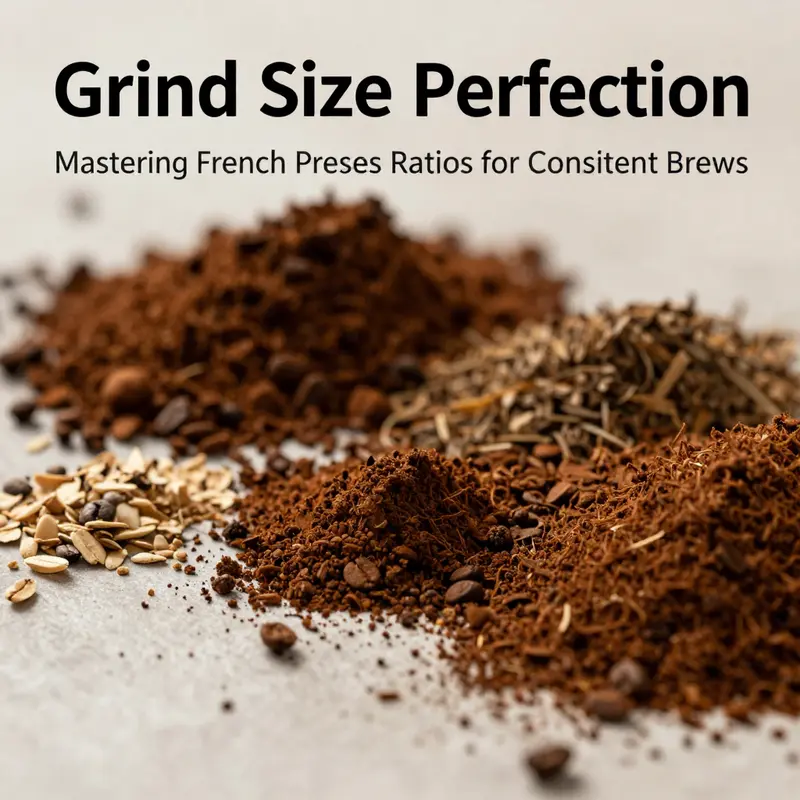
Grind Size Mastery: How Particle Control Elevates French Press Ratios
Every variable in the French press equation matters, but grind size sits at the center. It governs how water meets coffee, how flavors dissolve, and how much sediment ends up in your cup. Treat grind size as the active control in a finely tuned system: change it even slightly and the whole balance shifts. This chapter explains why a coarse, consistent grind is essential, how it interacts with ratios and brew time, and practical steps to dial in a clean, full-bodied French press that reliably tastes the way you want.
At its core, a French press is an immersion brewer. Grounds steep in water for a set time, then a metal mesh filter separates liquid from solids. That mesh is generous compared to paper filters, so particle size must do much of the heavy lifting. Coarse particles slow extraction, reduce fines that slip through, and preserve clarity and body. Fines—tiny dust-like fragments—behave differently: they accelerate extraction, settle into a silty layer, and dramatically change mouthfeel. Too many fines and you get grit and an astringent finish. Too few fines and extraction may stall, leaving the coffee sour and thin.
Begin with the right visual and tactile target. For French press, aim for particles that look like coarse sea salt or coarse breadcrumbs. They should feel gritty between thumb and forefinger without powdery residue. That texture is a useful reference during routine checks; if your grind clumps or produces dust, dial the grinder coarser. If the particles are large and uneven with massive flakes, you likely lose extraction efficiency—make it slightly finer.
The coffee-to-water ratio interlocks with grind size in predictable ways. A common starting point is 1:15—one gram of coffee for every 15 grams of water. It delivers a balanced cup for many beans. But grind size modifies how that ratio performs. With a properly coarse grind at 1:15 and a four-minute steep, extraction tends to hit a sweet spot where sweetness, acidity, and body align. If you move to 1:13 or 1:12 for something heavier, the increased solute concentration exaggerates both desirable and undesirable flavors if fines are present. Conversely, at 1:16 or 1:17 a coarser grind helps maintain brightness without thinning the body.
Imagine extraction as a time-dependent release of different compounds. Sugars and pleasant aromatics dissolve early and mid-steep. Bitter alkaloids and some oxidized compounds extract later. Grind size shifts the timing and rate of this release. Finer particles expose more surface area, speeding extraction and pulling late-stage bitters into the cup within the same four-minute window. Coarser particles slow the release so the same four minutes highlight sweet and aromatic notes while minimizing harshness.
Practical control begins with equipment. A burr grinder is essential. Blade grinders chop beans inconsistently, creating a mix of fines and large shards. Burr grinders shear beans between two abrasive surfaces, producing uniform particles. If you have a choice, prefer a conical burr design for consistent coarse settings and reduced heat transfer. Even among burr grinders, settings matter. Small adjustments can change particle distribution significantly. When calibrating, make tiny moves and test each setting with a repeatable brew routine.
Consistency also means maintenance. Clean burrs regularly. Old coffee oils and trapped grounds alter particle flow and increase fines. If you notice more sediment than usual at a stable setting, disassemble and clean the grinder according to the manufacturer’s guidance. Replace burrs when they dull—worn burrs produce more pulp-like fragments and dust.
Testing methodically helps you find the intersection of grind, ratio, and time that matches your palate. Establish a baseline: 1:15 ratio, four-minute steep, water at 195–205°F (90–96°C), coarse grind resembling sea salt, and a calibrated burr grinder. Measure precisely with a digital scale—volume measurements vary too much. Use fresh whole beans roasted within the past two to four weeks. Consistent water quality helps too; chlorinated or very hard water skews extraction.
Brew and evaluate. Pay attention to clarity, mouthfeel, sweetness, acidity, and bitterness. If the cup tastes sour or thin, either extraction is incomplete or dose is too low. Start by increasing the dose slightly—move to 1:14—or make the grind marginally finer so water extracts more readily. If bitterness or heavy astringency appears, examine your grind for fines. If fines are present, coarsen the grind and reduce the dose to 1:16 if necessary. If bitterness persists with a coarse grind, check water temperature and steep time; both can push extraction into bitter compounds.
Sediment and mouthfeel deserve focused attention because they often determine whether you enjoy the cup regardless of flavor notes. Sediment comes primarily from fines and from fragile particles produced by over-aggressive pouring or stirring. To minimize silt, stir gently—just enough to wet all grounds. Place the lid on with the plunger up to insulate during the steep, and press slowly and evenly at the end of the brew. Rapid plunging forces more liquid through the mesh and can resuspend settled fines, increasing sediment in your pour. Immediately decant brewed coffee into carafes or cups to stop extraction; leaving coffee in the press with grounds continues extraction and muddies flavor.
If sediment remains a persistent problem despite coarse grinding and slow plunging, evaluate the filter assembly and the press itself. Some presses have finer mesh or dual-screen assemblies that reduce fines in the cup. Regularly inspect the mesh for damage or warping; even small gaps let more solids through. A secondary short-term fix is to decant coffee through a cloth or paper filter at the point of serving—this clarifies the cup but removes some body. Use this sparingly; French press is prized for its full mouthfeel.
Understanding bean characteristics also informs grind decisions. Lighter roasts generally need more extraction to coax sugars and aromatics forward; a slightly finer grind or a higher dose can help. Darker roasts, already more soluble, extract faster; err coarser to avoid over-extraction. Highly processed or washed coffees with pronounced acidity benefit from a coarser grind that highlights clarity and fruit-forward notes. Natural or heavy-bodied coffees can handle a denser ratio and coarser grind to accentuate sweetness and texture.
Temperature and time remain partners to particle control. Water below 195°F slows extraction and can make a properly coarse grind underperform. Water above 205°F accelerates extraction and can draw bitterness from even coarse grounds. Four minutes is the standard immersion time because it balances flavor release for a wide range of beans at typical roast levels. If you adjust steep time, pair it with corresponding grind and ratio changes: lengthen time slightly with a coarser grind to increase extraction without increasing fines; shorten time if using a finer grind but expect more sediment and potential for over-extraction.
A note on repeatability: keep a brewing log. Track bean, roast date, grinder setting, dose, water temp, steep time, and tasting notes. Small, deliberate adjustments and careful recording will allow you to home in on a repeatable routine for each coffee. Over time you will develop a sense for how a bean’s roast level and origin respond to grind changes and ratios.
Finally, remember that grind size is not a single number in isolation but part of a system. When you master particle control, ratios become tools rather than guesses. A move from 1:15 to 1:14 no longer simply makes the cup stronger; it becomes a predictable way to enhance sweetness or body when paired with a slightly finer grind. Coarser grinds at 1:16 preserve brightness while maintaining mouthfeel. By thinking in combinations—grind, ratio, time, temperature—you convert the French press from an unpredictable immersion into a precision brewer suited to your taste.
For practical resources on the science behind extraction and particle effects, consult the research literature on coffee extraction dynamics. If you want to explore brewing technique experiments and community-tested recipes, see the Coffee Rich Life blog for real-world insights and examples: https://coffeerichlife.com/blog/coffee-rich-life/. For a deeper scientific study of extraction mechanisms and particle size effects, the research article linked here provides a technical foundation: https://www.sciencedirect.com/science/article/pii/S0956713523003428
Brewing Harmony: How Temperature, Time, and Ratios Converge to Perfect the French Press Cup
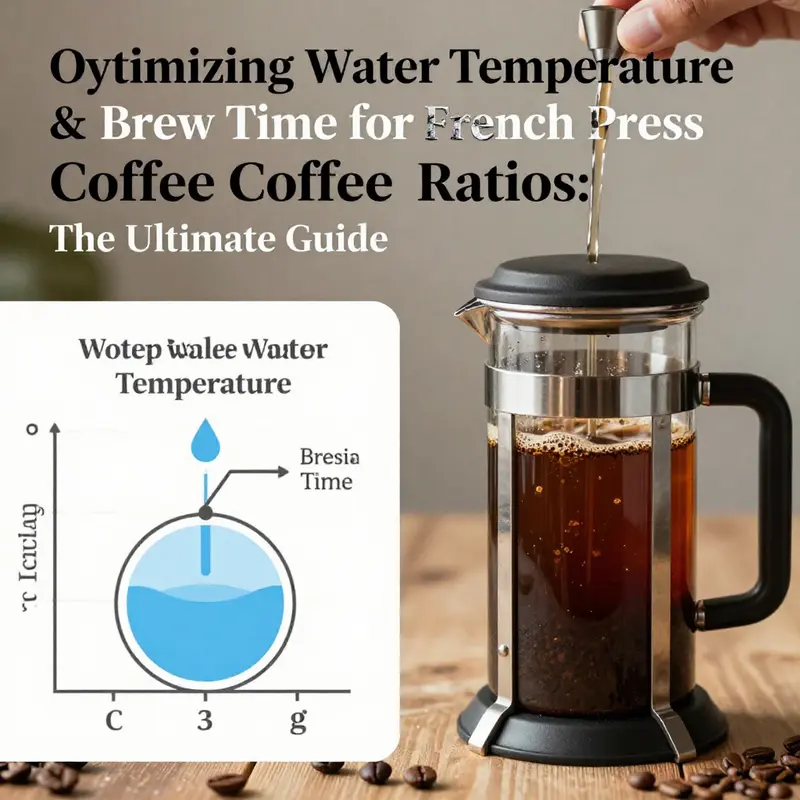
The dance of flavor inside a French press is less about heroic precision and more about patient balance. We already know from the broader guide that a solid starting point is the 1:15 coffee-to-water ratio, a blend that yields a cup with body and clarity without tipping into harshness. Yet ratio alone does not dictate success; temperature and brew time are the unseen conductors that shape how those solids dissolve, how oils coat the palate, and how the cup finally lands on your tongue with a texture that feels both lush and clean. When you learn to listen to the conversation between these variables, you begin to sculpt a brew that aligns with your palate while staying faithful to the coffee’s inherent sweetness and acidity. The goal is not to chase a single perfect method but to cultivate a nuanced approach that respects the science of extraction and the art of taste. In the process, you’ll discover that small, deliberate adjustments can yield outsized improvements, and that consistency comes from understanding how heat, time, and dosage work together rather than from treating them as isolated levers.
Temperature is the first whisper in this negotiation. The recommended range—195°F to 205°F (90°C to 96°C)—is not a rigid wall but a corridor that allows the coffee’s soluble compounds to dissolve at a rate that preserves brightness while developing body. Water just shy of a boil has enough energy to unlock the coveted aromatics and soluble solids. If the water crosses over into the higher end of the range, the extra heat nudges the extraction toward bitterness, drawing out harsh phenolics and over-emphasizing roasted notes. If the water sits on the cooler side, a portion of the flavorful compounds remains under-extracted, resulting in a cup that can feel thin, under-sweetened, and edged with sourness. Understanding this spectrum helps you tailor the end product to your roast level, grind size, and even your mood on a given morning. When you preheat the press and use water at the lower end of the range for lighter roasts, the flavor tends to sit in a more delicate brightness with a whisper of sweetness. Conversely, darker roasts often reward a touch more heat, allowing chocolatey depths to emerge without tipping into acrid bitterness. The key is consistency—keep the water within that window and avoid the jittery swings that throw flavor out of balance.
Brew time is the companion variable that translates heat into flavor. The conventional 4-minute mark acts as a practical benchmark, one that, in practice, conducts extraction toward a full but not overbearing profile for a wide range of beans. When the clock ticks shorter than four minutes, you risk under-extraction: the cup can taste thinner, with a lean mouthfeel and a sharpened acidity that betrays insufficient interaction between water and ground coffee. Extend beyond four minutes, and you begin to pull more solubles that can veer toward bitterness and a muddy perception of body. The 4-minute standard is a thoughtful middle ground, but like temperature, it benefits from small, deliberate adjustments tuned to the specifics of the roast and grind. If your brew tips toward sourness, a slight increase in time—say, up to 4 minutes and 30 seconds—can help bring more sweetness into balance, provided the temperature remains within range and the grind remains coarse enough to prevent excessive fines. If bitterness emerges, you can consider trimming the time back by a few seconds or dialing in a touch cooler water for that batch. The takeaway is that time does not act alone; it works in concert with temperature and ratio to shape the extraction curve from first contact to final pour.
The ratio anchors the structure of the cup, but it should not be treated as a fixed prison. A 1:15 ratio offers a balanced profile for many beans, but adjusting the ratio by a notch or two can reframe the cup’s character without sacrificing balance if you adjust the other variables in parallel. Moving toward 1:14 fosters a bolder, fuller mouthfeel with increased extraction potential; the scent seems to bloom and the cup can present a richer weight, though vigilance is required to avoid tipping into over-extraction if you push brew time and temperature too aggressively. A lighter 1:16 or 1:17 nudges the cup toward clarity and lift, inviting a brighter acidic note and a more delicate body. These adjustments should be executed with awareness of the grind size and filtration efficiency. A coarser grind helps maintain clarity at higher coffee doses, while a finer grind, if not carefully controlled, invites silt and a heavier mouthfeel that clashes with the lighter ratio. The interplay among grind, water temperature, and brew time becomes especially important when you move outside the 1:15 baseline. The coffee’s origin, roast, and freshness further influence how forgiving the equation remains; as with all variables, you learn to taste and then tune with intention.
In practice, the most reliable way to navigate this trio is a disciplined ritual that marries measurement with sensory observation. Start by preheating your French press—hot water swirls through the carafe to bring the vessel to temperature and to minimize heat loss during the brew. Weigh your coffee with a digital scale; for a standard 500 ml batch at 1:15, a typical starting point would be around 33 grams of coffee for 500 milliliters of water, a ratio that provides a sturdy backbone without becoming unruly. Grinding should be coarse and even, with particles resembling sea salt in texture. Blade grinders should be avoided in favor of a burr grinder, which yields a uniform bed that promotes even extraction and reduces the likelihood of gritty sediment slipping through the metal screen. When the grounds are ready, add them to the press and begin by saturating the bed, pouring hot water steadily to ensure complete wetting of all particles. A gentle stir at this stage helps remove any dry pockets and ensures an even soak. Place the plunger lid on top, but keep the plunger up to prevent the grounds from being compressed prematurely. Then set your timer to four minutes and resist the urge to disturb the brew during that period. After four minutes, press slowly and evenly, allowing the plunger to move with steady pressure to minimize disturbance of fines. Immediately pour into your mug to preserve the extraction’s integrity and to prevent further diffusion that could dull the cup’s brightness.
What emerges from this process is a flavor spectrum that responds to your exact inputs. If the cup seems sour or underwhelming in body and aroma, inspect the temperature and time first, then revisit the grind’s coarseness. A cooler water temperature paired with a shorter brew time may rescue a lacking sweetness, while ensuring the grind is not overly fine. If bitterness dominates, reassess the heat level and reduce the contact time. A longer steep coupled with a slightly higher ratio can intensify sweetness and body, but only if the grind keeps fines in check and the water remains within the optimal window. An often overlooked factor is aromatic retention; pre-ground coffee loses volatile compounds quickly, which is why the timing of grinding relative to brewing matters. Freshly ground beans deliver a more expressive cup, where temperature and time can reveal the full spectrum of the roast’s character rather than masking it with stale aromas.
The technique itself is a form of care. The sequence—preheat, weigh precisely, grind coarsely, saturate thoroughly, steep for an exact interval, plunge with control, and serve promptly—embeds a habit that supports reproducibility and nuance. Each step reinforces or constrains the next: better grinding yields a more even extraction, precise weighing ensures your ratios translate faithfully into the cup, and careful temperature control helps maintain the delicate balance of sweetness, acidity, and body. In that sense, mastering the French press is less about discovering a single “perfect” routine and more about cultivating a responsive practice. You learn to observe what your palate tells you, then adjust with targeted changes. If a batch sings with a clean sweetness and a lingering finish, you’ve found a comfortable equilibrium among your preferred ratio, a reliable grind size, and a favorable temperature-time landscape. If, instead, you notice a dull body or a harsh finish, you know which knob to turn next: dial the grind coarseness, refine the temperature range, or tighten the brew window by a few seconds. The art lies in recognizing when to preserve a successful pattern and when to modify it to align with the distinctive characteristics of the beans you use and the sensory profile you desire.
As you continue to refine, keep in mind that the ultimate goal is a cup that is faithful to the beans’ origin while expressing the roast’s sweetness and the water’s clarity. This requires a holistic approach: measure with care, grind with consistency, heat with intention, and time with discipline. Even the simplest French press can become a vehicle for terroir and technique when these elements are understood as a cohesive system rather than as isolated tweaks. The process invites you to become a curious taster and a precise engineer at the same time, a combination that yields not only a satisfying cup but also a deeper appreciation for how small decisions compound into notable flavors. If you want to explore broader perspectives on how to cultivate a thoughtful coffee routine, you can dive into the Coffee Rich Life blog post that explores the philosophy of living with coffee as a daily practice and how meticulous habits contribute to a richer coffee experience: https://coffeerichlife.com/blog/coffee-rich-life/. In practical terms, this means that the science behind the French press ratios is inseparable from the craft of extraction, and the craft grows stronger with repeated practice and patient listening to what the brew reveals after each pour.
The journey toward effortless consistency begins with the baseline you establish—the 1:15 ratio as a dependable anchor—and extends outward through real-world experimentation with time and temperature. You might find that your particular grinder, kettle, and bean variety shape the exact values you settle on for your daily brew, but the underlying principle remains the same: precise measurement, mindful heat, and a deliberate pace. The more you align these variables with your taste, the more your cup reflects both the bean’s personality and your own preferences. In the end, a well-tuned French press is less about chasing a universal standard and more about cultivating taste memory—an evolving map of flavors that you can read, adjust, and share with others. If you seek a deeper, more technical exploration of the science behind these variables, the Serious Eats guide offers a thorough treatment of temperature, time, and ratio in French press brewing: https://www.seriouseats.com/french-press-coffee-guide.
The Precision of Pour: Mastering French Press Ratios for Cafe-Quality Coffee

Brewing coffee with a French press is as much about patient ritual as it is about precise science. The moment the hot water meets the ground coffee, a conversation begins between texture, aroma, and balance. This chapter leans into the heart of that conversation: how ratios guide every other variable and how a disciplined approach to measurement unlocks consistent, cafe-quality results at home. The story of a great French press brew starts with a simple premise that often feels counterintuitive in a world of convenient capsules and automated machines. You do not simply pour water over grounds and hope for a remarkable cup; you calibrate a relationship between coffee and water, and then you let that relationship inform temperature, grind, and time. In practice, this means choosing a dependable baseline, respecting the roles of grind and temperature, and honoring the tempo of a four-minute immersion that yields a body, clarity, and sweetness that feel almost tactile on the palate. The baseline most pros agree on is 1:15, a ratio that yields balance without sacrificing the coffee’s inherent sweetness or complexity. But the value of a baseline isn’t rigidity; it is a starting point from which small, deliberate adjustments reveal how your coffee responds to your method. For a cup that sits squarely in the middle—neither too bold nor too delicate—the 1 gram of coffee to 15 grams of water rule translates to a practical example: 30 grams of coffee with 450 grams of water, or 50 grams of coffee with 750 grams of water. These numbers are not magical endpoints; they are the language through which you speak to the coffee and hear back about its strength, body, and brightness. The crucial takeaway is that consistency must begin with measurement. Volume-based approximations—tablespoons or cups—invite variance from bean density, roast level, and grind texture. A digital scale changes the game. It replaces guesswork with reproducible data, enabling you to reproduce a brew while you learn how to tune it to your taste. Precision, in turn, empowers refinement. When your palate nudges you toward more depth, you are not guessing; you are adjusting with intent. If your cup tastes sour or thin, a small uptick in coffee—the shift from 1:15 to 1:14—often nudges the balance toward sweetness and fullness without surrendering clarity. If bitterness or heaviness dominates, you may reduce the coffee slightly or shorten the brew time to prevent over-extraction. These micro-adjustments compound across dozens of brews, teaching you how each variable interacts with the others. The science here is straightforward but powerful: more coffee relative to water increases extraction pressure, raises the concentration of solubles, and strengthens the overall perception of body and aroma. Yet overdoing it can push the extraction into bitterness as soluble compounds become overpowering and oils saturate the cup with a roasted intensity that masks nuanced flavors. Too little coffee or too short a steep deprives the grounds of time to release their soluble components, leaving a sour or weak cup with a pale frame around the fruit and spice notes that defined the bean in its origin. The art emerges in the subtle, almost invisible adjustments that harmonize these forces into a clean, expressive cup. When you begin with the 1:15 baseline, you gain a reliable anchor. From there, the journey becomes a guided exploration rather than a blind experiment. A stronger, bolder profile can be accessed by ratios of 1:13 or 1:12, which intensify body and aroma and reveal more pronounced chocolatey or caramel notes in darker roasts. On the flip side, a lighter, brighter cup can be coaxed from a 1:16 or 1:17 ratio, where the coffee’s acidity and delicate aromatics take center stage and the cup reads cleaner and less heavy. The differences you will notice are not simply about strength; they are about the way flavors are framed and carried in the mouth, how the acidity reads, and how the finish lingers. Consider the practical implications of a scale in daily use. A scale is not merely a tool for measurement; it is an instrument of memory. By serially recording coffee weights and water volumes for each batch, you build a personal map of how your bean, roast, and grind respond to your technique. The important part is consistency in measurement rhythm. Weigh your coffee and water to a precise target every time, then proceed through grinding, preheating, and brewing with deliberate cadence. A coffee can become a signature brew not because the method changes dramatically but because your instincts develop around predictable inputs and the distinct aroma they produce. The grind is the next keystone in this chain. Even when your ratio is accurate, a grind that is too fine for a French press will flood your cup with silt, turning aromatic oils into a gritty, muddy texture and pulling harsh elements into the foreground. The ideal grind resembles coarse sea salt or breadcrumbs, granular and uniform. The consistent particle size is critical because it ensures uniform contact with water during the four-minute immersion and reduces the risk of fine particles slipping through the metal filter. A burr grinder is essential for this level of control. Blade grinders often create a spread of particle sizes that undermines extraction, yielding an uneven cup with a dull finish and more sediment than you want. With a uniform grind, your extraction becomes more predictable, the flavors unfold with greater clarity, and the mouthfeel remains smooth rather than gritty. Yet even the best grind cannot rescue a poorly prepared water parameter. Water temperature lies between 92 and 96 degrees Celsius for most beans. Too hot, and you burn delicate aromatics; too cool, and the grounds do not release their complete set of solubles. If your water runs hotter than 100 degrees Celsius, you risk scorching the grounds and dragging bitter compounds into the cup. If it sits below 90 degrees, you may under-extract, leaving bright but hollow notes that vanish quickly on the palate. The four-minute immersion window is another non-negotiable. This is the sweet spot where you unlock the balance: enough contact to dissolve sweet, fruity, and nutty compounds, but not so much that bitter notes become dominant. The clock should be started as soon as you saturate the grounds with water. After the time elapses, the plunger should be driven with steady, even pressure rather than a quick, forceful shove that can churn fine particles into suspension. The act of plunging should take roughly 15 to 20 seconds and should be performed with control to prevent a surge of fine particles from clouding the cup. Once the plunger is down, the coffee should be poured promptly. The moment the grounds rest against the plunger, extraction continues. If the brew sits in contact with the grounds, the risk of over-extraction climbs, and the resulting cup can shift toward bitterness and firmness at the expense of clarity and sweetness. A few practical routines can help translate this knowledge into reliable practice. Preheating the French press ensures the vessel is at brewing temperature, maintaining a stable thermal environment as you combine coffee and water. Weigh your coffee with the digital scale, using a ratio that you intend to copy for the batch. Grind the beans coarsely to the desired texture, then add the coffee to the press and water to the grounds. A gentle stir ensures full saturation, followed by placing the lid on with the plunger up while the brew steeps. After four minutes, the plunger is pressed slowly and steadily, and the coffee is poured immediately into a warmed mug or carafe. This sequence is not a ritual for ritual’s sake; it is a disciplined method that minimizes variables and invites your palate to recognize the traits that emerge from a well-balanced cup. A well-executed French press brew should reveal a body that feels substantial without heaviness, a clarity that lets fruit and spice notes emerge rather than hide behind oil, and a finish that charges the senses with sweetness and a hint of roast without bitterness. You may notice a certain oils-rich aroma that lingers even after the cup has been emptied. The presence of oils is part of the immersion philosophy: the metal mesh does not filter away every particle; it allows the natural oils to pass through, contributing to the cup’s fullness and mouthfeel. This is not a flaw but a defining characteristic. The challenge lies in harnessing that body while preserving the coffee’s character through a careful balance of ratio, grind, temperature, and time. For those who seek a deeper, more reflective practice, keeping a simple log can be transformative. Record the coffee origin, roast date, and grind setting in addition to the exact grams of coffee and water used, the temperature of the water, the duration of the steep, and the sensory notes you perceived. When you compare entries, you begin to notice patterns—certain beans may tolerate a slightly coarser grind at a fixed ratio, while others reward a modest increase in water temperature. Your taste memory becomes a map, guiding future brews toward a more consistent profile. As you search for further insight into the science of immersion brewing, consider a trusted resource that delves into technique and theory with a similar spirit of curiosity. For a broader discussion of the science behind immersion brewing and practical best practices, see an external guide that has guided many home brewers toward more consistent results: https://www.seriouseats.com/french-press-coffee-guide. Reading that kind of analysis can illuminate why the four-minute rule feels anchored to the physics of extraction and how tiny adjustments ripple through the final cup. If you are drawn to reading more about the craft in a broader context, you may also explore articles that resonate with this journey via the Coffee Rich Life blog. The site offers essays and practical tips that echo the insistence on precision and ritual without becoming overly prescriptive. The link below is one way to revisit ideas about daily coffee practice and the joy of mindful brewing: Coffee Rich Life blog. Returning to your own kitchen, the path to mastery is personal but not solitary. A consistent method anchored by a sound ratio—1:15 as a baseline—gets you where you want to be: a cup that carries the signature warmth of the bean, the brightness of its origin, and the subtle sweetness that reveals itself with time. The art you develop is less about chasing perfection and more about learning a language of proportion. The more you brew, the more you learn to listen to the coffee and adjust accordingly. And because the French press invites a direct line from ground to cup, there is a level of immediacy in feedback that makes the method especially effective for iterative improvement. You may discover, over many sessions, that certain beans respond best to a slight adjustment in the water-to-grounds ratio when roasted to a particular level, or that a two-degree variation in water temperature can unlock more nuanced acidity without compromising body. These discoveries are the payoff for the discipline of measurement. In the end, the goal is not a single perfect cup but a repeatable practice that yields a dependable result. A routine built on the 1:15 baseline, a burr grinder producing a coarse, uniform grind, precise temperature control, and a disciplined four-minute steep becomes a reliable method rather than a guess. The result is a brew that carries the essence of its origin and the care you invest in the process, delivering a cup that is both comforting and revealing, a coffee that invites you to pause, sip, and reflect on what you value in a everyday ritual. The journey from ratio to ritual is the heart of the French press as a learning tool and a craft. It is a practice that honors precision while leaving room for personal preference, a dynamic balance of science and sensibility. As you continue to refine your technique, remember that great coffee begins with great ratios and ends with great care. For further reading on the science and best practices behind immersion brewing, visit the external resource mentioned earlier. May your next brew be the next step in a satisfying, ongoing exploration of flavor, texture, and aroma that only a well-tuned French press can deliver.
Final thoughts
Understanding and mastering French press coffee ratios is pivotal for delivering a consistently excellent brew in your business. By applying the right coffee-to-water ratios, achieving the perfect grind size, controlling water temperature, and adhering to precise brewing times, you can elevate the coffee experience for your customers. This commitment to quality not only enhances flavor but also reinforces your brand’s reputation in a competitive market. Incorporate these principles into your business practice, and watch your coffee offerings stand out.