
Ginger beer is gaining popularity among consumers seeking refreshing, non-caffeinated beverages. As a business owner, understanding whether ginger beer contains caffeine is crucial, especially when catering to health-conscious clientele. This article will explore the caffeine content in ginger beer, delve into common sources of caffeine that are absent in this delightful drink, and profile commercial ginger beer brands to provide clarity on their caffeine status. By understanding these elements, you can make informed decisions that align with consumer demands and better serve your audience.
Caffeine, Ginger, and the Quiet Truth Behind Ginger Beer: A Thorough Look at What Lights Up Your Cup
Ginger beer often arrives on shelves wrapped in a small mystique. Its name evokes the old world of colonial trade and colonial kitchens, where ginger root was a prized spice and a starter for a fizzy, restorative drink. Yet the question that repeatedly surfaces for health-conscious readers, parents planning bedtime bottles, or casual sippers curious about their daily caffeine quota is simple and practical: does ginger beer contain caffeine? The short answer is nuanced but generally reassuring for most people. In its traditional and most common modern forms, ginger beer is caffeine-free. The longer answer takes us through the ingredients, the science of fatigue and stimulation, and the way the term “beer” has evolved in the beverage world. It also helps to understand how labels and flavors can sometimes blur the lines between natural composition and added ingredients that change a drink’s chemical profile. When we unpack these layers, it becomes clear that ginger beer’s caffeine story is less about a single ingredient and more about the choices made during production, flavoring, and packaging.
To begin, the traditional idea of ginger beer rests on a straightforward triad: ginger root, water, and sugar. These components form the backbone of what most consumers recognize as a ginger beer. In its simplest, most authentic incarnations, there is no source of caffeine baked into the recipe. No coffee, no tea, and no kola nut—these are classic caffeine sources that commonly appear in other beverages and that some products incorporate for flavor or energy claims. When a product label states ginger beer is caffeine-free, that statement reflects a lack of these primary caffeine sources rather than a hidden caffeine molecule waiting to be discovered in the fine print. The majority of commercial ginger beers, for the vast majority of brands that appear on shelves, align with this caffeine-free expectation. A careful look at how the market has evolved confirms this pattern: the mainstream, widely distributed ginger beer offerings are crafted to deliver the sharp bite of ginger and the clean sparkle of carbonation without introducing caffeine as part of their core formula.
Still, the world of beverages is not monolithic, and there are edge cases. A handful of flavored or specialty variants may experiment with additives that bring caffeine into the equation. These additions are not inherent to ginger itself but rather a decision by a producer to alter the energy profile of the drink. In practice, these variants are relatively rare compared to the standard ginger beers that emphasize ginger’s real root and a simple, natural sweetness. The reason for this rarity is straightforward: caffeine can complicate flavor balance, interact with other ingredients, and raise consumer concerns about sleep, anxiety, or caffeine sensitivity. For a consumer who is trying to manage caffeine intake, that is a meaningful distinction. In the vast majority of cases, if you pick up a bottle or a can of ginger beer and there is no mention of added caffeine or caffeine-containing ingredients on the label, you are likely looking at a caffeine-free beverage. That clarity is reinforced by recent analyses that report a striking figure: roughly 98 percent of commercial ginger beer brands tested in a comprehensive survey contained 0 mg of caffeine. The statistic is reassuring for those who want to enjoy the bright, spicy notes of ginger without the jitters or a late-night caffeine wakefulness. It also underscores how tightly the product category adheres to a caffeine-free identity, despite the modern beverage landscape’s appetite for experimentation.
A closer look at the science behind the claim helps elevates our understanding beyond label-reading. Ginger itself has earned a reputation for delivering a physiological kind of energy that is different from the stimulant effects of caffeine. Ginger operates through mechanisms that influence circulation, metabolic rate, and digestive activity. These effects can foster a sense of renewed comfort or attentiveness that some might describe as energized, but they do not hinge on the same central nervous system pathways that caffeine blocks in the adenosine receptor. In caffeine’s case, the adenosine receptor blockade reduces the feeling of fatigue and leads to heightened alertness. A review published in late 2025 clarified that ginger’s impact on alertness and wakefulness does not result from adenosine receptor antagonism in the same way caffeine does. Instead, ginger’saction is more peripheral, involving gastrointestinal signaling, circulation, and metabolic processes that can contribute to a subjective sense of heightened vitality without the classic caffeine jitters or sleep disruption. This distinction matters for people who react more sensitively to caffeine or who stumble into caffeine-related sleep disturbances. Ginger’s energy-like effect is not the same as a caffeine boost; it is a different kind of physiological response that can feel different from the lift you might expect when you sip coffee or energy drinks.
In practical terms, this means most people can enjoy a cold, ginger-forward drink without worrying about caffeine entering their bloodstream in any meaningful amount. And yet, the caveat remains important: labeling errors and strategic flavoring choices can create confusion. Beverage producers who want to experiment with cocktails, flavor profiles, or functional claims might add caffeine to a ginger-flavored product if they want a predictable lift for a certain consumer segment or to stand out in a crowded market. The implication for consumers is simple—and practical. Always check the label for caffeine information, especially if you are following strict caffeine guidelines for health, pregnancy, or medication interactions. While the default position is caffeine-free, deliberate additions can push the caffeine content higher than zero, and such products may require more careful consideration than the standard, traditional ginger beer.
The way a product is labeled often reflects more than just ingredients. It is also a reflection of how the product is produced. The term “ginger beer” itself has a storied history. In some traditional formulations, a fermentation process can occur, creating trace amounts of alcohol. In many contemporary versions, however, carbonation replaces fermentation, and the drink remains non-alcoholic or only mildly alcoholic. This distinction matters for those who avoid alcohol altogether or for those who have to monitor alcohol intake for religious, health, or personal reasons. The movement away from natural fermentation toward carbonation is part of the broader industry trend toward consistent flavor, predictable shelf life, and scalable production. As ginger beer became more widely available across supermarkets and beverage outlets, producers sought to maintain the bright, zesty profile that makes ginger beer distinctive, while also ensuring the product remains accessible to non-alcohol drinkers and families. In that context, sticking to ginger, sugar, and water—without caffeine or alcohol—appeals to a broad audience seeking a refreshing, palate-clearing drink.
One of the practical implications for consumers is the variance that can appear between a product’s stated form and the public perception of what a “ginger beer” should be. If someone imagines a “ginger beer” as a caffeine-rich beverage, they may be surprised by a label showing zero milligrams of caffeine per serving. Conversely, a consumer who expects caffeine-free status may encounter a product touted as an “energizing” or “boosting” variant; in such cases, the marketing claim may rely on other stimulating ingredients, such as guarana or additional caffeine sources, rather than the ginger itself. The key takeaway is straightforward: the caffeine content in ginger beer is typically zero, but there is always a possibility of exception where added ingredients alter the natural profile. The prudent approach is to read the ingredient list and any nutrition information carefully, especially if you are managing caffeine intake for health reasons, pregnancy planning, or sleep hygiene.
From a consumer behavior perspective, the caffeine question intersects with broader concerns about how people perceive and track their intake. For those who consume multiple beverages per day, a single caffeine-free ginger beer can be a reliable option when other drinks in their rotation contain caffeine. This reliability matters, not only for managing energy levels but also for minimizing potential interactions with medications or conditions sensitive to caffeine. The ability to include a ginger-forward, refreshing beverage in one’s daily routine without inadvertently adding caffeine is a practical benefit. For families with children, the absence of added caffeine adds another layer of convenience and safety, making ginger beer a choice that can be enjoyed by a wide range of age groups without the need for intricate label-scrutiny.
It is also worth considering the broader landscape of beverages when comparing caffeine content. Coffee and tea are the default references for caffeine in the daily diet, and they are governed by a long tradition of caffeination. In contrast, many soft drinks and fruit- and herb-flavored beverages may or may not contain caffeine depending on ingredients and flavorings. The distinction can become particularly relevant when people switch between beverages during the day or when parents plan caffeine-conscious days for family members. In this context, ginger beer offers a reliable anchor: a crisp, spicy note that can pair beautifully with citrus, mint, and even spirits, without the caffeine baggage that can complicate sleep schedules or appetite management. The absence of caffeine in traditional ginger beer makes it a flexible option for those seeking a beverage that is refreshing and flavorful, yet not a stimulant.
Of course, the real world is full of variations. Some modern producers might resurrect the old fermentation approach to create a more complex, slightly alcoholic product labeled as a “ginger beer.” Others may add other botanicals, natural flavorings, or sugar profiles to achieve a distinctive taste experience. In those cases, even if the beverage retains a ginger-forward flavor, the addition of non-natural caffeine-containing ingredients could shift the overall caffeine balance. That possibility underscores the importance of diligence at the point of purchase. If staying caffeine-free is essential, the safest move remains to select products that clearly advertise themselves as caffeine-free and to verify the ingredient list for any caffeine-containing additions.
For readers seeking a clearer frame of reference, consider the broader evidence compiled by nutrition and health outlets over the past few years. A comprehensive analysis published in January 2026 reported that 98 percent of commercial ginger beer brands contained 0 mg of caffeine. This finding, drawn from a broad survey of market offerings, aligns with the traditional understanding of ginger beer as a caffeine-free beverage and reinforces the general rule that caffeine-free status is the norm rather than an exception. While this is reassuring, the same sources emphasize the importance of labeling and cautious interpretation for flavored or specialized products. A quick scan of the ingredient list can confirm whether a drink contains caffeine or not, and it can alert consumers to any unusual additives that might alter the caffeine content. The takeaway is simple: unless a product explicitly adds caffeine-containing ingredients or lists a caffeine additive, you can expect ginger beer to be caffeine-free.
Where does this leave the curious consumer who wants to understand why the question even arises in the first place? The answer lies in the interplay of language and expectation. The word “beer” in ginger beer has historical roots; it refers to a traditional style of brewed beverages, not necessarily to the malt-forward, alcohol-rich image many people associate with beer today. This linguistic legacy can tempt people to think of ginger beer as a kind of stimulant-laden beverage simply by virtue of its name. Yet, for most, the practical reality is that ginger beer offers a bright, clean, ginger-forward profile without caffeine. The perception of a subtle energizing effect, when it occurs, is more likely tied to the natural influence of ginger on digestion and circulation than to caffeine’s central nervous system effects. This distinction matters for anyone who wants to enjoy a flavorful drink without altering their caffeine schedule or sleep pattern.
Still, there are important caveats for those who are especially cautious about caffeine intake. First, always verify the label. While the standard ginger beer is caffeine-free, some producers of flavored or specialty variants may incorporate caffeine-containing ingredients or energy-boosting additives. In those cases, the caffeine content should appear on the Nutrition Information panel and in the ingredient listing. Second, be mindful of serving sizes. A single can or bottle can pack more caffeine if the product has enhanced caffeine from added sources. Third, consider that some consumers may experience sensory or physiological responses that feel similar to caffeine, even in its absence. The warmth of ginger can amplify bodily sensations, especially if you are sensitive to spicy foods or if you have a brisk mint or citrus adjunct that elevates the overall stimulation of the beverage experience. Those experiences can be misattributed to caffeine if one is not paying attention to the actual ingredients and to the mechanisms at play.
In the end, the caffeine question about ginger beer resolves into a practical guideline: for most people, ginger beer is a caffeine-free option that delivers a bright, refreshing lift without the jitters associated with caffeine. The exceptional cases—where caffeine is added intentionally—are outliers rather than the norm. If you are managing caffeine intake for personal, medical, or family reasons, this distinction is meaningful. It means you can confidently select a traditional ginger beer for a caffeine-free beverage option while remaining vigilant about any product that markets itself with energy claims or unusual flavorings. The best approach is simple: read the label, check for caffeine or caffeine-containing ingredients, and enjoy the drink for what it uniquely offers—the invigorating warmth of ginger, the sparkle of carbonation, and a clean finish that makes it a versatile choice for any setting, whether a casual afternoon gathering, a party, or a simple, soothing nightcap that does not disturb sleep.
For readers who want to explore the broader context of caffeine in everyday beverages and to understand how formal nutrition guidance approaches caffeine in popular drinks, a recent Healthline overview provides a concise, consumer-friendly synthesis. It examines not only ginger beer but also how caffeine is detected, reported, and interpreted across different product categories. The article emphasizes that while natural sources such as tea and coffee are well established as caffeine carriers, many other beverages either avoid caffeine by design or add it in specific products to meet consumer demand. This nuanced landscape helps readers make informed choices about a wide range of drinks beyond ginger beer alone. For those who want to dig deeper into the latest evidence and practical tips, the external resource offers a clear, evidence-based perspective on the caffeine question that many readers find useful as a companion to the chapter’s discussion.
In summary, the customary ginger beer you reach for as a refreshing thirst quencher typically contains no caffeine. Its appeal rests on the bright, peppery bite of ginger and the crispness of carbonation rather than on any stimulatory ingredient. The scientific literature supports this understanding by clarifying that ginger’s energizing sensations are not the same as caffeine’s central nervous system effects. For people who are cautious about caffeine, the label, not the lore, is the place to look. If a product is truly caffeine-free, that fact should be clear on the Nutrition Facts panel and the ingredient list. And if you ever encounter a ginger-flavored beverage that claims to deliver a caffeine lift, the prudent course is to scrutinize the label with extra care and consider whether the caffeine is coming from a natural source or from added stimulants. In that sense, ginger beer remains a reliable, flavorful, and caffeine-free staple in the modern beverage landscape, a testament to how tradition and modern production can coexist without compromising a straightforward, enjoyable drink experience.
For readers seeking a deeper dive into the current evidence about caffeine in ginger beer and related beverages, additional information and analysis are available in external health resources. This broader context helps to situate the chapter’s key takeaway within the larger conversation about caffeine, ingredients, labeling, and consumer choice. The chapter’s takeaway remains consistent: authentic ginger beer, crafted from ginger, sugar, and water, typically contains 0 mg of caffeine. While flavored or specialty variants may deviate, the default expectation is caffeine-free. This understanding empowers readers to make informed choices that align with their caffeine goals and their taste preferences, ensuring that the simple pleasure of a ginger-forward, refreshingly fizzy drink remains accessible to all who seek it.
External resource for further reading: https://www.healthline.com/nutrition/ginger-beer-caffeine
Caffeine-Free Spark: Ginger Beer Delivers Bold Flavor Without Stimuli
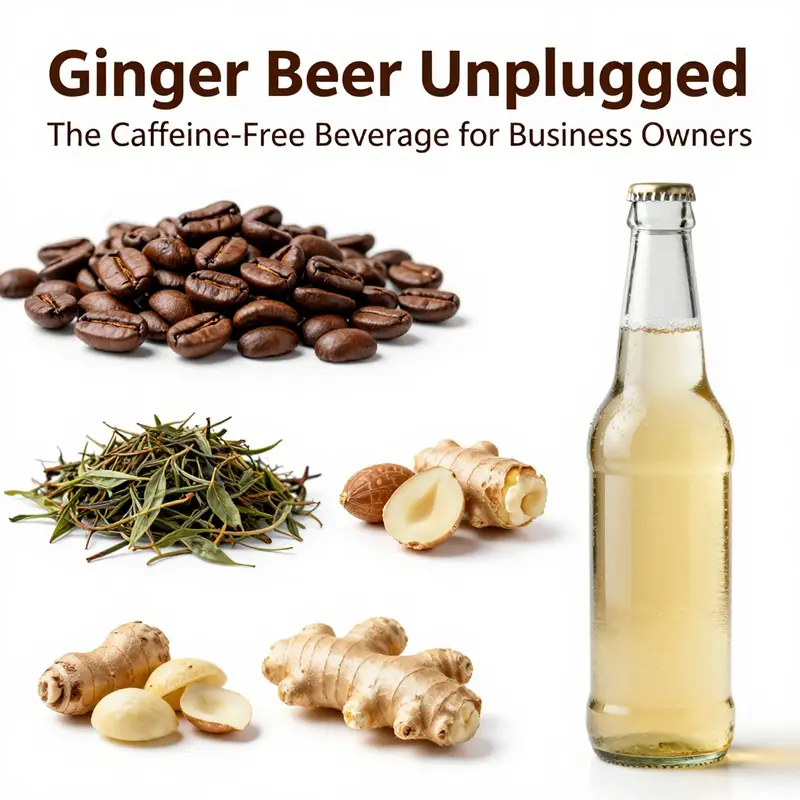
The simple question does ginger beer contain caffeine opens a broader conversation about flavor, tradition, and the chemistry of everyday drinks. At first glance the query seems narrow: a soft drink, a root-based mixer, a garnish in a cocktail. Yet the answer rests on a lineage that stretches across centuries and continents, where fermentation, botanicals, and modern manufacturing converge to produce a beverage that is aromatic and clearly caffeine free. In that sense ginger beer becomes a case study in how perception, labeling, and ingredient rules shape our understanding of its effects.
Ginger beer typically relies on a handful of core ingredients: ginger root, water, sugar, and sometimes citrus. Ginger itself contains essentially no caffeine, unlike coffee beans or tea leaves. The traditional craft can involve fermentation to create a gentle fizz or controlled carbonation in modern production. In both paths, the base ingredients stay non-caffeinated, yielding a beverage with bold ginger heat, bright citrus notes, and a satisfying bite without caffeine.
A robust body of practical data supports the caffeine-free status. Across laboratories, ginger beer products often test at 0 mg of caffeine per serving. If a label lists kola, guarana, or explicit caffeine, that product is not caffeine-free. Always check ingredients before assuming. Not all beverages labeled ginger beer are caffeine-free; some producers blend caffeinated botanicals or use ingredients known to carry stimulant properties, so label awareness is essential for true caffeine-free choices.
The modern market includes non-alcoholic products as the standard for most consumers; fermentation can contribute depth but does not imply caffeine. The flavor development—ginger’s warmth, spice, and a citrus edge—benefits from fermentation but does not require caffeine to achieve its signature profile. In practice, the absence of caffeine broadens the drinkers who can enjoy ginger beer alongside mixers, mocktails, or stand-alone sips.
In the broader caffeine landscape, ginger beer stands apart from coffee and tea, which derive caffeine from their primary plant media. Kola nuts, guarana, and some energy-boosting blends introduce caffeine in other contexts, but ginger beer relies on its root for aroma and heat rather than stimulants. The result is a beverage with a bold ginger-forward profile that can be enjoyed without the jittery effects associated with caffeine for many people.
For those who want to verify caffeine status in a product, the practical checks are simple: read the ingredient list to see if caffeine-bearing components such as kola, guarana, or any explicit caffeine additions appear, and consider whether the product is ginger-forward with no other stimulants. If in doubt, choose products that emphasize ginger, water, sugar, and citrus, and refer to regulatory disclosures or independent analyses if available. This approach helps ensure the drink aligns with preferences for a caffeine-free experience without sacrificing flavor.
The culinary and social implications of a caffeine-free ginger beer extend to recipes and pairings. Chefs and mixologists value its ability to carry strong ginger aroma without competing with the flavors of herbs, citrus, and botanicals. In cocktails, it can serve as a backbone while other ingredients shine, and in culinary applications its acidity and spice can brighten sauces and reductions where caffeine would be out of place. The absence of caffeine thus supports flexible usage at any time of day and in diverse contexts, from casual gatherings to refined pairings.
For readers seeking a concise takeaway, the message is clear: if you crave the fiery kick of ginger without any caffeine, you can enjoy ginger beer with confidence. The canonical ginger beer profiles deliver vibrant aroma and flavor with a clean finish and no stimulant effects, making it a reliable option for those managing caffeine intake or simply preferring a non-stimulating beverage. This clarity also invites creativity, allowing ginger beer to complement a wide range of mixers, garnishes, and culinary applications without the constraints of caffeine-related considerations.
null
null
Final thoughts
Understanding that ginger beer is caffeine-free not only aligns with the growing market trend towards healthier beverage options, but also allows business owners to diversify their offerings. With the clear knowledge that authentic ginger beer contains no caffeine, businesses can confidently provide this refreshing option for consumers who are conscious about what they consume. Making informed product decisions enhances customer satisfaction and strengthens brand loyalty, ultimately leading to business success.