
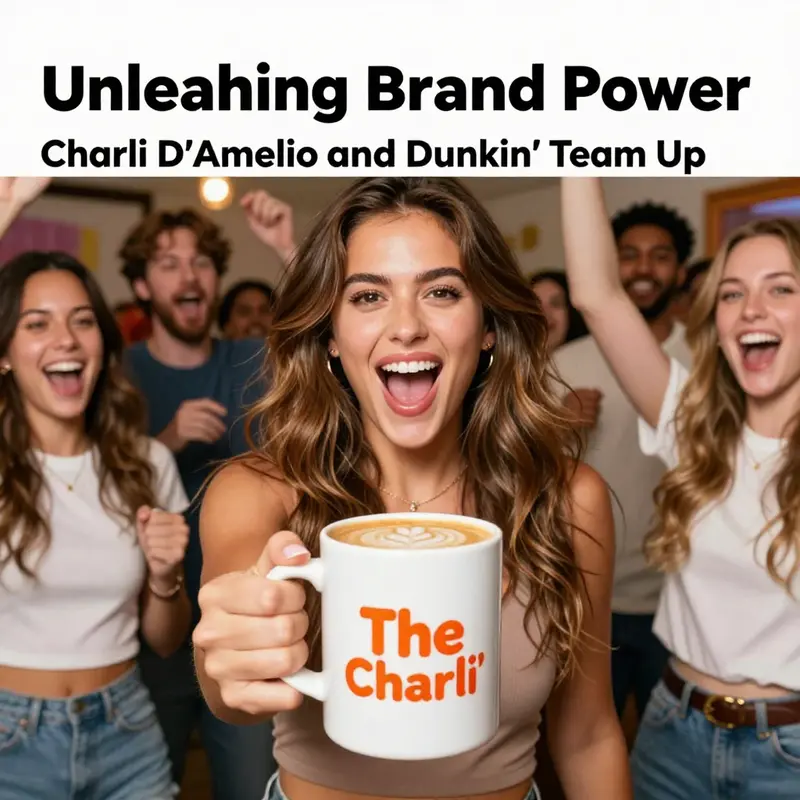
When Charli D’Amelio, a prominent TikTok influencer, collaborated with Dunkin’, it marked a pivotal moment in influencer marketing. The launch of ‘The Charli’ drink not only showcased Charli’s unique tastes but also illuminated the strength of celebrity partnerships in enhancing brand value. This campaign, devised by BBDO, intricately tied in various marketing strategies that blended creativity with consumer engagement. In this analysis, we will delve into the beverage launch, the marketing approach behind it, and the significant impact it had on Dunkin’s sales and brand perception.
Charli and the Personalization Wave: A Celebrity-Inspired Beverage Moment That Redefined Brand Engagement
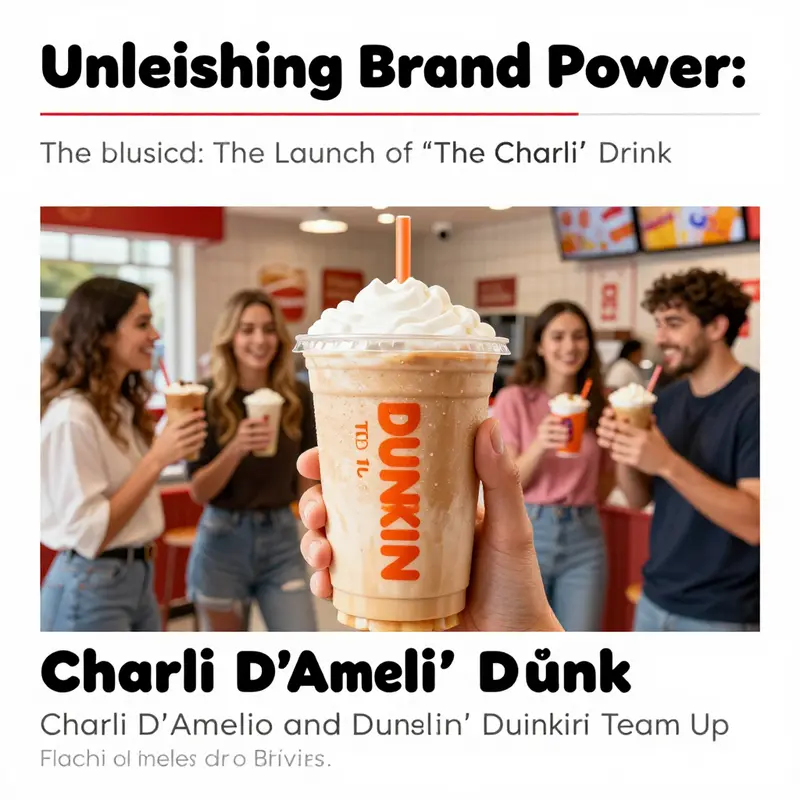
Charli D’Amelio’s ascent from a dance floor to the center of a cultural conversation illustrates a modern truth in branding: authenticity amplified by digital reach can turn a single moment into a shared habit. In the wake of Charli’s online persona—relatable, energetic, and relentlessly present—brands learned to listen as much as they broadcast. The collaboration that followed did not simply place a celebrity endorsement next to a beverage; it reframed how a beverage could be part of a personal story. Instead of offering a generic product with a celebrity’s face, the industry began to imagine a bridge from a creator’s everyday rituals to the everyday rituals of millions of fans. The result was a limited-time, celebrity-inspired cold brew that became less about a taste profile and more about a social ritual that fans could imitate, remix, and display across their own feeds. The shift mattered because it aligned the pace of marketing with the cadence of contemporary culture: fast, visible, and emotionally legible in a way that invites participation rather than passive consumption.
In practical terms, the plan unfolded as a carefully choreographed convergence of personality, product, and platform. The process began with the recognition that Charli’s audience did not want a simple ad; they wanted a window into her daily life, a glimpse of how she makes ordinary moments feel special. This insight is vital: the most successful celebrity collaborations today are less about the celebrity performing for a brand and more about the celebrity living in a context that fans already recognize as authentic. The beverage in question was positioned not as a fixed formula but as a flexible, personalizable moment—a cold brew crafted with dairy richness and a signature swirl that could resemble Charli’s own favorite preparation. The emphasis was on realism: a drink that could exist in a real-world routine, not a glossy, mass-market abstraction. By doing so, the campaign tethered the product to a lifestyle rather than to a single promotional spike, which is crucial for longevity in a category where novelty quickly fades unless it is embedded in daily behavior.
A cornerstone of the rollout was the integrated campaign designed by a renowned U.S.-based creative agency, a team that understood the importance of crossing channels without diluting the core idea. The plan was not a one-off billboard blitz but a layered experience that could travel across social media, retail spaces, and experiential moments in the store. Teasers teased a broader moment to come, while in-store executions translated the online narrative into sensory reality. A consumer who followed Charli on TikTok could encounter a storefront display that echoed the short-form video aesthetics she popularized: bold typography, friendly color palettes, and subtle motion that rewarded a closer look. The character of the campaign leaned heavily on authenticity and relatability. Rather than presenting a flawless, aspirational image, the messaging leaned into a sense of shared morning rituals, a community that starts the day with a smile and a familiar flavor profile. The intent was to create a cultural moment that fans could own, not just witness.
The push also illuminated the strategic value of cross-pollinating media formats. Short-form video, a signature format for Charli, became the seed for longer-form storytelling in other channels. Influencer-driven content, often created by micro- and macro-creators within Charli’s orbit, provided authentic commentary and demonstrations that felt like peer-to-peer recommendations rather than paid endorsements. In parallel, the campaign integrated non-digital experiences—retail fixtures, in-store sampling stations, and art installations that invited customers to step into a tangible version of Charli’s personal routine. This multi-sensory approach mattered because it acknowledged a critical truth about beverage brands in the digital era: as much as people crave digital experiences, they still recall the physical moment when a drink touches their lips, their eyes, and their sense of connection with others. The campaign’s design sought to ensure that the online hype translated into real-world traffic and that real-world interaction fed back into social proof, creating a virtuous loop that reinforced the product’s desirability.
What emerged was not simply a product launch but a cultural artifact. The narrative of a well-known creator’s preference—turned into a shared practice—gave fans something tangible to emulate. It capitalized on the dual impulses that drive consumption today: the vanity of self-expression and the comfort of belonging. Fans could claim a piece of Charli’s ritual by trying the beverage themselves, posting their own versions, and inviting comments that reinforced their identity within a growing community of like-minded enthusiasts. In this sense, the campaign did more than sell a drink; it helped define a moment when personalization scales from a personal preference into a social practice. That is the essence of the personalization wave that many brands are now trying to ride: a direct line from a creator’s daily life to a consumer’s everyday routine, bridged by content that feels both intimate and shareable.
From a strategic perspective, the campaign was a case study in balancing equity and experimentation. Charli’s public love for coffee culture provided a credible entry point for a brand that wanted to position itself as contemporary and student-friendly without alienating older cohorts or a more diverse demographic. The beverage was described in terms that any coffee lover could recognize—rich, dairy-forward, and subtly sweet—while the marketing language leaned into the idea of a personal favorite, something that could be part of the morning ritual rather than a stand-alone novelty. The result was a product message that could travel with a fan across different life moments: the bus ride to class, a late-night study session, a casual meet-up with friends after a workout. Each of these moments offered a narrative hook, a reason to try the drink and then to share the experience with others who might appreciate the same ritual in a slightly different context. The campaign’s strength lay in offering a shared canvas for personal expression rather than a single branded line of action. It invited fans to write their own chapters, to remix the story in ways that felt true to their lives, and to use Charli’s persona as a lens through which their own routines gained a new, social dimension.
The effects on the broader business landscape were telling. The limited-time offering, once perceived as a mere promotional tactic, began to contribute to sustained behavioral shifts: increased foot traffic in stores, longer dwell times as customers engaged with in-store installations, and a measurable uplift in social conversations around the beverage category in general. The immediate effect—sold-out lines and strong digital chatter—mirrored effects seen in other celebrity collaborations from previous eras but with a modern twist. Where older campaigns often relied on a single burst of media spend, this approach leveraged the creator’s ongoing presence to maintain momentum over weeks. The lesson, for marketers, was clear: in a world where attention is both scarce and highly fungible, a continuous narrative anchored by a respected creator can convert ephemeral interest into durable engagement. The campaign succeeded not by forcing a trend but by becoming a part of a trend that fans already perceived as authentic and engaging.
The narrative also touched on important questions about the role of branding in an era of fan-led communities. Celebrity partnerships carry with them a delicate balance between enthusiasm and overexposure. When done well, the partnership does not overshadow the essence of the beverage or the place where it is consumed; it amplifies them. The key lies in maintaining a sense of normalcy—the idea that this drink could belong to any daily routine rather than belonging solely to a high-profile moment. In practice, that meant designing packaging and in-store visuals that felt approachable and recognizable, not ostentatious. It also meant curating content that celebrated the fans themselves—user-generated content, fan art, and personal testimonials that positioned the drink as a shared memory rather than a one-time spectacle. In this ecosystem, the celebrity’s influence works as a catalyst, not a sole driver. It sparks conversation, invites imitation, and then fades into the background as ordinary fans continue to innovate the narrative through their own posts, rituals, and rituals of ritual sharing.
Beyond the immediate commercial metrics, the campaign signaled a broader shift in how younger consumers evaluate brands. They measure not only taste and price but also alignment with values and aesthetics of their social circles. A beverage that can be channelled into someone’s personal brand identity—an element of the day that can be captured, edited, and shared—starts to feel less like a product and more like a cultural instrument. The line between consumer and creator blurs when a drink becomes a platform for self-expression. This is why the campaign resonated with younger audiences: it did not demand their best pose or most polished moment; it invited them to participate in a communal ritual in a way that felt both casual and consequential. The success of the approach invites a broader reflection: the future of beverage marketing may increasingly rely on the ability to frame personal preference as a social act—an act that begins with a famous voice but is completed by countless ordinary fans contributing their own variations and narratives.
From an experiential perspective, the campaign demonstrated the power of design to translate appetite into a tactile experience. The visual language—color choices, typography, and the overall layout of store environments—echoed the quick, digestible rhythm of short-form content while preserving the sensory cues critical to a beverage experience. When a customer saw a display or participated in an activation that visually resembled a favorite creator’s online presence, the cognitive bridge between online recognition and physical consumption felt natural. This alignment reduces friction; it makes the decision to try the beverage part of a familiar routine rather than a bold leap into the unknown. The result is a customer journey that reads as seamless: discovery online, confirmation in-store, and reinforcement back online through shareable content created by fans and influencers alike. The campaign thus demonstrates how a brand can function as a facilitator of personal ritual, rather than merely a seller of a product.
One might ask what this implies for the future of beverage marketing. The answer lies in the continued exploration of personalization at scale, with caution about authenticity and sustainability. Personalization is powerful when it remains anchored in everyday experience and when the accompanying narrative respects the audience’s ability to participate. The most effective programs are those that offer a relatable experience—one that could plausibly occur in a morning routine—while providing a channel for fans to narrate their own stories around the core moment. This is not about creating a perfect, museum-worthy object; it is about offering a flexible, adaptable experience that can be remixed across different contexts, seasons, and geographies. The risk, of course, is fatigue: if a celebrity collaboration tightens its grip on a brand narrative too quickly or relies on a single, recurring motif, it may lose credibility with audiences who crave fresh, meaningful connections. A smart path forward involves rotating the creative partners, offering new nuanced versions of the core ritual, and maintaining a strong emphasis on accessibility and inclusivity. A beverage, after all, travels best when it belongs to a community that treats it as a shared instrument of daily life rather than as an isolated emblem of a momentary trend.
In reflecting on Charli’s role and the campaign’s architecture, one can see a broader pattern that marketers are chasing: the ability to translate a creator’s authentic daily practice into a scalable, participatory experience. The core idea is not to replicate a moment but to create an adaptable blueprint for future collaborations. If the aim is to sustain cultural relevance across generations and geographies, then brands must invest in a language that remains legible and inviting as audience demographics shift. That language is a combination of simplicity and depth: a reliable, recognizable flavor profile presented through a human lens that fans feel they know firsthand. When that balance is achieved, the dialogue between brand, creator, and consumer becomes an ongoing, evolving conversation rather than a single campaign’s closed loop. The beverage, in this scenario, becomes the artifact around which that conversation happens. It is both a product and a platform—an everyday ritual that invites a participatory culture to unfold around it.
For readers seeking a touchstone that frames this phenomenon, consider how the daily rituals of coffee culture have been discussed in broader, lifestyle-focused conversations. The idea that a single beverage can symbolize a larger lifestyle is not new, but the speed, breadth, and intimacy of modern digital culture amplify it in unprecedented ways. To explore how a broader audience talks about coffee as a lifestyle, you may find value in resources that examine personal routines and ritualized consumption in depth, such as the perspectives found at Coffee Rich Life. This context helps illuminate why a celebrity-inspired beverage moment can feel both intimate and universally shareable, bridging private preference with public discourse. By examining these dynamics, marketers, researchers, and brand builders can better anticipate the next wave of consumer behavior where personalization and authenticity are not just features but catalysts for cultural participation.
In sum, the Charli moment transcended the mere introduction of a new beverage. It offered a blueprint for how modern brands can harness celebrity influence while respecting the agency and creativity of fans. It demonstrated that a well-executed collaboration can translate a creator’s casual affection for a category into a social ritual that fans claim as their own. The approach recognizes that the value of a beverage in today’s market rests as much in the story surrounding it as in the product itself. When a drink becomes a signal of belonging and a stage for personal expression, it becomes more than a purchase. It becomes an invitation to participate in a shared, evolving experience. As brands continue to navigate the complexities of cross-channel storytelling, the Charli moment stands as a reminder that the interplay between authenticity, accessibility, and opportunity can yield not only immediate sales but lasting cultural resonance. The challenge for marketers remains how to repeat and adapt this model across different creators, categories, and locales, ensuring that each new chapter retains the sense of real connection that made the original moment feel inevitable rather than manufactured. The success story thus invites a careful, forward-looking approach that treats every future collaboration as a chance to reinforce a living ritual rather than a one-time stunt, while always keeping the human at the center of the brand narrative.
External resource: official press room: https://www.dunkindonuts.com/press
Charli at Dunkin: How a Relatable Icon Turned a Fresh Collaboration into a Global Marketing Playbook
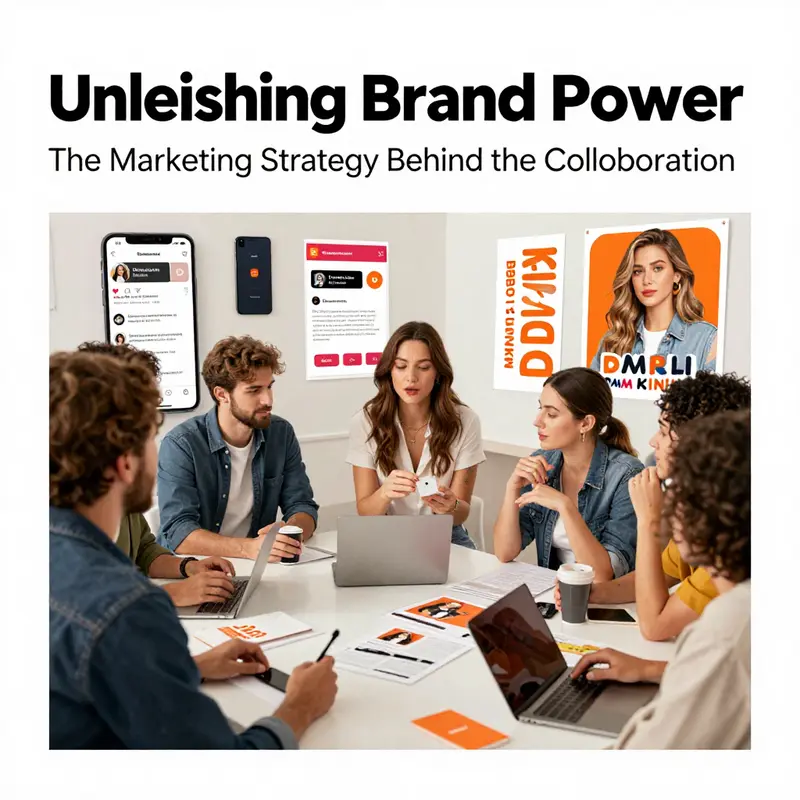
When Charli D’Amelio stepped into Dunkin’s orbit, the moment felt less like a brand endorsement and more like a cultural alignment. She wasn’t simply a face on a campaign; she represented a generation that learns by watching, participates by remix, and purchases through a pattern of shared experiences. Dunkin, for its part, did not treat the partnership as a one-off promotion but as a long-range investment in an evolving ecosystem where a celebrity’s daily ritual could become a brand’s daily routine. The result is a case study in modern marketing that straddles authenticity, scale, and participatory culture. It shows how a non-alcoholic beverage category can be reframed not as a product line, but as a social ritual, a small set of everyday acts that fans can imitate, remix, and make their own. The collaboration’s architecture—built by a renowned creative team and anchored in Charli’s genuine affection for the brand—reveals a blueprint that goes beyond a single launch and hints at what a sustained influencer partnership can achieve in a landscape crowded with flash-in-the-pan campaigns.
At the heart of the narrative is an authentic relationship. Dunkin did not simply sign Charli for a splashy endorsement; the brand pursued a long-term sponsorship that allowed Charli’s presence to become a natural thread in her everyday content. This approach mattered as much as the product itself. Fans watch routines unfold over time: what she orders, how she starts her day, the little rituals that signal belonging to a community. When Charli publicly orders a signature cold brew—driven by whole milk and a precise pump sequence of caramel swirl—the moment feels less like paid placement and more like a candid habit, a routine that could be replicated by anyone who shares her tastes and pace. This is not incidental; it is the keystone of credibility. The authentic relationship is reinforced by the cadence of the content program: regular appearances, recurring references, and a sense that Dunkin sits at the table of Charli’s daily life rather than hovering on the periphery of it. The long horizon is visible in every choice—from the tone of the posts to the visuals that accompany them—and that horizon matters just as much as the surface-level buzz.
In this setup, the beverage bearing Charli’s name becomes more than a limited-time offer; it is a signal of the collaboration’s seriousness. The process mirrors the way Charli’s audience consumes culture: with immediacy, but with an eye for consistency and trust. The beverage’s design aligns with Charli’s preferences and routines, providing a touchstone that fans can recognize and emulate. It isn’t a stand-alone product campaign; it is a storyline that fans can participate in. The open invitation to recreate the order, comment on the flavor, or pair it with a morning playlist turns a drink into a ritual and a ritual into a shared experience. In this sense, the campaign transcends traditional advertising metrics. It becomes a practice of social belonging, the kind of everyday moment that becomes a memory when amplified across community channels. The authenticity is not manufactured in a single post; it is amplified across a sustained cadence, allowing fans to see a familiar pattern in a familiar face, and that pattern fosters a sense of trust that is increasingly rare in a media landscape dominated by rapid-fire content bursts.
A second pillar of the strategy centers on viral campaigns that leverage Charli’s reach while inviting participation from millions of fans. The #CharliXDunkinContest on TikTok served as a catalyst, transforming passive viewership into active creation. Instead of pushing a single branded video, Dunkin invited fans to produce videos featuring the brand’s products in their own contexts. The beauty of this approach lay in its scalability and democratization. Each user-generated video becomes an invitation for others to engage, remix, and reinterpret, creating a widening ripple effect that is exponential in reach. The contest also capitalized on the platform’s native behaviors: short-form, highly visual content with a preference for authenticity and humor. By aligning with those behaviors, the campaign avoided the fatigue that often accompanies traditional ad bombardment. The result was not merely viral reach; it was a cascade of social proofs that redefined the idea of a successful launch in the modern media era.
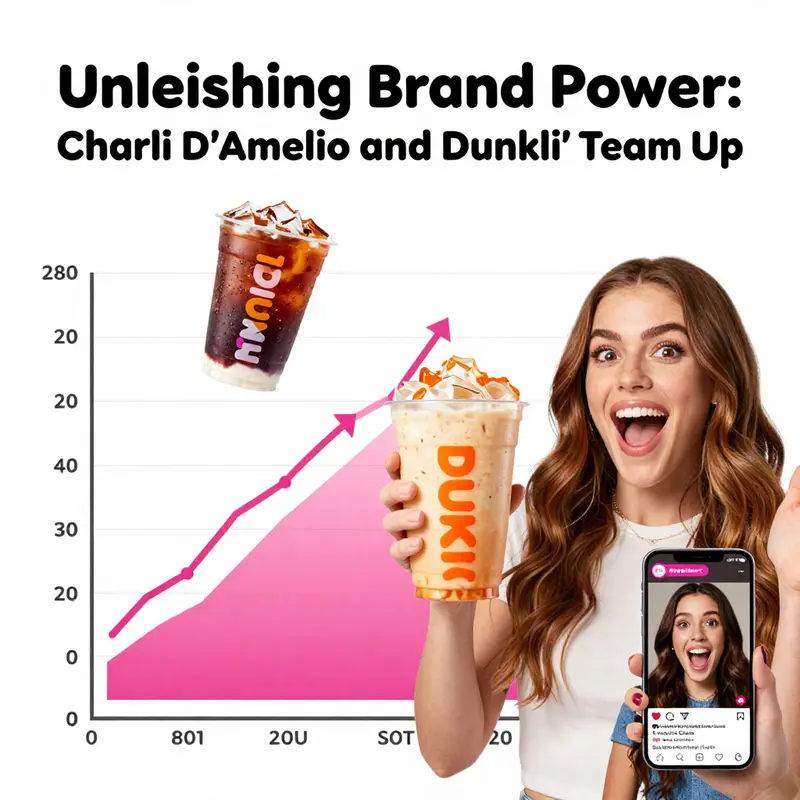
From a business perspective, the numbers on launch day offered a clear testament to the approach’s efficacy. The collaboration yielded a 57% spike in app downloads, underscoring how much the partnership extended the brand’s digital front door. Fans who had followed Charli’s content would naturally seek the brand’s app to access the drink, rewards, and further experiences. The 45% surge in cold brew sales on the launch day highlighted how a well-timed alignment of product and personality can translate into immediate consumer action. These metrics reflect more than a one-day spike; they signal a shift in consumer expectations. When a beverage is associated with a trusted cultural figure, the purchase decision becomes part of a larger narrative in which fans want to participate in the story as much as in the product’s flavor profile. The app download spike also emphasizes the importance of a seamless digital ecosystem in influencer marketing: once engaged, fans can be nudged along a path from discovery to loyalty through rewards, personalized offers, and easy shareability.
The campaign’s reach extended beyond the digital sphere into experiential and design-driven offshoots that helped ground Charli’s presence in real-world spaces. The marketing effort rolled out across advertising, print design, and installations, culminating in coordinated offline events that reinforced the brand’s accessibility and approachability. This multi-dimensional approach, guided by a well-respected creative partner, demonstrates that influencer marketing in the modern era is not merely about broadcasting a persona; it is about curating an entire sensory and social environment. The creative team’s work translated Charli’s persona into visually consistent moments that fans could recognize across channels—whether in a bus stop poster, a storefront display, or a street installation that invited fans to experience the beverage in unusual, instanced ways. The power of these installations lies not in pushing a single product but in creating tactile points of contact that anchor the story in everyday life. Such a strategy makes the brand feel accessible, not distant, and that accessibility is what converts curiosity into repeated visits and long-term engagement.
Another crucial dimension of the strategy is its alignment with the broader category dynamics. The campaign recognized the non-alcoholic beverage market’s unique opportunities: a product category that thrives on ritual, mood, and social sharing, rather than seasonality alone. By focusing on a long-term relationship with a figure who embodies the rhythms of daily life—work, study, workout, and leisure—the partnership positioned the brand as a trusted companion in ordinary moments. It is precisely in these ordinary moments where preferences are formed and reinforced. The music of a morning routine, the order of a mid-afternoon pick-me-up, the ritual of a post-work break—all these ordinary moments become stages on which the brand can perform, and Charli’s presence provides the right dramaturgy. The synergy is not about spectacle; it is about consistency and resonance. Audiences see themselves in Charli, recognize the brand’s role in her routine, and imagine how the same experience might fit into their own days. In this sense, the campaign hints at a longer arc of engagement: a calibrated rhythm of product innovations, limited-time offers that align with events in Charli’s world, and a continuous dialogue with fans through content that invites participation rather than mere observation.
The strategic backbone is also a reminder that influencer collaborations need a disciplined creative and media approach. The BBDO team, renowned for its integrated campaigns, crafted a framework that united the campaign’s disparate elements—advertising, print, architecture, and experiential events—under a singular narrative. This integration ensures coherence across touchpoints, a critical factor that often determines whether a partnership feels authentic or disjointed. When a viewer encounters a poster, a social post, and an in-store experience that all speak with the same voice and visual language, the brain learns to group them as part of one ongoing conversation rather than as unrelated exposures. The effect is a cumulative impact that grows stronger as fans move through the brand’s ecosystem, reinforcing the consumer’s sense of belonging and loyalty. The strategy also demonstrates the value of a disciplined approach to the non-alcoholic beverage category, where the emphasis is often on flavor, mood, and the social context of consumption. By weaving these elements into a continuous narrative rather than a series of isolated stunts, the campaign created a durable memory that fans carry with them, long after the last post has scrolled away.
Beyond the numbers and the visuals, the Charli–Dunkin collaboration illustrates a broader shift in how brands think about influence. The most successful influencer partnerships of this era do not rely on a single moment of fame; they build a shared ritual that fans can inhabit over time. The partnership’s success lies in a balanced equation: Charli’s authentic affinity for the brand, a long-term sponsorship that invites organic integration, a viral content framework that democratizes participation, and a multi-channel creative strategy that keeps the story coherent across moments and places. The result is a cultural moment that endures because it operates in the real world as much as in the feed. Fans do not just watch; they imitate, they remix, and they invite others to join. They discover a product not merely for its taste but for the sense of belonging it represents—a sense that Charli embodies and that the brand amplifies. In essence, the collaboration reframes a beverage into a shared habit, a small ritual that becomes part of a daily culture.
This approach also carries meaningful implications for brands navigating the current marketing climate. The Charli–Dunkin model demonstrates that the most powerful influencer partnerships are those grounded in genuine affinity and mutual benefit. It is not enough to cash in on a moment of fame; the partnership must contribute to Charli’s ongoing storytelling while offering the brand a stable platform for growth. The collaboration’s long horizon reduces volatility, enabling more thoughtful product development, longer-run content planning, and a more deliberate expansion into new markets. The global rollout of the beverage, under an integrated creative strategy, shows how a localized moment—rooted in Charli’s authentic love for Dunkin’s beverages—can be scaled into a worldwide rhythm that keeps fans engaged across cultures and time zones. The result is a marketing playbook that reads less like a campaign and more like a living experience. It is a reminder that in a world awash with short-lived stunts, durable value comes from partnerships that feel personal, consistent, and participatory.
For readers seeking further official context, the brand’s press materials provide a detailed account of the partnership’s scope and milestones. The official release outlines how the collaboration unfolded, the channels involved, and the strategic intent behind every creative decision. This external resource offers a concise ledger of the collaboration’s aims, outcomes, and next steps, reinforcing the idea that the Charli–Dunkin alliance was designed not as a single act but as a continuing narrative within the brand’s broader engagement strategy.
Internal resource note: for readers exploring how daily rituals shape coffee culture and consumer habit formation, a related exploration of coffee lifestyle themes can be found here: Coffee Rich Life.
External resource: Official details and milestone context on the Charli–Dunkin partnership can be accessed through the brand’s formal press release: Dunkin Announces New Partnership with Charli D’Amelio.
null
null
Final thoughts
The collaboration between Charli D’Amelio and Dunkin’ illustrates the power of influencer marketing in a rapidly evolving commercial landscape. The success of ‘The Charli’ drink is a testament to the effectiveness of well-planned marketing strategies, leveraging personal brands to elevate company profiles and drive substantial sales growth. Brands that harness this approach can achieve remarkable outcomes, creating buzz and attracting a devoted customer base. In essence, integrating celebrity influence with brand identity can offer a unique avenue for business expansion and consumer engagement.