
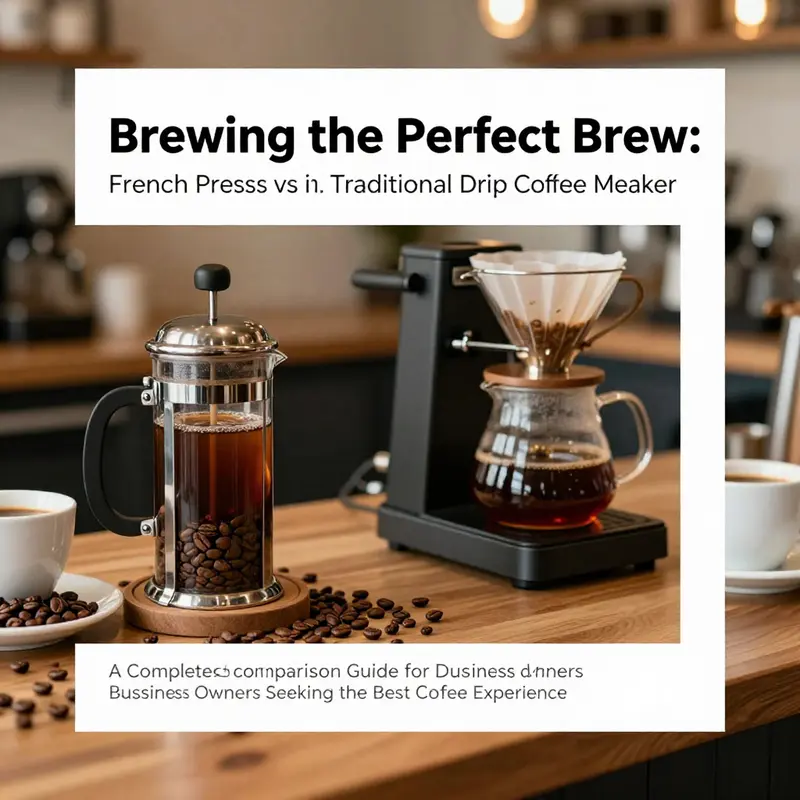
Coffee is more than just a beverage; it’s an integral part of daily routines and cultural ceremonies. For business owners, offering the right coffee experience can enhance customer satisfaction and employee productivity. Understanding the nuanced differences between brewing methods, specifically the French press and the traditional drip coffee maker, allows you to make informed decisions tailored to your business’s needs. Each chapter discusses essential aspects such as the brewing process, flavor profiles, convenience, and maintenance considerations. Dive deep into this comprehensive guide to discover which coffee brewing method aligns best with your goals.
Immersion and Filtration: A Deep Dive into French Press and Drip Coffee
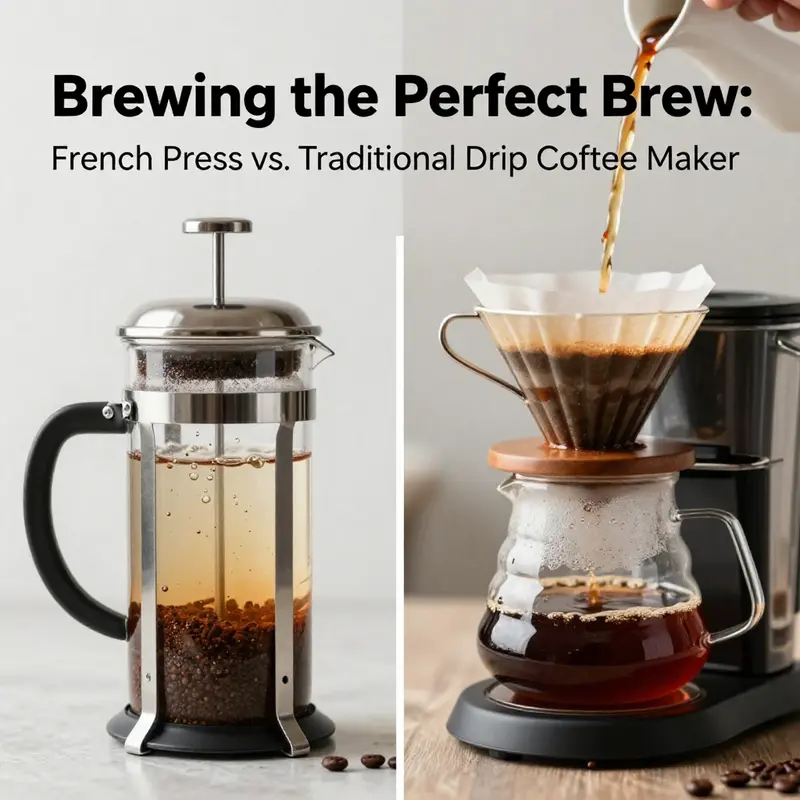
Two fundamentally different brewing philosophies lie at the heart of at-home coffee: immersion, where coffee grounds meet hot water in a close, unbroken embrace, and filtration, where water finds its way through a mattress of grounds and into a carafe with quiet precision. When you pull a cup from a French press or flip the switch on a traditional drip machine, you are witnessing a practical translation of those philosophies into flavor. The French press leans into direct contact, allowing oils, particulates, and native coffee oils to mingle with the water during a controlled soak. The drip system, by contrast, leans into automation and filtration, guiding hot water through a bed of grounds and letting a paper or reusable filter winnow out much of the oils and fines before the brew reaches your mug. The result is a bold, sometimes heavy cup on one end, and a cleaner, steadier cup on the other. Yet the journey from bean to cup is more than a simple toggle; it is a choreography of temperature, grind, timing, and filtration that reveals just how much control you have—whether you crave depth and body or clarity and consistency.
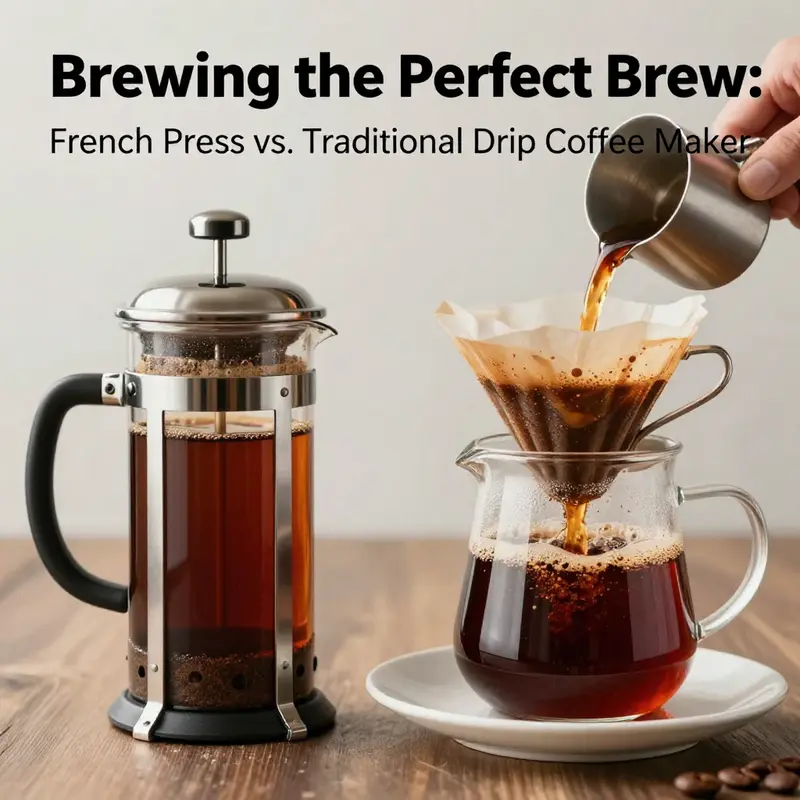
The heart of the comparison begins with the brewing method and extraction technique. Immersion brewing, as practiced by the French press, invites the grounds to swim in water for a defined stretch of time. Coarsely ground coffee is steeped for roughly four to five minutes, a window chosen to balance solubility with the robust character that comes from trapped oils and colloids. When the time is right, the plunger is pressed, and gravity cooperates to separate the spent grounds from the liquid. This method favors a thorough extraction, capturing a spectrum of compounds that contribute to body, mouthfeel, and a certain unfiltered richness. There is a tactile, almost tactile sensation to the cup—the oils coat the palate and linger, while a gentle sediment may ride the bottom of the cup if the grounds were not fully restrained. The metal filter does not catch the finest particles the way a paper filter can, so a fine balance exists between maximal flavor and the risk of grit.
In contrast, the traditional drip coffee maker embraces percolation and filtration. Hot water is heated to a precise range and then steadily drips through a bed of grounds held in a filter basket. The coffee then flows through the filter and into a carafe. Paper filters, common in drip setups, are superb at trapping oils and fines, yielding a cleaner, brighter cup with a smoother acidity. The filtration step acts like a curtain that softens the bouquet of the coffee, preserving some of the delicate aromatics while tempering stronger, heavier notes that immersion brews often spotlight. This approach prizes repeatability and automation: once you set the cycle in motion, the machine manages the timing, temperature, and flow with a steadiness that can be especially appealing during busy mornings. The result is a cup that is easier to predict from day to day, with less risk of unintended textures in the mouth.
Water temperature and control sit at the core of how each method persuades flavor from the beans. French press enthusiasts aim for a specific interval of hot water—typically between 195 and 205 degrees Fahrenheit (90 to 96 degrees Celsius). The precision here comes not from an integrated heater but from the art of heating water to just the right degree and then pouring it with intention. The temperature matters because it governs the solubility of various soluble compounds in the grounds. Too hot, and the extraction can swing bitter as harsher phenolics surge forward; too cool, and the grounds may not release enough of their oils and aromatics to create the signature depth. The lack of a built-in heating element hands the baton to the user, inviting a tactile connection to the process that many enthusiasts savor. Drip machines, meanwhile, typically heat water to a similar range but provide a built-in system that maintains a uniform temperature throughout the brew. The automation reduces the individual control—there is less room for manual adjustment—but it also minimizes the fluctuation that can accompany kettle-to-kettle pouring. In a way, the drip machine choreographs a consistent water bath for the coffee bed, turning what could be a variable experiment into a predictable procedure.
Grind size and its relationship to the brewing method are another crucial element in this two-sport race. French press demands a coarse grind, roughly the texture of sea salt. The reason is straightforward: a coarser grind reduces the chance of over-extraction and limits the number of fines that simply pass through the metal mesh. A grinder with sharp, consistent burrs becomes essential here; blade grinders often produce uneven particles that disrupt the extraction balance and increase the risk of gritty mouthfeel. A well-calibrated burr grinder helps ensure that the grounds share a uniform surface area so that extraction proceeds smoothly during the four-to-five minute steep. Drip coffee makers, in contrast, blend a medium grind with the filtration step to manage fines and oils. Because paper or reusable filters trap most of the fines, a slightly coarser grind can be forgiving. This synergy between grind size, filter type, and brewing time is where the two methods reveal their divergent personalities, yet also where skillful adjustment can bring either method closer to an ideal expression of the beans you choose.
Timing is the clock that governs the entire process. In the French press, timing is manual and starkly simple: four to five minutes of steeping, followed by an immediate plunge. The absence of a built-in timer invites mindfulness, but it also invites the risk of over- or under-extraction if the moment of plunging is misjudged. A shorter steep can yield a brighter, more astringent cup, while a longer one tends to extract heavier aromatics and oils. The drip machine handles time with reliable automation. A typical cycle might range from five to seven minutes, depending on the batch size and the model’s efficiency. The advantage is obvious for those with busy mornings who crave a familiar routine; the machine takes the guesswork out of the timing, letting you be less involved in the minutiae while still delivering a dependable cup. The trade-off is a reduced opportunity to influence the result in minute ways that matter to a particular palate. The ritual around timing in a French press, meanwhile, transforms brewing into a deliberate act—more like a dialogue with the beans than a mechanical sequence.
Flavor, body, and mouthfeel reflect the culmination of all these choices. A French press cup tends to be full-bodied and somewhat heavy, shaped by the oils that pass through the metal filter. The result is a rich, sometimes decadent sensation that can carry layered notes of chocolate, caramel, or fruit depending on the bean. The texture may feel velvety, with a slight oiliness on the tongue that lingers pleasantly for minutes. The price of that richness is a tendency toward more pronounced acidity on some beans or a stronger perception of bitterness if the steep time runs long. Drip coffee, with its cleaner filtration, presents a lighter to medium body, a smoother and brighter acidity, and a more uniform flavor across the cup. The oils and fines that contribute to body in immersion methods are largely filtered away, which yields a cup that can feel more approachable and consistent but sometimes at the expense of the depth found in a well-executed immersion brew. Both approaches reveal the bean’s personality, but they do so through different lenses: the press amplifies depth and texture; the drip emphasizes clarity and balance.
The practical implications of these differences extend far beyond the cup. For someone who loves a ritual and enjoys shaping a brew with hands-on control, the French press offers a stage where timing, temperature, and grind are in dialogue with the coffee’s lineage. The process rewards patience and experimentation; a small adjustment to grind size or steep time can unlock new facets of aroma and flavor. It also invites a more tactile, almost meditative, engagement with coffee. For daily convenience, the drip method can feel like a trusted partner. It promises routine, predictability, and speed, with less risk of an off-day from minor missteps. The simplicity and automation do not erase the craft involved, but they do shift the emphasis from hands-on manipulation to consistent results produced by reliable machinery. The choice between these methods often mirrors how you want to begin your day: with a deliberate, sensory ritual or with a quick, dependable routine that keeps the morning moving.
In practical terms, many coffee lovers discover they do not have to choose one approach over the other. A home that values both special-occasion depth and everyday reliability often cultivates a small repertoire: a French press for weekends when time and mood align for a deeper extraction, paired with a drip setup for weekdays when speed and consistency matter more. The overall quality of either brew hinges not only on the method but on a few key habits. First, invest in a reliable burr grinder that can deliver consistently sized particles for your chosen method. Second, keep a gooseneck kettle or another precise pouring device handy for the French press, which empowers careful water distribution and temperature control. Third, choose fresh, whole-bean coffee and grind just before brewing to preserve aromatics. These practices amplify the strengths of each method and reduce their weaknesses, offering a pathway to richer mornings regardless of which machine sits on the counter.
One practical note surfaces clearly when comparing these approaches: environmental impact and waste. The French press, particularly when paired with metal filters or options that reduce sediment, minimizes waste by avoiding disposable filters and relies on a simple, durable design. Drip machines can generate more waste through paper filters, though many households mitigate this by choosing reusable filters or composting grounds. The environmental footprint of either approach can be meaningful when you consider the full lifecycle, from bean to brew to disposal of spent grounds. The choice, then, becomes not just a question of flavor or convenience but also of how your daily habits align with your values about sustainability. Understanding the brewing process in both methods reveals that the differences are more than technical; they reflect different approaches to time, control, and the relationship you want to cultivate with the drink that starts your day.
For readers seeking a deeper, science-forward view of immersion brewing, a dependable external resource offers a rigorous look at the mechanisms at play when water bathes coffee grounds. The guide explains how immersion promotes maximum extraction of oils and soluble compounds, shaping the mouthfeel and aroma in ways that are distinct from filtration-driven methods. Access to this kind of evidence-based perspective can help you evaluate your own experiments and refine your technique with greater confidence.
null
null
Brew on Your Terms: Convenience, Automation, and the Trade-Off Between French Press and Drip Coffee Makers
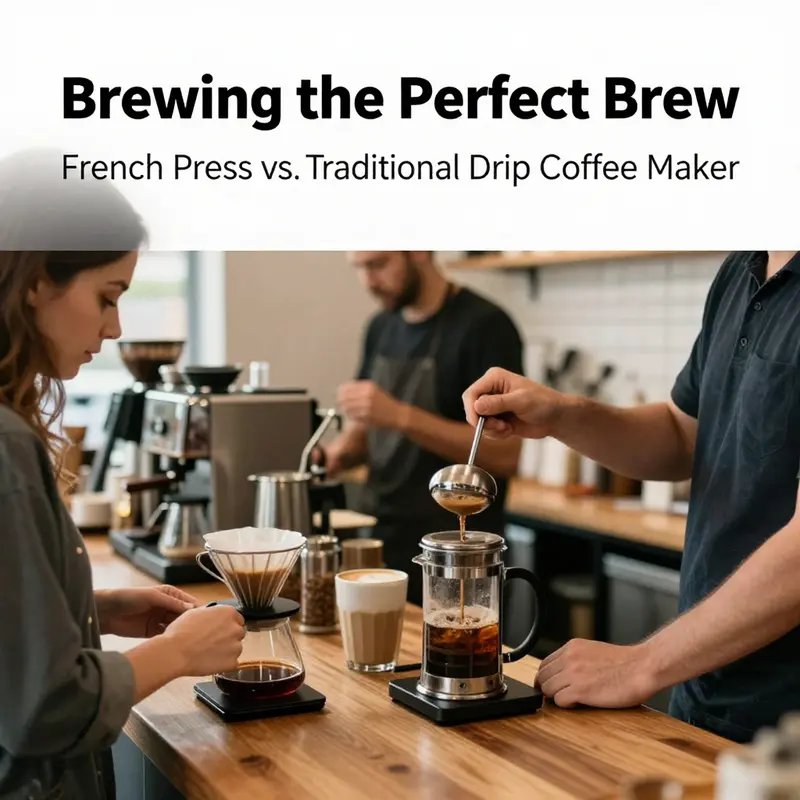
In the quiet minutes before the day truly starts, the choice between a French press and a traditional drip coffee maker is more than taste. It is about how you want coffee to enter your routine: as a mindful ritual that demands attention, or as a swift start that glides into the day. This chapter does not pretend to declare a universal winner; it maps the lived texture of convenience and automation, showing how each method shapes time, energy, and sense of control. The distinction is about the path to the cup, not only the cup itself. This is where extraction science meets daily life, and where your morning tempo matters as much as flavor.
Consider the traditional drip coffee maker, a device designed to be almost invisible in its efficiency. The moment you pour water into the reservoir and load grounds into the basket, automation takes over. The machine heats water to a consistent temperature, often in the neighborhood of 90 to 96 degrees Celsius, and releases it gradually through a bed of grounds. Gravity carries the coffee through a filter and into a carafe, ready to pour with minimal intervention after the initial setup. If your goal is to minimize hands-on time, the drip machine excels. You wake, you add water and grounds, you press a button, and you are rewarded with a steady stream of coffee that seems to materialize on schedule. The higher-end models pull this routine further into a morning soundtrack: programmable timers ring at a preferred wake-up moment, auto shut-off preserves safety and energy, and some units offer keep-warm functionality that tries to preserve aroma without letting the coffee grow stale over hours. In these devices, automation becomes a partner in your morning, freeing mental bandwidth for the day ahead. It’s a choir of mechanical reliability—an almost predictable cadence that reduces the friction between desire and action. If convenience is the primary language you use to describe your coffee ritual, the drip brewer speaks fluently.
Yet there is a social and sensory dimension to the drip experience that goes beyond speed and automation. Because the water is passed through ground coffee without immersion in the vessel itself, you often encounter a lighter, cleaner cup. The filter—paper or reusable—acts as a gentle sieve that traps oils and fine particles, yielding a smoother mouthfeel and a cup that finishes with a brightness some drinkers crave for its clarity. From a flavor perspective, this can feel like a release valve: subtler notes, delicate acidity, and a cleanliness that makes the cup easy to drink across the day. In practice, that cleanliness translates into a daily pattern: a predictable cup that blends with milk or sugar without competing for attention with the dairy or flavor additives. The automation, then, becomes less about personality and more about rhythm—an orchestration that mirrors an otherwise busy life, allowing a household to function with minimal friction even when every member has a distinct morning tempo.
The French press, by contrast, offers a different kind of convenience—one measured in control, ritual, and the pleasure of active participation. Here, convenience isn’t about hands-off operation; it’s about hands-on mastery. You begin by heating water to the range that heightens extraction, commonly around 195 to 205 degrees Fahrenheit. You then measure a specified coffee-to-water ratio, grind the beans to a consistency closer to coarse sea salt, and pour the hot water over the grounds in a glass carafe. The immersion period, typically four minutes, becomes a moment of anticipation and sensory engagement. When the steeping time ends, you press the plunger with a smooth, deliberate motion, and the metal mesh pulls the grounds away from the liquid, leaving a full-bodied coffee that carries oils and micro-solids into the cup. The manual nature of this method introduces steps that are repeatable, yes, but require attention and a consistent routine. It is not just brewing; it is a ritual of measurement, timing, and tactile feedback. The payoff is a cup that tastes undeniably richer and heavier—the oils that the metal filter allows through contribute to a mouthfeel and a depth that many coffee lovers describe as espresso-like in its intensity. If you savor the idea of shaping flavor through deliberate choices and enjoy a moment of focus in the morning, the French press becomes less of a machine and more of a personal coffee atelier.
These contrasting profiles illuminate a broader truth: convenience and automation are not just about speed, but about the relationship you want with your brew. Drip coffee makers aim to be invisible artisans, quietly delivering consistency while you direct your attention elsewhere. They fit well into families and households where mornings involve multiple people with different schedules. They respect time as a precious resource and deserve to be treated as a smart, dependable fixture that reduces decision fatigue. In these settings, automation can seem like a psychological relief—a reliable cascade of steps that feels like a small victory against chaos. If you prize a routine that minimizes decision-making friction, the drip coffee maker is your ally.
In the kitchen or on the counter, the French press offers something different: a chance to reassert agency in a world that often values automation over craft. It is an invitation to slow down, to calibrate flavor more precisely, and to tune variables with an experimental spirit. The manual engagement is not merely a constraint; it is a string you can pull to adjust the cup’s character. For instance, the grind size, the coffee weight, the water temperature, and the steeping time form a delicate feedback loop. Each adjustment nudges the balance of oils, tannins, and acids, gradually shaping a boldness that can approach the intensity of a well-crafted espresso, yet with a unique, thick, almost velvety mouthfeel. The French press thus honors a different kind of convenience—one that prioritizes taste quality through hands-on involvement. It is a method that can feel more accessible in off-grid or travel scenarios, where electricity is scarce or unreliable, and where the simplicity of components—glass, metal, and a plunger—speaks to a minimalist sense of efficiency. In such moments, convenience is redefined as independence rather than speed, and the ritual becomes a daily practice of craftsmanship rather than a chore.
The choice between these two paths inevitably touches on maintenance, a factor that subtly shapes how convenient a method feels once the novelty wears off. Drip coffee makers require a recurring discipline of descaling, cleaning of the water reservoir, and routine filter changes. Paper filters contribute to waste, a consideration for environmentally conscious users who want to minimize their footprint. Reusable filters alleviate some waste but demand regular cleaning to prevent staleness from building up in the machine’s internals. The keep-warm function, while handy, invites further trade-offs: prolonged heat can degrade flavor and invite stale notes to accumulate if the carafe sits too long. Cleaning a drip machine is often quick, simple, and integrated into the daily or weekly regime, but it remains a mechanical system with crevices and hoses that deserve attention. The French press, by contrast, invites simpler maintenance in some respects. There are no electrical components to worry about, and the core maintenance task—cleaning the mesh filter and carafe—tends to be straightforward. However, the immersion method can leave oils and fines in the carafe that require thorough scrubbing. If you neglect the mesh filter, it can dull the filtration and introduce off-flavors or a stale feel to the brew. This is a different kind of upkeep: less about descaling and more about meticulous cleaning to preserve the character of the coffee and the longevity of the equipment. In practice, the choice here is a trade-off between the ease of cleaning and the depth of flavor stability over time. If you value simplicity and a lower chance of lingering residues, the drip machine may win out on maintenance. If you value a richer sensory profile and don’t mind the extra scrubbing, the French press offers a more direct relationship with your coffee and its future tastings.
Lifestyle considerations also color the convenience equation. Drip machines assume a consistent environment: a predictable kitchen layout, a reliable power supply, and a routine that benefits from automation. They fit well in households where mornings are a fixed cadence, where the coffee is an anchor among other daily rituals, and where speed is a dependable advantage. The French press shines in settings defined by variability—travel, camping, or simple kitchens with limited counter space. Its low-tech form makes it portable, easy to store, and adaptable to circumstances where electricity is a luxury, or where a more tactile, sensory approach to brewing is valued. For those who travel frequently or who want a no-fuss, energy-free option for outdoor life, a French press can be a reliable companion. In this sense, convenience is not about the absence of effort, but about the type of effort and the degree to which you want to control it. In the end, the decision rests on what you want your mornings to feel like. If you wake up with a schedule that rewards automation and quick transitions, a drip coffee maker is a natural match. Its programming and efficiency mirror the needs of a modern, multi-person home where time is the most valuable currency. If, however, you seek a cup that carries the weight of your attention—an experience that invites you to observe, adjust, and savor the complexity of coffee—then the French press is not merely a tool but a contemplative practice. It becomes a morning studio where you craft your own notes, a ritual that can slow down the pace of the day in a world that too often demands speed.
To deepen your understanding of how one might balance these dimensions, explore the practical nuances of the French press ratios and brewing variables through dedicated guides that tailor the grind, bloom, and steep to personal taste. For instance, you can start with a well-documented approach to grinding and proportioning that aligns with the French press method, and then experiment with small adjustments to observe how the body and finish respond. This kind of iterative process is where the craft truly lives. You can find a thorough discussion of such ratios in resources designed specifically for the French press, which can help you refine your technique without sacrificing the joy of discovery. French press coffee ratios guide. As you weigh the two options, it’s also valuable to situate your choice within the broader landscape of coffee culture and the evolving conversation about sustainability and energy use. The convenience and automation debate often brushes against environmental considerations, where the life cycle of filters, the energy footprint of heating elements, and the durability of equipment come into play. The drip machine’s potential for a large daily yield must be balanced against the cumulative waste created by filters and the energy consumed by a busy household. The French press, with its metal or glass components and minimal electronics, embodies a simpler footprint in certain contexts, albeit with its own upkeep demands that can encourage longer product lifespans and thoughtful usage. These are not abstract considerations; they connect directly to how you choose to invest your time, how you value flavor, and how you want your coffee routine to reflect your values. This chapter, situated within a larger conversation about brewing methods, thus presents a spectrum rather than a dichotomy. It invites readers to imagine mornings where the first decision is not a rush to be done, but a choice that reflects a personal balance between convenience and craftsmanship. The drip coffee maker represents the modern, efficient cadence that many households rely on for consistency and speed. The French press embodies a slower, more deliberate engagement with what coffee means to you—the oils, the texture, the sense of place that comes with attention to variables like grind and steep time. The true takeaway is that neither method is superior in an absolute sense. Each offers a different route to the familiar comfort of coffee, a different sensory emphasis, and a different daily rhythm. The best choice for you will depend on how you want your mornings to feel on a given day, what constraints the day imposes, and how much you want to participate in shaping the cup from first sip to last swallow. To keep this discussion coherent with the broader article, remember that other chapters will extend the comparison into flavor profiles, cost considerations, and environmental impact. This exploration of convenience and automation underscores one central theme: the way you brew your coffee is not just about technique but about the choreography of your life. When a choice aligns with your preferred tempo, the experience of coffee becomes less about a machine and more about the moment you push the plunger, or the one you press a single button and allow the brew to unfold. These moments, when stitched together across days and weeks, reveal a personal warranty of taste and time—how you value efficiency, how you honor craft, and how you connect with the ritual of coffee as a daily, evolving practice. As you move forward in the complete guide, consider how this convenience-versus-control dynamic informs not only your current kitchen setup but your future upgrades. If you prize automation and seamless mornings, you may lean into drip solutions that scale with your household. If you prize flavor depth and a tactile, mindful process, you might keep or adopt a French press as your signature method. Either path can lead to a satisfying routine; the key is to align the method with your daily life, your energy levels, and your curiosity about how small adjustments to grind, temperature, or steep time can alter a cup’s character. In that alignment lies not just a better cup of coffee, but a more harmonious morning—one that respects your pace, supports your morning goals, and leaves you ready to greet whatever the day brings with a cup that feels deliberately yours. For readers who want to further explore the practical aspects of these choices, it can be useful to consider real-world scenarios and how the two methods perform in them. A hectic workday morning may demand the predictability and speed of a drip system, while a weekend ritual might invite the satisfaction of a properly timed French press brew. And remember, the switch between methods does not require a complete overhaul of your kitchen; small adjustments, like switching to a reusable filter or investing in a robust, heat-retaining carafe, can heighten efficiency and reduce waste whether you are team French press or team drip. The dialog between convenience and craft is ongoing, and the most satisfying approach often lies in being intentional about when to lean into automation and when to lean into hands-on control. External resource note: For readers seeking a broad, contemporary overview of how these methods fit into real-world use in different contexts, the BBC’s coverage offers a helpful, up-to-date perspective on common conveniences and practical applications across households. See the external link for a broader framing of the methods in daily life: https://www.bbc.co.uk/news/uk-68201937.
Preserving Flavor, Extending Life: A Practical Maintenance Playbook for French Press and Traditional Drip Coffee Makers
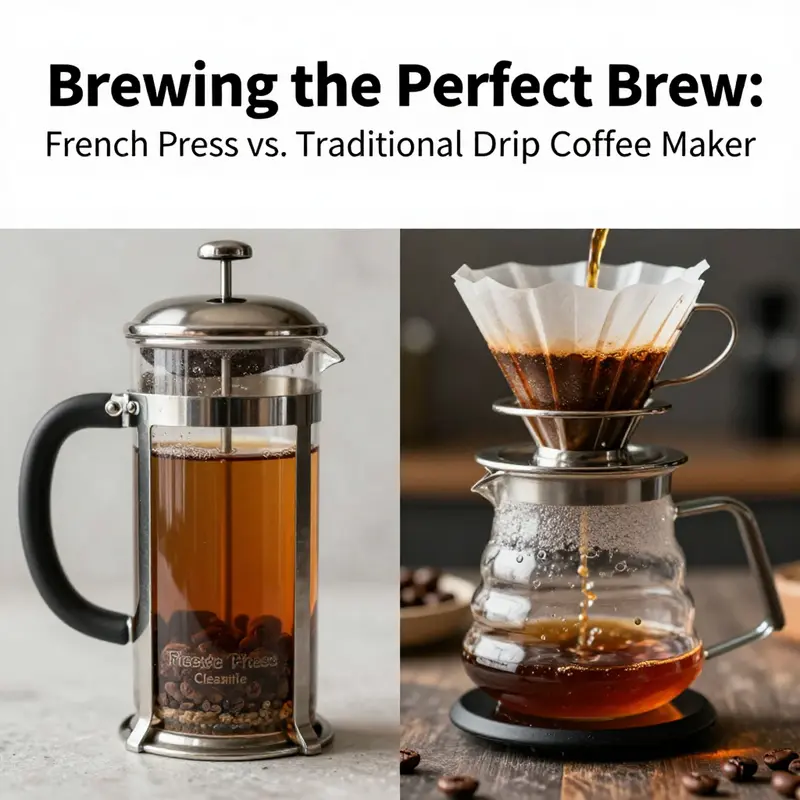
Every great morning deserves a faithful ritual, and maintenance is the quiet backbone of that ritual. In the debate between a French press and a traditional drip coffee maker, what often separates a great cup from a merely good one is not only the brew method but how consistently you care for the equipment that makes it. Maintenance is less about chasing perfection and more about preserving the subtle oils, aromas, and textures that each device releases with its distinctive approach to water, heat, and contact. When you understand the maintenance logic behind these two popular devices, you gain a practical advantage: you can tailor cleaning to your lifestyle, your water, and your taste without sacrificing convenience or flavor. This chapter looks at maintenance as a performance-enhancing routine rather than a chore, highlighting how design choices translate into cleaning realities and how a simple, well-timed cleaning habit can keep both machines producing reliable, flavorful brews for years to come.
The fundamental design differences between a French press and a traditional drip machine are not merely about how the coffee is brewed. They drive the daily and deep-cleaning choices that determine long-term taste and performance. The French press immerses coarse grounds in hot water, letting oils and fine particles mingle with the brew before a metal plunger separates liquid from spent coffee. This intimate contact means oils find their way into all the nooks of the carafe and into the plunger assembly. In a drip machine, hot water passes through grounds lined by a paper or reusable filter, which traps most oils and fines. The result is a cleaner cup, but the interior pathways and heating element become a stage for scale buildup if mineral-rich water is involved. These design realities shape the cleaning narrative: the French press rewards meticulous oil management, while the drip machine rewards regular descaling. Both paths lead to a common goal—consistent, safe brewing—but they demand different daily and periodic care.
On a practical level, daily cleaning for both devices is straightforward, yet the routine differs in emphasis. After a French press session, the obvious step is to discard the grounds and rinse the carafe, plunger, and lid. The metal filter screen deserves careful attention too, as any residual oils can later dull the next batch’s clarity. A quick post-brew rinse is not enough; to avoid stubborn oil films and potential off-flavors, you should disassemble the plunger and wash every component with warm, soapy water. The goal is to prevent oil buildup that can create a stale or rancid taste profile over time. For the drip machine, daily care is more about keeping the flavor pathways clear. Remove and rinse the filter basket and carafe, wipe the exterior, and if you use a reusable filter, give it a thorough rinse to prevent clogging. The emphasis here is not to let residues linger where hot water and air circulate, which can invite off-notes into the next batch.
Yet daily care is only part of the story. The deeper difference shows up in deep cleaning and descaling. The French press does not have an internal heating element, which means it does not require descaling in the traditional sense. Its maintenance centers on removing built-up oils and residues that accumulate inside the carafe and around the plunger mechanism. A practical weekly approach is to soak the carafe and plunger in a vinegar-and-water solution (a 1:1 ratio) for an hour or two, then scrub gently with a soft brush. Baking soda can act as a mild abrasive for stubborn staining, followed by a thorough rinse to avoid any sour aftertaste. This routine keeps oils from becoming rancid and preserves the clean, robust flavor profile the French press is known for. By contrast, the drip machine asks for more conventional descaling because mineral deposits in the heating element and water pathways can sap efficiency and warmth. A cycle with white vinegar or a citric acid solution—again, typically a 1:1 mix with water—followed by two to three fresh-water rinses is a dependable method. In areas with hard water, such descaling might need to occur every 1–3 months, depending on usage and the machine’s scale buildup. These practices are not arbitrary; they are grounded in the physics of scale and the chemistry of coffee oils, both of which conspire to alter heat transfer, extraction efficiency, and, ultimately, taste.
The health and safety implications of neglecting maintenance are real and nontrivial. In a French press, residual oils and undrained grounds can foster odors and, in warm, moist environments, mold or bacterial growth if cleaning is inconsistent. While this risk is smaller in a non-heated press, it is not zero, especially if you let equipment sit between uses for extended periods. In drip machines, the concern is more about biofilm formation in internal tubing and reservoirs. Studies and food-safety guidance emphasize that routine cleaning and periodic deep cleaning are essential to prevent microbial growth that can influence both flavor and safety. The practical takeaway is simple: a clean machine is not only tastier but healthier. Safety-first habits—unplugging the machine before cleaning, using non-abrasive tools, and ensuring thorough rinsing—make maintenance an ally rather than a risk.
Material choices also color the maintenance experience. French presses often feature glass carafes with metal or plastic components. Glass is elegant but fragile; sudden temperature changes can crack it, so care with hot water and cold rinses is prudent. Stainless steel models, especially those with double-wall insulation, offer greater resilience and heat retention but still benefit from gentle handling to protect seals and gaskets. Drip machines tend toward plastic or metal housings with various filter options. BPA-free plastics are common for lightweight, portable units, yet all plastics can degrade over time with repeated exposure to hot water and cleaning agents. The overarching lesson is simple: the surface you touch daily matters. Choose materials that fit your tolerance for care and your comfort with routine maintenance. This is not a cosmetic preference alone; it translates into how long a unit will stay efficient and flavorful, and how easy it will be to keep it clean without frustration.
With maintenance realities in mind, practical routines emerge. A minimal, effective approach is to treat cleaning as a weekly ritual rather than a reactive chore. For the French press, this means a regular oils-focused deep clean on weekends, plus a quick post-use rinse every day. For the drip machine, schedule a descaling session every one to three months, tuned to your water hardness and how often you use the machine. The goal is to prevent buildup from becoming a flavor thief—mineral or oil-based—before it affects aroma, mouthfeel, and overall satisfaction. It helps to keep a small set of tools close at hand: a soft brush, a bottle of white vinegar, a mild dish soap, a non-abrasive sponge, and a clean towel. This modest kit can cover both devices without turning maintenance into a burdensome chore.
A practical tip that blends maintenance with efficiency is to incorporate a simple routine cue. After you finish brewing, rinse and reset your equipment so it’s ready for the next use. In a French press, that means disassembling the plunger and washing each piece promptly, then air-drying before reassembly. In a drip machine, a quick wipe-down of the exterior and a prompt rinse of the carafe and filter basket keep surfaces pristine and ready for the next coffee moment. The beauty of this approach is that it minimizes the risk of skipped deep cleans and makes descaling less intimidating when it finally occurs. The result is a steady rhythm of clean equipment, predictable flavor, and less downtime spent on maintenance than you might fear.
For readers who want a hands-on, kitchen-ready guide to cleaning a common coffee brewer, a practical resource can help bridge the gap between theory and practice. See How to Clean a Bunn Coffee Maker for a straightforward, step-by-step walkthrough that aligns with the maintenance logic outlined here. It emphasizes safe handling, thorough rinsing, and a focus on routine that supports consistent taste and reliability. How to Clean a Bunn Coffee Maker is a concise example of how a simple cleaning schedule translates into better mornings, especially when you juggle multiple methods or want to keep a busy kitchen running smoothly.
Beyond the routine, a broader awareness of water quality and its consequences can inform maintenance choices. Hard water, rich in minerals, accelerates scale formation and can demand more frequent descaling for drip machines. In contrast, softer water reduces mineral buildup but may still carry dissolved organic compounds that interact with oils differently. A mindful approach to water—whether through filtration, memory of your local water supply, or a simple filtration pitcher—can complement maintenance and help preserve flavor integrity. The interplay between water chemistry, heating, and filtration is subtle but significant; it’s one of the reasons a routine that fits your life—whether you prefer hands-on brewing or automated convenience—will always pay off in a more consistent cup.
As flavor and efficiency go hand in hand, the maintenance decision becomes part of a larger practice: you are choosing a lifestyle around your coffee. The French press offers the tactile delight of control and the rich, oil-laden body that invites a frequent, oil-conscious routine. The drip machine rewards streamlined cleaning and predictable performance, with descaling as a longer-form but essential commitment. Neither path is inherently superior in flavor or function; each rewards discipline. If you like a bold, full-bodied cup with a tactile, hands-on process, you will likely embrace the daily oils-aware care that the French press requires. If you prize speed, convenience, and a cleaner overall sensation with less daily effort, the drip machine’s maintenance arc will feel natural, provided you commit to periodic descaling.
In the end, maintenance is a conversation about taste, hygiene, and longevity. It is how you translate the physics of brewing into a daily routine that supports both flavor and peace of mind. The most effective plans are those that align with your schedule, your local water, and your appetite for a ritual that begins every morning with a sense of mastery rather than a sense of obligation. When you treat cleaning as an extension of your craft rather than a deficit in your time, you protect the very elements that make coffee meaningful: aroma, clarity, body, and warmth. The result is not merely a cleaner machine, but a more dependable, satisfying cup that greets you with consistency and confidence.
External science-backed resources offer additional context on safe cleaning practices and the importance of routine hygiene for home brewers. For readers seeking a deeper dive into kitchen microbiology and cleaning best practices, the following resource provides a rigorous perspective that complements practical advice: https://www.ncbi.nlm.nih.gov/pmc/articles/PMC9876543/.
Final thoughts
Choosing between a French press and a traditional drip coffee maker ultimately depends on your business’s specific needs and priorities. If you aim to provide a bold and full-bodied coffee experience and appreciate the hands-on preparation, the French press is an excellent choice. Conversely, if operational efficiency and convenience matter more in your setup, a traditional drip coffee maker will serve you well. By weighing the aspects covered in this guide, you can confidently select the brewing method that aligns best with your brand and customer expectations.