
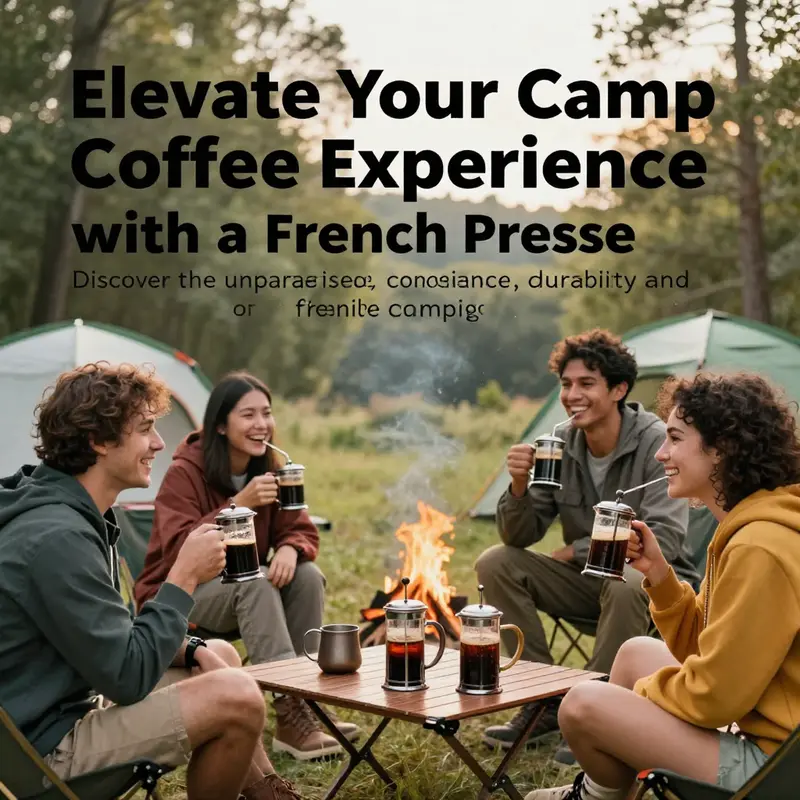
Coffee enthusiasts understand the value of a good brew, especially when enjoying the great outdoors. Choosing a French press for camp coffee is an exceptional decision that offers a blend of simplicity and quality. This manual brewing method requires no electricity, making it perfect for remote locations where power is a luxury. Additionally, it’s lightweight and easy to clean, which aligns with the need for convenience in outdoor settings. Each chapter of this article will explore different facets of using a French press for camp coffee, from its effortless brewing process to its sustainability and durability, concluding with its remarkable flavor enhancements.
Brewing Freedom in the Backcountry: The Essential Convenience of a French Press for Camp Coffee
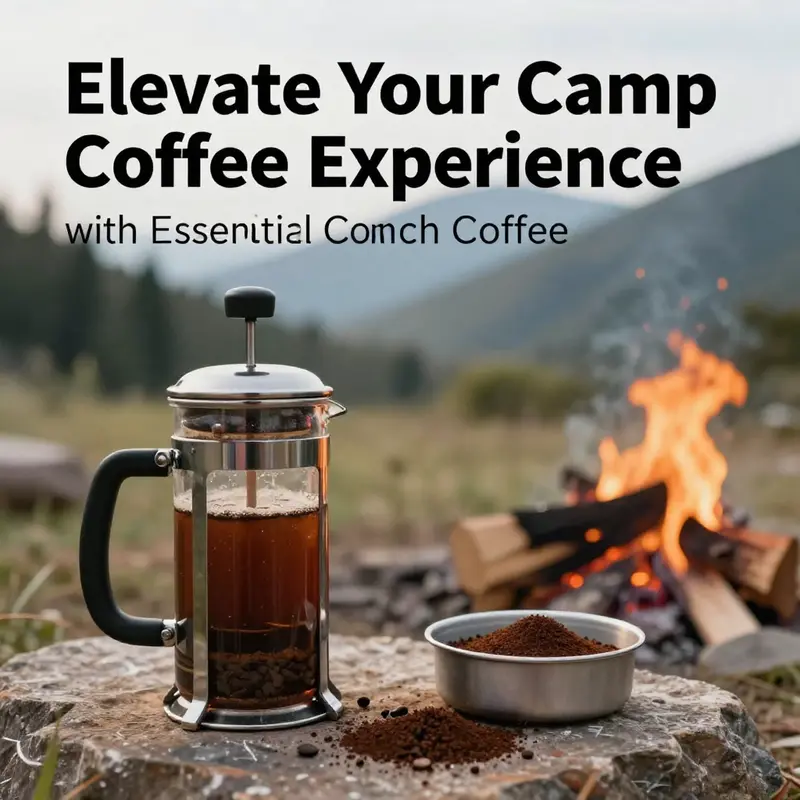
The morning light leaks over the pines, and the day begins not with a rush, but with a ritual. In the backcountry, where power cords vanish into the mist and electric conveniences stay at home, coffee can still be a reliable companion. The quiet efficiency of a French press makes this possible. It is a tool built for simplicity, but its charm lies in how that simplicity translates into flavor and routine. A camp coffee setup built around a French press strips the moment to its essential elements: hot water, coarsely ground beans, a press, and time. No plugs, no pods, no complicated assemblies. Just a straightforward, repeatable process that, over the course of a trip, becomes as dependable as the sunrise itself. The promise is not a fancy brew but a robust, full-bodied cup that carries the scent of the beans through the crisp air, wrapping the morning in warmth and clarity. This is what makes the French press such a compelling choice for camp life: it respects the land, honors the user’s time, and delivers results that feel almost as familiar as home, even when the scenery is far from it.
The appeal begins with the absence of electricity. In the wild, where power sources are scarce or absent altogether, a device that functions by human effort alone has a natural advantage. A French press requires nothing more than hot water and coffee grounds, which means you can rely on a dependable cup wherever your travel takes you. If you carry a stove or a campfire, you already have the means to produce a brew that rivals what you might enjoy at a familiar breakfast spot. The absence of electrical dependence reduces the planning burden: you don’t need to consider wattage, timers, or voltage compatibility. You only need to attend to the basics—heat, grind, time, and patience—and the result is a cup that meets you where you are, no matter the terrain or the weather. It is a modest reminder that the simplest tools, used properly, can yield the richest experiences.
Another strength lies in the equipment footprint. The French press is notably light and compact compared with more elaborate setups. It is one unit, with a carafe, a plunger, and a lid that doubles as a stopper for brewing and serving. There are no spare filters to pack, no separate carafes to juggle, and no fragile components to risk shattering during a hike or a bumpy trail. This minimalism translates into real camp practicality: the press travels well in a daypack or a dedicated brew kit, and it cleans up quickly when the work is done. With a reliable heat source and a small container of coffee grounds, you can produce a consistent morning ritual that feels like a small act of control in a world that often feels unpredictable. The burden of routine is lightened by design; the press embodies the idea that good coffee in the outdoors should feel natural rather than forced, familiar rather than exotic, and certainly not a burden after a long night under the stars.
Flavor, however, is the heart of the appeal. The metal mesh filter of a well-made press keeps natural coffee oils and micro oils in the cup, delivering a mouthfeel and aroma that are different from paper-filtered brews. In the woods, where clarity and warmth are prized, that fuller body can feel especially satisfying. The result is not merely a stronger taste but a texture that lingers—smooth, velvety, with a hint of earthiness from the outdoor air and perhaps a touch of pine if you’ve found your way near a conifer trail. The bold profile adds to the sensory experience of camping, turning a necessary caffeine hit into a moment of pause and presence. In that sense, the press becomes more than a brewer; it is a conduit for the sensory rhythm of the day, a small ceremony that anchors the traveler in the moment and makes the landscape feel a little more intimate, a little less distant.
The method itself is elegantly simple and surprisingly forgiving, once you settle into a steady rhythm. The core steps—add grounds to the chamber, pour in hot water, allow a brief steep, and press down to separate the grounds from the liquid—are straightforward enough to memorize on the first trip and repeat reliably on every subsequent outing. A commonly used ratio, around 1:15 coffee to water, with a steep time of roughly four minutes, offers a solid baseline that balances extraction and clarity. This baseline is not a rigid rule carved in stone; it invites small experiments in grind size and steep duration to suit bean type and personal preference. The beauty of the approach is in its clarity: you can adjust one variable at a time, and you’ll almost immediately taste the impact. For those who crave a quick reference or want to deepen their practice, a focused guide on ratios can be a valuable companion during rest periods or at a trailhead café stop. See French press coffee ratios—the ultimate guide for a deeper dive into dialing in your brew. The key is to approach the process with a calm, steady hand and to view each brew as a chance to learn about the coffee and the environment you’re in.
The ritual’s beauty also lies in its cleanup. After pressing, the grounds drop away, and the carafe can be rinsed with a quick splash of water or wiped clean with a damp cloth. Clothing, gear, and hands stay relatively untouched by the process, which matters when you’re packing and moving through a camp set-up or a backcountry campsite. There’s no need to dismantle a maze of components or filter paper that will end up in a trash bag—an important consideration when you’re mindful of waste and leaving no trace. The simplicity of cleanup supports fast turnover of morning routines, which means more time to enjoy the day ahead, whether you’re planning a long hike, a scenic overlook, or a leisurely breakfast with companions. In this light, the press becomes not just a coffee maker but a reliable partner for sustainable camping, reducing waste while maintaining the sort of flavor and aroma that can set a positive tone for the day.
Durability is another compelling attribute for outdoor use. High-quality presses are typically built to endure the bumps and splashes of travel. Stainless steel bodies resist impact, while borosilicate glass carafes provide clarity about the brew and excellent temperature resistance when treated with care. The robust construction makes it easier to blend the device into a rugged gear stack without sacrificing performance. This resilience matters: in remote locations, a single piece of equipment that works well and lasts longer reduces the need to carry replacements, saving space and weight. The backcountry is an unpredictable place, and the best gear is the gear that keeps showing up, season after season. A press that can withstand a few bumps and a few chilly mornings becomes more than a tool; it becomes a trusted companion that you can rely on when the quest for coffee is part of the day’s adventure.
In terms of flavor control and consistency, the press offers a promise of repeatable results without the expertise and cost that other methods sometimes demand. Once you lock in a reliable ratio and a suitable steep time, you can repeat the process with confidence, even when you’re in a new location or dealing with a different stock of water. The consistency comes from the method itself and the quality of the grind. A coarse grind reduces the likelihood of over-extraction and minimizes sediment, a practical consideration when you’re balancing a light pack with a heavy day ahead. If you like a touch more brightness, you can adjust the grind slightly finer or extend the bloom time by minutes, but the baseline remains a steady starting point. That steadiness is what makes the French press such an appealing option for campers who want to bring a touch of café culture into the wild without complicating their routine. The method’s clarity and repeatability create a sense of reliability—an almost comforting predictability that can be a welcome anchor on unsettled days.
Beyond the technical and sensory benefits, the act of brewing with a French press fosters a certain mindfulness. In the quiet of a campsite, the ritual slows the pace in a healthy way. It invites you to observe the water’s heat rising from the kettle, to watch the grounds swell and release aroma as the coffee blooms, and to time the steep with care rather than rushing toward the final result. This moment of deliberate attention can sharpen the senses and heighten appreciation for the environment around you. The coffee becomes a bridge between the indoors you’ve left behind and the rugged world you’ve chosen to explore. In such moments, the press does more than provide caffeine; it offers a small, reliable ritual that can elevate the entire outdoor experience, lending warmth to cold mornings, comfort to isolation, and a sense of continuity that travels with you from one campsite to the next.
Practical tips breathe additional life into the routine. Preheating the carafe is a simple step that stabilizes temperature and preserves extraction quality. A warmed vessel minimizes the shock of hot liquid against a cool surface, helping to maintain a steady brewing temperature and ensuring the cup doesn’t lose heat too quickly once served. Milling coffee to a coarse, even consistency is another practical adjustment. In the absence of a grinder that can perform fine tuning, aim for a grind that resembles bread crumbs rather than powder. The coarser texture helps reduce sediment and makes pressing smoother, which, in turn, produces a cleaner cup with less chance of gritty aftertaste. Water quality matters, too. If you’re near a stream or lake with mineral content that isn’t ideal, consider using a basic filtration or a simple pre-boil to reduce the risk of off-flavors. Even a modest modification in water temperature can change the resulting cup; staying near the 195–205°F range tends to extract the full range of flavors without becoming overly bitter. If you’re heading into a windy, cool environment, keep the kettle sheltered and the carafe capped to retain heat and prevent rapid cooling. These small habits, assembled over time, transform a simple ritual into a reliable morning practice.
A final note on scope and sustainability. The camp coffee routine, when built around a French press, naturally leans toward a conscientious approach to consumption. There’s no need to rely on disposable filters or pods, which means less waste and a lighter environmental footprint. The portability of the press aligns with the ethos of backcountry travel: pack light but pack well, bring only what serves a purpose, and maximize the value of every ounce. It’s a reminder that the most meaningful experiences often come from the simplest tools used with intention. And while the press is a humble method, it is not timid in flavor or impact. It yields a beverage that can hold its own against urban mornings, offering warmth, aroma, and a sense of ritual with every pour.
In this way, the French press embodies a philosophy of camp coffee that many travelers come to recognize: that great coffee outdoors does not demand extravagance, loud gadgets, or a long setup. It rewards patience, attention, and a willingness to embrace the basics. It invites you to slow down just enough to notice the rising steam, the changing light, and the quiet rhythm of a morning that is yours to shape. Whether you’re a seasoned camper or a first-time explorer, this approach can make the difference between a good morning and a great one. And because it’s so approachable, it also offers a doorway for beginners to enter the world of pour-over and immersion-style practices with confidence later on, should the mood and the setting inspire more experimentation.
As you tuck the press back into your pack after a successful brew, you’ll likely feel a small surge of satisfaction. It’s the satisfaction of knowing that you didn’t need a power outlet, a complex gadget, or a fragile setup to achieve something comforting and restorative. The backcountry coffee you’ve brewed is not merely fuel; it’s a companion for the miles ahead, a reminder that you can craft a moment of home-savoring anywhere, so long as you have hot water and a plan. The French press, in its unpretentious reliability, makes that possibility real. It is a tool designed for the outdoors, embodying a balance between rugged practicality and generous flavor. It honors the terrain by offering a cup that stands up to wind, cold, and fatigue, yet remains approachable enough that you can master it with a short learning curve. In the end, choosing a French press for camp coffee is not just about the drink; it’s about choosing a way to begin your day with intention, curiosity, and a sense of place that only the outdoors can provide. It’s about embracing a method that aligns with the pace of the landscape and the pace of your own travel, delivering a cup that tastes like a small but meaningful achievement each morning on the trail, by the fire, or beside a glistening lake.
External reference: For a practical, kitchen-tested overview of camping with a French press, see The Spruce Eats guide on camping coffee brewing: https://www.thespruceeats.com/french-press-camping-coffee-3627878
Why a French Press Stands Up to the Outdoors: Sustainability and Durability for Camp Coffee
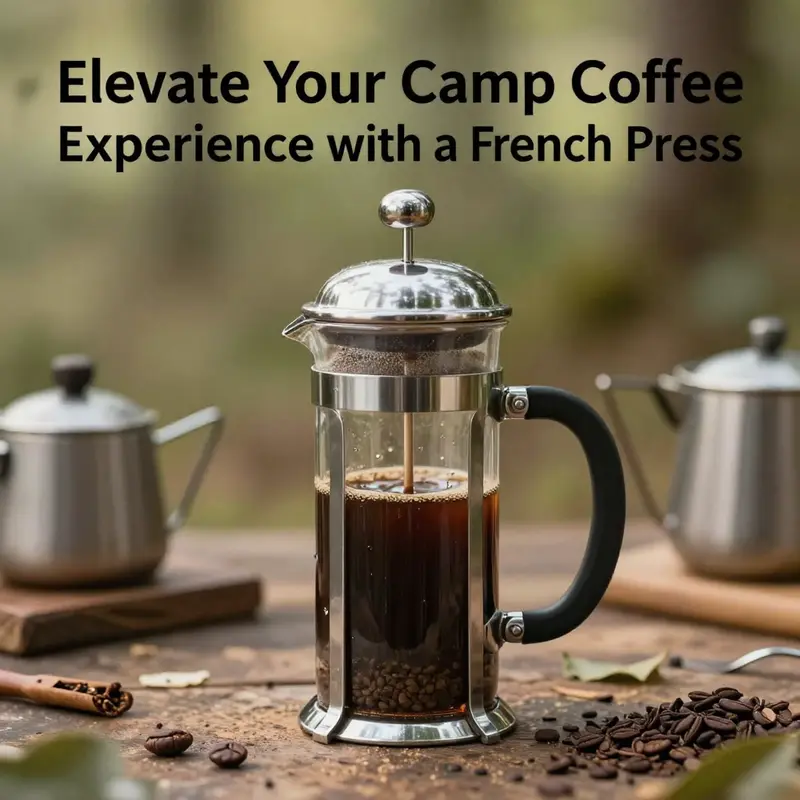
Morning light spills across the camp, painting the kettle and the sturdy silhouette of a French press in practical, unpretentious lines. The scene feels close to essential: hot water, coarsely ground coffee, a reliable tool, and a tiny ritual that promises a rewarding cup. In the wild, where space is precious and potential mishaps are plenty, choosing gear that is durable, easy to maintain, and kind to the environment isn’t a luxury—it’s a necessity. The French press, when selected with attention, checks those boxes with quiet confidence. Its appeal in camp settings isn’t about flash or gadgetry; it’s about method, mood, and the way a good cup can anchor a day spent outdoors. This chapter explores why the French press remains a prudent, even ideal, choice for camp coffee, framed through two enduring virtues: sustainability and durability. Together, they shape not just a brew but a philosophy of outdoor living where simplicity meets reliability, and where a traveler’s footprint matters as much as their caffeine fix.
Sustainability sits at the core of the French press’s appeal in the outdoors. It is a fundamentally reusable brewing device, designed to endure and to minimize waste. In camp life, where every item travels in and out of the packing list, a reusable tool reduces the clutter and the ecological footprint associated with disposable pods, single-use filters, and consumables that quickly accumulate. A press crafted from stainless steel or borosilicate glass is built to weather rain, sun, dust, and the occasional tumble. Those materials aren’t just sturdy; they carry a lifecycle that tilts toward longevity. Stainless steel resists corrosion and denting, while borosilicate glass, though more fragile in a fall, can be replaced or viewed in the context of a long, restorative relationship with the outdoors. The net effect is simple: fewer replacements, less waste, and a cup of coffee that doesn’t hinge on a supply chain beyond the kettle and the water boil.
Beyond materials, the environmental footprint of the French press aligns with a broader outdoor ethic. It is a device that emphasizes reuse over disposable convenience, which makes it a natural fit for campsites, remote trails, and backcountry huts where waste management is a daily concern. The metal mesh filter, a staple of most presses, keeps oils and flavor compounds in the brew rather than trapping them in disposable paper filters. The result is not only a richer cup but a cleaner footprint—fewer waste bags to haul out, fewer filters to replace, and less plastic packaging in one’s pack. The sustainability argument gains depth when you consider the device’s durability. A well-made press can last for years with proper care, a longevity that compounds the environmental gains. It becomes a stewardship decision as much as a coffee choice, a way to honor the places we enjoy by reducing the resources we expend while enjoying them.
Material choices also matter to the eco-conscious camper. Stainless steel and borosilicate glass are not only durable; they are recyclable at the end of a long life. The steel body can shrug off bumps that would dent fragile plastics, and when the time comes to retire a press, its components can often find new purpose in recycling streams rather than landfills. This recycling potential enhances the device’s sustainability profile, transforming a simple morning coffee ritual into a daily practice that supports responsible consumption over time. Importantly, the reuse story extends beyond the device itself. Because the press is built to last, it reduces the churn of replacements and the demand for energy-intensive manufacturing. In small ways, each cup brewed with a reliable press becomes a vote for a slower, more deliberate approach to camping—the kind of approach that values gear that stays the course rather than gear that yields to fashion.
Durability, the other pillar of the camp-friendly French press, emerges in form and function. A well-designed press is more than a vessel; it is a tool that must perform reliably under varied conditions. In rugged outdoor contexts, double-walled stainless steel models are prized because they combine strength with heat retention. The wall cavity acts as a buffer: it protects the hot brew from rapid cooling while defending the user from the metal’s surface heat. Such construction matters on mountain mornings when a kettle takes longer to boil, or when a chilly breeze gnaws at your hands during a late pickup of the coffee ritual. The durability story continues with thoughtful details: non-slip silicone bases on many models provide stability on uneven ground, a small but meaningful feature when your camp table is a rock, a log, or a wobbly bench. The plunger mechanism, too, needs to be robust. A sturdy plunger with a reliable seal keeps grounds from escaping and minimizes the need for constant adjustments. It’s the kind of design fidelity that pays off after hours of hiking, cooking, and waking up to coffee that never feels like a compromise.
The practical advantages of durability also shine in the field. Weight and packability matter more when every ounce counts. Modern camping-focused presses strike a careful balance: they are light enough to carry on longer treks but sturdy enough to survive the inevitable bumps that come with travel. Some models feature compact, travel-ready dimensions that nest neatly inside a pack sleeve or a dedicated mug. This thoughtful engineering translates into real-world benefits: less bulk in the morning, fewer items to manage during a cold, wet hike, and a sense of security that comes from knowing the tool you rely on won’t fail when you need it most. In addition, many presses resist corrosion from damp air or salty coastal winds, which is not a minor risk in the backcountry and speaks to the long-term value of investing in quality hardware rather than chasing cheaper, short-lived options.
Of course, no apparatus is perfect in every environment. A French press invites a simple ritual: heat water to a boil, add coffee, wait, press, and pour. The ritual’s repetitiveness can be seen as a strength in the outdoors. It trains patience, a virtue you rediscover when morning light meets the steam rising from a kettle. It also encourages a mindful approach to timing, ratio, and texture—elements that, when balanced, yield a cup with depth and balance that many campers find superior to that produced by paper-filter methods. The 1:15 coffee-to-water ratio, paired with a steep time around four minutes, is a classic baseline that, with small adjustments for altitude and bean roast, translates across many landscapes. This is not a rigid dictate but a reliable starting point that reduces guesswork and fosters consistency—an asset when your surroundings are unpredictable and your time is precious.
To speak plainly, the true value of a French press in the camping world lies in its ability to deliver café-quality flavor without dependencies that wear you down. There is something compelling about a method that honors the variables of the outdoors—heat, water quality, grind size—and still produces a richly textured cup. The metal mesh filter preserves the oils that many other brewing methods strip away, which contributes to a fuller body and a more nuanced aroma, one that lingers in the air and in your memory as you linger near the fire. In the quiet of dawn, that depth matters. It makes the first pour feel like a small, meaningful reward rather than a routine necessity. And because the device is straightforward to operate, it invites a sense of autonomy: you control the timing, the strength, and the temperature, shaping your morning to the conditions at hand rather than adapting to a machine’s whims.
The sustainability and durability story naturally converges with practical care. A press survives better when it is treated with simple maintenance routines. After brewing, the grounds are disposed of properly, and the plunger and vessel are rinsed with clean water. In many settings, that rinse becomes a quick brush-down to remove any stubborn coffee oils that could accumulate over time. For longer trips, a travel-friendly model’s design can accommodate a spur-of-the-moment wipe with a cloth or a quick rinse in a nearby stream—always mindful of local regulations and environmental respect. In households and camp kitchens alike, the habit of cleaning promptly helps extend the life of seals, threads, and the mesh filter. It also preserves flavor integrity for future brews, ensuring that the coffee you enjoy on day one remains faithful on day five or day ten, provided the press travels with you and remains properly stored between uses.
In the end, the decision to bring a French press on a camping trip is not only about the brew. It is an operating philosophy for the outdoors: a preference for tools that endure, a commitment to reducing waste, and a desire to enjoy a cup of coffee that carries the character of the place you explore. For eco-minded campers and durability-focused travelers alike, the press offers a balance of efficiency and flavor that aligns with a sustainable mindset. It is quiet, unpretentious, and capable of delivering a reliable cup in a wide range of environments. The best press for the trail is the one that fits your specific needs—the weight you’re willing to bear, the heat you can muster, and the degree to which you value minimizing environmental impact without sacrificing the joy of a well-made morning beverage.
If you’re weighing options, you may want to compare methods and gear thoughtfully rather than rely on a single claim or a flashy feature. A deeper look at how the French press stacks up against traditional drip methods can be illuminating, especially when gear choices are part of a broader lifestyle choice. For a detailed comparison, you can explore the guide that contrasts these two approaches and helps you assess suitability for different camping scenarios: French press vs traditional drip coffee maker: a complete comparison guide. This resource can help you weigh flavor, ease of use, cleanup, and portability as you fine-tune your camp setup. The outdoors reward practical decisions that honor both taste and the planet you’re visiting, and the French press stands out as a thoughtful, resilient option that aligns with that ethos.
For readers seeking further exploration of sustainable coffee practices in outdoor settings, broader context and additional perspectives can be found in established discussions about brewing outdoors and the benefits of full-flavored coffee achieved through methods that keep essential oils intact. An external perspective, such as the piece from a longstanding publication, underscores the enduring appeal of the French press as a straightforward, robust approach to camp coffee and offers a complementary view on how outdoor brewing can balance convenience with quality. External resource: https://www.theguardian.com/lifeandstyle/2023/jul/12/why-the-french-press-is-the-best-way-to-brew-coffee-outdoors
Flavor on the Trail: How a French Press Delivers Consistent, Rich Camp Coffee

Morning in the backcountry carries a crisp, patient quiet that invites small rituals to take on larger meaning. The kettle sighs as water heats, steam fogging a breathy window of dawn. The camp world feels slower, more tactile, and coffee—when done right—is the compass that centers the day. In this light, the French press emerges not as a neat gadget but as a reliable companion that respects the landscape and the ritual of waking. Its appeal in outdoor settings rests on three quiet strengths: simplicity, durability, and the ability to coax a deeply satisfying cup without electricity or a hundred little parts that can fail when you most need them. It is a tool built for the field, where weight matters, where warmth matters, and where the act of brewing can be as restorative as the first bite of a hot breakfast. The press embodies a philosophy of coffee that favors texture and presence over speed and convenience, a philosophy that suits the open air and the rhythms of a slow, deliberate morning. When you lift the lid, pour the hot water, watch the grounds bloom, and press down with a steady hand, you have already threaded flavor, technique, and environment into a single, reproducible experience that travels as well as your map and compass do.
Choosing a French press for camp coffee is more than a preference. It is a commitment to a certain kind of coffee culture—one that travels light, but drinks with depth. There is no need for outlets, no need for coaxing a finicky machine to life in the chill of dawn. The process is quiet, almost ceremonial, and the result—rich, full-bodied coffee with a tactile texture that lingers on the tongue—feels like a small luxury earned under wide skies. And because the tool is so straightforward, it rewards memory and routine. Once you pin down the essentials—the grind, the water temperature, the steep time—you have a method you can replicate anywhere, whether you are perched above a forest stream, at a windy high camp, or tucked into a mossy campsite where the dawn light filters through spruce. In the field, reliability matters as much as quality, and the French press delivers both in a compact, care-forged package that never shouts but always satisfies.
The simplicity of the press is not a simplification of flavor; it is a pathway to clarity. With no electrical components to fail and no pods or filters to stock, the gear list remains intentionally lean. You need the press, coffee grounds, a heat source, and clean water. That is a liberating constraint, especially on extended trips where every ounce counts. Fewer moving parts mean fewer potential points of failure. It also means fewer decisions during nascent hours when fatigue can blur judgment. In the wilderness, a dependable routine matters more than a flashy setup. The press respects that need for steadiness, offering a predictable procedure that yields a consistent cup if you follow a few basic principles. The result is not a laboratory brew but a cup that carries the memory of the trail—the woodsmoke, the pine, the chill air—through the first warm sip.
The taste profile you achieve with a French press in the wild is inseparable from its method. The metal mesh filter keeps a larger portion of the coffee’s natural oils in the cup, which translates to a fuller, more textured body than many paper-filtered brews. Those oils carry aroma and mouthfeel in a way that feels almost tactile, as if you can sense the landscape in the sip. This is not a flat cup; it’s a cup with character, with a density that supports sweetness and complexity. You will notice the coffee’s body—how it coats the palate, how long the finish lingers, how notes of chocolate, fruit, herbal spice, or malt can pop or settle with quiet confidence. The oils also help accentuate a coffee’s origin traits—the earthiness of a highland bean, the bright citrus of a washed lot, or the deeper caramel tones that emerge as you ride a morning chill. In a setting where the sensory environment matters as much as the caffeine hit, that richness matters. The press, in this sense, honors the beans rather than masking them.
The heart of the camp-friendly appeal lies in the control the method grants. In a world of automated drip machines and timed capsules, the French press invites you to steer the brew with intentional hand movements. Temperature, ratio, and immersion time are variables you can tailor to the specific beans you carried and the climate you face. The standard guidance—a 1:15 coffee-to-water ratio and a roughly four-minute steep—serves as a reliable baseline. But the necessity to adapt is real: at altitude, water boils at a lower temperature, and extraction can slow; at higher humidity or in very dry air, evaporation and heat loss behave differently. The press makes those adjustments intuitive rather than opaque. You can tune the grounds to be slightly coarser or slightly finer to influence the extraction, and you can adjust the steep time in small increments to sculpt brightness or body. The ability to experiment, with immediate feedback in your cup, is one of the method’s greatest strengths when you are miles from the nearest café.
From a practical standpoint, the method is straightforward, but it rewards a disciplined setup. Preparing for brew begins with a few routine steps that can dramatically improve consistency. Pre-warming the carafe is a small ritual that pays visible dividends: it minimizes heat loss as you introduce hot water and grounds, helping you maintain a stable temperature during the extraction window. Having a sensible grind size is equally important. A medium-to-coarse grind resists over-extraction in a short brewing window, preventing the cup from leaning toward sourness or bitterness. Fresh grinding is ideal for maximum aroma, but if you must buy pre-ground coffee on the trail, aim for a grind that resembles sea salt rather than fine sand. The water itself is your medium, and its temperature is a lever you can pull to favor aroma and sweetness. Water just off the boil—roughly ninety-two to ninety-six degrees Celsius—tends to preserve delicate aromatics while still extracting robust flavors. If you have a portable thermometer, use it; if not, rely on the pause after a vigorous boil when the bubbles have softened and the aroma becomes more pronounced.
The bloom that follows your first pour is a small, telltale moment. A quick swirl to wet all the grounds and a brief rest of about thirty seconds lets the CO2 escape and the grounds begin to release aromatic compounds. That bloom is not just theatrical; it is a signal that you have started a proper extraction, with enough surface area exposed for the hot water to work through the entire bed of grounds. After the bloom, you pour the remaining water with a steady, controlled motion, then drop the plunger on top and wait. The waiting period is when character forms—in that time you will decide if you want brighter notes, more body, or a smoother finish. A four-minute window is a reliable baseline, but you can shorten or lengthen it by a minute or two based on the beans’ density, roast level, and your taste. When the moment arrives to press, use a slow, even pressure. A jerky plunge can agitate fines and muddy the cup; a consistent, mindful press yields a clean separation between the grounds and the brew. The resulting pour should be warm, inviting, and balanced—rich in texture, with a clarity that invites you to notice the nuances of the beans and the environment that shaped them.
An often underappreciated dimension of camp coffee with a French press is how the equipment encourages thoughtful sourcing and bean handling. Altitude, climate, and bag integrity all influence the flavor you taste. At higher elevations where air is drier and water boils at a lower temperature, you may experience a slight shift in extraction. The effect can be mitigated by a finer grind, a touch more time, or a modest increase in water temperature within the safe range. In contrast, warmer, lower-altitude mornings may coax faster extraction; here a coarser grind and a shorter steep can maintain balance. The beans themselves carry the trip’s narrative—their roast profile, their origin, and their age become evident as you savor the cup. A dark roast tends to bring forward body and chocolate notes, giving a comforting, viscous feel that pairs well with the brisk air of a chilly morning. A lighter roast can reveal brighter fruit and floral tones, where clarity and snap in the cup come to the fore. Either way, the French press respects these bean traits by preserving oils and avoiding the paper filter’s clamping effect on sweetness and texture.
Durability and portability are not afterthoughts in the camp coffee equation; they are integral to the experience. The press’s form—usually a stout stainless steel body with a robust plunger and a metal mesh filter—offers resilience against the bumps and bruises of travel. Borosilicate-glass variants may provide a crisper, cleaner aesthetic and mouthfeel, but they demand more care and protection in rugged terrain. The choice between metal and glass often becomes a trade-off between weight, heat retention, and risk tolerance. For many backcountry cooks, a compact, well-sealed press that folds into a small footprint is ideal. It can ride in a pack with equal ease to a stove or a mug. And because the method does not require electricity or fragile parts, it remains dependable across a range of campsite conditions—from cold, windy mornings to sun-drenched, dusty afternoons. That reliability is a kind of quiet luxury that compounds the sense that coffee is not a luxury at all but a basic, dependable companion on any expedition.
Cleaning and care are the practical glue that keeps the ritual sustainable. After the press, the grounds come out with a quick twist and a tap of the grounds-chamber, leaving minimal mess behind. A rinse with hot water and a gentle brush keep oils from building up on the filter screen and on the plunger’s threads. If you have access to soap, a tiny dab can help keep aromas from lingering between trips, though many campers prefer to keep things simple and minimize soap usage to protect nearby waterways. The goal is to keep all parts dry and ready for next time, because a clean press is a fast, predictable one. In the field, you will likely encounter a spectrum of cleaning conditions—from rushing to break camp to scrambling to keep gear dry in a sudden shower. A well-kept press handles those conditions gracefully, and that ease reinforces the sense that good coffee need not be a complicated affair.
Consistency on the trail grows from habit as much as from technique. Once you settle on a routine—pre-warming, a proper grind, the bloom, the rest, the press—your morning coffee becomes a stable, comforting anchor regardless of where you wake. You may find yourself adjusting your method subtly as seasons shift or as you explore new beans, but the core idea remains intact: a reliable, repeatable process yields a cup whose identity travels with you. If you want a little extra brightness on a particular morning, you can nudge the grind a touch finer or nudge the water temperature a degree or two lower; if you crave more body, extend the steep gently by a minute or two. The point is not to chase perfection in a single moment but to cultivate a practical sense of what works for you in the outdoors. That discipline is, in its own way, an art form—an art of making warmth, aroma, and texture converge into a familiar, satisfying cup.
Beyond the mechanics, the French press quietly enriches the social fabric of camping life. The ritual of grinding (even if with a small portable mill), of heating water, of watching the grounds bloom, and of sharing the finished cup, creates a moment of presence. In a world where screens often govern morning routines, the press centers you in a tactile, sensory experience that invites conversation and quiet reflection. The cup becomes a common reference point—a simple, shared asset that helps the group orient itself toward the day ahead. The ritual also honors a landscape’s atmosphere, from the scent of pine and damp earth to the crispness of a morning sky. It is remarkable how much a single cup can influence mood, appetite, and energy for the day’s exertions. In this sense, the press does not merely brew coffee; it helps to frame the entire outdoor experience, aligning taste with terrain and turning a routine into a small, meaningful practice.
For hikers who want to weigh the trade-offs between methods, there is a growing body of comparative guidance that helps you choose the right tool for your trip. A practical look at how this method stacks up against drip brewing can be found at French press vs traditional drip coffee maker: a complete comparison guide. It is a thoughtful resource that highlights the gains in flavor and control the press offers while acknowledging some contexts where other methods may be more convenient or faster. In the field, the choice often comes down to personal preference and the specifics of the trip—group size, weather, weight limits, and your own tolerance for cleanup. Still, the French press remains a reliable, high-value option that aligns with outdoor maps, backpacks, and sunrise routines.
External resource: For a deeper look at the mechanics and benefits of immersion brewing, see Coffee Review’s overview: What is a French press and how does it work. https://www.coffeereview.com/what-is-a-french-press-and-how-does-it-work/
Final thoughts
Using a French press for camp coffee not only simplifies the brewing process but also enhances the entire outdoor experience through rich flavors and eco-friendly practices. The conversation around camping coffee has shifted, and opting for a French press sets your trip apart by delivering not just caffeine, but a brew that invigorates the spirit of adventure. The French press embodies the essence of enjoying high-quality coffee while connecting with nature, making it an indispensable tool for any camping enthusiast.