

Understanding the coffee-to-water ratio for French press brewing is crucial for business owners looking to deliver consistent, high-quality coffee. The right ratio not only enhances flavor and strength but also helps establish a loyal customer base. With a starting point of 1:15, adjustments can be made based on personal taste and consistent practices. The following chapters will explore the foundational aspects of coffee ratios, how to tweak them for flavor balance, and the importance of optimizing variables like grind size and water temperature for the perfect brew.
Brewing with Precision: Mastering the French Press Ratio for Consistent, Rich Flavor
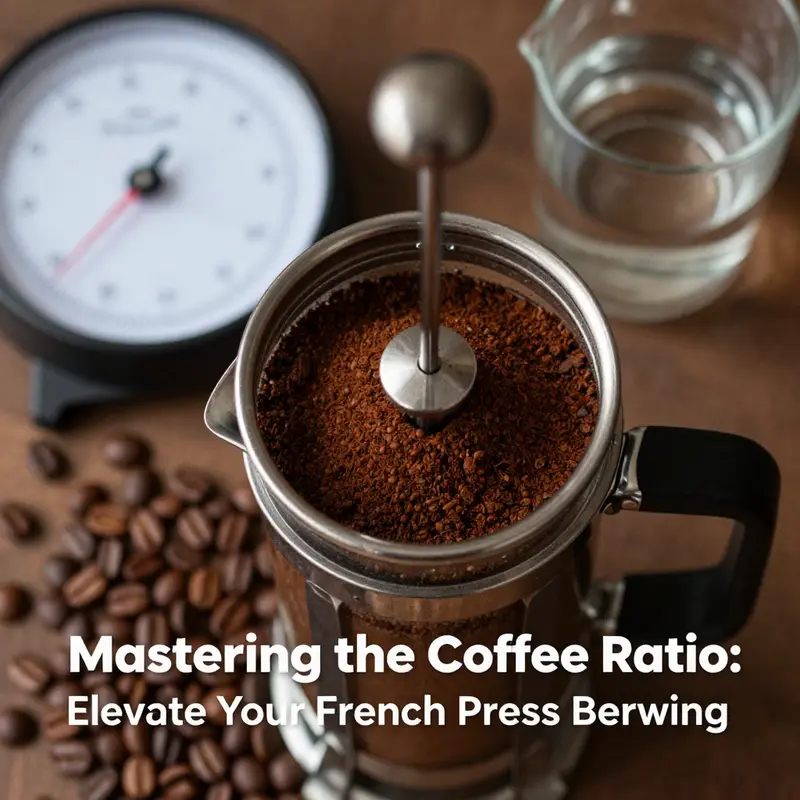
The line between a good cup and a great cup in the world of the French press is often drawn at the coffee-to-water ratio. It is not a flashy variable, but it is the one that quietly governs strength, balance, and the way that aroma blooms into the cup. When you start with a ratio, you are setting a scaffold for the entire brew. The standard starting point many baristas rely on is a ratio of 1:15, one gram of coffee for every fifteen grams of water. This baseline is a compass, not a rule, guiding you toward a well-balanced cup that isn’t too bold or too weak for most palates. If you measure 500 milliliters of water for a pot, that baseline calls for about 33 grams of coffee. It is a precise starting place, but it is also a doorway to personalization. No two mornings are identical, and the same goes for the coffee you grind, the water you heat, and the room where you brew. The ratio is the lens through which you view those small, meaningful differences. It is the anchor that makes your decisions about grind size and brew time more than guesses; it makes them deliberate choices rooted in a shared principle: concentration matters, but balance matters more.
The beauty of the French press is that it invites experimentation without inviting chaos. A tiny adjustment in the ratio can transform a sour, thin cup into something fuller and sweeter, or push a heavy, bitter brew toward a crisper, more clarifying finish. If the cup tastes sour or under-extracted, the instinct is often to push more water through the grounds or to lean into a stronger coffee presence by nudging the ratio toward 1:14. Conversely, if the brew arrives heavy and bitter, a gentler touch with the coffee can bring the finish into better relief by moving toward 1:16. These adjustments are small, but their impact compounds as the coffee coexists with heat and time. The art of dialing in your French press is a patient practice of tasting and tweaking, tag-teaming your senses with precise measurements to uncover a flavor profile that feels like your personal signature morning ritual.
Yet numbers alone do not tell the full story. The precision that makes the 1:15 starting point useful is the precision you bring to the rest of the process. To replicate results with any consistency, you need to measure with a digital scale. Volume measurements, such as tablespoons, are tempting for their simplicity but unreliable because grind size and packing density vary. Two scoops of coffee can weigh differently depending on how coarsely you ground the beans or how firmly you scoop, and the same goes for water. The scale shifts from a convenience to a reliability tool, transforming guesswork into a repeatable protocol. With a scale, you can maintain exact counts of both coffee and water and track how small shifts in your routine alter the cup. The result is not just better coffee; it is confidence in your method and the power to make incremental improvements without spiraling into inconsistency.
The role of grind size in shaping the final cup deserves equal attention. For a French press, the goal is a coarse, even grind profile that resembles sea salt or rough breadcrumbs. A consistency in particle size ensures that the coffee grounds interact with water in a predictable way during the four-minute immersion. When the grind is too fine, you risk over-extraction, which can yield a muddy body, bitter notes, and a cup that clings to your palate with a heavy aftertaste. A grind that is too coarse, however, can under-extract, leaving you with a weak cup that tastes flat and sour. A burr grinder is essential here because it produces uniform particles, whereas blade grinders can generate a range of sizes, including some fine particles that slip through the mesh filter and into the cup. The coarse grind, paired with a consistent temperature and a steady steep time, allows for an even extraction across the bed of grounds, making the final cup more predictable and more enjoyable. When you look at the grind and the ratio together, you begin to see why so much attention is paid to the physical reality of the coffee before you even pour water.
Temperature and time complete the triad of variables that determine extraction in the French press. The water should be hot enough to extract the oils and aromatics that make coffee alluring, but not so hot that it scorches the grounds. A temperature around 93 degrees Celsius, roughly 200 degrees Fahrenheit, is a practical target for many home brewers. This range supports a balanced extraction, allowing the beans to release their sweetness, fruitiness, and body without tipping into excessive bitterness. The steep time for a classic French press is often around four minutes. This is not a sacred decree; it is a guideline that matches the coarse grind and the immersion method. Four minutes gives the grounds enough time to release flavor compounds into the water while allowing the mesh filter to hold back most of the fines that would otherwise muddy the cup. Shorter times can yield a brighter, thinner cup, while longer times risk over-extraction, especially if the grind is on the finer side. What matters is consistency: keep the same grind, the same water temperature, and the same four minutes whenever you start a new batch, and you empower yourself to notice how a small change in one variable shifts the entire flavor profile.
With these components in view, the idea of a perfect ratio becomes less of a fixed target and more of a flexible, tunable parameter. The range you operate in is typically between 1:13 and 1:17, a band in which most home brewers can comfortably navigate flavor preferences. Within that band, taste becomes the compass. If your palate leans toward a fuller mouthfeel with caramelized sweetness and a gentle brightness, a 1:14 or 1:15 ratio, guided by a robust four-minute steep and a consistent coarse grind, often delivers what you are seeking. If you crave clarity and a crisper finish, a lighter touch of coffee—shifting toward 1:16 or 1:17—can reveal those delicate notes while staying true to the French press method, which inherently emphasizes body and presence. The key is not to chase a single number but to cultivate a method that yields reliable results and then refine that method according to taste. Small, iterative changes—one gram more or less coffee, a few seconds longer or shorter, a slightly finer or coarser grind—produce meaningful differences that accumulate through each brew cycle.
To translate this into a practical routine, imagine you are setting up a morning ritual rather than executing a recipe. You begin by placing your carafe on the scale, adding water to reach your target mass, and noting that mass. Then you add coffee to match your chosen ratio, using the scale to confirm the exact weight. You pre-warm the vessel and rinse the grounds with a quick warm-up to keep the temperature stable as you begin the pour. You introduce the ground coffee to the water in a gentle bloom, if your grinder and setup allow, and you monitor the immersion as the clock starts. The movement from the kettle to the grounds is where much of the magic happens: the aroma climbs in the room as the surface tension ripples through the water, inviting a sensory foretaste of the cup to come. The four-minute mark is a cue rather than an obstacle; it marks when the extraction has matured enough to deliver the full range of flavors while preserving clarity and sweetness. When you press, you do so slowly and steadily, letting the mesh filter separate the slurry from the pristine coffee beneath. The result is a cup that carries the weight of the grounds but finishes smooth, with little bitterness and a sense of balance that invites another sip.
The conversation about a reliable starting point and the adjustments that follow is not a debate about rigidity but a dialogue about how to tune a method that already works well for many. The ratio remains the backbone of the process, but the real artistry comes from treating it as a variable you can adjust with intention. If you feel you are chasing a perfect cup rather than discovering one, slow down and return to the basics: measure every component, maintain a coarse, even grind, keep temperature steady, and time the brew consistently. As you do, you learn to recognize how a cup changes when you nudge a gram here or a degree there. Those micro-adjustments, when accumulated, reveal a spectrum of profiles that can satisfy different moods, different coffees, and different days of the week. Your palate becomes your compass, and the scale your map. The end result is not simply a strong or a light cup but a coffee that communicates your attention to detail and your appreciation for the craft. And that is the essence of mastering the French press: a disciplined approach to a flexible method that rewards curiosity as much as it rewards accuracy.
For those who want a concise entry point that blends the science with accessible guidance, consider this path: start at 1:15, brew for four minutes at a steady 93°C, and use a coarse grind achieved with a burr grinder. Taste the cup and note whether it tastes balanced, with sweetness and body that do not mask delicate flavors. If sourness dominates, incrementally move toward 1:14, testing with each batch until sweetness and balance emerge. If bitterness or heaviness lingers, step toward 1:16 or 1:17, again testing in small increments. The key is to be methodical, not aggressive. Your aim is to discover the texture and aroma that feels most like the coffee you enjoy, not to chase a universal standard that may not reflect your personal palate. The journey is ongoing, and every cup teaches you something new about how variables interact and how small nudges can yield more coherence between aroma, body, and finish.
As you deepen your practice, you may encounter a broader ecosystem around the topic. There are practical guides that delve into the specifics of grind density, extraction curves, and the theory behind why these numbers behave the way they do. If you are curious to explore a deeper, more technical perspective on the subject, you can explore the broader discussion at French press coffee ratios: the ultimate guide, which provides a structured approach to dialing in your brew. This resource complements the personal, hands-on approach outlined here and offers a framework for understanding how different coffees might require slight recalibrations to maintain balance across origins and roast profiles. For further theoretical grounding and to broaden your understanding of the method, you can consult the literature on extraction dynamics and immersion brewing that helps explain why a 4-minute steep at a particular temperature yields a predictable set of sensory outcomes. In practice, the most meaningful learning comes from tasting and comparing, but having a solid mental model helps you anticipate how changes will influence flavor rather than reacting to them after the fact.
To close the loop on how to think about this in daily practice, think of the ratio as a conversation between coffee and water. The coffee provides a matrix of solubles—acids, sugars, phenolics, and oils—while the water acts as the solvent that tunes their expression. The grind size determines how quickly these solubles become available, and the temperature and time control the pace of their release. When you keep these elements in harmonious balance, your brew aligns with your taste: it remains faithful to the source coffee, honors the clarity you seek, and delivers the tactile body that the French press is known for. The result is not merely a caffeine fix but a moment of deliberate craft, a small ritual that starts with a precise ratio and ends with a cup that mirrors your intent. In the end, the ratio is less an absolute and more a language you learn to speak fluently—one that translates coffee into a cup you can savor, day after day.
For readers who want to explore more about the practical organization of this approach, a reliable next step is to follow one of the long-form resources that examine the interplay of grind, water mass, and timing in depth. You can read about the underlying principles and how they translate into hands-on technique at the external resource linked here. That guide deepens the conceptual framework you have encountered in this chapter and helps bridge the gap between theory and daily practice. And if you are curious about how this method compares to other common brewing approaches, there is a broader comparison available that discusses the strengths and limitations of immersion brewing in relation to more automated or traditional drip methods. The takeaway is simple: the most satisfying cup you can achieve begins with a thoughtful ratio, but it is completed by your consistency, curiosity, and patience as you tune the variables to the coffee at hand.
Internal link for further reading: French press coffee ratios: the ultimate guide.
External reference for deeper theory: https://baristahustle.com/french-press-coffee-ratio/
Dialing in the French Press: How Coffee-to-Water Ratios Sculpt Strength, Balance, and Flavor

The art of the French press is, at its core, a study in ratios. The moment you pour water over coffee, you begin a delicate dialogue between extraction and restraint, a conversation that is guided more by numbers than by luck. The baseline many baristas and home brewers lean on is the 1:15 ratio: one gram of coffee for every fifteen grams of water. In practical terms, that translates to a pretty straightforward starting point for a typical brew. If you’re working with 500 milliliters of water, you’d use about 33 grams of coffee. It’s not a magic formula, but it is a dependable compass. It promises a cup that carries both body and nuance, delivering a bold presence without tipping into heaviness. Yet the moment you taste that cup, you realize how personal flavor is. Some mornings you crave a brighter edge; other days you want something more enveloping and robust. That is when the ratio begins to matter in earnest, when tiny adjustments can tilt the entire experience toward sweetness, acidity, or a smoother finish. The ratio is not a rigid decree but a flexible instrument, one that you tune with each brew to coax out the specific character you want from your beans.
To begin shaping your preference, you must measure precisely. The scale is your ally here, not a rival. Volume measurements—tablespoons and scoops—are unreliable because grind size and how tightly you pack the grounds can swing the actual coffee mass by a wide margin. A digital scale lets you lock in the numbers you need, and it invites repeatability. With a consistent grind, you can reproduce the same extraction profile, or deliberately vary it in small increments to explore new flavors. Precision matters because the French press doesn’t filter away rough edges the way a paper filter does. What you extract with your water lingers in the brew, and the mesh can only do so much to separate fines from the final cup. That is why the grind and the timing must align with your ratio to create a harmonious brew rather than a muddled one.
A coarse, even grind is essential. Think of salt or rough breadcrumbs rather than flour, and you’ll be closer to a texture that allows the coffee to mingle with water without releasing an overwhelming amount of fines. A burr grinder is the surest path to that consistency. Blade grinders churn out uneven particles, and those inconsistencies invite over-extraction on some particles while leaving others under-extracted. The result is an uneven cup: some bites of bitterness, some flat notes, and a texture that can feel sandy on the tongue. When the grounds share a similar size, extraction proceeds more evenly, which means the numerical ratio you set on the scale more reliably translates into flavor. The coarse grind also aids immersion during the four-minute steep—the window when the transition from extraction to over-extraction becomes most apparent. Keep in mind that the grind size, the water temperature, and the steep time are a tight triangle. Move one vertex, and the other two respond in kind. The ratio helps you anchor one variable, but it won’t rescue a badly chosen combination of the other two.
Within the framework of solid technique, a practical range emerges. Most brews will sit comfortably between a 1:13 and a 1:17 ratio, depending on the coffee and the mood you’re seeking. The 1:15 starting point remains a reliable default, a friendly middle ground that suits many tastes and beans. Yet the path to your ideal cup is paved with experimentation. If a cup lands sour or thin, it’s often a sign of under-extraction. In that moment, the instinct is to lean toward more coffee, but the wiser move is to tweak the ratio toward 1:14 or 1:13 and to reexamine grind consistency, grind size, water temperature, and steep time in concert. If the brew leans toward bitterness or heavy fullness, you’re likely in over-extraction territory. The remedy isn’t always simply pulling back on the coffee; you can also measure a longer, slower, cleaner extraction by gentler adjustments and mindful control of the parameters around your chosen ratio. The idea is to maintain balance while nudging flavor and strength into the range that feels right to you.
Here is where taste becomes a teacher. The conversation you have with your cup is conducted through sensation: how the cup presents its body, how cleanly the flavors emerge, and how quickly the aftertaste fades. With a 1:12 ratio, you invite a more concentrated brew—one that can echo the intensity of an espresso in terms of presence and mouthfeel, but without the crema or the pressure. It is possible to approach a 1:12 without sacrificing clarity, but it demands careful control of the steep time and grind size. If the water is a touch hotter than ideal or the grind is finer than the target, the risk of over-extraction increases, and the cup can register as bitter, harsh, or astringent. The underpinnings of the issue lie in a faster extraction of soluble compounds that can dominate the cup, masking delicate aromatics. In practice, moving toward a 1:12 ratio is not simply about putting more coffee into the same amount of water; it is about rebalancing the entire brew, often with watchful eye on how long the coffee steeps and how finely the coffee is ground.
On the other side of the spectrum, lighter brews emerge when you push the ratio toward 1:16 or even 1:20. In that territory, the cup feels more transparent, more particular, and often more nuanced. The body recedes a touch, and the aroma can come across with livelier notes of floral brightness, citrus zest, or herbal accents that might otherwise be muted by a fuller, heavier cup. The challenge in this region is to preserve a sense of body and presence while avoiding a washed-out or insipid feel. Temperature and time come into sharper play here. If the water is too cool or if the steeping time is cut too short, the cup can veer toward sourness or lack of depth. If you push the ratio higher to 1:20, your goal becomes maintaining enough solubility and integration so that the flavor does not drift into dryness or excessive brightness. It becomes a game of maintaining balance: a lighter roast may reveal brighter acidity and a more delicate sweetness, while keeping enough body to prevent the coffee from slipping into a watery finish.
The practical steps to achieve consistent results begin with the starting point and then move through a deliberate cycle of tasting, measuring, and adjusting. Start with the 1:15 ratio as your anchor. Weigh your coffee and your water carefully, grind to a coarse, even texture, and heat your water to about 200°F (93°C). Four minutes is the benchmark steep time for many French press routines, but you will likely find your own sweet spot after a few rounds. When you brew, pour with intention and patience, letting the grounds bloom briefly as they first meet the hot water. After the four-minute mark, press slowly and evenly, and pour into a warmed mug to preserve temperature. Take a moment to assess the cup: how is the body? Do flavors come through clearly, or are they muffled by bitterness or sourness? Is the finish clean, or does it leave a lingering aftertaste that dominates the cup? Your senses will guide you toward the next adjustment.
The next brew should be a deliberate change, not an accident. If the coffee tastes weak, increase the coffee amount slightly or tighten the ratio toward 1:14 while preserving grind size. If your coffee reads thin and flat, consider whether the water temperature is too low, the steep time too short, or the grind size too coarse. Tighten the ratio a little to declutter the cup and coax more extraction without tipping into harshness. If, instead, the brew tastes too bitter or heavy, reduce the dose by a notch or two and, if needed, shorten the steep time slightly or coarsen the grind a touch. The point is not to chase a one-off perfect cup but to cultivate a consistent, repeatable method that can adapt as you learn more about your preferences and as your beans change with roast level and age. A key to achieving this consistency lies in keeping the grind size constant while only adjusting the ratio within the 1:13–1:17 range and controlling the other factors—the water temperature and the steep time—so that the overall extraction remains balanced.
As you gather more experience, you’ll notice your palate seeks certain flavors under particular circumstances. A 1:15 ratio often produces the kind of balance that reveals the coffee’s intrinsic character: the sweetness that emerges when the sugars are extracted thoughtfully, the acidity that lends brightness without sharpness, and the body that provides a satisfying mouthfeel without heaviness. When you want a stronger note without sacrificing clarity, a 1:14 or 1:13 can deliver that intensity with a still-refreshing finish if the grind and steep are aligned. Conversely, when you crave a lighter cup with more discernible individual flavors, 1:16 or 1:20 can deliver. The challenge is not to default to a single ratio but to develop a feel for how your particular coffee behaves at each point in the spectrum. A reliable method is to keep a simple tasting log: record the ratio, grind size, water temperature, and steep time for each brew, then note the perceptions—body, brightness, sweetness, and finish. With time, patterns emerge, and you’ll begin to anticipate how a given bean responds to a given ratio, helping you approach the next batch with more confidence and fewer surprises.
In this careful dance of measurement and sensation, language matters less than sensation. The numbers are tools, not commandments. They are there to guide you toward reproducibility and to create a framework within which your senses can give you feedback. In practice, this means embracing the routine while allowing room for inquiry. If you taste a cup and find it lacking in clarity, you might revisit the coarse grind, verify that you have not over-steeped, and confirm you are within the core ratio band. If you taste a cup that is wonderfully balanced but lacks some punch in aroma, you might consider adjusting the grind slightly finer for the next brew while staying within the same ratio, or slightly increasing the water temperature to improve extraction. The goal is not to chase a single perfect cup but to cultivate the ability to steer flavor and strength toward your preference with method and intent.
For readers who want to explore the broader science behind these decisions, the literature offers a more detailed map of how extraction proceeds as ratio changes. A reputable resource that dives into the mechanics behind these choices is available for those seeking a deeper understanding of why a 1:15 ratio often yields such reliable results and how even small deviations can impact flavor or mouthfeel. If you’re curious to go beyond practical tips and into the science of extraction dynamics, this guide provides a thoughtful, grounded exploration that complements the practical advice outlined here. French press coffee ratios—the ultimate guide.
In sum, adjusting the coffee-to-water ratio in a French press is less about chasing a fixed target and more about cultivating a precise sensitivity to how your brew changes with small, measured tweaks. The baseline 1:15 is a strong starting point that balances body, flavor, and clarity for many drinkers. From there, you can explore stronger profiles around 1:12, or lighter profiles around 1:16 to 1:20, mindful that each shift interacts with grind uniformity, water temperature, and steep duration. The key is disciplined experimentation with consistent technique, a reliable scale, and a patient eye for how taste evolves as the variables dance together. The more you observe and log, the more quickly you’ll discover your own preferred ratio—one that speaks to your palate and the moment’s mood, while still honoring the fundamental physics of extraction that every great cup shares.
External resource for deeper exploration: https://baristahustle.com/how-to-use-a-french-press-for-the-smoothest-coffee-every-time/
From Ratio to Ritual: Fine-Tuning Grind, Temperature, and Steep Time for a Consistently Great French Press
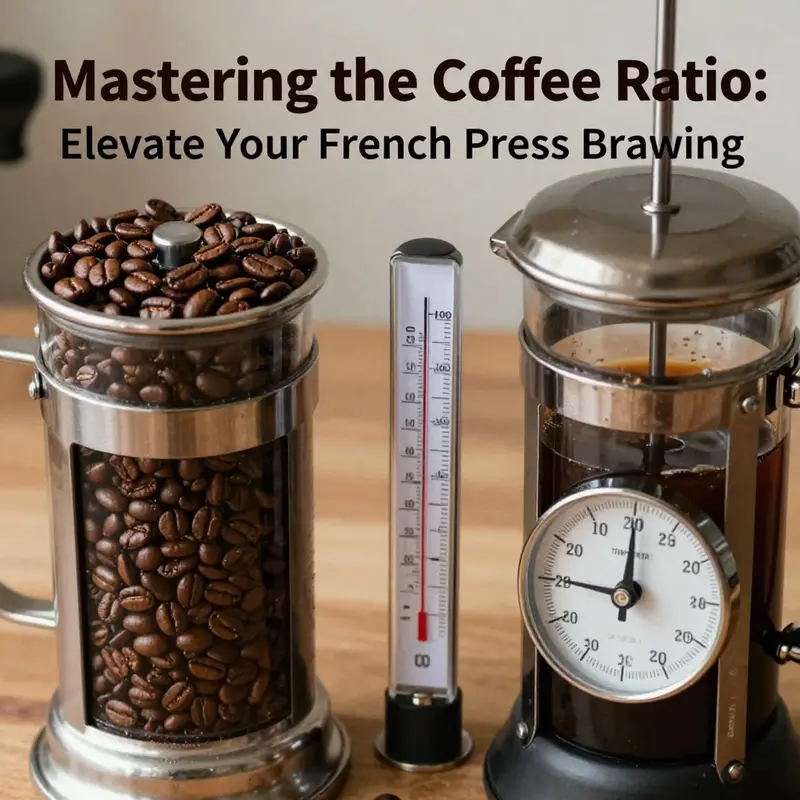
The journey to a great French press cup begins with a simple, stubborn truth: the ratio of coffee to water provides the backbone, but life in the cup arrives when grind, heat, and time dance in step with that backbone. It is a small orchestra, and every instrument must be tuned. A solid starting point helps—the widely recommended 1:15 ratio, meaning 1 gram of coffee for every 15 grams of water—yet even this well-worn guideline invites personal interpretation. The goal is not to cling to a single number but to cultivate a method that yields a balanced, full-bodied cup most days and can be nudged toward your preferred profile on days when your mood or your beans demand a different tone. For a practical example, consider a 500-ml brew. At a 1:15 ratio, you would ground roughly 33 grams of coffee. That measurement sits at the intersection of strength and clarity, a middle path that respects both extraction science and the human palate.
The point isn’t to resist adjustment but to approach adjustment with precision. If the coffee tastes sour or thin, you are likely under-extracted. A modest step up in coffee, edging toward a 1:14 ratio, can coax the balance you crave without turning the brew harsh or muddy. If the cup tastes overly bitter or heavy, it is a signal of over-extraction, and the remedy lies in dialing back on coffee—shifting toward a 1:16 ratio or even a touch lighter if other variables are held constant. The whisper of a new balance often arrives through small, measured changes rather than sweeping overhauls. And the one tool that threads all of this together is the scale. Digital scales for both coffee and water remove the guesswork that often accompanies tablespoon measurements, which vary with grind density and bean type.
A robust start to this precision-driven approach is paired with a few non-negotiables: a consistent grind, a stable temperature, and a steady steep. Each component reinforces the others. The grind, in particular, is a major determinant of extraction behavior. In the French press, immersion dominates, so the grind must tolerate full contact with hot water without enabling excessive fines to slip through the mesh filter. A coarse, even grind, with a texture reminiscent of sea salt or rough breadcrumbs, is essential. When the grind is too fine, extraction runs ahead of water movement, pulling harsh, bitter compounds into the cup and sending fines through the filter, creating a gritty mouthfeel. When it is too coarse, extraction stalls, and the cup risks tasting flat and underdeveloped. A burr grinder is indispensable here because it delivers uniform particle size. Blade grinders, by contrast, generate a spectrum of particle sizes that disrupt the extraction balance, leading to inconsistent results even if everything else remains constant.
But grind is only one part of the equation. Water temperature acts as the key that unlocks flavors from the coffee while guarding against scorching. The target range sits just below boiling, around 93°C (200°F). Water hotter than boiling can scorch grounds and invite a sharp, disagreeable bitterness, while water too cool may fail to pull out the full spectrum of flavors, leaving behind sour notes and a lackluster aroma. The practical way to hit this sweet spot is simple: heat the water to a rolling boil, then let it rest for about 30 seconds before pouring. This gives you a stable temperature band for the entire brew, reducing temperature drift as the coffee grounds steep.
Steeping time, the dormant phase that lets flavor molecules dissolve into the water, is typically set at four minutes for a French press. This window is generous enough to extract the body and aroma while avoiding the creeping bitterness that lengthier immersion can invite. If you extend beyond five minutes without adjusting other variables, you risk over-extraction; if you shorten to under three minutes, you may miss out on the fullness that the grounds can release. As with the other variables, time benefits from precision. A timer becomes your ally, not your enemy, ensuring that you replicate the precise moment when the cup achieves balance.
The beauty of this craft lies in the small, incremental changes that accumulate into a preferred profile. The ratio network—1:15 as a reliable baseline—offers a springboard from which to explore, but the real skill is in harmonizing that ratio with a consistent grind, stable temperature, and an attentive four-minute steep. Within a narrow corridor, roughly 1:13 to 1:17, the exact target is a matter of taste and bean. The practical approach is to pick a ratio within that range and commit to a fixed grind size, a fixed temperature band, and a fixed steep time for a series of brews. Only then should you shift one variable at a time to refine the result.
To translate this into a usable method, begin with a clear plan for your brew day. Weigh your coffee and water with a digital scale. Grind the coffee to a coarse, even consistency, the texture of sea salt—a level of coarseness that resists becoming too powdery while maintaining surface area for effective extraction. Preheat the French press to stabilize temperature during the brew. Heat water until it just begins to bubble, then rest briefly to settle into the target range of 93°C. Add the grounds to the carafe, then pour a portion of the water to saturate them evenly, allowing a short bloom of sorts as the coffee begins to hydrate. Stir gently to ensure all grounds are wetted, then top up with the remaining water. Set the timer for four minutes, and during the steep, avoid stirring too aggressively or disturbing the grounds; the goal is to allow the melt of flavors to happen with minimal disturbance. When the timer sounds, press the plunger slowly and steadily, resisting the urge to accelerate the plunge. A slow, controlled press prevents fine particles from slipping through the filter into the cup, preserving a smoother texture. Finally, pour immediately and drink while the cup retains its aromatic warmth.
If you feel compelled to adjust for your particular beans or mood, approach changes with caution. For a brighter, more lively cup, nudge the ratio downward toward 1:14 to extract a touch more from the beans, but maintain the same grind, temperature, and steep so that the extractions remain balanced. If the cup veers toward bitterness or turbidity, first check the grind; a slightly coarser grind can often restore balance without sacrificing body. If the coffee remains heavy or muddy, consider shortening the steep time by a minute while preserving the rest of the setup. The idea is to create a feedback loop: adjust, brew, taste, compare to your previous iteration, and then decide whether to move the needle again.
This approach also underscores a broader point about consistency. The science of extraction tells us that taste emerges not from a single variable, but from their combined effect. The grid of ratios, grind sizes, temperatures, and times forms a lattice in which your beans express their character. A digital scale anchors this lattice, converting subjective intuition into repeatable data. The grind acts as the sieve that modulates how fast the water interacts with the coffee, while temperature determines which compounds dissolve and at what rate. Time grants the opportunity for those compounds to migrate into the brew, but too much time and the robust compounds can become overbearing. The aim is not to chase some mythical “perfect” combination, but to cultivate a reliable approach that yields a cup you recognize and savor, day after day.
As you gain experience, you may want to explore the nuanced role of each variable in slightly different contexts. For instance, darker roasts often reveal more forgiving behavior with moderate adjustments to the grind and time, given their higher solubility. Lighter roasts may reward a tighter control over temperature and a slightly longer steep, enabling a broader spectrum of flavors to emerge without tipping toward bitterness. The key remains methodical experimentation within the same baseline setup: keep the variables otherwise constant while shifting one at a time to reveal its effect on aroma, body, acidity, and aftertaste. In practice, this means that a single change—say, increasing the coffee by a gram or two while holding water constant—can make a noticeable difference in perceived strength and balance. You will begin to recognize the fingerprints of your preferred roast level and bean origin in the way the cup opens in the aroma, expands on the palate, and lingers after the last sip.
In the broader context of this chapter, consider how to formalize this learning without losing the joy of brewing. A small ritual around your French press routine can provide the structure needed for consistent results while still allowing for personal expression. Preheating the press, weighing coffee and water, and maintaining a steady steep are not chores but habits that preserve the modulation of flavor that your beans deserve. A deliberate stir after saturating and a slow, patient plunge are simple acts that yield a smoother mouthfeel and a more even extraction. The patience embedded in this routine is not about rigidity; it is about cultivating a reliable platform from which your palate can explore, celebrate, and refine.
To connect this discussion to a broader resource that deepens understanding of the ratios and their tested ranges, consider exploring a comprehensive guide on French press ratios. It frames the same core concepts in a structured, evidence-informed way and offers tested ranges you can adopt as a reference point. French press ratios guide. The guide emphasizes the need for precision in measuring both coffee and water and reinforces the principle that grind size, temperature, and time must be coordinated with the chosen ratio for reliable results.
In practical terms, the process is a dynamic blend of science and sensibility. The science provides a roadmap—range-based targets, reproducible steps, and predictable outcomes. The sensibility arises from tasting, adjusting, and aligning the brew with your own preferences and the beans you have chosen. The result, when done with care, is a velvety, full-bodied cup that carries the distinct fingerprint of your roast and your method. And the more you practice, the better you will become at predicting how a given adjustment will shift the final profile, enabling you to tailor the experience to different occasions and moods without losing the coherence of your brewing approach.
As a closing note, remember that the heart of mastery in French press brewing lies not in chasing a single perfect recipe but in nurturing a reliable framework that respects the coffee’s origin, roast, and fresh vitality. The ratio provides the baseline, but the real sophistication arrives through disciplined control of grind, temperature, and steep time. When these elements align, the cup you pour becomes a reflection of careful measurement and mindful technique—a daily ritual that turns a simple act of making coffee into a satisfying, repeatable practice.
External reference: For a science-backed parameter guide from a respected source on optimizing French press parameters, see this resource: https://www.illy.com/en-us/coffee-guides/how-to-use-a-french-press
Final thoughts
Achieving the perfect cup of French press coffee hinges on understanding and adjusting your coffee-to-water ratio. By exploring the foundational ratio of 1:15 and considering variables such as grind size, water temperature, and steeping time, you can master the art of French press coffee brewing. For business owners, these insights are not just about creating a great cup but also about offering consistency and quality that can foster customer loyalty. By refining your approach, you can ensure that every customer leaves happy with a perfectly brewed cup of coffee.