
Understanding the caffeine content in Mountain Dew is essential for business owners in the beverage industry. As a popular citrus-flavored soft drink, Mountain Dew offers specific caffeine levels that can appeal to consumers looking for a quick energy boost. This article delves into the caffeine content across Mountain Dew’s varieties, evaluates its impact on consumer behavior, and compares its caffeine levels to other beverages in the market. Insights garnered from this analysis will not only inform your product offerings but also help in strategizing marketing efforts to maximize consumer engagement and satisfaction.
The Caffeine Equation in Mountain Dew: From Original to Energy and Kickstart
Note of focus: this chapter follows the thread of caffeine content across Mountain Dew’s core lineup, tracing how many milligrams are in each 12‑ounce serving and why those numbers matter for daily intake. In the world of citrus-forward sodas, Mountain Dew has carved out a distinctive niche by pairing bright, high-sugar flavor with a measurable caffeine lift. The result is a beverage that is not simply a refreshing fizz but also a potential source of alertness for many drinkers. The exact milligrams of caffeine you’ll find in a standard 12-ounce can are not identical across every variant, but the pattern that emerges from the core products is clear: caffeine content is substantial enough to register in daily caffeine calculations and to influence how consumers think about their beverage choices. The original formulation, the bulk of the standard flavors, and the higher‑caffeine variants together sketch a spectrum that helps explain why people reach for a can when they need a quick pick‑me‑up or a social sip during a busy afternoon.
Caffeine, in this context, acts as the primary stimulant, binding to adenosine receptors in the brain and reducing the sense of tiredness that accompanies long days or late nights. This interaction is what makes Mountain Dew feel like more than a simple sugary drink. It gives those who are sensitive to caffeine, as well as those who routinely ingest it, a predictable jolt that can last several hours, depending on individual metabolism and concurrent intake of other stimulants or foods. The numbers matter because they shape how a consumer stacks Mountain Dew against other caffeinated options—coffee, tea, cola, or energy drinks—and how it fits into a daily caffeine budget.
For the vast majority of standard flavors—the ones that define the brand’s everyday experience—the caffeine figure per 12-ounce serving sits around the mid‑range for carbonated beverages. Specifically, a regular 12-ounce can of Mountain Dew contains approximately 55 milligrams of caffeine. This figure places it well above many traditional colas, which often land in the 30 mg per 12-ounce range, and comfortably below many energy drinks that market higher caffeine content per serving. The consistency of this 55 mg baseline across the original Mountain Dew lineup—Original Mountain Dew, Code Red, and Live Wire (Wild Orange)—helps establish a predictable caffeine profile that fans and health-conscious consumers can rely on when planning their caffeine intake. It also anchors discussions about how much caffeine is present in the beverage as a whole, regardless of whether one is sipping on a familiar original flavor or exploring a new variant.
Yet Mountain Dew isn’t a single point on the caffeine map. The brand has expanded into products designed specifically to deliver more energy, and those variants carry noticeably more caffeine per can. Mountain Dew Energy, for instance, contains about 95 milligrams of caffeine per 12-ounce can. That figure more than doubles the caffeine content of the regular Mountain Dew, transforming the beverage from a mid‑afternoon pick‑me‑up into a more pronounced stimulant. The increased caffeine content aligns with the product’s positioning as an energy-forward option, appealing to consumers who seek a more robust boost, whether they are engaging in physical activity, cramming for exams, or needing sustained alertness during long drives or late work sessions. The caffeine‑to‑flavor balance remains a central theme for this variant, and the 95 mg per 12-ounce serving is a clear signal of how beverage brands calibrate caffeine to target different consumer needs without altering the familiar Mountain Dew flavor profile.
Another variant that belongs to the higher‑caffeine tier is Mountain Dew Kickstart, which typically has around 100 milligrams of caffeine per 12-ounce can. Kickstart is marketed toward those who want more caffeine than the standard Dew, often pairing the citrus base with additional energy‑oriented ingredients and a slightly different nutrition profile that supports a more intense caffeine experience. The presence of 100 mg per 12-ounce serving underscores a broader industry trend: when brands launch products in the energy‑enhanced space, they often escalate caffeine content to meet consumer expectations for performance alongside taste. For anyone tracking caffeine intake, this distinction between 55 mg, 95 mg, and 100 mg per serving is more than a numerical curiosity; it’s a practical framework for planning consumption across a day that includes variety in taste and energy needs.
The data behind these figures comes from a blend of official product information and beverage analysis platforms that monitor and verify nutritional content. In practical terms, this means that if you pick up a regular Mountain Dew, you’re likely sampling a formula that has earned a steady reputation for providing a moderate caffeine lift that many people pair with meals, work sessions, or social occasions. If you opt for Mountain Dew Energy, you should anticipate a noticeably stronger caffeine presence—nearly double the classic amount—whose effects may be felt sooner and for a longer stretch of time. Kickstart sits alongside Energy at the upper end of the spectrum, delivering a similar magnitude of caffeine per serving, but with a different flavor emphasis and, at times, a slightly higher sugar content that can intensify the overall energy experience.
This spectrum—55 mg in the standard Dew, 95 mg in Mountain Dew Energy, and 100 mg in Kickstart—provides a practical lens for understanding how much caffeine is present in commonly consumed Mountain Dew products. It also invites a closer look at serving size and the way calories and caffeine accumulate across a day. Considering a typical daily caffeine limit of around 400 milligrams for healthy adults, a single can of regular Mountain Dew contributes a modest but meaningful portion of that limit. A can of Mountain Dew Energy, by contrast, approaches a quarter of the daily limit, and a Kickstart can edges toward a quarter to a third, depending on how many other caffeinated products a person might be using. This arithmetic matters for anyone who drinks more than one caffeinated beverage in a single day, particularly when the beverages share similar timing, such as mid‑afternoon gaps that people often fill with both soda and coffee or tea.
One practical takeaway for readers who rely on the label to guide their choices is the importance of reading the nutrition facts on the packaging. The stated caffeine content is typically presented per serving, with the serving size aligned with the can’s volume. For the standard 12-ounce can, the stated serving size is straightforward. However, for products that come in larger formats or multi‑serve containers, the label may present more than one serving per container, which can alter the total caffeine content if a drinker finishes the entire container in one sitting. In other words, a 16-ounce can of a Mountain Dew variant would contain roughly 1.33 times the caffeine of a 12-ounce serving, assuming a consistent mg-per‑serving figure. This proportional scaling is a useful rule of thumb for anyone who might encounter non‑12-ounce formats at the store, in vending machines, or during on‑the‑go purchases.
From a consumer education perspective, these numbers are not just trivia. They shape how people think about energy management, timing, and potential interactions with other sources of caffeine. Some readers may rely on Mountain Dew as a quick afternoon surge to finish a task, while others might incorporate it into more extended routines that include coffee or tea. The 55 mg baseline is enough to provide a noticeable lift when consumed in moderation, to be sure, but those who regularly consume higher‑caffeine products—especially in the energy and Kickstart lines—should account for cumulative intake across the day. It’s also worth noting that caffeine effects are highly individualized. Factors such as body mass, tolerance, metabolic rate, and concurrent food and beverage intake influence how strongly a given mg amount will be perceived.
The broader context of caffeine in Mountain Dew invites a broader comparison with other caffeinated beverages. Coffee, depending on preparation, often delivers about 95 mg of caffeine per 8-ounce cup, which means a standard cup can rival a regular Mountain Dew in mg while delivering caffeine in a different delivery format and flavor profile. Tea, depending on type and steeping time, can range from 20 mg to 60 mg per 8-ounce serving, often bringing a subtler uplift that many people appreciate for its smoother energy curve. Sodas like traditional colas usually hover around 30 to 40 mg per 12-ounce serving, which places Mountain Dew’s 55 mg in the middle-to-high range for flavored colas. When grappling with a daily caffeine plan, it helps to map out a rough chart: a can of regular Mountain Dew might be treated as one caffeine unit in a mid‑level tier, while Mountain Dew Energy and Kickstart belong in a higher tier that can significantly contribute to daily totals within a few hours.
The practical implications extend beyond the math. For some readers, the caffeine content informs how they pair Mountain Dew with meals or other beverages. A person who consumes a regular Dew with lunch might delay a coffee until later in the afternoon, potentially spacing out caffeine intake to avoid a late‑day wakefulness effect. For others, the higher‑caffeine variants could be part of a deliberate strategy to maximize alertness for late work sessions, long drives, or extended study periods. In either case, understanding the mg per serving helps people make informed decisions about timing, quantity, and the potential for overlap with caffeine from other sources such as energy drinks, tea, or chocolate.
The original and widely available flavors share a common identity that the brand has cultivated over decades: a high‑energy beverage that remains rooted in a recognizable citrus taste. The caffeine content in the standard Dew contributes to that identity by offering a reliable lift that does not overwhelm the palate with bitterness or complexity, unlike some bitter espresso-based drinks. This pairing of flavor clarity and stimulant effect makes Mountain Dew a popular choice among those who want a clear, quick, and recognizable caffeine experience. At the same time, the higher‑caffeine variants demonstrate how the brand adapts to changing consumer expectations—people want more energy, and the product line provides a straightforward way to access higher caffeine levels without sacrificing the familiar fizzy, citrus-forward profile that fans expect.
For readers who crave even more nuance about how these numbers are determined and how they might vary across markets and formulations, the official product information and nutrition labeling are the most authoritative sources. The figures cited here reflect the commonly listed per‑serving amounts for the standard can sizes. While limited‑edition variants or regional releases may introduce small deviations, the core line maintains an emphasis on predictable caffeine levels that align with the brand’s high‑energy image. The result is a story that’s not just about a single number, but about a spectrum of options that empower consumers to tailor their caffeine intake to their days—whether they’re seeking a quick, refreshing lift, a stronger energy boost, or a careful balance of taste and performance.
To explore further how the caffeine content stacks up across Mountain Dew’s lineup, you can review the dedicated resource that surveys caffeine content for Mountain Dew variants. caffeine content MT Dew. This resource helps readers connect the numerical facts with practical, day‑to‑day decision making, especially when planning multiple caffeinated beverages within the same day. While the numbers themselves are precise, the real story lies in how those numbers translate into personal experience, daily routines, and the choices people make about when and how to hydrate with a blend of flavor and alertness.
In closing, the caffeine content story of Mountain Dew—from 55 mg in the regular can to nearly 100 mg in Energy and Kickstart—offers a compact case study in how beverage brands calibrate stimulant strength to match product positioning. It also highlights a broader consumer truth: an ordinary can of soda can be a meaningful contributor to daily caffeine intake, especially for those who enjoy multiple caffeinated beverages in a single day. As with any stimulant, mindful consumption—especially for those with caffeine sensitivity, pregnant individuals, or people monitoring total daily intake—helps maintain a balance between taste, energy, and overall well‑being. For the curious reader who wants the most up‑to‑date specifics, the official nutrition facts provided by the manufacturer remain the best reference point, and they are readily accessible on the company’s site. Finally, for a comprehensive, external verification of these values, consult external nutrition databases and product listings that corroborate the per‑serving caffeine figures across the standard Mountain Dew lineup.
External resource: Mountain Dew Nutrition Facts page: https://www.mountaindew.com/nutrition-facts
Caffeine in a Popular Citrus Soda: Quantifying Milligrams and What It Means for Your Day

Caffeine sits at the quiet intersection of taste and function in many everyday beverages. In a line of citrus-forward, carbonated drinks widely found in stores and vending machines, the caffeine content is not a mystery hidden behind marketing jargon. It is a measurable parameter—one that can shape alertness, focus, and even sleep in subtle but real ways. The standard 12-ounce serving from this familiar neon-hued soda carries about 55 milligrams (mg) of caffeine. That figure is not arbitrary; it is the result of careful formulation, ingredient sourcing, and the brand’s intent to offer a reliable boost without overwhelming the senses. For most ordinary consumers, this amount provides a noticeable lift in wakefulness and attentiveness, especially when the day has stretched longer than planned or a routine afternoon slump threatens productivity. Yet, the same mg can become a source of restlessness for others, a reminder that caffeine is a central nervous system stimulant with a spectrum of effects that vary by individual tolerance, body mass, metabolic rate, and sleep debt.
The caffeine content becomes a central thread when people compare beverages or manage a daily caffeine budget. Across the standard lineup of flavors that fans often reach for—whether in original form or its diet counterpart—the baseline caffeine level remains remarkably consistent. In the regular, non-diet formulation, the 12-ounce can sits around 55 mg. The diet version, which preserves most of the flavor profile with a nearly identical sweetness and mouthfeel, clocks in at about 55.2 mg per 12 ounces. This narrow margin underscores the brand’s intent to offer a predictable stimulant profile across its mainstream products. It also gives consumers a practical, real-world benchmark: if you switch between the classic and the diet version, you aren’t suddenly stepping into a different caffeine universe. The body still encounters a similar stimulant signal, which helps with planning intake and understanding how different options stack up against other common sources of caffeine in a typical day.
For those who crave even more lift, the beverage landscape offers higher-energy relatives that sit outside the standard formulation. Limited-edition or specialty variants can push caffeine content well beyond the familiar 55 mg mark, sometimes surpassing 100 mg per can. These higher-caffeine options are designed for moments when quick, intense alertness is needed—perhaps during long study sessions, late-night shifts, or endurance activities that demand steady focus. However, this increased potency comes with a trade-off: the risk of jitteriness, racing heartbeats, anxious voices in the head, and a rougher path to sleep when consumption stretches into the evening. The responsible consumer learns to recognize personal tolerance and to read the label before choosing a more potent option, especially if multiple servings are likely in a single day or if other caffeine sources are part of the routine.
The practical takeaway for most readers is straightforward. A single 12-ounce serving of the regular formulation delivers a consistent caffeine dose that sits within the middle of the spectrum for common soft drinks. It sits below many energy drinks and coffee beverages on a per-serving basis but above most non-caffeinated sodas. This middle ground supports a stable energy profile without the extreme peaks that can accompany higher-caffeine products. In this sense, the beverage functions as a convenient, portable stimulant—one that can complement a busy day without redefining how the body responds to caffeine. The measured stability across flavors reinforces the idea that flavor innovation does not have to come at the expense of a predictable stimulant profile. For readers who care about exact numbers, the data point remains a reliable reference: roughly 55 mg per 12-ounce serving in the standard lineup, with the caveat that some variants drift upward when formulated for consumers seeking a stronger lift. A quick look at the caffeine profile of the standard formulation shows about 55 mg per 12 oz, with only minor deviations among the regular flavors. For those curious about the specifics of the baseline numbers, see the deeper breakdown in caffeine-content-mt-dew.
Understanding these figures invites a broader reflection on how people use caffeine in daily life. The body responds to caffeine by blocking adenosine receptors, a mechanism that reduces the perception of fatigue and enhances alertness. This biological action translates into practical effects: sharper attention, quicker reaction times, and a delayed feeling of sleepiness. In everyday terms, a measured dose in the 50s mg range can help navigate the mid-afternoon lull, support early-morning preparation, or provide a short-term edge during demanding tasks. The perception of these benefits, however, is not universal. Some people metabolize caffeine quickly, feel a brisk lift, and then return to baseline with ease. Others are more sensitive. For them, even a single 12-ounce can can trigger jitters, a rapid heartbeat, or disrupted sleep several hours later. Those with particular health concerns—such as cardiovascular conditions, anxiety disorders, or pregnancy—often approach caffeine with heightened caution, because the same quantity that energizes one person can pose meaningful risks to another.
Label literacy becomes a crucial tool in this context. Reading nutrition panels and ingredient listings provides not only the caffeine content but also an awareness of how caffeine interacts with other elements in the beverage. Sugar content, for instance, can accentuate a mood-boosting effect through a rapid rise in blood glucose, followed by a winter of fatigue if the sugar crash comes later. The interplay between caffeine and sugar has been studied in various populations, with mixed findings about long-term energy regulation and appetite signaling. In some cases, the combination may encourage more frequent consumption, simply because the immediate gratification of taste pairs with a noticeable, if temporary, lift in alertness. In others, moderation and mindful budgeting help prevent the cycle from taking root. The practical approach is to view caffeine as one tool among many for managing energy—best used when aligned with sleep, hydration, nutrition, and activity—rather than a standalone solution.
From a consumer behavior standpoint, this baseline caffeine content informs how people structure their day. In practice, many individuals time their intake to coincide with periods of the day when mental tasks demand resilience. Morning routines often incorporate caffeine as a stimulant to sharpen focus after wakefulness. The mid-afternoon hours, notorious for fatigue, can benefit from a controlled pick-me-up that avoids the more disruptive consequences of late-day stimulants. For those who prefer a steady energy rhythm, knowing that a single can contains about 55 mg helps compare this beverage to coffee, tea, or other caffeinated options. It also clarifies what happens when multiple sources accumulate. If a person drinks two 12-ounce cans in a day, the total comes to about 110 mg from this beverage alone, which represents a meaningful but not extreme portion of commonly referenced daily caffeine limits. When other caffeinated drinks—coffee in the morning, tea in the afternoon, or energy shots during a late-night project—enter the equation, the day’s total can quickly rise. In practical terms, that means people who routinely monitor caffeine intake should treat this soda as a fixed, measurable part of their daily budget rather than a flexible wildcard.
The broader health conversation around caffeine emphasizes context. For most healthy adults, moderate caffeine intake is generally considered safe, with many guidelines placing a conservative upper limit around 400 mg per day. This ceiling is intended to prevent insomnia, anxiety, and adverse cardiovascular effects for the majority of people. Yet individual tolerance can shift over time and with age, sleep quality, and concurrent medications. In the setting of pregnancy, for children, or in the presence of cardiovascular concerns, medical professionals often advise stricter limits. A single 12-ounce can with 55 mg becomes an easy first question for anyone reevaluating their caffeine choices: How does this fit into the day’s total? How does it pair with meals, exercise, or rest? How might it affect sleep if consumed later in the afternoon or evening? These are not abstract questions but practical considerations that shape daily routines and long-term well-being.
The stability of the baseline caffeine content across the standard flavors does not mean that all aspects of the product remain constant. Manufacturing processes, batch variations, and reformulations can create small, perceptible differences from one lot to the next. These variations are typically minor and within a narrow range, but they exist nonetheless. For a consumer who logs caffeine intake with precision—whether for medical reasons, performance planning, or personal habit tracking—acknowledging this variability means being vigilant about labels and, when in doubt, confirming the caffeine amount on the can or bottle in hand. In practice, this often translates into a simple habit: check the label before consuming, especially if you are using the beverage to manage a caffeine budget or if you know you are sensitive to stimulant effects.
The beverage landscape also teaches an important lesson about brand strategy and consumer expectations. The consistency in caffeine content across the line supports a brand identity built on reliability and energy. Consumers who repeatedly choose a familiar option often do so because they trust the experience—the taste is pleasant, the caffeine provides a steady lift, and the overall effect aligns with expectations. This trust is valuable, especially in a crowded market where new products compete for attention with flashy claims of intensity. Yet, the occasional higher-caffeine variant serves a clear purpose for a subset of users: when the aim is a stronger, more immediate boost, there is a pathway to that experience without resorting to entirely different categories of beverages. The key, again, is informed choice and mindful consumption.
A practical takeaway for readers who want to make sense of the numbers without becoming obsessed with mg alone is this: consider caffeine as a budget item. The 55 mg per 12-ounce serving of the standard line is a predictable base. If you pair this with other daily caffeine sources, you can estimate your total exposure and adjust your intake to suit your goals and health status. If you plan two 12-ounce servings in a day, you’re looking at about 110 mg from this line alone. Add a morning coffee, an afternoon tea, or another caffeinated product, and the math changes quickly. When planning ahead, many people find it helpful to map out a simple daily caffeine budget—one that accounts for sleep goals, heart rate responses, and personal tolerance. In this way, the numbers become a guide rather than a cage, a framework to help maintain energy without tipping into disruption. For readers who want a deeper dive into the exact composition and a broader comparison across similar beverages, the linked internal resource provides a detailed breakdown of caffeine content and how it compares within a broader category of caffeinated drinks.
External research and data collected through 2024 support the view that the average caffeine content in the standard formulation remains stable at roughly 55 mg per 12-ounce serving. This stability reinforces the idea that regular choices within this product family offer a reliable, moderate stimulant profile that can support daily functioning without the sharp spikes associated with higher-energy variants. Nevertheless, the existence of higher-caffeine versions—whether in limited runs or in sub-lines aimed at a more intense energy experience—reminds us that the stimulant landscape is not monolithic. For parents, caregivers, or individuals monitoring caffeine intake for health reasons, this distinction is particularly relevant because it highlights the need to read labels carefully and to account for all sources of caffeine, not just one favorite product. In other words, a thoughtful approach to caffeine begins with information—knowing what’s in a serving, recognizing the potential for variability, and applying that knowledge to real-life choices.
Taken together, the numbers tell a story about how this widely available beverage fits into modern life. It is not a mystery drink with an unmeasured boost; it is a calculated ingredient in a daily routine. The appeal lies not only in taste but in the practical energy it offers for tasks that demand attention, focus, and quick response. For students studying late into the night, for workers navigating shift changes, or for anyone who wants a nudge to maintain momentum through a busy afternoon, a standard can provides a reliable stimulant that is easy to carry, easy to consume, and easy to monitor. Yet this same reliability comes with responsibility: the same caffeine that supports alertness can interfere with sleep if consumed too late, or contribute to restlessness if the body is already near its tolerance limit. The middle path—enjoying the beverage with awareness, balancing it with water and nutrition, and respecting personal limits—appears to be the most sustainable approach for those who value steady energy without the side effects that can accompany higher-caffeine choices.
As the day unfolds, the caffeine profile of this popular citrus soda remains a quiet but influential factor in how people feel and perform. The numbers do not exist in isolation; they interact with sleep, activity, stress, and overall health. The fact that the baseline is stable year after year provides a sense of continuity amid a marketplace that continually renews itself with new flavors, new formats, and occasional spikes in caffeine content. For the reader who wants to know not just what is in the can but how it translates to daily life, the answer is clear: the standard option offers a dependable, moderate dose of caffeine that can sharpen focus and alleviate fatigue when used judiciously. Higher-caffeine variants offer a step up for specific moments or preferences but require careful consideration of the cumulative daily intake and the body’s response.
In closing, understanding the caffeine content of a familiar citrus soda is less about chasing a single magic number and more about building a practical framework for consumption. It’s about recognizing the role caffeine plays in wakefulness and mood, appreciating the stability of the baseline across the core lineup, and acknowledging that some products in the family push the ceiling higher for those who seek a stronger stimulant effect. The numbers are not just digits on a label; they are a guide to choosing what, when, and how much to drink in order to feel energized without compromising sleep, heart health, or daytime functioning. For readers who want to explore the topic further and compare this beverage’s caffeine profile to other popular drinks, the following internal resource offers a focused look at caffeine content across related products: caffeine-content-mt-dew. And for a broader external perspective on the caffeine content of Mountain Dew, see the external resource linked here: Caffeine Informer: Mountain Dew caffeine content.
A Caffeinated Snapshot: How 55 mg in Mountain Dew Fits Into the Beverage Landscape
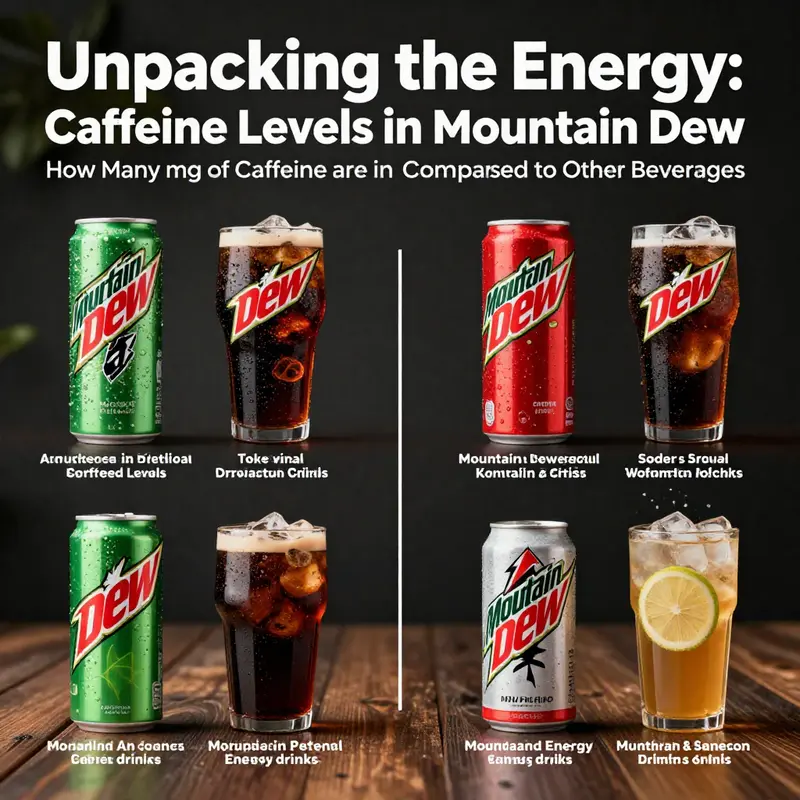
Caffeine is a conspicuous companion in many everyday choices, and among popular beverages, Mountain Dew stands out for delivering a predictable, moderate dose that can influence both mood and focus without the intensity of an energy drink. A standard 12-ounce can contains about 55 milligrams of caffeine. This figure sits in a middle ground when you map it against a broad spectrum of common caffeinated drinks. It is enough caffeine to be noticeable for many people, yet not so high that it triggers the jitters or a sudden crash typical of higher-dose options. Understanding that 55 mg is not a one-size-fits-all number helps frame how people incorporate this beverage into their routines. Some reach for it for a morning lift before tasks that require a bit of alertness, others as a mid-afternoon pick-me-up, and a few use it to nudge a workout or a study session over a modest hurdle. The value, then, is less about a dramatic surge and more about a steady, reliable cue to stay attentive for a stretch of time.
In the broader world of caffeinated beverages, that 55 mg translates to a position somewhere between a cup of regular coffee and a lighter energy-forward option. Coffee, depending on grind, roast, and brew, typically yields roughly 95 to 200 mg of caffeine per 8-ounce serving. That range reflects the variability in preparation methods—from a simple drip to a robust, darker roast—whose practical effect is to deliver a stronger kick than the Mountain Dew baseline. An espresso shot, on the other hand, delivers about 63 mg of caffeine in a single ounce. The concentration is higher, but the volume is much smaller, which means the caffeine is delivered in a more intense, shorter-lived burst. Put side by side, Mountain Dew’s 55 mg per 12 ounces presents a gentler profile than a standard cup of coffee and a lighter profile than a robust espresso, yet more caffeine than most traditional colas. This relative standing matters because it informs decisions about when and why to choose this drink over others during the day.
Delving into soft drinks as a category, Mountain Dew often carries more caffeine than many of its cola counterparts. For example, Coca-Cola typically clocks in around 34 mg per 12-ounce serving, a figure that’s comfortably below Mountain Dew’s 55 mg. The difference is meaningful for individuals who are tracking their daily caffeine intake with some precision, whether for personal health goals, sleep hygiene, or simply to avoid overconsumption. When compared with energy drinks, the contrast becomes starker. An 8.4-ounce can of Red Bull contains about 80 mg of caffeine, which sits well above Mountain Dew on a per-volume basis, signaling a more pronounced energy effect in a shorter time frame. Yet the Mountain Dew formulation achieves its own compact steadiness: enough to feel a lift, but not a flood, and with a flavor profile that remains recognizable across the standard line of products. This makes it a notable option for those who want a modest energy lift without leaning into the higher octane territory of most energy drinks.
The numerical clarity of caffeine content is only part of the story. The user’s experience of caffeine depends not only on milligrams per serving but also on how the body absorbs caffeine, how quickly it takes effect, and how long it lasts. After ingestion, caffeine typically reaches peak levels in the bloodstream within about 30 to 45 minutes for many people, though individual factors such as metabolism, age, body mass, and concurrent food intake can shift that timing noticeably. The half-life of caffeine—the time it takes for the body to eliminate half of what was consumed—commonly ranges from about three to five hours, again with wide personal variation. In practical terms, a 55 mg dose may offer a mild, noticeable lift for several hours for some individuals, while others might feel only a gentle alertness that fades more quickly. This nuance helps explain why Mountain Dew can fit into different daily rhythms: it is often enough to sustain concentration during a late-morning push or a post-lunch slump, yet not so large a dose that it disrupts sleep if consumed earlier in the day.
The consistency of caffeine content across the standard Mountain Dew flavors further reinforces its position as a reliable choice for people who want a familiar experience without having to read a nutrition label intensely every time. Original Mountain Dew, Code Red, and Live Wire (Wild Orange) share a common caffeine footprint in the neighborhood of 55 mg per 12-ounce can. That uniformity matters, because it creates a predictable expectation for the consumer. When a product remains steady across flavors, the decision to choose one variant can hinge more on taste preference or brand affinity than on concerns about caffeine load. For someone balancing a busy schedule with a need for quick energy, that predictability can be as valuable as the taste itself. Of course, exceptions exist. Limited-edition or specialty versions may deviate slightly in caffeine content due to formulation changes, seasonal adjustments, or collaborations. In practice, though, the core line maintains this average, supporting the brand’s identity as a high-energy beverage with a reliable caffeine cadence.
From a health and daily-use perspective, this level invites readers to consider how it fits into their broader caffeine ceiling. Many health authorities emphasize that a moderate daily total up to about 400 mg of caffeine is generally considered safe for most healthy adults. For someone who drinks one Mountain Dew a day, that intake would account for a fraction of that recommended ceiling, leaving room for other sources—coffee in the morning, tea in the afternoon, or a small cocoa-based beverage in the evening—without crossing into uncomfortable territory. Individuals who are caffeine-sensitive or who have certain medical conditions should of course tailor their intake with care. Pregnant individuals, for example, are often advised to limit caffeine consumption, and children or teenagers are typically encouraged to keep caffeine exposure low. These guidelines are not a single rule but a framework that helps people align caffeine choices with personal health, sleep patterns, and daily responsibilities.
The flavor and the energy effect often travel together in conversations about Mountain Dew. The brand’s citrus-forward taste—bright, zingy, and aggressively refreshing—tends to pair well with the notion of a light stimulant without overpowering other sensory experiences. Flavor and function do not always align in straightforward ways, and that is part of why caffeine content matters: it is the measurable, comparable factor that helps people decide whether a drink will support focus during a task, sustain a conversation with a colleague, or provide a pause during a long driving stretch. If the goal is a measured lift in mood and attention without the intensity of a high-caffeine product, 55 mg per serving becomes a practical benchmark. It’s enough to be noticeable, but not so much that it dominates the moment or influences sleep at an ordinary daytime hour.
Understanding these numbers in context also invites a broader reflection on how people manage caffeine across a day shaped by work, study, and recreation. Some individuals cluster caffeine around specific windows—mid-morning, after lunch, or before workouts—using beverages that fit those windows without oversaturating their system. Others prefer to reserve stronger or more complex caffeine sources for particular tasks that demand intense attention, such as early morning reading, complex problem-solving, or extended driving. Mountain Dew, with its standard 55 mg dose, can function as a dependable bridge between these patterns, offering enough kick to stay engaged without triggering the kind of overstimulation that prompts self-imposed pauses. Reading the numbers openly can also reduce guesswork. Rather than relying on memory or assumptions about how much caffeine a drink contains, a quick check of the label or a trusted resource confirms the actual content and helps plan the day with more predictability.
For readers who want to explore the topic further beyond the 55 mg baseline, the landscape of caffeine content across beverages is rich and varied. The same 12-ounce frame that holds Mountain Dew contains more caffeine than many traditional sodas, but far less than caffeinated shots or some energy beverages, when viewed on a per-ounce basis. Those who crave a stronger lift might consider coffee or concentrated energy products, while those seeking a lighter touch could opt for tea, which varies widely in caffeine depending on leaves and brewing methods yet often sits near the lower end of the spectrum compared to Mountain Dew. The key is to recognize that caffeine content is not the sole determinant of how a drink affects you. The total package—sugar, acidity, carbonation, and even the presence of other additives—shapes the overall energy experience. Sugar, in particular, can influence how quickly caffeine is perceived and how long a burst of energy lasts, underscoring that the relationship between caffeine mg and practical effect is not purely linear.
As you navigate this landscape, consider how a single can of a familiar citrus-flavored beverage can function as a flexible tool in your daily routine. If timing and consistency are your priority, the standard 55 mg dose provides a reliable lift without overwhelming your system. If taste and aroma steer your preference, you’ll find flavor variants that retain that same caffeine baseline, allowing you to choose based on profile rather than dose. And if you’re curious about how this particular caffeine content stacks up against your other daily sources, a quick, side-by-side comparison can be illuminating. To dig deeper into the caffeine content of Mountain Dew itself, you can explore one dedicated resource that discusses this exact topic in a concise, accessible format: Caffeine content MT Dew. This deeper dive helps bring the numbers into a practical frame, showing how the beverage’s caffeine load fits into broader dietary patterns and personal energy management.
The conversation around caffeine is as much about habit and context as it is about milligrams. For people who are sensitive to caffeine, even 55 mg can feel more impactful, especially if consumed on an empty stomach or late in the day. Conversely, those who routinely tolerate caffeine well may not notice a strong effect until they add in other stimulating factors, such as a busy schedule or a stressful environment. The point is not to chase a particular buzz but to understand how a consistent dose interacts with your physiology and daily rhythm. In that sense, Mountain Dew’s standardized caffeine content becomes a practical anchor: it gives consumers a predictable baseline from which to measure personal response and adjust consumption accordingly.
Finally, the broader question of how many milligrams of caffeine are in a given drink rarely exists in isolation. People often juggle multiple sources, from beverages to chocolate to medications, into a single day, and the cumulative total matters. Keeping track, even roughly, can help maintain balance between alertness and rest. If you’re curious about how Mountain Dew’s caffeine content compares with other popular choices in everyday life, a reliable, external review offers a wider lens on the topic. For a broader perspective on caffeine across beverages, see Healthline’s overview of caffeine content, which provides context beyond one brand or one category.
In the spirit of practical, actionable information, this chapter has kept the focus squarely on the numbers that shape decisions at a glance while weaving in the context that makes those numbers meaningful. Whether you’re budgeting your caffeine for a busy workday, planning study sessions, or simply trying to enjoy a flavorful drink without overdoing it, the 55 mg per 12-ounce serving offers a reliable, mid-range option within the caffeine ecosystem. For those who want to explore the topic even further or verify the numbers against the latest product formulations, the linked resource above provides a straightforward way to see how this beverage stacks up and how it fits into a broader caffeine-conscious lifestyle.
External note for readers seeking broader verification and broader beverage comparisons: Healthline provides an external, in-depth look at caffeine content across beverages, which can help place Mountain Dew in a wider context and offer additional perspectives on how caffeine interacts with other dietary components. https://www.healthline.com/nutrition/caffeine-in-mountain-dew
Final thoughts
In conclusion, understanding the caffeine content in Mountain Dew—approximately 55 mg per 12-ounce serving—allows business owners to align their marketing and product strategies with consumer preferences. With its notable caffeine level consistent across most variants, Mountain Dew appeals to a demographic that seeks both refreshment and energy. By effectively communicating this value to consumers, businesses can enhance their sales potential and create loyal customer bases. This informative analysis not only helps navigate the competitive beverage landscape but also fosters an understanding of consumer behavior shaped by caffeine consumption.