
Understanding the caffeine content in beverages like Mountain Dew is crucial for business owners. This article explores the standard 55 milligrams of caffeine per 12-ounce bottle, its effects on consumers, and how it compares to other caffeinated drinks. Additionally, we’ll examine current consumer trends and preferences, guiding business owners in making informed decisions about their beverage offerings.
55 Milligrams and a Mild Jolt: Understanding Caffeine in a Popular Citrus Soda Bottle
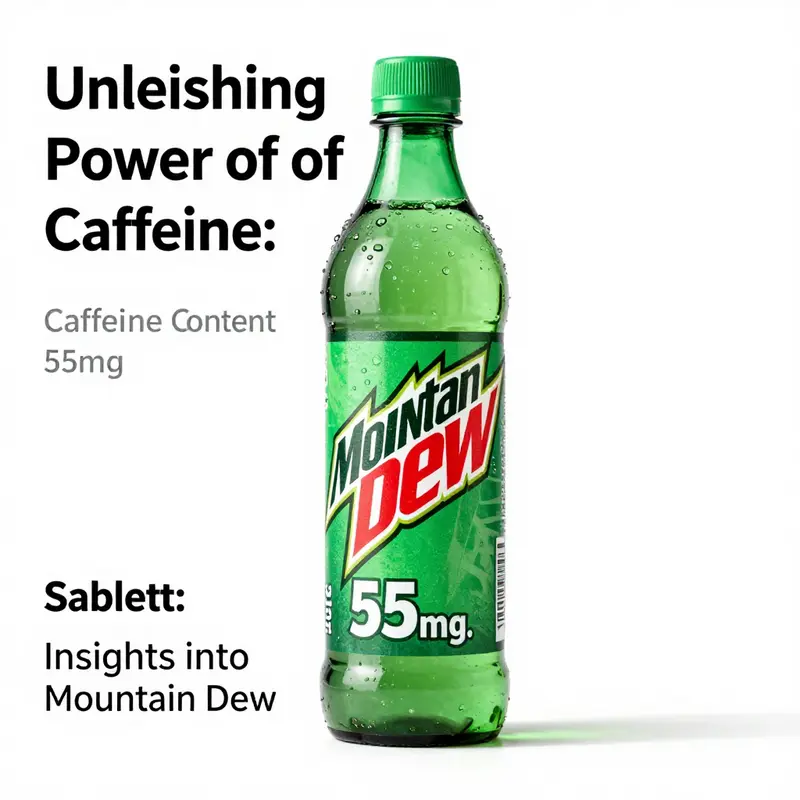
A standard 12-ounce serving of a familiar citrus-forward soft drink carries about 55 milligrams of caffeine. That figure serves as a practical reference for readers assessing a quick energy lift within a daily routine. In comparison with coffee or energy drinks, 55 mg appears modest, but it is not negligible, especially for multiple servings or caffeine-sensitive individuals. In context, 55 mg is the commonly cited amount on Nutrition Facts panels for mainstream products, providing a baseline for conversations about daily caffeine intake and how a single bottle can influence alertness, mood, and sleep.
The caffeine in carbonated soft drinks comes from a carefully balanced formulation designed to deliver a mild lift without bitterness. The 12-ounce standard has endured as an industry benchmark, while differences across flavors or regional variants can cause small deviations. In practice, consumers should check the Nutrition Facts panel to confirm the caffeine content of the exact bottle they hold.
To connect numbers with behavior, consider that in the morning 55 mg can contribute to wakefulness and focus, while in the afternoon it may help fend off a post-lunch slump. For some, it can disrupt sleep if consumed late. The key idea is that 55 mg is a defined dose used to support consistency across products, not a universal prescription.
The broader caffeine landscape has grown more complex, with packaging, size, and formulation affecting the perceived effect. A larger bottle or stronger variant can alter the experience even if the per-serving amount remains similar. The 55 mg figure remains a useful anchor for shoppers tracking total daily caffeine exposure and making informed choices about timing and sources.
Readers seeking precise data should rely on the official Nutrition Facts and the manufacturer site. Acknowledging occasional deviations for specialty items, the 12-ounce standard remains the anchor point for most discussions about caffeine in this beverage class. In sum, 55 mg per 12-ounce bottle offers a practical, transparent measure that helps readers plan their caffeine intake while enjoying a refreshing citrus beverage.
Buzz in a Mountain Dew Bottle: The Real Story of Caffeine, Energy, and the Trade-offs

A bottle of Mountain Dew is more than a beverage with a bright lemon-lime spark. For many, it is a compact energy packet, a quick moment of clarity in a crowded day. The caffeine inside a typical 12-ounce bottle is roughly 54 to 55 milligrams, a number that glides into everyday conversation as a practical benchmark for what a mid-range caffeinated drink can deliver. That slight variation—from 54 to 55 mg—exists because product formulations shift by region and by the exact product line. Yet, despite minor fluctuations, the narrative around Mountain Dew’s caffeine content remains consistently that it sits between a standard cola and a cup of coffee. In plain terms, it is more stimulating than many sodas but less intense than a regular coffee, which helps explain why it is a popular choice for an immediate energy lift without the full kick of a hot brew.
When people compare Mountain Dew to other caffeinated beverages, the contrast becomes a story about context and consequence. A typical cola clocks in around 34 milligrams per 12-ounce serving, a figure that many might consider modest for a daily pick-me-up. A cup of coffee, by comparison, commonly delivers about 95 milligrams in a standard 8-ounce cup, a level that can feel like a sharper shove toward wakefulness. Mountain Dew therefore occupies a middle ground. It offers a tangible boost, enough to sharpen attention and push back fatigue for a while, but it does not overwhelm with the intensity many associate with coffee. That positioning helps explain its enduring popularity among students, night-shift workers, drivers who need a quick alert, or anyone who wants a brisk moment of focus without a long caffeine cascade.
The practical implications of those numbers show up in everyday behavior. In the right dose, caffeine acts as a mild stimulant that can improve alertness, reaction time, and concentration. The effects that many notice after sipping Mountain Dew can feel like a quick reset: a clearer sense of attention, a momentary lift from fatigue, and a transient sense of cognitive steadiness. These benefits, while welcome, are not universal, and they come with a caveat. The same compound that sharpens attention can also tilt the balance toward restlessness or discomfort if consumed in excess or late in the day. It is easy to overestimate how much a single bottle can do, especially in a culture that often associates caffeine with productivity and efficiency. The human body does not always interpret caffeinated signaling the same way from one person to the next, and timing matters as much as quantity.
Within the broader landscape of caffeine, Mountain Dew presents a case study in how a familiar everyday product can serve as a convenient energy source without demanding a ritual or a cup. For those who prefer a cold, carbonated option, the beverage offers a discrete dose that can be consumed quickly, with relatively predictable effects. The idea of timing—when the caffeine is consumed and for how long its effects last—becomes as important as the amount itself. A student pulling an all-nighter might reach for a bottle to regain alertness during a late study stretch, while a commuter on a morning route could rely on that same boost to kickstart a morning routine. In such scenarios, the caffeine content and the pace at which it influences alertness matter nearly as much as the taste or the brand symbolism. The practical takeaway is simple: Mountain Dew provides a noticeable but moderate stimulant effect, enough to influence daily decisions, yet not so potent that it becomes the sole driver of mood or performance.
The science behind caffeine’s effects helps illuminate why those numbers translate into real-world sensations. Caffeine acts primarily by blocking adenosine receptors in the brain, a mechanism that reduces the sensation of fatigue and increases wakefulness. The result can be a sharper sense of focus, increased mental energy, and a temporary bounce in mood for many people. However, the same mechanism that promotes alertness can yield side effects when intake is higher than what an individual’s physiology can comfortably tolerate. Jitteriness, anxiety, and a faster heart rate are common responses to more substantial caffeine exposure or sensitivity. These responses are not universal, but they are sufficiently common to deserve mindful attention, especially for people who are already prone to anxiety or who have heart rate sensitivities.
One of the more nuanced parts of the caffeine conversation is how it affects sleep. For most adults, caffeine consumed earlier in the day can still influence sleep latency and sleep quality several hours later. Mountain Dew’s caffeine content—while moderate by comparison—still holds enough power to disrupt sleep if consumed late in the evening or close to bedtime. The relationship between caffeine and sleep varies from person to person. Some can drink a bottle in the late afternoon without noticing any disturbance, while others find themselves awake long after they intend to fall asleep. This variability has practical implications for routine planning and for those who are trying to manage sleep hygiene while maintaining daytime energy. The lesson here is not to demonize caffeine but to recognize that timing and personal sensitivity are as critical as the dose itself.
Beyond the overt physical effects, the psychological landscape surrounding caffeine, especially at higher intakes or with frequent consumption, is more intricate. Some research points toward links between high caffeine intake and negative psychological outcomes in adolescents, including heightened anxiety or depressive symptoms. It is important to emphasize that these findings are not uniform and are shaped by a mix of withdrawal effects, overall consumption patterns, and other lifestyle factors. Adolescents, in particular, can be more vulnerable to the mood and behavioral shifts that caffeine may provoke, underscoring the need for careful, developmentally aware guidance rather than universal judgments about a single beverage. For adults, the mood effects tend to be more nuanced, interacting with baseline stress, sleep patterns, and individual tolerance. In other words, caffeine’s impact on mood is not a one-size-fits-all equation; it is a personal calculus that can shift with context, habit, and physiology.
Guidance for those who want to navigate caffeine intake without sacrificing energy or well-being leans toward moderation and timing. The core recommendation is straightforward: moderation is key. For children and adolescents—the demographic for whom caffeine can be more disruptive—the American Academy of Pediatrics emphasizes limiting intake due to potential effects on development and behavior. For most adults, occasional Mountain Dew consumption is unlikely to cause harm, while regular or excessive intake should be approached with caution and self-awareness. The practical approach to drinking Mountain Dew, then, becomes less about moralizing a single product and more about understanding personal limits, monitoring effects, and aligning intake with sleep, stress, and activity levels.
In practical terms, language around caffeine often focuses on numbers, but the lived experience is about balance. A single 12-ounce bottle can provide a useful burst of attention when a morning slump or mid-afternoon fatigue hits. But as with any stimulant, the same dose can become a source of restlessness, tension, or sleep interference if used too frequently or too late in the day. The story is not about shunning caffeine but about integrating it into a broader pattern of energy management. Hydration, nutrition, and adequate sleep always play a role in sustaining energy, and caffeine should be considered a supportive tool rather than a replacement for healthy habits. For readers seeking a quick reference on the exact caffeine content in Mountain Dew, a concise explainer is available at the resource caffeine-content-mt-dew.
In the larger narrative of caffeinated beverages, Mountain Dew occupies a space that makes it accessible and familiar. It is not a luxury coffee or a niche energy shot; it sits at the intersection of taste, culture, and practical energy needs. That positioning can influence how people choose to use it—whether to power down a late project, to endure a long drive, or to push through a demanding class schedule. The health considerations are real and deserve respect, but they are not a verdict on the beverage itself. They are a reminder that every caffeinated choice exists within a web of personal health, daily routines, and long-term goals. The aim, then, is to cultivate a mindful relationship with caffeine: knowing the dose, understanding your own sensitivity, and aligning consumption with your sleep, mood, and energy needs. When done thoughtfully, Mountain Dew can be part of a balanced approach to staying alert without tipping into the uncomfortable side effects that can accompany overuse.
As we move forward in this exploration, it is useful to keep in view how the caffeine landscape evolves across products and markets. The simple fact remains that Mountain Dew’s caffeine level lands in a practical middle ground—enough to provide a noticeable lift, but not so high that it demands the kind of careful usage that stronger caffeinated beverages might require. This realism can empower readers to make choices that fit their schedules, their health considerations, and their personal thresholds for alertness, jitteriness, or sleep disruption. In other words, understanding the caffeine content in a Mountain Dew bottle is less about counting milligrams in isolation and more about fitting a dose into a broader lifestyle strategy that respects both moments of high demand and the quiet needs of rest and recovery. The chapter on caffeine in a bottle of Mountain Dew thus becomes not a simple recital of facts but a narrative about how a familiar drink can press on our routines and still leave space for healthful balance across the day.
External resource for further reading: Mayo Clinic’s overview on caffeine content and its effects across beverages offers a broader context for these numbers and experiences. https://www.mayoclinic.org/healthy-lifestyle/nutrition-and-healthy-eating/in-depth/caffeine/art-20049216
A Bottled Buzz in Context: Caffeine in a Citrus Soda and Its Benchmarks Among Popular Beverages
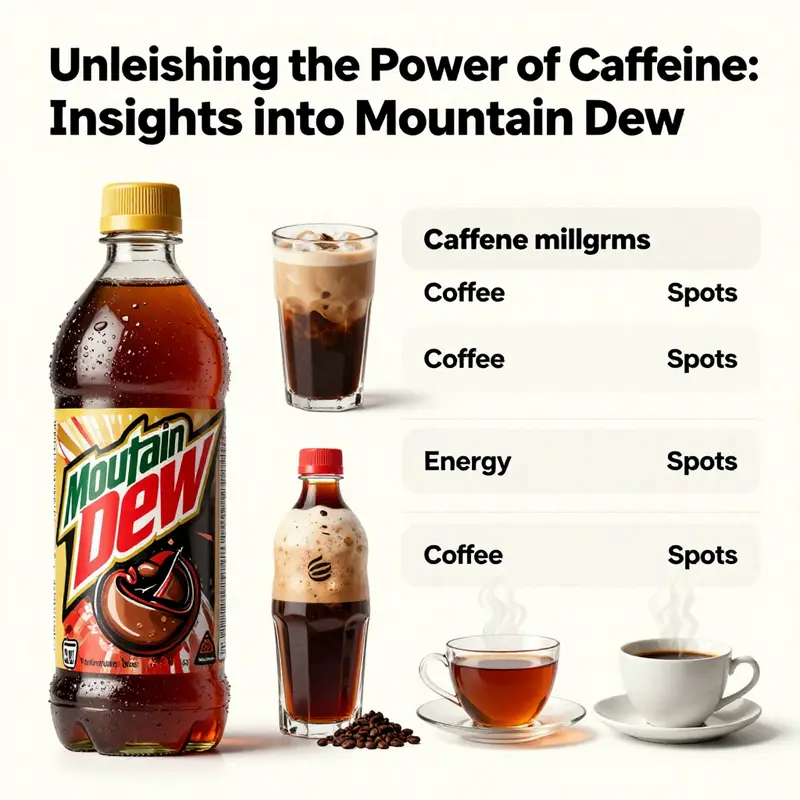
Caffeine in a bottle can feel like a quiet hinge between refreshment and a quick burst of alertness. In the familiar 12-ounce serving of a widely consumed citrus soda, the caffeine dose sits around the mid‑range for soft drinks—roughly fifty‑plus milligrams. The exact number can drift a notch or two depending on the batch, the country, or the specific product formulation, but a standard reference point hovers near 54 to 55 milligrams per 355 milliliters. This level places the drink in a distinctive category: more caffeinated than many regular colas yet far below what a cup of coffee delivers. The result is a beverage that can feel energizing without the jittery overdrive some people associate with other caffeinated choices. It’s a formula that appeals to those who want a quick lift with a flavor profile they enjoy, rather than a café ritual or an energy shot in a can.
That context matters because caffeine is not a diary entry you can read in a vacuum. It interacts with sugars, flavors, and the overall sensory experience of a drink. The same caffeine that helps you wake up can also amplify sweetness, heighten citrus tang, or alter the perceived body of a beverage. For many, the appeal lies not only in the caffeine count but in the way the beverage delivers that caffeine alongside a familiar, palate-cleansing flavor. In the case of a citrus-forward soft drink, the crisp acidity and bright citrus notes can make the caffeine feel like a smoother lift, a lift that doesn’t demand a separate glass of water to accompany it. The exact caffeine amount, then, becomes a practical detail in a larger story about how people choose beverages to fit moments—a busy morning, a transition between tasks, or a quick break during study or work. For readers who want a precise figure, the official product nutrition panels typically place this level in the 50s, and it’s important to treat the number as a guideline that can vary slightly by product variation and regional formulation. See the deeper breakdown in the linked internal resource for the exact numbers and regional differences: Caffeine content mt dew.
In the broader landscape of caffeine delivery, that fifty-some milligrams in a single bottle still positions the citrus soda as a notable player among beverages that people commonly select for a quick uplift. When you place this amount alongside other popular choices, the contrast becomes instructive for understanding how different categories approach caffeine. A standard cola typically falls in the mid‑30s to low‑40s milligrams per 12-ounce can. The difference may seem small in isolation, but over the course of a day, it compounds—especially for someone who alternates between beverages for taste, habit, or a perceived need for alertness. A neighboring category, the energy drink, can push caffeine per serving higher, with small cans sometimes carrying around 80 milligrams. The mathematics of caffeine becomes straightforward: the same milligrams, spread over different serving sizes, create varied concentrations and different daily patterns of consumption. And then there is coffee, the benchmark against which many other caffeinated beverages are measured. A 12-ounce cup from a major coffee source often lands well above 200 milligrams, a stark contrast to the citrus soda’s smaller lift. The hierarchy is clear, but the stories are not. People reach for a beverage not just for the caffeine amount but for the moment it helps them navigate—a schedule, a commute, or a deadline.
To understand what those numbers feel like in everyday life, it helps to convert them to per-ounce intensity rather than per-serving totals. The citrus soda’s caffeine delivers about 4.8 milligrams per ounce, a rate that is substantial for a soft drink but modest next to a cup of coffee, which hovers around 20 milligrams per ounce for many standard brews. Compare that to a small energy drink, where roughly 80 milligrams in 8.4 ounces translates to nearly 9.5 milligrams per ounce. In this per‑ounce frame, the citrus soda feels like a bridge between soft drinks and stronger caffeinated formats: enough concentration to be noticeable, but not enough to eclipse the more potent options that many people reserve for a different part of the day or for a more intense lift. Those ratios matter because they shape user expectations. A consumer who sips the citrus soda with a sense of a quick pick‑me‑up often experiences a smoother, steadier sense of alertness as the caffeine interacts with the beverage’s other ingredients, especially its sugar and citrus acidity.
This is not merely an arithmetic exercise. The practical implications extend to daily routines, where people must balance caffeine intake with other sources across meals, snacks, and drinks. The coming together of caffeine with sugar, flavor, and liquid volume creates a combined effect that differs from the sum of its parts. In a beverage like the citrus soda, the caffeine contribution sits alongside a familiar sweetness and tartness that most people enjoy as a satisfying, refreshing option. The experience can be described as a quick lift without the intensity some seek from a pure energy drink or a coffee shot. Yet because the caffeine level is higher than in many other soft drinks, it remains important for consumers to monitor how often they reach for this drink in a given day. For balance, it helps to consider personal sensitivity to caffeine, usual intake from other sources, and any guidelines or restrictions from health care providers or researchers. As the evidence base evolves, readers may find it helpful to track their own responses to different caffeinated beverages and to compare not just the total milligrams per serving but also the pattern of intake across the day.
From a labeling perspective, the standard‑issue caffeine figure is a practical anchor. It informs shopping decisions, office break routines, and social rituals around beverages. It also raises questions about how to interpret the numbers when products vary by region or when manufacturers introduce new formulations. Caffeine content can shift with changes in sweeteners, flavor profiles, or even packaging sizes. In some markets, the same product line can display slightly different milligrams per serving, reflecting regulatory or formulation differences. For readers who want the most authoritative and up‑to‑date data, the official site of the beverage line offers the latest breakdowns across flavors and regions. This is especially useful since the numbers cited in consumer discussions can drift over time as new flavors or reformulations roll out.
For readers seeking a deeper dive into the exact caffeine figure for the citrus soda in question, the linked internal resource provides a regionally nuanced breakdown that mirrors real‑world choices: Caffeine content mt dew. This reference helps anchor the discussion in concrete figures while acknowledging that the per‑serving amount can vary. It also highlights how many people think in terms of “how much will this drink wake me up” rather than simply “how many milligrams are in the bottle.” The human element—how people feel after a few sips, how they plan their day, and how they regulate caffeine intake—shapes the takeaway just as much as the numbers themselves.
Against that backdrop, it’s useful to place the citrus soda alongside other popular choices, not to promote a single pick but to illuminate the caffeine landscape’s texture. A leading cola typically clocks in around the mid‑30s milligrams per can, a few points lower than the citrus soda. A widely consumed cola variant sits closer to the high‑30s, offering a slightly different caffeine profile that customers often notice in the context of a snack or a light meal. A well-known coffee shop brew, while not a direct comparison in taste or delivery format, stands as the peak in everyday caffeine exposure for many people—roughly two to three orders of magnitude higher per 12‑ounce serving than the citrus soda. An energy drink, frequently served in compact cans, can deliver a sharp, concentrated caffeine dose in a small package, which some consumers value for its quick, pronounced lift. These comparisons matter because they frame consumer expectations about how a given beverage will influence alertness, mood, and energy during the day.
The broader context also invites a cautionary note about habit formation. The fact that a citrus soda delivers more caffeine than some other soft drinks does not necessarily translate into a universal recommendation or a universal risk. Instead, it highlights a spectrum of options, each with its own sensory profile, sugar content, and caffeine‑delivery style. Some people may welcome a modest but reliable lift without the heaviness of a strong coffee, while others may find that any caffeine, regardless of type, interacts with their physiology in a way that makes mindful consumption prudent. This is especially relevant for individuals sensitive to caffeine, those who consume caffeine later in the day, or people who balance caffeine intake with medications or other stimulants. In such cases, understanding the relative caffeine content across beverages becomes a practical tool for personal planning.
The comparative element is not just about the numbers; it is about the experience and the choices that flow from those experiences. When someone picks up a citrus soda for a quick break, they are choosing a sensory package—bright citrus flavor, a familiar sweetness, a crisp mouthfeel—that coincides with a caffeine lift that is noticeable but not overpowering. The decision is rarely made in isolation. It’s influenced by memory, habit, and even the social context in which the beverage is consumed. That is why the chapter keeps a focus on how caffeine content interacts with flavor and ritual. The same caffeine dose may feel differently when taken with or without a meal, when the palate is clean or full of another flavor, or when the body is in a state of normal activity versus fatigue. In other words, caffeine is not just a number on a label; it is part of a dynamic experience that shapes how people build routines around beverages.
Finally, readers should consider how these data points feed into broader questions about health, lifestyle, and choice. The caffeine content in a citrus soda sits at a level that can contribute meaningfully to daily intake without crossing obvious boundaries for many adults, provided overall consumption remains moderate. Regulatory bodies have established general guidance about safe daily limits, and many health professionals emphasize personal sensitivity, sleep quality, and overall diet as critical factors in determining what level of caffeine is appropriate for any given person. The exact figures can be less important than the pattern and cadence of consumption: how often the beverage is chosen, what other caffeine sources accompany it, and how those choices fit into a larger routine aimed at maintaining energy, focus, and well-being. The comparison to other beverages reinforces that idea. It shows that caffeine presence is only one dimension of a drink’s appeal, and it invites readers to think about caffeine as part of a broader lifestyle matrix rather than as a solitary metric.
External reference: For a direct, external data point from the product’s own channel, consult the official site that hosts the nutrition information and product specifics. This resource provides the most current formulation notes and serving sizes as formulated by the beverage producer: https://www.mountaindew.com/ .
Caffeine, Citrus, and Market Currents: Navigating a Bold Soda’s Trajectory in Today’s Beverage Landscape
Caffeine, citrus, and momentum define a line of beverages that sit at a curious crossroads of performance and personality. In a market crowded with options, the flagship citrus energy soda has built its reputation not merely on buzz but on a careful calibration of taste, effect, and brand story. The contemporary consumer strolls into the aisle with a set of expectations that blend desire for a quick energy lift with a preference for clearer labels, more purposeful ingredients, and a sense of authenticity. The brand that anchors this narrative has long honored its role as a high-energy, bold-flavored option while quietly expanding the definition of what energy can mean in a modern everyday routine. The conversation around caffeine in a single bottle, then, is not just about milligrams; it is about how those milligrams sit in the larger arc of flavor, health-conscious choices, and social signals that shape buying behavior. When we peel back the wrapper, we find that caffeine is a gateway to a larger set of consumer expectations—efficacy, experience, and ethics—all wrapped in an instantly recognizable citrus profile.
The widely cited figure of approximately 55 milligrams of caffeine per 12-ounce bottle remains a touchstone in this discussion. It sits in the middle of the spectrum for caffeinated sodas, offering a balance between a noticeable energy boost and a more approachable flavor experience. This level makes the beverage accessible to both casual consumers and those seeking a steadier uplift during a busy day. Yet the number is not a rigid badge; regional formulations vary slightly, and packaging adjustments can reflect broader marketing and regulatory considerations. It is a reminder that caffeine content is both a technical specification and a narrative device. It signals consistency to regular customers and flexibility to product developers who must navigate evolving consumer expectations, regional tastes, and labeling standards. For a quick reference on caffeine content, see the article on caffeine-content-mt-dew.
Within this landscape, the consumer is not simply chasing caffeine; they are chasing momentum, focus, and a texture of experience that aligns with personal identity. This is where real-time analytics enter the story. During a beverage innovation panel held in late 2025, executives emphasized that the progression of a citrus energy soda is now guided by a three-pronged data approach. Social media sentiment, regional sales performance, and focus group feedback converge to shape flavor development and product strategy. The goal is not to chase every trend but to anticipate how shifting preferences will refract through core attributes: taste intensity, caffeine reliability, and the balance between sweetness and cleaner labeling. The result is a product narrative that preserves the iconic, zesty kick while responding to a demand for simpler ingredients and transparent benefits. In short, the brand aims to be both relentlessly energetic and genuinely legible to consumers who care about what they drink and why.
Three trends in particular have been influential in shaping the current trajectory. First, energy-enhancing beverages that offer more than a caffeine hit. The aim is to deliver sustained alertness, rather than a short-lived spike. In response, the portfolio has explored broader functional storytelling—emphasizing mental clarity and daytime readiness rather than only physical vigor. Second, the incorporation of functional ingredients beyond caffeine. The consumer increasingly expects B vitamins and natural caffeine sources to be part of the equation, signaling a trend toward beverages that claim cognitive and metabolic benefits as part of their core promise. Third, health-conscious options and flavor diversification. Clean labels, reduced sugar, and zero-sugar variants have moved from niche to standard, with the citrus base maintaining its signature brightness even as sugar content shifts. The result is a product ecosystem that can pivot between indulgence and restraint without losing its edge. The citrus-forward flavor remains the anchor, but the city of flavor now contains a mosaic of accents that invite personalized experiences rather than a one-note encounter.
From a procurement perspective, the landscape is equally instructive. The modern supply chain for ready-to-drink caffeinated beverages is no longer a simple path from plant to shelf. It is a complex ecosystem that includes licensed manufacturers, private-label producers, and authorized resellers, each playing a role in ensuring consistent taste, regulatory compliance, and flexible response to demand swings. The sourcing picture underscores a practical truth: consumer preferences can shift faster than traditional planning cycles, and the ability to adapt—without sacrificing safety or quality—becomes a core competitive differentiator. For retailers and distributors, this means heightened attention to supplier capabilities, lead times, and labeling accuracy. In parallel, it reinforces the value of scalable production that can accommodate both flagship formulations and reduced-sugar variants as consumer taste profiles evolve. The result is a resilient supply chain that can deliver the same recognizable citrus punch across a broader spectrum of consumer needs.
Within this framework, flavor diversification is not merely a creative exercise; it is a strategic response to personalization. Limited-edition releases, seasonal blends, and collaborations reflect a broader cultural movement toward experiential consumption. Consumers want something novel enough to be newsworthy, yet familiar enough to feel safe and satisfying. The citrus base offers a reliable canvas for these experiments, providing a core reference point that makes risk-taking feel manageable rather than arbitrary. The emphasis on variety aligns with the broader trend toward exploration in everyday beverages, where people treat their choices as small, meaningful rituals. The brand leans into this with care, balancing the excitement of new flavors with the reassurance of a familiar energy profile and a consistent caffeine cadence. In doing so, it demonstrates how a single product line can remain dynamic without losing its essential identity.
For business decisions, understanding these currents is crucial. The modern consumer does not approach a bottle in isolation; they bring a set of expectations about health, transparency, and convenience. Clean labels and transparent ingredient lists have become a baseline, while the search for functional benefits is increasingly common. The consumer wants to know what they are drinking and why it matters for their daily routine. The brand’s ongoing evolution shows that it is listening—tracking feelings, perceptions, and behavioral nudges across digital and physical spaces. This listening culture helps explain why the formula that has long delivered a dependable caffeine lift continues to be complemented by options with reduced sugar or zero sugar, all while preserving the citrus energy that anchors the experience. It is a delicate equilibrium, one that relies on precise data interpretation, careful formulation, and disciplined marketing that does not overpromise on benefits.
The consumer’s journey with this citrus energy soda is, in many ways, a study in balance. On one hand, the product must deliver a reliable energy lift that supports productivity and alertness in real time. On the other hand, it must align with a growing emphasis on wellness and responsible consumption. The 55-milligram benchmark per 12-ounce bottle remains a practical benchmark for discussions about energy, taste, and value. It communicates a consistent baseline that customers recognize and that product teams can reference when evaluating new variants or adjustments. Yet it is the story behind the number—about trust, predictability, and a brand promise—that sustains long-term engagement. Consumers want to feel confident that the beverage will perform when they need it and taste right when they want a moment of flavor intensity. And they want to see that the brand is mindful of broader health trends without compromising the boldness that first drew them to the product.
In integrating these ideas, the chapter of this narrative moves away from a simple catalog of features toward a more holistic view of what caffeine in a bottle can symbolize in today’s market. It is not merely a matter of calories or milligrams; it is about how a single bottle can anchor a lifestyle—a quick uplift, a taste memory, and a reliable cue in a crowded arena of choices. The discipline behind this approach is clear: blend data-informed flavor development with a commitment to transparency and a flexible portfolio. This fusion keeps the citrus energy soda relevant as consumer expectations shift toward cleaner labels, smarter sugar usage, and measurable functional benefits. It also preserves the core identity that has made the brand a recognizable presence on shelves and in media conversations alike. In this way, caffeine content becomes part of a larger conversation about value, purpose, and experience in modern beverage culture.
What does this mean for the consumer at the point of purchase? It means a more informed decision plane, where taste, energy, health considerations, and personal values intersect. It means recognizing that a baseline caffeine level is an important signal, but not the sole determinant of choice. The brand’s ongoing development—guided by social analytics, regional performance, and consumer feedback—signals that the beverage industry recognizes the need to balance immediacy with consideration. It shows an industry that wants flavor adventures and functional benefits to coexist with cleaner ingredient lists and responsible sugar usage. It also indicates that the emotional appeal of a bold citrus flavor—its brightness, its sense of momentum, its cultural resonance—remains a lasting differentiator in a marketplace where many products can deliver caffeine, but few can deliver a coherent sense of identity in every bottle.
As the market continues to evolve, the implicit lesson is that caffeine in a bottle operates on multiple planes. There is the mechanical truth of caffeine mg, the sensory truth of flavor, and the narrative truth of why a consumer drinks it in the first place. The modern consumer does not want to choose between energy and ethics; they want both, wrapped in a package that feels reliable, traceable, and empowering. The citrus, energy-driven line has mastered that alignment by listening first, formulating second, and marketing with a sense of restraint that acknowledges the growing demand for clarity and health-conscious options. In this synthesis, caffeine content becomes a facet of a broader, more complex conversation about how people fuel themselves, what they value in a brand story, and how a simple bottle can become a reliable companion in a day that demands focus, flavor, and a moment of boldness. The chapter that unfolds from these observations is not merely about a drink; it is about the evolving relationship between energy, taste, and the market that chooses to celebrate both.
External resource: Official site context can be found here for broader product context and official specifications: https://www.mountaindew.com/
Final thoughts
The significance of caffeine content, particularly the standard 55mg found in Mountain Dew, plays a vital role in consumer choices and perceptions. Understanding these nuances can empower business owners to better position their products and meet market demands. Keeping abreast of these insights is essential for those looking to maintain a competitive edge in the beverage landscape.