
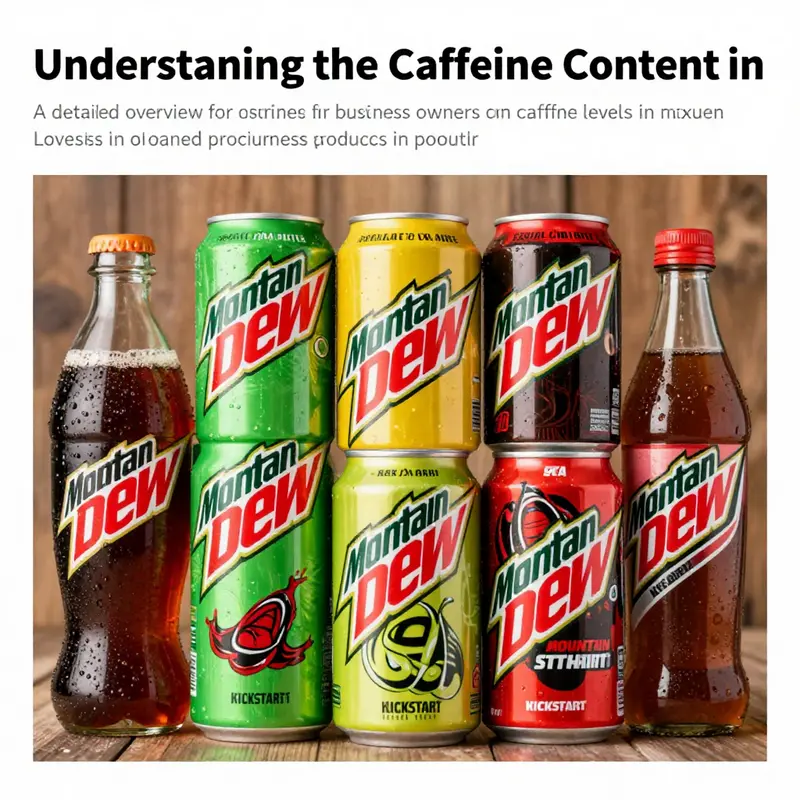
The caffeine content in beverages can influence consumer choices significantly. For business owners in the beverage industry, understanding how much caffeine is in Mountain Dew is essential for meeting customer preferences and formulating marketing strategies. This article delves into the caffeine content of both Regular Mountain Dew and Mountain Dew Kickstart, as well as comparing these levels to other popular beverages on the market. By evaluating these various aspects, business owners can make informed decisions when considering product offerings and positioning in their local markets.
The Buzz Behind the Can: Decoding Caffeine in the Regular Citrus Soda
The question many readers bring to the table is simple, yet it invites nuance: how much caffeine does the regular citrus soda actually contain per can? The short answer is straightforward for a standard 12-ounce serving, but the longer answer reveals the subtle differences that sneak into our daily caffeine tally, depending on product variations, packaging, and even regional formulations. In a landscape crowded with options, understanding the caffeine content of this popular refresher requires not just a single number but a clear map of how that number shifts with size, variant, and even manufacturing nuances. For the curious reader, this is less a numerical trivia game and more a practical guide to managing daily caffeine intake without guessing from memory or relying on rumor.
On the most common measuring stick—a 12-ounce can—the regular version of this iconic citrus beverage clocks in at about 55 milligrams of caffeine. This figure has persisted across multiple sources and remains consistent in data from 2024, which helps anchor discussions that can otherwise drift into anecdote. The 12-ounce standard is a helpful baseline because it mirrors the size most people reach for in a quick pick-me-up or a casual sip throughout the day. When a consumer contemplates replacing a cup of coffee with this drink or mixing it into a daily routine, that 55 mg per can becomes a practical reference point. It’s enough to contribute a noticeable energy lift for many, yet it’s far from the extremes seen in other caffeinated beverages, which opens room for thoughtful planning around daily intake.
A useful way to understand the place of this regular citrus soda in the broader caffeinated ecosystem is through simple comparisons. A well-known mainstream cola, for instance, typically hovers around 34 milligrams per 12-ounce serving. That puts the citrus soda in a higher league for caffeine content by a modest margin, but not in the territory of the most potent caffeinated drinks. The point isn’t to shame or celebrate one beverage over another; it’s to provide context for how caffeine stacks up among the beverages many people reach for at different times of the day. When someone’s goal is to moderate intake, knowing that regular citrus soda can be roughly 20 milligrams above a typical cola helps in planning how many servings fit into a daily limit without unintended overage.
Yet not all versions of this citrus beverage are created equal. There exists a higher-caffeine variant in the same product family, marketed to deliver a stronger lift with the same familiar flavor profile. In that variant, a 12-ounce can carries about 92 milligrams of caffeine. The jump from 55 mg to 92 mg is a meaningful increase—almost a two-thirds higher than the standard version. For someone who has grown accustomed to a steadier dose of caffeine, or for those whose schedules demand a more pronounced afternoon pick-me-up, this stronger variant offers a clear difference in energy delivery. It is not an entirely different product category, but it does shift the caffeine math enough to influence how one counts daily intake. The other attributes of the variant—calorie count, vitamin content, and even juice percentage—further color the decision to choose one version over another at the store. The stronger option, while still a non-coffee source, embodies how product lines can target different consumer needs within the same flavor family.
Delving into the nutrition profile provides additional texture to the conversation. The regular version sits at a modest calorie count per 12-ounce serving, while its higher-caffeine counterpart often lands with a similar or slightly higher energy footprint. The higher-caffeine variant typically carries about 80 calories per can and around 5% juice, alongside vitamins B and C. These extras reflect a marketing approach that frames the beverage as a more balanced or functional option within a broader lineup. Although those numbers might entice certain consumers, the caffeine content remains the primary driver of the lift most people seek. It’s important to understand that the added vitamins or juice do not negate the caffeine’s presence; they simply accompany it, providing a more rounded, if still caffeinated, beverage experience.
To translate these numbers into everyday choices, it helps to consider how caffeine actually behaves in the body. Caffeine reaches peak levels relatively quickly after consumption, typically within 30 to 60 minutes for many people, though this window can vary with age, body mass, metabolic rate, and whether the caffeine is consumed on an empty stomach or with food. The effects—alertness, a perceptible reduction in perceived effort, and a modest boost in mood or focus—are real for many individuals. But caffeine is not a one-size-fits-all stimulant. Sensitivity varies widely. Some people feel anxious or jittery with even small doses, while others welcome a more pronounced lift and can tolerate higher intakes without discomfort. This variability helps explain why two people, drinking the same beverage, might experience notably different reactions.
Labeling practices also shape how consumers approach caffeine in practice. In many jurisdictions, caffeine content is listed per serving on the nutrition label. The “per serving” convention can be straightforward when the product is clearly divided into standard units, such as a 12-ounce can. Yet for people who drink beverages in larger sizes, the math becomes a little more involved: a 24-ounce can or a bottle meant to be shared in two servings multiplies the caffeine content, and without careful attention to serving size, someone might inadvertently exceed their intended limit. The routine habit of consuming a single 12-ounce can morning and another in the late afternoon can total 110 milligrams or more if one chooses the higher-caffeine variant, underscoring the value of reading the label and tracking intake across all caffeinated sources in a given day.
The broader landscape of caffeinated beverages also helps clarify where the regular citrus soda stands. It is neither a high-caffeine energy drink nor a purely non-caffeinated refreshment. It sits in an intermediate space, offering a noticeable but not overwhelming lift relative to a typical energy shot or energy drink, while still delivering a distinct flavor profile that keeps it popular across generations. Those who rely on caffeine to manage daily energy rhythms might find the regular version adequate for some days, while others may lean toward the higher-caffeine variant when they anticipate longer stretches of activity, late-night work, or early-morning starts that demand extra alertness. The presence of caffeine in this context is part of a broader cultural and behavioral pattern—the way people use familiar flavors to signal a moment of pause, a quick reset, or a deliberate nudge toward a more productive pace.
For individuals who want to map caffeine intake over a week, the numbers add up quickly if multiple caffeinated beverages are consumed. Consider a routine where a person drinks one standard serving in the morning and one higher-caffeine variant in the afternoon. That daily total falls around 55 mg and 92 mg on the two days, rather than simply 147 mg spread out across a single day. When every source is tallied, including coffee, tea, chocolate, and even certain medications or supplements, the cumulative caffeine load can approach or exceed commonly recommended daily limits for some people. The practical takeaway is simple: know the per-serving caffeine of what you drink, multiply by how many servings you actually ingest, and keep a running tally to avoid surpassing personal comfort or physician-advised thresholds.
The data points we rely on come from established sources that track caffeine content across beverages. The 55 mg per 12-ounce can for the regular version aligns with recent compilations and is consistent across reputable references, including data published in 2024. Acknowledging the existence of higher-caffeine variants is essential for a complete picture. These figures are not just numbers on a label; they reflect how product formulation, market positioning, and consumer demand intersect in the real world. When someone asks, “how much caffeine is in this drink?” they are often seeking a practical answer for a specific moment—without needing to wade through technical specifications or marketing language. The clarity provided by the simple 12-ounce baseline makes it easier to translate caffeine content into everyday choices.
From a health perspective, the conversation then naturally turns to daily limits and personal tolerance. Most health authorities have historically suggested a range around 400 milligrams per day as a general upper limit for healthy adults. That boundary is a guideline, not a mandate, and it must be interpreted in light of individual sensitivity, medical conditions, pregnancy status, and concurrent stimulant use. For some people, 400 milligrams feels comfortable and manageable; for others, even a fraction of that amount can produce side effects. It is also important to note that caffeine is absorbed rapidly and can interact with other substances or medications, potentially altering sleep, heart rate, or anxiety levels. In practice, this means that a single days’ intake should be considered in the context of the entire day’s caffeine sources, not just one beverage. A thoughtful approach to caffeine looks less like counting cups and more like sculpting a daily profile of energy that aligns with sleep, mood, and productivity.
When readers think about trying to moderate caffeine, practical strategies help bridge the gap between numbers and daily life. One strategy is to stagger beverage choices so that caffeine intake is spread across the day rather than concentrated in a few hours. Another is to alternate with lower-caffeine or caffeine-free options to create intentional boundaries around consumption. For those who enjoy the flavor and ritual of a citrus soda, pairing it with meals or using it as a post-litness treat can help modulate the timing and context of caffeine exposure. Understanding that a single 12-ounce can represents a discrete caffeine dose empowers people to make deliberate choices rather than relying on a vague sense of “it’s probably fine.” The math becomes a useful tool rather than a mysterious variable.
In the end, the regular citrus soda—whether sipped as a modest morning lift or paired with a more robust energy-focused variant—serves as a practical case study in how caffeine content matters more than a single number. It illustrates how formulation decisions, serving sizes, and consumer preferences converge to shape the daily caffeine landscape. For a reader who wants a precise, science-grounded snapshot, the 55-milligram baseline per 12-ounce can provides a reliable anchor. For those seeking a more intense caffeine experience, the stark increase to 92 milligrams per 12-ounce unit in the higher-caffeine variant is a clear, product-driven difference worth noting. And for the majority of daily caffeine planning, the key is balancing intake across all sources, respecting personal tolerance, and using serving size as the meaningful unit of measure rather than a loose estimate. The numbers on the can are more than mere facts; they are practical tools for navigating a caffeinated world with intention and awareness.
For readers who want to explore the broader context of how caffeine content is documented across beverages and how those figures compare in different data compilations, the topic often remains consistent: the baseline for this classic citrus option sits around 55 mg per 12-ounce serving, with a higher-caffeine variant offering around 92 mg. These values, corroborated by recent data and common industry references, give a reliable frame of reference for personal use. It’s a reminder that a single can can contribute meaningfully to daily totals, and that awareness of serving size, product variant, and other caffeine sources can transform a simple purchase into a thoughtful daily habit rather than a source of constant uncertainty. In a world where caffeine pervasiveness seems to grow with every new product, returning to these numbers helps consumers make informed choices that align with health goals and lifestyle needs.
For readers who want a concise reference point as they plan meals, workouts, or study sessions, a quick recap is helpful: a standard 12-ounce can of the regular version contains roughly 55 milligrams of caffeine. A higher-caffeine orange-citrus variant contains roughly 92 milligrams per 12-ounce can. When comparing to a leading cola, which runs around 34 milligrams in the same size, the citrus option falls in a middle tier that’s noticeable but not extreme. The numbers become even more meaningful when you consider the real-world factors of serving size, daily total, and individual tolerance, turning a simple label into a practical daily guide. If you want to dive deeper into the scientific and nutritional side of caffeine in beverages, you’ll find authoritative data that catalogs caffeine content across a broad spectrum of drinks, which serves as a useful reference point for both everyday choices and more deliberate caffeine planning.
External resource: For a comprehensive list of caffeine content across beverages, see the CDC’s Caffeine Content of Selected Beverages. https://www.cdc.gov/nutrition/publications-data/caffeine-content-of-selected-beverages.html
The 92-Milligram Moment: Tracing Caffeine in a Citrus-Fueled Kickstart Beverage

Caffeine often sits quietly behind the gloss of a familiar soda label, waiting to be counted and compared in the same breath as calories, vitamins, and serving size. In the world of citrus-flavored, energy-forward drinks from a well-known soda lineage, the caffeine count is not a simple badge but a calculated tool that shapes how consumers plan their day, their workouts, and their afternoon snacking. When you lift a chilled can that carries a bold orange hue and a promise of steady alertness, you are also lifting a precise amount of caffeine that varies with the size of the can, the exact formulation, and the marketing story that the manufacturer wants to tell. In this chapter we focus on a particular variant designed to deliver a sharper energy lift in a larger serving, and we let the numbers speak for themselves: a 16-fluid-ounce can that carries about 92 milligrams of caffeine. This figure, verified by an official product listing on a major retailer, anchors a broader discussion about how caffeine content is reported, how it scales with package size, and how consumers can translate that information into practical daily decisions. A line of inquiry that begins with a single product quickly stretches into a broader map of caffeine in beverages, where size, flavor, and added ingredients all shift the total stimulant delivered with every sip. To keep the frame precise, we will refer to standard formulations that apply to the U.S. market and acknowledge that regional variations can occur, but the numbers we discuss reflect that familiar baseline you’ll likely encounter in stores and online catalogs alike.
The most striking aspect of the 16-ounce variant’s caffeine profile is not just the absolute number but the rate at which caffeine comes per unit of volume. When you divide 92 milligrams by 16 ounces, you arrive at roughly 5.75 milligrams of caffeine per ounce. That figure sits above the per-ounce content of the more widely known 12-ounce regular version of this beverage, which is commonly cited at around 55 milligrams per can. Doing the quick math, the 12-ounce can delivers about 4.58 milligrams per ounce. In practical terms, the 16-ounce option carries more caffeine overall, but it also stretches that caffeine into a longer, more gradual intake if consumed over time, as opposed to the smaller can’s shorter, more concentrated dose. These arithmetic comparisons are not merely numbers for the curiosity cabinet; they matter when people optimize caffeine intake for workouts, study sessions, or shift work, because the total caffeine consumed in a day is a sum of many such servings across meals and beverages.
The product’s packaging does more than just hold liquid. It signals a broader energy proposition through its accompanying attributes: the formula includes vitamins B and C, calories sit around the 80-mark, and there is a modest share of juice, quantified at about 5 percent. These elements—vitamins, calories, juice content—do not amplify caffeine by themselves, but they contribute to the overall sensory and nutritional profile that many consumers weigh alongside caffeine when choosing a beverage. In this constellation, caffeine remains the primary driver of the wakefulness effect, while the other components contribute to the overall experience—taste, mouthfeel, and a sense of healthful branding that can make a consumer feel like they are balancing energy with a touch of nourishment. The caffeine content, like the other numbers on the label, is anchored in the U.S. market’s standard formulations, and the trust placed in those numbers relies on a combination of regulatory labeling practices and the manufacturer’s own product listings.
From a consumer perspective, the act of choosing this larger, higher-caffeine variant is a trade-off between a longer single-serve experience and the flexibility to split that experience into two smaller portions if desired. Some readers will find that a 16-ounce can suits a longer reading session or a longer workout warm-up, where steady energy is preferred to a quick spike. Others may opt for a smaller 12-ounce can to avoid exceeding a personal caffeine cap or to better align with a daily routine that already includes other caffeinated products. The difference in caffeine per serving thus becomes a practical planning tool: it helps to map out a day’s caffeine budget with a simple math exercise rather than relying on memory alone. And because caffeine interacts with timing, it matters when the beverage is consumed. A morning can can set a different rhythm than an afternoon can, especially if a hydration plan or a meal schedule accompanies the caffeine intake.
Label literacy plays an essential role here. The consumer-facing data—caffeine, calories, juice percentage, vitamins—are all part of a broader labeling ecosystem designed to provide quick, actionable information. Yet behind those numbers lies a subtle but important nuance: caffeine is a psychoactive compound, and its effects depend not only on the amount ingested but also on an individual’s tolerance, recent sleep, and concurrent consumption of other stimulants or medications. The 92-milligram count for the 16-ounce variant represents a standard, headlining figure, but it does not dictate how any one person will feel after a single can. Some readers may be more sensitive to caffeine and will notice effects at lower doses, while others with higher tolerance might not perceive a marked difference until their intake approaches the higher ends of daily consumption. Reading labels with this context in mind helps shield against over- or under-estimating one’s personal caffeine needs.
To connect the numbers with a practical frame of reference, consider how the 92-milligram count aligns with broader daily guidelines. The U.S. Food and Drug Administration has traditionally indicated that up to about 400 milligrams of caffeine per day is a reasonable amount for most healthy adults. This ceiling provides a rough guide for planning, especially on days when multiple caffeinated beverages find their way into a single schedule. The Kickstart variant’s 92 milligrams constitutes roughly a quarter of that daily limit if one were to drink four such cans without other caffeine sources. Of course, real-world consumption rarely aligns with neat four-can blocks, and many readers will encounter a variety of caffeinated products—coffee, tea, energy drinks, and certain soft drinks—in a typical day. In rare cases, individuals with specific medical conditions or sensitivities may need stricter limits advised by healthcare professionals. Pregnant individuals, children, and adolescents generally face stricter recommendations, underscoring why label-reading and an awareness of total intake matter more than any single label claim.
The relationship between caffeine and taste is another dimension worth noting. The caffeine molecule has a familiar bitterness that is subtly masked or offset by sweeteners, citrus notes, and other flavor components. In the case of a citrus-forward, energy-enhanced beverage delivered in a 16-ounce format, the profile often relies on a bright orange-tinted flavor, mild acidity, and a balanced sweetness to keep the caffeine from dominating the palate. The beverage’s overall sensory package—taste, aroma, texture—can influence how quickly a consumer drinks a can and, by extension, how quickly caffeine reaches peak levels in the bloodstream. A quicker finish might deliver a more immediate caffeine rise, while a slower, extended finish can delay absorption and smooth out effects over time. This interplay between flavor and physiology helps explain why some people reach for a larger can during a specific part of the day, while others keep a smaller option in reach for shorter, more targeted bursts of alertness.
In the broader landscape of caffeinated beverages, the specificity of 92 milligrams per 16-ounce serving is a reminder that caffeine content is not a universal constant across products even within a single brand family. Different flavors, different serving sizes, and different marketing intentions can push the caffeine count in one direction or another. The Kickstart variant demonstrates how packaging decisions—16-ounce versus 12-ounce cans—translate directly into total stimulant delivery. When a consumer notes that a larger can carries more caffeine, it is not only a matter of the added volume but also the extended window during which caffeine operates in the body. This connection between form and function is at the heart of how manufacturers design products that meet specific energy needs while still delivering on taste and brand promise.
As we consider the practical implications, it is helpful to examine how a reader might approach this information when shopping or planning. If the goal is to measure total caffeine for a given day, a simple rule of thumb can be used: count the number of 16-ounce servings planned and multiply by 92 milligrams, then add any other caffeine sources. If a consumer prefers to limit caffeine intake to a more conservative level, selecting the 12-ounce alternative—whether to maintain a smaller daily total or to reserve energy for late-day tasks—becomes a straightforward option. The calculus is not about denying oneself a favorite flavor but about aligning intake with personal thresholds and daily schedules. For those who enjoy variety, alternating between larger and smaller formats across a day can provide a tailored energy profile while keeping a rough tally of total caffeine.
The measurement story behind a 16-ounce can of this citrus-forward, energy-enhanced beverage is a case study in how modern consumer products communicate potency. The 92-milligram figure is not just a static number set in isolation; it is embedded in a system of packaging decisions, regulatory labeling standards, and consumer expectations about energy, hydration, and flavor. With a single can, a person can experience a surge of alertness, a steady lift, or a mild, sustained energy depending on how they pace their consumption, their other sources of caffeine, and their own physiology. The fixed quantity—92 milligrams per 16-ounce serving—helps consumers calibrate their intake against the day’s demands, whether that demand is mental focus for work, stamina for a long workout, or simply a moment of wakefulness in the afternoon lull.
For readers seeking a direct, official reference point, the product listing for the 16-ounce Citrus flavor confirms the 92 milligram caffeine content and provides assurance that the number aligns with the manufacturer’s stated formulation. This alignment between listing and real-world packaging helps reduce confusion that can arise when different retailers report slightly different numbers or when regional variations blur the line of comparison. Where label literacy becomes power is in recognizing that the same 92-milligram figure, when scaled to a different can size or a different flavor, can shift in meaningful ways. A 12-ounce version might deliver a lower total caffeine count, while a larger or differently formulated variant could deliver a higher total amount or a different absorption pattern. The key is to anchor expectations to a known baseline, then adjust for serving size, timing, and personal tolerance.
To tie the discussion back to practice: when you are evaluating a beverage in this category, begin with the base serving size and the labeled caffeine amount. Convert to a per-ounce rate if you want to compare across products with different can sizes. Then consider how you plan to consume the product—will you finish a full can in one go, or will you stretch it across a period of time? Finally, reflect on your daily caffeine budget, your sleep quality, and any health considerations that might warrant a more conservative approach. In that kind of thoughtful planning, the numerical detail—92 milligrams per 16-ounce serving—becomes a practical tool rather than a mere trivia fact.
For readers who want to explore related discussions and widen the context beyond this single variant, there is a broader conversation about how caffeine content compares across beverages, including other citrus-forward options and non-coffee sources. The landscape is diverse enough that a few quick checks can prevent unexpected caffeine loads on a given day. A helpful way to deepen this understanding is to consult an in-depth resource on caffeine content across a range of beverages, including this particular product’s standing within the spectrum of caffeinated options. If you’d like to see a concise comparison, you can refer to relevant discussions in the linked article on caffeine content in MT DE W, which situates the 92-milligram figure within a broader framework of daily intake, serving sizes, and label interpretation. For a direct reference, see the linked page dedicated to caffeine content in MT Dew itself.
As a final note on sourcing, the precise number for this 16-ounce variant—92 milligrams per can—has been cross-checked with an official listing that confirms the figure for the Orange Citrus flavor. The listing’s confirmation reinforces the reliability of the baseline figures used in this discussion and highlights how online product pages can serve as quick, transparent references for consumers seeking to verify caffeine counts without having to rely solely on memory or hearsay. The convergence of packaging, labeling, and retailer listings creates a coherent picture: a larger can here delivers a higher total caffeine content than a smaller can, while maintaining a similar per-ounce rate. The takeaway is straightforward: if you plan to monitor caffeine intake closely, you will benefit from calculating by serving size and then aligning that total with your daily consumption plan.
External resources can provide additional context or validation for readers who want to explore the science and policy surrounding caffeine labeling, the biology of caffeine absorption, or comparative beverage studies. For those who wish to review the official listing directly, the product page linked above offers the definitive number in a real-world marketplace setting, illustrating how numbers translate from lab measurements to consumer purchase decisions. The bottom line remains consistent across credible sources: a 16-ounce serving of this citrus-forward, energy-enhanced beverage contains about 92 milligrams of caffeine, with the exact totals varying slightly by batch, formulation, and regulatory labeling practices in the region. For those who prefer a visual anchor, the Amazon listing for the Orange Citrus flavor provides a concrete reference point to accompany the numbers discussed here. External resource: https://www.amazon.com/Mountain-Dew-Kickstart-Orange-Citrus/dp/B07QJYVW3R
Caffeine in Focus: Mountain Dew’s Boost Within the Broader Beverage Landscape
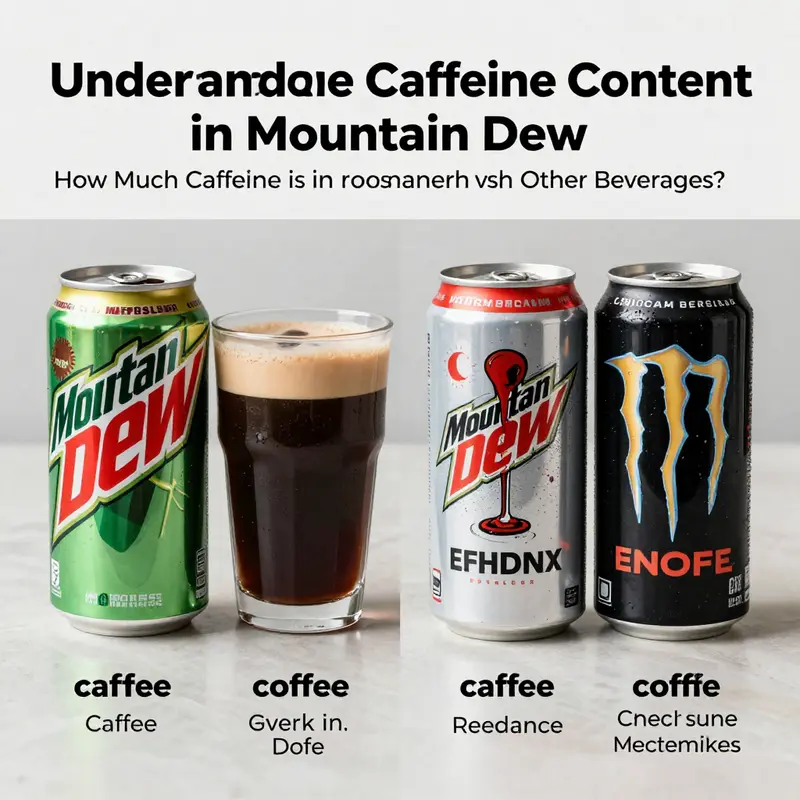
Caffeine is a familiar companion for many people as they navigate daily rhythms, from morning commutes to late-night study sessions. Yet the amount of caffeine in a single serving can feel like a hidden variable, shifting with formulation, serving size, and brand. In this chapter we focus on Mountain Dew, a beverage long known for its bold citrus snap and its place in the casual caffeine conversation. Rather than treating Mountain Dew as an isolated symbol of energy in a bottle, we position it alongside a spectrum of common drinks—colas, other sodas, and the more concentrated fuel of energy drinks—and examine how its caffeine content stacks up when people weigh flavor, calories, and dose against their own caffeine needs. The picture that emerges helps readers gauge what a typical 12-ounce can can deliver, how that dose compares to familiar rivals, and what choices exist for those who want less, more, or a different kind of caffeine experience.
Beginning with the core numbers helps anchor the discussion. In its regular formulation, Mountain Dew delivers about 55 milligrams of caffeine per 12-ounce can. That is a respectable jolt when you consider the alternative beverages that share the shelf—colas and other standard sodas—where the caffeine counts sit significantly lower. A 12-ounce can of Coca-Cola, for instance, carries roughly 34 milligrams of caffeine, and Pepsi clocks in around 38 milligrams for the same size. Those figures create a practical benchmark: Mountain Dew’s caffeinated kick sits notably higher than classic colas, but it does not vault into the realm of high-energy drinks that are engineered for a more intense caffeine experience. The comparison becomes even more tangible when you consider serving size and caffeine density. A consumer who switches to an 8-ounce serving of a typical energy drink might encounter around 80 milligrams of caffeine, a level that nearly doubles Mountain Dew’s dose on a per-ounce basis, even though the volume is smaller. This framing helps readers see why Mountain Dew is often described as having a stronger kick than some sodas while remaining a milder option than most energy beverages.
Mountain Dew’s caffeine story broadens when we look at its variants. The Original Mountain Dew and Code Red, two of the brand’s most enduring flavors, sit in the same neighborhood: around 54 to 55 milligrams of caffeine per 12-ounce can. Live Wire, which sports a lighter, zesty orange profile, is reported to deliver a similar caffeine punch. The takeaway is not just about one fixed number; it is about a family of formulations that maintain a consistent caffeine rhythm within a 12-ounce framework. For readers who favor a straightforward apples-to-apples comparison, this consistency across the core line helps demystify the experience: you can expect roughly the same caffeine baseline whether you choose Original, Code Red, or Live Wire, with only minor deviations depending on batch and market. That consistency is particularly relevant for people who monitor their daily caffeine intake and want a dependable anchor in their beverage choices.
The practical implications of Mountain Dew’s caffeine level show up in real-world decisions. For someone who enjoys a bold, citrus-forward flavor and wants a caffeine lift that is more pronounced than a typical cola, Mountain Dew represents a compelling option within the realm of regular sodas. It is not designed to replace a dedicated energy drink for someone who needs an aggressive caffeine dose, but it does provide a meaningful boost for those who want a noticeable effect coupled with a palatable, familiar taste. The higher caffeine footprint relative to standard colas makes Mountain Dew a go-to choice for daytime blocks that demand a little extra alertness, especially when sugar and hydration needs are both considerations. It is also worth noting that caffeine is only one part of the sensory experience; Mountain Dew’s bright citrus flavor and carbonation contribute to how the drink feels in the moment, which can influence how people perceive the overall energy effect.
For readers who want a more nuanced perspective on how Mountain Dew compares with other caffeinated beverages, it is helpful to step back and consider the broader landscape. A 12-ounce serving of Coca-Cola, with about 34 milligrams of caffeine, sits closer to the middle of a spectrum that includes both lighter caffeinated options and stronger ones. Pepsi follows at roughly 38 milligrams per 12-ounce can, a touch higher than Coca-Cola but still well below Mountain Dew’s regular 55 milligrams. In contrast, the energy drink category introduces a different scale entirely. Red Bull, for example, comes in an 8.3-ounce can with around 80 milligrams of caffeine, a density that exceeds Mountain Dew’s by nearly 50 percent in a much smaller volume. The comparison underscores a practical truth: caffeine content is not a single number to memorize but a relationship between dose, serving size, and the kind of product you choose. A slight adjustment in portion can move you from a modest perk to a more pronounced stimulant effect, and the context of consumption—whether it’s a morning routine, a study session, or a late-afternoon pick-me-up—shapes the perception of how strong that effect feels.
From a nutritional vantage point, the differences matter because they influence how people plan their caffeine intake across the day. For some readers, Mountain Dew’s 55 milligrams per can may align with a balanced intake alongside meals and intermittent snacking, while others may seek to limit their caffeine to fewer than 100 milligrams per day, or keep it within a threshold that aligns with personal sensitivity or medical guidance. The presence of other ingredients in Mountain Dew, such as sugar content and carbonation, also informs how a caffeine boost feels. The sugar can amplify short-term energy spikes for some individuals, followed by a potential crash that can complicate energy management. Those who monitor sugar intake may weigh Mountain Dew’s caffeine against its calorie count and sugar load, which in the regular formulation is around the 170 to 180 calorie range per 12-ounce can, depending on market variation. In this sense, the caffeine count cannot be fully interpreted in isolation; it interacts with carbohydrates, flavors, acidity, and the general appetite response that a citrus soda can provoke.
For readers who want a singular, focused reference to Mountain Dew’s caffeine, there is a concise breakdown that emphasizes the core figures across the product family. If you would like to see a dedicated, in-depth chart that maps caffeine by Mountain Dew variant, you can explore a post specifically dedicated to the caffeine content of Mountain Dew. Caffeine content of MT Dew. This linked resource consolidates the numbers in a way that complements the narrative here, offering a precise, variant-by-variant snapshot for those who prefer quick reference over narrative context. While the present chapter emphasizes comparisons across beverages, the linked piece provides a practical companion for readers who want to quantify caffeine dose with minimal cognitive load.
The broader takeaway from these comparisons is simple: Mountain Dew delivers a meaningful caffeine dose that sits between common colas and most energy drinks, with a flavor profile that makes it a popular choice for everyday consumption rather than a specialized performance beverage. This positioning matters for people balancing taste, caffeine, and calories in a single daily ritual. If someone’s goal is a moderate stimulant effect that does not overwhelm the palate or the stomach, Mountain Dew offers a midrange option in the crowded beverage landscape. If a stronger or more predictable caffeine delivery is required for tasks that demand heightened focus, the landscape offers higher-dose alternatives, albeit with smaller serving sizes and different flavor expectations. And if the aim is to minimize caffeine altogether, there are choices with lower caffeine counts or even non-caffeinated variants that preserve some flavor experience without the stimulant component.
To appreciate how caffeine content translates to real-world behavior, consider how people typically consume Mountain Dew. A can in a midday break may deliver enough caffeine to sustain attention during a meeting or a stretch of desk work, particularly when combined with other sensory cues like carbonation and bright citrus. For many, the experience is as much about habit and momentary mood as it is about the physiological boost. The taste and the fizz can signal a break from routine, a small ritual that connotes energy and alertness without the strict execution demands that some high-caffeine products impose. In other words, caffeine serves as a functional cue as well as a pharmacological input, and Mountain Dew’s formulation aligns with that dual role in a way that resonates with a broad audience.
For readers who manage caffeine intake with care, the choice often comes down to a blend of personal tolerance, daily schedule, and preferences for flavor, sweetness, and calories. If you are seeking a more modest caffeine intake, alternatives such as non-caffeinated flavored waters or lighter soda options can provide flavor without a strong stimulant effect. If you want a larger dose for a short period, a smaller-serving energy drink might deliver the needed boost, though it also introduces additional ingredients commonly found in energy products. The landscape invites a mindful approach: consider not only how much caffeine is in a single can but also how many such servings you plan to consume in a day, what other caffeine sources you are taking, and how your body responds to caffeine after meals, exercise, or sleep disruption. The nuanced picture that emerges from comparing Mountain Dew with familiar beverages is not simply a tally of milligrams; it is a lens through which to view personal consumption patterns, flavor preferences, and the practical realities of modern life where caffeine has become a routine companion.
In the end, Mountain Dew sits comfortably within an ecosystem of caffeinated options. Its regular form offers a solid 55 milligrams per 12-ounce can, edging out many everyday sodas while still remaining below the densities typical of energy drinks. Its variants preserve that core caffeine level with minor fluctuations, keeping the drink approachable for fans who favor consistency across flavors. For those who crave a bolder caffeine profile, the landscape provides higher-dose choices, but with different flavor expectations and serving sizes that affect the total daily intake. And for anyone aiming to dial back caffeine, the path toward moderation is clear with clear comparisons to lower-caffeine or non-caffeinated offerings. The journey from soda to energy drink, from flavor-packed citrus to performance-focused beverages, is a reminder that caffeine is not a single, monolithic component. It is a spectrum, shaped by product design, portion, and personal physiology.
External reference and context can deepen understanding beyond a single chapter’s scope. For readers who wish to explore the caffeine footprint of Mountain Dew in a broader sense, an external resource provides a broader catalog of caffeine counts across products and preparations. https://www.caffeineinformer.com/mountain-dew-caffeine
Final thoughts
Understanding caffeine levels in beverages such as Mountain Dew provides valuable insights for business owners. By staying informed about Regular Mountain Dew and Mountain Dew Kickstart, as well as how these products compare to others in the market, businesses can effectively tailor their offerings to meet consumer demands. Knowledge of these details can enhance marketing strategies, ensuring alignment with customer preferences. Ultimately, this can lead to greater satisfaction and loyalty among consumers, making informed decisions vital for success in the beverage landscape.