
Caffeine has established itself as a crucial element in modern consumer culture, often playing a central role in choosing beverages. This analysis juxtaposes the caffeine content in Mountain Dew and coffee—a comparison vital for businesses aiming to cater to caffeinated preferences. Chapter one will delve into a detailed caffeine content analysis, contrasting the 55 mg found in a 12 oz can of Mountain Dew against the 80 to 100 mg served in an 8 oz cup of coffee. Chapter two explores the health implications linked to caffeine consumption from both beverages, highlighting potential concerns and benefits. Chapter three investigates consumer preferences, discerning which factors drive choices between these two popular drinks. Finally, chapter four evaluates market trends, shedding light on the evolving consumption patterns and what they mean for business owners in the beverage sector.
Jolt in a Can, Brewed Truth: A Deeper Look at Caffeine in Mountain Dew Versus Coffee
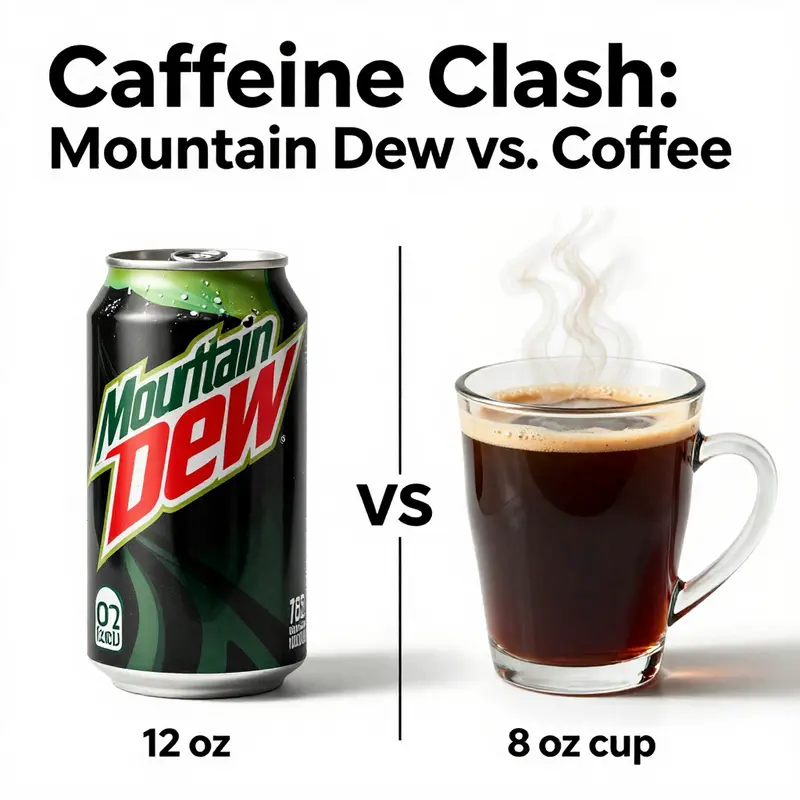
Energy comes in many forms, and the way a beverage delivers that energy often reveals more than a single number on a label. Caffeine, the most widely studied stimulant in everyday drinks, rarely behaves the same way in a carbonated citrus soda as it does in a cup of brewed coffee. To understand what that means in real life, it helps to start with the raw figures and then move into how those figures translate into moments of wakefulness, focus, or jittery unease. The surface difference—a can of a bright, lime-green liquid versus a steaming mug—belies a deeper contrast in how caffeine is packaged, delivered, and perceived by the body. In the case at hand, a standard 12-ounce can of the soda contains about 55 milligrams of caffeine, while an 8-ounce cup of coffee typically carries around 95 to 100 milligrams. These numbers create an initial picture: coffee generally delivers a stronger caffeine jolt per serving. Yet the story does not end with the numbers; it extends into serving sizes, rate of absorption, and the broader context of how people use these drinks in daily life.
A closer look at the numbers shows why the difference matters. The soda’s 55 mg per 12-ounce can translates to roughly 4.6 milligrams of caffeine per ounce. In comparison, the coffee commonly cited—100 mg in 8 ounces—reaches about 12.5 mg per ounce. On a purely per-ounce basis, coffee delivers more than twice the caffeine of the soda. This disparity helps explain why coffee can feel like a sharper signal to the brain: a smaller volume, higher concentration, and a more immediate cue to arousal. Of course, real-world effects depend on more than milligrams per ounce. The body’s rate of absorption, stomach emptying, and even anticipatory mechanisms—like the contextual cues of morning routines—shape how quickly and how long that energy lasts. The carbonate-laden, acidic profile of the soda can influence gastric dynamics, potentially altering the pace at which caffeine reaches the bloodstream compared with coffee’s smoother, warmer context. In short, the numbers are instructive, but they sit inside a broader experience of caffeine delivery.
Flavor and branding also shape how a caffeine boost feels. The citrus-inflected, neon-hued drink carries a distinct taste that many associate with quick mood uplift and a sense of refreshment. It’s easy to drink a can in a few minutes, especially in a social setting or during a mid-day break, and the familiar fizz creates a quick sensory cue that aligns with a jolt-like perception. Coffee, by contrast, presents a more intricate sensory profile—the aroma, the initial warmth, and the nuanced notes shaped by roasting level and brewing method. Those sensory cues can prime the body for a different energy experience: not just the caffeine hit, but a ritualized moment that carries with it expectations of focus, steadiness, or even the comfort of a habitual routine. Put differently, caffeine is not just a chemical; it’s also a behavioral signal, and the context of consumption changes how that signal is interpreted by the brain.
The variability across Mountain Dew flavors adds another layer to the comparison. While the classic version is consistently reported to contain about 55 mg of caffeine per 12-ounce can, other variants tend to hover in a similar range. The differences are small enough that the broader conclusion remains intact: Mountain Dew provides a measurable caffeine lift, but it sits well below the caffeine concentration of a standard cup of brewed coffee. This nuance matters for anyone tracking daily caffeine intake, whether for sleep hygiene, anxiety management, or performance planning. If caffeine is a tool for wakefulness, understanding both the magnitude and the cadence of its delivery becomes essential. A single 12-ounce can offers steady, moderate energy, whereas a cup of coffee tends to deliver a more potent and potentially longer-lasting effect, depending on the brew and the individual.
From a practical standpoint, daily habits often guide choice. A person who needs a higher caffeine load for intense concentration or physical endurance may favor coffee, particularly when the goal is to maximize caffeine per serving and to tailor the experience through grind, brew method, and cup size. For someone seeking a milder lift, a familiar taste profile, or a casual, social beverage in the middle of the day, the citrus soda can be appealing. It’s not simply about caffeine content; it’s about how the body responds to that caffeine in the context of other ingredients and the speed of consumption. The soda’s sugar content and carbonation can have additional effects on energy perception and appetite, sometimes producing a quick, short-lived surge that tapers off, while coffee’s broader matrix of compounds can modulate caffeine’s impact in subtler ways. These dynamics remind us that caffeine’s effects are layered and personal, not a one-size-fits-all equation.
The study of caffeine in these beverages naturally invites questions about consistency and measurement. The numbers cited—55 mg in a 12-ounce can and 95–100 mg in an 8-ounce cup—derive from typical servings and standard preparation methods. They illuminate a clear hierarchy in caffeine density, yet they also reveal the gray areas: flavor variants, brewing strength, and serving size all contribute to a spectrum rather than a single value. Even within the Mountain Dew family, the potential for slight fluctuations means readers should view these figures as reliable benchmarks rather than absolute laws. For readers seeking precise figures for a specific variant or for a custom serving size, consulting manufacturer data or lab analyses can offer more granular insight. Nevertheless, the current frame provides a solid baseline for navigating everyday choices and for understanding why coffee tends to dominate discussions about strong caffeine hits.
To connect these figures to real-life decision making, consider how people plan caffeine intake around work schedules, workouts, or study sessions. If you’re facing a late-afternoon task that requires sustained attention, the higher caffeine density of coffee can offer a more pronounced peak. If you’re simply needing a quick lift during a midday break, the citrus soda might suffice, providing a brisk, refreshing signal without the intensity of coffee. And if you’re monitoring caffeine intake due to sleep, anxiety, or heart rate considerations, the difference in caffeine concentration per unit volume becomes a critical factor in planning. It’s not merely about what the beverage contains, but how much of it you’re consuming and when you choose to consume it.
For readers who want to explore the topic further, a concise look at caffeine content in Mountain Dew can be found in dedicated resources that outline how the caffeinated beverage stacks up against other common sources. See the detailed narrative here: Caffeine Content MT Dew. This internal reference provides a focused case study on the beverage’s caffeine profile and how it compares across variants, complementing the broader discussion in this chapter.
In sum, the contrast between Mountain Dew and coffee is more than a head-to-head of numbers. It is a window into how caffeine is delivered, perceived, and integrated into daily routines. The soda offers a moderate, quickly accessible lift in a larger serving, wrapped in a flavor and sensory package that invites casual consumption. Coffee delivers a more concentrated dose in a smaller volume, often accompanied by a ritual and a brewing method that shape timing and duration of effect. For those who track energy, performance, or sleep, recognizing these nuances supports smarter choices and more predictable outcomes. The caffeine landscape is not a single story but a family of experiences, each shaped by volume, density, and context. And while the chase for the strongest possible lift may push some toward coffee, others will find value in the steady, brisk energy and the distinctive flavor profile of the other option.
External Reference: for broader context on caffeine effects and physiology, see the Mountain Dew official site and product information here: https://www.mountaindew.com
Caffeine, Acidity, and Sugar: Reading the Trade-Off Between a Citrus Soda and a Cup of Coffee
Two of the most common daily pick-me-ups hinge not just on caffeine, but on how it arrives in the body and what else travels with it. In many homes, a quick switch from a sweet, citrus-forward canned beverage to a hot mug of coffee marks a shift not only in taste but in metabolic load, behavioral zest, and long-term health considerations. When we compare caffeine content, the contrast is stark enough to matter for people who monitor their intake or who are sensitive to the other ingredients that accompany caffeine. In practical terms, a 12-ounce serving of this popular citrus soda delivers about fifty-four to fifty-five milligrams of caffeine. By contrast, a standard eight-ounce cup of brewed coffee tends to carry roughly ninety-five milligrams. The difference is not merely a number on a label; it translates into how long someone feels alert, how quickly they might ride a caffeine crash, and how the body metabolizes the other elements that ride along with the stimulant.
The immediate effects of caffeine largely derive from its interaction with adenosine receptors in the brain, a mechanism that helps to promote wakefulness and focus. Yet caffeine rarely enters the body alone. In the citrus soda, it travels with a hefty dose of sugar—roughly forty-six grams per can—and a trio of acids, including citric and phosphoric acid, that intensify the drink’s bite. In coffee, the accompanying elements are different: sugars are typically lower unless added, and the natural acids in coffee can still contribute to a sensory sharpness and, for some, stomach discomfort. The immediate experience of sipping a citrus soda, therefore, combines a caffeine jolt with a rapid sugar infusion and a tart acidity that can irritate the gut or throat on sensitive days. Coffee, while capable of stirring similar sensations—nervousness, restlessness, or a racing heart in predisposed individuals—tends to feel more measured when consumed without added sugar or with moderate amounts of dairy or plant-based cream.
This juxtaposition raises a practical question about acute effects: is the boost from coffee categorically stronger, or is it simply that the body perceives and metabolizes each beverage differently due to its non-caffeine constituents? In many people, the answer is nuanced. The soda’s sugar can amplify the perceived energy by triggering a quick insulin response and a transient spike in blood glucose, which can collaborate with caffeine to generate a more rapid sensation of alertness. The trade-off is that this sugar surge can also foster an energy lull later, a rebound effect that tempts more intake or leaves one chasing that initial spark. Coffee, on the other hand, carries caffeine in a leaner carbohydrate setting. For those who drink it plain or with modest additions, the experience centers more on the caffeine itself and how the brain responds to adenosine blockade over a longer period. Yet even coffee is not free of potential discomfort: for some, caffeine can provoke heartburn, reflux, or a jittery anxiety that makes it harder to settle after office hours or study sessions. The acidity of both beverages matters in this regard, though the soda’s concentration of acid is higher on a per-volume basis. The body’s response to acidity can influence the likelihood of transient digestive distress, particularly if the drink is sipped slowly over an extended period rather than consumed quickly.
Beyond the acute horizon lies a longer, more consequential landscape. The sodium- and sugar-laden profile of the citrus soda poses risks that ripple well beyond the momentary buzz. The total sugar load in a single can can contribute to caloric excess, which, when consumed repeatedly over weeks and months, associates with increased risks of obesity, insulin resistance, and type 2 diabetes. The fructose component, in particular, has a metabolic pathway centered in the liver. When fructose circulates in high amounts, the liver converts much of it into fat, elevating triglycerides and fueling processes linked to non-alcoholic fatty liver disease. This hepatic emphasis helps explain why the beverage’s long-term impact can diverge significantly from that of coffee, especially when the latter is consumed in moderate amounts and without sugar additives. Many studies hint at coffee’s protective associations for metabolic and liver health, as well as neurological outcomes, when consumption remains within moderate bounds. The pattern matters as much as the content: two cups spread through a day may carry a different risk profile than several sodas, each loaded with sugar, consumed in rapid succession.
Dental health provides another axis along which these beverages diverge. The citrus soda’s pH hovers around a level of about 3.3, an acidity that weakens enamel rapidly when the drink is held in the mouth and swallowed slowly over time. The combination of high acidity and sticky sugar creates an inviting environment for enamel erosion and bacterial growth. Saliva does its best to neutralize acids and remineralize enamel, but the protracted exposure that comes with sipping across hours can outpace this natural defense. Coffee, though not innocuous to dental health—especially when sipped frequently or with added sugars and flavorings—does not typically present the same degree of acidity or sugar load. It carries its own risks for staining and occasional enamel wear if consumed excessively; however, its erosive potential tends to be less pronounced than that of highly acidic, sugary beverages. The net outcome is that regularly choosing a sugar-rich, acidic drink may pose a higher risk to dental integrity than a coffee routine that remains simple or sugar-light.
When health outcomes are considered over the long arc of years, the contrast sharpens further. Regular consumption of a highly sugary, acidic beverage aligns with a spectrum of chronic health challenges—weight gain, insulin resistance, NAFLD, and cardiovascular strain—that accumulate as calories monotonically rise and dietary balance tilts toward carbohydrates with little fiber or micronutrient variety. Coffee occupies a different risk-reward spectrum. A growing body of observational evidence suggests that moderate coffee intake—especially when sugar-free or low in added fats—associates with a lower risk of several chronic conditions, including type 2 diabetes and some liver diseases, along with potential neuroprotective effects. Of course, this is not a carte blanche for unbridled consumption. Caffeine sensitivity and individual health conditions modulate outcomes. For some people, caffeine can raise blood pressure modestly or exacerbate anxiety—features that deserve attention, especially for those with preexisting conditions or a tendency toward gastritis or reflux. The daily decision, then, involves aligning caffeine goals with overall dietary patterns and digestive comfort.
In the larger arc of behavior, consumption patterns play a formative role. A can of citrus soda is often a convenient, portable option that fits into quick snack breaks, commutes, or social gatherings. It encourages steady sipping over longer periods, a practice that can sustain intake but also prolong exposure to acids and sugars. Coffee, by contrast, is often enjoyed as a ritual—brewed hot or iced, sometimes with sweeteners or creamers, and frequently accompanied by mindful pacing that can help regulate intake. This rhythm matters; sipping a caffeinated beverage across a long work session can preserve attention and performance without pushing the body into excessive sugar load or high acid exposure. And while both beverages deliver caffeine, the distinction in accompanying ingredients means that people who are watching calories, blood sugar, or dental health may choose coffee without sugar or opt for a dark-roast option that minimizes bitterness without relying on sweeteners. For others who want a quicker jolt or who need to avoid caffeine lingering in their evening routine, the choice shifts again toward timing and personal tolerance.
A note on real-world choices helps ground these points. The most informative way to compare these two sources is to examine not only caffeine content but the broader dietary and health context in which they are consumed. If one’s objective is to maximize alertness in the shortest possible time, the higher caffeine content of coffee will typically do the trick, especially when consumed in a plain or minimally sweetened form. If the objective is to enjoy a familiar taste and a rapid sugar surge alongside caffeine—perhaps during a high-energy afternoon stretch—then a citrus soda might feel appropriate. Yet from a health-risk perspective, the sugar and acidity of the soda push its long-term considerations toward caution, while moderate coffee use—particularly without sugar—may offer a more favorable balance of benefits and risks for many adults.
For readers seeking further nuance beyond the numbers, a broader discussion of caffeine sources and how they fit into daily life is useful. A practical takeaway is to tailor beverage choices to personal health goals and tolerance. If higher caffeine levels are needed but dental health or metabolic concerns loom large, one might opt for coffee with a careful approach to sugar and dairy additives. If the aim is a minimal caffeine dose but a quick flavor experience, a low-sugar, moderately caffeinated beverage could be a better fit. And for those who want to navigate dental health considerations more proactively, limiting acidic and sugary exposures, and maintaining regular dental care, becomes a central strategy.
To connect this discussion with a broader perspective on how these two caffeine sources compare in everyday use, readers can explore a concise analysis that cross-references caffeine content and practical consumption patterns in a dedicated overview: coffee-vs-mountain-dew. While the precise numbers may vary by brand tweaks and serving sizes, the core idea remains consistent: caffeine content and the accompanying ingredients shape both immediate and longer-term effects. This layered understanding helps readers move beyond “how much caffeine” to ask “what else comes with it” and “how does that fit with my health goals and daily routine.”
In sum, both beverages supply caffeine and can affect mood and cognition in the short term, but the path they chart for long-term health diverges meaningfully. The citrus soda’s higher sugar load and acidity compound the potential risks for metabolic and dental health, especially with habitual, extended consumption. Coffee’s potential health benefits—paired with mindful use, such as limiting added sugar or choosing lighter additives—offer a contrasting trajectory. The choice is not simply a matter of which cup wakes you up faster; it is about balancing caffeine needs with dietary quality, digestive comfort, and long-term wellness goals. The nuanced picture that emerges from these considerations emphasizes one practical point: be deliberate about what sits in your cup, how long you let it linger on your palate, and how often you reach for a caffeine fix in a given day. External resources, such as professional guidance on dental health and metabolic risk, can help shape decisions that align with personal health priorities.
External resource: ADA dental erosion guidance provides detailed context on how acidic and sugary drinks influence dental health over time. https://www.ada.org/en/sci-research/ada-statement-on-the-role-of-acidic-and-sugary-drinks-in-dental-erosion
Citrus Spark vs Morning Ritual: How Flavor, Caffeine, and Culture Shape Mountain Dew and Coffee

The choice between a bright, citrus-forward soda and a steaming cup of brewed coffee reveals a landscape where flavor science, caffeine biology, and daily routines intersect. In many households, the decision isn’t only about energy in the moment but about a constellation of preferences—taste, texture, ritual, and social meaning. When we compare Mountain Dew and coffee through the lenses of caffeine, flavor, and culture, a nuanced picture emerges: one beverage offers a tangy, fast-acting spark that pairs with action and spontaneity; the other provides a deeper sensory experience and a more sustained cognitive lift anchored in ritual and tradition. The numbers help illuminate the contrast, even as they cannot capture the full story of why people reach for one or the other in the morning or during a busy afternoon.
From a purely quantitative standpoint, caffeine content is perhaps the most straightforward difference. A standard 12-ounce can of Mountain Dew contains about 54 to 55 milligrams of caffeine. In contrast, an 8-ounce cup of coffee typically delivers between 80 and 100 milligrams of caffeine. Put differently, a cup of coffee usually offers roughly 1.5 times the caffeine of a can of Mountain Dew, and often more, depending on the brew strength and grind size. Yet the arithmetic of mg per serving does not fully explain the user experience. Caffeine is a finite molecule, but its effects are shaped by the matrix in which it is delivered. Coffee brings with it a complex profile of flavors, aromas, and acids that can modulate mood and focus in ways that a lemon-lime soda does not replicate. Mountain Dew, with its signature sharp lemon-lime profile and high carbonation, delivers a crisp sensory rush that feels immediate and lively, often multiplied by the sugar content that accompanies it. The net effect is a quick, flavorful energy boost that can feel almost like a social moment: grab, sip, share, and move on.
The sensory quality of Mountain Dew—the bright citrus, the bite of carbonation, the tart snap—appeals to a consumer segment drawn to bold flavor and a brand image associated with speed, action, and an adventurous edge. Coffee, by contrast, is valued for its aroma, depth, and the ritual surrounding its preparation and consumption. The sensory journey begins with the roast’s aroma and carries through the tactile act of pouring, the warmth of the mug, and the slow, deliberate sip that many describe as a moment of pause before the day begins in earnest. In this way, caffeine is not merely a chemical input but a cue within a larger behavioral pattern. People choose Mountain Dew when they want a quick, flavorful lift to accompany movement and social energy. They choose coffee when they seek sustained alertness, a reliable mental foothold for tasks requiring concentration, or a comforting ritual that signals the start of a focused work period.
The story of consumption is also about health awareness and long-term patterns. Mountain Dew’s standard formulation provides a notable dose of caffeine, but it carries a substantial amount of sugar—around 46 grams per 12-ounce can in the original version. That sugar load amplifies the immediate energy spike but can lead to a later energy dip, sometimes accompanied by cravings or mood fluctuations. For those who want the flavor and the caffeine without as much sugar, a zero-sugar variant exists that maintains roughly the same caffeine content per 12 ounces, offering a lower-calorie option without sacrificing the citrusy kick. These formulation choices reflect a broader consumer trend toward balancing taste with health considerations, a trend that has only intensified as people become more mindful of daily sugar and caffeine loads.
Coffee, meanwhile, is often consumed with little to no added sugar or cream, depending on the tradition and the preparation method. Black coffee emphasizes a cleaner caffeine delivery and a more nuanced tasting experience, one that rewards technique and patience. There is a ritual in selecting the beans, grinding to the right texture, controlling water temperature, and timing the extraction. The caffeine payload remains a constant in the background, but the experience—the aroma, the mouthfeel, the lingering aftertaste—contributes to a broader effect on alertness and mood that many users describe as more balanced over time. In the balance between Mountain Dew and coffee, caffeine is a shared commodity, yet its delivery system and its accompanying sensory cues generate distinctly different patterns of use. Some consumers value the immediate, bright spark of Mountain Dew to power through high-energy tasks or social moments, while others prize the steadier, more contemplative lift of coffee during work, study, or conversation.
Beyond the mug and the can, social and cultural factors shape how people think about these beverages. Mountain Dew is deeply embedded in a brand culture that celebrates boldness, speed, and youth appeal. Its marketing often positions the drink as a companion to fast-paced activities, outdoor adventures, and a sense of spontaneity. For many, consuming Mountain Dew is as much about the moment as it is about the caffeine itself: a quick burst of flavor that signals a shift from idle to active engagement. Coffee, conversely, carries a different social currency. It anchors routines, supports focus, and carries with it rituals—buzzing cafes, quiet corners, a shared table, or a personal moment of intentional breathing before the day’s demands. The social meaning attached to coffee can be as reinforcing as the chemical effect of caffeine itself, which helps explain why coffee remains a central anchor in various cultural settings—from workplace desks to cozy home kitchens.
These experiential differences also intersect with health considerations, especially as research explores how caffeine interacts with mood and mental health over time. A pilot investigation published in 2025 examined patterns of caffeine use and their links to depression and anxiety symptoms among fifth graders. The study underscored a growing concern: frequent consumption of high-caffeine beverages might influence emotional well-being in developing populations, particularly when sugar content is also high. While the study’s scope is specific to a younger demographic, the implication for adults is clear: habitual high-caffeine, high-sugar intake can contribute to mood swings, energy crashes, and a cycle of craving that complicates daily energy management. This has nudged many health-conscious consumers to rethink choices and seek alternatives that deliver flavor and alertness with fewer potential downsides.
In response, the market has responded with a menu of options that tilt toward balance. For those who want Mountain Dew’s signature taste while dialing back caffeine intake, options with the same flavor profile but reduced caffeine exist, and some brands offer zero-sugar variants that preserve taste while cutting sugar. On the coffee side, many consumers experiment with lighter roasts, pour-over techniques, or specialty beverages that emphasize aroma and texture rather than simply the caffeine payload. The practical takeaway is straightforward: if your primary goal is significant caffeine delivery in a familiar, palate-pleasing format, coffee tends to win on the caffeine-per-serving metric. If you value flavor, immediacy, and a brand persona that resonates with movement and vitality, Mountain Dew provides a compelling, lower-caffeine alternative that still offers a noticeable energy lift.
This nuance matters for daily planning. A quick glance at caffeine content makes the landscape easier to navigate, but it does not tell the whole story. The effect of caffeine is moderated by how it is consumed, what else accompanies it, and the context in which it is consumed. A morning routine that blends ritual, aroma, and social interaction can magnify the perceived benefits of coffee, turning a simple caffeine dose into a sustainable cognitive and emotional anchor for the day. In contrast, a drive-time pick-me-up with a citrus sparkling beverage can deliver rapid sensory satisfaction and a short-lived boost that suits a busy, outdoor, or social setting. Both beverages compete in a crowded energy market, yet their value propositions—one grounded in ritual and depth, the other in flavor and immediacy—continue to attract different audiences who value different combinations of taste, timing, and mood.
For readers seeking a concise reference to the caffeine arithmetic behind these two beverages, a detailed comparison of caffeine content in Mountain Dew is available here: caffeine-content-mt-dew. This resource highlights how the numeric realities of caffeine per serving align with the broader experience each drink offers. As long as people weigh flavor, energy, and health considerations together, Mountain Dew and coffee will continue to occupy distinct, meaningful roles in daily life. The question, then, becomes less about which one is objectively better and more about which one aligns with a given moment, a person’s health goals, and a longer-term pattern of energy management. In the chapters that follow, we will examine how these choices scale across contexts—workdays, study sessions, social occasions, and weekend breaks—revealing how caffeine, flavor, and ritual weave together to shape daily life in surprising ways.
External statistics that contextualize these trends reinforce the narrative of a shifting beverage landscape. For broader market dynamics and consumption patterns, see statistics on top-selling beverages in the United States.
Caffeine at the Crossroads: Market Movements, Body Signals, and the Mountain Dew–Coffee Dynamic
Caffeine sits at an intriguing junction where biology meets culture, where a quick lift can be shaped as much by sugar, fizz, and branding as by the chemistry of adenosine receptors in the brain. In the current landscape, two everyday conduits of caffeine illustrate this tension vividly: a neon-bright citrus soft drink and a time-honored brewed beverage. Each delivers a distinct rhythm of energy, a different relationship to appetite and mood, and a unique footprint on the market. The contrast is not simply about which one contains more milligrams per serving; it is about how people use caffeine to navigate moments that demand speed, focus, or both. In this sense, the market is not just a ledger of caffeine content but a map of consumer priorities, social rituals, and the evolving tactics brands deploy to stay relevant in a landscape where attention is a currency as potent as caffeine itself. The data guiding this chapter anchor that map: Mountain Dew provides a notable caffeine boost but does so within a context of sugar, carbonation, and rapid absorption that can propel an intense, short-lived surge. Coffee delivers a steadier, more gradual propulsion that aligns with sustained performance, longer attention spans, and rituals that deepen social and professional routines. The story, then, is not a simple face-off but a dialogue between immediate sensation and longer-term utility, between instant gratification and a form of caffeine that fits into daily life with predictable cadence.\n\nFrom a content standpoint, the numbers help illuminate the core differences. A 12-ounce can of Mountain Dew contains roughly 54 to 55 milligrams of caffeine, a caffeine payload that sits comfortably in the upper range for soft drinks yet well below what a typical eight-ounce cup of brewed coffee offers. In contrast, coffee commonly lands in the 95 to 100 milligram range per eight-ounce serving. These figures matter not only to the precision-minded reader but to anyone who times energy needs through a busy day. The disparity in caffeine content frames two distinct use cases: Mountain Dew is often a rapid, situational pick-me-up during tasks that reward quick reflexes and heightened alertness in the moment, while coffee tends to accompany longer periods of concentration, planning, and social engagement. The difference in milligrams is also entwined with another factor that colors consumer experience: sugar. Mountain Dew’s sugar load around 46 grams per can acts as a high-octane amplifier of the caffeine punch. The combination can produce a brisk energy spike that feels more dramatic than coffee for many people, followed by a notable drop that can invite a compensatory loop of snacking or additional caffeine. In game rooms, study sessions, or late-night creative bursts, this pairing of caffeine and sugar can become a ritual that’s less about long-term stamina and more about rapid, extended bursts of activity. The sensation, in short, is less about a steady drumbeat and more about a rapid cadence that can propel performance for a finite window, then recenter the user on the next hurdle.\n\nThe market signals behind these choices reveal a broader cultural shift. Mountain Dew has reaped a resurgence in the eyes of Gen Z and younger millennials, buoyed by a strong association with digital entertainment, esports, and meme culture. Limited-edition flavors, collaborations with gaming teams, and merchandise lines have helped keep the brand relevant in a crowded beverage space where novelty and identity often trump pure function. This cultural positioning matters because it reframes caffeine as a social signal as well as a physiological input. For many young consumers, consuming Mountain Dew is as much about belonging to a certain online culture as about seeking a jolt of energy. The brand’s emphasis on speed, intensity, and playfulness dovetails with the pace of online life where attention is constantly competed for and momentary wins accumulate into a longer narrative of presence in the gaming and streaming ecosystems.\n\nCoffee, by contrast, sits atop a different spectrum of market dominance. It remains the stalwart of functional caffeine, prized for its reputation in sustaining focus and productivity across a broad range of contexts. The coffee market benefits from rituals—the ritual of brewing, sipping, and sharing—that turn caffeine into social lubrication as well as fuel. In many consumer segments, coffee is marketed not only for its stimulating effect but for wellness-oriented narratives: sourcing transparency, sustainable farming practices, and a premium experience that rewards attention to origin and process. This positioning makes coffee more than a beverage; it becomes a lifestyle choice that aligns with work culture, intellectual inquiry, and a slower, more intentional pace of consumption. While Mountain Dew leans into immediacy and cultural identity, coffee leans into consistency, ritual, and perceived long-term benefits. The market dynamics reflect these distinctions: Mountain Dew grows through cultural osmosis with gaming and youth culture, while coffee expands through reliability, quality storytelling, and a broader appeal to professionals, students, and casual social drinkers who seek both performance and ritual.\n\nThese contrasting profiles have tangible implications for consumer behavior. In environments that prize rapid reflexes such as esports tournaments, long streams, or late-night problem-solving sessions, the quick, sugar-enabled boost from Mountain Dew often proves irresistible. Its packaging and branding reinforce a sense of velocity and immediacy, making it a go-to option for people who need to stay alert in the moment and feel a quick shift in energy. The caveat, of course, is that the same combination can accelerate fatigue later in the session, nudging individuals toward more snacks or another caffeinated pick-me-up. Coffee, meanwhile, tends to be the companion for longer tasks that require sustained attention, such as studying for exams, working on complex projects, or engaging in thoughtful conversations that unfold over hours. The choice between these two beverages is, at its core, a decision about energy architecture: is the goal to maximize sudden performance within a short window, or to sustain cognitive function across a longer period with a calming, reliable cadence?\n\nThe narrative of caffeine use also intersects with pricing, accessibility, and health considerations that shape long-term consumption patterns. Mountain Dew typically offers high availability at convenience outlets, gas stations, and supermarkets, with a price point that makes it an easy, everyday choice for a quick burst. Its appeal is amplified by its bold flavor profile and the distinctive visual branding that signals speed and excitement. Coffee, by contrast, spans a broader price range, from modest daily brews to premium specialty drinks, and it benefits from both at-home preparation and the social experience of coffee culture. Health-conscious marketers have leveraged coffee’s perceived benefits—focus, routine, and wellness credentials—to position it as part of a balanced lifestyle. This framing has helped coffee maintain a dominant share in the functional caffeine market, even as consumer preferences evolve toward more diverse and sometimes more indulgent caffeinated experiences.\n\nThe future of these two caffeine pathways is unlikely to be a zero-sum contest. Instead, expect a landscape of hybrid ideas and cross-pollination. Beverage brands are increasingly experimenting with texture, flavor, and functional claims that blur the line between a quick energy boost and sustained cognitive support. Consumers may gravitate toward products that offer both a reliable baseline of alertness and occasional moments of intensity—without compromising taste or overall health goals. In this evolving milieu, the lesson is not simply which drink delivers more caffeine per milliliter, but how each product fits into a broader matrix of personal routines, social contexts, and digital-age rituals. The math of caffeine content remains important, but it is the alignment of that math with the user’s daily schedule, preferences, and identity that ultimately decides which pathway remains in steady use.\n\nFor readers seeking a deeper dive into the caffeine equation and the nuanced differences between these two popular conduits, the exploration available in the article coffee-vs-mountain-dew offers a complementary perspective that emphasizes quantitative comparison alongside cultural interpretation. That exploration can be a helpful companion as you map your own energy needs against the backdrop of a market that continues to redefine what caffeine can mean in daily life. As the conversation about energy, taste, and lifestyle continues to evolve, it becomes clear that Mountain Dew’s bold, high-sugar option and coffee’s refined, ritual-driven approach each hold a distinct place in a spectrum of caffeinated choices. The market trends of 2025 underscore this reality: both pathways endure because they satisfy different demands, different moments, and different senses of self in a world that prizes speed and nuance in equal measure. The external resource that anchors this discussion—Mountain Dew’s official expressions of flavor and product strategy—provides context for how the brand positions itself within the beverage ecosystem and how those positioning choices ripple through consumer perception and behavior. External resource: https://www.mountaindew.com
Final thoughts
In summation, the comparison between Mountain Dew and coffee in terms of caffeine content emphasizes the distinct roles these beverages play in consumer choices. With Mountain Dew offering a lighter caffeine boost and coffee providing a more substantial jolt, businesses must understand these differences to effectively target their market. By recognizing health implications, consumer preferences, and shifting market trends, business owners can better position their products to meet the evolving demands of caffeinated beverage consumers. Ultimately, the choice between Mountain Dew and coffee encapsulates a broader narrative of consumer habits, brand loyalty, and health consciousness in today’s marketplace.