

Mountain Dew is a staple in the beverage market, known for its bold flavor and energy-boosting properties. As business owners in the food and beverage sector observe shifting consumer preferences, understanding unique selling points like caffeine content can directly impact product offerings. Each chapter will delve into the nuances of Mountain Dew’s caffeine, its health implications, market dynamics, and consumer perceptions, equipping business owners with insights for better decision-making.
Caffeine Currents in Mountain Dew: Tracing the Citrus-Jolt’s Bold Energy Profile

Caffeine has long been a defining element of the citrus bright, high energy beverage that many consumers reach for when they need a quick lift. In the landscape of caffeinated soft drinks, Mountain Dew stands out for delivering a noticeable jolt in a compact package. A standard 12-ounce can delivers roughly 55 milligrams of caffeine, a figure that places it among the higher caffeine offerings in the sector. This level of caffeine is part of what shapes its identity as an energy oriented soft drink, the kind that many fans reach for during a long afternoon or a late night study session. While flavor fans often talk about lemon lime brightness and the tang of its carbonation, the caffeine content is a constant that underpins the beverage’s energy claim, quietly supporting the sensory punch with a measurable boost that many drinkers come to anticipate with each can.
Across its mainline flavors the caffeine profile remains strikingly consistent, though a careful eye will notice minor fluctuations that reflect manufacturing tolerances and formulation iterations. Original Mountain Dew clocks in at about 54 milligrams of caffeine per 12-ounce can, which still lands in the same general neighborhood as the other core varieties. Code Red, which blends cherry and citrus notes for a sweeter, more fruit-forward experience, and Live Wire, renowned for its vibrant wild orange flavor, each carry about 55 milligrams per 12 ounces in typical production lots. These slight differences are not large enough to redefine the energy impact; rather, they underscore how the brand maintains a steady caffeine backbone across its lineup, ensuring that consumers seeking a caffeine lift can reasonably expect a familiar profile whether they choose the classic citrus punch or one of the fruitier iterations.
To put these numbers into context, a typical 12-ounce serving of many popular colas can fall in the 30 to 40 milligram range, with variations by brand and year. Mountain Dew’s content sits noticeably above that baseline, reinforcing its stereotype as a higher energy option among mainstream soft drinks. The relevance of this caffeine load becomes even clearer when you consider a daily intake scenario. If a person consumes multiple caffeinated beverages in a day, those hundreds of milligrams can accumulate quickly. The consistency of caffeine across Mountain Dew flavors helps consumers estimate their total intake without needing to recalibrate for every flavor they choose. It also means that someone who regularly drinks Diet Mountain Dew or Mountain Dew Code Red can anticipate a similar caffeine contribution per serving, even as the sugar content and color profile shift with the flavor.
As with most caffeinated beverages, the caffeine in Mountain Dew is designed to be a quick acting stimulant. On top of the citrus snap and carbonation, caffeine acts on the nervous system to reduce perceived effort and increase alertness for a period after consumption. The sensory experience—sharp acidity, sparkling mouthfeel, and a lingering citrus finish—works in tandem with the caffeine to create a recognizable energy signal. For some drinkers, that combination is precisely what makes Mountain Dew a habitual choice during tasks that demand sustained focus or endurance of attention. For others, the same profile can feel too intense, especially if the day already includes other significant caffeine sources or if a person is sensitive to caffeine’s effects. From a consumer education perspective, knowing that the caffeine content in a 12-ounce serving hovers around the mid fifty milligrams range gives a practical baseline for planning consumption, whether one is managing caffeine intake for health reasons or simply balancing beverages across a busy day.
The focus on caffeine does not exist in a vacuum. Sugar content, flavor variety, and even labeling practices all contribute to how people experience Mountain Dew. Some varieties carry higher sugar levels in addition to their caffeine load, which can intensify energy feelings in the short term while potentially increasing the overall caloric impact. In contrast, Diet Mountain Dew uses artificial sweeteners and preserves the same caffeine presence, preserving the energy signal while lowering sugar intake. These nuances matter for readers who are weighing caffeine against sugar as part of a broader dietary pattern. The capacity to anticipate both caffeine and sugar in a serving makes it easier to fit Mountain Dew into a day that also includes coffee, tea, or other caffeinated choices, rather than accidentally surpassing a preferred daily limit.
For those monitoring caffeine exposure, it is helpful to recall general guidelines about daily intake. The commonly cited upper limit for most healthy adults is around 400 milligrams per day, though individual tolerance can vary widely. Teens are typically advised to keep total caffeine well below that level, with many health authorities suggesting around 45 milligrams per day or less for younger individuals. Pregnant or nursing individuals are often encouraged to moderate caffeine intake further, with some guidelines recommending no more than 200 milligrams per day. Mountain Dew, with its roughly 55 milligrams per 12-ounce serving, can contribute a meaningful portion of any of these thresholds when consumed in multiple servings or alongside other caffeinated products. This is especially relevant when flavor exploration becomes a daily habit rather than an occasional treat. The bottom line is that caffeine content is a straightforward, measurable attribute of Mountain Dew, and understanding the per serving amount empowers readers to manage their energy intake with greater clarity rather than relying on instinct alone.
Beyond the numbers, readers may want a succinct synthesis that ties the caffeine profile to practical daily decisions. If you are coordinating a day that includes long driving, late-night study, or shift work, Mountain Dew offers a familiar and reliable caffeine contribution that can complement other sources such as coffee or tea. Yet when several caffeinated beverages accumulate, it is easy to overshoot personal comfort or health guidelines. The flavor of Mountain Dew, with its bright citrus character and bold carbonation, might be the doorway through which a consumer chooses to meet a caffeine need. The everyday decision becomes a calculation: how many 12-ounce cans can fit into a day while maintaining energy without crossing a personal threshold? In this space, Mountain Dew presents a predictable caffeine footprint that makes such planning feasible rather than guesswork. For readers who want a crisp, topic specific summary of the caffeine landscape across the lineup, a concise breakdown can be explored at the linked resource, which offers a focused look at how much caffeine each flavor delivers per serving: Caffeine content of MT Dew.
As this discussion threads through the flavor map and the energy map in tandem, the takeaway remains that Mountain Dew positions itself as a high energy option within the soft drink category. The near uniformity of caffeine across its main flavors underscores a deliberate design choice: maintain a recognizable energy cue while offering a spectrum of taste experiences that satisfy different preferences. This alignment between taste and energy is part of why the beverage has maintained a strong following, even as consumer attention shifts toward more nuanced caffeine products and energy drinks. The tradeoffs inherent in any caffeinated choice—weight of sugar, timing of consumption, and sensitivity to caffeine—continue to shape how people integrate Mountain Dew into their routines. For someone who wants to align this beverage with official formulation details, the brand’s own site remains the primary reference point for updated nutrition and caffeine data, which can be useful when comparing to other caffeinated beverages you may encounter in daily life. External sources provide corroborating context for the caffeine level and its role in consumer choices, grounding this chapter in accessible, real world data. External resource: https://www.mountaindew.com
Caffeine, Sugar, and Buzz: Tracing Mountain Dew’s Energy Footprint and Its Health Implications
Mountain Dew has long carried a reputation beyond a simple thirst-quencher. Its bright flavor and brisk presence in the beverage aisle are fueled not just by taste but by caffeine—and a notably sizable amount at that. The standard 12-ounce can contains about 54 milligrams of caffeine. That figure is consistent across the brand’s mainline flavors, including Diet Mountain Dew and Mountain Dew Code Red, which reinforces the drink’s identity as an energy-tinged soft drink rather than a purely flavor-forward soda. For readers seeking the details straight from the source, the official Mountain Dew site provides the caffeine and nutrition facts for its flavors, underscoring that this is a product designed with a noticeable caffeine kick in mind. This level of caffeine matters, because it places Mountain Dew in a category where energy and alertness become a talking point as much as refreshment.
That caffeine load sits in a nuanced space. On one hand, it can deliver a mild to moderate energy boost and a sharpened focus for some people, especially those who are regular caffeine users. On the other hand, the same amount can provoke uncomfortable symptoms in others. Insomnia, nervousness, and restlessness are among the common complaints shared by individuals sensitive to caffeine. An elevated heart rate and digestive disturbances are also reported by some, particularly when the drink is consumed in larger quantities or late in the day. The minute-to-minute reality of caffeine’s effect varies with body weight, tolerance, and metabolism. People metabolize caffeine at different rates, so one person might feel a noticeable lift, while another experiences only a slight nudge or, conversely, jitteriness and anxiety. The social and cultural associations with Mountain Dew—its branding as a quick lift for gamers, students, and late-night workers—only amplify these subjective experiences. The caffeine content, then, is not a mere number; it is a contextual signal about how this beverage can interact with sleep patterns, mood, and daily routines.
Beyond caffeine, a broader lens is essential. The health impact of Mountain Dew cannot be reduced to caffeine alone. The drink also carries a substantial sugar load, with roughly 46 grams per 12-ounce can. Sugar contributes to energy spikes followed by crashes, which can perpetuate a cycle of short-lived stimulation and appetite misregulation. The acidity of the beverage—reflected in a pH around 3.3—adds another dimension to its health profile. High acidity, when consumed regularly, has been associated with dental erosion and enamel wear, a concern colloquially described by many as “Dew Mouth” in communities that discuss the brand. When caffeine, sugar, and acidity converge, the potential for longer-term health effects becomes a legitimate consideration for regular consumers, especially children and teens, individuals with preexisting metabolic concerns, or those who drink Mountain Dew in large quantities.
The scientific landscape offers a mixed picture. A study frequently cited in discussions about caffeine use among youth is Luebbe’s 2009 pilot investigation, titled Mountain Dew® or Mountain Don’t?: A Pilot Investigation of Caffeine Use Parameters and Relations to Depression and Anxiety Symptoms in 5th- and 10th-Grade Students. The study identified a positive correlation between caffeine use and mental health symptoms in young participants. While this kind of study does not prove causation, it does emphasize a relevant caution: regular caffeine consumption during formative years can be associated with mood-related concerns. Such findings contribute to a growing consensus that caution is warranted for younger populations and for anyone tracking mood, sleep, and anxiety symptoms in the context of caffeine intake. It is a reminder that caffeine is not an inert additive; it interacts with neurobiology and sleep architecture in ways that can shape daytime functioning and emotional well-being.
From a regulatory and safety perspective, the caffeine story intersects with official guidance on what is considered a safe envelope for soft drinks. Health Canada has stated that caffeine levels up to 150 parts per million (ppm) in soft drinks are regarded as not posing significant health risks. This regulatory threshold is expressed in a way that translates into practical terms for a 12-ounce serving: the 54 milligrams of caffeine found in Mountain Dew sits comfortably within that limit. Yet safety does not imply unlimited consumption. The public health message remains clear: moderation matters, and even within regulatory bounds, consuming caffeine in excess or without regard to individual sensitivity is not risk-free. The regulatory framing helps consumers understand that a certain caffeine ceiling exists, while also acknowledging that personal circumstances—age, pregnancy status, cardiovascular health, and stimulant tolerance—can shift the risk profile.
The picture becomes more intricate when the full nutritional profile is considered. The sugar content, acidity, and caffeine together frame a health narrative that extends beyond short-term effects. Regular intake of high-sugar beverages has been linked to an increased risk of type 2 diabetes, obesity, and metabolic complications over time. Dental health concerns, driven by both sugar and acidity, are a persistent theme for people who consume these beverages regularly. In this context, Mountain Dew’s caffeine content is only one variable among several that can influence long-term health outcomes. For individuals who are monitoring caffeine intake, mental health symptoms, or metabolic health, the beverage represents a multifaceted consideration rather than a simple “is it caffeinated or not” question. The health impact is nuanced, shaped by patterns of consumption, portion sizes, timing, and overall dietary habits.
In terms of practical guidance, the research landscape aligns with common-sense strategies for those seeking to moderate their intake. If the goal is to reduce caffeine while preserving a sense of refreshment, switching to lower-caffeine options or to non-caffeinated beverages with enjoyable flavors can be effective. Sparkling water with natural flavorings, for example, can provide a satisfying sensory experience without the stimulant load or the sugar load. It is also prudent to consider timing—avoiding caffeine late in the day can help protect sleep quality, which in turn supports daytime energy more sustainably than a single, late-afternoon boost. For individuals who enjoy the ritual or social aspect of Mountain Dew, a mindful approach can help balance desire for a familiar taste with consideration for health and sleep, especially for younger or more caffeine-sensitive people.
Within the context of the broader article, readers may appreciate a concise reference point for how Mountain Dew’s caffeine content compares to related beverages. For a closer look at how caffeine in Mountain Dew stacks up against other popular beverages, see the discussion on caffeine content across Mountain Dew flavors and related drinks. The linked resource offers a straightforward numerical comparison that can ground your understanding of whether Mountain Dew feels uniquely energizing or sits among familiar caffeinated beverages in everyday life. Caffeine content in Mountain Dew.
Putting all of this together, the question of whether Mountain Dew has caffeine is straightforward: yes. The amount is substantial enough to deliver a noticeable stimulant effect for some, while for others it may be a negligible factor or a potential trigger for sleep disruption, anxiety, or digestive discomfort. The broader health implications arise not from caffeine alone but from how caffeine interacts with the drink’s other characteristics—high sugar and high acidity—over time. The regulatory guardrails provide a framework for safe exposure, but personal health circumstances determine the real-world risk. For educators, parents, and individuals balancing caffeine intake with sleep, mood, and metabolic health, the message is clear: awareness plus moderation is the prudent path when Mountain Dew is part of the daily beverage landscape. Health literacy here means recognizing that caffeine is a tool that can help with focus and energy, but it is not risk-free, particularly for younger individuals or those with sensitivity. As the research base continues to evolve, the practical takeaway remains consistent: know your limits, choose your beverages with intent, and consider alternatives that preserve refreshment without unintended side effects.
External resource: Health Canada – Caffeine in Soft Drinks: Safety Assessment (Updated August 6, 2025). https://www.canada.ca/en/health-canada/services/food-nutrition/food-safety/caffeine.html
Caffeine at the Peak: Where Mountain Dew Stands Among Everyday Drinks
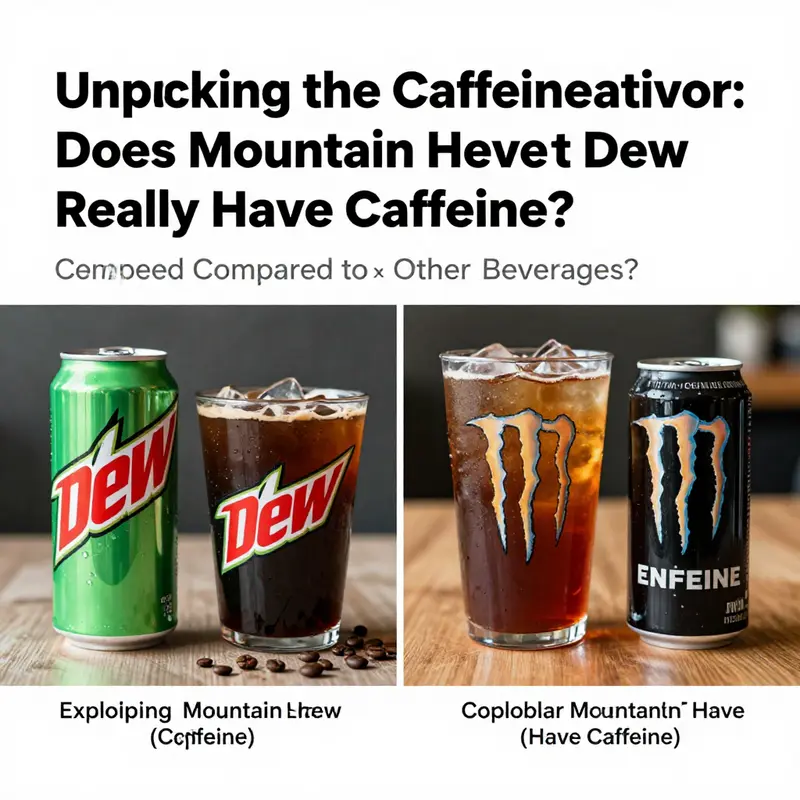
When readers ask whether Mountain Dew contains caffeine, the straightforward answer is yes, and not just a little. The original formula carries about 54 milligrams of caffeine in a standard 12-ounce can, a figure that has helped shape the drink’s reputation as a quick, zingy pick-me-up rather than a traditional beverage. This caffeine level isn’t unique to the original; several of the brand’s mainline flavors share the same profile, creating a consistent energy kick across the lineup. That consistency matters for anyone who wants a reliable caffeine boost while keeping to the familiar, citrusy bite that fans associate with the brand. In conversations about caffeine and soft drinks, these numbers become a practical shorthand for comparing what people reach for on a busy day or during a long evening of errands, gaming, or study sessions.
To place that number into perspective, consider how Mountain Dew stacks up against other common beverages. A 12-ounce can of Coca-Cola clocks in around 34 milligrams, Pepsi around 38 milligrams, and Dr Pepper around 41 milligrams. By comparison, an energy drink such as Red Bull, at 80 milligrams in an 8.4-ounce can, delivers nearly double Mountain Dew’s caffeine per serving, yet the can itself is smaller. Coffee, the benchmark for caffeine in many people’s minds, sits at roughly 95 milligrams per an 8-ounce cup. These comparisons illuminate a subtle but important point: Mountain Dew sits in the upper tier of sodas—high enough to deliver a noticeable kick, yet not so high as to blur the line with dedicated energy drinks. For someone who wants a caffeine lift without purchasing an energy drink, this position can feel like a practical middle ground, blending taste, familiarity, and a measurable caffeine jolt.
That practical middle ground is part of the drink’s appeal, especially for those who value predictability. The same 54 milligrams per 12-ounce serving that defines the Original also characterizes popular variants such as Diet Mountain Dew, Code Red, and Voltage. The consistency across flavors means fans can switch between varieties without recalibrating their caffeine expectations. For a consumer who has developed a routine—an afternoon pick-me-up or a late-evening study session—the ability to choose a flavor while still knowing the caffeine profile remains one of the beverage’s quiet strengths. It’s a perk that blends brand identity with a straightforward energy profile, a combination that helps explain why these beverages maintain a steady presence on shelves and in homes.
But caffeine is only part of the energy story. Mountain Dew’s appeal rests not just on the lift it provides but on the balance of flavor, sweetness, and the sensory snap that comes with that famous “zesty bite.” The caffeine kick rides alongside a generous sugar load in the original version—roughly 46 grams per can—creating a dual impact: caffeine stimulates the brain and nervous system, while sugar delivers a quick surge of energy that can feel satisfying in the moment and can also lead to a sharper decline later. This combination is a double-edged sword. For some, it’s a legitimate, occasional energy source. For others, especially those watching daily sugar or caffeine intake, it signals the need for mindful consumption. The brand acknowledges this dynamic implicitly in its broader lineup, where flavor and caffeine are harmonized to offer a particular kind of energy experience rather than a pure stimulant solution.
The numbers themselves invite a closer look at how people think about beverages as sources of energy. A can’s 54 milligrams aren’t the highest in the soda category, but they are unusually high for mainstream, non-energy drinks. In everyday decision-making, that means a person can choose a beverage that feels like a “real” lift without crossing the line into energy-drink territory. It’s a nuance that matters when people calculate caffeine intake across a day, be it for work, study, or recreation. And while the caffeine content is a constant across the main flavors, other factors—such as sugar content, flavor intensity, and subsequent fatigue—shape the overall energy experience. The caffeine dose is not a standalone signal; it operates in concert with taste and calories to influence when and how often someone reaches for the can.
For readers who want a more granular sense of how these numbers translate into real-world decisions, a closer look at the breakdown across beverages helps. If someone is comparing a standard 12-ounce serving of a cola to Mountain Dew, the headline figure is the caffeine amount. The cola will deliver roughly two-thirds of Mountain Dew’s caffeine per can, while an energy drink’s caffeine per serving may be higher, yet in a smaller package. The coffee comparison is a reminder that caffeine intensity can be strong in a short burst; still, the soft drink offers a longer, more gradual flavor profile with an energy kick that isn’t as abrupt as black coffee. This is the kind of nuanced takeaway that matters in daily choices, especially for readers who want a clear sense of how much stimulation they’re getting from familiar brands in familiar portions.
The broader conversation about caffeine content is, in part, a conversation about moderation and context. If a person drinks one can of Mountain Dew in the morning and another in the late afternoon, they’re likely to notice a steadier, repeatable energy rhythm in their day, compared with reaching for a sugary snack. However, the sugar load complicates this picture. The original version’s sugar content amplifies the energy effect but also contributes to a quicker drop in blood sugar once the initial boost wears off. For those who are sensitive to sugar highs or who are monitoring caloric intake, this creates a trade-off: you gain a bright, immediate lift, but you might also experience a more pronounced post-ingestive lull. The diet variant, by contrast, substitutes artificial sweeteners for sugar and, in doing so, removes the sugar-driven energy spike; the caffeine is still present, but the metabolic impact shifts, a point that invites readers to consider both caffeine and sugar together when evaluating energy options.
From a consumer’s standpoint, then, the decision to reach for Mountain Dew becomes less about chasing caffeine in a vacuum and more about balancing energy needs with taste preferences and dietary goals. If the goal is a consistent, citrus-forward lift without the heightened caffeine load of an energy drink, Mountain Dew presents a compelling option. If the goal is to minimize sugar while maintaining a caffeine boost, Diet Mountain Dew offers a different, sugar-free alternative with the same caffeine level per can. For those who crave a fruit-punch flavor with a bit more caffeine punch in a single serving, Voltage and Code Red present the same 54 mg per 12-ounce baseline, allowing for flavor variety without sacrificing the energy profile. Reading the nutrition facts panels with this framing helps consumers align their beverage choices with their daily routines and tolerances, rather than relying on rumor or marketing hype.
For readers who want a compact reference to the caffeine content across Mountain Dew’s lineup, there is a dedicated resource that breaks down the numbers in a clear, flavor-by-flavor way. This concise breakdown can be a handy cue when planning a day that includes study, workouts, or long meetings. It distills the core idea that caffeine content, while important, is one piece of a larger energy equation that includes sugar, flavor, and personal tolerance. The point isn’t to demonize one beverage or to champion a single path to energy, but to equip readers with a practical understanding of what they’re consuming and how it fits into their broader caffeine and sugar budgets. In that sense, the 54-milligram figure becomes a reliable anchor for conversations about daily energy sources, rather than a blind leak of information about a single product.
To capture the complexity of this topic without drifting into product-specific jargon, consider the question as a balancing act. How much caffeine do you need? How sensitive are you to sugar? What flavor do you actually enjoy enough to drink regularly? These questions don’t have one right answer, and the 54 mg per 12-ounce serving of Mountain Dew’s popular flavors offers a consistent platform from which to explore. Readers who want a deeper dive into the caffeine specifics can explore a dedicated breakdown of Mountain Dew’s caffeine content here: Caffeine content of Mountain Dew. This reference anchors the narrative in a precise numeric framework while keeping the discussion accessible and grounded in real-world choices.
As a closing note, the caffeine story can be revisited with an eye toward official nutrition data. For readers seeking authoritative figures beyond a consumer-facing summary, the brand’s own site provides the most direct access to flavor-by-flavor caffeine and nutritional facts. It serves as a dependable external resource to verify the numbers and to explore any updates or new flavors that may enter the lineup. In the end, whether you’re choosing Mountain Dew for a quick lift during a busy afternoon or comparing it to the broader beverage landscape, the caffeine content remains a central, concrete detail that informs your daily energy strategy. And like any good energy decision, it benefits from a clear map of how much caffeine you’re consuming, how it interacts with sugar and other ingredients, and how that combination fits your personal rhythm.
External resource: https://www.mountaindew.com
Market Currents: How Bold Caffeine and Citrus Identity Drive Consumer Preferences for High-Energy Soft Drinks

In the crowded shelf of beverages, caffeine signals more than alertness. It signals a pact with the consumer: flavor plus a measurable lift. For caffeinated soft drinks that lean into a citrus-forward identity, the challenge is not only to taste refreshing but to feel energizing. The market has learned to read both the sensory punch and the perceived function. In this context, a 12-ounce can offering a 54-milligram punch sits at a crossroads: it must satisfy flavor while delivering a dependable dose of stimulation. This dual expectation creates a market dynamic where intensity of taste and strength of caffeine reinforce each other, shaping what people reach for on a quick break or during a long drive. The result is a category that feels both refreshing and purposeful, a rare combination in the realm of everyday beverages.
Caffeine content matters in the way a heartbeat matters to a runner. Industry data show caffeine content as a defining attribute. In mainstream formats, the figure sits at about 54 mg per 12-ounce serving, a level that stands out against many traditional non-colas. That baseline informs consumer expectations about performance. When shoppers hear “a bold, refreshing lift,” caffeine content is the quiet punctuation mark. For brand teams, this balance between taste and caffeine is a design constraint: too little and energy signals fall flat; too much and the product risks tasting acrid or unsettlingly bitter. Across the line, the energy cue remains part of the brand promise, even as it competes with coffee or dedicated energy drinks at the point of purchase.
Flavor innovation rides on a bold citrus identity. The core profile is crisp, sharp, and intensely carbonated, delivering a lemon-lime bite with hints of grapefruit that sharpen the palate under a rush of fizz. This sensory signature helps the beverage cut through sweetness and anchors it in memory. The appeal is more than intensity; it is the sensation of refreshment that can accompany a quick break, a long drive, or a late-night study session. To keep interest alive, the lineup has expanded with variants that push beyond the baseline citrus frame. One variant blends cherry sweetness with citrus tartness for a more approachable, fruit-forward profile, while another leans into a vibrant orange profile for a juicier, punchier finish. Taken together, these options sustain the brand’s signature effervescence while widening appeal to different tastes.
Beyond flavor, health considerations shape buying choices. The combination of high sugar content and pronounced acidity raises concerns about dental health and metabolic impact. Citric and phosphoric acids contribute to enamel erosion, while sugar load drives appetite and energy fluctuations. In response, many consumers seek lower-sugar or diet variants. Yet reformulations often trade sugar for artificial sweeteners, a compromise some shoppers find off-putting. Despite these tensions, strong brand equity and sensory intensity keep these beverages popular, especially among younger demographics who value an energizing effect and bold, unmistakable taste.
Among the audience, there is a clear tilt toward experiences that feel both rebellious and efficient. Younger consumers, digitally connected, draw energy from brands that pair strong flavor with a reliable lift. They want a sensory package that stands out on a cluttered shelf and that fits into fast-paced routines—commuting, gaming, studying, or socializing. Flavor intensity matters as much as the caffeine punch, and novelty matters even more as the market grows crowded with imitators. For marketers, the challenge is to maintain a core taste while expanding the portfolio with disciplined, on-brand variants that preserve the identity: bold, citrus-led, high-energy without sacrificing the sense of refreshment. Loyalty in this space often follows the coherence of that identity more than a single flavor or a single caffeine level. This ongoing evolution shapes consumer habits and brand strategies for years to come.
Placed at the intersection of soda and energy beverages, this category occupies a unique stance. It offers an everyday option for those who want a quick flavor rush with a practical lift, but without venturing into the coffeelike rituals of espresso or the more extreme profiles of energy drinks. The result is a flexible consumer proposition: flavor-forward refreshment with noticeable energy, accessible in a mass-market setting. As tastes evolve and health concerns intensify, brands in this space experiment with lower-sugar formats, portion-control packaging, and clearer labeling about caffeine content and acidity. The strategic tension between flavor authenticity and health-conscious reformulation remains a defining feature of the market’s trajectory. Internal alignment around the core citrus-elevating identity helps maintain consistency as the lineup expands and new entrants challenge the scope of what a caffeinated citrus drink can be.
For a closer look at how caffeine content is characterized in this category, see caffeine content in MT Dew.
For deeper technical standards and industry applications behind these formulations, researchers point to broader beverage-trends scholarship, such as Stanford’s Beverage Trends Research (https://www.stanford.edu/research/beverage-trends/mountain-dew-flavor-standards).
Caffeine, Flavor, and Public Perception: Unpacking the Wakeful Kick Behind a Famous Citrus Soda
When people ask whether a familiar, bright citrus soda contains caffeine, the answer is straightforward: yes. Yet the topic invites more than a simple yes or no. It opens a broader conversation about how a single ingredient can shape taste, energy perception, and consumer attitudes in a marketplace saturated with bold flavors and daily caffeine sources. The original formulation of this popular citrus-forward beverage carries a caffeine load that has long been part of its identity. Specifically, a 12-ounce can delivers about 54 milligrams of caffeine, a figure that stands out in the realm of mainstream soft drinks. This level of stimulation contributes to its reputation as an energy-tinged option rather than a purely refreshing sweet. It is a figure that many fans acknowledge, and it is a number that industry observers routinely compare to the caffeine content found in other, more conventional cola varieties. Importantly, the zero-sugar variant, often chosen by those watching calories, maintains the same caffeine level as the regular version. This equivalence matters because it means consumers can opt for fewer calories without sacrificing the kick they expect from the beverage. Across major flavors in the line, the caffeine profile remains conspicuously consistent, underscoring a deliberate branding choice: the drink is as much about energy as it is about taste. The continuity of caffeine across flavors reinforces the beverage’s stance as a bold, stimulating option within a crowded category. The numbers matter not only for those tracking caffeine intake but also for those who value a predictable experience after they pop the tab. In a crowded market, predictability is itself a form of appeal, and the caffeine profile provides a dependable sensory and functional anchor for long-time fans and curious newcomers alike. The guidance embedded in product pages and nutritional disclosures—where available in official channels—paints a coherent picture: this is a caffeinated citrus soda, offered in multiple forms to suit diverse preferences while preserving a robust caffeine backbone. This consistency matters because it helps demystify myths that might otherwise arise around another common question: who buys this beverage and why. The answer to that question reveals a complex portrait of consumer behavior, one that blends flavor loyalty with an appetite for a brisk, afternoon lift. The perception of caffeine as a practical tool for staying awake or sharpening focus makes the beverage appealing beyond the narrow stereotype of a “kid-friendly” brand. It is a product that has carved out a significant niche among adults who want a flavorful alternative to plain water or traditional cola, particularly in settings that reward quick energy and a bright, tangy palate. The caffeine element is thus not an afterthought but a central attribute that informs product development, marketing language, and consumer choice. The brand’s flavor language—its tartness, its bright citrus notes, its crisp finish—works in concert with the caffeine to create a multisensory experience. Flavor and stimulant effects reinforce each other, yielding a perception of both refreshment and momentum. For many, the drink offers a momentary mental lift, a sense that the body is more alert and the day’s tasks feel more approachable. Yet such effects are never the sole driver of consumption. Taste remains primary for most people, with caffeine acting as a valued complement. The interplay between taste and stimulation helps explain why this beverage has sustained a strong market presence even as health and nutrition conversations grow more nuanced. Consumers often describe the experience in terms of a “zesty bite” or a bright, energizing sparkle—characteristics that translate well into both casual sipping and more purposeful use, such as pairing with activities that demand quick focus or sustained energy. The consistency of the caffeine profile across flavors thus supports a coherent brand experience: flavor satisfaction coupled with a reliable wakeful effect. It is a combination that has built loyalty over years and contributed to a steady stream of new flavor ideas that still aim to preserve the core caffeinated identity. The reception among consumers is not monolithic, of course. Many fans celebrate the bold taste and the steady energy kick, pointing to the drink as a preferred option during long drives, study sessions, or periods of intense social activity. Others voice concerns about sugar content, particularly in the regular formulation, and about the potential for artificial aftertastes that can accompany high-intensity flavors. These critiques are not unique to this beverage; they echo broader debates about sugar, caffeine, and the role of taste in choosing beverages for daily routines. Yet even amid concerns, the product line maintains a robust following, in part because it speaks to a distinctive palate—one that rewards a precise balance of acidity, sweetness, and mouthfeel, all underpinned by a caffeine component that makes the experience feel more than just refreshing. The consumer conversation, therefore, travels beyond taste and energy. It touches questions of timing, health, and lifestyle. Some parents and caregivers worry about caffeine exposure in younger audiences, while adults carve out space for a caffeinated option that pairs well with meals or social gatherings. Marketers, sensing these dynamics, have responded with variants that preserve caffeine while offering different sugar profiles, visual aesthetics, and packaging cues designed to appeal to a broad demographic. The result is a brand image that remains bold and unambiguous: a high-impact, citrus-forward option that promises a wakeful moment without sacrificing flavor. In this context, the chapter of myths and facts surrounding caffeine in this citrus-forward beverage becomes less about dispelling a single rumor and more about clarifying how caffeine, flavor, and consumer expectations co-evolve. The “myth” that the drink is merely a kid-centric or sweet-tix beverage dissolves under the weight of real-world consumption patterns. The reality is that a sizeable portion of daily users spans across age groups, drawn by the combination of taste and caffeine rather than by one single motive. This is not to deny concerns about sugar load, late-day caffeine effects, or the role of marketing in shaping perceived norms. Rather, it is to acknowledge that the caffeine component—when viewed alongside flavor and accessibility—occupies a central place in why the drink has endured as a cultural reference point in the landscape of caffeinated beverages. As readers consider the broader implications, it becomes clear that the caffeine fact is a hinge: it explains both why the beverage remains popular and why its reception is a mix of loyalty, caution, and curious experimentation. The story of this citrus-forward drink is thus less a tale of a single ingredient than a case study in how taste, stimulant effects, and consumer perception reinforce one another over time. If one strand of the discussion is to be traced, it is this: caffeine contributes to a recognizable identity; flavor contributes to memory and attachment; and consumer reception—shaped by health considerations and personal preferences—shapes how that identity evolves. The end result is a beverage that many people reach for precisely because it offers both a familiar flavor profile and a dependable energy lift, a combination that keeps it relevant in a fast-moving market that continually seeks the next bold, bold flavor with a little extra kick. For readers who want a precise sense of the caffeine footprint and how it translates into real-world choices, the story is not merely about numbers. It is about how those numbers interact with taste, daily routines, and the evolving conversation around sugar, caffeine, and wellness in modern life. In the broader arc of this article, the chapter invites continued reflection on how a single beverage, anchored by a specific caffeine level, can shape behavior, preferences, and even concerns about health and sleep. The next sections will extend this inquiry by contrasting this caffeine profile with other common sources and exploring how consumers weigh taste against health considerations in everyday decisions. External resource: https://www.mountaindew.com
Final thoughts
The exploration of Mountain Dew’s caffeine content reveals its significant role in both consumer preferences and health discussions. As business owners, understanding this aspect can help in tailoring marketing strategies and product selection to align with consumer interests. Ultimately, knowledge about the caffeine content—paired with considerations of health impacts—can enhance product offerings and drive sales.