
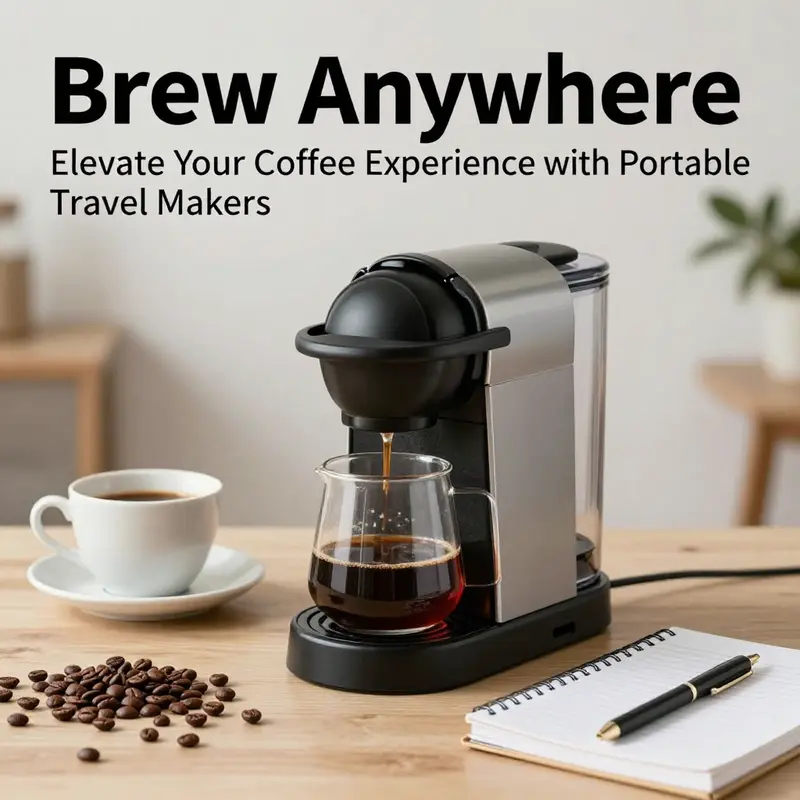
The ability to enjoy high-quality coffee on the go is increasingly essential for modern business owners. Portable travel coffee makers are revolutionizing the way coffee enthusiasts brew their favorite beverages, whether in the office, on the road, or at a campsite. These compact devices ensure that a fresh cup is always within reach, empowering entrepreneurs to maintain their productivity and enjoy their favored brews no matter where their work takes them. This article will explore the features and benefits of portable travel coffee makers, examine the different types available, and provide insights on how to use them effectively in various situations. By understanding these aspects, business owners can optimize their coffee experience, catering to their unique travel contexts and preferences.
Brew on the Move: The Subtle Power and Practical Craft of Portable Travel Coffee Makers
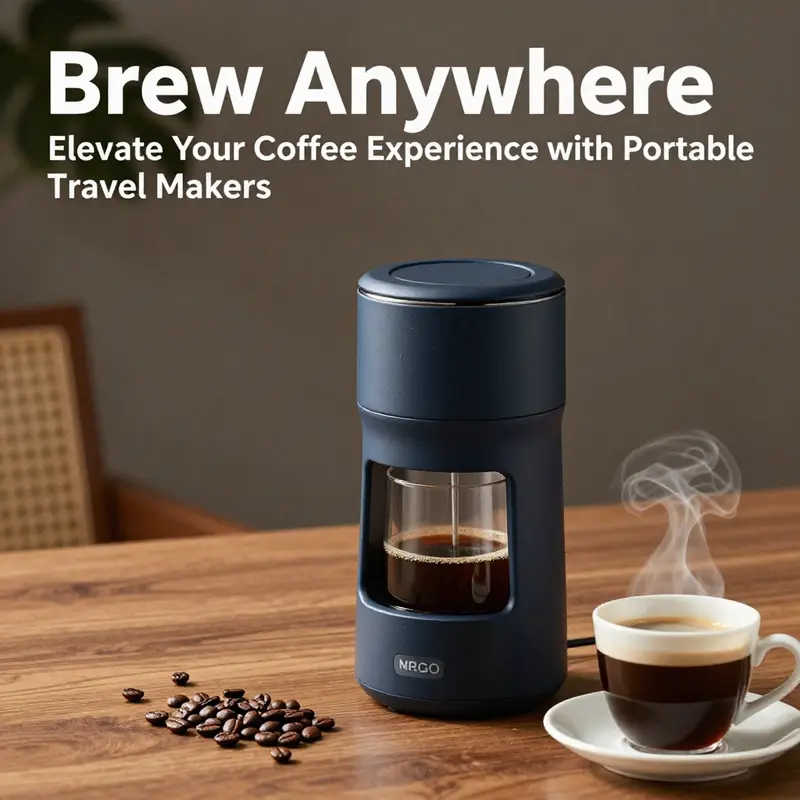
Freshly brewed coffee has a portability problem solved by design. A portable travel coffee maker is more than a compact gadget; it is a deliberate extension of a morning ritual that refuses to anchor itself to a single location. For coffee lovers who measure the day by the aroma that trails from a mug, these devices offer a reliable, repeatable experience wherever the journey takes you. The story of these makers begins with a simple premise: convenience without compromise. Travelers, campers, and daily commuters alike want a cup that tastes like it came from a proper café, not a vending machine, studio apartment, or flatly prepared office pot. The best devices are not merely small; they are thoughtfully engineered to preserve the essence of the coffee you love while fitting into a backpack, glove box, or carry-on. In this sense, portable travel coffee makers are less about novelty and more about consistency, control, and delight in small, deliberate packages. They are a solution for those who refuse to surrender quality for mobility and who recognize that heat, aroma, and texture still matter, even when the scenery changes from kitchen to trail to tunnel.\n\nPortability, at its core, is a balance between weight, size, and durability. The devices designed for travel routinely trade off bulk for efficiency, choosing materials that stand up to the bumps of a journey while keeping the brew within reach. A lot of what makes a travel coffee maker work hinges on material science and ergonomic design. Stainless steel models bring rugged resilience and the capability to retain heat, but they can add weight. BPA-free plastics help shave ounces off a system but may not exhibit the same heat retention as metal. Glass, especially in double-wall constructions, can offer superior insulation and a refined aesthetic, yet it raises the stakes for breakage in a backpack or campsite. The practical takeaway is not a single ideal material but a spectrum that lets a traveler pick a compromise aligned with their itinerary. A lightweight, durable option might use a stainless-steel shell with a glass or polymer lining, marrying the advantages of heat retention, safety, and tactile comfort. The emphasis on material choice signals a broader intention: these devices are engineered to be backyard café quality without demanding fragile handling. The result is a coffee maker that feels like it belongs in a luggage compartment and performs precisely when needed, whether perched on a picnic table or balanced on a car cup holder during a long, winding drive.\n\nThe independence from electricity is what renders portable travel coffee makers truly versatile. The manual cohort—think of immersion methods, pour-over rigs, and clever hybrid concepts—lets you brew with human power alone. When you are off-grid or simply unplugged for a weekend, the ritual remains intact. These devices rely on hot water supplied by a stove, a kettle, or even a thermos, turning every location into a potential café. This self-reliant approach is not relegated to the outdoors; it translates into practicality for office desks, hotel rooms with limited amenities, or trains where outlets are scarce. Yet the landscape also includes electric options that echo the comforts of home, especially for road trips or long commutes where time and consistency matter. Some of these models integrate compact battery packs or car adapters, allowing a user to press a button and enjoy a freshly ground or pre-pulled brew in the limited space of a vehicle or a quiet cabin. The tension between purely manual systems and electric ones is not a binary but a spectrum of autonomy. A manual system invites a tactile, mindful process—water temperature control, grind size, immersion time—while an electric model offers speed, consistency, and hands-free operation. Both paths lead to the same payoff: a hot, nuanced cup that travels as far as your itinerary does.\n\nBrewing quality, perhaps the most personal dimension of these devices, is where the craft truly shows. Immersion-style devices excel at producing a rich, full-bodied cup by allowing the coffee’s oils and solids to mingle with hot water over a brisk but controlled period. The result is a cup with depth, a sense of body, and a lingering aftertaste that can feel almost barista-made in a compact form. On the other side of the spectrum, precision pour-over and semi-immersive systems emphasize control over water flow and temperature. This control enables a more delicate extraction, where the sweetness of a bean and the acidity of its profile can be shaped by the rate at which water saturates the grounds. The double-wall or insulated designs do more than deceive the eye with a sleek silhouette; they actively support the extraction process by keeping heat stable and the exterior cool to touch, which matters for safety and comfort during travel. When you lift a well-built portable unit, you encounter a sense of deliberate engineering: an alignment of time, temperature, and texture that mirrors the careful choreography of a café barista, minus the full café footprint. The most sophisticated models blur the line between manual and mechanical by offering precise temperature windows, stable heating surfaces, and measured pour controls that render a consistent cup across different settings. Even without a power outlet, a traveler can enjoy an extraction profile that remains faithful to the bean’s innate character, revealing nuanced notes that might otherwise vanish in a rushed brew.\n\nThe user experience is, in many ways, a test of practical design. A good travel coffee maker prioritizes ease of use without sacrificing precision. One-handed operations, leak-proof lids, and ergonomic handles matter more than they appear on a spec sheet. A good lid seals securely to prevent drips in transit, which is crucial for a device that might ride in a backpack or sit in a car cup holder. A comfortable, heat-safe handle invites the user to pour with confidence, while an intuitive spout helps to minimize spills during movement or in cramped spaces. For travelers, the ability to assemble and disassemble quickly becomes a feature worth its weight in coffee aroma. This ease of use extends to cleaning and maintenance, which matters far beyond the immediate cup. Simple disassembly, accessible filters, and components that resist staining make it possible to maintain performance after stashing the device in a damp tent corner or a mug holder on a train. A well-designed travel brewer considers the entire lifecycle of the product, acknowledging that a single trip might require a portable brewer to endure multiple rounds of packing, unpacking, and reassembly without losing its edge.\n\nSafety adds another layer of sophistication to the design. Travel means varied surfaces, uneven ground, and the constant possibility of tipping. A non-slip base provides stability on bus trays, boat decks, or a stubborn tabletop in a windy campsite. Materials chosen for exterior surfaces avoid heat transfer to the user’s hands, and components that come into contact with hot liquids must comply with food-grade standards to ensure safe, repeatable use in a travel context. Such safety-conscious design pays dividends in user confidence: you are more likely to embark on an early-morning hike or a late-night layover with a device that feels sturdy, predictable, and trustworthy. In a world where you might be miles from your usual café ecosystem, relying on a well-made, safe, and dependable device makes all the difference between a fleeting caffeine fix and a satisfying, soul-warming cup that nourishes the journey.\n\nBeyond the mechanics of heat, filters, and flow, there is a nuanced conversation about the kinds of coffee these devices can unlock. Immersion appliances tend to bring out oils and a fuller mouthfeel, attributes that coffee enthusiasts often hunt for in a home setup. Their capability to extract with a slower, more thorough soak gives a cup a robustness that can stand up to a bold roast and a strong dosing ratio. In contrast, precision pour-over-oriented units let the water’s interaction with the grounds happen in a controlled stream, enabling brighter, cleaner profiles with pronounced acidity and nuanced aromatics. The choice between immersion and pour-over on the go is a reflection of what the traveler seeks: comfort and richness on the one hand, or clarity and brightness on the other. For those who mix and match beans while on the road, a modular approach can be particularly rewarding. Some travelers prefer having both a simple immersion method for quick, reliable coffee in the outdoors and a refined pour-over option when a settled site and a moment of stillness invite a more measured extraction. The practical virtue of portability is that it supports experimentation without compromising the coffee habit. The journey becomes as much about exploring flavors as it is about navigating landscapes, and the gear you choose should empower that exploration rather than constrain it.\n\nChoosing a portable travel coffee maker is a balancing act that weighs travel style against coffee preferences. If your itineraries lean toward adventure with unpredictable water access and frequent packing, you might value compactness and resilience over ultimate control. In that case, a compact, sturdy unit that yields a satisfying cup with minimal fiddling becomes ideal. If your trips are longer and involve periods of settled camping or remote cabins where you can manage water temperature and timing with more patience, a device that offers more precise control over grind, water temperature, and flow might be worth the extra space. The decision also intersects with how you source your beans on the road. Several travelers report that carrying whole beans and a portable grinder can elevate the experience, especially when paired with a robust filtration and extraction method that preserves oils and aromatics. In this context, a hybrid approach—carrying a compact grinder for beans and choosing a travel brewer that supports flexible water delivery—can deliver café-grade coffee across a spectrum of environments. The broader message is that portable travel coffee makers are not one-size-fits-all tools but adaptable instruments whose value grows with how you plan to use them. The best choice aligns with your tolerance for weight, your expected water access, and the kind of coffee you crave when your surroundings shift from the predictable to the unpredictable.\n\nFor readers who want a quick compass in a crowded field, a helpful reference is a roundup that surveys top options for on-the-go coffee. It points to how different designs handle the trade-offs between bulk and performance, and it can guide the decision toward a model that fits the traveler’s daily rhythm. See more here: best portable travel coffee makers for great coffee on the go. The takeaway is not a single perfect device but a spectrum of well-considered choices. Each traveler will discover a point along that spectrum where the brew, the journey, and the memory of the first sip in a new place converge. The result is a portable coffee experience that stays faithful to the craft, travels as a companion, and lets the aroma of a just-made cup accompany you through the day’s most demanding moments.\n\nThe broader implication of portable travel coffee makers is that coffee culture continues to democratize, expanding beyond the kitchen into every corner of daily life. The devices address a fundamental human moment: the desire for warmth, familiarity, and ritual wherever we roam. They enable a cadence of mornings that does not wait for a kitchen to wake up, a hotel room to be cleaned, or a café to open. They remind us that the art of brewing can be portable without becoming a compromise. This is not merely about a cup of coffee; it is about sustaining a personal routine in the face of change. As travelers grow more diverse in their itineraries, the devices adapt, offering more than hot water and ground coffee. They deliver a microcosm of café precision, a hint of home, and the improvisational spirit that accompanies exploration. The chapter you have read is a map of possibilities rather than a prescription. It invites you to explore, to weigh your priorities, and to let your next brew on the road reveal as much about your taste as your destination. In the end, a portable travel coffee maker is a small but powerful ritual device that ensures the first scent of coffee greets you wherever you go, turning a mere stop into a moment you can carry with you.\n\nExternal resource: https://www.reuters.com/business/energy/portable-coffee-makers-see-rising-demand-travelers-2025-10-08/
Brewing on the Move: Exploring the Landscape of Portable Travel Coffee Makers
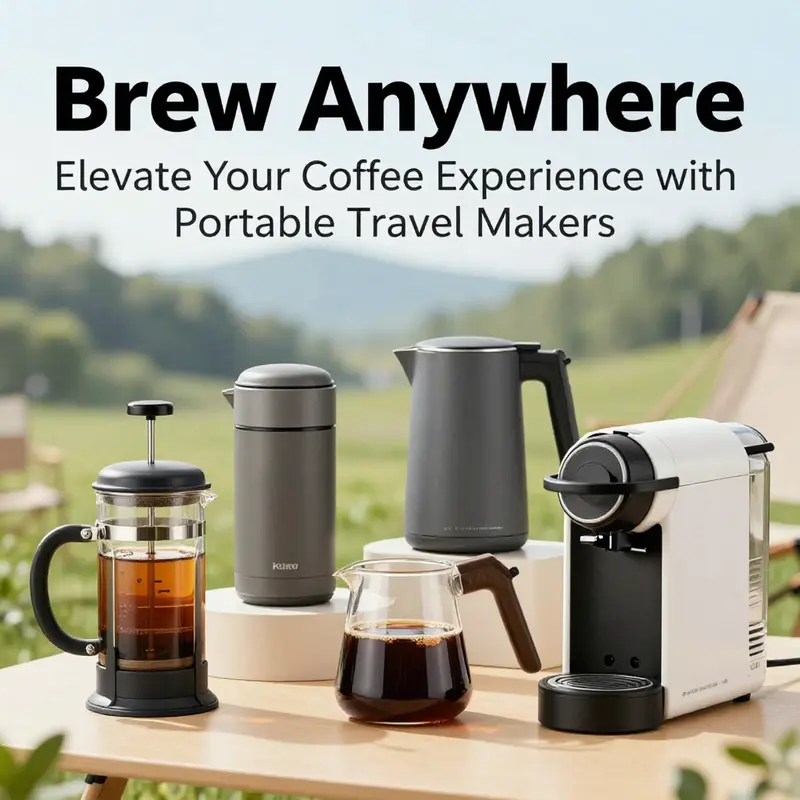
A traveler’s morning often hinges on one simple ritual: a satisfying cup of coffee. The right portable travel coffee maker makes that ritual reliable no matter where the day starts. The landscape of these devices feels like a conversation among design priorities—portability, resilience, and the fidelity of the brew. The core idea is straightforward: you want a device that travels light, performs consistently, and leaves enough room in your pack for everything else that comes with an adventure. What counts as portable in one trip may look very different in another. A hiker might prioritize absolute lightness and a straightforward brew method, while a road-tripper could value speed and convenience. Yet all portable options share a common thread: they are built to operate beyond the bounds of a fixed kitchen, enabling a fresh cup when power is scarce, water is scarce, or time is scarce. In this chapter, we trace the main pathways through which travelers meet their coffee needs on the road, a map that helps you align equipment with your travel style while preserving the integrity of the coffee you crave.
Manual portable coffee makers sit at the core of true independence. They operate without electricity, batteries, or cords, and their appeal grows stronger the more you move away from civilization. At the heart of the most iconic manual option is the French press—a cylindrical beaker, a plunger, and a fine mesh that works with gravity and pressure. The experience is almost ritualistic: grind, heat, pour, wait, press, pour again. A French press shines when you want a full-bodied cup with body and depth, free from the constraints of pre-packaged pods. The brew’s character depends on variables you can control: grind size, water temperature, steep time, and the texture of the filter. The craft lies in balancing the resistance of the mesh with a calm, even plunge, which yields a cup that is rich but not muddy. Because these devices don’t rely on a heat source beyond a stove or campfire, they are inherently reliable for camping, backpacking, or any scenario where power is not a given.
A compact pour-over setup broadens the flavor spectrum you can achieve while still remaining eminently portable. The essence of pour-over is precision—hot water is poured over grounds in a filter with deliberate, controlled movements. The flavor profile tends to be cleaner and more nuanced, with clarity that reveals the origin notes of the beans. While pour-over drippers are not always considered “portable” in the strictest sense, small, packable drippers and collapsible funnels can ride in a backpack with almost the same ease as a traditional mug. The method invites a personal ritual: a steady hand, a moment of anticipation, and the satisfaction of watching the bloom and color-drip of coffee as it conducts its own little ceremony.
Some travelers gravitate toward hand-pumped espresso makers. These devices sit at the apex of portability and performance among manual options. They require the user to generate pressure by pumping air into the chamber, a process that mimics the extraction dynamics of a standard espresso machine. The best hand-pumped units are built from sturdy materials—stainless steel or aircraft-grade aluminum—that resist wear and corrosion after repeated assembly and disassembly. They pack down small and can deliver espresso-like shots with a velvet texture, provided you’re precise with grind size, tamp, and timing. The limitation is not only the effort involved but also the learning curve. A successful shot depends on maintaining consistent pressure and achieving a balance between grind size, dose, and extraction time. For travelers who prioritize flavor fidelity and are willing to invest a few practice sessions, hand-pumped espresso can be a revelation on the road.
Electric portable coffee makers expand the toolkit with convenience that manual devices cannot always deliver. These machines require a power source and typically fall into two broad categories: single-serve electric units and more robust, commercial-grade portable machines. Single-serve models often emphasize simplicity. A one-button interface can brew coffee from beans or pods, sometimes with an integrated grinder that freshly grinds beans just before extraction. The appeal is immediate: a hot cup with minimal fuss, whether you’re in a hotel room, a cramped hotel gym, or a cabin at a trailhead. These devices can tap into different power sources, from USB to car adapters, which makes them highly adaptable for in-car road trips, hotel rooms, or any setting where a wall outlet is out of reach. The trade-off is that they rely on electricity and, in some cases, on pre-packaged capsules. Still, when power is available and you value a clean, consistent cup with little manual effort, these machines shine.
On the other end of the portable-electric spectrum lie commercial-grade portable units. These are designed to handle higher volumes and more demanding schedules. They tend to be larger, built to withstand frequent use, and capable of offering multiple brewing options or higher pump pressures. In the hands of a dedicated user, such devices deliver flavors that approach café-level extraction, even away from a permanent kitchen. They often feature robust construction, with a focus on durability and reliability in environments where a traditional coffee shop simply isn’t available. Their versatility is matched by a practical consideration: size and energy demands. If your adventures include long multi-day trips, base camps, or work scenarios where you need consistent performance to serve groups, a portable electric unit with higher capacity can be a smart, long-term investment.
In weighing these categories, the decision typically hinges on a few practical questions. Do you prioritize complete independence from power, or is a dependable power source part of your plan? Is flavor fidelity more critical than speed, or do you need a quick, consistent cup that can be produced in a few minutes with minimal steps? How much weight and bulk can you realistically carry without compromising the rest of your gear? Each path—manual, electric single-serve, and commercial-grade portable—has its own merit, and the best choice often blends elements from more than one approach. For many travelers, a hybrid setup works best: a lightweight manual brewer for backcountry mornings and a compact electric unit for car trips or hotel stays where outlets are handy. The result is a flexible system that respects both the love of a good brew and the realities of movement.
A quick note on materials and safety, especially when travel is involved. For any portable device, the construction matters as much as the performance. Double-wall designs, when present in portable models, help retain heat while keeping the exterior safe to touch, which is a meaningful advantage in chilly environments. Materials matter as well: food-grade stainless steel, safe plastics, and nonreactive glass are hallmarks of devices designed for repeated use and easy cleaning. A device that can be rinsed quickly and reassembled with minimal hassle is not merely convenient; it’s a meaningful safeguard for travelers who may not have access to a full kitchen or cleaning station. When you’re far from home, post-brew maintenance matters almost as much as the brew itself—especially if you’re sharing equipment with friends or fellow travelers.
The practicality of these devices often comes down to how well they balance performance with portability. A compact, well-designed French press can travel easily in a backpack, surviving a rough bus ride or a hiking trip. A portable pour-over setup rewards careful, consistent technique and tends to have fewer moving parts, which translates into fewer pieces to misplace or break. A hand-pumped espresso tool, while more demanding, can deliver a concentrated shot that rivals a café experience in the most confined spaces. Electric single-serve machines add a degree of predictability and speed that can be invaluable when time is scarce or when you simply want a quick caffeine fix before a day of activities. Commercial-grade portable units, though larger, offer the possibility of serving both travelers and companions in shared spaces—hot drinks that can shift a morning mood from groggy to ready-to-explore in minutes.
If you’re seeking a concise overview that complements this exploration, you can explore a curated guide focused on top portable travel coffee makers here: best portable travel coffee makers for great coffee on the go.
Beyond the equipment itself, the real value of a portable coffee system lies in how it integrates with your travel routine. The choices you make influence not only the flavor of the brew but also how you pace your day, how you allocate space in a packed bag, and how you connect with people around a shared table in a dorm, cabin, or campsite. In many ways, your coffee ritual becomes a microcosm of travel style: deliberate, adaptable, and personal. Some days demand a quiet moment by a lakeside, where a French press and a kettle can produce a comforting aroma that signals the start of a new journey. Other days require the efficiency of a single-serve machine to power through the morning before a long drive or a demanding hike. The beauty of portable travel coffee makers is that they reflect the choices you make about comfort, sustainability, and flavor, turning the act of brewing into a practical, reliable companion rather than a task to be endured.
As you prepare to select your setup, remember that no single device will satisfy every scenario. Your best approach may be to assemble a light, minimalist kit for backcountry use and a compact, versatile option for vehicle-based travel or hotel stays. The aim is to preserve the ritual of a fresh cup while respecting the realities of movement—packing space, weight limits, and the varying availability of heat sources. For those who want a deeper dive into the practicalities of brewing on the road, the broader conversation about beverage preparation in mobile contexts offers a wealth of considerations—from water quality and grind size to cleaning routines and the cultural aspects of coffee in transit. The world of portable travel coffee makers is not a one-size-fits-all solution; it is a spectrum of designs engineered to help you keep your connection to the coffee you love, wherever the road takes you.
External resources and communities often highlight a blend of craft and practicality. The ongoing dialogue around portable coffee on the road underscores an important point: the best device is the one that fits your life, your appetite for experimentation, and your tolerance for a bit of tinkering. It’s not merely about technique; it’s about cultivating a morning routine that travels with you. The more you explore, the more you’ll discover how your preferences shape your gear, and how gear, in turn, shapes your mornings away from home. This reciprocity between device and routine is what keeps the coffee you savor on the journey vibrant and personal, rather than a compromise in an unfamiliar setting.
For readers who want to see the practical implications of these choices in real-world terms, a useful resource from the broader coffee community offers context on how portable systems fare in varied environments and workflows. External resource: https://www.ncausa.org
Brewing On the Move: Adapting Portable Travel Coffee Makers to Every Situation
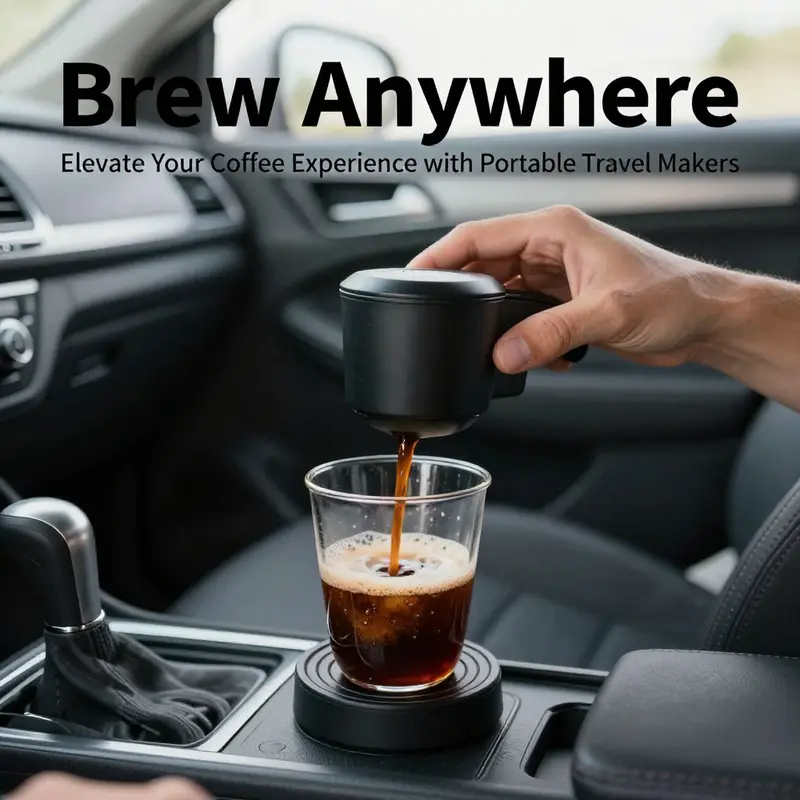
The allure of a portable travel coffee maker lies in a simple promise: the ability to transform a scattered morning into a moment of craft, regardless of where you find yourself. Far from being a novelty, these devices have evolved into reliable tools that bridge the gap between the ritual of real coffee and the realities of travel. Their strength is not in flashy features but in thoughtful design—compact form, resilient construction, and the capacity to produce a brew that preserves the oils, aromatics, and character of ground coffee. When you set one of these devices in your pack, you’re not just packing caffeine; you’re carrying a small, dependable cafe that travels with you, ready to match the pace of your day and the tone of your surroundings.
In everyday life, the distinction between home-brewed coffee and a visit to a cafe often hinges on time and practicality. A portable travel coffee maker responds to both needs with quiet efficiency. The quiet part matters because the best morning coffee should wake you with warmth, not with a chorus of mechanical noise or a long, deliberate ritual that delays the day’s first action. The efficiency comes from purpose-built features: a compact silhouette that slips into a backpack or laptop bag, a straightforward brewing sequence, and materials chosen for heat retention, safety, and ease of cleaning. These devices are not meant to replace a full-size espresso machine or a high-end pour-over station; they are designed to deliver the best possible crema, body, and aroma from a grounded dose within the constraints of travel—time, power, water, and space.
Consider the two broad paths a traveler might choose. One path leans into manual operation: no external power needed, relying on your own exertion to build pressure that extracts flavors from the beans or grounds. The other path leans into automation: a compact, battery-powered unit that handles grinding, heating, and pressurization at the press of a button. Each path has its own rhythm and its own benefits, and the choice often reflects the traveler’s priorities: the serenity of a quiet, methodical pull on a lever versus the brisk certainty of a single-press brew that arrives in under two minutes. This is not a debate about superiority; it’s a meditation on allocation of time, energy, and anticipation.
The more traditional, hands-on approach elevates the sensory experience in ways that can feel almost ceremonial. When you prepare a dose in a manual system, you’re intimately engaged with the process: you grind to a particular fineness, you level the dose, you apply steady, deliberate pressure, and you watch the bloom of oils emerge as the water meets the grounds. The result can be a fuller, more complex cup, with a texture that lingers on the palate. The practical realities of this approach, however, are clear as well. It requires attention, a slightly longer setup, and a reliable heat source. For camping, a stove or a small fire might supply the heat, and water quality becomes a more deliberate consideration. The weight of a sturdy manual unit is often offset by its simplicity and the satisfaction of a hands-on ritual that travels as a portable studio for the senses.
On the other hand, a compact, battery-powered unit embodies another kind of craftsmanship: it is a leap toward speed without sacrificing flavor. The aim is to deliver a consistent, cafe-like coffee experience in minutes, with minimal fiddling. In such devices, the focus is on reliable heating, a compact grinder (or compatibility with pre-ground coffee pods), and a pressurization system that can approximate the espresso experience in a travel-friendly chassis. The machine’s exterior is designed to be safe to touch even after brewing, with materials that resist heat and corrosion and a form that fits neatly in a glove compartment, suitcase, or hiking pack. For those who start their travel mornings on the move—late trains, early flights, or city streets—the ability to brew in a pinch without searching for a power outlet or bulky equipment can be a decisive advantage.
An honest look at performance reveals that portable coffee makers today often aim for robust extraction rather than mere convenience. Even when electricity is scarce or speed is essential, the best devices manage to preserve essential coffee compounds—the aromatic oils, the nuanced acids, the body that gives a cup its presence. The best of these devices strive for a balance: heat retention that keeps the brewing water at a steady, optimal temperature, a dependable seal to prevent leaks in motion, and a filtration system that preserves desirable compounds while keeping the cup free of particles. A well-designed portable system makes a notable difference in the daily ritual of a traveler, turning a straightforward brew into a moment of thoughtful enjoyment rather than a mechanical afterthought.
The practicalities of different travel contexts shape how you’ll use a portable coffee maker. In the field, where electricity and running water are not guaranteed, a manual press or a gravity-fed system shines. These models typically rely on hand-pumping or pressure generated through a simple mechanism, and their durability is a critical asset. Stainless steel, aircraft-grade aluminum, and heat-resistant glass or insulated walls are common materials that protect the brew from temperature fluctuations and the inevitable bumps of travel. The ability to draw water from various sources—cold streams, melted snow, or a portable water supply—in a pinch, further expands a traveler’s options and underscores the versatility of portable brewing in remote spaces. The tradeoffs are real: you may spend a couple of minutes more on the process, and you’ll want to keep to a clean, quick rinse routine so you can reuse the device each morning without harboring flavors from yesterday’s cup.
When you migrate to urban settings, the equation shifts toward speed and ease of use. A compact, electric, single-serve setup can pull a shot or brew a strong cup in under two minutes, integrating smoothly with a fast-paced itinerary. In a train cabin, a hotel room, or a small apartment, the convenience of a one-button operation—paired with a simple water-fill and a straightforward clean-up—can make the experience feel almost as effortless as reaching for a premium capsule system, but with the advantage of real grounds and a more personal taste. In these contexts, design matters as much as performance. A device that heats quickly but remains cool to the touch on the exterior invites confidence; a device with a thoughtfully designed handle and a reliable pour spout helps you avoid spills in crowded transit hubs. The final judgment, as travelers well know, is not only about the cup but also about the ritual: the way the grounds mingle with the water, the moment you press the plunger or flip the switch, and the aroma that travels with you as you move through the day.
The social aspect of coffee cannot be overlooked either. Portable coffee makers, especially those tucked into a backpack along a busy city street or carried into a remote campsite, become silent signals of intention. They show that you value quality enough to invest a few minutes in your cup, even when you’re surrounded by the familiar hum of commuters or the crackle of a campfire. Carrying one signals a certain competence and a desire for authentic flavor that rests somewhere between a ready-to-drink beverage and a meticulously brewed cup back home. In social settings—whether you’re traveling with colleagues or meeting locals while abroad—this careful choice of equipment can also become a talking point, a way to share a small piece of your personal routine with others who might appreciate a moment of craft amid their own journeys. The act of brewing, then, becomes more than a habit; it becomes a bridge across cultures, a way to slow down in the middle of a fast-paced day and taste something that carries your own mark.
The choice between a manual and an electric portable system is not simply about speed or effort; it is a decision about how you want to engage with coffee while you travel. If your trips are dominated by nature, a rugged, heat-efficient, manual design may be your preferred path. If your days are spent in transit through airports, stations, and hotel lobbies, a compact electric model may fit your routine better, offering consistency and a quick payoff that matches a tight schedule. In either path, the essence remains the same: you want a solution that preserves the integrity of the coffee while respecting the realities of travel—size, weight, maintenance, and the ability to adapt to varying water quality and power availability.
From a broader perspective, the evolution of portable coffee makers mirrors a larger shift in travel culture. Travelers increasingly seek autonomy, not just convenience, in how they start their day. They want to maintain a sense of self-reliance and ritual, even when they’re far from familiar cafes or home kitchens. The best devices acknowledge this need by offering reliable performance with minimal fuss, while still inviting the user to participate in the process if they choose. They are designed to be as comfortable in a remote campsite as in a hotel room, as ready for a week-long road trip as for a daily commute that begins before the sun fully rises. In this sense, portable travel coffee makers become more than appliances; they are portable rituals—carefully engineered tools that honor the craft of coffee while embracing the practicalities of modern travel.
So, as you plan how to equip your next journey, consider what you value most in the morning cup. Do you crave the tactile pleasure of dialing in a grind, dosing precisely, and watching a filter pull through a bright, layered shot? Or do you prefer the simplicity of a reliable system that delivers consistent results with minimal steps? Either way, a portable coffee maker can be tailored to your situation, turning every destination into a potential café, and every clock into a reminder that great coffee is not a luxury of place but a skill that travels with you. For readers exploring multiple options, a practical approach is to compare how each device handles heat, pressure, and cleaning, then weigh those factors against your typical travel patterns—camping, city wandering, business trips, or weekend escapes. The goal is to find a companion that respects your pace, satisfies your palate, and travels light enough to keep packing simple while still delivering the taste of a well-made cup.
As you navigate these considerations, you’ll likely encounter a spectrum of choices that emphasize different strengths. Some devices optimize for heat retention and filtration efficiency, offering a longer contact between water and grounds for deeper extraction. Others prioritize rapid heat-up times and compact form factors, sacrificing some nuance for speed and ease. In all cases, the central promise remains: you can carry a capable, personal coffee experience wherever your itinerary takes you. The best approach is to align your selection with your typical environments, your preferred brewing method, and your tolerance for setup versus standby time. If you’re a camper who loves the accumulation of aromas as dawn breaks, you’ll lean toward a model that thrives on manual pressure and robust heat retention. If you’re a commuter who values a clean, quick take on a rushed morning, you’ll gravitate toward a unit that powers up fast and delivers a strong cup in minutes. Either path ensures that your morning ritual travels with you, unshackled from concern about access to electricity or a nearby cafe.
For a concise guide to how these options map onto different lifestyles, you can explore a thorough roundup that highlights the best portable travel coffee makers for on-the-go quality. This resource distills the landscape into practical choices, helping you identify where your preferences sit on the spectrum of control, speed, and flavor. By understanding the nuances of heat management, pressure generation, and cleanup, you can select a device that integrates seamlessly into your travel routine and elevates your experience without complicating your packing list. And once your choice is made, the journey to better morning coffee becomes less about improvisation and more about a dependable, repeatable ritual that travels as reliably as you do.
Looking ahead, the ongoing refinement of portable brewing technology promises incremental gains in efficiency, durability, and taste. New materials and better sealing solutions can improve heat retention and reduce the risk of leaks, while thoughtful ergonomics can make the act of brewing feel even more natural in diverse settings. These advancements, when paired with a traveler’s patience and curiosity, can turn even a fleeting layover into an opportunity to savor a cup that reflects care and craft. In the end, the decision about which device to carry is less a question of which model is best and more a question of which approach best aligns with your travel persona—the patient, hands-on ritualist or the quick, dependable commuter who refuses to sacrifice quality for convenience. Either way, portable travel coffee makers offer a bridge between the structured routine of home and the unpredictable rhythm of the road, enabling you to begin every journey with a cup that speaks to your taste and your commitment to coffee done well.
For readers seeking a quick comparative glimpse beyond the narrative, see Best portable travel coffee makers for great coffee on the go. This resource offers a practical overview of how different designs perform in real-world scenarios and can help you narrow your choice before hitting the road. External perspectives are valuable, too; for a broader view of portable options and what the broader coffee community finds noteworthy, a respected industry guide provides a comprehensive look at how these devices have matured and why they matter to modern travel culture.
External reference: https://www.thespruceeats.com/best-portable-espresso-makers-4850588
Final thoughts
Portable travel coffee makers have become essential tools for business owners who value the quality and convenience of coffee wherever they are. By understanding the features and advantages of these innovative devices, exploring the variety of options available, and identifying practical use cases, entrepreneurs can significantly enhance their coffee experience. Whether enjoying a cup in the office or brewing on a camping trip, these tools ensure that great coffee is accessible. Ultimately, investing in a portable travel coffee maker not only promotes routine well-being but also fuels the productivity necessary for success in business.