

Dr Pepper stands out in the vast world of carbonated beverages, not only for its unique taste but also for its caffeine content. With approximately 41 to 42 milligrams of caffeine per 12-fluid-ounce serving, Dr Pepper occupies a middle ground among caffeinated soft drinks. Understanding caffeine’s role in flavor enhancement and consumer appeal is crucial for business owners looking to maximize their product offerings. Throughout this exploration, we will delve into the specifics of caffeine in Dr Pepper, examining its comparison with other beverages, its influence on flavor and consumption, health considerations, and ultimately its market position among soft drinks. Ensuring clarity and awareness of these factors is essential for businesses engaging with or selling caffeinated refreshments.
A Gentle Buzz: Caffeine in Dr Pepper and Its Quiet Role in the Soft-Drink Landscape
Caffeine in Dr Pepper sits as a steady companion rather than a loud jolt. A typical 12-ounce serving contains about 41 to 42 milligrams of caffeine, placing Dr Pepper in the mid-range of soft drinks. This makes it predictable for everyday planning, whether you choose regular or zero-sugar variants.
When set beside other beverages, the picture clarifies: Coca-Cola usually around 34 mg per 12-ounce can, while coffee often ranges from 95 to 200 mg per serving. That places Dr Pepper between a mild caffeination and a stronger stimulant, well short of coffee and above some lighter sodas. Some energy drinks can eclipse it, and Mountain Dew often sits a bit higher as well, but the comparison helps explain how people calibrate taste and energy.
Caffeine contributes a gentle bitterness that complements the drink’s 23-fruit-and-spice blend. The bitter edge helps temper sweetness and reveals complexity in flavor without overpowering the palate. In this way caffeine acts as an invisible partner that supports balance rather than stealing the show.
Behaviorally, many consumers notice a mild wakefulness rather than a sharp energy spike. The level is designed to be approachable for daily consumption, suitable for a midafternoon break or a casual sip in the morning.
The equivalence of caffeine across regular and zero-sugar lines provides consistency that matters for daily totals. People who monitor caffeine intake can compare products more easily and plan alongside tea, chocolate, or other caffeinated items.
From a regulatory standpoint, labeling practices aim to offer clear information about caffeine content. Individuals should consider sensitivity and personal health goals when deciding how to fit Dr Pepper into their daily routine.
In sum, Dr Pepper strikes a balance: enough caffeine to offer a gentle lift and a touch of bitterness to frame the flavor, but not so much as to dominate the experience. The 41 to 42 mg per 12-ounce serving reflects a design that supports enjoyable, steady consumption throughout the day.
The Subtle Lift: Caffeine’s Role in Dr Pepper’s Flavor and Everyday Sips
Caffeine often occupies a quiet, backstage role in soft drinks, enough to keep a drink from fading into mere sweetness but not so commanding that it drowns the palate in bitterness. In Dr Pepper, that balance is part of the designed experience. The beverage carries a precise amount of caffeine per can, enough to register as a gentle nudge rather than a drumbeat of alertness. A standard 12-ounce (355 mL) can of regular Dr Pepper or its zero-sugar variant contains about 41 to 42 milligrams of caffeine. In practical terms, this places the drink in the moderate range of caffeinated sodas. It sits higher than caffeine-free colas, but well below the energy-forward options many people reach for when they want a pronounced lift. This placement matters not only for the physiology of stimulation but also for how the drink tastes and how consumers include it in their daily routines. When people talk about flavor, they are often thinking about aroma, sweetness, and texture, yet caffeine subtly threads through all of these aspects, shaping the overall sensory profile in ways that aren’t always obvious at first sip.
What makes the caffeine in this particular soda notable is not the sheer volume of caffeine but its nuanced relationship with the drink’s already complex flavor. Unlike classic colas, where caffeine traditionally arrives as a byproduct of other ingredients, Dr Pepper adds caffeine intentionally as part of a broader sensory strategy. The goal is not to ignite the senses with a sharp kick but to layer a gentle, persistent lift that can accompany casual sipping across the day. This intent becomes apparent when tasting the beverage side by side with others. The caffeine’s presence introduces a restrained bitterness that doesn’t dominate; instead it acts as a balancing counterpoint to sweetness. The result is a mouthfeel that feels a touch more round and dimensional—the kind of bite that makes a drink feel complete rather than merely sweet. In this way, caffeine on the roster of ingredients functions as a flavor modifier as much as a stimulant, subtly guiding perception toward a more complex, lasting finish rather than a quick, singular impression.
The sensory effects of caffeine extend beyond taste and aroma into the rhythm of sipping. For many, the drink provides a “gentle lift” rather than a pronounced surge. This is not accidental. The caffeine level aligns with a consumption pattern built around everyday moments—a mid-morning break, a late-afternoon pick-me-up, or a quiet desk companion during a long stretch of work. The pattern matters because it frames how people experience the product over time. Rather than prompting a single, intense moment of alertness, the caffeine content supports a steady, manageable energy that can complement a routine rather than disrupt it. It is this quality that makes Dr Pepper a popular choice for those who want a mild stimulant without the jittery aftertaste that accompanies higher-caffeine beverages. In conversations about caffeine in soft drinks, the drink’s moderate caffeine level is often cited as a reason people return to it—satisfied, not overwhelmed—and it helps explain why some prefer it over more aggressive caffeinated options.
Yet all that is not to say the caffeine content is invisible. In fact, consumer perception of caffeine is part of the beverage’s psychology. A notable finding from recent research is that an overwhelming majority of drinkers—about 95 percent—are unaware of the exact caffeine content in their favorite soft drink. This disconnect between knowledge and experience can influence consumption choices in subtle ways. A person may reach for a can because it feels like a refreshing, flavorful lift, not recognizing that the same lift comes with a measurable amount of caffeine. This ambiguity can be beneficial in everyday use, offering a casual, approachable option for those who want a little energy without a conspicuous, energetic climax. At the same time, it invites mindfulness in contexts where caffeine intake matters—such as for people who are sensitive to caffeine, who are managing sleep or anxiety disorders, or who are pregnant. The lack of overt labeling about caffeine can make it easy to underestimate the stimulant content, which is an important consideration for daily planning.
The intentional inclusion of caffeine also ties into how the drink’s flavor profile is perceived by different palates. For some tasters, the mild bitterness of caffeine acts as a counterpoint to the drink’s rich sweetness and its signature, non-cola character. That contrast can enhance the perception of depth, giving the beverage a more polished finish than a purely sweet, vanilla-like profile might suggest. In sensory terms, caffeine can sharpen the palate just enough to highlight the subtle spices and fruit-like notes that some describe as part of the drink’s unique flavor language. The net effect is a sensory experience that rewards repeated sips and, over time, can lead to the impression of a more satisfying mouthfeel. It’s a reminder that flavor is not only about sweetness or aroma but about the dynamic interplay of all compounds present, including caffeine, which quietly participates in shaping the overall impression.
Understanding the caffeine content also helps place Dr Pepper within a broader landscape of caffeinated beverages. When compared to other widely consumed drinks, the 41–42 mg per 12-ounce can sits higher than standard colas like Pepsi, which delivers roughly 38 mg per 330 milliliters, yet lower than many popular diet colas and energy-forward options that hover around the mid-40s to mid-50s milligrams in similar serving sizes. Diet Coke often carries more caffeine per can than regular variants, a difference that can matter to caffeine-sensitive individuals. The comparison underscores an important nuance: caffeine content is not just a number; it’s a contextual marker that can influence decisions about how the drink fits into a daily schedule, how it interacts with meals, and how it aligns with one’s sensitivity to stimulants. The fact that Dr Pepper’s caffeine is integrated as a deliberate design choice contributes to its appeal as a daily companion rather than a stand-alone pick-me-up geared for intense focus.
One consequence of this deliberate design is that the drink’s caffeine can subtly shape choices around consumption frequency. Because the lift is gentle, many people find themselves enjoying the drink at multiple times in a single day, weaving it into rituals rather than planning it as a single event. This pattern, in turn, reinforces the idea that caffeine’s effect is not merely a momentary cue but a factor that influences how people structure their routines. The moderation of the lift helps prevent a jarring drop in energy between sips, which can be more noticeable with higher-caffeine beverages. In that sense, caffeine becomes part of the texture of everyday life—a steady, approachable contributor to mood and stamina rather than a dramatic stimulant that demands attention.
The topic invites a practical note on health and responsible use. While moderate consumption is generally considered safe for most adults, it is wise to account for personal sensitivity, medical history, and any conditions affected by stimulants. For those who are especially caffeine-sensitive, for pregnant individuals, or for anyone managing anxiety or sleep disorders, it is prudent to consider how three or more servings in a day might influence sleep quality or restfulness. The issue is not merely about one meal or one drink but about how a pattern of intake over the course of a day can accumulate. In such contexts, awareness of caffeine content becomes a tool for balancing enjoyment with well-being. It is not about avoidance but about informed choice, a careful calibration of taste, stimulation, and rest.
Part of fostering that informed choice is recognizing that caffeine in Dr Pepper is not an accidental sideline. The beverage’s flavor engineering includes caffeine as a deliberate lever to achieve a specific sensory and experiential balance. This is not the same as adding caffeine to chase a quick, pronounced effect. Rather, it is about embedding a mild stimulant within a flavor-driven experience so that the drink remains satisfying across multiple sips and various contexts. The result can be described as a sense of continuity: a familiar, comforting lift that accompanies a busy day without demanding a drastic change in pace. In practice, this means the drink can function as a reliable everyday option for many people, a companion that stays within the comfortable zone of stimulation while not competing with more intense caffeinated beverages when a stronger lift is necessary. For readers seeking a deeper dive into the caffeine conversation around this drink, more detailed analysis is available at Is Dr Pepper caffeine.
The broader takeaway is not simply that caffeine is present but that its presence is a deliberate feature of a flavor-centric product. Consumers who understand this can better appreciate how the drink’s taste and its effect on mood and energy interrelate. It helps explain why this beverage remains a staple for those who prefer a milder, more sustained lift alongside a distinctive, non-cola flavor profile. The calculus behind the caffeine content is a reminder that flavor and function are not separate domains; they are intertwined aspects of how a product performs in real life. People do not just taste a drink; they experience its rhythm across a day, and caffeine is an invisible companion that helps shape that rhythm in subtle, enduring ways.
As with many details tucked into the fine print of a label, the practical takeaway is simple: if you are mindful about caffeine, you can incorporate Dr Pepper into your routine with a clear sense of what to expect. The flavor carries that faint edge of bitterness that keeps sweetness honest, and it comes with a lift that feels approachable rather than overpowering. For those curious about whether the drink’s caffeine content might affect specific health concerns, a quick consult with a healthcare professional or careful self-monitoring can help. In the end, the conversation about caffeine in this drink is as much about understanding your own responses as it is about tasting notes or serving sizes. It’s about finding a balance that preserves enjoyment while respecting personal limits, a balance that aligns with the drink’s long-standing role as a familiar, comforting, and gently stimulating option in a busy day. External resource for further verification of the official caffeine content is available at https://www.drpepper.com/dr-pepper-caffeine-content.
External reference: https://www.drpepper.com/dr-pepper-caffeine-content
Moderate Caffeine, Gentle Wakefulness: Understanding Dr Pepper’s Caffeine Content and Its Health Implications
Dr Pepper contains a moderate amount of caffeine in a typical 12-ounce can, making it a gentle wakeful option rather than a high-octane energy boost. A standard can delivers about 41 to 42 milligrams of caffeine, which sits between caffeine-free sodas and stronger caffeinated beverages such as energy drinks or brewed coffee. This moderate level can provide a subtle lift for daytime tasks without the jittery surge associated with higher caffeine doses.
Flavor and caffeine interact in subtle ways. The caffeine adds a mild bitterness that counterbalances the drink’s sweetness, helping to keep the finish clean on the palate. This perceptible lift is usually enough to improve focus or mood for a casual afternoon break without dominating the sensory experience.
From a health perspective, the caffeine content in Dr Pepper generally fits within common daily guidelines. For most healthy adults, daily intakes up to about 400 milligrams are considered safe by major health authorities, and a single can represents only around 10 percent of that limit. For the vast majority, this amount is unlikely to cause adverse effects when consumed as part of an overall moderate caffeine intake.
Individual sensitivity matters. Pregnant individuals, people with anxiety or certain cardiovascular conditions, and those with stimulant-related disorders may need to monitor caffeine more carefully. Spreading out caffeinated beverages across the day or choosing caffeine-free alternatives later in the day can help maintain balance between alertness, sleep, and well-being.
A common misconception is that Dr Pepper is caffeine-free. In reality, the caffeine is present and consistent in standard servings, underscoring the value of checking labels and tracking total caffeine exposure from all sources. When planning caffeine intake, it helps to map sources across a day to avoid unwanted disruption to sleep or calm.
In summary, Dr Pepper offers a moderate caffeine dose that supports daily enjoyment without demanding a high-energy response. For most people, a single can can provide a mild lift while fitting into a broader routine focused on taste, balance, and steadier energy throughout the day.
A Gentle Lift in a Flavorful Landscape: Dr Pepper’s Caffeine and Its Market Niche in Soft Drinks
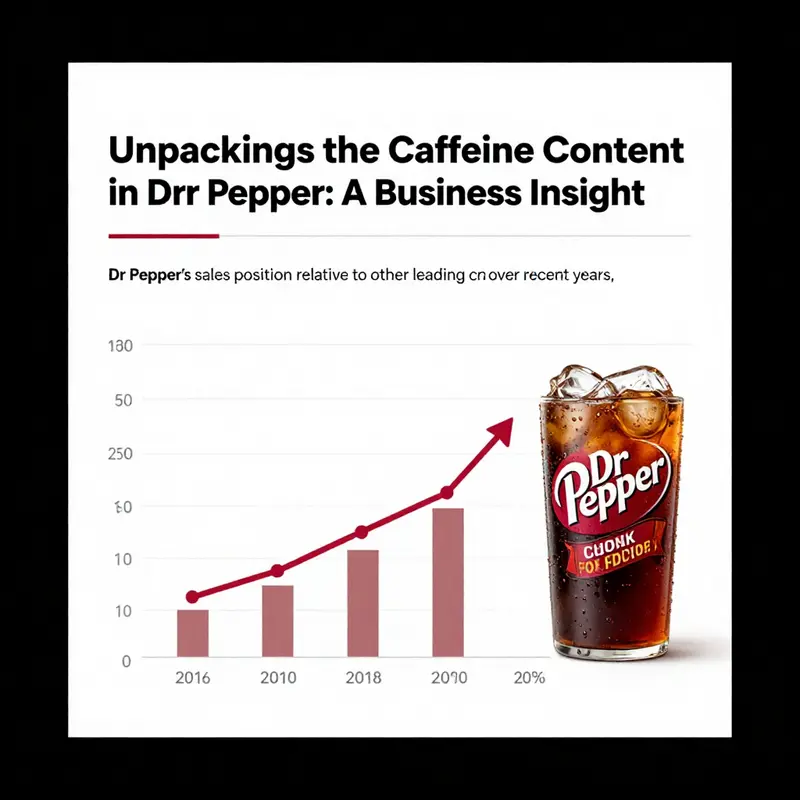
A can of Dr Pepper sits in the hand like a familiar companion, its ruby-bright glow catching the light as if inviting a moment of pause. In that moment, caffeine is quietly at work, not as a loud chorus but as a steady undertone that lends a subtle lift to the drink’s already distinctive personality. The caffeine inside a standard 12-fluid-ounce can operates as a balancing agent. It nudges the palate toward a hint of bitterness that counterpoints the sweetness, helping the proprietary blend of flavors—often described as a unique fusion of cherry, licorice, clove, and twenty other notes—unfold with a sense of complexity rather than sugary simplicity. This is not a beverage built to jolt, nor is it a low-energy novelty. It occupies a middle ground that many tasters find approachable for everyday consumption, a level of stimulation that fits neatly into a busy afternoon or a casual social setting without demanding a separate “energy” category in a shopping cart.
Quantifying that lift begins with the familiar measure: roughly 41 to 42 milligrams of caffeine per 12-fluid-ounce can. This range, reported consistently across multiple sources, places the drink in a mid-range category among caffeinated soft drinks. An influential analysis published in the Journal of the American Dietetic Association in 2007 reinforces this placement, noting about 42.6 mg per 12 oz in a national-brand survey. The small variance among official tallies matters less for the label than for the lived experience—readers who compare a can to a coworker’s cola or to an energy drink will notice a difference in intensity, but not a dramatic gap. The caffeine content informs a practical takeaway: the drink offers a mild, manageable lift that can accompany a wide range of daily activities, from a mid-morning slump to a post-lunch pause, without demanding a rethinking of caffeine intake around meals or workouts.
If one surveys the wider landscape of caffeinated beverages, the contrast becomes more telling. A Coca-Cola Classic or Pepsi typically clocks in a few milligrams lower per 12 oz, while energy-boosting beverages push well past the Dr Pepper benchmark, sometimes by a factor of two or more. This spectrum matters culturally as well as chemically. For many consumers, the appeal is not simply the caffeine amount but how it aligns with flavor expectations. Dr Pepper’s flavor profile—a signature blend of cherry-forward sweetness tempered by bitter undertones—benefits from caffeine’s bitterness, which keeps the overall sweetness from tipping into cloying territory. The result is a sensory experience that feels both familiar and a touch more mature than straightforwardly sweet drinks. In practice, the drink’s moderate caffeine supports a positioning that straddles two worlds: it is familiar enough to fit in with classic colas and other mainstream sodas, yet distinct enough in taste and energy profile to justify its own shelf space and consumer memory, especially in regions where regional nostalgia for the brand runs deep.
The brand’s market position is inseparable from its flavor identity. The presence of caffeine reinforces the drink’s daytime suitability, a feature that retailers and marketers often emphasize in merchandising and promotions without turning the product into a caffeine-centric pick-me-up. The caffeine content signals availability to a broad audience—students, professionals, and social diners alike—without signaling a performance-focused or athletic-use case. This alignment with everyday consumption translates into how the product is discussed in media, how it appears in store displays, and how it is perceived by long-time fans and new customers alike. In the cultural geography of the United States, the beverage has carved a niche particularly in the South and Southwest, where regional preferences for distinctive flavor and a moderate energy lift intersect with strong brand recognition. That cultural resonance helps sustain not only steady demand but also word-of-mouth discovery, as the drink is repeatedly encountered in social rituals, casual dining, and convenience-store snacking alike.
Beyond taste and distribution, the caffeine story invites consideration of consumer health and behavior. For those monitoring caffeine intake, the mid-range level offers a predictable, manageable contribution to daily totals. The broad guidance often cited—roughly up to 400 mg per day for healthy adults—leaves room for casual, moderate consumption without crossing into high-stimulation territory. Individuals with pregnancy considerations, anxiety sensitivity, or other health conditions may choose to moderate further, recognizing that caffeine’s effects vary widely among people. In crafting a beverage intended for regular, everyday use, formulators balance a desire for a noticeable lift with an obligation to preserve flavor integrity. Too much caffeine can flatten the palate, making the drink feel more like a stimulant than a flavor experience. Too little, and the beverage risks losing its brand character in a sea of milder options. The middle ground achieved here supports the drink’s identity as a flavorful, accessible choice that remains relevant to a wide audience across settings and routines.
Formulation discussions often circle back to the flavor system that defines the product: a proprietary mix of 23 flavors that includes cherry and an array of spicy, herbal, and botanical notes. Caffeine’s role is not to overshadow these notes but to engage them, sharpening bitterness enough to reveal nuances without intensifying acidity or harshness. In other words, caffeine becomes a seasoning for taste, a subtle amplifier that helps the drink maintain its signature edge across a spectrum of consumer palates. This interplay helps explain why the beverage endures in markets where taste can tip brand loyalty toward one of many similar offerings. It also sheds light on why the beverage remains easy to pair with meals, snacks, and social occasions—the caffeine helps align the experience with everyday rhythm without creating a perception of high-energy consumption.
For readers curious about how caffeine behaves across variants, one common question is whether the diet version carries the same caffeine footprint. Does Diet Dr Pepper have caffeine? Get the truth in. Does Diet Dr Pepper have caffeine? Get the truth in.. The answer, in general terms, points to a likeness in order of magnitude rather than a perfect parity. Diet formulations often aim to preserve the core sensory experience—the aroma, mouthfeel, and flavor balance—while optimizing calorie and sugar profiles. Caffeine, being a relatively stable and attractive function for many consumers, tends to appear in similar ranges across regular and diet variants, though exact amounts can vary by batch and formulation decisions. This nuance matters for shoppers who compare labels in everyday shopping and for health-conscious readers who track caffeine across a multi-beverage day. It also underscores why brand storytelling often centers not on caffeine alone but on the broader sensory and lifestyle cues the product embodies.
The market narrative surrounding this mid-range caffeinated beverage is thus not simply about caffeine as an accelerant. It is about a cohesive experience—taste, energy, and cultural resonance—that positions the drink as a reliable daily companion rather than a specialty item. The brand’s lasting appeal rests on the ability to offer a recognizable, flavor-forward experience while providing a gentle lift that can be enjoyed in the company of work, study, conversation, or leisure. In retail terms, this translates into steady shelf presence, consistent promotional messaging around taste and versatility, and a consumer expectation of reliability. The result is a product that continues to thrive in a crowded aisle, balancing taste intensity with a measured stimulant effect that remains within the everyday consumer’s comfortable range.
From a research perspective, these observations align with broader analyses of caffeine content in carbonated beverages. They illuminate why a mid-range caffeine profile can be strategically advantageous: it signals wakefulness without demanding a behavioral shift toward high-stimulus products. It also helps explain consumer perceptions of value—the idea that a flavorful experience can coexist with a modest, predictable lift rather than a potent caffeine surge. This framing supports continued relevance in a market that increasingly values both taste and wellness-conscious decision-making. External resource: https://www.ncbi.nlm.nih.gov/pmc/articles/PMC2914939/
Final thoughts
The caffeine content in Dr Pepper is not just a numerical figure; it plays a critical role in influencing consumer choices and defining market trends. By comprehending how caffeine affects flavor, health considerations, and benefits and drawbacks associated with it, business owners can better strategize their approach to beverage offerings. As the beverage market continues to evolve, staying informed on these aspects ensures that businesses remain competitive and responsive to consumer preferences. The knowledge gained from this analysis of Dr Pepper’s caffeine properties can be leveraged to enhance marketing strategies, product development, and customer engagement. Strong positioning amid growing health consciousness and informed consumption will distinguish your brand in a crowded marketplace.