

For business owners, a Bunn coffee maker is often an integral part of operations, serving patrons with their favorite brews. However, to ensure consistent quality and extend the life of these machines, regular cleaning and maintenance are crucial. This article delves into the importance of utilizing specialized Bunn coffee maker cleaning tools, presenting essential tools every owner should consider, and comparing conventional methods like vinegar with commercial descalers. By the end, you will have a comprehensive understanding of how to maintain your coffee equipment effectively, keeping your beverages at peak quality.
Bunn Coffee Maker Cleaning Tools and Longevity: Protecting Performance Through Routine Maintenance
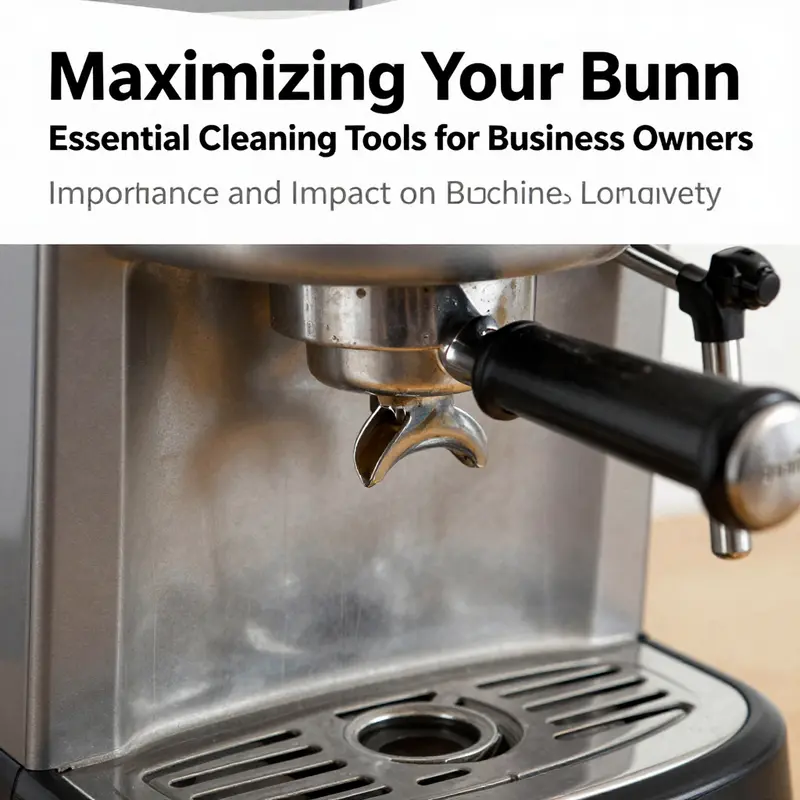
A commercial coffee brewer lives at the crossroads of consistency, reliability, and the sensory experience that customers expect. The flavor, aroma, and temperature stability that make a good cup of coffee memorable are not just the result of the bean and the roast; they are also the consequence of how well the machine is cared for. In a busy operation, small maintenance choices can translate into meaningful gains in uptime and in the life of the equipment. This chapter examines the role of dedicated cleaning tools in sustaining peak performance, highlighting why these tools matter as much as the calibration and the grinder settings that many operators obsess over. When a brewer is treated as a living system—one whose passages, spray heads, and water lines must remain clear of mineral build-up and oil residues—the case for specialized tools becomes clear. Regular cleaning is not a cosmetic exercise; it is a preventive strategy that keeps the machine operating at the temperatures and flow rates required for a consistent extraction, hour after hour, day after day.
Descaling is the most familiar and time-honored maintenance task. In the lifecycle of a commercial brewer, mineral deposits from hard water are relentless guests that work underground, quietly narrowing pathways and dulling the precision that underpins perfect extraction. A descaling process typically involves circulating a cleaning solution through the internal passages, allowing minerals to loosen, dissolve, and wash away. To do this effectively, many technicians rely on a de-liming tool—a small, reusable implement that helps agitate and remove scale from narrow channels and hard-to-reach corners within the machine. In practice, this tool is used during the descaling cycle, often in combination with a descalering solution, to loosen mineral scale from the heating elements, the group head, and the water lines. The result is a cleaner interior surface that supports better heat transfer and more predictable flow, both of which are essential for stable brewing temperatures and uniform extraction. A 4-pack of these reusable de-liming aids offers practical value for regular maintenance, ensuring that no interval or shift manager has to delay a cleaning because one tool is missing.
The second category of indispensable cleaning tools tackles the residues that accumulate in the spray head area. The spray head, or shower screen, is the distribution point that governs how water streams onto the coffee bed. Oils and fine coffee particles can bond to this surface over time, creating micro-blockages that alter water flow and, in turn, brew strength and evenness. A dedicated spray head cleaning tool is designed to reach into the crevices around this critical component, dislodging stubborn oils and residue that standard rinsing cannot remove. When used regularly, the spray head cleaner helps maintain the even water distribution that is essential for uniform extraction and a consistent cup profile. It is a small investment with outsized returns: fewer occlusions, steadier flow, and fewer performance anomalies during peak service.
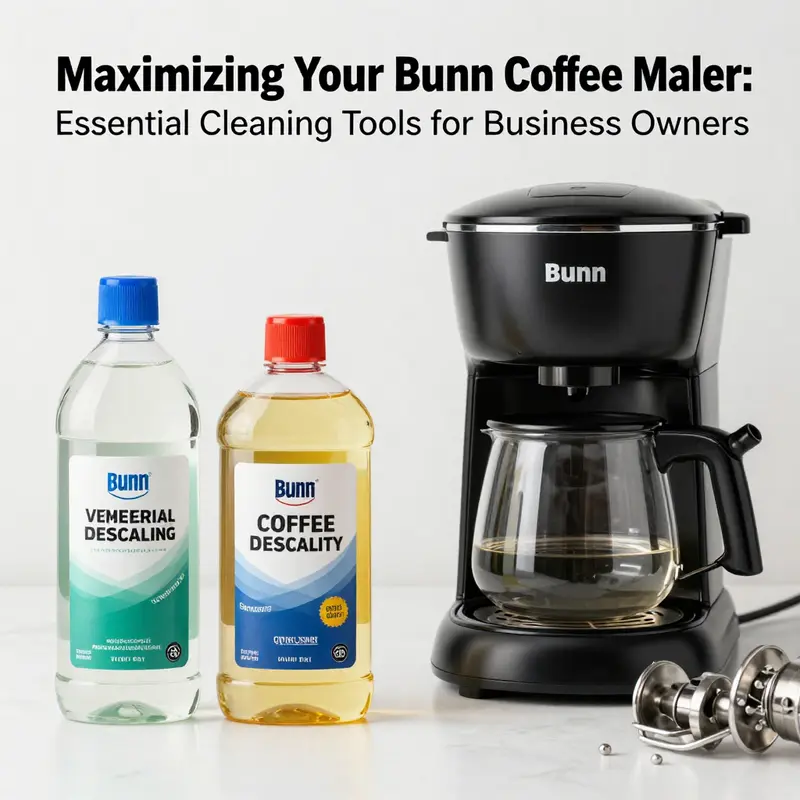
The discourse around descaling also invites a practical comparison of cleaning solutions. Homebound cooks and professional operators alike have options: white distilled vinegar or commercial descalers. Vinegar—typically around 5% acetic acid—offers a cost-effective route that many operators already stock. It can be effective for light scale and is convenient for occasional maintenance by smaller operations. However, vinegar carries a scent and a taste risk if not fully rinsed, and its acidity can be aggressive toward certain plastics and elastomers over time if used improperly. Commercial descalers, by contrast, are formulated with organic acids that target mineral scale while aiming to protect sensitive components. Citric acid, lactic acid, or gluconic acid-based descalers are common; they are selected for compatibility with the plastic and metal surfaces inside commercial brewers and for their gentle yet effective dissolution of scale. A well-chosen descaler—especially one designed for commercial equipment—can dissolve mineral deposits more predictably and with less odor than household vinegar, a consideration that becomes meaningful in busy environments that rely on a clean, odor-neutral brewing room.
When the topic turns to tools and technique, the narrative shifts from “what to use” to “how to use it.” The descaling process becomes a coordinated sequence in which the machine is prepared, the cleaning solution is circulated, and the internal channels are given time to yield to the mineral crust that otherwise narrows them. The de-liming spring or analogous tool is used to agitate and loosen deposits in tight passages, while the spray head cleaner is guided along the shower screen and group head to ensure no residual oils hide in small recesses. The value of a dedicated cleaning kit becomes apparent here: instead of improvising with off-brand items or improvisational tools, operators gain access to purpose-built instruments designed for those exact points of contact. The result is not only a cleaner machine but a more precise and dependable brew pathway that supports consistent temperatures and stable flow rates, both of which are essential for a reliable extraction profile across multiple shifts.
In this context, the practical reality is that an investment in cleaning tools translates into longer machine life. Scale buildup is more than a cosmetic problem; it is a mechanical burden. It can insulate heating surfaces, alter heat transfer efficiency, and create pressure differentials within the water paths that stress seals and joints. When you couple thorough descaling with targeted cleaning of the spray head, you minimize the risk of leaks and the need for premature component replacement. Over time, this translates into fewer emergency service calls, less downtime, and a more predictable maintenance window for deeper servicing or part replacements. The goal is to preserve the integrity of the machine’s core systems—temperatures, water distribution, and flow paths—so that the brewer remains capable of delivering the same level of performance, shot after shot, even in high-demand environments.
A careful, well-planned maintenance routine also reinforces consistency in the cup. Consistency begins with temperature control, and temperature stability is intimately tied to how clean the internal passages are. Scale acts like a poor conductor, impeding efficient heat transfer and causing hot spots or cool zones within the brew path. Oil residues in the spray head can alter wetting patterns, affecting saturation and extraction times. By regularly engaging with the cleaning tools designed for these exact tasks, operators create conditions where the water spends the right amount of contact time with the coffee bed, water disperses evenly, and the machine’s sensors can perform within their calibrated tolerances. The result is a tangible improvement in flavor consistency, aroma, and overall cup quality, with less variation from shift to shift.
The value proposition extends beyond flavor and reliability. In a bustling operation, every minute of downtime costs money, and every move in the cleaning routine should contribute to efficiency. The presence of a dedicated descaling kit and a spray head cleaning tool simplifies training and standardizes procedures across staff. A technician or manager can articulate a simple, repeatable routine that minimizes guesswork, reduces the risk of missed steps, and ensures the machine is brought back to a known good state after cleaning. In practice, this means a more predictable workflow, easier onboarding for new staff, and fewer surprises during pre-opening checks or health-and-safety audits. The conversational tone of a well-structured maintenance routine also tends to improve adherence; when staff see a clear connection between a tool, a procedure, and better cup quality, they are more likely to follow through with the recommended steps.
The discussion would be incomplete without acknowledging the value of practical resources. The manufacturer’s support materials emphasize a clean, methodical approach to maintenance, with stepwise guidance that aligns with the goal of preserving component integrity. For operators seeking a concise, step-by-step refresher, a practical reference exists that outlines how to approach cleaning a Bunn brewer, including recommendations for descaling and targeted tool usage. This resource complements the hands-on kit approach by providing a framework that can be adapted to different service environments, whether a busy café, a large hotel pantry, or a corporate break room. In other words, the tools are not a substitute for knowledge; they are catalysts for applying knowledge more effectively.
As with any specialized routine, the cadence of maintenance matters. Descaling and spray-head care are not one-off tasks; they are ongoing practices that should align with water quality, usage patterns, and the machine’s design tolerances. A simple quarterly deep clean may suffice for some operations, while others in high-use settings will benefit from more frequent attention. The decision rests on a few practical indicators: the frequency of coffee brews produced, the observed flow rate and brew temperature stability, and any shifts in flavor or aroma that prompt a closer inspection of the internal pathways and spray head. In all cases, the use of purpose-built cleaning tools brings a level of precision to the procedure that general-purpose brushes or improvised tools rarely achieve. The goal is not to complicate maintenance but to elevate reliability, protect the investment in the machine, and safeguard the consistency that customers come to expect with every cup.
For operators who want to deepen their approach, a simple heuristic can guide routine planning. If the water in your area is particularly hard, if the machine handles a high volume of coffee daily, or if you notice any drift in brew strength or temperature, that is a clear signal to lean more heavily on descaling and spray-head cleaning. A de-liming spring should be part of the descaling routine, performing the mechanical portion of mineral removal where chemical action alone may be insufficient. A spray head cleaner should accompany that process, ensuring the last mile of cleanliness in the distribution pathway before water meets coffee. In practice, this combination yields a cascade of benefits: clearer internal channels, more stable heat transfer, steadier water flow, and, ultimately, a more consistent extraction profile. When these elements hold steady, operators can focus more of their attention on dose control, grind calibration, and batch consistency—areas where precision translates directly into quality.
To support readers who want a practical, actionable reference, a concise article exists that walks through the specifics of cleaning a Bunn brewer. It provides focused guidance on steps, tools, and considerations that complement the broader discussion here. The linked resource offers a complementary, hands-on angle for operators who prefer to see a concrete sequence in action while still appreciating the underlying rationale for each tool and step. How to Clean a Bunn Coffee Maker provides a handy bridge between theory and practice, reinforcing the idea that the right tools, used correctly, yield measurable improvements in performance and longevity.
In sum, the case for dedicated cleaning tools is not merely about removing scale or wiping down surfaces. It is about sustaining the nuanced interplay of heat, water distribution, and coffee extraction that defines a great cup. The descaling kit and spray-head cleaning tool are small instruments with outsized impact when integrated into a regular maintenance cadence. They support longer machine life, steadier performance, and higher-quality beverages, all while reducing the likelihood of disruptive failures that can arise from neglected buildup. In environments where a single excellent batch can define a day’s success, investing in the right tools and procedures becomes a practical, profitable choice. The path to longevity is paved with attention to detail, disciplined routine, and the disciplined use of tools designed for the job. When operators commit to that path, the machine becomes more than a piece of equipment; it becomes a reliable partner in delivering consistency, efficiency, and satisfaction to every cup poured.
External resources can offer additional guidance and official recommendations. For practitioners who want to consult the manufacturer’s maintenance stance directly, the support page provides the formal procedures and cautions that help ensure compatibility with specific models and configurations. This collaboration between tool-driven practice and manufacturer guidance helps ensure longevity without compromising performance. To explore official guidance, you can visit the manufacturer’s support page at the end of this chapter.
External reference: https://www.bunn.com/support/
Caring for the Core: A Thorough, Integrated Look at Essential Cleaning Tools for Commercial Drip Brewers
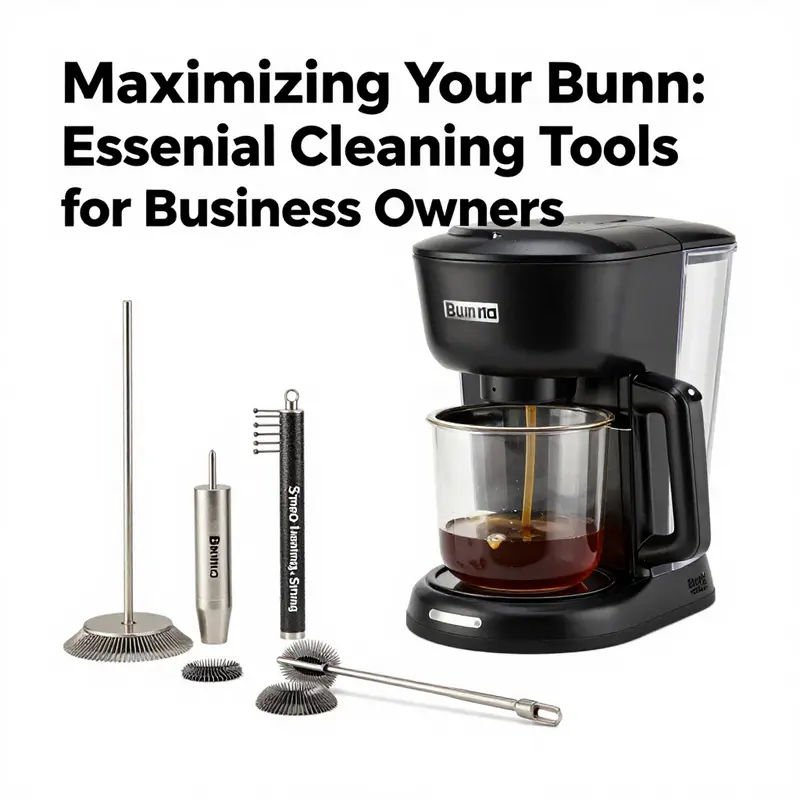
A clean coffee brewer is more than a gleaming exterior and a brisk preheat cycle. It is a machine that breathes easy, delivers consistent flavor, and remains reliable under heavy daily use. In commercial environments, where the brew cycle is constant and water hardness varies, maintenance becomes a discipline rather than a quick weekend ritual. The heart of this discipline is a focused set of cleaning tools and a reliable descaling routine. When those elements align, the result is not merely better-tasting coffee; it is a longer machine life, fewer interruptions to service, and a more predictable operation that staff can trust and customers can taste. The pathway to that reliability begins with understanding the core tools that make descaling and cleaning effective, and how to deploy them in a way that respects the machine’s design while recognizing the realities of a busy kitchen, café, or office environment. The essential toolkit centers on three components: a reusable de-liming device that helps dislodge mineral buildup from internal passages, a spray-head cleaning tool that maintains the integrity of water distribution and oil-free spray paths, and a properly chosen descaling agent that dissolves scale without compromising seals, gaskets, or electronic components. It is tempting to rely on household habits or quick rinse cycles, but scale and oil residue don’t wash away with a casual splash. In commercial gear, mineral scale binds to the inside of tubes, boiler walls, and spray paths; coffee oils and fines settle in crevices, creating micro-blockages that slowly impede flow and uniform extraction. The cumulative effect is a drift in brew strength, uneven contact times, and a flavor profile that veers away from the intended profile. The cleaning tools discussed here are designed to address these exact issues in a practical, repeatable way that fits into a monthly or quarterly maintenance rhythm. The descaling process, in particular, requires careful choice: white distilled vinegar is a longstanding, cost-effective option for routine care, while commercial descalers lean on organic acids such as citric, lactic, or gluconic acid. Each option has its benefits and caveats, and the choice often depends on water hardness, the machine’s exposure to mineral-rich water, and the manufacturer’s guidance. Vinegar is widely available, inexpensive, and simple, but its acetic acid can be more aggressive on certain metals and rubber components if used improperly or left too long in contact with sensitive parts. Commercial descalers offer formulations that are specifically engineered to be gentler on seals and electronics while maintaining robust mineral dissolution, typically with optimized contact times and rinse cycles. The best practice is to adopt a descaling routine that uses a reputable descaler designed for commercial equipment, paired with a rigorous rinse or purge to ensure any lingering residues are removed. Beyond the chemistry, the physical tools are what make the routine practical and repeatable. The de-liming device works as a guided spring or tool that gently engages mineral deposits adhered to the interior surfaces. When inserted and manipulated according to the manufacturer’s guidelines, it helps detach scale from boiler walls and tubing without stressing joints or gaskets. This is especially valuable in systems with long, straight runs where deposits can accumulate and then crack under pressure during the next brew cycle. The spray-head cleaner, meanwhile, targets a more neglected arena: the area where the brew water exits the head and makes first contact with the coffee bed. Oils, fines, and mineral residues can coalesce around the spray head, leading to irregular spray patterns, uneven water distribution, and channels that bypass portions of the basket. A dedicated spray-head cleaning tool cuts through this buildup and enables a thorough rinse that preserves optimal spray characteristics over time. When these physical tools are paired with a descaler, the cleansing routine becomes cohesive rather than episodic. A thorough descale followed by targeted cleaning of the spray head ensures mineral deposits are removed from the critical channels, while oils and fines are flushed from the drink-path surfaces that directly influence flavor and extraction uniformity. This approach reduces the probability of channeling, where liquid finds the path of least resistance, producing weak or overly concentrated brews. For many operators, the best way to perceive the value of a clean machine is through steady flavor consistency. When mineral deposits thin out the inner surfaces, the water flow becomes even, the contact time between water and coffee grounds stabilizes, and the resulting brew expresses the intended flavor notes with minimal deviation. In the broader context of equipment longevity, regular cleaning with the described toolkit reduces corrosion risks and mechanical wear by removing corrosive deposits and preventing clogging that forces pumps and valves to work harder. The cumulative effect is a machine that remains responsive to daily demand, with fewer unplanned downtimes during peak service hours. Implementing a routine that blends these tools with appropriate descaling agents is practical and scalable. A recommended cadence is every one to three months, though the exact interval should be tailored to usage volume and water hardness. In high-usage environments or locations with hard water, more frequent attention helps preserve peak performance. Conversely, in low-demand settings or with softer water, intervals toward the lower end of the spectrum can still deliver reliable results provided the routine remains consistent. The essential principle is consistency over intensity. A concise, predictable cleaning schedule reduces the risk of long-term buildup and makes maintenance a manageable part of daily operations rather than a sudden, disruptive project. When planning the routine, it helps to think in stages rather than in a single event. Begin with a descale using a descaler appropriate for commercial equipment, following the product’s recommended dilution and contact times. Next, perform a thorough rinse to purge the system of any residual cleaning solution, then move to targeted cleaning of the spray head area using the dedicated tool to remove oils and deposits that muffle spray uniformity. Finally, reassemble and run test brews with a small batch to confirm that the water distribution is even and the flavor profile is returning to expectation. A well-executed sequence minimizes the risk of cross-contamination between cleaning cycles and coffee residues. In some shops, operators incorporate the de-liming tool during the descale to help detach stubborn mineral clinging to internal passages. The loop between mineral removal and spray-head cleanliness is not coincidental; every stage supports the other, and neglect in one area typically manifests as a defect in the next cup. The practical benefit of combining these emphasis points is not simply the removal of scale, but a broader assurance of brew quality that customers can taste and staff can rely on. When a routine becomes routine, it becomes predictable. Predictability translates into smoother service, faster turnaround, and more consistent quality across the day’s batches. It also makes it easier to track when maintenance was performed and to plan replacements or more thorough checks as components age. For those operating multiple units or commercial kitchens with a rotating staff, documentation of a standard cleaning protocol becomes an asset. A clear, repeatable process reduces the learning curve for new technicians and creates a shared language for maintenance across shifts. In practice, the toolkit described here—without getting buried in specific model numbers or product labels—serves as a compact, interoperable solution. The de-liming element addresses internal mineral buildup, the spray-head cleaner guards against spray irregularities, and the descaling agent provides a reliable chemical foundation to dissolve scale without compromising components. The synergy among these tools is what sustains machine performance under pressure. The cost and effort required to maintain this toolkit pale in comparison to the expenses and downtime associated with scale-related performance degradation. For those seeking a straightforward route to obtain compatible cleaning components, there are procurement options that consolidate these essentials into a single, compatible set. A reliable source for purchasing these essential cleaning tools is available through Alibaba, where you can find a cleaning set designed to be compatible with popular commercial brewers: https://www.alibaba.com/wholesale/coffee-maker-set_19.html. This resource is especially helpful for operators who maintain multiple units or who want to standardize on one cleaning approach across an entire operation. While shopping, it can be useful to cross-check compatibility with the specific series or model family in use, and to verify the included items align with your maintenance plan. If you are seeking a practical, hands-on walkthrough of implementing these tools in a real-world workflow, there is a valuable, field-tested guide that walks through the practical steps of cleaning a Bunn coffee maker. The guide emphasizes the same core principles discussed here—descale carefully, rinse thoroughly, and maintain the spray path to preserve uniform extraction. For a direct route, you can explore a step-by-step cleaning guide here: how to clean a bunn coffee maker. This resource provides a grounded, experience-based perspective that complements the tool-focused approach described in this chapter, helping operators translate theory into actionable practice without losing sight of the sensory outcomes that define café quality. The guidance in that guide dovetails with the routine outlined above, ensuring that users can move from a general understanding of the toolkit to concrete, repeatable actions on the shop floor. As with any technical maintenance task, safety and product integrity are paramount. Always follow the descaler manufacturer’s directions for dilution, contact time, and recommended rinse procedures. Use appropriate personal protective equipment as advised, and ensure proper ventilation during descale cycles when chemical cleaners are involved. Before starting a descale, remove any filled carafes, unplug the machine, and allow it to reach a safe temperature range that won’t stress seals or hoses. When finished, perform a careful, full purge with clean water to ensure no cleaning solution remains in the circuit. Documentation of each cleaning cycle—date, solution used, dilution, contact time, and any notes about observed deposits or spray behavior—helps build a maintenance history that can be leveraged to optimize intervals and anticipate component aging. The long view for cleaning equipment is not just about immediate performance, but about enabling operators to forecast when a deeper service or part replacement may be warranted. The tools discussed here make routine care feasible, even in high-demand environments. They keep the system accessible for staff who must perform quick turnarounds and provide a foundation for technicians to perform more thorough interventions without losing momentum during service hours. In the end, the goal is simple: to preserve the brewer’s design intent, maintain aroma and flavor integrity, and minimize disruption. The combination of a de-liming approach that lifts mineral deposits, a spray-head clean that restores the distribution network, and a descaler that dissolves stubborn scale while protecting vital components, offers a balanced, effective path to durable performance. When these elements are used consistently, the result is a coffee program that remains robust across seasons, venues, and changing water profiles, with flavor that remains faithful to the producer’s intent and customer expectations. The content presented here remains adaptable, practical, and aligned with the realities of commercial operation. It centers on tools, routine, and a philosophy of maintenance that treats cleanliness as a core operational discipline rather than a reactive task. By integrating the right tools with a disciplined cadence, operators can sustain high-quality brews, protect their assets, and uphold a service standard that keeps clients returning for the experience they expect. The work may feel procedural at times, but the payoff—consistently good coffee and a reliably performing brewer—speaks for itself across every cup poured.
null
null
Final thoughts
Effective maintenance of Bunn coffee makers is crucial for any business owner who relies on quality coffee service. The cleaning tools discussed are not merely accessories; they’re essential for maintaining the integrity of your machines and enhancing the flavor profile of your beverages. Understanding the difference between using basic household products like vinegar and commercial descaling solutions can lead to improved operational efficiency and longevity of your equipment. By integrating these practices into your regular maintenance schedule, you can assure your customers a consistent and enjoyable coffee experience every time.