

Understanding the caffeine content in Coca-Cola is crucial for business owners who seek to cater to conscientious consumers. As a popular beverage, Coca-Cola contains 33.9 milligrams of caffeine per 12-ounce serving, a content that is comparatively lower than that found in coffee. This moderate caffeine level may influence consumer purchasing behavior and health considerations. In this exploration, we will delve into a quantitative analysis of caffeine in Coke, effects on health and dependence, comparisons with other beverages, consumer choices when it comes to alternatives, and the cultural perceptions that shape consumption trends. Each chapter provides insights that can help business owners make informed decisions.
Shades of Spark: A Quantitative Look at Caffeine in Coca-Cola
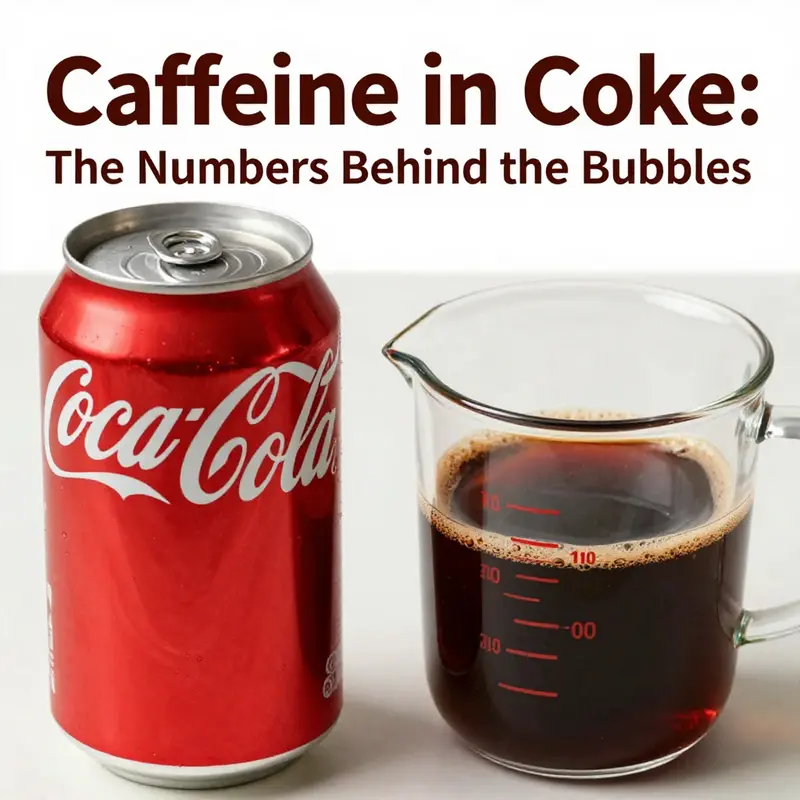
Caffeine often hides in plain sight, giving a familiar lift without shouting its presence. In the realm of soft drinks, Coca-Cola has long stood as a benchmark for moderate caffeine delivery, a contrast to the bolder, more roasted profiles of coffee. The quantitative picture is clear: a standard 330 ml can carries roughly 33 milligrams of caffeine. That figure, while debatable across regions and formulations, places Coca-Cola squarely in the midrange of caffeinated beverages. The comparison to coffee is stark. A typical cup of coffee—depending on bean, roast, and brewing method—ranges from about 95 to 200 milligrams per serving. In other words, a can of regular Coca-Cola offers less than a third of the caffeine found in a cup of coffee, and often closer to a quarter. This difference matters for people tracking daily caffeine intake or those seeking a lighter lift rather than a jolt. Yet the caffeine in Coke is not utterly negligible; for many regular consumers, it contributes to a gentle, habitual caffeine cadence that can feel like a familiar rhythm in the day rather than a dramatic interruption of it. The broader implication is practical rather than mystical: beverages with moderate caffeine deliver a steadier, more predictable experience, especially when consumed as part of a wider, modulated caffeine pattern across meals and beverages.
The rigor behind this figure rests on a robust analytical approach. The caffeine content in Coca-Cola has been quantified using High-Performance Liquid Chromatography (HPLC), a gold-standard technique for resolving and measuring small molecules in complex mixtures. In the method, detection occurs at 273 nanometers, a wavelength well suited to caffeine’s absorbance characteristics. The mobile phase—the solvent system that carries the sample through the column—has a ratio of acetonitrile to water at 20:80, a composition chosen to optimize separation and peak clarity for caffeine amid a busy beverage matrix. The column temperature is maintained at 20 degrees Celsius, and the flow rate is kept at 1 milliliter per minute. These conditions yield exceptionally linear responses, with a correlation coefficient (r) of 0.9999 across the measurable range. In practical terms, this means the method can reliably quantify caffeine from trace levels up to higher concentrations without losing accuracy. Moreover, the recovery rate—the percentage of caffeine detected relative to what was present—averages 99.69%, underscoring the method’s precision and the reliability of the reporting that reaches consumers and regulators. Such details matter because they anchor caffeine content in a framework of quality control and traceability, reassuring both manufacturers and the public that the numbers are not merely estimates but verifiable data produced under stringent conditions.
Within the same analytical landscape, the content of caffeine in Coca-Cola is presented with clear benchmarks. Official data from The Coca-Cola Company state that caffeine in the standard Coca-Cola product sits at approximately 33 milligrams per 330 ml can. This figure, while precise, is part of a broader ecosystem of caffeinated offerings within the brand family. By comparison, Diet Coke—often cited as higher in caffeine per typical serving—contains about 46 milligrams per 355 ml can. The landscape gets more variable with other formulations and regional tweaks; for instance, products positioned as sugar-free or zero-sugar variants can exhibit slightly different caffeine levels depending on the region and formulation. The takeaway is not a single universal constant, but a well-documented reality: Coca-Cola’s caffeine content is moderate, especially when placed next to coffee or certain energy-forward sodas, where caffeine levels can climb significantly higher. The analysis also points to the existence of caffeine-free options within the Coca-Cola portfolio for consumers who wish to avoid caffeine altogether, alongside a spectrum of non-caffeinated beverages like clear seltzers and ginger-ale variants. In this sense, the company’s product line is designed to accommodate a wide range of caffeine preferences without sacrificing consistency in the brand’s core offering.
The narrative of caffeine in Coca-Cola is also a story about consumer choice and health considerations. Regular consumption can lead to mild dependence for some individuals, a subtle physiological and behavioral pattern rather than a dramatic addiction. When caffeine is suddenly removed, a subset of people may experience transient withdrawal symptoms such as headaches, fatigue, or irritability. For most people, these effects are temporary and manageable, and many can reduce or eliminate caffeine from their diet with little disruption to daily routines. This is not a warning about danger but a practical acknowledgment: caffeine in everyday beverages contributes to a habitual pattern for some, and awareness of this pattern empowers more intentional choices about what and how much to drink. For those who wish to avoid caffeine entirely, the brand family includes caffeine-free options that preserve the familiar carbonation and flavor profile while removing the stimulant payload. The broader implication for consumers, educators, and healthcare professionals is straightforward: awareness and moderation are the most reliable guides when balancing taste, ritual, and physiological response.
From a methodological perspective, the study and its reported figures embody the careful intersection of chemistry and consumer information. The HPLC-based analysis demonstrates high reliability and reproducibility, reinforcing the confidence readers can place in the reported numbers. It also highlights the importance of transparent measurement in the beverage industry, where trace-level ingredients must be quantified with precision to maintain quality, safety, and consumer trust. The quantitative details—down to the milligram per can and the exact chromatographic conditions—may appear technical, yet they translate directly into everyday decisions. A commuter who relies on a single can during a long workday, or a parent balancing beverages for a household, benefits from knowing that the caffeine contribution is steady and modest. Meanwhile, a reader comparing ingredients across drinks can see where Coca-Cola sits on the spectrum of stimulant delivery, and how that spectrum shifts with formulation and serving size.
For readers curious about how Coke’s caffeine stacks up against other sodas, consider this comparison: Caffeine in Mountain Dew vs Coke. This link opens a window into how different brands calibrate caffeine while maintaining distinct flavor identities, a reminder that the beverage landscape is as diverse as it is regulated. The broader takeaway remains consistent: caffeine in Coca-Cola is a quantified, controlled component designed to offer a predictable lift without overwhelming the palate or the system. Consumers who want to tailor their intake can lean into caffeine-free variants and non-caffeinated alternatives such as sparkling waters or ginger-ale options, choosing the path that best fits their taste, timing, and tolerance.
In closing, the quantitative analysis of caffeine in Coca-Cola is more than a number on a label. It is a careful synthesis of analytical chemistry, product formulation, and consumer guidance. The evidence supports a practical conclusion: caffeinated Coca-Cola provides a modest caffeine contribution, well within safe consumption guidelines for the general population when consumed in typical amounts. The rigorous measurement framework—precise detection, well-controlled mobile phases, stable temperatures, and impressive recovery rates—ensures these figures are trustworthy for daily decision-making and for ongoing quality assurance in the beverage industry. As with any stimulant, mindful consumption remains the wisest approach, complemented by informed choices about alternatives when caffeine-free options better align with personal health goals. External references and official product data continue to anchor this understanding, ensuring readers have access to primary sources as they navigate the nuanced landscape of caffeine in common beverages.
External resource: Coca-Cola Company Official Site
Caffeine in Coke: A Moderate Stimulant Within a Familiar Sip

A familiar bottle, a familiar fizz, and a familiar spark. Caffeine sits quietly at the core of that spark, turning a commonplace beverage into something a little more than a thirst quencher. In the plain terms of a nutrition label, Coca-Cola—the classic blue-and-red icon that, for many, signals a quick lift—contains caffeine in a dose that most adults will find modest. The typical 12-ounce (355 ml) can carries about 33.9 milligrams of caffeine. It is a far gentler introduction to caffeine than a standard cup of coffee, where a single serving can range from roughly 95 to 200 milligrams depending on brew and brand. This contrast matters because it frames the conversation about safety, habit, and the everyday choices people make about energy and alertness. The caffeine in a cola is enough to be noticeable—enough to sharpen focus for a moment or to play a small role in a daily routine—yet it rarely produces the kind of burst that can disrupt sleep or provoke strong jitters in most adults when consumed in moderation.
The health implications of this level of caffeine hinge on context. For most healthy adults, a daily intake around 400 milligrams from all sources is commonly considered a practical upper limit, balancing potential benefits against risks. In this frame, a single 12-ounce can of cola is a minor contributor. The benefits some people experience from caffeine—enhanced alertness, quicker reaction times, and modest improvements in cognitive performance—have been observed at such doses in various studies. But these benefits tend to fade as intake increases. When caffeine becomes a large share of daily consumption, sleep can suffer, nervousness or jitteriness can appear, and heart rate or digestion may be affected in sensitive individuals. The Coke dose sits in that middle ground: enough to be felt, but unlikely to be the sole driver of adverse effects unless a person alternates multiple caffeinated beverages or has unusual sensitivity.
A key point often overlooked in casual discussions is that caffeine is not the same as a hard-and-fast drug of abuse. It acts by blocking adenosine receptors in the brain, which reduces the feeling of tiredness and can subtly elevate mood and attention. This mechanism also underpins a mild form of psychological dependence for some people. When caffeine intake drops abruptly after regular consumption, withdrawal symptoms—headache, fatigue, irritability—can briefly interrupt daily routines. These effects are typically mild and transient, especially when overall caffeine intake from all sources is modest. In the context of Coca-Cola, the sugar, flavor, and carbonation all contribute to a hedonic loop: caffeine may enhance the momentary reward of drinking, while the familiar taste reinforces habit. The interplay between caffeine and sugar is particularly relevant because it can encourage repeat behavior, especially in social or stressful moments when energy and mood are focal concerns.
From a physiological perspective, the body handles a Coke’s caffeine just like it handles caffeine from other sources. It is absorbed quickly, reaches peak levels within an hour or so, and then is metabolized gradually. The magnitude of any effects—insomnia, increased heart rate, or upset stomach—depends on many factors: age, body weight, tolerance built up over time, concurrent use of other stimulants, and even genetic variations in caffeine metabolism. This is why health guidance often emphasizes personalized boundaries rather than universal thresholds. For some people, even a small amount can trigger symptoms if they are particularly sensitive or if they drink cola late in the day. For others, the same amount may pass almost unnoticed.
People who regularly consume cola, and many other caffeinated beverages, can find themselves in a habitual pattern where caffeine becomes part of a broader daily routine. The sweetness and fizz add to the appeal, transforming a simple drink into something that feels like a reliable pick-me-up. That reliability can be comforting and convenient, especially in moments of midday tiredness or when quick caffeine access is preferred over brewing a cup of coffee. Yet the habit is not merely about caffeine. It also involves taste preference, social cues, and the social rituals around certain beverages. Because caffeine often comes packaged with sugar, the habit can also contribute to higher caloric intake and greater sugar exposure than a non-carbonated, non-caffeinated option. These layers of habit and choice are precisely why public guidance emphasizes moderation and mindful consumption rather than blanket avoidance.
For readers who want to compare Coke to other caffeinated drinks, it is useful to consider where the caffeine stands in the wider landscape. Beverages vary widely in caffeine content, and the same person may tolerate one drink much better than another. If you are curious about how Coke stacks up against other popular beverages, you can explore the caffeine content of Mountain Dew elsewhere. The comparison helps illuminate how a single small drink can fit into a larger daily pattern of caffeine intake: caffeine content of Mountain Dew. This kind of awareness does not demand perfection, but it can empower better decisions in the context of one’s total caffeine load.
Beyond the caffeine itself, many people weigh the broader health implications of their beverage choices. The American Heart Association and other health authorities encourage limiting added sugars and being mindful of caffeine intake, particularly for children and adolescents whose developing bodies may respond more strongly to stimulants and sugar. For adults, the practical takeaway is clear: a moderate, predictable amount of caffeine, consumed as part of a balanced diet, can be compatible with a healthy lifestyle for many people. It is when intake becomes inconsistent, excessive, or combined with high sugar intake that concerns arise.
With this understanding, many consumers look for ways to tailor their beverage choices. Some opt for caffeine-free alternatives when a caffeine lift is not needed or when evenings require more sleep-friendly routines. Others appreciate the option to adjust the overall caffeine load by rotating between caffeinated and non-caffeinated beverages, or by choosing lower-sugar alternatives when sugar content is a consideration. In this sense, Coke and similar drinks function not only as products but as part of a broader conversation about how people manage energy, mood, and daily demands. The dialogue is personal as much as public: a balance between utility, taste, habit, and health.
In any discussion of caffeine in Coke, it is important to acknowledge the broader regulatory and scientific context. Government agencies provide guidelines to help consumers understand how much caffeine they may encounter in foods and beverages, and researchers continue to refine what those numbers mean for different populations. The official stance emphasizes that, for most adults, moderate caffeine intake is safe, while reminding readers to consider their total exposure from all sources. Keeping this in mind, readers who want to verify caffeine content or seek guidance tailored to individual health profiles can consult authoritative sources for the latest recommendations and facts.
External resource: FDA guidance on caffeine in foods and beverages offers a comprehensive framework for understanding how caffeine is regulated and communicated to the public. You can explore the agency’s guidelines for more detailed information on caffeine content and safety considerations at https://www.fda.gov/food/ingredients-colors-and-packaging/caffeine.
Quiet Buzz: The Caffeine Footprint of the Classic Cola and Its Place Among Everyday Stimulants
Caffeine sits at a familiar crossroad in many daily routines. It is both a sensory spark and a habit, a nudge that can sharpen focus or simply brighten the morning mood. Among the beverages we reach for with regularity, the classic cola stands out as a modest but steady source of that lift. It delivers a reminder that caffeine need not come from a single, intense source to be part of a daily pattern. For many people, the lift from this familiar drink is gradual, brief, and predictable, a gentle note rather than a shout.
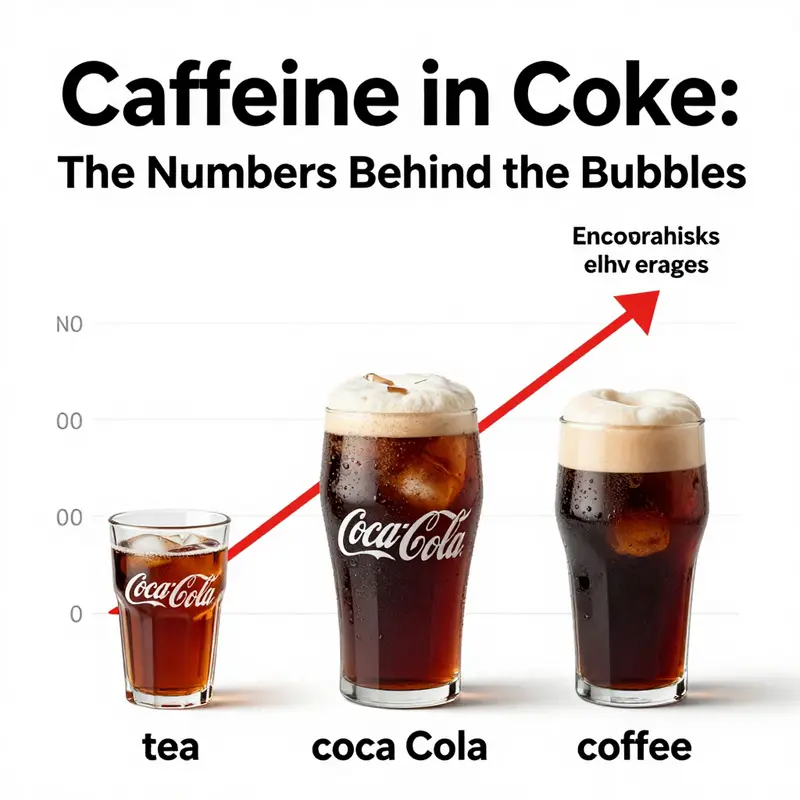
In numerical terms, the most common form of this beverage comes in a can about 330 milliliters in size. That standard serving holds roughly 33 milligrams of caffeine. Put next to a cup of coffee, the contrast is immediate: a typical 12-ounce cup usually carries somewhere in the range of 95 to 200 milligrams. In other words, the cola’s caffeine content sits about three to four times lower than a standard cup of coffee. The difference is not just in numbers; it translates to a different everyday experience. The cola provides a milder uplift, a steadier pace, and a gentler return to baseline after the effect passes. For some people, that milder profile is precisely what they want—a small, sustainable gain in alertness that does not overwhelm the senses.
The landscape becomes more nuanced when we compare other popular soft drinks. A Diet-style variant, for example, tends to carry more caffeine per 12-ounce can than the regular version—about 46 milligrams. That uptick, while still modest when set against coffee, matters for those who monitor caffeine intake closely. Tea, often praised for its own nuanced caffeine profile, typically ranges from 55 to 65 milligrams per cup. Some teas can rival or exceed the cola, especially when brewed stronger or served in larger volumes. The result is a spectrum rather than a single truth: caffeine content varies widely across beverages, and the distinctions become more meaningful when you think about a day’s total intake rather than a single serving.
For those who wish to avoid caffeine altogether, the market provides options in abundance. Caffeine-free versions of the cola lineage exist, along with a wide array of non-caffeinated beverages that can fill the same niche in taste and routine. The choice is not simply about zero versus some caffeine; it is about balancing flavor preferences, dietary goals, and the rhythm of the day. In practice, many people find that caffeine-free choices deliver the same sensory satisfaction—the familiar fizziness, the familiar sweetness—without the stimulant effect. This flexibility supports people who are sensitive to caffeine, who have specific health considerations, or who simply prefer to curtail their caffeine load in certain life stages.
Understanding these numbers invites a broader reflection on how people consume caffeinated beverages. Caffeine, at modest levels, is generally considered safe for most adults when consumed in typical amounts. The absorption and metabolism of caffeine can differ from person to person, which helps explain why the same beverage can feel energizing to one person and largely inert to another. Regular consumption can lead to a mild degree of dependence for some individuals, a pattern in which the body adapts to caffeine’s presence. When caffeine is removed abruptly after such use, some people report discomfort—headache, fatigue, irritability. The symptoms are usually temporary and mild, and most individuals can adjust by tapering off rather than stopping cold turkey. The key, as with many daily choices, is mindfulness and moderation rather than rigidity.
From a practical standpoint, the numbers are helpful but not prescriptive. A person who drinks one can per day may accumulate about 33 milligrams daily from that source, a figure that remains well within the safety range for many adults. If that same person also enjoys a cup of tea and a cup of coffee at various times, the daily total can climb quickly. The nuanced message is not to fear caffeine, but to understand how different beverages contribute to the total, and to tailor choices to personal tolerance, health goals, and lifestyle constraints. In this light, the classic cola becomes one part of a broader caffeine mosaic rather than a stand-alone determinant of energy or alertness.
A useful way to gauge these differences is to test with intention. For someone curious about how a specific soda stacks up against another caffeinated staple, there is a straightforward comparison worth exploring. On one hand, a popular caffeinated soda provides a modest burst of caffeine along with a familiar taste profile. On the other hand, a cup of tea or a coffee offers a different flavor and a different kinetic profile—sometimes a slower onset, sometimes a more pronounced peak. The decision to choose one over another can hinge on taste, context, and how quickly a person wants the effect to begin and how long they want it to last. In this sense, the beverage landscape is not just about caffeine quantity; it is about experience, timing, and personal preference.
For readers who want a more granular portrait of how these beverages compare, a dedicated resource covers a broader range of caffeinated drinks and their content. The page on caffeine content for Mountain Dew, for example, provides a detailed breakdown that helps situate cola within a wider ecosystem of soft drinks. Such resources illuminate how one popular option fits into a daily pattern alongside coffee, tea, and other sodas. By examining this broader context, readers can make more informed choices aligned with their goals, whether those goals include reducing caffeine, managing intake precisely, or simply enjoying a wider varietal palate in daily beverages.
As this chapter threads together the numbers, tastes, and practical considerations, it becomes clear that the caffeine footprint of the classic cola is modest but meaningful. It sits comfortably between the extremes of zero caffeine and the higher intensities of brewed coffee. It also embodies a broader principle: everyday choices accumulate. A day’s total caffeine intake reflects not just one drink, but a sequence of small decisions and the cumulative lift or lull they bring. For many, that is precisely the point. A little caffeine here, a small adjustment there, and the rhythm of the day can remain steady without overwhelming the senses.
For those who want to explore beyond the scope of this chapter, the official context supplied by the beverage company provides a broader frame for understanding caffeine content across the brand’s products. Such official information complements the consumer-facing data found in research summaries and helps anchor personal decisions in a reliable reference. In the end, the choice between a classic, caffeine-containing cola and its caffeine-free counterparts is a matter of balance, preference, and timing. The numbers offer guidance, but personal experience completes the picture.
External reference: For more information on caffeine content across beverages, see the official resource at https://www.coca-colacompany.com.
Caffeine in Cola: Balancing Flavor, Stimulation, and Consumer Choice

The familiar fizz of a cola is not just about sweetness and sparkle. Within that liquid shimmer lies a modest dose of caffeine, a tiny stimulant that nudges the day without demanding a coffee-grade ritual. A standard 12-ounce can of the caffeinated variant contains about 33.9 milligrams of caffeine, a figure that often surprises people who expect all caffeinated beverages to deliver a sharp wake-up call. In the broader landscape of caffeinated drinks, this amount sits well below the typical caffeine range found in a cup of coffee, which can run from roughly 95 to 200 milligrams depending on the brew and serving size. The contrast is instructive: cola offers a milder lift, more suitable for those who want a subtle, steadier level of alertness rather than a robust caffeine punch. The numbers help explain why many people reach for a cola not because they crave a coffee-like jolt, but because they want a familiar, refreshing lift that fits into a daily routine without drastically altering energy levels or sleep patterns.
Caffeine is a mild stimulant by design, and its effects vary from person to person. For most adults, the influence is gentle enough to support a routine—paring morning fog, sharpening focus for a few hours, and potentially contributing to a steady pace through a busy afternoon. Yet regular consumption can foster a mild dependence for some, a dynamic that becomes noticeable when a caffeine-containing drink is suddenly removed. Headache, fatigue, irritability, and a temporary dip in mood or energy are common withdrawal symptoms for a subset of people. These reactions are typically short-lived and manageable, especially when caffeine intake is reduced gradually rather than stopped abruptly. Such nuance matters because it reframes the conversation from a binary choice—caffeinated or not—into a question of how caffeine fits into a broader lifestyle. The goal for many is not complete avoidance but thoughtful moderation that preserves the enjoyment of a drink while keeping energy cues aligned with personal needs.
The cultural habits around cola consumption also shape how people navigate caffeine. For some, the beverage is a daily refreshment, a familiar ritual that pairs with meals or social moments. For others, caffeine is a concern tied to energy management, sleep quality, or dietary goals. In response to these varied preferences, producers have cultivated a spectrum of options. Caffeine-free versions of the flagship cola exist, along with an array of non-caffeinated sparkling drinks that still deliver that same hallmark fizz and flavor profile. The practical upshot is clear: consumers can tailor their choices to fit health goals, energy patterns, or even occasion-based preferences without sacrificing the familiar sensory experience that many associate with this category of beverages. This alignment between product design and consumer intent reflects a broader trend toward more transparent ingredient disclosure and a broader, more inclusive lineup that acknowledges different lifestyles.
From a consumer behavior perspective, transparency around ingredients matters as much as the availability of alternatives. People are increasingly deliberate about what they drink, seeking clarity on caffeine content, sugar, and other additives. The move toward greater openness has spurred brands to publish caffeine content and ingredient profiles, making it easier to compare options across the caffeinated landscape. In practice, this means a shopper can choose a drink that fits a specific daily rhythm—opting for a caffeine-free version on late evenings, or selecting a caffeinated option in the early afternoon when a mild lift supports productivity. The option set, therefore, becomes less about restricting choice and more about enabling choice that aligns with energy needs, sleep quality, and personal health considerations. The result is a marketplace that respects individual goals while preserving the social and sensory pleasures that come with a well-carbonated beverage.
For readers curious about how other fizzy drinks stack up, the conversation benefits from looking at comparisons across categories. A quick, practical way to broaden understanding is to examine whether non-cola sodas share a similar caffeine footprint, which in turn helps map out where one might place a cola within a daily caffeine budget. If you want to explore a specific comparison, you can consult a detailed breakdown on does orange soda have caffeine, which provides context about caffeine content in a popular citrus option. This kind of cross-category insight supports a more nuanced approach to choosing beverages, especially for those managing caffeine intake alongside other dietary considerations. Does orange soda have caffeine?
Beyond personal choice, the availability of caffeine-free alternatives serves a practical purpose for certain groups. Pregnancy, certain medical conditions, medication interactions, and personal sensitivities can all influence whether caffeine is a welcome presence in the daily lineup. In response, beverage producers have expanded their offerings to include caffeine-free variants that still deliver the carbonation, flavor, and mouthfeel that fans expect. The existence of these options is a reminder that taste and enjoyment do not have to come with a caffeine-driven energy signal. It also signals a broader societal shift toward mindful consumption, where individuals feel empowered to select products that align with their health and lifestyle goals without feeling deprived of familiar taste experiences.
The historical note about caffeine content in cola beverages—often traced back to analyses conducted around 2007—frames the discussion with a sense of context. That body of work analyzed prepackaged national-brand carbonated beverages and pegged a 12-ounce serving of the classic caffeinated version at roughly 33.9 milligrams. While newer studies appear in the literature and consumer data continues to evolve, this figure remains a touchstone for comparing cola to coffee and to other caffeinated drinks. It underscores how the same category can accommodate a wide range of caffeine experiences, all anchored by a shared tradition of brisk, fizzy refreshment. The essence of the chapter rests on this balance: a beverage that delivers flavor, carbonation, and a measured stimulant profile, all while offering pathways to caffeine-free enjoyment for those who prefer it.
For readers who want to navigate caffeine thoughtfully, a practical takeaway is to treat beverages as part of a broader pattern rather than as isolated choices. If you routinely reach for a caffeinated cola, consider pairing it with hydration goals or consuming it earlier in the day to minimize potential sleep impact. If you’re seeking to reduce caffeine intake, you can transition by mixing regular and caffeine-free versions or by gradually shifting to non-caffeinated alternatives that provide the same sensory experience without the stimulant component. The key is to preserve the enjoyment of the drink while aligning it with daily routines, energy levels, and sleep. In this sense, the cola category becomes not merely a source of stimulation but a signal of informed, intentional consumption—a small but meaningful act in the broader pursuit of balance in a busy life.
As the landscape of beverage choices continues to evolve, the takeaway is clear: caffeine in cola is a nuanced topic, one that invites curiosity and practical decision-making. The presence of caffeine in a familiar drink does not dictate every moment of the day, but it does offer an opportunity to reflect on how much stimulation is genuinely desired and how to achieve that with clarity and ease. The chapters that follow will continue to situate caffeine within a wider spectrum of beverages, exploring how different drinks compare in flavor, caffeine content, and health considerations, while keeping the focus on real-world choices readers can apply to their routines. The journey from the can to the cup becomes a small, repeated exercise in mindful drinking, one that honors taste, convenience, and personal goals alike.
External resource: https://www.coca-colacompany.com
null
null
Final thoughts
The caffeine content in Coca-Cola plays a significant role in shaping consumer behavior, health perceptions, and cultural trends. As business owners navigate this landscape, understanding the implications of caffeine not only aids in product offerings but also facilitates better customer engagement. From analyzing caffeine levels across beverages to recognizing alternative choices and cultural consumption patterns, there’s ample opportunity to position your beverage offerings effectively. This comprehensive insight into caffeine in Coke underscores the importance of informed decision-making within the beverage industry.