
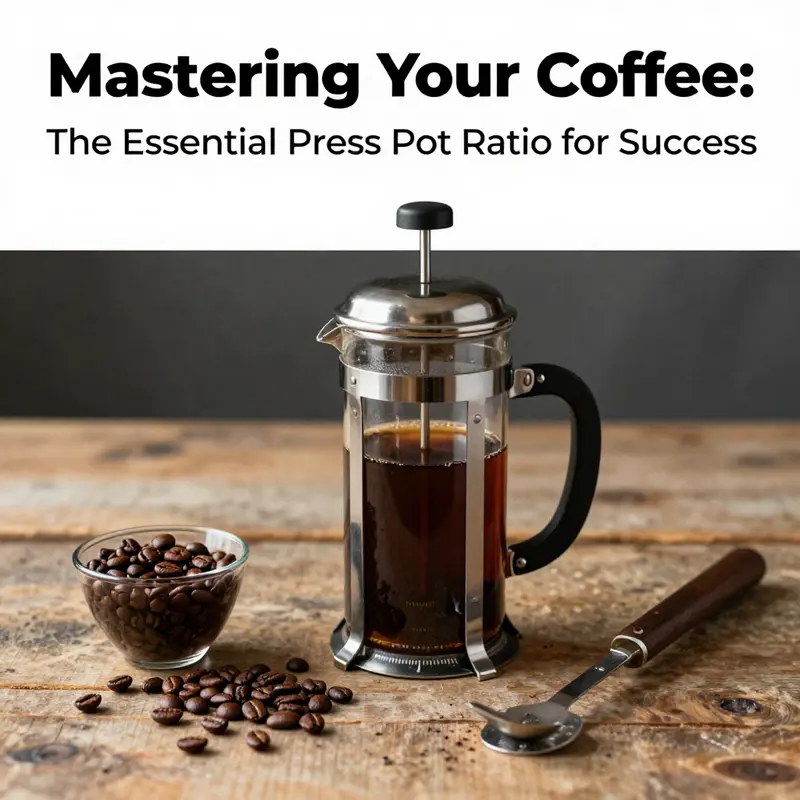
Crafting the perfect cup of press pot coffee is both an art and a science for business owners in the coffee industry. Understanding the ideal coffee-to-water ratio is crucial for consistency and quality, and can significantly enhance customer satisfaction. In this guide, we explore essential techniques for achieving the optimal press pot coffee ratio, how to tailor brews to individual tastes, the role of grind size in extraction, and precise measurement practices. Elevate your brewing skills to resonate with patrons and elevate your coffee business.
The Weight of Flavor: Mastering the Press Pot Ratio for a Rich, Clean Cup

The press pot, with its sturdy metal screen and patient immersion, invites a different kind of coffee math. Here the ratio of coffee to water is not a mere guideline but a dial that tunes strength, mouthfeel, and the clarity of aroma. In practice, a starting point around 1:20—one gram of coffee for every twenty grams of water—offers a balanced baseline that remains friendly to a wide array of beans and roasts. This is not a rigid law; it is a living parameter that responds to bean origin, roast level, grind size, and even your mood on a given morning. The weight-based approach, preferred by serious brewers, makes the process reproducible and repeatable. It transforms coffee preparation from a casual ritual into a precise craft, where each gram and second matters. While many guides present a broader range, the precision of 1:20, blended with a four-minute immersion, often yields a cup with body and clarity that stay in harmony rather than tug in opposite directions. And yet, as with any rule in coffee, nuance matters. Different beans reveal their personality when the water-to-coffee ratio shifts even slightly, and the beauty of the press pot is that it is forgiving enough to experiment and exact enough to measure progress over days, not just cups.
To begin shaping your own profile, treat 1:20 as a sturdy anchor. From there, you can tilt toward a brighter, lighter texture by nudging the ratio toward 1:18, or lean into a deeper, more chocolatey body by moving toward 1:22. The logic is simple: more coffee relative to water intensifies flavor compounds and body, while more water relative to coffee tends to thin things out, allowing delicate notes to emerge without being overwhelmed by tannins. But the impact of ratio is entwined with the roast level. Lightly roasted beans, which carry a higher concentration of nuanced aromatics and a tendency toward thinner body, often respond well to a touch more coffee—around 1:18 to 1:19—so their bright characteristics don’t vanish in a sea of watery impressions. Darker roasts, conversely, can tolerate or even benefit from a slightly gentler ratio, perhaps 1:22, to temper boldness and avoid muddy or burnt flavors that can emerge when extraction runs too aggressive. The result is a cup with a well-defined sweetness, a kiss of roasted notes, and a smoother finish that lets perception linger rather than crash into harsh edges. In practice, starting with 30 grams of coffee to 600 grams of water or 28 grams to 560 grams offers a reliable midpoint for many home setups, especially when the grind and temperature align with the same degree of care.
But the story of ratio remains unfinished without acknowledging the other variables that ride along with those numbers. Water temperature, for instance, works in concert with the ratio to shape extraction. Water that hovers between 195 and 205 degrees Fahrenheit—roughly 90 to 96 degrees Celsius—facilitates a robust extraction without scalding the delicate compounds that yield aromatics and sweetness. Too hot, and you risk extracting harsh tannins and bitterness; too cool, and the cup risks sour underperformance. The temperature range is not a ceiling but a corridor in which the ratio can do its best work. In this environment, a coarser grind is essential. A grind resembling sea salt enables the filter to do its job, retaining most fines while allowing the immersion process to coax oils and soluble compounds from the grounds. It is this balance—the coarse grind, the measured weight, the precise temperature, and a measured four-minute soak—that yields a cup whose velvet mouthfeel and nuanced aroma feel both accessible and complex.
The scale becomes more than a tool; it becomes the backbone of a repeatable ritual. When you measure coffee and water by weight, you remove the variability of scoops, taps, and misrouted pour spouts. The result is predictable extraction and a platform for refinement. If you begin with 30 grams of coffee and 600 grams of water, your sensory baseline—moderate body with a balanced acidity and a clean finish—becomes a reference point. If the first cup feels robust but a touch flat, you might try a slight adjustment toward 1:19 or 1:18 for the next batch, depending on whether you crave more brightness or more depth. If bitterness lingers after pressing, you could consider dialing back the coffee by a gram or two or trimming the brew time by thirty seconds, but always returning to the same weight-based discipline to compare results with clarity. The fixed variables—weight, water quality, grind size, and temperature—are, after all, the most stable axis around which other, softer preferences can revolve.
As with any technique, there is a tactile dimension to the ratio that goes beyond numbers. A four-minute steep feels almost tactile in the cup: long enough to pull forward a depth of flavor, short enough to avoid the austere, hollow notes that can appear when extraction runs long or short. The press pot’s immersion method invites a fuller mouthfeel because the grounds mingle intimately with the water, unimpeded by a paper filter. Oils and fine particles remain, lending texture and aroma that a filtered method would filter away. The result is a cup that can unfold slowly on the palate, revealing a spectrum of notes—from fruit brightness to chocolatey sweetness to earthy undertones—depending on how the ratio plays with the other variables. This is not magic but the outcome of a careful choreography: weigh the grounds, calibrate the water, set the temperature, time the steep, and then press with deliberate control. When these elements align, you taste an experience that feels both intimate and precise, as if the cup itself were a measured statement about how a single origin can wear many masks.
Those who want to deepen their understanding can look to the broader community of immersion brewers, who often emphasize the sensory consequences of each variable. The absence of a paper filter in the press pot means that the cup retains more oils and micro-particles, contributing to a richer, more robust mouthfeel. This characteristic also magnifies the impact of the chosen ratio. If you lean toward a higher coffee-to-water ratio, you will notice more fullness and a longer finish; if you trend toward a lower ratio, the cup can reveal sharper acidity and clearer aromatics, albeit with a lighter body. The interplay of ratio with time and grind is where the art becomes most evident: minute deviations in any one factor can tilt a cup from balanced to over- or under-extracted, especially when the grounds are coarse and the brew is short. In the end, the goal is not merely to extract flavor but to sculpt a sensory narrative where body, aroma, sweetness, and aftertaste converge into a cohesive experience. The ratio is the keystone enabling that convergence; without it, even the finest beans risk dissolving into a generic, less personal cup.
To explore the practical texture of this topic further, consider a concise, focused guide that surveys how numbers translate into flavor in the press pot. The guide walks through starting points, adjustments for roast level, and how to adapt to different bean origins, steps that echo the experience of many home brewers who gradually refine a ritual that feels reliable yet flexible. This is not simply about memorizing a recipe; it is about cultivating a sensitivity to how a given batch of coffee behaves when mixed with water at a precise temperature for a defined time. The numbers become a vocabulary through which you articulate your preferences and then test them, cup by cup, week by week. A single chart is seldom enough to capture the dynamic nature of coffee; instead, a living practice emerges when you combine measurement with mindful tasting, noting how slight shifts in ratio correspond to noticeable changes in aroma, body, and finish. In this light, the press pot ratio becomes a dialogue, with the bean offering its default tendencies and the brewer shaping the conversation with weight, time, temperature, and grind.
For those who wish to blend reading with practical exploration, a focused resource on coffee ratio for the French press offers a compact, stepwise view of how to approach adjustments. The article distills the core idea that 1:20 serves as a solid baseline, while also presenting concrete scenarios—light roasts requiring a touch more coffee for body, dark roasts benefitting from a gentler touch to avoid bitterness. The piece emphasizes measuring by weight to ensure consistency and describes how minor changes in grind and brew time can tip the balance one way or the other. You can find that focused guide here: coffee-ratio-french-press.
Beyond the numbers, the craft of the press pot invites you to think about water quality, vessel design, and even your environment. Filtration in the kettle and the freshness of the grounds can sway the outcome as much as the ratio itself. If your tap water is hard, you may notice a mineral brightness that sharpens the perceived acidity; if your water is soft, the cup may lean toward smoother sweetness but at risk of tasting flatter. The grind’s coarseness interacts with filtration to determine how much oil and sediment make it through; too fine a grind with a standard mesh can result in a swampy texture, while too coarse a grind can yield a tea-like clarity with muted flavor. These are the kinds of observations that become meaningful when you pair them with a disciplined ratio. When you consider all these factors together, you begin to sense why the press pot has endured as a method: it is both forgiving and exacting, a forgiving amount of water that still requires a precise hand to coax depth from each batch.
As you practice, you may notice a personal preference emerging. Some mornings you might crave a cup with a strong sense of presence and a long, lingering finish; other days you may lean toward a cup that feels bright and delicate, almost tea-like in its clarity. The ratio is the instrument you adjust to produce those outcomes. If you want more persistent body without bitterness, increase the coffee slightly toward a 1:19 or 1:18 ratio and maintain a steady four-minute brew. If you want a higher degree of aromatic lift and a cleaner finish, you might experiment with 1:21 or 1:22, tightening the window to ensure the extraction remains balanced. Each adjustment becomes a note in a growing repertoire of personal preference, and the weight-based method ensures that those notes can be compared across days with fidelity.
Finally, for readers seeking deeper scientific context and expert commentary, the immersion approach to coffee brewing has been explored by seasoned practitioners who emphasize how the absence of paper filtering in immersion methods affects flavor perception. These discussions highlight how the interaction between ratio, time, and grind can be understood not just as a sequence of steps but as a system with feedback: a cup’s aroma informs how you might adjust the ratio next time, which in turn tunes the aroma again. If you wish to explore this perspective further, a detailed technical resource provides a thorough analysis of immersion brewing, including the press pot. It can be found here: https://www.jameshoffmann.com/coffee/brewing/press-pot-coffee/
In the end, mastering the press pot ratio is less about chasing a single perfect number and more about building a stealthy intuition. The weight-based discipline anchors your experiments, while the four-minute immersion, the coarse grind, and the careful control of temperature open the door to a spectrum of flavors that can evolve as you learn the beans you love. The journey from 1:20 to your preferred expression is a gradual one, marked by cups that taste more like your own device for expressing a particular origin’s character rather than a generic pot of coffee. The chapter you’re reading now is a map, not a manifesto: it invites you to test, to sense, and to refine, arriving at a personal threshold where body, brightness, and sweetness align in confidence. And as you turn the page toward more nuanced methods, you will find that the press pot remains a companionable mentor—steadfast in its fundamentals, generous in its subtleties, and endlessly adaptable to the realities of what you have at hand. In that sense, the ratio becomes not a constraint but a doorway to a more intimate, more precise, and more satisfying experience of coffee.
Brewing Precision in a Press Pot: Fine-Tuning the Coffee-to-Water Ratio to Suit Your Palate
The conversation around a press pot, or French press, coffee ratio often starts with a number, but it should end with a feeling. The numeric starting point is a compass, not a cage. Across guides and barista rituals, you’ll encounter a spectrum of ratios, each promising a different kind of cup: bold, balanced, gentle, or layered with nuanced oils. The core insight is simple: the ratio of coffee to water shapes strength and extraction, but it is not the only dial you should trust. For many enthusiasts, adjusting the ratio becomes a personal audition, a test of which brew sings to their palate when the grounds and water meet in that tall beaker of glass and metal. If you are aiming for a practical, conversation-ready approach to the press pot, you begin with a starting point, observe the result, and then tune with intention rather than guesswork.
Historically, the standard guidance has hovered around ratios that yield a balanced cup with robust body. A commonly recommended starting point is somewhere near 1:15 to 1:18 by weight, which translates to about 30 grams of coffee for every 480 to 540 grams of water. This band reflects the press pot’s immersion brewing style, where coarse ground coffee steeps in hot water for several minutes, and the grounds are pressed to the bottom to separate the infusion from the brew. In practice, many home brewers gravitate toward a 1:16 or 1:17 to begin with, a choice that taps into a wide consensus about how the press extracts oils, chalky fines, and the warmth of the roast into a cup that feels full without becoming muddy. Yet the landscape is not fixed, and those numbers are a map rather than a sentence carved in stone.
A more nuanced observation appears when we widen the lens beyond the most common habit. Some seasoned brewers describe a starting point closer to 1:20, especially for those who prefer a lighter, smoother cup that preserves clarity amid the press’s inherent density. In that frame, 30 grams of coffee would meet around 600 grams of water. The idea behind 1:20 is to give water more room to carry aroma and flavor through the extraction process, reducing the risk of overbearing heaviness while still maintaining body from the oils the press helps retain. It’s a reminder that the press pot, with its metal mesh and plunger, is more of a flavor conduit than a pure filtration device. The longer contact with water allows delicate notes to emerge while the agitation remains gentle enough not to pull every last nuance into a bitter edge.
From there, the path splits according to taste preference, roast level, and even the water you use. If you crave a stronger, more concentrated cup that can hold its own with a bold breakfast, nudging the ratio toward 1:18 or even 1:16 can yield a denser, more assertive cup. This is not simply about “more coffee equals more flavor”; it’s about how concentration awakens certain compounds during extraction. In practical terms, moving to 1:18 means 30 grams of coffee to roughly 540 grams of water. The result can be a cup with deeper resonance and more pronounced chocolate or caramel notes, depending on the coffee, the grind, and the temperature. It’s still, at its core, a matter of balance: too much coffee for the amount of water can push the brew toward bitterness and extract undesirable compounds, while too little risks a flat, underdeveloped taste.
On the opposite side of the spectrum, dialing the ratio toward 1:22 or 1:24 invites a lighter profile with more perceived brightness and a cleaner finish. The same 30 grams of grounds would meet 660 or 720 grams of water. The result is a cup that’s less dense but more revealing of the origin notes—fruitiness, citrus, or floral hints—depending on the roast and bean. This lighter path can be appealing for hot summer days or for those who prefer a longer, sipping experience where the cup doesn’t feel heavy on the tongue. Yet it also invites heightened attention to extraction dynamics. If the water-to-grounds relationship grows too forgiving, you risk under-extraction, where the cup tastes sour or flat because not enough soluble compounds have dissolved into the brew.
The decision to adjust the ratio is inseparable from the other variables you bring to the pot. Grind size, for one, is critical. The press pot relies on a coarse grind, not just to prevent over-extraction, but to keep fines from slipping through the mesh and clouding the final cup. A finer grind alters the surface area of the coffee, accelerating extraction and potentially amplifying bitterness. When you change the ratio, you should watch how your grind interacts with it. A 1:20 ratio brewed with a coarse grind and a four-minute steep can yield a different balance than the same ratio with a slightly finer grind, where the same water temperature will draw more soluble material in a shorter window.
Brew time and water temperature are the other two levers that connect to the ratio. The canonical four-minute steep is a guideline, not a universal truth. If you tilt toward a heavier ratio, you might consider a touch longer steep or a slightly cooler water temperature to avoid accelerating extraction to an intolerable intensity. If your goal is a lighter cup, a shorter brew time or mildly higher temperature can help push the aromas forward without creating harshness. In this sense, the ratio becomes an invitation to a broader dramaturgy of brewing, where each variable has a whispered effect on the others. You learn by doing and by taking notes, not by chasing a perfect number in isolation.
To support this ongoing learning process, many brewers keep a simple log: the date, the coffee and water weights, the grind size, the grind setting, the water temperature, the steep time, and the aroma and taste notes. This discipline matters because coffee is a living material; its flavor can shift with roast level, the origin of the bean, and even the water’s mineral composition. The practice of weighing every component rather than relying on volume avoids miscalculations that creep in when a scoop is used or when a recipe assumes standard cup sizes. Weight-based measurement is a sturdier backbone for experimentation, especially when you are exploring a broader range of ratios and seeking consistency across sessions.
The journey from a standard starting point to a personalized ratio is, at heart, a dialog with your palate. A few experiential truths tend to hold across the board. First, coffee-to-water ratio shapes the rate and extent of extraction, but it does not solely define flavor. You may discover that a 1:20 ratio with a robust roast yields a robust cup that still feels clean because the coarse grind and solid immersion protect against over-extraction. Second, the press pot’s immersion method—where the grounds remain in contact with water for several minutes—means you can influence the final cup more subtly than with a rapid-drip method. The choice of grind, water temperature, and infusion time can telescope with small ratio changes to produce surprisingly different experiences. Third, balance remains the ultimate goal. Some brewers prioritize body and richness; others chase clarity and aromatic complexity. The ratio is one of the core levers, but it plays best when aligned with the other variables rather than pushed in isolation.
For those who want a practical pointer that threads through all these considerations, imagine this approach: start with a ratio that feels comfortable—say 1:20 for a balanced baseline. Brew a batch and sink into the sensory evaluation: What flavors emerge? Is the cup too dense, or not enough? How is the aftertaste? If it feels heavy and a touch bitter, consider sliding toward 1:22 or 1:24 and perhaps a slightly longer steep, or a touch cooler water to temper the extraction. If it tastes flat or sour, you might try 1:18 or 1:16 with a similar four-minute interval, ensuring your grind remains appropriately coarse and the water hot but not scorching. The key is to change one element at a time, then note the effect. A small, deliberate adjustment can reveal a lot about how your water behaves with your coffee.
The broader takeaway is that ratio is not a rigid decree but a starting point from which your brewing personality can emerge. When you communicate this approach to your own kitchen or café workflow, you are embracing a method that respects both science and sensation. If you seek a deeper dive into how ratios translate into practice across different methods and beans, you can explore a dedicated guide that consolidates many of these ideas and translates them into a more expansive set of guidelines. French press coffee ratios—the Ultimate Guide offers a structured look at how to calibrate your grind, your dose, and your steep to align with your preferences, while still honoring the fundamentals of water temperature and extraction.
To anchor this discussion in a broader community understanding, it’s helpful to consult a trusted external resource that distills practical experience into actionable steps. For a grounded, widely used reference on French press ratios and the science of immersion brewing, consider The Spruce Eats’ French press coffee ratio guide. It offers foundational guidance on adjusting the strength and body of your cup, along with practical notes on grind size and brew time that complement the personal-taste philosophy described here. This external reference provides a concrete touchstone for readers who want a concise, reliable baseline as they begin to experiment with their own ratios and brewing parameters.
In the end, the quest for the perfect press pot ratio is a pilgrimage to your own sensory memory. The coffee you love is the one you’ll refine over iterations, rather than the one you’ll discover in a single afternoon. The beauty of the press pot lies in its invitation to tactile, iterative learning: grind coarser or finer, adjust the dose, tweak the water temperature, and time the steep with careful attention. Each brew teaches you something about how water and coffee interact under the quiet pressure of a plunger and a metal mesh. Little by little, a refined routine emerges—one that respects the science of extraction while honoring the artistry of taste. And when the day comes that your routine feels almost instinctual, you have not merely found a method; you have found a relationship with coffee rooted in curiosity and care.
Grind Size and the French Press Equation: Turning Ratios into Flavor
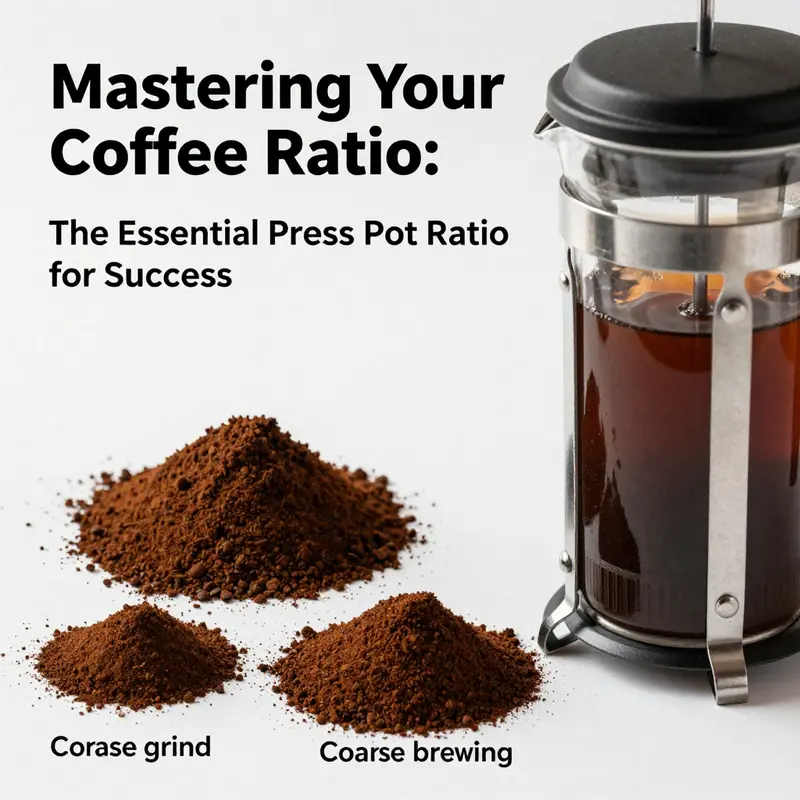
The quiet math of a great cup begins not with the coffee-to-water ratio alone, but with the grind size that makes that ratio real. In the world of press pot brewing, the standard guideline of 1:15 to 1:18 by weight sets a floor for strength and balance. But the grind size is the crucial dial that translates that ratio into flavor. It is the difference between a kettle of muddy, underdeveloped brew and a cup that feels both precise and generous on the palate. When we talk about the press pot, we are talking about immersion, time, heat, and texture. The grind size is the texture that determines how quickly and evenly the water can interact with the coffee. Without it, the best ratio will not unlock its potential; with it, the same ratio can yield a spectrum of outcomes, from bright clarity to deep, velvety body. The interplay between grind and ratio is not a single-move chess game but a dialogue that evolves with taste and technique.
The ratio provides a stable framework: one part coffee to fifteen to eighteen parts water by weight. This is a long-standing convention because immersion brewing dissolves flavors steadily. The French press allows the grounds to mingle with water for a defined period, typically around four minutes, letting solubles migrate into the cup while some, including oils that contribute to body, remain in suspension. Yet the grind size governs how efficiently that extraction happens. A coarse grind, the texture of sea salt, slows the process in a controlled way. It keeps fines from slipping through the metal mesh and into the final cup, which would muddy the texture and muddle the flavor. Conversely, a too-fine grind can flood the brewer with fines, creating a slurry that clogs the filter and produces a heavy, over-extracted brew that tastes bitter or flat in some notes and sour in others. The grind is not merely a preface to the ratio; it is its practical realization.
The choice of grind size is also a choice of uniformity. A burr grinder is essential here because it produces a consistent particle size. Inconsistent particles, especially a mix of fines and chunks, will extract unevenly. Water will find the easiest path through the finest particles, which can over-extract quickly and leave behind under-extracted, sour channels in the cup. A uniform grind ensures that the extraction proceeds in a steady, predictable way, making it easier to fine-tune the ratio to suit personal preference. The result is a cup that can be bright and clean or rich and heavy, all while maintaining the clarity of flavors that a good grind helps preserve. And because the French press does not rely on paper filters to trap fine particles, the grind choice becomes even more critical. The body and texture of the brew hinge on how well you manage that balance between grind size and filter limitations.
When you begin with the classic 1:16 starting point—think 30 grams of coffee to about 480 grams of water—you set a baseline that many home brewers find approachable. From there, fine-tuning your grind size can reveal how far your palate wants to push that ratio. If you crave a brighter, more acidic cup with more perceived lift, you might experiment with a slightly coarser grind. The faster the water travels through the bed of grounds, the less time there is for acids to develop and the more subtle the sweetness can appear. In contrast, if you want more body and a presence that lingers on the tongue, a touch finer grind can increase surface area and accelerate extraction enough to pull forward those deeper caramelized notes, provided you do not push the brew time beyond your tolerance for bitterness. It is a delicate balance, and the grind is the instrument through which the balance is conducted.
Another dimension is the target flavor profile. The grind is not a blunt instrument but a nuanced lever. For a brighter cup with more acidity, you may prefer a grind that is just a touch coarser than you would use for a standard medium-roast drip brew. The water still rests on those grounds for the same four minutes, but the extraction will proceed a little more slowly, allowing delicate fruit-like notes to emerge. For a fuller, more chocolatey body, you might inch toward a slightly finer grind, accepting a little more extraction to coax those heavier sugars and oils from the grounds. The goal is not to fight the ratio but to let the grind size harness the total extraction within the time and temperature you have chosen. This is why many seasoned brewers keep a scale nearby and adjust by weights rather than volume, ensuring that each variable—grind, time, temperature, and ratio—remains controlled and repeatable.
The texture of the grind matters almost as much as the texture of the brew. If the grind is off, you will see it in the mouthfeel long before you notice the aroma or taste. A properly ground coffee in a press pot should yield a cup that is clean on first sip and then rich as it lingers. You should not feel a gritty sludge on the tongue, nor should you encounter a watery, underdeveloped finish. The goal is a balance: a cup that is full-bodied without heaviness, aromatic with a sense of brightness that avoids sourness or a flat aftertaste. To maintain that balance, you must pay attention to how the grind interacts with the metal filter. The metal mesh traps a majority of fines but not all; the more finite the grind, the number of fines will increase, risking a muddy sensation. Therefore, keeping a coarse, uniform grind reduces those risks and helps the chosen ratio shine through.
Of course, grind size does not exist in isolation. Temperature, agitation, and brew time all play their roles, but the grind remains the primary determinant of extraction velocity. A four-minute steep can yield very different results if the particles are too fine or too coarse. A finer grind may require a slight reduction in brew time to avoid over-extraction, whereas a coarser grind could tolerate a longer contact time to draw out more sweetness and body. The interplay among grind, time, and temperature is a living system. You adjust one variable and the others respond in kind. The clever approach is to start with a solid ratio and a consistent grind, then adjust gradually and taste carefully. The changes can be small but meaningful, often revealing a spectrum of flavors that a single batch might never show if the grind remains fixed and the ratio never shifts.
To support this process, keep your equipment in good shape. A burr grinder that delivers uniform particle sizes is invaluable. Regularly cleaning your grinder ensures that oils and old grounds do not degrade the current grind consistency. A dull burr can create uneven chunks, which undermines the uniform extraction that makes the ratio trustworthy. You may find that after several weeks of use, you need to recalibrate your grind setting. A simple, disciplined approach is to start at a known baseline—such as a 1:16 ratio with a medium-coarse setting—and adjust in small steps of the grind size, tasting after each adjustment. The tasting process matters as much as the measurement process. Visual and tactile cues will guide you, but nothing replaces the palate for confirming whether your grind size truly aligns with your preferred balance of brightness, sweetness, and body.
This is not a recipe locked in ink; it is a method that invites sensory feedback. The same ratio will taste different with different beans, roast levels, and even brewing vessels. A light-roast bean may reveal floral acidity with a coarser grind, while a dark-roast bean might require a touch finer grind to unlock the resonance of roasted sugars without tipping into bitterness. You are not simply following steps; you are conducting a sensory experiment each time you grind, measure, and brew. The ratio gives you a framework, but the grind makes it sing. It is a partnership between precision and discovery, and the best results emerge when you allow both structure and curiosity to guide your hands.
For readers who want a more structured blend of theory and practice, a comprehensive guide to French press ratios and grind interactions is available in a well-regarded resource. It outlines how to navigate the relationship between grind size, water temperature, and brew time to achieve consistent results, and it emphasizes the importance of weighing all inputs to obtain repeatable outcomes. You can explore the detailed methods in that guide to refine your own practice and then return to your routine with a renewed sense of control over your results. When you pair that knowledge with the discipline of measured ratios, you arm yourself with a robust toolkit for quality coffee at home. In practice, you will find that the grind is not a mere technical detail but a functional key to realizing the full potential of the ratio you choose.
The ongoing goal is to create a brew that feels like it belongs to you. The grind size, properly scaled to your chosen ratio, unlocks the flavor map that your beans offer. It unlocks the story of fermentation in the cup—the interplay of sweetness, acidity, and body that evolves as heat, time, and particle size converge. The result is not simply a stronger or weaker cup; it is a cup that communicates intention and care. Your preference becomes the compass. If you enjoy a cup with more lift and clarity, you may lean toward a slightly coarser grind at your standard ratio. If you prefer a denser, more chocolate-laden profile, a touch finer grind might be your path, provided you maintain control over brew time and temperature. Adjustments should be incremental and deliberate. With practice, you will learn to read the signs in aroma and mouthfeel, and the grind will become a trusted collaborator in achieving your ideal balance of strength and finesse.
Internal resource: For a deeper dive into how grind size interacts with the broader concept of French press ratios, consider the detailed discussion available here: French press coffee ratios—the ultimate guide.
External resource: To broaden understanding of the extraction dynamics and the math behind the French press method, see Barista Hustle’s systematic exploration of grind, ratio, and temperature in their French press guide. This external resource provides an additional lens on how to approach the problem of turning a ratio into a flavorful, balanced cup: https://baristahustle.com/blog/french-press-coffee-ratio-guide/ .
Precision in a Press: The 1:15–1:18 Ratio that Defines a Consistent French Press

The French press invites a certain intimacy with coffee. You assemble a handful of grounds, pour a river of hot water, and watch an opaque slurry bloom into a fragrant, sediment-rich elixir. Yet within that tactile ritual lies a deceptively simple truth: the ratio of coffee to water acts as the first and most influential filter on flavor, body, and balance. This is not a suggestion about preference alone; it is a practical articulation of extraction science lived in a cup. The widely accepted standard—1 gram of coffee to 15 to 18 grams of water—functions as a foundational gatekeeper. It sets the ceiling and the floor for what your brew can become. When you begin with this ratio, you give yourself a predictable starting point from which taste, aroma, and texture can be refined. The goal is not merely a strong or mild cup but a consistently enjoyable one, batch after batch, roast after roast, grind size after grind size. In the French press, where immersion helps preserve oils and fuller mouthfeel, the ratio becomes a lever you can pull with intention rather than luck.
That 1:15–1:18 range translates to a fairly specific rhythm in the kitchen or café: for every gram of coffee, you’ll use 15 to 18 grams of water. The math stays constant even as you scale up or down. If you start with 20 grams of coffee, the water should range from 300 to 360 grams, with 320 grams (a 1:16 ratio) as a sweet, commonly recommended middle point. If you want more intensity, you can edge toward 1:15, and for a softer, less aggressive cup, toward 1:18. The variation is not arbitrary. It corresponds to how much coffee is dissolved during contact with water, what remains in the grounds, and how much of the coffee’s solubles are carried into the cup. By anchoring your process to a weight-based measurement, you avoid the distortions that volume measurements can introduce—especially when you factor in the coffee’s grind size, density, and the inherent variability of scoops and spoons.
To make this practical and repeatable, many brewers adopt a precise weighing approach. Weigh the coffee first, then add water until you land in the target range. The emphasis on weight is not pedantry; it is the most reliable way to lock in the intended concentration and to ensure your brew’s final strength aligns with your expectations. The precision becomes evident when a kitchen timer, a scale, and a timer work in concert. The scale guarantees you don’t drift into under- or over-extraction, and the timer helps you channel the water’s heat into a four-minute immersion that harmonizes with the grounds’ solubility. The result is less variability across days and more predictability when you switch from a light roast to a darker one, or when you shift from a medium to a coarse grind.
The science behind the 1:15–1:18 window is anchored in the Golden Cup philosophy, which considers not only strength but balance, sweetness, and aroma. The goal is a finished beverage whose total dissolved solids (TDS) lands in a precise window—roughly around 1.15% to 1.35% for the typical press pot brew. This range is not arbitrary; it reflects a careful calibration between extraction yield and the cup’s sensory profile. When the TDS sits within this window, you’re more likely to perceive a harmonious sweetness and a stable acidity, with the body neither thin nor cloying. Move outside that window, and the same grounds can reveal themselves very differently: under-extract and you taste sour notes and a thin texture; over-extract and you encounter bitterness and a heavy, sometimes numbing finish. Keeping the ratio within the 1:15–1:18 frame gives you a dependable baseline from which to analyze those shifts and adjust accordingly.
Consider a practical example that many home brewers find approachable. Start with 20 grams of coffee and 320 grams of water, a neat 1:16 ratio. The math is straightforward, and the result, with proper grind size and temperature, tends to sit comfortably in the middle of the strength spectrum. But what makes the experiment meaningful is not the one exact cup but the repeatable process it represents. Each morning you can reproduce that 1:16 foundation, taste the outcome, and decide whether you want to cleanse the palate with a slightly stronger or milder batch the next day. The act of weighing and timing turns brewing from a ritual into a controlled practice, and control is the currency of consistency. The simple adjustment of a few grams or a few seconds can cascade into a cup that tastes distinctly different, which is why exact measurements matter so much in this context.
The French press relies on immersion, which has its own flavor logic. Grounds are fully submerged for several minutes, allowing a broader range of soluble compounds to leach out. Coarser grind sizes are typically recommended because they reduce the likelihood that fines will clog the filter or pass through the mesh, ensuring a smoother mouthfeel and more even extraction. A four-minute steep is a commonly suggested starting point, long enough to extract the desirable oils and flavors without pushing the grounds toward excessive extraction. Temperature plays a subtle but crucial role here. Water heated to a precise range—generally about 92°C to 96°C (198°F to 205°F)—helps maintain a balanced extraction curve. Too hot, and bitterness can overwhelm; too cool, and sweetness and aroma can be muted. When you keep the ratio steady, temperature and time become fine-tuning tools rather than primary determinants of flavor destiny.
If you want to quantify the effect of your tweaks, a TDS meter offers a factual read of concentration after brewing. While not strictly necessary, this instrument can transform subjective taste into objective data. You might find that your routine yields a TDS closer to 1.25% on a typical day, then drifts toward 1.15% when the grind shifts slightly finer or coarser, or when the brew time is nudged by ten or twenty seconds. Measuring TDS helps you see the invisible hand of the ratio at work, turning taste into a reproducible, testable process. It’s a reminder that what we perceive with our senses can be aligned with measurable parameters when we choose to measure.
The ratio’s influence extends beyond the scale and timer. It informs how you think about water quality and its contribution to flavor. If your water is hard or heavily mineralized, your extraction profile can skew, and the perceived sweetness of the cup may dull or bitter notes may appear more pronounced. In such cases, maintaining a strict 1:15–1:18 ratio does more than control strength; it anchors you to a baseline that makes it easier to diagnose where flavors are coming from and whether adjustments should be made to grind size, water temperature, or steep time rather than to the ratio alone. A reliable ratio helps you separate the signal of good coffee from the noise of variables that might otherwise derail a consistent brew.
Within this framework, the path to consistency feels almost empirical. You begin with the ratio as your anchor, then align grind size with your coffee’s roast level, adjust the water’s temperature within a narrow corridor, and commit to a four-minute immersion. If you’re working with a darker roast, you might notice your cup leaning toward chocolatey or burnt notes; a lighter roast could reveal brighter fruit tones and higher perceived acidity. In each case, the ratio remains the baseline, the reference point that makes these flavor discoveries legible rather than magical. You can describe the process as a dialogue between the coffee and water, with the ratio acting as the interpreter, translating mass and heat into aroma, sweetness, and body.
For readers seeking a more practical, narrative pathway through this subject, consider following a guided outline of ratios and outcomes. In a well-documented approach, one would begin with a 1:16 ratio as the default, then vary within the 1:15–1:18 range to explore intensity and smoothness. If the result is too bold or too thin, you can anchor your decision in the measured change rather than a guess. If you want a direct route to even more precise guidance, there is a comprehensive resource dedicated to French press ratios that walks through measurements, grinding decisions, and timing considerations in a structured, recipe-based way. French press coffee ratios: the ultimate guide. This reference reinforces the idea that even a single cup can be a teachable moment when approached with a method that prizes reproducibility alongside personal taste.
Alongside this practical framework, the broader standards of good cup quality remind us that the ratio is a beginning, not an end. The Specialty Coffee Association’s Golden Cup guidelines articulate a spectrum of ideal outcomes, including TDS targets and extraction balance that align with a well-made press pot. While every household and café will encounter different constraints—grind availability, water composition, and equipment quirks—the ratio remains a universal hinge. If you ever doubt the importance of starting points, return to the numbers: 1 gram of coffee per 15 to 18 grams of water, measured by weight, in a four-minute immersion, at a temperature that stays just below the scorch of boiling. It is a simple math that unlocks a surprisingly wide range of flavors and textures while keeping your process audibly repeatable.
In sum, the 1:15–1:18 ratio is more than a guideline; it is a disciplined approach to quality in a vessel that invites variability, not control. It recognizes that coffee is a living thing, shaped by roast, origin, grind, and even the mood of the morning. Yet it insists that taste, aroma, and body can be reliably steered if we begin with a steady anchor. The ratio helps convert an art form into a craft, offering a shared language that helps home brewers and professionals alike compare notes, reproduce successes, and continue tasting coffee as it was meant to be tasted: with balance, clarity, and a genuine sense of depth. If there is a single takeaway for the reader, it is this: start with the measurement, trust the numbers, and then listen to the cup. The cup will tell you if you are getting closer to what you want, or if you should nudge toward slightly different arithmetic—knowing that what you are really tuning is the extraction that makes ordinary water and ordinary grounds transform into something extraordinary.
External resource: Golden Cup guidelines from the Specialty Coffee Association offer a canonical reference point for these principles. See https://www.sca.coffee/golden-cup-guidelines for further detail.
Final thoughts
Achieving the perfect press pot coffee is a result of understanding essential ratios, grind size, and precise measurements. By honing these skills, you can ensure your offerings meet the expectations of even the most discerning coffee lovers. As you implement these techniques, remember that coffee brewing should be enjoyable—feel free to experiment with different ratios until you find your ideal brew. A well-brewed cup is a testament to your commitment to quality, helping you stand out in the competitive coffee market.