
Caffeine remains a central player in the soft drink industry, with products like Mountain Dew leading in popularity among consumers seeking an energy boost. With variants such as the original flavor and Code Red, the caffeine content is a vital consideration for business owners in the beverage sector. Understanding how much caffeine is in Mountain Dew can inform product marketing strategies, health considerations, and consumer preferences. This article examines the caffeine content across Mountain Dew’s variants, compares it to other soft drinks, and explores health impacts and trends in consumer behavior. Additionally, we will discuss regulatory standards that govern caffeine labelling, ensuring that business owners are well-equipped to navigate the complex landscape of beverage offerings.
Caffeine Currents: Mountain Dew’s Variant Spectrum
Imagine standing in front of a cooler filled with options, each can promising a different kind of lift. Mountain Dew carries a caffeine signature that many readers recognize as a baseline figure. In a standard 12-ounce can, the classic formulation contains about 55 milligrams of caffeine, a figure that helps readers compare Mountain Dew with other sodas and energy-forward beverages. It is a moderate lift, not a spike, and it complements the drink’s bright, citrusy flavor rather than dominating the experience. The 12-ounce serving, about 355 milliliters, provides a familiar frame for visualizing caffeine content. Within this frame, the baseline tends to stay steady for the core formula and the most recognizable flavor variants. A jump to the higher end occurs with certain energy-friendly lines, where a 12-ounce can can carry roughly 90 milligrams of caffeine. This upper end marks a deliberate scaling for stronger lift while preserving Mountain Dew’s flavor balance. The difference matters for those who need longer-lasting alertness or a more pronounced caffeine cue in a single can. Of course, exact numbers vary by batch, region, and packaging, so the label remains the authoritative source. The official nutrition page is the most current reference as formulas evolve. For readers mapping caffeine on a broader scale, the classic version sits near the caffeine level of ordinary colas, while higher energy variants approach the upper end of the spectrum. In practice, whether you choose a classic or a higher caffeine option, the right choice depends on context and your own tolerance. The takeaway is that Mountain Dew offers a spectrum rather than a single fixed amount, enabling a quick choice between a mild lift and a stronger, more focused boost. When comparing to other beverages or planning caffeine intake, readers can use the numbers as a guide without letting them drive the entire decision, because flavor and refreshment matter just as much as caffeine content. For those seeking a quick reference, see the broader discussion on Mountain Dew caffeine in relation to other colas, which helps put the numbers into context. To verify current figures, consult the official nutrition information page on Mountain Dew’s site, which consolidates the latest caffeine data for each product.
Caffeine by the Can: Positioning Mountain Dew Within the Soft-Drink Caffeine Landscape
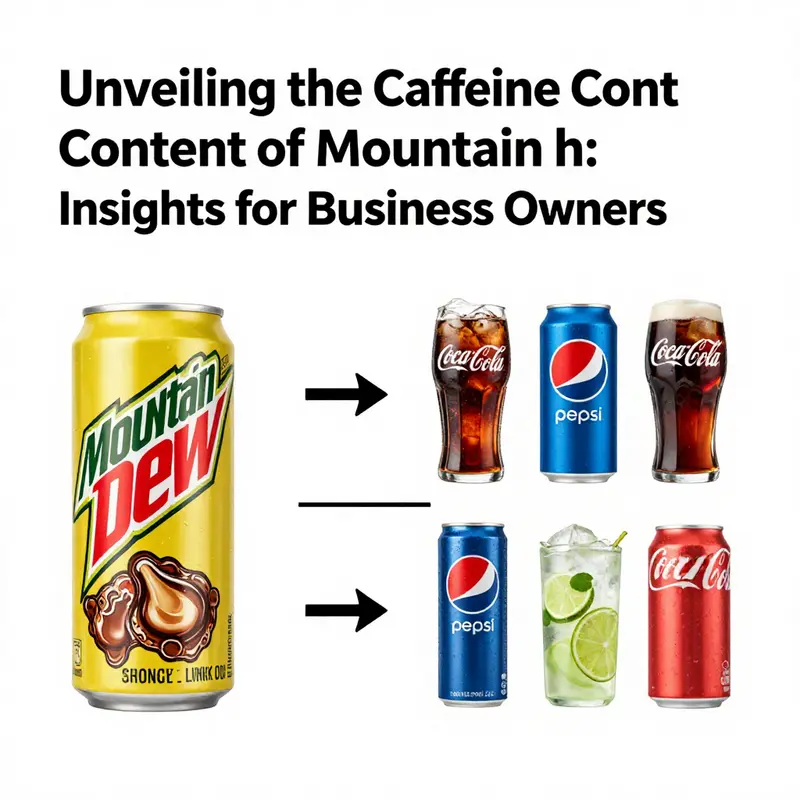
Caffeine sits at the crossroads of taste, alertness, and daily ritual. It is a substance that many consumers recognize by feel as much as by label, a quiet driver of wakefulness that travels with the bubbles and sweetness of a familiar can. Among the beverages that routinely carry caffeine, Mountain Dew stands out for delivering a clear, steady dose in a standard serving. In a 12-ounce can, the caffeine content rounds to about 55 milligrams, a figure that has become a reference point for how this citrus-loaded beverage compares with other soft drinks. That value is commonly reported for the regular formulation and, in many markets, remains consistent across variants that share the same basic recipe. For many readers, this level represents a noticeable energy lift without the intensity associated with high-energy drinks. The practical implication is simple: if you know you tolerate roughly 50-some milligrams well, a single can provides a meaningful perceptual difference without a dramatic jump beyond what you might expect from a cola-like baseline. The exact numbers on packaging or on the brand’s official pages can vary slightly by batch or regional labeling, but the general pattern is widely recognized by both consumers and researchers. The consistency across a standard form and its commonly sold relatives has made Mountain Dew a convenient reference point when people ask how much caffeine is in popular citrus sodas. In conversations about daily caffeine intake, this figure—55 mg per 12-ounce serving—often anchors comparisons to other beverages encountered at the supermarket, the gas station, or the vending machine. Yet it is worth noting that even within a single brand family, the precise caffeine content can shift in subtle ways depending on flavor development and regional formulation decisions. When readers seek the official, up-to-date numbers, turning to the brand’s product page or the label on the can provides the most direct source. The broader message, however, remains clear: Mountain Dew sits on the caffeine-rich side of the spectrum for regular colas and citrus-forward sodas, delivering a perceptible lift without entering the upper echelons dominated by energy-focused products. For readers who want a quick, practical reference, a concise takeaway is this: a standard Mountain Dew can lands in a caffeine zone that many people find noticeable but manageable, making it a dependable choice for a mid-afternoon pick-me-up or a pre-workout nudge during a long day. If you are curious about how this compares in practice to other caffeinated beverages, a simple comparison of serving sizes helps translate mg into real-world effects. A typical 12-ounce serving of Mountain Dew, at around 55 mg, delivers roughly the same caffeine-per-ounce ratio as many other well-known sodas in the same class, though the absolute milligrams can be higher or lower depending on the flavor, country of sale, and regulatory environment. Because serving sizes vary across regions and brands alike, it is always prudent to consult the local label for the most precise information, especially when you are tracking caffeine intake for health, sleep, or medication interactions. For readers who want the clearest, most actionable sense of how this figure stacks up against other beverages, an internal resource provides a direct comparison that translates mg into a practical daily picture. How much caffeine in a Mountain Dew is a question that invites not just a single answer but a context—one that considers regional formulations, label disclosures, and the broader landscape of caffeinated drinks. If you are looking to anchor your understanding, you can explore a practical comparison through an accessible reference that centers on Mountain Dew’s caffeine content and its relative position among popular options. How Much Caffeine in a Mountain Dew. This link is a useful touchstone for readers who want to translate the mg figure into daily choices, size, and timing. Beyond the can, the science of caffeine measurement reveals why numbers on labels can differ from one country to another and why researchers emphasize standardization and transparent reporting. Across a spectrum of soft drinks evaluated in separate studies, caffeine levels have shown a surprising degree of variability. A comprehensive study conducted in New York State and Ontario documented a broad range for cola products, from as low as 0.8 mg per can to as high as 50.8 mg per can in New York, and from 0.03 mg per can to 29.4 mg per can in Ontario. Those numbers are not just curiosities; they reflect the real-world impact of formulation choices, regional product lines, and regulatory guidelines that govern caffeine content. The contrast between New York and Ontario underscores how consumer experiences can differ depending on where a beverage is manufactured, labeled, and sold. The same study highlights a broader regulatory and formulation dynamic that can influence the caffeine landscape across markets, sometimes narrowing the range through standardization, sometimes widening it in pursuit of regional taste preferences or sourcing realities. In a different geographic context, Istanbul provided another lens through which to view caffeine in soft drinks. Researchers employed liquid chromatography-tandem mass spectrometry (LC-MS/MS) to quantify caffeine levels across beverages such as iced tea, iced coffee, and various energy- and cola-style drinks. The analytical method demonstrated high sensitivity, with a limit of detection at 0.04 mg/L and a limit of quantification at 0.13 mg/L. The technique showed excellent linearity, with r² = 0.9997, and a mean recovery rate of 96.76%, indicating robust accuracy for food toxicology applications. This combination of sensitivity and accuracy matters because it helps ensure that even trace amounts do not slip past the analytical net, a critical consideration when researchers compare beverages across regions or track changes over time. The practical upshot for consumers is that reported values for caffeine in soft drinks are built on rigorous measurement, but the numbers can differ with method, sample handling, and whether the serving size is a can or a bottle. When we translate those data into everyday choices, it becomes clear why a standard look at mg per serving can still leave questions about total daily intake. For example, in recent beverage assessments, well-known cola products have shown caffeine contents in the high thirties to near-forty milligrams per 330-milliliter can in several markets. A 330-milliliter can of a classic cola-like beverage fell around 38 mg in one market, while another prominent cola carried about 42 mg per 330 milliliters. A sugar-free variant traded slightly higher, around 46 mg per 330 milliliters, with a comparable figure emerging for a popular energy-forward beverage when evaluated in a similar volume. These data points illustrate a useful pattern: while some traditional colas cluster in the mid-to-high thirties or low forties, certain sugar-free or energy-adjacent options can push toward the high forties. In this landscape, Mountain Dew’s 55 mg per 12-ounce serving sits at the upper end of the typical cola range and slightly above several of the standard colas measured in standard serving sizes. That positioning matters when people attempt to calibrate caffeine intake against daily routines, workouts, or sleep sensitivity. It also underscores the importance of reading labels carefully, especially when beverages are packaged in nonstandard serving sizes. Serving size is a key driver of apparent caffeine intensity. A larger bottle might mask a higher mg-per-serving value simply because the consumer drinks more volume. Conversely, a smaller serving can exaggerate the relative strength if the same mg-per-serving figure is scaled down. For readers who want a crisp sense of how Mountain Dew compares with other caffeinated beverages, a quick contextual frame is helpful. Mountain Dew’s profile, with approximately 55 mg in a typical 12-ounce can, sits ahead of many classic colas but lags behind certain highly caffeinated energy beverages when those are measured by the same 12-ounce standard. In a sense, Mountain Dew occupies a space where taste, branding, and caffeine content intersect, offering a robust caffeine presence without stepping into the more intense end of the energy-drink spectrum. This positioning makes it a convenient reference point for people who want to gauge their caffeine intake across a broad beverage landscape. And while the exact caffeine figure can vary by region, batch, or flavor, the overarching pattern remains clear: knowledge of serving size and label details provides a dependable way to translate a can into a quantitative sense of daily caffeine exposure. For readers seeking practical clarity, the conversation about Mountain Dew’s caffeine content is inseparable from the broader study of how soft drinks are formulated, labeled, and consumed around the world. It is not merely a matter of a single number but of understanding variability, measurement rigor, and consumer behavior in real-world settings. The science behind these measurements—ranging from label disclosures to advanced LC-MS/MS methods—fosters a more informed approach to caffeine management. If you want to dig deeper into the methodological backbone of these comparisons, the analytical details and validation protocols are accessible through the referenced study in Analytical Chemistry. By embracing this broader view, readers can appreciate the approximate 55 mg in a can of Mountain Dew as a representative value that sits within a wider, regionally nuanced caffeine ecosystem. External researchers, policymakers, and curious consumers alike benefit from the ongoing effort to standardize labeling and to refine measurement techniques, ensuring that a can’s caffeine content remains both transparent and comparable across markets. For those who want to connect these insights to practical daily decisions, the essential takeaway is straightforward: check serving size, read the label, and consider how your consumption aligns with your caffeine tolerance and sleep needs. The numbers tell a story about taste and energy, but it is the context—the region, the product, and the volume—that completes the picture. External resource for methodological depth: https://doi.org/10.1021/ac501472y
The Buzz and the Burden: How Caffeine in a Popular Citrus Soda Shapes Health

Caffeine sits at the center of a well-known caffeinated citrus beverage that many reach for as a quick pick-me-up. A standard 12-ounce can delivers about 55 milligrams of caffeine, a figure that remains consistent across the regular formula and its common flavor variants. This level places the drink in the same general category as many other popular caffeinated sodas, offering a noticeable energy boost without tipping into the realm of extreme caffeine content. For readers who want a precise sense of how this caffeine amount compares across products, a focused resource can provide a detailed breakdown. In the meantime, it is worth understanding how that amount interacts with the drink’s other ingredients and what it means for health over the short and long term.
The immediate question for many consumers is not only how much caffeine is present, but what that caffeine does when consumed alongside a beverage that is also high in sugar and calories. The stimulant effect of caffeine is well established: it can increase alertness, enhance certain cognitive functions, and raise heart rate modestly. When paired with a beverage that carries a sizable sugar load, the physiological response can be more complex. The caffeine acts on the central nervous system, while the sugar drives rapid energy fluctuations in the bloodstream. Taken together, these elements can contribute to a felt sense of quick energy, followed by a potential slump as insulin and glucose dynamics respond to the surge.
Health researchers often point to three intertwined domains when evaluating the impact of regular caffeine consumption from sugary beverages: acute physiological effects, longer-term metabolic risk, and the broader implications for cardiovascular and dental health. In acute terms, caffeine can trigger a rise in blood pressure and heart rate, a response that may be more pronounced in individuals who are sensitive to stimulants or who consume caffeine on an empty stomach. For some, this manifests as jitters, anxiety, or an unsettled sense of restlessness. In people with underlying anxiety disorders or sleep disturbances, the stimulant properties can exacerbate symptoms such as insomnia or heightened arousal.
From a metabolic perspective, the combination of caffeine and high sugar creates a potent mix. Caffeine can influence metabolic rate and lipid mobilization, while high sugar intake drives spikes in insulin and glucose. Over time, persistent exposure to this combination has been linked, in observational literature, with insulin resistance and an elevated risk profile for type 2 diabetes. The same beverages associated with short-term energy highs have also been implicated in elevating blood pressure for susceptible individuals. Those with preexisting hypertension or metabolic syndrome may experience a multiplied effect, underscoring that the health impact of caffeine cannot be separated from the context of what else accompanies it in the drink.
Beyond metabolism, caffeine’s effect on the nervous system can translate into subjective experiences that vary by person. Some drinkers report improved focus and a calmer sense of wakefulness, while others notice heightened anxiety, irritability, or difficulty winding down in the evening. The timing of consumption matters: caffeine consumed late in the day can disrupt sleep, which in turn amplifies daytime fatigue, mood swings, and cognitive cloudiness. For adolescents and young adults, whose brains and sleep patterns are still maturing, regular caffeine intake from sugary beverages may have disproportionate effects on sleep quality and daytime functioning. The complexity deepens when caffeine is part of a beverage that is already energizing when sugar is considered as a companion stimulant, further impacting appetite regulation, meal timing, and long-term energy balance.
Sugar content deserves particular attention. The high carbohydrate load in such beverages contributes to weight gain when consumed frequently, especially if these drinks replace more nutrient-dense options or occur in the context of an overall calorie surplus. Weight gain is a known risk factor for cardiovascular disease, and the combination of obesity risk with caffeine-driven sympathetic activation can create a less favorable cardiovascular profile over time. Dental health is another area of concern. The acidic nature of many caffeinated colas, combined with substantial sugar, places enamel under repeated challenge. Over months and years, this environment can erode dental surfaces, increasing the likelihood of cavities and related dental problems. The pattern is not unique to one brand or formula; it emerges from the combination of acidity, sugars, and caffeine that characterizes these beverages.
Given these potential effects, the practical takeaway centers on moderation and mindful consumption. Health professionals often emphasize limiting sugary caffeinated drinks and choosing alternatives that disproportionately emphasize hydration and low-sugar options. Water remains the most reliable daily beverage for maintaining hydration without adding extra calories, sugar, or caffeine. Unsweetened tea or coffee can offer caffeine in a context that allows better control over intake and timing. For those who do choose to enjoy a caffeinated citrus beverage, it can be helpful to pair it with meals rather than consuming it on an empty stomach, monitor total daily caffeine intake, and be attentive to how sleep patterns are affected by late-day consumption.
To aid readers who want a deeper dive into the caffeine content itself and how it stacks up against other caffeinated drinks, a concise exploration of the numbers can be informative. The standard can’s caffeine level is modest by some standards, yet when combined with a relatively high sugar content, it creates a product that can influence energy and appetite in ways that are not always straightforward. Those seeking a quick reference can consult the dedicated overview that outlines caffeine content across similar beverages, which helps place 55 milligrams in a broader context.
From a policy and public health perspective, the chapter’s focus centers on how individuals incorporate these beverages into their daily routines. Moderation remains the practical recommendation, and the broader health message is clear: habitual, high-sugar, caffeinated drinks should be balanced with nutrient-dense choices and healthy hydration. Some readers may benefit from appetite and sleep tracking to understand how caffeine and sugar interact in their lives. For athletes or people with high caffeine sensitivity, personalized strategies—such as limiting intake to earlier in the day or substituting with non-caffeinated alternatives during evening hours—can support better sleep and steadier energy throughout the day.
The chapter’s discussion also acknowledges that the health effects of caffeine cannot be divorced from overall dietary patterns. The beverage in question is not a stand-alone risk factor; rather, it is one component of a broader lifestyle narrative that includes physical activity, stress management, sleep quality, and meal composition. The research presented here aligns with a growing body of evidence that emphasizes moderation and informed choices. By understanding the specific caffeine amount and recognizing how sugar and acidity contribute to risk, readers can make better-informed decisions about when and how to enjoy such a beverage.
For readers seeking more granular scientific context, a peer-reviewed study provides a detailed look at the vascular and metabolic effects of caffeine and high-fructose beverages, including implications for renal function and cardiovascular health. This external resource offers a robust foundation for understanding the mechanisms behind the health signals discussed here and helps connect daily beverage choices with long-term health outcomes. NCBI study on caffeine and high-fructose beverages.
If you want to explore how the caffeine content in this popular beverage compares with other widely available drinks, a concise, reader-friendly summary is available in the linked resource that focuses on caffeine content across common drinks. For an accessible, practical reference, you can also browse a contextual overview that discusses how caffeine amounts relate to daily intake recommendations and how to interpret those numbers in the context of a typical diet.
In sum, the portrait of caffeine in this beverage is not simply about a single number on a can. It is about how that number interacts with sugar, acidity, and dietary context to shape short-term experiences and long-term health considerations. The 55 mg per 12-ounce serving is a meaningful data point, but the real story unfolds when we look at how regular consumption fits into daily habits, sleep, stress, and energy management. By remaining informed and applying moderation, readers can enjoy the beverage’s stimulating effects while minimizing potential downsides. And by choosing hydration-centered alternatives most of the time, individuals can preserve energy without surrendering long-term health goals.
Internal reference for further details on caffeine content in this class of beverages can be explored here: caffeine-content-mt-dew. This resource provides a practical, consumer-friendly framing of how caffeine amounts compare across related drinks, helping readers gauge what fits best within their daily caffeine budget.
Energy in a Citrus Pulse: How Caffeine Shapes Mountain Dew’s Flavor, Fans, and Future

Caffeine sits at the heart of Mountain Dew’s identity, a sharp, steady beat that many fans hear before they taste the citrus. In the realm of mass-market sodas, its caffeine content—roughly 54 to 55 milligrams per 12-ounce can—ranks Mountain Dew among the more energizing options. This consistency across the flagship original formula and Code Red creates a familiar baseline that purists recognize and new fans come to expect. The effect is more than a quick lift; it is a signal about what Mountain Dew aims to be: a beverage that pairs bold flavor with a reliable energy kick. When a consumer reaches for a can, the caffeine becomes almost a second flavor profile, a perception that the drink won’t just refresh but also sharpen focus for a moment or two, whether a long study session, a night shift, or a weekend gaming marathon is in progress. In markets where form and function are increasingly fused, this dual appeal helps Mountain Dew stand out from other colas that trade energy for flavor or vice versa. The caffeine factor does not merely support wakefulness; it reinforces a sense of momentum that the brand continually leans into when communicating with its audience.
The appeal of a higher-caffeine beverage is particularly resonant among younger demographics who value immediacy and intensity. The brand’s flavor profile—zesty citrus with a punchy sweetness—complements the energy delivery, creating a sensory experience that feels both refreshing and purpose-built. This alignment between taste and energy helps explain why Mountain Dew remains a staple for people seeking a quick, reliable boost without committing to coffee. It is not merely about the quantity of caffeine but about a perception of efficiency: a drink that can be enjoyed casually yet still deliver a noticeable lift when the moment calls for it. In this frame, caffeine becomes part of the brand’s narrative, a signal that Mountain Dew understands the needs of its audience and designs its beverages to meet them without sacrificing taste.
The consistency of caffeine levels across the mainline variants—original, Code Red, and related formulas—plays an essential role in sustaining that narrative. When a consumer opens a can, they anticipate not only the familiar neon-colored citrus but also the guaranteed energy jolt that accompanies it. This predictable backbone enables flavor innovations to flourish without alienating long-time fans. It is a delicate balance: the brand must diversify taste experiences through new flavors and regional launches while preserving the core caffeine delivery that customers have come to expect. As a result, the product line can experiment with citrus silhouettes, heat-spiced undertones, or occasional fruit-forward riffs, all while maintaining a recognizable energy signature that anchors brand loyalty.
Trend analysis within the broader beverage landscape reveals that Mountain Dew’s approach to caffeine has evolved in tandem with consumer desires for both familiarity and novelty. Live Wire, the Wild Orange variant, demonstrates how the brand leverages bold citrus notes to offer a vibrant, refreshing experience without sacrificing the high caffeine content fans associate with the product line. The resurgence of interest in citrus-forward flavors reflects a cultural moment that prizes bright, energetic profiles—an effect that dovetails naturally with the drink’s energizing properties. This synergy between flavor and caffeine is not merely a marketing flourish; it mirrors how consumers perceive energy across different contexts, from sports and gaming to late-night socializing. Across international markets, similar logic informs product strategy. The re-launch of Mountain Dew Energised in Australia, for instance, foregrounds caffeine delivery alongside its citrus identity, aligning regional expectations with a globally recognizable energy cadence. Such moves hint at a broader strategy: keep the signature caffeine delivery intact while expanding the flavor canvas in ways that feel contemporary and adventurous.
This strategy has also helped Mountain Dew carve a durable niche in the crowded U.S. soft-drink market. By positioning itself as a top-tier option for those who want an assertive citrus flavor with an energizing punch, Mountain Dew differentiates itself from peers that lean more heavily on either sugar, caffeine, or flavor alone. The result is a brand that is not only a beverage but a cultural signal—an item people associate with momentum, focus, and the kind of daily pace that rewards a quick, satisfying lift. The positioning extends beyond taste, shaping consumer expectations for the category itself. When a shopper considers the caffeine content of Mountain Dew versus that of other popular beverages, the decision is often influenced by a perception of efficiency: a drink that offers both flavor and function in a single, convenient package.
Health-conscious trends add nuance to this picture. The rise of sugar-free variants, sometimes marketed as zero-sugar or zero-calorie alternatives, demonstrates the brand’s responsiveness to dietary concerns without diluting the caffeine experience. These products maintain the high-energy profile fans expect while offering options that appeal to those monitoring sugar intake or caloric load. For some consumers, this is a decisive factor in choice, particularly for ongoing routines that demand both energy and dietary mindfulness. Yet the shift toward zero-sugar options also encourages dialogue about taste and aftertaste, as some buyers report a perceptible artificial finish. The brand seems to negotiate this tension by balancing familiar citrus brightness with cleaner formulations where possible, all while preserving the core caffeine delivery that remains central to the product’s appeal. In this sense, caffeine acts as a constant through shifting health-conscious values, providing a stable foundation while flavor and formulation experiments push the envelope.
Ultimately, Mountain Dew’s enduring success rests on a careful choreography of caffeine, flavor, and cultural relevance. The caffeine level is a reliable touchstone—high enough to satisfy energy-seeking consumers, but not so extreme that it deters everyday enjoyment. Consumers appreciate the predictability that comes with a familiar lift, and they respond to flavor innovations that feel like natural extensions of the brand’s citrus identity. This combination helps explain Mountain Dew’s resilience in a dynamic market where new energy-forward drinks come and go. As preferences evolve toward personalization and performance, the brand’s ability to maintain a recognizable core while embracing thoughtful experimentation ensures it remains a reference point for discussions about caffeinated soft drinks. The story around Mountain Dew is as much about who drinks it as it is about what’s in the can, and the caffeine milestone acts as a bridge between those two dimensions.
For readers who want to see the granular figures and how various variants compare, a detailed breakdown is available here: caffeine content of Mountain Dew. This resource codifies the practical realities fans encounter in the market, offering clarity for shoppers who weigh caffeine as part of their overall beverage choices. The chapter’s exploration also invites a broader consideration of how caffeine content intersects with flavor strategy, product diversification, and global expansion. The interplay between taste, energy, and consumer expectations is an ongoing narrative that keeps Mountain Dew relevant across generations and geographies. As the brand continues to innovate and to respond to health-conscious trends, the caffeine signal remains a touchstone—an anchor that helps readers understand not only what the drink is, but why it resonates in a world that prizes quick, confident momentum. External industry perspectives further illuminate this dynamic, illustrating how Mountain Dew’s approach to caffeine mirrors larger currents in caffeinated beverages and energy-forward consumer culture. External resource: https://www.beverageindustry.com/soft-drinks/mountain-dew-fueled-by-caffeine-and-culture
null

null
Final thoughts
The caffeine content in Mountain Dew presents a vital consideration for business owners, informing marketing strategies and health guidelines. Knowledge of the specific caffeine levels across various Mountain Dew variants enables businesses to cater to consumer preferences better while ensuring compliance with regulatory standards. As consumers continue to seek beverages that offer both flavor and an energy boost, understanding the implications of caffeine in their choices becomes essential. Addressing these factors can help beverage businesses thrive in an increasingly competitive market.