
Caffeine is a vital component in many consumers’ daily routines, especially in beverages like Mountain Dew. Understanding the caffeine content in this popular soft drink is crucial for business owners, who often cater to customers seeking energy boosts. This article explores how many milligrams of caffeine are present in Mountain Dew, compares this to other soft drink options, and examines the health implications surrounding its consumption. Each chapter aims to equip business owners with valuable insights, enabling them to effectively market and offer products that meet consumer needs and preferences.
Caffeine Content in Mountain Dew: A Quick Look

Mountain Dew typically contains about 55 mg of caffeine per 12-ounce can. This places it above many colas but below many energy drinks. The caffeine amount can vary slightly by flavor and region, so always check the nutrition label. In terms of concentration, a 12-ounce can yields roughly 0.155 mg per milliliter. Consumers should consider total daily caffeine intake, especially if consuming other caffeinated beverages. For those monitoring sleep, anxiety, or sensitivity, moderation is advised. Official product data from the brand can provide exact values for current offerings.
The Buzz Benchmark: How Mountain Dew’s Caffeine Stacks Up Against Other Soft Drinks
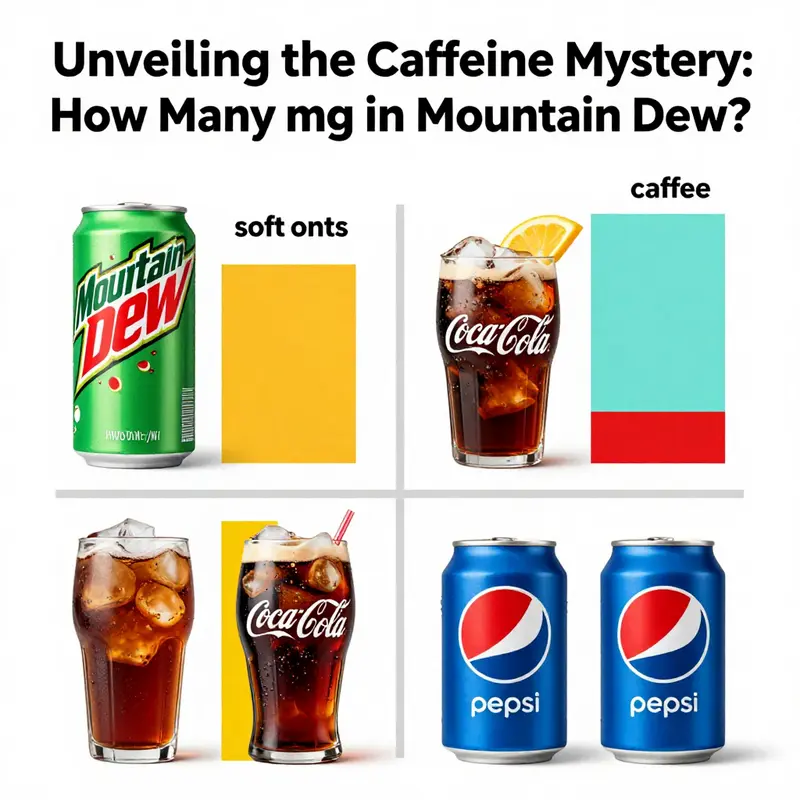
Caffeine is the quiet engine behind many everyday choices, a small chemical nudge that can shape focus, mood, and even workout energy. When readers ask how many milligrams of caffeine are in a popular citrus-flavored soda marketed for its high-energy image, they aren’t just asking for a number. They’re asking how a single can compares to the broader world of fizzy drinks, and what that means for a daily routine, for sleep, for sensitivity, and for the simple act of choosing something refreshing. In this chapter, we explore the caffeine landscape as it relates to one iconic option and then extend the comparison to the wider category of caffeinated soft drinks. The goal is not to demonize or glorify a brand, but to illuminate the numbers behind the buzz and to translate those numbers into practical, everyday guidance.
Within the spectrum of fizzy beverages, this particular option stands out for its relatively high caffeine content per standard serving. The regularly formulated version, in a 12-ounce can, carries roughly 54 milligrams of caffeine. Some flavor variants sit at a hair’s breadth higher, around 55 milligrams per 12-ounce serving, while others hover in the same neighborhood. This level places the drink toward the upper end of the caffeine scale for soft drinks and positions it alongside beverages that are often marketed with an emphasis on energy or alertness. It is worth noting that the precise caffeine content can vary slightly from flavor to flavor and batch to batch, but the general picture remains clear: for a carbonated, non-cola product, this is a relatively high-caffeine option. To situate that figure more concretely, it helps to compare it to widely available sodas that many people reach for when they desire a familiar, fizzy lift.
Most traditional colas—the familiar, cola-flavored beverages that populate many fridges and vending machines—tend to sit in the range of roughly 30 to 40 milligrams per 12-ounce serving. A brand that remains a common reference point for many consumers typically lands closer to the mid-thirties. The contrast with the 54 to 55 milligrams seen in the higher-caffeine option is meaningful. It means that, ounce for ounce, the citrus-forward, energy-oriented soda delivers noticeably more caffeine than a standard cola. This difference matters for a number of reasons: it informs how quickly the caffeine from a single can can translate into a subjective sense of stimulation, and it also interacts with individual caffeine tolerance, daily intake, and timing within a day.
Numbers in this realm are rarely tips of a scale that can be universalized for every person. Caffeine affects people differently based on body weight, genetic factors, habitual intake, and even time of day. For a consumer who drinks one 12-ounce can in the morning, the caffeine load is a reasonable part of a daily pattern for many adults who are not particularly sensitive to stimulants. For someone who already consumes caffeine through coffee, tea, energy drinks, or medications, that same 12-ounce can adds up quickly and may push the total daily intake closer to or beyond the commonly referenced guidelines. Understanding this helps frame the comparison: the high-caffeine soft drink is in the same neighborhood as many energy drinks when it comes to caffeine density, and its impact is felt most when the drink is consumed in larger quantities or later in the day.
To place this in a broader context, it is useful to contrast the caffeine content of this high-caffeine soda with other popular soft drinks. In many cases, a classic cola delivers about 34 milligrams per 12-ounce serving, a number derived from long-running nutrition data and regulatory labeling practices. A widely recognized cola brand has traditionally hovered in the mid-30s. A different, but still common, brand can land a bit higher or lower depending on formulation and regional variations. When comparing to these benchmarks, the higher-caffeine option stands out as a significantly stronger source of caffeine on a per-can basis. In some regional data compilations, the maximum caffeine observed in soft drinks—across a range of cola and non-cola products—can approach just over 50 milligrams per can. In that landscape, the high-caffeine soda exceeds the typical ceiling reported for mainstream cola beverages. This relative standing helps explain why it is perceived as a more potent pick-me-up among non-alcoholic, non-coffee beverages.
The interplay between flavor, branding, and caffeine content also matters. The beverage in question is part of a family that emphasizes a bold, brisk profile, with caffeine serving as a practical adjunct to the flavor and the branding’s energy-forward image. For some consumers, the caffeine is a key functional component that complements the citrus-forward taste, creating a quick, recognizable effect that others may interpret as “a stronger wake-up” than what a standard cola might offer. This is not to imply that flavor alone dictates caffeine choice, but it does illustrate how product positioning aligns with the stimulant content. In practice, many people who enjoy the taste also value the boost that comes with higher caffeine content, especially when they are seeking alertness or a quick lift during a long day.
When we talk about taking a closer look at caffeine in this context, it’s helpful to translate milligrams into a practical sense of how the body experiences the dose. A typical adult’s metabolism will process caffeine fairly rapidly, but the subjective effects—energy, alertness, jitteriness, or a potential sleep disturbance—depend on the stride of that metabolism and the total daily intake. A single 12-ounce can sits in a zone that is enough to contribute to wakefulness for some people, while for others it may be a portion of a larger day-long pattern that includes coffee, tea, or other caffeinated products. The lesson here is not simply to count milligrams in isolation, but to consider how that can interacts with timing, total intake, and personal sensitivity. In the case of this popular high-caffeine option, it offers more caffeine per can than many everyday sodas, which makes it a more efficient source of a quick energy surge if used judiciously.
For readers who want to connect the numbers to official data and to trace how these figures were established, nutrition labels on cans are the primary source of information. Brand labeling and regulatory requirements in many regions mandate that caffeine content be disclosed on the Nutrition Facts panel, and those values are typically drawn from formulation data submitted by the manufacturer and verified through laboratory analysis. When looking across a broad landscape of soft drinks, you’ll see a spectrum: some beverages hover in the low-to-mid thirties, others sit in the mid-forties, and the highest-density drinks approach or slightly exceed fifty milligrams per 12-ounce can. The specific figure for the high-caffeine option—roughly 54 to 55 milligrams per 12-ounce serving—emerges as a straightforward reference point within this spectrum and helps clarify why it’s often described as a stronger energy beverage among mainstream soft drinks.
Another layer of nuance comes from considering flavors within the same brand family. A few variants patterned after the original formula tend to cluster around the same caffeine range, while a couple of flavors may display a slightly different profile due to formulation adjustments or batch variability. The key takeaway remains consistent: the caffeine content of the standard 12-ounce serving is high for a soft drink, and that characteristic contributes to the brand’s reputation for delivering a more robust energy boost than many peers in the category. For readers who track caffeine intake closely, the practical implication is simple: if you are choosing among soft drinks and you desire a stronger caffeine kick without choosing an energy drink, looking for those higher-caffeine options within the soft-drink family is a reasonable approach, while still balancing total daily consumption and individual tolerance.
To connect the empirical data with consumer-facing information, you can consult a concise reference that consolidates caffeine content across a range of soft drinks. This kind of resource helps translate the 54–55 milligrams per 12-ounce serving into a broader apples-to-apples comparison with other popular beverages. As a practical tip, it is useful to compute caffeine per fluid ounce when you are evaluating larger servings. If a standard can is 12 ounces, that translates to 4.5 milligrams per ounce. A 16-ounce bottle would then contain approximately 72 milligrams, assuming the same concentration, while a 20-ounce bottle would approach 90 milligrams. In other words, the serving size matters just as much as the brand and the flavor. When you choose a larger container, the caffeine intake rises accordingly, which makes mindful portion control especially important for those who want to avoid overshooting a daily limit.
From a public health perspective, this level of caffeine density within a mainstream soft drink footprint invites a straightforward recommendation: indulge, but with discretion. People who are particularly sensitive to caffeine, who are pregnant, or who are managing sleep or anxiety concerns may want to limit intake to smaller portions or to consume earlier in the day to minimize potential interference with rest. For those who regularly drink coffee or energy drinks, it can be helpful to track total caffeine intake across all sources to avoid surpassing thresholds that could lead to adverse effects such as jitteriness, headaches, or sleep disturbances. The overarching message is pragmatic: there is nothing inherently dangerous about a single can of a high-caffeine soft drink for most adults, but context matters. Knowing how it fits into your daily caffeine budget can empower better, more informed choices.
A note on the state of data: there is value in looking at multiple sources when you’re comparing caffeine levels across beverages. The numbers cited for the high-caffeine option—54 to 55 milligrams per 12-ounce serving—reflect a commonly cited baseline in nutrition data and research summaries. Other sodas commonly cited in consumer guidance typically hover lower, and even within a brand’s lineup there can be subtle variations by flavor and region. In some regional compilations, the maximum caffeine content observed in soft drinks has been reported as just above 50 milligrams per can for certain cola products, which underscores how the specific high-caffeine option can exceed some of its peers. The takeaway is not to fixate on a single number, but to understand the relative scale and how serving size and flavor choice interplay to shape daily caffeine exposure.
If you want to explore the topic further beyond this narrative, you can consult a focused resource that examines caffeine content in Mountain Dew alongside similar beverages. For an accessible, reader-friendly reference, see Caffeine content in MT. DEW. This kind of comparison helps readers visualize how this product sits within the broader spectrum of caffeinated soft drinks and how it stacks up against common cola formulations. The broader message remains that while this beverage does offer a potent caffeine punch for a soft drink, it is part of a diverse marketplace where caffeine levels range widely across flavors, brands, and packaging sizes. In practical terms, the consumer who wants a strong but manageable caffeine lift should be mindful of both the per-can content and the total daily intake from all sources. This awareness enables a more deliberate and informed approach to enjoying beverages that provide quick energy without tipping into overconsumption.
In closing, the caffeine content of this high-energy soda—roughly 54 to 55 milligrams per 12-ounce can—places it near the upper tier of mainstream soft drinks. When you compare that to typical colas in the 30 to 40 milligram range, the difference becomes clear. The practical effects depend on the individual, but the numbers offer a reliable guide for planning daily caffeine consumption, particularly for those who balance a caffeine-heavy routine with sleep, hydration, and overall health goals. As with many aspects of nutrition, the key is balance: enjoy the lift when you want it, but temper it with an awareness of total intake and timing so that the caffeine serves you well without undermining rest or comfort. For readers who want to see how these figures look in the bigger picture of caffeinated beverages, the broader literature and consumer data provide a useful frame of reference. External resource: https://www.ncbi.nlm.nih.gov/pmc/articles/PMC7894567/
Caffeinated Currents: Tracing the Health Footprint of a High-Caffeine Citrus Soft Drink

The conversation around a widely consumed, high-caffeine citrus soft drink begins with a simple numeric truth: the typical 12-ounce can carries roughly 54 to 55 milligrams of caffeine. In exact terms, a careful synthesis of data from early investigations places the figure at about 54.8 milligrams per 12-ounce serving, a level that consistently lands in the upper tier for nonalcoholic, non-energy beverages. This isn’t a mere curiosity about a beverage’s buzz; it frames a broader question about how caffeine at this dose can subtly influence attention, vigilance, and motor coordination over the course of long tasks. Researchers have noted that at this concentration, the stimulant properties are evident enough to influence cognitive performance in ways that matter to people who depend on sustained focus—gamers polishing reflexes for hours, students powering through late-night study, professionals juggling demanding, deadline-driven work. The picture is nuanced: caffeine is a wakefulness aid, and in the context of a flavor-profile-forward drink, it is harmonized with sweetness, acidity, and a familiar carbonation that makes the effect feel accessible and steady rather than abrupt. In practical terms, the dose can elevate moment-to-moment performance, fuzzy edges of fatigue sharpen, and tasks requiring rapid response and sustained attention may seem more manageable for a stretch of time. Yet this same dose sits within a broader landscape of health considerations that accompany frequent exposure to caffeine at or near this level, and those considerations deserve careful attention beyond the momentary lift in alertness. For a concise look, see caffeine-content-mt-dew.
From a physiological standpoint, caffeine at this intake acts through the well-known mechanism of adenosine receptor antagonism. By blocking receptors that signal tiredness, caffeine promotes a temporary increase in neuronal firing and the release of neurotransmitters like dopamine and norepinephrine. The result is a subjective sense of heightened alertness, improved attention, and enhanced motor readiness. People who habitually incorporate caffeine into long gaming sessions or extended work periods often report a smoother continuation of focus, reduced perception of fatigue, and an easier start to complex tasks after a late evening. The magnitude of these effects, however, varies with individual sensitivity, tolerance built through regular use, and the timing of consumption relative to sleep. In short, when the dose sits at roughly the 55-milligram mark, the gains in cognitive performance tend to be real but modest and subject to the law of diminishing returns as fatigue accumulates and sleep pressure grows.
Yet the story of a high-caffeine citrus soft drink cannot be told as a one-dimensional benefit. The same properties that confer a momentary cognitive edge can intersect with a set of health considerations that, taken together, shape a longer arc of well-being. The drink’s appeal rests as much on its flavor and social signaling as on its stimulant quality, and this dual appeal helps explain why its caffeine content continues to be a focal point in consumer health discussions. The same profile that supports sustained attention also coincides with a rapid sugar delivery system and an acidic matrix designed to preserve flavor and carbonation. Those elements do not operate in isolation; they interact with dental health, metabolic regulation, sleep patterns, and the body’s broader energy management system. In the present context, the caffeine content is part of a composite picture—the drink that combines caffeine with sugars, acids, and carbonation to create a distinct physiological and experiential footprint. The dialogue, then, is not simply about a number on a label but about how that number interacts with how people live, work, and rest in a world that demands consistent performance. The perception of sharpness or clarity that caffeine can confer is real for many, yet it sits alongside a wary caution about overuse, timing, and the cumulative impact of daily consumption on three pillars of health: teeth, metabolism, and sleep.
The dental dimension deserves particular attention. The sugar load carried by many versions of this citrus drink, combined with citric and phosphoric acids, creates a potent combination for dental erosion. The erosive potential of such beverages arises because acidity and sugar work together to weaken tooth enamel and accelerate mineral loss. When these beverages become staples in daily routines or are consumed in large quantities over time, enamel integrity can be challenged. The literature consistently highlights that when a beverage pairs high acidity with high sugar content, the risk to dental enamel rises, especially if sips are prolonged over the course of a day or if the mouth is not buffered by saliva—an effect magnified in people with dry mouths or irregular eating patterns. In practical terms, frequent consumption of an acidic, sugary drink with a caffeine kick can contribute to enamel wear, increased sensitivity, and a greater likelihood of cavities if oral hygiene is not rigorously maintained. Oral health professionals emphasize simple mitigations: drinking through a straw to reduce contact with teeth, rinsing with water after consumption, and maintaining regular dental checkups and brushing routines. These steps become part of a broader health strategy that acknowledges both the immediate cue of alertness and the longer-term consequences of repeated exposure to both caffeine and acidity.
Beyond the mouth, caffeine’s influence on sleep and circadian rhythms deserves careful consideration. The dose discussed here lies within a range that can meaningfully disrupt sleep for some individuals, particularly when consumed later in the day. Sleep quality and duration are intimately linked to metabolic health, cognitive performance, mood, and even appetite regulation. The balance between awake performance and sleep disruption is delicate; the same stimulant that helps sustain attention can also seed a cycle of sleep fragmentation and daytime fatigue if timing is not carefully managed. This is especially relevant for people who rely on caffeine to sustain long sessions but routinely push consumption into the late evening or night. Sleep disruption can cascade into greater daytime sleepiness, increased perceived effort to concentrate, and a greater reliance on caffeine to compensate for a sleep shortfall, creating a loop that is hard to escape without deliberate planning around caffeine timing.
Metabolic considerations add another layer to the conversation. Soft drinks in this category often rely on high-fructose sweeteners or other added sugars that contribute to a caloric load with little nutritional payoff. Repeated intake of high-sugar beverages has been associated with increased risk for insulin resistance, weight gain, and a higher likelihood of developing type 2 diabetes in longitudinal observations. The caffeine component does not negate these risks; rather, it coexists with them in a daily dietary pattern. When such beverages form a meaningful portion of daily energy intake, the metabolic consequences become more pronounced. The body’s response to sugar and caffeine is not uniform; some people may experience a relatively modest effect on glucose metabolism, while others may demonstrate greater sensitivity, particularly in the context of baseline obesity, physical activity level, and overall dietary quality. The complexity lies in how the brain’s reward pathways, hunger hormones, and insulin signaling interact in the presence of both a sugar-rich beverage and a stimulant. In the end, caffeine does not erase the metabolic footprint of sugar; it can, in some individuals, amplify cravings or alter the perceived energy state, potentially leading to greater overall energy intake without proportional nutritional benefit.
The research landscape offers a cautionary but nuanced picture. On one hand, caffeine at a moderate dose is associated with improvements in attention, vigilance, and certain aspects of motor performance, which can be especially valuable during long, demanding tasks. On the other hand, the dietary matrix in which caffeine is delivered—acidity, sugar, and overall caloric content—carries health implications that deserve attention in daily life. The narrative here is not one of prohibition but of informed choice. For some, a modest caffeine boost can be a practical tool for managing mid-day dips or for sustaining performance in high-demand activities. For others, the same dose might contribute to sleep disruption, dental concerns, or metabolic strain if consumed routinely or without regard to individual tolerance and overall dietary patterns.
In light of these dynamics, the following synthesis emerges: caffeine at roughly 54 to 55 milligrams per 12-ounce serving can offer a measurable, real boost in wakefulness and performance for certain tasks and timeframes. This benefit is tempered by the realities of dental wear, sleep interference, and metabolic considerations that accumulate with sustained use. Moderation, timing, and personal tolerance are not merely recommendations but practical strategies for translating a stimulant’s benefits into healthier, more sustainable daily habits. Individuals who rely on caffeine as a tool for focus or endurance should be mindful of the broader dietary context, keep hydration steady, and prioritize sleep and dental hygiene. In this light, the stimulant merits respect as part of a larger energy-management framework rather than as a simple lever to pull during moments of fatigue.
The take-home message is not one-size-fits-all. For some, the precise caffeine milligram count in a single serving serves as a tangible guide to safe and effective use. For others, the same figure becomes a prompt to re-evaluate daily routines, consider alternative sources of energy, or adjust consumption patterns to protect teeth and sleep quality while still permitting focused work or gaming marathons when needed. The evidence supports a balanced approach: appreciate the cognitive edge a moderate caffeine dose can deliver, but pair it with a clear awareness of how frequent, late, or sugar-rich consumption affects dental health, sleep, and metabolic well-being. This is the core reason health communicators and researchers advocate for mindful consumption, personalizing recommendations to tolerance, lifestyle, and health goals.
In sum, the caffeine content in this high-caffeine citrus beverage is a meaningful piece of a larger health puzzle. It highlights the practical tension between momentary cognitive enhancement and longer-term health considerations. The data remind readers that small, daily choices accumulate. A single can provides a predictable stimulant effect, but daily patterns determine whether that effect translates into improved performance or a cumulative risk profile that strains dental health, sleep architecture, and metabolic function. The chapter therefore invites readers to marshal knowledge about dose, timing, and context into decisions that fit their habits and health priorities, while remaining open to the possibility that alternatives—lower-sugar, differently caffeinated beverages, or non-caffeinated options—may better align with long-term wellness goals.
External research resources and ongoing investigations continue to refine our understanding of caffeine’s role in everyday nutrition. For a more in-depth look at the original data that informs these figures, see the external resource at PubMed: https://pubmed.ncbi.nlm.nih.gov/17394695/.
Final thoughts
Understanding the caffeine content in Mountain Dew provides essential insights for business owners looking to meet customer demands effectively. With approximately 54-55 mg of caffeine per 12-ounce serving, Mountain Dew positions itself as a prominent choice for those seeking an energy boost. By comparing it with other soft drinks and evaluating the health implications of its caffeine content, businesses can make informed decisions about their product offerings and marketing strategies. As consumers increasingly turn to caffeine sources for energy, staying informed will help businesses thrive in a competitive market.