
Caffeine has become a staple in many people’s daily routines, thanks to its ability to enhance alertness and energy levels. Among the myriad of beverages available, Mountain Dew stands out not only for its bold flavor but also for its significant caffeine content. This article explores the caffeine content in a standard can of Mountain Dew and its implications for energy and performance, especially in businesses that cater to active consumers like gamers and enthusiasts. By examining the nutritional aspects of caffeine in Mountain Dew, its effects on performance, and comparing it to other popular beverages, we aim to provide business owners with a comprehensive understanding that can inform product offerings and marketing strategies. Each chapter delves deeper into this topic, presenting valuable insights that can enhance customer engagement and drive sales.
Energy in a Neon Can: A Thorough Look at Caffeine in a Popular Citrus Brew
A 12-ounce can of a widely consumed neon citrus beverage carries about 54 to 55 milligrams of caffeine. This range positions it in the middle tier of caffeinated drinks, more than many traditional soft drinks but less than several concentrated energy products. The number, while seemingly modest, carries weight in a pattern of consumption that has become common during long hours of focus-intensive tasks—from studying to immersive gaming sessions—and it is the kind of detail that helps unpack why this beverage, in particular, has earned a reputation for delivering a steady, readable lift without the pronounced and abrupt jolt that some people fear. When people talk about the caffeine in such a can, they are not just naming a stimulant; they are naming a cognitive tool used to sharpen attention, sustain vigilance, and keep motor coordination precise during tasks that demand uninterrupted performance over hours. Caffeine works by nudging the brain toward alertness, primarily by blocking adenosine receptors that accumulate as time passes and signal sleep and fatigue. The effect is not a single surge but a smoother modulation of wakefulness that many find beneficial during extended periods of play or work. The practical upshot is that a moderate dose can sharpen reaction times and reduce the perception of fatigue, enabling a person to stay in the zone longer than they might otherwise manage. In environments that prize quick reflexes and sustained concentration—such as fast-paced gaming or long computer-based tasks—the perceived advantage is often framed as a competitive edge, a way to maintain momentum when mental fatigue threatens to creep in. The value of this caffeine dose, then, is not merely in the chemistry of the molecule but in the way it dovetails with the rhythm of a prolonged activity. It helps keep attention stable, helps maintain a steady pace, and reduces the moment-to-moment feeling of drift that can come with protracted concentration. Those who monitor their intake often describe a gradual, manageable lift rather than a dramatic, unscripted spike. The result is a form of mental steadiness that is prized during extended sessions where sharp focus and quick timing are coupled with a demand for consistency. Yet this is not a blanket endorsement of heavy caffeine use. It is an invitation to understand the dose that tends to be tolerable for many people: enough to support cognition without tipping into overstimulation, jitteriness, or sleep disruption if caffeine is consumed late in the day. The practical implication is simple: frequency and timing matter as much as the absolute amount in a single can. In the real world, people do not consume caffeine in isolation. They drink it alongside water, meals, or other beverages; they eat foods that affect digestion and glucose processing; and they live with sleep cycles that can shift the impact of caffeine from crisp focus to unease if the dose falls too close to bedtime. This interplay between dose, timing, and context shapes daily experiences with caffeinated drinks and is essential to understand when considering how a single can contributes to overall stamina and performance. The debate about whether such a beverage is “too much” or “just right” hinges on personal tolerance, genetics, and lifestyle. Some individuals are more sensitive to caffeine’s stimulating effects; for them, 54 to 55 milligrams can feel more pronounced, and the same amount may be perfectly manageable for others who regularly adjust to higher daily intakes. In either case, the guidance that emerges from a careful look at this dose emphasizes mindful pacing: avoid loading the same amount in a short span, especially if sleep quality or anxiety levels are already a concern. For gamers in particular, where long streaming sessions have become a social as well as a competitive activity, the pattern of caffeine use intersects with other factors such as screen time, light exposure, and evening routines. The caffeine in this type of beverage is a tool, not a solution. It complements deliberate breaks, hydration, and nutrition strategies designed to sustain performance without undermining health or sleep. The surrounding nutrients in the can, however, remind us that caffeine does not come alone. A standard serving carries about 170 calories and roughly 54 grams of sugar. The calories come primarily from the sugars—the simple carbohydrates that provide a quick source of energy but also demand a metabolic response that can influence appetite, energy swings, and long-term weight considerations. The sugar load is not inconsequential. Sugar is quickly absorbed, which means it can reinforce the energy-boosting effect of caffeine in the short term, creating a combined signal of fast energy that may be desirable in the moment but can contribute to a post-consumption crash if the caffeine wears off and the sugar-level troughs down. The digestive journey for these sugars begins as soon as the beverage is swallowed. The body metabolizes them rapidly, and for some individuals, that rapid influx can be felt as a transient lift followed by a downturn. This potential for a “sugar crash” can interact with caffeine’s own waning effect as the body metabolizes both substances at different rates. The interplay between caffeine and sugar contributes to a broader pattern of energy management that many people navigate with care, especially during activities that demand steadiness over extended durations. The combination—caffeine providing wakefulness and sugar delivering quick energy—can feel synergistic in the moment, which is why such beverages have found a steady following among those seeking a reliable, portable source of mental and physical stamina. But even as caffeine can support heightened attention and faster reaction times, it is essential to acknowledge the health dimensions that accompany regular use of a sugar-laden, caffeinated beverage. The can’s tart, bright flavor owes much to acidity, with citric and phosphoric acids contributing to taste as well as to oral health considerations. Citric acid adds zing, while phosphoric acid helps balance the sweetness with a tang that keeps the drink refreshing. From a dental perspective, the acids can pose a risk to tooth enamel over time if the beverage is consumed frequently or sipped slowly over long periods. Enamel erosion is a long-term concern for anyone who relies on acidic, high-sugar beverages as a regular energy source. The concern is not just about a single can but about habitual patterns that accumulate daily, weekly, and monthly. The same sugars that fuel short-term performance can also contribute to longer-term health challenges if the beverage is part of a broader dietary pattern that places excess calories in liquid form. Liquid calories tend to bypass the satiety signals that slow down the intake of solid foods, which can result in an elevated total daily calorie intake. When someone tries to balance performance goals with weight management, these liquid calories become a meaningful consideration. The fact that a can does not fill the stomach to the same extent as food can trick the body into consuming more calories over the course of a day, especially when beverages with added sugars replace more filling options. It is this subtle misalignment between liquid calories and fullness signals that often catches people off guard, reinforcing the idea that moderation, timing, and overall dietary balance are critical for maintaining long-term health outcomes. In practice, a thoughtful approach to caffeine like this is not about demonizing a single can; it is about recognizing how the cup of coffee culture, the energy drink world, and the everyday diet converge in a single, ready-to-drink container. For some, the beverage becomes a trusted companion during extended periods of screen time, while for others it serves as a reminder to pace consumption and seek hydration or nourishing foods to sustain energy more evenly over hours. This perspective aligns with broader nutritional guidance that encourages a balanced intake of fluids, nutrients, and energy across the day, rather than relying on a single source of caffeine or sugar to power through tasks. The chapter’s data point—roughly 54 to 55 milligrams of caffeine per 12-ounce serving—serves as a practical reference in conversations about caffeine content across beverages. It places the drink in a tier that is accessible to many adults, while still demanding mindful consumption for younger individuals, those with caffeine sensitivity, and anyone who contends with disrupted sleep patterns or anxiety. The healthier habit framework emphasizes spreading caffeine intake through the day, choosing water or unsweetened alternatives to rehydrate, and using the beverage as a strategic tool rather than as a default energy source. It also invites readers to consider how they define performance: is it the ability to stay awake at a desk, to perform precisely in a video game, or to sustain a restful night’s sleep that supports cognitive function the next day? Each of these outcomes can be shaped by timing and total daily caffeine intake, as well as by how one manages sugar consumption and other dietary factors. In that sense, a single can becomes a microcosm of a broader question about modern energy strategies: how do we balance the immediate rewards of caffeine with the longer-term needs for health, sleep, and metabolic balance? The research narrative behind these questions is consistent with a cautious optimism. Caffeine at moderate doses can meaningfully enhance attention, vigilance, and motor coordination, which are all relevant to tasks that require sustained mental effort and precise physical control. The cognitive benefits are often noticeable in tasks requiring sustained attention, faster reaction times, and reduced mental fatigue. Yet the same substance can contribute to jitters, anxiety, and sleep disturbances when consumed in excess or at inappropriate times. The key to leveraging caffeine effectively lies in timing, dose, and context: spacing out intake during long sessions, pairing caffeine with proper hydration, and ensuring that sleep remains a priority. The nutritional profile accompanying caffeine in this beverage further shapes its impact. The calories and sugars contribute to the overall energy picture of a session, which can influence appetite, energy fluctuations, and long-term energy balance. Those who are watching caloric intake or managing weight may choose to interface with caffeinated beverages in a more deliberate way, perhaps alternating with low-calorie or zero-sugar options, or using the beverage primarily for brief periods of heightened focus rather than as a regular habit. Dental health considerations add another layer to the decision-making process. The combination of sugars and acids can pose a risk to enamel with repetitive exposure. This risk need not derail enjoyment, but it does call for practical measures: sipping foods and beverages with meals, rinsing the mouth after consumption, and, where possible, offering alternatives that support enamel health while preserving the cognitive or performance benefits people seek in such drinks. The broader health conversation also touches on hydration. Caffeine’s reputation as a diuretic has been revised over time. For people who consume caffeine regularly, the body tends to adapt, and the net effect on hydration is not the same as for someone who consumes caffeine infrequently. In real-world terms, a person who drinks a moderate amount of caffeine and also maintains adequate fluid intake is unlikely to experience harmful dehydration from a single can. The practical takeaway is not to view caffeine as a universal solution to fatigue but as one tool among many. When used thoughtfully, it can support performance and alertness without producing excessive side effects or sleep disruption. In the end, the conversation about caffeine in a single can is not about a single number or a single moment of effect. It is about understanding how a moderate caffeine dose interacts with sugar, acidity, and daily routines to shape energy, focus, and well-being. The message is nuanced: caffeine is a helpful ally when used with awareness, not a universal remedy or a dietary loophole. For gamers and others who need to sustain attention for long periods, the lesson is not to chase a mythical all-day wakefulness but to tailor intake to personal tolerance, to schedule caffeine around breaks and meals, and to complement it with hydration and nutrient-dense foods that support steady energy. A practical framework emerges from this perspective. Use caffeine in moderation, allowing time between doses to prevent jitteriness, and align it with goals for sleep and recovery. Pair caffeinated beverages with water to maintain hydration, and be mindful of added sugars that can precipitate energy highs and subsequent lows. Finally, recognize that the benefit is most meaningful when it fits within a broader pattern of healthful choices rather than when it stands alone as the sole energy strategy. For those seeking deeper information on the caffeine content of similar beverages or comparative analyses, a detailed post on the caffeine content MT Dew provides additional context and nuance about how this particular beverage stacks up against others in its category. caffeine content MT Dew. This reference offers a closer look at how the numbers translate across products, helping readers calibrate their own intake and expectations. As a concluding note, the official nutrient breakdown offered by authoritative databases remains a valuable baseline for understanding how caffeine, calories, and sugars interrelate in a single can. Such sources provide a stable frame for discussing personal consumption, health goals, and the overall energy landscape in which caffeinated beverages operate. In a broader sense, this information empowers readers to make choices aligned with their needs, preferences, and daily rhythms, rather than relying on hype or simplifications. For readers who want additional background on how these beverages contribute to the daily nutritional picture, the USDA’s FoodData Central entry offers a precise, data-driven anchor for researchers and enthusiasts alike. It is here that the numbers—54 to 55 milligrams of caffeine per 12-ounce serving, along with 170 calories and 54 grams of sugar—become part of a larger, science-based conversation about consumption patterns and health outcomes. External reference: USDA FoodData Central provides a detailed nutrient breakdown that supports a grounded understanding of where caffeine and other constituents fit into the daily diet. https://fdc.nal.usda.gov/fdc-app.html#/food-details/170643/nutrients
Charged by a Can: How Mountain Dew’s Caffeine Shapes Energy, Focus, and Performance

A single 12-ounce can of Mountain Dew carries a modest but meaningful dose of caffeine, typically around 54 to 55 milligrams. This range appears consistently across reliable analyses and official product information, making Mountain Dew a recognizable source of caffeine for many people who seek a quick lift without drinking an energy drink with a higher caffeine load. Even within the same product line, there can be slight deviations depending on formulation or regional differences, and diet variations hover around the same mark, often cited as about 55.2 milligrams per 12-ounce can. The essence remains: caffeine in this familiar can acts as a stimulant that can sharpen alertness, lift mood, and help counter the fatigue that accumulates during extended tasks. For readers who want a precise accounting of caffeine across different beverages, the U.S. Department of Agriculture’s FoodData Central provides an authoritative reference point, a standard that helps researchers and curious consumers alike compare caffeine content across drinks. In practical terms, this means that sipping Mountain Dew for a gaming session, a study sprint, or a long drive offers a defined, moderate caffeine exposure rather than a large stimulant spike. The interpretive question is not only how much caffeine is present, but how that amount translates into energy, focus, and performance in real life tasks that unfold over minutes to hours.
Caffeine is a well-known central nervous system stimulant. It can elevate alertness, reduce perceived effort, and improve mood—all factors that contribute to a sense of being more awake and better able to sustain effort. In controlled terms, caffeine’s effects are most evident when a person begins a task feeling fatigue or when the mind needs to stay vigilant over a period of time. The Mountain Dew you might reach for while streaming, programming late into the night, or preparing for a competitive gaming session is, in essence, a standardized dose that can influence both cognitive and motor performance. The clinical picture, while not dramatic, is consistent: caffeine reduces subjective fatigue and can enhance reaction time and attention. These are the kinds of benefits players, students, and workers often chase when they reach for a caffeinated beverage in the middle of a stretch that demands mental clarity and steadier energy.
To understand how this habitual caffeine exposure translates into real-world effects, it helps to look at how caffeine functions in the brain and body. Caffeine’s primary action is to block adenosine receptors in the brain, a mechanism that ordinarily signals tiredness and promotes sleepiness. By dampening that signal, caffeine promotes wakefulness and can enhance focus, particularly when tasks require sustained attention. Beyond wakefulness, caffeine intersects with mood regulation and memory processes, offering modest improvements in concentration and information processing speed in many individuals. The overall impact is dose-dependent and highly individual. A standard can of Mountain Dew provides what researchers often classify as a low-to-moderate dose, enough to feel a lift without triggering the more noticeable side effects associated with higher caffeine intake. When consumption becomes habitual, tolerance can develop, meaning the same amount might feel less potent over days or weeks. This nuance matters for anyone who depends on caffeine for regular performance, as it invites a mindful approach to timing, quantity, and personal sensitivity.
From a broader research perspective, caffeine use has risen globally as people discover its usefulness for focus, memory, and physical performance. A 2015 synthesis by Cappelletti and colleagues highlighted caffeine’s growing popularity as a cognitive and physical enhancer, noting that even moderate doses can yield measurable improvements in alertness and performance across tasks ranging from simple reaction-time exercises to more demanding cognitive challenges. More recent work by Erdmann and colleagues in 2021 reinforced the idea that low-to-moderate caffeine doses can elevate energy levels and cognitive performance, particularly when mood and motivation are at stake. Taken together, these findings help explain why a can of Mountain Dew can feel meaningful in contexts that require sustained attention or quick reflexes. They also illuminate a key point: the same caffeine dose that helps with focus and energy during a gaming session can support or hinder performance depending on how it is integrated with sleep, overall caffeine tolerance, and individual physiology.
That physiology becomes particularly relevant when considering physical performance. Caffeine’s influence extends beyond mental alertness. In the realm of exercise and muscle performance, caffeine-containing drinks have demonstrated benefits for strength, endurance, jumping ability, and sport-specific actions in controlled settings. A series of studies over the past decade has built a consistent picture: caffeine can enhance peripheral muscle function and perceived exertion, allowing individuals to perform more work before fatigue sets in. A 2025 study, for example, reported improvements in endurance and performance across a battery of physical tasks after caffeine consumption, aligning with earlier research that showed caffeine’s ergogenic properties. When applied to everyday activities—lifting a heavy box, sprinting to catch a bus, or maintaining a steady pace during a long gaming session that requires quick bursts of physical action—the practical takeaway is clear. A moderate caffeine dose, such as the amount in a can of Mountain Dew, can contribute to a subjective sense of energy, sharper focus, and improved execution of physical tasks that occur over short to medium durations.
In the context of gaming and extended screen time, where players often chase both mental sharpness and physical stamina, Mountain Dew’s caffeine content sits at a threshold that many find appealing. Players may notice quicker onset of alertness, an enhanced sense of timing, and better reaction time in moments when milliseconds matter. Yet this is not a universal effect. Tolerance, body weight, sleep history, and overall health shape each person’s response. For some, the shake of jitters or a post-caffeine crash may interrupt performance, particularly if caffeine is consumed late in the day or in combination with insufficient sleep. The practical implication is straightforward: while Mountain Dew can be a reliable ally for certain tasks, it is most effective when used strategically rather than consumed reflexively. A measured approach—timing caffeine to align with peak task demands, keeping daily intake within reasonable bounds, and giving the body time to metabolize the stimulant—tends to yield the most consistent results.
The discussion of caffeine content in Mountain Dew would be incomplete without acknowledging the variation across product variants. The classic formulation remains close to the 54–55 mg per 12-ounce mark, a figure that is well-supported across analyses and product data. Diet Mountain Dew mirrors this amount closely, with reports often cited around 55.2 mg per 12-ounce can. Specialty flavors and limited editions can deviate from the baseline, either rising or falling by small margins depending on formulation changes and batch differences. For researchers and enthusiasts who track caffeine exposure, this means that a single can provides a reliable, moderate dose, while any deviations from the baseline should be interpreted with awareness of the specific product variant and timing of consumption. In practical terms, this consistency helps people calibrate their caffeine intake across a day, particularly if multiple sources are involved or if caffeine is being used to time a specific task or event.
To connect these physiological and performance considerations to accessible, real-world guidance, it is useful to reflect on the broader landscape of caffeine research and how it informs everyday choices. For instance, one line of inquiry emphasizes the global rise of caffeine use as a tool for focus, memory, and energy maintenance, which helps explain why beverages like Mountain Dew remain popular in contexts such as gaming and long study sessions. Another strand emphasizes the dose-dependent nature of caffeine’s effects, reminding readers that the same amount can beneficially enhance performance for some and over-stimulate others. In practical terms, this means that the effect is not a one-size-fits-all phenomenon. Your own sensitivity, your sleep quality, and the activities you plan will shape how a 54–55 mg dose influences your energy, focus, and performance.
An important practical note accompanies these considerations for anyone who wants to explore the topic in more depth. If you are curious about how Mountain Dew’s caffeine content compares with other caffeinated beverages, there are many comparative analyses that place caffeine in context, including side-by-side assessments of different drinks. For readers exploring this topic further, a detailed comparison can be found in one dedicated overview, where you can explore the nuances of caffeine content across products and formats. This chapter leans on those general patterns to interpret Mountain Dew’s caffeine exposure, while acknowledging that individual response will always color the bottom line. If you want to see a concise, drink-by-drink breakdown relevant to Mountain Dew and similar beverages, you can explore the dedicated article on caffeine content in Mountain Dew, which presents a focused look at the numbers and the practical implications for daily consumption. caffeine-content-mt-dew.
Beyond numbers and immediate effects, there is a broader caution tied to caffeine use: individual responses vary, and prolonged, uninterrupted caffeine exposure can destabilize sleep patterns and lead to later-day fatigue or jitters. The balance, as many researchers suggest, is to align caffeine use with objective needs—when you need sharpness for a task, you time it to your peak performance window, and you avoid late-day consumption that could disrupt sleep. In the end, Mountain Dew’s caffeine content provides a reliable, moderate dose that many people use to sustain energy and performance in the face of deadlines, streams, or workouts. The beverage does not replace a solid sleep schedule or healthy hydration, but it can be a practical tool when used thoughtfully.
For readers who want to deepen their understanding of the scientific underpinnings, the topic intersects with a broader body of work on caffeine and performance across various domains. The study cited earlier in this chapter, along with other contemporary analyses, supports the view that caffeine’s effects are nuanced and context-dependent. While the exact degree of benefit will differ from person to person, the core message remains stable: a moderate caffeine dose from a familiar source like Mountain Dew can contribute to increased energy, improved mental alertness, and enhanced short-to-medium duration performance. The take-home idea is to match caffeine intake to tasks and to monitor how your body responds over time, adjusting hydration, sleep, and dosing accordingly.
Finally, for readers seeking a deeper, formal scientific framing, a detailed analysis is available in the published literature, which situates caffeine within a broader nutritional and ergogenic context. For a more comprehensive review of caffeine’s effects on energy and performance, see the external resource linked at the end of this chapter. In sum, the caffeine content of Mountain Dew provides a practical, accessible dose that many use to maintain alertness and performance during demanding activities, while also inviting mindful use to preserve sleep, mood, and overall wellbeing.
External reference: For a more detailed scientific analysis, see https://doi.org/10.3390/nu13082677.
Beyond the Buzz: Unpacking Caffeine in a Can of Mountain Dew and Its Role in Modern Energy Habits
Caffeine has become a familiar companion for many people who juggle work, study, and gaming sessions, and a standard 12-ounce can of Mountain Dew sits squarely in that landscape. The beverage’s appeal rests not only on its bright citrus flavor but also on a caffeine level that many consumers recognize as a reliable lift. In practical terms, a single 12-ounce can of regular Mountain Dew carries about 54 milligrams of caffeine, with some sources rounding to around 55 mg. This range—roughly 54 to 55 mg per can—appears consistently across multiple reputable analyses and official product information, making Mountain Dew a recognizable source of caffeine for people who want a quick, familiar boost during long stretches of activity. The nuance here is important: caffeine content can vary slightly by formulation or flavor, but the classic version remains in the same general neighborhood, providing a steady baseline for understanding how much caffeine you’re consuming when you crack open a can. This baseline is not just a number on a label; it translates into real-world effects on alertness, focus, and the way the brain handles fatigue during extended tasks, whether you’re drafting code, keyboards clacking during a late-night stream, or navigating a demanding gaming ladder.
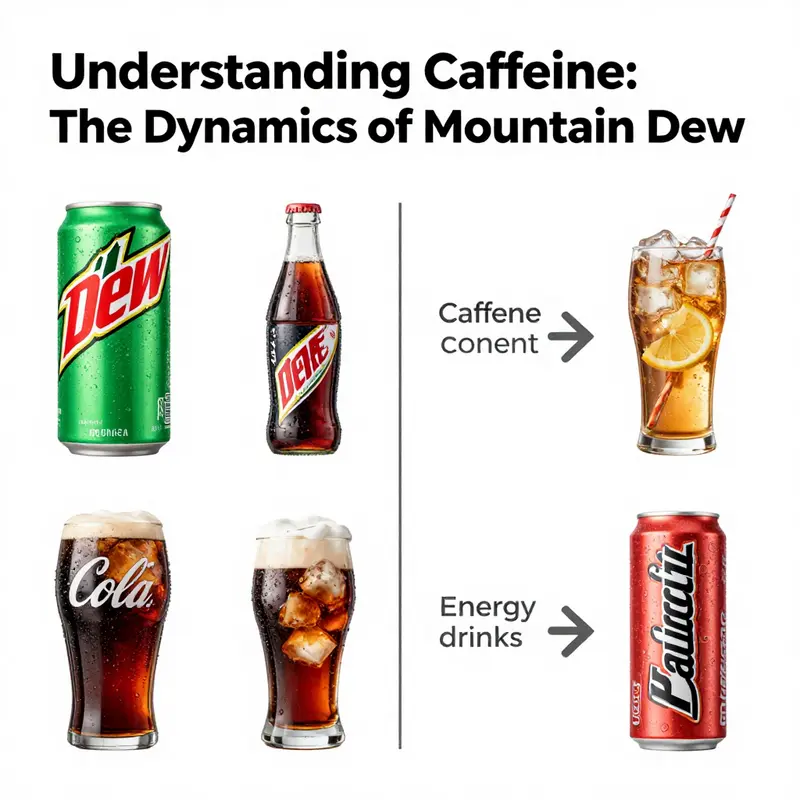
To ground the discussion, it’s helpful to situate Mountain Dew’s caffeine within the broader food and drink landscape. The amount in Mountain Dew sits higher than many standard sodas. For example, Coca‑Cola Classic typically contains about 34 milligrams of caffeine per 12-ounce serving, Pepsi-Cola around 38 mg, and Dr Pepper roughly 41 mg. Red Bull provides a different kind of comparison: about 80 mg in an 8.4-ounce can. That means Mountain Dew offers a comparatively high caffeine punch for a soft drink, but not the extreme concentration you’ll find in most energy drinks by volume. That said, Mountain Dew’s caffeine level is still significant enough to influence how a consumer perceives energy during a sitting or a session. For people who want to cultivate consistent daily routines, the relative share of caffeine from Mountain Dew can contribute to a predictable energy profile across mid-day and into the afternoon.
From a physiological standpoint, caffeine works by modulating signaling in the brain. It blocks adenosine receptors, a chemical messenger that promotes sleepiness, and, in doing so, heightens alertness and short-term concentration. The result is a sensation of sharper focus and reduced perceived fatigue, which is particularly appealing during long streaming sessions, late-night study marathons, or additional-day productivity pushes. It’s worth noting that caffeine’s effects are subject to personal sensitivity, tolerance built over time, and the context in which it’s consumed. A helpful rule of thumb is to pace intake and to consider how caffeine interacts with sugar and other stimulants, because the combination can encourage a more complex energy pattern. In practical terms, a Mountain Dew can provide a cognitive lift that supports sustained attention for a stretch of time, but it is not a panacea. The subjective experience—how jittery or alert you feel, how quickly you crash, and how sleep is subsequently affected—depends on your unique physiology, your recent caffeine history, and the timing of consumption.
When we widen the lens to demographic and behavioral patterns, Mountain Dew’s caffeine profile emerges as a factor that marketers and researchers often tie to particular lifestyles. The beverage’s branding has long aligned with high-energy domains—extreme sports, competitive gaming, and edgy campaigns that resonate with younger adults and digital natives. The lift associated with its caffeine content is positioned as part of a broader energy ecosystem: a citrus-flavored cue that signals quick action, quick reaction, and a few moments of heightened performance. The practical takeaway for readers is that caffeine content interacts with consumer expectations. If you pick up Mountain Dew during a gaming session or a long work shift, you’re not just choosing a drink that tastes bright; you are selecting a tool that can alter your moment-to-moment energy profile. This interplay between flavor, caffeine, and social identity helps explain why this beverage has maintained a stable niche in a crowded market of caffeinated options.
A precise understanding of caffeine content also invites careful comparisons with other common beverages. While Mountain Dew holds a relatively high caffeine load for a soft drink, it is still a more moderate amount than many energy drinks on a per-volume basis. This distinction matters for people who monitor overall daily caffeine intake. For example, a single Mountain Dew can contribute a roughly quarter of the commonly suggested daily ceiling for caffeine for many adults, depending on individual tolerance and other sources consumed during the day. For frequent daytime consumers, cumulative exposure from multiple sources—coffee, tea, sodas, and some energy drinks—adds up, and the effect on sleep, mood, and concentration can be meaningful. Keeping a mental tally helps avoid unwanted outcomes such as jitteriness, restlessness, or a disrupted sleep cycle. The conversation about Mountain Dew’s caffeine is thus not just about a single can; it’s about how that can fits within a broader pattern of caffeine use, daily routines, and personal preference.
For readers who want a deeper dive into the specific caffeine content and how Mountain Dew compares to other drinks, there is a concise resource that lays out a clear comparison. The page emphasizes the caffeine content of Mountain Dew, situating it alongside popular colas and energy drinks to illustrate how the numbers stack up in everyday choices. This kind of comparison is useful for people who want to make informed decisions about when to reach for a can and how to manage timing around meals, workouts, or screens. It’s also a reminder that the idea of “more caffeine” is not a universal good; it depends on context, health considerations, and personal goals. A measured approach helps ensure caffeine supports rather than disrupts daily rhythm.
To connect these threads to practical choices, consider this: the caffeine content in Mountain Dew is meaningful, but it’s not the sole determinant of how you perform during extended tasks. The surrounding structure—your sleep schedule, meal timing, hydration, and even light exposure—plays a crucial role in how you experience the stimulant. In a typical day, relying on a single product for all-day energy is neither realistic nor advisable. Instead, individuals can use caffeine more effectively by aligning their intake with work or study demands, keeping a modest daily ceiling in mind, and allowing space for natural energy patterns to reassert themselves when caffeine wears off. If you’re curious about how Mountain Dew’s caffeine stacks up against another popular cola and want a succinct, evidence-informed comparison, the linked resource provides a clear snapshot and a helpful reference point as you navigate the caffeine landscape. This context helps readers place Mountain Dew within a larger caffeinated ecosystem and supports more deliberate consumption choices. caffeine content of Mountain Dew
For a wider health context on caffeine intake across the population, it’s helpful to reference national data that describe how caffeine contributes to daily consumption patterns. The Centers for Disease Control and Prevention’s NHANES-based data brief provides a broader view of caffeine intake among U.S. adults and children. This external context highlights that products like Mountain Dew form part of a mosaic of sources contributing to total caffeine exposure. Understanding this bigger picture can reassure readers that their personal experience with a can or two is part of a larger, real-world pattern rather than an isolated anomaly. External researchers and policymakers use this broader view to explore how caffeine affects sleep, behavior, and health outcomes across different ages, lifestyles, and health profiles. The data remind us to balance curiosity about product specifics with a public health perspective on responsible consumption, especially when caffeine intake intersects with sleep needs and daily functioning.
In sum, Mountain Dew’s caffeine content—consistently around 54 to 55 mg per 12-ounce can—occupies a distinctive niche in the caffeine landscape. It’s enough to be noticeable for most daily routines, particularly for those who seek a quick cognitive lift during demanding tasks, while not pushing into the higher-intensity territory of concentrated energy drinks. The way this energy integrates with taste, marketing, and user habits helps explain why the beverage maintains its allure for gamers, students, and professionals who want a familiar, citrus-forward boost without venturing into unfamiliar territory. As with any stimulant, mindful use remains the best practice: consider timing, total daily intake, and personal sensitivity, and pair caffeine with healthy routines that support sustained performance without compromising sleep or well-being. For readers who want a concise, factual comparison of Mountain Dew’s caffeine content with other popular drinks, the linked resource provides a clear snapshot and a helpful reference point as you navigate the caffeine landscape.
Final thoughts
In summary, understanding the caffeine content in Mountain Dew and its effects offers valuable insights for business owners. Whether targeting gamers needing a quick energy boost or consumers looking for refreshing beverages, savvy marketing can capitalize on caffeine’s benefits. By recognizing how Mountain Dew’s caffeine levels compare to other drinks, business owners can position their products effectively, ensuring they meet the needs of their audience while maximizing engagement and sales opportunities.