
Understanding the caffeine content of popular beverages like Dr Pepper is crucial for business owners looking to cater to consumer preferences and health considerations. With Dr Pepper containing 41 mg of caffeine per 12-ounce can, it’s important for businesses to not only know this figure but also how it compares to other popular sodas. In this exploration, we will delve into the caffeine levels found in Dr Pepper, their implications on health, and the necessary regulations and labeling guidelines. Additionally, we will discuss the increasing importance of consumer awareness regarding caffeine intake, ultimately equipping business owners with the knowledge they need to make informed decisions.
Caffeine in a Classic Cola: How Many Milligrams Really Sit in a 12-Ounce Sip?
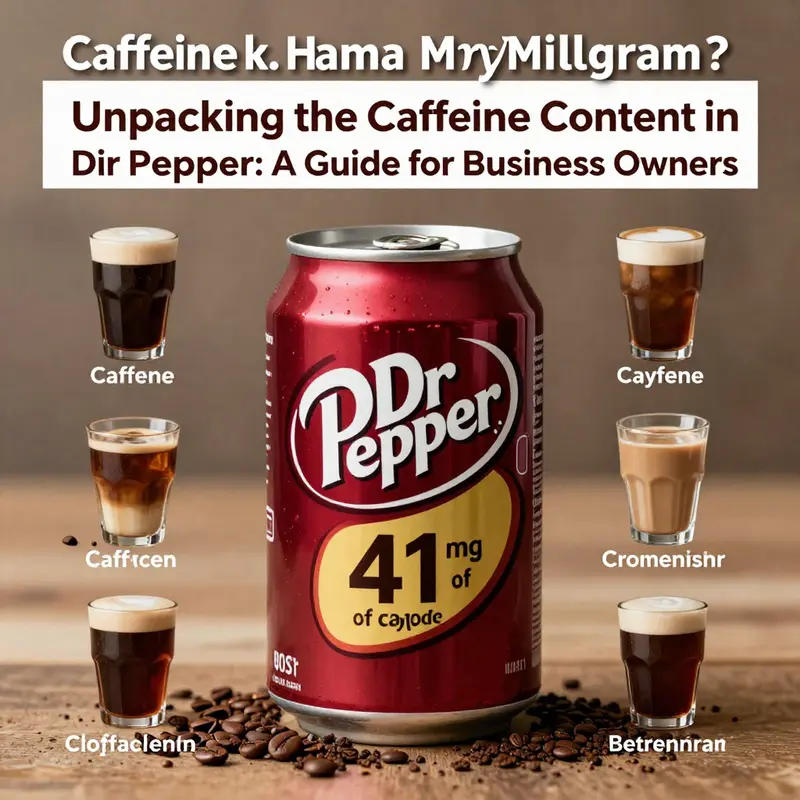
Caffeine is one of those ingredients that blends into the background of everyday life, yet it shapes the way we approach our daily routines. When a person pours a cold, fizzy, peppery-scented beverage and takes a moment to think about what’s in it, the caffeine content is often a hidden detail that influences how the drink feels in the body. In a 12-ounce can of the regular version, that amount is 41 milligrams. The figure is specific, not a guess, and it anchors the rest of the story about how much caffeine ends up in the cup, bottle, or can you reach for during a mid-afternoon break. It is a number that matters not because it shouts for attention, but because it acts as a quiet predictor of how your body might respond—how quickly you wake up, how long the alertness lasts, and how your schedule lines up with the rest of the day.
From a consumer perspective, the most practical takeaway is consistency. Across standard U.S. and Canadian formulations of both the regular and the zero-sugar versions, the caffeine content remains the same: 41 milligrams per 12-ounce serving. That consistency is meaningful because it allows people who track caffeine to make reliable plans. If you’re balancing caffeine with other daily sources—tea, coffee, energy drinks, or certain medications—the fixed 41 mg per regular can becomes a reference point you can count on, not a moving target. The fact that the zero-sugar version shares this same caffeine level reinforces the idea that the trade-off here is sweetness and calories, not a reduction in stimulant content. This detail matters for households that are careful about sugar intake but still want a familiar caffeine profile when they crave a familiar, fizzy experience.
To understand where this 41-milligram figure sits in the wider landscape, it helps to place it in context with the broader family of caffeinated beverages. If you line up a spectrum from mild to strong, many non-caffeinated soft drinks sit at the far left, while the classic cola family tends to cluster toward the middle. On that spectrum, 41 mg for a 12-ounce serving places this beverage above those without caffeine at all and below most coffees or energy drinks, which routinely push well beyond the 70–100 mg mark per serving. The comparison is not just about numbers; it’s about the everyday choices people make when planning meals, workouts, or study sessions. A single can provides less caffeine than a big morning coffee, yet enough to be noticeable for someone who is moderately sensitive to stimulants. The precise position on the spectrum can shift with serving size, but the baseline remains a stable reference point for planning.
The 12-ounce serving size is the standard measurement in North America and serves as the anchor for labeling and nutrition facts. In practice, many people reach for larger cans or bottles, or they drink multiple servings in a single sitting. The math is straightforward: if you double the serving to 24 ounces, you double the caffeine content to 82 milligrams. If you sip from a 16-ounce bottle, you’re still within a relatively common consumer pattern, and you’re looking at roughly 54 milligrams. These conversions emphasize an important point: the caffeine impact grows with volume, even when the beverage itself remains the same. Understanding this helps answer a frequent question: how does the caffeine in a single can compare to the caffeine in a cup of coffee? A standard eight-ounce cup of brewed coffee typically delivers around 95 milligrams, though that amount can swing widely based on the brew method and beans. A single energy drink can push the caffeine well over 100 milligrams. In this context, the classic cola beverage lands in a middle zone—a moderate amount that can add a subtle lift without the heavier punch associated with high-caffeine drinks.
A closer look at the numbers also invites a quick, practical calculation. The 41 milligrams come from a standard 12-ounce serving, which translates to about 3.4 milligrams per ounce. That small, incremental figure helps in planning: sipping a 6-ounce portion would yield about 20 milligrams, and a 16-ounce glass would give roughly 54 milligrams. Framing caffeine content in per-ounce terms makes it easier to estimate intake when portions aren’t exactly 12 ounces, which is a common real-world scenario when people pour into mugs or larger cups. It also highlights why the question of “how much caffeine is in this drink?” often becomes a matter of portion control as much as product composition. The numbers underpin everyday decisions, from how to pace a day of studying to how to time a workout session and even how to plan caffeine-free periods to minimize sleep disruption.
From a manufacturing standpoint, the uniformity of 41 milligrams per 12-ounce serving across the regular and zero-sugar variants underscores a design choice rooted in product consistency. The caffeine used in these beverages is measured to deliver a predictable stimulant effect while preserving the signature flavor profile that consumers expect. This stability matters not only for the consumer who wants a dependable experience but also for healthcare professionals and researchers who compare caffeine intake across populations. When the exact caffeine content is known and consistent, the data can be compiled into more accurate intake assessments and health recommendations. It’s this reliability, more than any dramatic deviation, that makes such figures useful in a crowded field of beverages with wildly different caffeine levels.
For readers who want to see the official numbers laid out by the manufacturer, the nutrition facts page provides detailed data for this class of beverage. If you’re curious about how the numbers are presented by the producer and how they compare to other products in the same category, you’ll find that page helpful for grounding your understanding in primary data. It’s not just about curiosity; it’s about equipping yourself with accurate information when you plan meals, caffeine-cutting goals, or shifts in energy management. The data serves as a reliable baseline for any discussion about caffeine in popular soft drinks and helps avoid assumptions that can lead to misinformed choices. When the question arises, “How many milligrams are in my can of this classic cola?” the answer remains straightforward: 41 milligrams per 12-ounce serving, with small, predictable variations only if the serving size changes.
To explore the broader picture of caffeine in similar products, consider the range of caffeine content across mainstream beverages. In many cases, standard colas hover in the 30-55 milligram range per serving, a window that reflects formulation choices, regulatory labeling practices, and consumer expectations. Within that band, the 41 milligrams per 12-ounce serving fits neatly as a middle-ground option. It’s sufficient to offer a perceptible lift without delivering the heavier kick that characterizes larger caffeine-laden drinks. This middle-ground positioning helps explain why many people reach for this type of beverage at times when they want a mild boost rather than a flood of stimulation. It also clarifies why this beverage remains a popular choice for those who want to maintain a steady level of alertness without too much fluctuation in energy levels.
For those tracking caffeine intake with a specific goal in mind—for health, sleep, or personal preference—these numbers become actionable. The fixed 41-milligram figure per 12 ounces serves as a reliable reference point when planning daily caffeine budgets. It’s enough to influence how you pace your day, especially if you are consuming other caffeine sources in the same 24-hour window. It’s also worth noting that individual responses to caffeine vary. Some people metabolize caffeine quickly and feel a quick surge of alertness with little disruption to sleep, while others experience jitters, a racing heart, or difficulty winding down. The 41 milligrams per serving is a meaningful dose for many, but it’s only one factor among many—genetics, tolerance, meal timing, and overall health all play their part in how caffeine feels at any given moment.
A practical tip emerges from this information: if you want to approximate caffeine intake from a day’s beverages, start by totaling the number of 12-ounce servings you consume and multiply by 41. If you drink a variety of caffeinated drinks, convert them to milligrams per serving using the standard references, then sum the totals. This approach yields a coherent picture of daily caffeine exposure and helps prevent unplanned overages. For those who enjoy both flavor and function, the key is balance: flavor provides the desire for a refreshing moment, while function—moderate caffeine intake—helps maintain energy without compromising sleep or comfort later in the day.
For readers seeking a deeper dive into related variations, this resource offers a focused look at caffeine content across different versions and formulations. It can serve as a companion to the data already discussed here, helping to illuminate how small changes in product design can shape the caffeine experience. how-much-caffeine-in-dr-pepper-zero provides a useful reference point for those curious about how zero-calorie variants compare in terms of stimulant content while preserving familiar taste and mouthfeel. While the exact figures can vary by market or batch, the central takeaway remains clear: the caffeine story in this category tends to be stable enough for practical planning, yet nuanced enough to reward a careful, informed approach to daily intake.
In sum, the caffeine footprint of this classic cola-style beverage is modest by contemporary standards, but not negligible. The 41 milligrams per 12-ounce serving sits in a range that many people find comfortable for daily consumption, offering a dependable lift without the pronounced intensity of stronger caffeinated drinks. This balance—between effect and calm, between taste and function—helps explain why the beverage has earned a steady place in many routines. For any reader who wants to anchor their caffeine knowledge in solid data while remaining mindful of personal health goals, this figure serves as a reliable reference point. Official nutrition data at the manufacturer’s site remains the definitive source for precise labeling and regional variations, reinforcing the idea that learning about caffeine is less about sensational numbers and more about building informed, consistent habits. External resources can provide additional context for those who wish to compare across products and markets. https://www.drpepper.com/nutrition-facts
Dr Pepper in Perspective: Positioning Its 41 mg Caffeine Against Everyday Sodas

Caffeine functions as a quiet co-pilot in many popular beverages, subtly shaping how a drink feels on the tongue and in the mind. When we pour a standard 12-ounce can of the regular formulation, the caffeine content registers at 41 milligrams. That number becomes a reference point for readers seeking a practical sense of what a casual, everyday soda can deliver in terms of a gentle lift. It also anchors a broader comparison that helps people gauge how much of a stimulant they’re consuming in the course of a day. In the larger landscape of shelf-stable beverages, 41 milligrams sits in a moderate zone—enough to be noticeable without demanding a strict caffeine management plan for most adults. This is particularly meaningful for those who keep a close eye on their intake for health reasons, personal preference, or daily routines that require steady focus rather than a sudden surge.
To place that 41 milligrams in clearer terms, a quick look at a few familiar competitors helps build a frame. Coca-Cola Classic typically clocks in around 34 milligrams per 12-ounce can, and Pepsi lands near 38 milligrams. On the other side of the spectrum, the diet varieties—Diet Coke and Diet Pepsi—tend to deliver about 46 milligrams per 12-ounce serving. Those figures reveal a spectrum where the regular, full-sugar Dr Pepper sits above Coca-Cola Classic and Pepsi but below the two prominent diet siblings. The broader implication is not simply a ranking by amount but a demonstration of how product formulation and branding shape the caffeine narrative in a crowded market. In numeric terms, Dr Pepper’s 41 milligrams is a value perched between mid-range and the lower end of what some dieters and macro trackers might classify as a mid-level caffeine content.
Still, the raw milligrams tell only part of the story. The caffeine content is just one facet of how a beverage feels when it meets the palate. In Dr Pepper’s case, the caffeine interacts with a distinctive blend of flavors that balances sweetness with a mild astringency. Unlike some sodas that lean toward a clean, nearly neutral finish, Dr Pepper offers a nuanced finish where the gentle bitterness of caffeine plays a role in the overall profile. That interaction helps explain why the drink remains a familiar choice for many who are seeking a modest energy lift without the intensity associated with caffeinated beverages marketed as energy drinks. In other words, caffeine here is not a loud presence; it is a complementary one that contributes to the drink’s signature character.
There is also a practical distinction to consider when thinking about Diet Dr Pepper versus the regular version. Diet formulations typically deliver the same or comparable caffeine levels as their sugar-sweetened counterparts, but the taste characteristics shift because of artificial sweeteners like aspartame and acesulfame potassium. In this context, caffeine remains a constant that helps preserve the drink’s boldness even when sugar is removed. The result is a sugar-free option that still carries a recognizable level of the stimulant, a dynamic that matters for consumers who want a flavor-forward experience without calories from sugar. For readers curious about the specific caffeine nuances in Diet Dr Pepper, a deeper dive into the topic is available through dedicated resources that examine how caffeine is retained or adjusted in diet formulations. Does Diet Dr Pepper Have Caffeine? This question continues to surface as people compare not only caffeine content but the overall taste expectations of diet versus regular products. You can explore this further through a detailed resource that discusses the caffeine content in Diet Dr Pepper.
Does Diet Dr Pepper Have Caffeine?
Beyond the numbers, the flavor chemistry behind Dr Pepper’s caffeine contribution deserves attention. Caffeine’s bitterness can subtly temper sweetness, helping to create a more complex mouthfeel. In a drink that fuses a kaleidoscope of fruit and spice notes, that bitterness can act as a balancing agent, preventing the sweetness from becoming cloying. In this sense, caffeine isn’t merely a stimulant; it’s a component of the drink’s overall sensory architecture. That nuance becomes particularly relevant when considering products marketed as sugar-free. Dr Pepper Zero, for example, preserves a bold flavor profile despite the absence of sugar, and caffeine interacts with artificial sweeteners to shape a perceived body and finish. The result is a product that offers a recognizable aroma and a steady, confident aftertaste that remains approachable for those who want a lively but not overpowering flavor experience.
Of course, any conversation about caffeine in a soft drink must also acknowledge health considerations. A single regular can—whether consumed alone or as part of a daily routine—provides a moderate lift but is not a caffeine-free option. For individuals who are pregnant, highly caffeine-sensitive, or managing certain health conditions, the intake from even a single can can be a relevant consideration. The Dr Pepper caffeine profile sits well below the thresholds associated with more intense caffeinated beverages like coffee or energy drinks. For many, that means a casual, daytime enjoyment rather than a pre-workout or all-night energy solution. The planning question then shifts from “how much caffeine is in this can?” to “how does this fit into my total daily caffeine budget, along with coffee, tea, chocolate, and other stimulants?” The answer will vary by person, but the core value remains: the drink provides a gentler lift than stronger caffeine sources while delivering a distinctive, lasting flavor experience.
Historically, Dr Pepper holds a place in American culture that extends beyond numbers. Its roots trace back to a medicinal fountain tradition in Waco, Texas, a history that helps explain why the drink carries a sense of antiquity and curiosity. The blend of fruit and spice essences that define the beverage’s profile has contributed to a lasting identity that remains distinct from the cola-centric lineup that dominates the shelves. This cultural background enriches the conversation about caffeine in the drink, because the caffeine content is not only a measure of energy but also a facet of a legacy product that has evolved over time to accommodate changing consumer tastes and regulatory environments. The result is a product that embodies both tradition and modern formulation, offering a familiar flavor with a measured, steady caffeine presence.
If readers want to locate the official specification directly from the manufacturer, the primary source remains the product’s own ingredients and nutrition information. This authority is a useful companion to the comparative context offered here, helping to reassure readers that the numbers discussed are grounded in published data rather than speculation. The official resource provides the baseline figures for caffeine content across standard U.S. and Canadian formulations of both regular and zero-sugar variants, reinforcing the sense that the 41-milligram figure is not a fluctuating claim but a stable reference point for everyday consumption. In the end, the value serves as a practical anchor for shoppers and casual readers who want to understand how a single can fits into a broader caffeine-aware routine.
For readers who want to broaden their sense of how this drink compares to other caffeine-containing beverages, the landscape is instructive. Coffee, by contrast, sits in a much higher range, often well above 100 milligrams per serving depending on the preparation method. Energy drinks frequently push the caffeine content higher still, sometimes with multiple servings or concentrated formulas. In that sense, the soda’s 41 milligrams represent a relatively modest stimulant, one that’s sufficient to offer a gentle lift without turning the experience into a full-on caffeine event. The social and cultural contexts—quick breaks at work, casual gatherings, or a moment of focus during a long afternoon—help explain why this level of caffeine remains appealing to a broad audience. It’s enough to feel the effect, but not so much that it eclipses the other sensory pleasures that come with the drink—its aroma, its familiar sweetness, and its distinctive, almost mischievous character that has kept it recognizable for decades.
From a consumer education standpoint, the chapter’s aim is not to encourage indiscriminate consumption but to illuminate how the caffeine content situates this beverage among its peers. The numbers, the flavor, and the heritage together form a narrative: a single can offers a measured lift within a larger ecosystem of sodas, each tuned to a different balance of taste, appetite, and alertness. In this space, Dr Pepper’s 41 milligrams is neither negligible nor excessive; it’s a fixed point that invites readers to weigh their daily intake with intention. And in weighing, they often find that this drink, with its signature blend and modest caffeine, remains a compelling choice for those who want a flavorful, non-energy-drink option that still provides a dependable afternoon lift.
External resources can provide a complementary, official perspective on caffeine content. For readers seeking the manufacturer’s explicit figures and formulation notes, consult the official caffeine content information provided by the company. This resource reinforces the numeric baseline discussed in this chapter and offers a direct point of reference for anyone compiling a personal caffeine ledger.
External resource: https://www.drpepper.com/ingredients
Overall, the chapter positions Dr Pepper not merely as a caffeine figure on a page but as a beverage with a distinctive identity shaped by its flavor architecture, its cultural roots, and a carefully balanced caffeine profile. The comparison to other sodas provides context, helping readers understand where 41 milligrams fits within everyday choices. It also underscores that, while not a substitute for coffee or energy drinks, this drink can offer a pleasant moment of lift that aligns with particular tastes and daily rhythms. In the end, caffeine content becomes part of a broader story about how modern beverages balance flavor, stimulation, and cultural meaning in a continually evolving market.
null
null
Reading the Label: Caffeine Levels, Consistency, and Consumer Confidence in Dr Pepper

Caffeine is a modest compass for many people navigating daily choices about energy, focus, and how they pace their days. When the discussion centers on a beloved, long-standing soft drink like Dr Pepper, the question often lands with practical clarity: how much caffeine is really in this 23-flavor blend, and does that amount change with where you buy it or which version you choose? The answers are more straightforward than they sometimes feel. In regular-formula Dr Pepper, a standard 12-ounce can delivers about 41 milligrams of caffeine. That figure, echoed across the major markets of the United States and Canada, forms a reliable baseline that helps consumers map their intake without wading through a forest of conflicting numbers. The consistency across formulations—whether you’re sipping the classic or its zero-sugar counterpart—translates into a simple promise: you can expect the same mild stimulant effect with each serving, regardless of where or when you purchase it. This stability is more than numerical neatness; it’s a practical feature that supports mindful consumption for people who track caffeine for health reasons, daily routines, or personal preferences.
From a consumer standpoint, that consistency matters because caffeine is not a one-size-fits-all substance. Some people respond to caffeine with heightened alertness and a sense of steadier energy, while others experience jitters or sleep disruptions even at modest doses. Consumers who monitor caffeine intake—whether due to medical considerations, pregnancy, sensitivity, or personal limits—need solid, reproducible figures they can rely on when planning meals, snacks, or beverages around the clock. The Dr Pepper caffeine figure sits in a comfortable middle ground. It’s not a coffee-level jolt, which generally sits around 95 milligrams per typical cup, and it’s more caffeinated than many non-caffeinated sodas or some lighter soft drinks. The contrast helps paint a practical picture: Dr Pepper offers a gentle lift rather than a pronounced kick. As a result, it tends to fit into routines that prize a mild, steady lift—enough to stay attentive in the midafternoon without becoming a practical stimulant that disrupts sleep later in the evening. This positioning aligns with the beverage’s purpose as a refreshing, flavorful option rather than a performance-enhancement product.
The precise measurement landscape for Dr Pepper’s caffeine is not a single snapshot but a small constellation of findings. The most commonly cited figure—the 41 milligrams per 12-ounce can—appears in the broad community of prepackaged beverage data and aligns with the widely accepted ranges seen in independent analyses. Some recent, more granular analyses have presented a slightly higher point, around 42 to 43 milligrams per 12-ounce serving, reflecting sampling variability and the subtle differences that can emerge across production lots or measurement methods. When researchers report this range, the practical takeaway for most consumers remains intact: a standard can of Dr Pepper sits in a moderate caffeine bracket. It’s high enough to be noticeable but not so high as to demand stringent scheduling around caffeine intake. The difference between 41 and 43 milligrams is not a dramatic shift in effect; it is a reminder of the small, real-world variations that accompany food and beverage testing. In this sense, the caffeine content of Dr Pepper becomes a case study in how precise numbers translate into everyday decisions without forcing constant recalculation.
One of the strongest themes in contemporary beverage discourse is transparency. Consumers want to know what they’re ingesting, especially when it comes to caffeine, which can interact with medications, sleep cycles, and overall daily rhythm. Dr Pepper’s approach to presenting caffeine data—consistent numbers across regular and zero-sugar variations and across major markets—supports an informed relationship with the product. The data do more than satisfy curiosity; they empower people to plan. A student balancing caffeine intake during study sessions, a parent managing sleep schedules, or a professional coordinating breaks with a caffeine boost can rely on a fixed, predictable value rather than a moving target. In a market where labels and nutritional disclosures are expanding in scope and detail, Dr Pepper’s established caffeine figures offer a touchstone of reliability. The effect is more than numerical accuracy; it’s about enabling responsible choices in a landscape crowded with options, including energy drinks and other caffeinated beverages that carry a broader spectrum of stimulant intensity.
Beyond the numbers, context matters. The familiar aftertaste and the distinctive blend of flavors in Dr Pepper create a sensory experience that can influence perceived energy or alertness in subtle ways. People who savor Dr Pepper for its refreshing quality may notice a gentle lift that accompanies the flavor profile, rather than a sharp, coffee-like surge. This aligns with the beverage’s historical positioning as a widely approachable option for casual refreshment. The stability of caffeine across regular and zero-sugar versions reinforces that experience: the flavor and mouthfeel remain consistent, while the caffeine contribution stays within a predictable range. For many, that predictability is a relief—an everyday constant that supports daily routines without forcing constant recalibration of one’s caffeine budget.
The broader landscape of caffeine in prepackaged beverages further informs how Dr Pepper fits into daily life. Industry analyses, including systematic examinations of national-brand carbonated beverages, provide a useful frame for understanding where Dr Pepper sits on the caffeine spectrum. The results tend to show a spread of caffeine content across similar products, with Dr Pepper consistently occupying a middle ground that is neither exceptionally high nor unusually low. This middle ground is precisely what makes Dr Pepper an appealing option for many consumers who want a modest, reliable lift alongside the enjoyment of a familiar, well-loved flavor. It also underscores the importance of looking at caffeine in context: the total daily intake from multiple sources—including coffee, tea, cola, and other caffeinated products—shapes the overall experience more than any single beverage alone.
For readers who want to explore variations beyond the standard formulation, the existence of zero-sugar versions and other Dr Pepper variants invites careful consideration. Zero-sugar formulations maintain the same general caffeine framework while eliminating calories from sugar, offering a comparable stimulant profile for those who monitor caloric intake. This parallel helps consumers treat Dr Pepper as a versatile part of their beverage repertoire, one that can be selected to align with dietary goals without sacrificing the familiar taste and the predictable caffeine level that accompanies a 12-ounce serving. If curiosity leads you to compare across variants, a direct, practical path is to examine the zero-sugar option’s caffeine content in comparison to the regular variant. In fact, you can explore a focused look at caffeine in Dr Pepper Zero through a dedicated resource that assesses how much caffeine this variant delivers in a similar serving size. how much caffeine in Dr Pepper Zero.
The pacing of caffeine within Dr Pepper and its peers suggests a thoughtful balance in modern beverage design. The brand aims to offer a refreshing, satisfying drink that also respects the realities of caffeine consumption. The numbers—whether they are firmly pegged at 41 milligrams or described as 42.6 milligrams in certain analyses—do not exist in a vacuum. They are part of a practical framework that helps consumers plan their day. A midafternoon pick-me-up becomes a reliable option when one can reasonably assume that a single can will contribute a modest, predictable amount of caffeine. That stability makes it easier to calibrate intake across multiple occasions—at lunch, during a study session, or in the hours leading up to a meeting. It is a subtle but meaningful aspect of consumer confidence: you can reach for a familiar, flavorful drink without fear of tipping a daily caffeine budget into uncertain territory.
For readers who wish to locate the foundations of these numbers in primary research, the broader literature includes comprehensive analyses of caffeine content across prepackaged beverages. One foundational study, authored by KH Chou and colleagues, provides a detailed snapshot of caffeine levels in national-brand carbonated beverages and refrigerates the variability seen across products and brands. This study helps explain why figures like 41 milligrams per can are robust generalizations, while acknowledging that sampling and measurement nuances can yield small deviations in reported values. Engaging with this research gives context to the consumer experience: it reassures that the common figures are not arbitrary, but the product of systematic testing and ongoing monitoring of beverage composition. The link to this study is available for readers who want to dive deeper into the data and methodology that underlie widely cited caffeine figures for Dr Pepper and its peers. External resource: KH Chou et al., “Caffeine Content of Prepackaged National-Brand and Private-Label Carbonated Beverages.” https://www.ncbi.nlm.nih.gov/pmc/articles/PMC2048287/
The practical takeaway for the everyday reader is clear. Caffeine in Dr Pepper sits in a moderate range, enabling a subtle, reliable lift without presenting a heavy stimulant burden. The product’s labeling and the consistency of caffeine across major markets build a foundation of trust, supporting consumers who rely on predictable information for health, sleep planning, and daily routines. The conversation about caffeine in Dr Pepper extends beyond numbers; it touches on taste, experience, and the responsibility companies bear to furnish accurate, actionable data. As demand for clear labeling grows, Dr Pepper’s approach to communicating caffeine content—along with the broader series of measurements that accompany it—serves as a model for consumer transparency. The journey from flavor curiosity to practical budgeting is often shorter than people expect, especially when the numbers line up with lived experience: a familiar drink, a familiar lift, and a familiar sense of reliable intake. And for those who want to compare caffeinated beverages across their day, the path is simple—start with a known baseline, consider the cumulative effect, and use the information as a practical tool rather than a source of anxiety.
In sum, consumer awareness about caffeine levels in Dr Pepper rests on a blend of stable data, transparent labeling, and the lived experience of those who drink the beverage regularly. Whether one is planning a study session, coordinating a family’s caffeine budget, or simply choosing a refreshing drink to accompany a meal, the established figure of roughly 41 to 42 milligrams per 12-ounce can provides a reliable benchmark. It situates Dr Pepper in the broader caffeine landscape as a moderate, approachable option—one that delivers a gentle lift while inviting informed choices. This balance, between flavor, function, and transparency, reinforces the trust that keeps Dr Pepper a familiar presence in many refrigerators, lunchrooms, and break rooms alike. The numbers matter not as rigid rules but as practical guidance that supports a balanced consumption pattern aligned with individual needs and daily rhythms.
Clear Doses, Clear Labels: How Dr Pepper’s Caffeine Is Regulated and Reported Across Borders
The caffeine tale of a well-known cola-like beverage unfolds not on the can alone, but in the rules that surround how the caffeine content is communicated to consumers. It is a story that threads together numbers, warnings, and the quiet questions many listeners ask when they scan a Nutrition Facts panel or a regulatory notice: How much caffeine is really in this drink, and what does that mean for me, my family, or someone who is watching their intake? For a product like Dr Pepper, the numbers are surprisingly specific, yet the regulatory landscape around those numbers is layered and varies by jurisdiction. What the research materials reveal is a pattern you can trace across markets: caffeine exists in a measurable, declared form, and the way it is disclosed is guided by clearly defined rules that can differ, sometimes subtly, from one side of the Atlantic to the other.
From the outset, it is important to anchor the discussion in the core figure most consumers encounter: a 12-ounce (355 mL) can of regular Dr Pepper contains about 41 to 42 milligrams of caffeine. This precise range is echoed across standard U.S. and Canadian formulations of both the regular and the zero-sugar versions. Yet even as this amount sits on the label as a simple fact, the implications ripple outward. It means that Dr Pepper sits well below the caffeine levels found in most energy drinks, which commonly carry hundreds of milligrams per serving, but it also means that the product contributes to daily caffeine totals that some people track carefully for health or personal preference reasons. The result is a practical tension: consumers want accuracy, manufacturers want consistency, and regulators want clear communication. The factual baseline—41–42 mg per can—serves as the anchor around which the regulatory discussion orbits.
In many consumer contexts, what matters most is not merely the absolute milligram count, but how that count is presented. The European Union, with its detailed labeling regime, treats caffeine content as part of a broader framework that emphasizes consumer awareness and informed choice. Regulation (EU) 1169/2011 requires that products containing caffeine provide clear and comprehensive ingredient and nutrition information on packaging. More specifically, if a beverage contains more than 150 milligrams of caffeine per liter (or, equivalently, more than 15 mg per 100 milliliters), a high-caffeine warning label would be triggered. The Dr Pepper family, with caffeine around 11 to 12 mg per 100 milliliters in some descriptions and about 3.5 mg per 100 milliliters in other summaries, historically does not cross that threshold. According to the detailed results, Dr Pepper’s caffeine per 100 ml is described as roughly 3.5 mg in one section, yielding a per-liter figure that sits below the EU’s warning threshold. The takeaway for EU consumers is straightforward: even though caffeine is listed, the product typically does not require a high-caffeine warning on the label in many EU markets, because the caffeine content falls under the regulatory trigger most of the time. Yet the emphasis remains on transparency—the packaging must clearly state both the caffeine content and all other ingredients, so shoppers can make informed decisions.
Beyond the EU, the United States presents a different regulatory silhouette. The U.S. Food and Drug Administration does not impose a formal caffeine limit on soft drinks like Dr Pepper. Labeling requirements are less about warning brackets and more about disclosure: if caffeine is present, it must appear on the Nutrition Facts panel. There is no mandatory warning for moderate caffeine levels, even for brands that people may consider to be on the lower end of the caffeine spectrum. The practical effect is that U.S. consumers rely on the Nutrition Facts to gauge caffeine content, rather than a regulatory label alert. That said, public health guidance from various health organizations continues to urge moderation, especially for children, adolescents, and pregnant individuals. In other words, the label communicates a fact, while health guidance frames context for safe consumption.
The chapter’s results also highlight the subtle but meaningful differences across product lines within the same brand family. For example, Diet Dr Pepper is noted to contain slightly more caffeine than its regular counterpart, at around 44.1 mg per 12-ounce can. This contrast underscores a broader point: even within a single brand, formulation choices can influence caffeine content, and those choices matter for anyone who tracks caffeine intake or needs to manage a restricted diet. When a reader encounters this specific figure, it becomes the kind of data that can prompt re-evaluation of daily totals and perhaps a rebalancing of beverages chosen throughout the day. If curiosity extends to the question of other products in the same portfolio, the landscape shows a spectrum rather than a single fixed value, reminding consumers that reading the label is always a prudent habit.
The regulatory conversation, however, does not exist in a vacuum. It interacts with consumer expectations, scientific assessments of safety, and the practicalities of manufacturing. In Europe, the labeling regime is embedded in a larger system of consumer information, food safety, and risk communication. Even when a product does not trigger a high-caffeine warning, the requirement to provide precise caffeine content and full ingredients on the packaging ensures that the consumer can make choices aligned with their health status, caffeine sensitivity, or dietary restrictions. In the United States, the absence of a hard limit on caffeine in soft drinks means fewer formal regulatory guardrails, but the public health community fills some gaps with guidance about daily limits, emphasizing that cumulative intake matters and that beverages with caffeine contribute to that total. The cross-border contrast—detailed labeling and threshold-based warnings in the EU versus disclosure-driven labeling in the U.S.—illuminates how policy can shape consumer understanding without changing the fundamental chemistry of the beverage.
What about rules that might seem ancillary but actually influence how a product is perceived on a shelf? The EU’s emphasis on legibility and accuracy supports a reliable read of caffeine content, but it also creates a framework where manufacturers must maintain consistent labeling across markets if the product is marketed in multiple regions. The U.S. system, with its looser caps on caffeine, may appear less prescriptive, yet labeling requirements still demand that caffeine be declared when present. This difference matters in a global context because consumers increasingly compare products across borders, sometimes using EU labeling as a benchmark for transparency. In practice, that means the consumer who travels or shops cross-border often benefits from consistent labeling standards, even if the regulatory threshold differs. The broader implication is clear: caffeine content becomes not just a chemical fact but a communication practice, one that blends science, policy, and consumer education.
Within this regulatory landscape, readers may wonder how to interpret the numbers in real life. If a can of Dr Pepper contains approximately 41–42 mg of caffeine, the practical daily calculus begins with one can and extends to how caffeine accumulates across the day. While 41–42 mg is modest relative to many energy drinks, it still contributes to the total caffeine load a person may be carrying at any given time. For someone monitoring sensitivity, a child, or a pregnant individual, even this seemingly modest amount becomes significant when combined with other sources such as tea, coffee, chocolate, and certain medications. The labeling, the thresholds, and the guidance form a three-layered approach: know the exact amount from the Nutrition Facts, understand the regulatory framing that governs how that amount is presented, and apply personal health considerations in daily choices.
For readers who want to explore the topic further, a deeper dive into caffeine content across beverage options can be informative. A practical path is to examine related products and formats—such as the caffeine profile of comparable colas or zero-sugar variants—which often reveal how formulation tweaks influence caffeine amounts. A useful resource in this regard is a detailed breakdown of caffeine content in Dr Pepper Zero, which provides a parallel lens on how sugar-free variants may align or diverge from standard versions. See How much caffeine in Dr Pepper Zero for a concise comparison that complements the chapter’s focus on regulatory labeling and consumer information. This internal link offers a concrete, side-by-side reference to one well-documented variant, reinforcing the idea that caffeine content, even within the same brand family, can vary and should be considered in total daily intake calculations.
It is also helpful to anchor these discussions with a credible external reference that frames caffeine as a public-health consideration rather than merely a label detail. The European Food Safety Authority (EFSA) provides a comprehensive view of caffeine intake guidance and regulatory considerations across Europe, including labeling expectations under Regulation (EU) 1169/2011. Their work situates the caffeine discussion within a broader health context and supports consumers who are trying to balance enjoyment with safety. For readers seeking an authoritative external perspective, consider reviewing EFSA’s focus on caffeine and health at the following link: EFSA Caffeine and Health.
In sum, the Dr Pepper caffeine story is not just about a single metric on a can. It is about how a beverage’s caffeine content is measured, disclosed, and interpreted by people who rely on labeling to manage their health and daily routines. When a consumer reads a can and sees the stated 41–42 mg per 12-ounce serving, they are engaging with a regulated disclosure that varies by jurisdiction but remains anchored in the same core idea: caffeine presence is real, and its communication to the public comes with rules designed to empower informed choice. The EU’s threshold-based warning system and the U.S. disclosure approach together illustrate how different regulatory philosophies shape consumer perception without eliminating the underlying chemistry. For some, that chemistry is a quiet, daily consideration; for others, it is a cue to plan the day with caffeine carefully in mind. In every case, awareness—fueled by transparent labeling and reasoned guidance—helps turn a familiar beverage into a consciously chosen part of a broader, balanced diet.
Final thoughts
The precise caffeine content in Dr Pepper—41 mg per 12-ounce can—holds significant relevance for business owners in the beverage industry. As consumer awareness grows regarding health implications related to caffeine intake, understanding how Dr Pepper compares to other sodas, alongside existing regulations, is essential. This knowledge not only helps in making informed product decisions but also enhances transparency with customers. As a business owner, being adept in these details can bolster your brand’s credibility and customer loyalty, ensuring your offerings align with consumer preferences and health considerations.