
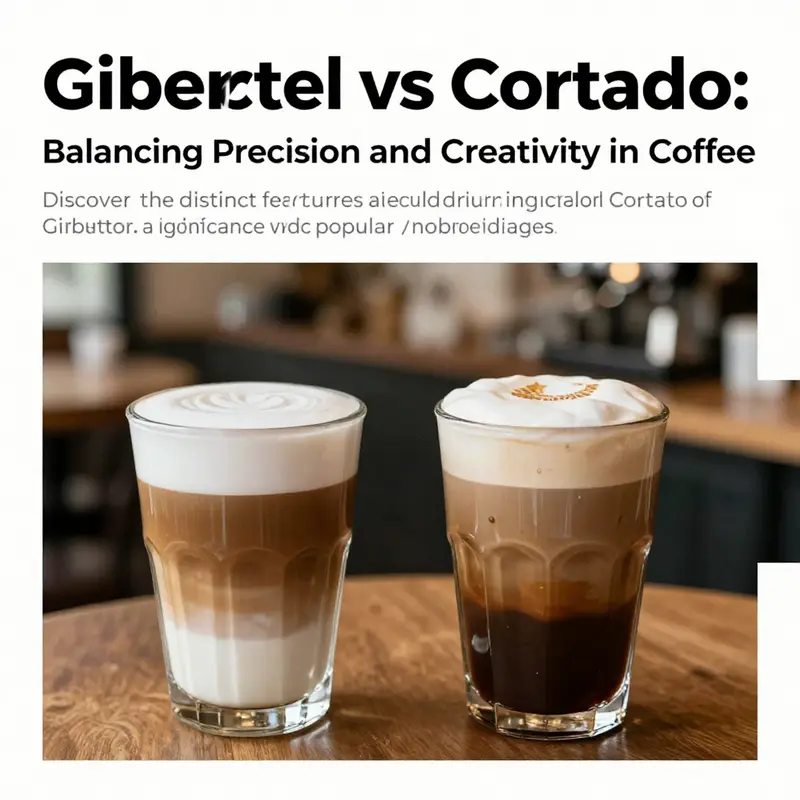
In the intricate world of coffee, the distinction between Gibraltar and Cortado often leads to considerable confusion among coffee enthusiasts and business owners alike. Both drinks, derived from the Spanish verb ‘cortar’ meaning ‘to cut’ or ‘to moderate’, aim to harmonize the boldness of espresso with the creaminess of milk. This article delves into the key differences between Gibraltar and Cortado, exploring their definitions and standards, taste experiences, cultural origins, market trends, and how they cater to diverse consumer preferences. Each chapter will unfold unique insights that can assist coffee shop owners in making informed decisions about their offerings, enhancing their customer experience, and capitalizing on market trends.
Between Form and Flavor: Defining Gibraltar and Cortado, and the Quiet Rules That Shape Their Taste
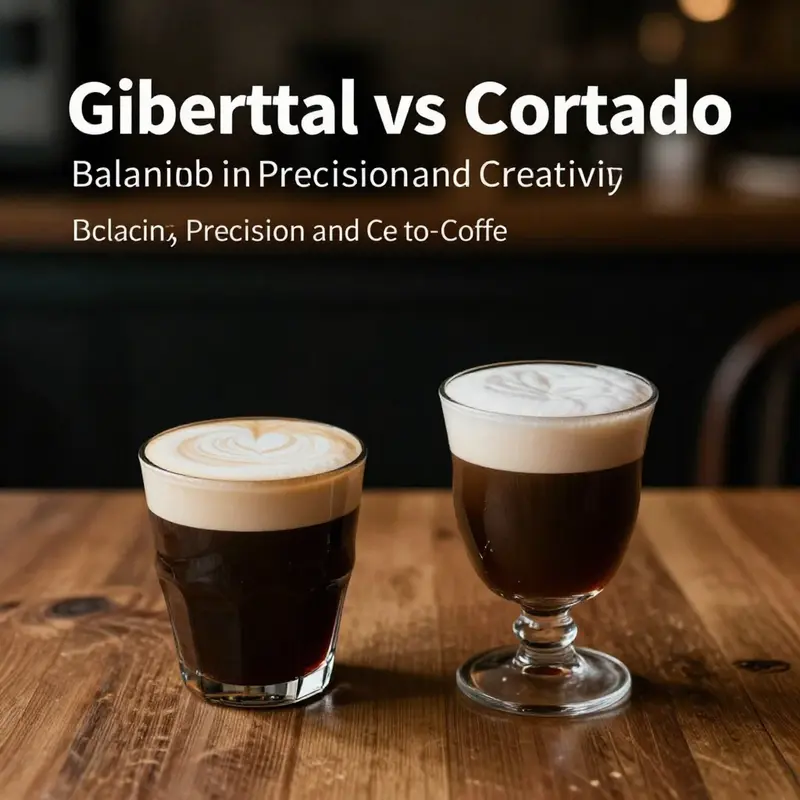
In the world of coffee, Gibraltar and Cortado are kin. They share a Spanish root—the verb cortar, meaning to cut or to neutralize—an idea that grounds both drinks in the same impulse: use a small amount of milk to soften the intensity of espresso while preserving its character. Yet they live in different mythologies. Cortado is a concept, a method of balance. Gibraltar is a product, a defined experience that travels with a particular cup and a ritual around it. The journey from one to the other is not a straight line of improvement or addiction to a stricter recipe; it is a conversation about proportion, vessel, and the social act of drinking coffee as a shared moment rather than a solitary routine. If you listen closely to how baristas describe each drink, you hear distinct hills in the landscape of caffeinated culture: Cortado speaks to flexibility, to a barista’s judgment about milk temperature and the gentleness of the pour; Gibraltar speaks to standardization, to a ceremonial vessel that anchors a precise 1:1 alliance between espresso and steamed milk. The practical upshot is simple on the surface, complex in perception: the two drinks can feel almost identical in taste when you sip them slowly, yet they never taste the same twice if the cup, the milk temperature, or the pour is off. This is not a matter of secret recipes so much as a matter of how a small change in the ritual shapes the overall experience. A single ounce more milk, a milk that’s too cold or too foamy, or a cup that cools a bit too fast, and the balance tilts. The effect is subtle, yet the memory of the first sip—how the sweetness arrives, how the espresso edge softens—depends on those tiny variables, the ones that a cup can relentlessly transmit or erase. And so, while the two drinks may share the same fundamental building blocks—concentrated coffee and milk—their identities are linked to how they are presented and perceived as much as to how they are mixed. For a compact, side-by-side overview that captures these shared roots and divergent habits, see Gibraltar coffee vs Cortado.
Cortado, in its most widely accepted sense, is defined by equal parts espresso and hot milk. The term itself points to an act of cutting or softening: the milk slices into the espresso to temper its bite without erasing its clarity. In practice, many baristas aim for a 1:1 ratio, often using a double shot of espresso with an equal measure of warmed milk. The milk is typically not frothed into a dense foam; it remains smooth and integrated, designed to preserve the espresso’s aromatics while delivering a silkier mouthfeel. Because Cortado’s milk is not heavily aerated, the drink tends to present a robust, nearly espresso-forward profile with a cushion of creaminess that coats the palate without muting the coffee’s acidity and caramel tones. The cup, while not rigidly prescribed, is commonly small—4 to 6 ounces in many places—chosen to keep the drink hot and to emphasize the shift from the intense espresso to the softened finish. This setup makes Cortado a flexible standard across many cultures. When a café uses a different cup, the drink remains Cortado in name, but the sensation in the mouth can shift—warmer or cooler, more or less intense, depending on how the cup holds heat and how the milk integrates with the crema.
Gibraltar, by contrast, anchors its identity in a more rigid, almost ritualized frame. It also adheres to a 1:1 proportion, but its defining features are the exact ingredients and the vessel. The standard Gibraltar drink is a double shot of espresso matched with an equal amount of steamed milk, poured into a small, stout glass with a handle—a glass specifically known as the Gibraltar cup. The emphasis here is not merely on balance but on an almost ceremonial presentation. The Gibraltar cup is part of the drink’s meaning: order becomes experience, and the glass acts as a cue that signals a precise construction. In practice, that means whoever hands you a Gibraltar is signaling that you are about to encounter a highly consistent flavor profile, one that tastes and feels very similar from cup to cup, café to café. The ritual surrounding the drink—how the milk is heated, how the espresso is timed, how the pour meets the crema—becomes a crucial part of the effect. The definition of Gibraltar as a “cup-driven” drink helps it travel as a cultural artifact within the American specialty coffee landscape, where the idea of a hidden or elevated order accentuates the drink’s allure as a mark of expertise. The uniformity provided by the cup and the strict 1:1 ratio keeps the emphasis on the balance of intensity and silkiness while offering a predictable, almost forensic, tasting experience for those who seek that precise equilibrium.
Both drinks share a central aim: to tame the punch of espresso with a measured amount of milk. The overlap is tangible: both preserve the espresso’s character, both present a low milk-to-coffee ratio, and both demand a careful pour that avoids turning the drink into a latte or a cappuccino. What separates them is the language of the experience. Cortado is a flexible concept, an invitation to judges of taste to adjust warmth, milk temperature, and even the shape of the vessel to coax the best expression from the coffee. Gibraltar is a product with a fixed script. The cup is a symbol, and the script is a standard: a 1:1 mix that aims at predictability and a certain kind of ritualistic satisfaction. In this sense, the debate between Gibraltar and Cortado is less about which is better than the other and more about what you want from a coffee moment—the quick, intensity-preserving balance of Cortado, or the measured ritual and steady comfort of a Gibraltar.
In practice, this distinction matters to the way coffee cultures teach new drinkers and the way cafés design their menus. A teachable moment often arrives when a customer asks for a “Cortado” but is handed a small glass with a foamy top or an unheated milk pour, or conversely when a Gibraltar is served in a generic cup without the Gibraltar glass—these moments reveal how fluid the boundary can be in everyday use. The contrast also offers a window into how coffee culture negotiates standardization with regional taste. Cortado spreads through European cafés as a straightforward, approachable balance that can adapt to different milk temperatures and even to iced variants, if the barista chooses to experiment with cold milk in a careful, controlled way. Gibraltar, meanwhile, travels with a promise of precision, a nod to the American specialty scene’s love of a defined ritual and a recognizable vessel that signals expertise to the initiated.
For readers who want to translate these ideas into practice, the choice between Cortado and Gibraltar often comes down to what you value most in the moment. If you want the strongest possible coffee memory with just enough cream to soften the edges, Cortado may be your pick, and you can guide the barista to 1:1 with warm, non-frothed milk. If you crave a repeatable, almost ceremonial experience that arrives in a glass and speaks in a quiet, confident key, ask for Gibraltar and insist on the dedicated cup—this is not merely a drink, but a small performance that aligns taste with a ritualized form. Either path emphasizes balance, but the route you choose reveals something about how you want to engage with the coffee you sip. The shared thread is the idea of cutting through the espresso’s sharpness with a measured amount of milk, a practice that, across borders and baristas, keeps the essence of both drinks alive: a moment of clarity tempered by a touch of warmth.
For those interested in exploring further, the online landscape offers a nuanced dialogue on how these drinks are defined and performed in different cafés. A concise, side-by-side overview can be found in Gibraltar coffee vs Cortado. To deepen the broader context, you can consult external references that map the evolution of the Cortado in the coffee canon, such as Cortado on Wikipedia.
null
null
杯中的边界:Gibraltar 与 Cortado 的起源、演变与全球流行
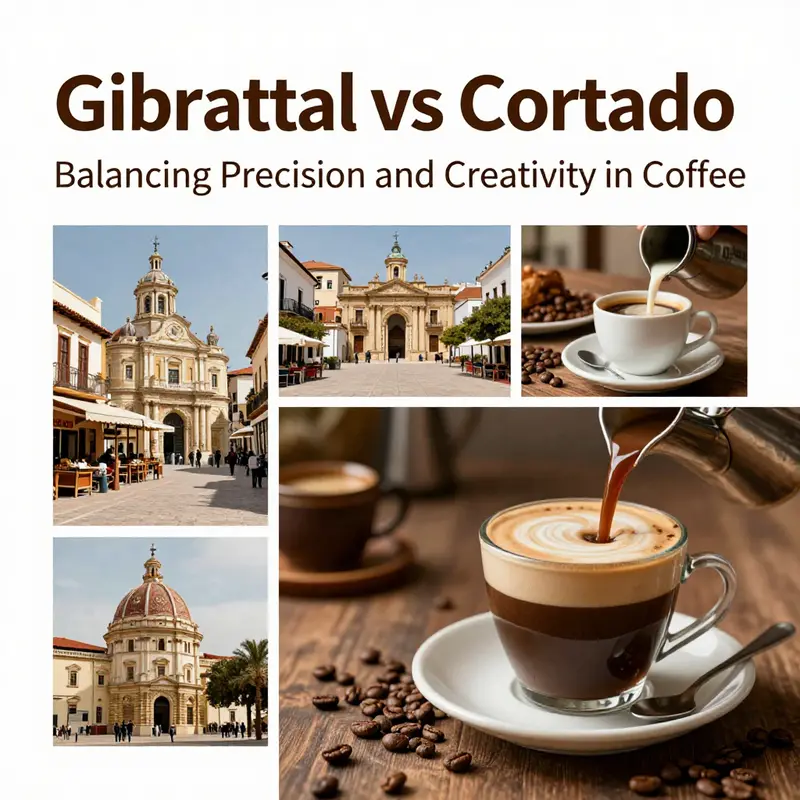
在咖啡的语言里,Gibraltar 与 Cortado 并非对立的极端,而是同源而不同的表达。它们都承载着“cortar”的意志——用少量牛奶来中和或削减浓缩咖啡的强烈风味,使口感更易被辨识为平衡与清晰。两者的民间传说与历史谱系并不完全相同,但它们在全球咖啡场景中的互动,恰好揭示了地域、器皿与时尚潮流如何共同塑造一个易于记忆的口感叙事。理解这两种风格,既是认识咖啡历史脉络的一种方式,也是理解当代咖啡馆如何通过命名、杯具与配方来引导消费者感知的一种方式。
Cortado 这个词来自西班牙语的 cortar,意指切断、削减。它最早在西班牙的巴斯克地区成形,作为一种简洁而直接的喝法——用热牛奶温和、短促地削掉浓缩咖啡的尖锐感。传统的 Cortado 常以浓缩咖啡与等量或接近等量的热牛奶搭配,奶泡极薄,甚至几乎没有奶泡。这种比例的稳定性曾是北、南欧咖啡馆对这杯饮品的坚守,随着欧洲的城市咖啡文化扩展,Cortado 的名字也逐渐跨过国界,成为那些寻求“把味道切开的浓缩风味”的爱好者的常见选项。第三波咖啡浪潮的到来,让 Cortado 在全球范围内获得了新的诠释空间:它不再只是巴斯克的传统,而是在不同文化中被重新解读,形成了从1:1到1:2甚至1:3的多元比例,但核心理念始终围绕着“保留浓缩本身的识别度,同时让奶香带来平衡和顺滑”。
在不同的区域,Cortado 的定义并非一成不变。咖啡师们会以微妙的差异调控奶的温度、质地和奶泡的薄厚,以实现不同的口感与风味轮廓。有人偏爱更浓的苦感与更薄的奶香,另一些则希望奶香更稳、风味更圆润。正因为如此,Cortado 常被视为一个“概念”,它把浓缩的强烈与牛奶的柔软放在同一条味觉线上,让人既能感受到咖啡的主体,也能察觉到奶的润滑。
Gibraltar 这个名称并非指某一种独立的饮品,而是一种特殊的杯具和随之而来的命名习惯。它源自北美某些城市咖啡馆在2000年代初期推广的一种约300毫升左右的杯子,用来盛放接近1:1 的浓缩与打发牛奶混合物。这一杯型的形状与直布罗陀地理名称相呼应,因此被赋予“Gibraltar”的称呼。关键就在于器皿本身——杯身的高度、直径、口径以及它让牛奶表面与浓缩的 crema 脱离微妙接触的方式,显著影响口感的进入点。市场上,当杯子成为符号,顾客对同一配方的理解便更容易趋同:在许多店里,Gibraltar 与 Cortado 的比例几乎在1:1附近,口感通常呈现出浓郁的咖啡基底和顺滑的奶感之间的稳定平衡。
然而,Gibraltar 并非一个独立的饮品品类,它更像是一种对 Cortado 的“包装与标签”——既体现了容量与呈现,也承载着消费文化的期待。由于杯子的统一性,一些场景中“Gibraltar”成为对1:1 或接近1:1 的 Cortado 的代称。这种现象揭示了全球化语境中,名称往往随器皿、品牌策略和地理记忆共同演化。对于初尝者而言,点一杯被称作 Gibraltar 的饮品,往往冲击着对“1:1 配比”的直观预期。对于资深爱好者,习惯了 Cortado 的灵活性与口感层次的人,会在同一杯饮品中感受到奶香与苦感的微妙夹击——有时更偏向顺滑、有时又保留了相当的咖啡强度。
这两种表达背后的文化脉络,其实映照出咖啡从地域传统走向全球化表达的复杂路径。Cortado 的起源强调本地化的调控与口感的平衡,是对“少量热牛奶中和浓缩”的忠实演绎。Gibraltar 的故事则提醒人们,全球化不仅是口味的传播,也是器皿、命名和品牌叙事的扩散。杯具作为记忆载体,使得同一配方在不同城市获得不同的文化标签。随着城市咖啡馆的汇集,越来越多的店面希望以明确的杯具与名称传达“专注与精致”的体验,这使得 Cortado 的灵活性与 Gibraltar 的固定性共同在同一张菜单上并存。对于想要快速理解差异的读者,可以参考这篇对比文章 Gibraltar Coffee vs Cortado。
从感官角度看,二者的差异更多来自于奶泡的处理和牛奶的温度控制,而非单纯的比例数字。Cortado 的丝滑感往往来自奶泡的极薄层次和对温度的精确把控,牛奶的甜度与香气被巧妙抑制在适宜的范围内,使浓缩的核感成为焦点。Gibraltar 的稳定性则来自更稳定的奶泡与一杯接近等量的配比带来的“结构感”——口中先遇到的是浓缩的甜脆、随后是奶的光滑圆润,层次分明且收尾干净。不同的器皿高度与杯壁的热传导,也会改变口腔中奶泡与液体的分布,从而影响香气的释放与余韵的长短。
在未来,咖啡馆的菜单或许继续把 Cortado 与 Gibraltar 作为两种互相关联但又彼此独立的选择来呈现。更多的店家会在保留经典比例的基础上,探索微调的奶温、奶泡厚度和最后的杯身呈现,让同一种比例在不同的技法下呈现截然不同的口感。与此同时,一些区域的咖啡文化也可能推动对“Gibraltar”这一术语的再造——不仅作为杯具的标识,也可能成为一个更广义的风味记号,指向“近似1:1 的浓缩与牛奶”的经验感。对于热爱细节的人来说,这意味着体验的多样性与可重复性之间需要更细致的沟通。
从更广的视角看,Gibraltar 与 Cortado 的对话,正是全球化与本土化相互作用的微观缩影。它们提醒我们,理解一杯咖啡,不能只看配方的数字,更要关注杯具、文化记忆和社群互动给这杯饮品带来的“可感知性”。当你走进下一家店,看到标注为 Cortado 的菜单时,不妨想象那杯饮品背后也许有一个围绕器皿、历史与风格的故事,只是在不同地点以不同语言被讲述。并且,当某些店以 Gibraltar 的名义提供近似1:1 的混合物时,你也在体验一个关于全球饮品如何被当地市场重新命名、重新包装的即时案例。
外部参考资源:Blue Bottle Coffee 的 The Gibraltar 页面:https://www.bluebottlecoffee.com/about/gibraltar
null
null
Measured Traditions, Flexible Palates: Navigating Standardization and Personal Taste in Gibraltar and Cortado
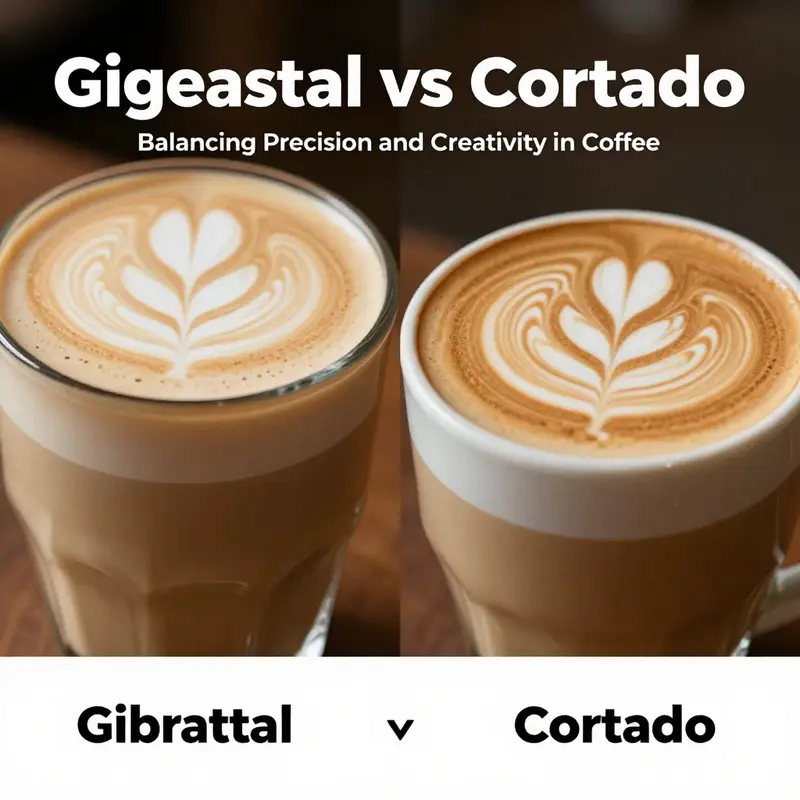
In the small but intense world of espresso, two drinks stand shoulder to shoulder—the Gibraltar and the Cortado—yet they resemble each other as siblings who have grown into different personalities. Both aim to soften the bite of a concentrated shot with milk, but they do so through different philosophies. One drink embodies a ritual of standardization that travels well across cafés and continents; the other embodies a spirit of personal adjustment that invites every cup to become a fleeting portrait of a moment’s mood. To understand how these two beverages meet the needs of a diverse audience is to glimpse a larger story about craft, space, and how a cup can feel both universal and intimate at the same time. The conversation between Gibraltar and Cortado thus becomes a conversation about taste itself: what we want when we seek a refined coffee moment, and how the café world translates that desire into practice.
In the Gibraltar, standardization wears a distinctive, almost ceremonial hat. The drink is defined not merely by its ratio, but by its vessel and its exact pairing: a double-espresso backbone matched with a precisely steamed microfoam milk, presented in a small, stout glass that encourages a particular type of sip and a particular progression of flavors. The proportions, the crema’s lingering sweetness, the way the milk settles with the coffee’s edge—all of these elements are part of a scripted experience. This is a drink designed for consistency. When a customer crosses from one shop to another, the expectation is not just a similar taste; it is the same moment, repeated with the same satisfaction. The Gibraltar’s architecture—the glassware, the timing of the steam, the balance that must feel neither aggressively coffee-forward nor languidly milky—serves a purpose beyond taste. It creates a reliable, recognizable ritual that can anchor a café’s identity and offer a dependable touchstone for guests who crave predictability in an ever-shifting culinary landscape. The design goes deeper than flavor; it shapes perception, speed, and social ritual, enabling a café to promise quality that feels universal yet distinctly its own.
The Cortado, by contrast, reads like a map of personal preference. Rooted in the Spanish word cortar, meaning “to cut,” this drink is less a fixed recipe and more a concept of balance. In many shops, Cortado is an invitation to experiment with ratio and texture. Some baristas lean toward a bolder coffee presence, dialing in slightly more espresso to ensure a pronounced signal even as the milk rounds the edges. Others tilt toward a silkier texture, layering in more microfoam to coax a velvet mouthfeel that blankets the palate. The result is a spectrum: from lean, espresso-forward Cortados where the milk acts as a precise counterpoint, to creamier, milk-forward versions where the drink reads like a velvety espresso latte with a lighter touch on the foam. This variability is not a flaw but a feature, a design that allows a drink to mirror the mood of the moment or the preferences of the person in front of the bar. The Cortado becomes a living recipe—a framework that supports individuality rather than a fixed standard. In a café world that often prizes speed and uniformity, Cortado’s flexibility can feel like a breath of personal air, a reminder that taste is not a single truth but a negotiation among coffee beans, milk, technique, and the human palate.
This tension—between standardized consistency and flexible expression—maps neatly onto broader trends in the modern coffee scene. Standardized formats grant efficiency, reliability, and a shared vocabulary. They support a café’s ability to train staff, manage equipment, and deliver an experience that feels stable across locations and times. A Gibraltar, with its distinctive glass and fixed proportions, is a microcosm of that approach. It says to the customer: the quality you’re seeking is reproducible, and the moment you order this drink you are entering a familiar, almost ceremonial space where the variables are minimized in service of a predictable outcome. Yet even within this framework, there is room for nuance—the temperature, the microfoam’s satin texture, and the crema’s sweetness can all be fine-tuned to preserve the drink’s character within the standard.
Cortado, conversely, speaks to a café culture that prizes exploration. It is a banner for the barista’s discretion and the customer’s agency. The same espresso shot can yield a different sensory image depending on the barista’s technique, the milk’s temperature, and the microfoam’s lift. In practice, this means that two Cortados from the same café on different days or at different times can offer distinct experiences, each honest to the moment’s ingredients and the craft applied. For patrons who relish conversation with their coffee—speaking to aroma, mouthfeel, and the way a drink evolves from first sip to the lingering finish—Cortado provides a laboratory of preference. It becomes an edible prompt to articulate what is most satisfying at that exact hour: the sharpness of coffee, the creaminess of milk, the way foam embraces the tongue, and how long the aftertaste lingers. The flexibility here is not merely about taste; it is about hospitality as an act of listening—an invitation for the guest to steer their own sensory journey.
For the consumer, these divergent paths offer a rich repertoire. Some people want the reassurance of a standard, a dependable hand to guide their coffee moment no matter where they are in the world. In busy morning rituals, the Gibraltar’s consistency can feel like a trusted friend delivering the same, comforting cue: a familiar sweetness, a predictable closure. Others seek a conversation with the barista, a chance to adjust, to calibrate, to respond to how the day has been unfolding. The Cortado becomes a canvas on which to sketch a personal preference, a daily negotiation with taste that makes each cup feel exclusive, even when the method is familiar. These two approaches are not mutually exclusive antagonists; they coexist in the best cafés, where the staff can offer both a dependable anchor and an invitation to bespoke texture and balance. The result is a café culture that respects ritual while cultivating curiosity, recognizing that different moments and different people require different ways of entering a cup.
From a craft perspective, the Gibraltar’s rigidity is a discipline: it requires precise measurement, controlled passivity in the microfoam, and a vessel that communicates a brand’s standard. The barista’s role is to preserve a particular sensory trajectory—the way the milk integrates with the espresso, how the crema carries with it the bar’s signature sweetness, how the drink feels on the tongue as it cools slightly. The Cortado, by contrast, puts a heavier burden on dialogue and technique. The barista must tune milk texture, temperature, and pour with the aim of achieving harmony with the chosen espresso profile. That could involve adjusting the microfoam’s elasticity, the pour rate, or even nudging the crema’s stability through precise steam pressure management. In both cases, equipment quality and technique matter enormously, but the emphasis shifts. Gibraltar emphasizes repeatability; Cortado emphasizes responsive artistry. The café, in this sense, is a laboratory where tradition and innovation meet, producing a spectrum of experiences that can satisfy a broad audience without diluting the craft’s integrity.
As this dialogue continues to unfold across markets and generations, it helps to acknowledge the cultural currents that sustain both paths. The standardized Gibraltar offers a sense of reliability in a global coffee ecosystem that values uniform quality and efficient service. The Cortado’s flexibility resonates with communities that celebrate individuality, local taste, and the joy of improvisation. The practical outcome for cafés is not a choice between one or the other, but a balanced portfolio: a menu that protects a core, repeatable experience while also inviting customers to co-create their own sensory story. In this balancing act, the drink becomes more than a beverage; it becomes a signal about how a café hears its guests and how it guides them through a moment of aroma, heat, and texture.
For readers who want to explore these ideas further in a broader context, the Gibraltar vs Cortado conversation is often linked to the broader discourse on beverage standardization versus customization in specialty coffee. See the discussions on Gibraltar’s presentation and the flexible Cortado approach in dedicated comparisons like the one found at Gibraltar coffee vs cortado. Gibraltar coffee vs cortado. The conversation gains depth when readers follow the thread into how different cafés translate these principles into their daily routines, training, and shop design. In the end, the choice between a Gibraltar and a Cortado is less about which is superior and more about which frame of taste and ritual a given moment desires. It is, in essence, a reminder that coffee culture thrives where standardization and individuality meet, allowing a drink to carry both a shared language and a personal signature.
External reference for context on standardized presentation: https://www.bluebottle.com/products/gibraltar
Final thoughts
Understanding the differences between Gibraltar and Cortado is crucial for coffee shop owners aiming to provide distinctive and memorable coffee experiences. While both drinks share a common goal of balancing espresso’s richness with milk’s creaminess, their preparation standards and taste experiences diverge significantly. By recognizing these nuances and responding to consumer preferences, business owners can effectively enhance their offerings, cater to a wider audience, and ultimately drive sales. As coffee culture continues to evolve, staying informed about these trends is essential for maintaining a competitive edge in the market.