

Understanding caffeine content in beverages is essential for business owners, especially those in hospitality and food service. Mountain Dew, a popular carbonated drink, offers unique caffeine levels that can affect customer choices and health considerations. This article delves into the specifics of caffeine in Mountain Dew, compares it with similar beverages, examines health implications, and highlights consumer preferences. Through these insights, business owners can better understand their customers’ needs and inform their product offerings effectively.
The Caffeine Equation in a 12-Ounce Mountain Dew: A Practical Quantitative Portrait
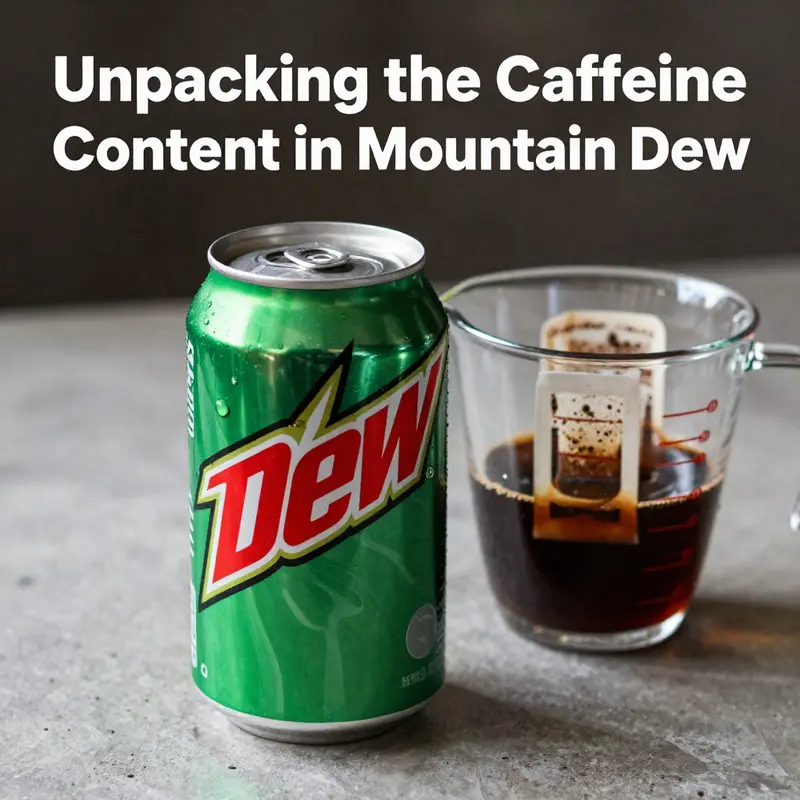
When people ask how much caffeine is in a cup of Mountain Dew, they often mean a standard serving rather than a random splash from a larger bottle. A widely accepted reference is a 12-ounce can or bottle, which is about 355 milliliters. In that standard serving, regular Mountain Dew delivers about 55 milligrams of caffeine. That figure holds across most typical servings, with small variations by product line or serving size. The caffeine level has a density that makes it easy to compare with other beverages, and a straightforward way to translate it into a real-world cup is to convert to a per-volume basis. If you convert to per-100 milliliters, the caffeine density is about 15.5 milligrams. This density helps when you think about pouring Mountain Dew into different cup sizes. A quick calculation shows that the density remains constant, so larger volumes contain more caffeine in total, while the concentration stays the same.
The 12-ounce serving of Mountain Dew sits higher on the caffeine scale than many other popular soft drinks. That elevated level is a defining feature of the brand, contributing to its reputation for a noticeable energy lift alongside the recognizable citrus flavor. In practice, this means a standard can or bottle delivers enough caffeine to produce a perceptible alertness boost for some people, especially when consumed in combination with other sources of caffeine during the day. It’s a reminder that caffeine content is not merely a label number; it translates into real, measurable effects on wakefulness, focus, and even heart rate for sensitive individuals.
Caffeine content can vary slightly across product lines and flavors, but the original Mountain Dew formula remains the benchmark. Variants such as Code Red or Live Wire may show small fluctuations, yet the typical benchmark remains around 54–55 milligrams per 12-ounce serving. Those small differences matter mainly for people tracking caffeine intake precisely, rather than for casual consumers seeking a general sense of lift. The numbers you see on the label are the result of official product labeling and the nutritional information provided by the manufacturer. They reflect standardized measurements used for all standard servings, which makes cross-comparisons easier for consumers who want to plan caffeine intake across beverages.
To place these figures in a broader context, it helps to compare Mountain Dew’s caffeine content with coffee. An average 8-ounce cup of coffee typically contains about 80–100 milligrams of caffeine. That means a single cup of coffee usually delivers more caffeine than a 12-ounce Mountain Dew, but Mountain Dew still offers a substantial lift in a smaller, carbonated package. For people who prefer a certain flavor profile or who want a caffeinated option without the stronger bitter notes of coffee, Mountain Dew presents a different kind of stimulant experience. It’s a reminder that caffeine alters not only the body’s energy level but also the sensory and experiential side of a beverage.
From a practical standpoint, the per-serving approach matters. The 55 milligrams per 12-ounce serving is a fixed amount associated with that serving size. If you decide to drink a larger cup, the caffeine dose increases with the amount you consume, assuming you maintain the same beverage density. For example, a 16-ounce cup holds about 473 milliliters. Using the 15.5 milligrams per 100 milliliters density, that cup would contain roughly 73 milligrams of caffeine. A 20-ounce bottle, about 591 milliliters, would translate to roughly 92 milligrams in total. These arithmetic exercises are helpful for anyone tracking caffeine intake across several beverages. They also illustrate why beverage labeling focuses on serving size rather than total caffeine for the whole bottle, since opening and drinking quantities vary so much in real life.
The reliability of these figures rests on the integrity of labeling and the consistency of the manufacturing process. Mountain Dew’s caffeine content is documented on the product’s official labeling and is corroborated by nutritional information provided by the manufacturer. The density figures align with the standard serving size that most people purchase and consume. While some products within the Mountain Dew family may be marketed with different caffeine amounts due to reformulations or regional variations, the contemporary core formula provides a dependable baseline for the majority of consumer experiences. This reliability is useful for people who plan caffeine intake around workouts, study sessions, or evenings when staying awake is a concern.
For readers who want a quick anchor, think of Mountain Dew as a mid-to-high caffeine option among soft drinks. It sits above many sodas in caffeine content yet remains below the levels often found in energy drinks and certain specialty coffees. It is, in effect, a caffeine-forward soda that blends flavor and lift without venturing into the higher-density caffeine territory associated with some energy beverages. That positioning matters for people who are sensitive to caffeine or who are balancing caffeine with other dietary sources, medications, or sleep considerations.
To aid cross-comparison with other beverages, the per-100-milliliter figure is especially useful. If you’re choosing between a 100 ml portion or a larger glass, the density measure helps predict the caffeine you’ll ingest. For a quick mental model, imagine a standard 355 ml can containing about 55 mg of caffeine. You can scale up or down with simple arithmetic using the 15.5 mg per 100 ml density. The math stays straightforward, and the underlying principle remains constant: the caffeine dose in a given cup is a product of the serving size and the beverage’s caffeine concentration.
For readers who want to see the same data presented from a consumer-facing source, the official labeling and nutritional information carried by the manufacturer is the best reference point. In addition, the brand’s own site provides detailed product information, including labeling standards and the formulation for the core Mountain Dew line. For those who enjoy exploring side-by-side comparisons, there is a broader discussion that situates Mountain Dew’s caffeine alongside other popular soft drinks and caffeinated beverages. That broader context can illuminate how a single 12-ounce serving stacks up against other familiar options. A concise reference you can consult is the caffeine content of Mountain Dew, which offers a focused look at the numbers and the practical implications for daily intake.
If you want a quick link to a dedicated discussion of Mountain Dew’s caffeine content, you can explore the detailed breakdown here: caffeine content of Mountain Dew. This resource presents the same density concept in a consumer-friendly format and can help readers bridge the gap between the raw numbers and real-world sipping.
All told, the takeaway is straightforward. A standard 12-ounce serving of regular Mountain Dew delivers about 55 milligrams of caffeine, roughly 15.5 milligrams per 100 milliliters. The figures align with the label and the manufacturer’s nutritional information. They also translate cleanly into practical math when you consider different cup sizes. As with any caffeine source, the actual experience will depend on individual sensitivity, timing, and the total daily caffeine load from all inputs. The numbers provide a solid, transparent baseline for making informed beverage choices in daily life.
External resource: For the most current labeling and product details, consult the official Mountain Dew site. Mountain Dew Official Website
Jolts in Context: Reading Caffeine Levels Across Beverages and What It Means for a Citrus-Forward Favorite
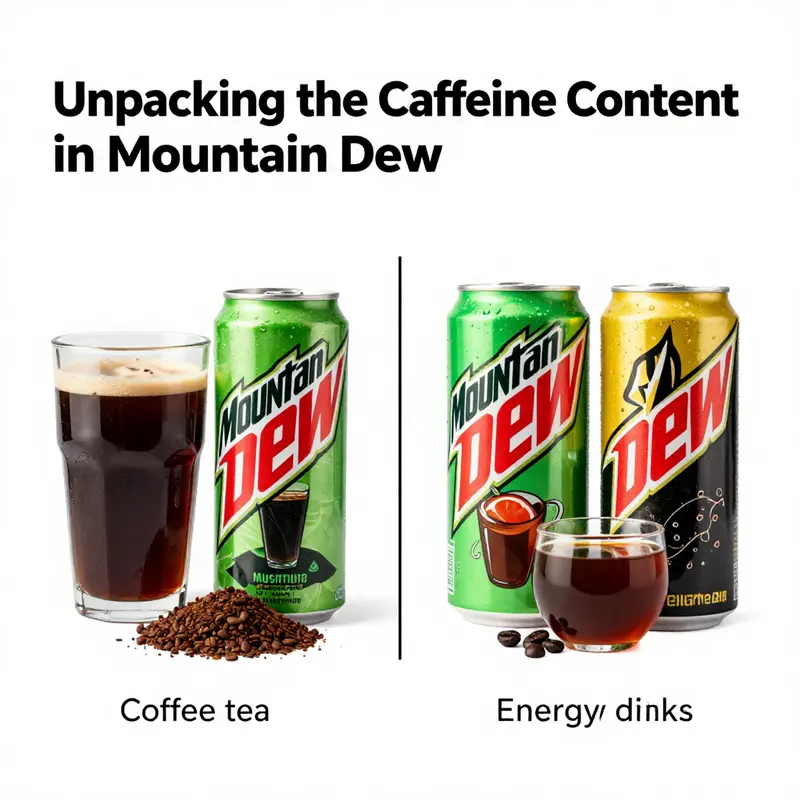
Caffeine sits at the center of how we think about energy, focus, and a quick lift. Yet the numbers behind that lift vary as surely as the drinks themselves vary in flavor and form. In this chapter, we step into a comparative landscape that places a high-caffeine, citrus-tinged soft drink on the same stage as coffee, tea, and even energy beverages. The aim is not merely to score points on which drink delivers the most caffeine per serving, but to paint a fuller picture of how much caffeine you’re likely getting in a typical cup, how that amount fits into your daily rhythm, and why a single number—whether 54, 55, or another figure—can be both helpful and misleading when you’re planning a day of study, work, or movement.\n\nAcross the beverage spectrum, caffeine content is as much a product of serving size as of formulation. A standard 12-ounce serving represents a common baseline for carbonated soft drinks and many ready-to-drink beverages. In that format, the high-caffeine citrus option under discussion lands in a mid-range pocket, higher than the average sodas many people reach for on a casual basis, yet lower than products engineered as dedicated stimulants. The typical range people encounter for this category is around 54–55 milligrams per 12-ounce can. This places it well above the caffeine content of two widely consumed cola brands and in the vicinity of what many recognize as a steady, lasting uplift—without crossing into the top tier of energy-focused drinks. The numbers, of course, are shaped by the precise formulation on each product line and the serving size the manufacturer promotes. A 12-ounce can is a convenient, conventional reference point, but the same beverages can appear in larger bottles or smaller cans, and those size shifts translate directly into more or less caffeine per serving. It’s a simple reminder that the mg listed on a label—or, in some cases, the mg reported by official data—reflects not a universal standard, but a defined serving that may differ when you pour, sip, and refuel.\n\nTo place these figures in a broader context, compare them with other familiar beverages. An 8-ounce cup of brewed coffee commonly carries about 95–100 milligrams of caffeine. The idea that a “cup” is a universal unit dissolves when you translate it to different drinks, because 8 ounces of one beverage can deliver nearly double the caffeine of 8 ounces of another. Tea, particularly green tea, sits around 25–30 milligrams per 8-ounce cup, a gentler bump that can be enough to lift alertness without a sharp spike. Even sports and energy-oriented drinks, which are designed to provide quick bursts of stimulation, can hover in a lower range per serving than the boldest caffeinated beverages, or stack caffeine via multiple servings in a day. In that sense, the beverage described here behaves more like a mid-range energy option than a conventional, caffeine-light soda, but it does not claim the same concentrated punch as a purpose-built energy drink. This nuance matters for readers who juggle multiple sources of caffeine across a day and want to calibrate what crosses their lips with how they sleep, exercise, or focus during long sessions.\n\nThe chapter’s data highlight a key practical takeaway: caffeine content is not a single, fixed, universal number. It depends on the product’s formula, the exact batch, and the serving size you choose. For the citrus-forward, high-energy profile discussed here, most standard 12-ounce servings track around 54–55 milligrams. That slight variance—one milligram here or there—usually falls within the margin of label rounding or minor production differences, but the overall message remains clear: this category sits above the caffeine content of many standard sodas, yet well shy of the most extreme energy-dedicated options. The precise numbers for individual stock lines are not identical, but the pattern is predictable enough to inform daily planning. In real-world terms, you can expect a 12-ounce container of this type to deliver roughly half the caffeine of a strong coffee and somewhat more than a typical green tea infusion, depending on how your body processes caffeine and how much you drink in a day.\n\nOne of the most useful ways to think about caffeine is to treat it as a daily total rather than a single serving’s value. When readers consider a caffeine day, they often forget to account for the sum of all sources: coffee rounds from morning, tea or cocoa in the afternoon, and a potential afternoon pick-me-up from a caffeinated soda or energy drink. In that light, the 54–55 milligrams per 12-ounce serving can be a meaningful piece of the daily puzzle, especially if a person’s routine includes multiple caffeinated items. A morning coffee with 95–100 milligrams, a midday green tea with 25–30 milligrams, and an afternoon 12-ounce citrus-based cola-style drink at 54–55 milligrams yield a total that climbs toward 180–230 milligrams or more. Of course, the exact tally depends on size choices, servings, and the day’s activities, but the arithmetic is straightforward: accumulate caffeine across beverages, and the cup you’re sipping contributes to the whole.\n\nThe chapter’s comparative frame also invites a careful look at the lineup’s internal consistency. Within the citrus-forward family, the bulk of products tends to hover around that same 54–55 milligram mark per 12-ounce serving, offering a reliable cue for readers who want a predictable uplift without a heavy dose. This modest consistency is important for people who rely on caffeine to sustain attention during long tasks, whether they are studying late into the night, coding through a shift, or training for an endurance event. It signals that the caffeinated beverage in question can provide a reliable boost without a dramatic spike that might disrupt sleep later in the day. Yet even this predictable uplift requires mindfulness: caffeine tolerance, sensitivity, and metabolism vary widely, and the same 12-ounce serving might feel stronger to one person and milder to another. Those differences underline a core principle of caffeine literacy: knowing not just how much caffeine is in a serving, but how that caffeine interacts with your personal rhythm, your prior day’s intake, and the demands of the next 24 hours.\n\nThe broader landscape of caffeinated drinks, when viewed side by side with this high-energy citrus option, helps clarify why people often reach for a beverage in moments of needed focus or momentum. A cup of coffee remains the benchmark for a robust caffeine jolt, often exceeding 90 milligrams per 8-ounce cup. Tea offers a gentler arc, while some energy drinks aim for a concentrated lift that can push well beyond the 100-milligram mark per serving. A sports drink or flavored beverage with low caffeine content, by contrast, acts more as a hydration and taste option than a primary stimulant. Thus, the decision to choose this citrus-forward option boils down to context: the time of day, the availability of alternatives, and the user’s objective—achieve crisp alertness, maintain steady focus, or simply enjoy a familiar, enjoyable flavor while staying mindful of total intake.\n\nAddressing a reader’s practical curiosity, we should acknowledge that manufacturing realities matter. The laboratory figures behind a label can glide around a couple of milligrams depending on batch-to-batch variation, formulation tweaks, and even the exact measurement of a serving. In the world of consumer nutrition data, that variability is normal. It’s part of why nutrition labels often present a range or a standard value with a note about potential differences. For readers who track caffeine meticulously, the best course is to rely on the most recent official data from the manufacturer or to check the serving size and caffeine listing on the package as it’s consumed. The broader picture remains robust: for a standard 12-ounce serving, this category offers a reliable, mid-range caffeine level that can meaningfully contribute to daytime alertness without delivering an aggressive caffeine overload.\n\nUnderstanding these numbers also involves recognizing the urban myths that circulate around caffeine. Some conversations imply that certain beverages deliver a “cleaner” or more “smoother” lift; others warn about jitteriness or a caffeine crash. The science, in plain terms, points to a straightforward mechanism: caffeine blocks adenosine receptors in the brain, reducing the feeling of tiredness and increasing neural activity. The subjective experience—how awake you feel, how evenly your attention is spread, how your heart rate responds—depends on your physiology, mood, hydration status, and what else you’ve eaten or drunk that day. The exact mg per serving matters, but it’s only one piece of the larger mosaic of how caffeine affects you as an individual.\n\nFor readers planning a day with multiple caffeine moments, a simple guideline can be helpful: keep a running tally of caffeine intake from all sources and align it with personal sleep goals and daily routines. If you anticipate an evening event that requires rest, you might choose a lower-caffeine option in the late afternoon or switch to a non-caffeinated beverage. If, conversely, you have a late-night study session ahead, you might keep your total for the day within a comfortable range—an approach that respects both performance needs and recovery. The numbers provide a scaffolding for that planning rather than a rigid prescription. They enable you to calibrate your choices in advance, so you aren’t guessing the impact of each cup or can and you aren’t surprised by a caffeine surplus or deficit when you reach for your next drink.\n\nIn the spirit of practical literacy, the data presented here also underscore the importance of labeling and education. The label’s caffeine figure should guide decision-making, but it’s not the entire cast. The context—how much you drink, how often you drink it, and how your body responds—shapes the outcome as much as the milligrams do. As readers seek clarity, they may turn to official sources for precise numbers, especially when comparing different product lines or preparing for tests, exams, or training cycles. The goal is not to demonize caffeine or to declare a universal threshold, but to cultivate a nuanced understanding of how much caffeine you’re consuming, how it fits into your day, and how to balance alertness with rest.\n\nTo reinforce the practical takeaway, consider this synthesis: a typical 12-ounce serving of a high-energy, citrus-forward beverage sits in the 54–55 milligram range. That level is higher than many standard sodas, lower than the most concentrated energy drinks, and roughly half the caffeine content found in a strong cup of coffee—per 8-ounce measure. When you scale up to larger servings, the math follows accordingly. Carrying this knowledge into daily choices makes it easier to predict how a given drink will influence your focus, mood, and energy balance over the hours ahead. And when you combine beverages across the day, you’ll want to account for both the caffeine and the timing: early-day caffeine can sharpen focus for tasks that demand concentration, while late-day caffeine can hinder sleep, even if you haven’t noticed the effect in the moment.\n\nFor readers seeking a deeper dive into the caffeine profile of this category, a linked resource provides a detailed breakdown and updates on formulation changes across product lines. how-much-caffeine-in-a-mountain-dew offers a focused look at caffeine content, serving sizes, and how to interpret label data in light of real-world consumption. While that guide focuses on one brand’s offerings, the principles apply broadly: read the label, know your serving size, and monitor your total daily intake across all sources. In addition to label literacy, remember that hydration, nutrition, and rest are essential companions to caffeine decisions. A cup that delivers alertness is most effective when supported by steady water intake, balanced meals, and the chance to unwind as needed. The body benefits from both the spark of caffeine and the recovery that follows, particularly on days that demand sustained mental effort or physical performance.\n\nWhen readers reach for any caffeinated beverage, they should keep a few practical checks in mind. First, confirm the serving size on the package and keep an eye on the calories and sugar content, since those factors influence overall energy levels and metabolic responses. Second, consider the cumulative effect of caffeine from all sources, including pills or supplements that may be taken for study or athletic performance. Third, be mindful of personal tolerance and any symptoms of overconsumption, such as sleep disruption, restlessness, or stomach upset. Fourth, recognize that caffeine’s effects are not universally identical; people with certain medical conditions, pregnant individuals, and those sensitive to stimulants may need to limit intake further. Finally, when in doubt about how caffeine might interact with medications or health concerns, consult a healthcare professional for personalized guidance. This blend of practical steps and contextual awareness helps readers use caffeine as a tool—an aid for focus and energy—rather than as a default habit that grows out of control.\n\nThe broader takeaway from the chapter’s data is straightforward: caffeine content matters, but it matters most when you connect it to your daily routine, your sleep, and your performance goals. A high-energy beverage with roughly 54–55 milligrams per 12-ounce serving can serve as a reliable companion for focused study sessions or lengthier workouts without delivering an excessive dose. Yet the real skill lies in integrating that information into a thoughtful plan—one that respects your body’s signals, honors your sleep windows, and keeps you in command of your day rather than letting the clock or the cup determine your pace. In that sense, caffeine literacy is best understood as a practical toolkit: know the numbers, apply them to your schedule, and adjust as needed. The chapter’s data, together with a mindful approach to serving sizes and total daily intake, empower readers to craft a caffeine plan that supports steadier energy, clearer focus, and healthier routines over the long arc of study, work, and life.\n\nExternal reference for further context and formulation details can be found at the official product site, which provides the latest data on caffeine content and packaging formats: https://www.mountaindew.com/.
The Caffeine Threshold: Navigating Health Implications Behind the Popular Citrus Soda’s Buzz
The citrus soda that often fuels a quick lift in the middle of a long day sits at a curious intersection of refreshment and risk. When people ask how much caffeine is in a cup of that popular citrus soda, the answer sits in a narrow band: a standard 12-ounce can contains about 54.8 milligrams of caffeine. That figure, echoed across a body of industry data, places this beverage in the realm of moderate caffeine sources. It is certainly below the caffeine load of a typical cup of coffee, which commonly ranges from 80 to 100 milligrams per eight-ounce serving. Yet those numbers tell only a portion of the story. Caffeine does not act in isolation. It arrives with a constellation of other ingredients that shape how the body experiences its kick, how the brain responds, and how long the effects linger. This chapter considers the health implications of that caffeine, not in isolation but as part of the beverage’s broader profile: sugar, acidity, and the long arc of daily consumption.
To understand the potential health implications, it helps to start with the chemistry and the body’s response. Caffeine is a central nervous system stimulant. In amounts around the mid-tens to mid-fifties of milligrams per 12-ounce serving, many adults notice subtle shifts: a quicker onset of alertness, a softened sense of fatigue, and sometimes a trace of jitteriness if they are sensitive or if they consume it on an empty stomach. For some, this modest lift can be a practical aid in the afternoon or a quick cognitive boost during a demanding work routine. For others, particularly those with sensitivity to stimulants, the same amount of caffeine may provoke heart palpitations, anxiety, or sleep disturbances. In the context of the citrus soda, the caffeine does not come alone; it is part of a beverage that packs substantial sugar and acids. The synergy among these elements matters, because the body’s response to caffeine can be amplified or moderated by other nutrients and compounds that accompany it.
The sugar profile of this beverage is strikingly aggressive. A typical 12-ounce can carries around 46 grams of added sugar. That amount translates to a significant caloric load and a rapid influx of glucose into the bloodstream. When sugar is consumed in liquid form, the body’s regulatory processes can be slower to respond than when sugar is eaten in solid foods. High sugar intake, especially in the liquid form, places a steady demand on the liver, which processes fructose, a primary sugar component in many sweetened beverages. Over time, persistent exposure to high levels of added sugars can contribute to a metabolic milieu that increases the risk of insulin resistance and, in some individuals, type 2 diabetes. The metabolic dance between caffeine and sugar is not merely additive. Caffeine can influence appetite and energy expenditure in ways that interact with blood sugar dynamics, potentially affecting how one feels after a few hours: a spike in wakefulness might be followed by a more pronounced drop in energy if sugar-induced insulin response slows down or if sleep is compromised by caffeine intake late in the day.
Another critical factor is the beverage’s acidity. With a pH around 3.3, the drink sits firmly in the acidic range. This level of acidity has implications for dental health and enamel integrity, especially when sipping slowly over long periods. The combination of high sugar and acidity creates an environment in the mouth that favors cariogenic bacteria, such as Streptococcus mutans, which thrive when sugar is present and may thrive even more when saliva’s natural buffering capacity is challenged by continuous exposure. Over time, this can contribute to enamel demineralization and an elevated risk of cavities, particularly if the beverage is consumed frequently and sipped throughout the day rather than in a single, mindful sitting.
The health implications extend beyond the teeth. The long-term pattern of caffeine consumption—how much, how often, and in what combination with sugar and acidity—can influence mood, sleep, and even cardiovascular health in susceptible individuals. A pilot study from a decade ago found a nuanced link between caffeine use and depressive symptoms, a relationship that appeared to be mediated by withdrawal effects. In practical terms, habitual caffeine users might experience mood dips when a regular intake is reduced, a phenomenon that underscores how dependence can color daily well-being. The takeaway is not that a single can is a disaster but that regular, high-frequency consumption can contribute to a cycle where mood, energy, and sleep become more sensitive to the caffeine-sugar-acid combination.
Safety guidelines add another layer to the discussion. Health authorities establish limits to protect the public from excessive caffeine exposure, but the real-world risk is shaped by how many servings people actually drink. In soft drinks, authorities have historically used concentration thresholds, such as parts per million, to gauge safety. A common reference point suggests that caffeine in soft drinks is generally considered safe up to certain limits, yet this guidance does not negate the reality that cumulative intake matters. Drinking several cans daily, while each canstay within a conservative caffeine threshold, can still push total daily caffeine exposure into levels that provoke sleep disruption or anxiety for sensitive individuals. This nuance matters because caffeine tolerances vary widely across people, influenced by genetics, habitual use, and concurrent use of other caffeine-containing products.
Another piece of the safety tapestry concerns historical additives that have stirred consumer concern. Brominated vegetable oil (BVO), once used in some formulations, became a focal point of public alarm. Even though current levels are low and BVO has been phased out in many markets, the episode serves as a reminder that the safety and quality of beverages hinge on more than caffeine and sugar alone. It highlights the broader context in which people evaluate their choices: a desire for transparent ingredients, clear labeling, and a sense that the beverage ecosystem respects both short-term stimulation and long-term health.
With these factors in view, the central question becomes how to balance enjoyment and health in everyday life. The answer is not a universal prescription but a practical mindset: be mindful of how many servings are consumed, consider the timing of caffeine across the day, and recognize how sugar and acidity interact with personal health goals. For many adults, moderate consumption—an occasional can rather than a daily habit—may align with general wellness. For others, particularly those with sleep disorders, anxiety, or metabolic concerns, even a single can can tilt the balance toward less favorable outcomes. The key is to recognize the beverage as a complex package rather than a single nutrient and to assess how that package fits into each person’s unique health landscape.
One small but meaningful way to deepen this understanding is to examine the caffeine content in more detail. A single 12-ounce serving carries roughly 54.8 milligrams of caffeine, a figure that aligns with broader industry measurements and represents a tangible difference from the caffeine intensity of a typical brewed coffee. The contrast can be instructive: people often assume all caffeinated drinks deliver a similar punch, but the way caffeine is delivered, absorbed, and felt depends on the other constituents present—the sugar, the acidity, and the overall beverage matrix. For readers who crave a more granular look at the caffeine content itself, a deeper dive is available in a dedicated profile of this beverage’s caffeine content caffeine-content-mt-dew.
The broader health conversation also invites a practical comparison with other common caffeinated beverages. Coffee, with its range of 80–100 milligrams per eight-ounce cup, provides a higher caffeine density in a smaller volume. Tea and some energy drinks can vary widely, sometimes packing more caffeine into a single serving than the citrus soda in question. Yet the comparison should be framed with attention to sugar and acidity as well. Coffee is commonly consumed with little added sugar and with a much lower acidity level than many soft drinks, which can alter how caffeine affects the body, particularly when the beverages are consumed frequently or across a long day. The metabolic context matters: when caffeine arrives alongside large quantities of sugar, the reward pathway in the brain may be shaped by the immediate energy spike, followed by a compensatory stress response if the bloodstream carries a heavy glucose load. Over time, the pattern can contribute to fluctuating energy, mood instability, and subtle shifts in metabolic signaling. Taken together, these elements suggest that caffeine in this popular citrus soda cannot be fully understood in isolation; its health implications emerge from the sum of caffeine, sugar, and acidity in combination with daily habits.
In the end, the question of safety is not a single yes-or-no verdict but a spectrum. For most healthy adults, moderate enjoyment—occasional consumption without overindulgence—likely falls within a safe zone. The more frequent the consumption, the more important it becomes to monitor sleep quality, appetite, dental health, and energy fluctuations throughout the day. People with anxiety disorders, sleep disturbances, or metabolic vulnerabilities may need to set firmer boundaries and consider alternative beverages that deliver refreshment without adding the same sugar load or acidity. Small changes can yield meaningful benefits: pairing a can with a meal to slow absorption, rinsing the mouth after sipping to protect enamel, or alternating with unsweetened beverages to reduce cumulative sugar and caffeine exposure. These practices do not require a drastic transformation of a routine, but they do require a thoughtful assessment of personal health goals and daily patterns.
The literature, practice, and public health guidance converge on a simple truth: caffeine is a tool, not the answer. It can sharpen focus and lift mood, but it can also contribute to restlessness, sleep disruption, and metabolic strain when used without consideration of the broader dietary and lifestyle context. The citrus soda in question sits at the crossroads of this truth. Its caffeine content is real and modest by some benchmarks, but its sugar and acidity magnify potential risks when consumed in excess or habitually. This layered understanding invites readers to regard their caffeine choices through a broader lens—one that weighs immediate effects against long-term health trajectories and daily living realities.
For readers seeking a concise takeaway, concrete steps can help translate these insights into daily practice. First, be mindful of the number of servings per day. If you are consuming more than one can daily, consider alternating with water or unsweetened beverages to reduce total sugar and caffeine exposure. Second, guard sleep. Avoid caffeine late in the day, especially if you are sensitive to its effects on sleep latency and quality. Third, protect dental health by finishing a sip and then rinsing or brushing after lengthy exposure, helping to neutralize acid and limit enamel erosion. Fourth, observe how your mood and energy respond to caffeine and sugar. If you notice fluctuating mood or trouble with concentration, it may be a signal to adjust intake and consider lower-sugar alternatives. Finally, remember that information about safety is not a license for careless consumption. It is an invitation to approach your caffeine choices with intention, balancing enjoyment with health considerations that are unique to you.
As you navigate these choices, consider consulting trusted resources on caffeine safety and dietary guidelines. Health authorities provide context for safe limits and help interpret how individual factors—age, health status, and concurrent medications—can influence how caffeine affects you. While a single can may be a harmless treat for many, the cumulative effect of multiple servings across a day can shift risk profiles in meaningful ways. Keeping this nuance in view helps preserve both the pleasure of a familiar beverage and the long-term well-being that many readers aim to protect.
External resource: Health Canada offers authoritative guidance on caffeine limits in beverages and how they translate into everyday consumption. For readers seeking formal safety benchmarks, see https://www.healthcanada.gc.ca, and consider how those guidelines apply to your personal routine.
Caffeine, Clarity, and Choice: Understanding How Consumers See and Use a Popular Caffeinated Citrus Soda

Caffeine sits at the center of the story told by this widely consumed citrus-inspired soft drink. Its reputation as a reliable energy boost makes it appealing to people who need to stay alert through late study nights, long work shifts, or gaming marathons. Yet the same attribute invites scrutiny from health-minded consumers who track stimulant intake, worry about sleep disruption, or worry about how caffeine interacts with anxiety or heart rate. In this context, awareness is not just about recognizing that the drink contains caffeine; it is about understanding how much is in a given serving, how that amount compares with other common sources, and how individual routines shape what consumption feels like in real life. The result is a nuanced landscape where taste, habit, and health considerations intersect, and where the brand’s energy proposition remains a strong driver of choices even as consumers become more discerning about when and how to reach for it.
Across standard servings, the caffeine content of this citrus-forward beverage sits in a relatively high range for mainstream soft drinks. The typical 12-ounce (355 ml) can contains roughly 54 to 55 milligrams of caffeine. That figure has currency with readers who already know that coffee, by comparison, often delivers around 80 to 100 milligrams per 8-ounce cup. The contrast helps frame decisions: the soda offers a quicker, readily accessible jolt that can be consumed casually, yet it is not as potent as a cup of coffee for many people. For casual observers and everyday readers who want a quick sense of the caffeine scale, this comparison is an essential heuristic. It communicates both the value proposition—a solid energy lift without the heavier, longer-lasting stimulant load—and the limits, clarifying that the jolt comes with constraints appropriate to the context of daily intake.
Still, the numbers alone do not capture the social meaning of the drink. Among regular consumers, the beverage is often tied to specific routines and identities. It is particularly popular in environments where rapid alertness matters—gaming sessions, study blocks, or late-night shifts—where the caffeine edge is part of a broader ecosystem of performance and endurance. In these settings, the drink serves not merely as a thirst quencher but as a signal that the user intends to maintain focus, pace, and momentum. The perception of high caffeine content becomes a feature rather than a flaw for those who value sustained wakefulness over a casual, low-stimulation experience. This is where brand messaging and product positioning reinforce a powerful association between flavor, energy, and immediacy, resonating with younger demographics who prize bold taste and quick results.
Yet consumer awareness is not one-dimensional. Health-conscious segments increasingly ask questions that extend beyond caffeine alone. They consider sugar content, overall caloric load, and the cumulative effect of caffeine when combined with other stimulants or late-night routines. In this longer arc, the same attribute that attracts energy-seeking consumers also invites careful consideration from those who are sensitive to caffeine or who manage conditions such as anxiety or sleep disorders. The brand’s core formula, which pairs a high caffeine level with a recognizable, intensely flavored profile, creates a paradox: it delivers a compelling sensory experience while inviting a chorus of questions about moderation, timing, and daily consumption patterns. For many, awareness evolves into practical strategies—smaller servings, strategic pairing with water, or alternation with non-caffeinated beverages—so they can enjoy the taste and energy without overdoing the stimulant load.
The market response to these evolving preferences is telling. Within the spectrum of product variants, the zero-sugar or low-calorie option remains a popular choice for consumers who want the taste and the energy boost without sugar. Importantly, this option preserves the same high caffeine level as the sugar-containing core variant, which speaks to a broader consumer aim: to decouple sweetness from the stimulant experience to the extent possible. This dynamic reveals a nuanced consumer palette where the flavor profile and energy effect take center stage, but sugar content and metabolic impact are increasingly in focus as well. The result is a more sophisticated set of purchase decisions, where individuals weigh not only how strong the caffeine is, but how the overall nutritional footprint aligns with their daily rhythms and health considerations. The landscape now supports a more deliberate approach to consumption, even when taste remains a primary draw.
From a brand strategy standpoint, ongoing flavor innovation provides another window into consumer preferences. The development cycle—driven by social-media feedback, focus groups, and regional sales signals—shows that caffeine remains a central pillar of the beverage’s appeal. When new, bold flavors are introduced, they are often framed as part of an energy-forward experience, emphasizing intensity and excitement as much as taste. Flavor breakthroughs can broaden the audience by offering novel sensory experiences that still carry the same energy signal that loyal users expect. The lesson for readers is not simply about a menu of new tastes; it is about how the ecosystem surrounding the drink nurtures continued relevance. Limited-edition releases and cross-promotions illustrate how brands test the boundaries of taste, packaging, and timing, all while preserving a recognizable energy profile that keeps caffeine at the core of the proposition. The pattern suggests that flavor and energy may evolve in tandem, with consumer feedback shaping both what is offered and how it is perceived in the moment of consumption.
In practical terms, consumers seeking information about caffeine content can turn to official sources that regularly update product details and flavor availability. These channels help bridge the gap between memory and measurement, providing a reference point for those who want to calibrate their intake precisely. For readers who want a quick, digestible context, a concise overview of caffeine content across serving sizes—plus a reminder of how caffeine density translates into daily limits—can be invaluable. The broader implication is that awareness, once a matter of peripheral knowledge, becomes a guide for action. When readers understand the caffeine landscape as a set of practical choices, they are better equipped to align consumption with personal health goals, daily schedules, and taste preferences without sacrificing the sense of energy that this popular beverage offers. In classrooms, on gaming setups, and in office cubicles, the interplay of flavor, caffeine, and timing shapes a personal calculus that is both simple to grasp and nuanced in practice.
For readers exploring the relationship between caffeine content and personal limits, there is value in connecting the dots between what is known and how it is used in everyday life. A quick reference point helps situate how much caffeine is reasonable in different contexts. In a 12-ounce serving, the caffeine load is substantial but not extreme for most people, especially when compared to the range typical of a standard coffee serving. The choice to drink a single serving, to sip slowly, or to combine with water can dramatically alter the experience, transforming a quick boost into a more controlled, manageable effect. This nuance matters because habit, timing, and individual sensitivity influence whether caffeine remains a helpful aid or simply another stimulant to manage. The discussion then moves from raw numbers to the lived realities of daily routines, where a familiar, bold flavor can be a feature of productivity, social interaction, or downtime, depending on how it fits into each person’s life.
As readers consider their own patterns, the notion of accessibility plays a recurring role. The beverage is widely available, affordable, and easy to incorporate into various daily rituals. Its energy promise feels immediate, conferring a sense of reliability when schedules tighten or deadlines loom. Yet accessibility also invites caution; the ease with which one can reach for a can or bottle can encourage habitual use, especially for individuals who already juggle caffeine from other sources. This is why understanding serving sizes, reading product labels, and recognizing personal triggers becomes essential. The conversation around awareness thus extends beyond mere familiarity with the caffeine figure to a broader consideration of lifestyle, habit formation, and the ways in which a single drink can anchor or disrupt daily rhythms. In this sense, caffeine content becomes a lens through which readers examine their own needs, habits, and boundaries, rather than simply a datum to be memorized.
To ground these reflections in a practical frame, readers may wish to consult related resources that synthesize caffeine content with broader beverage choices. One internal reference offers a concise look at how caffeine stacks up in a popular citrus-forward option and neighboring beverages, helping readers place this drink within a wider landscape of stimulants and flavor profiles. This kind of cross-reference supports a more deliberate approach to consumption, inviting readers to balance taste, energy, and health considerations in ways that fit their personal goals. At the same time, the official flavor and product pages provide ongoing updates about availability, formulation, and regional variations, underscoring how consumer feedback continues to shape what ends up on shelves and in shopping carts. In a world where preferences evolve with new flavor experiences and shifting health priorities, the ability to access clear, current information becomes a vital companion for anyone navigating the caffeine landscape.
For readers who want a quick path to additional context without wading through dense data, a short overview article dedicated to caffeine content in a popular citrus beverage can be a helpful entry point. It summarizes serving-size effects, compares caffeine intensity to other common sources, and frames how people integrate the drink into daily routines. The article also points out how timing, hydration, and the presence of sugar influence the overall experience, offering practical tips for savoring the flavor while keeping caffeine intake within personal limits. While the core beverage remains a familiar choice for those seeking a brisk boost, the broader narrative emphasizes mindful consumption, the value of labeling clarity, and the role of consumer feedback in shaping future offerings. In this way, awareness becomes both knowledge and agency—the ability to choose, regulate, and enjoy in ways that align with evolving health goals, social contexts, and personal tastes.
In closing, the conversation about how much caffeine is in a familiar citrus beverage is more than a static fact. It is a window into consumer psychology: how taste and energy co-create a sense of momentum, how health considerations nudge people toward moderation or diversification, and how brands respond by refining formulations and expanding flavor canvases. The high caffeine content remains a defining feature that attracts a broad audience, especially those who value immediacy and intensity. Yet as awareness deepens, so do the strategies people use to integrate this beverage into their lives thoughtfully. Smaller portions, hydration strategies, and selective timing become common practices, while innovative flavor launches remind us that caffeine can accompany bold taste without surrendering control over daily routines. The balance between excitement and prudence continues to shape how this popular, energy-forward option is perceived, chosen, and enjoyed across diverse moments and communities.
External resource: For comprehensive, up-to-date information on the product lineup, caffeine content across variants, and official guidance, refer to the brand’s flavor and product pages: https://www.mountaindew.com/discover/flavors/products-and-more
Internal reference: readers seeking a concise discussion of caffeine content in a popular citrus soda can explore related analysis here: caffeine content in a popular citrus soda
Final thoughts
In conclusion, understanding the caffeine content in Mountain Dew is crucial for business owners who wish to align their offerings with consumer preferences and health considerations. By analyzing the quantitative aspects of caffeine, comparing it to other beverages, exploring health implications, and gauging consumer awareness, businesses can create informed strategies to cater to their customers effectively. This knowledge not only supports better product choices but also fosters a responsible approach to beverage consumption. Engage your customers with transparency about caffeine levels and enhance their experience with offerings that meet their health and taste expectations.