

Understanding the coffee press ratio is essential for business owners looking to elevate their coffee offerings. The right ratio not only influences flavor but also affects brewing time and extraction quality. With a proper grasp of the optimal coffee-to-water proportions, you can ensure that each cup served is irresistibly rich and flavorful. The following chapters explore the nuances of the coffee press ratio, covering its chemistry, potential variations, and practical applications for achieving the ideal brew. By mastering these elements, you will enhance customer satisfaction and create a memorable coffee experience that keeps patrons returning for more.
The French Press Ratio: Finding Balance for a Rich, Clean Cup
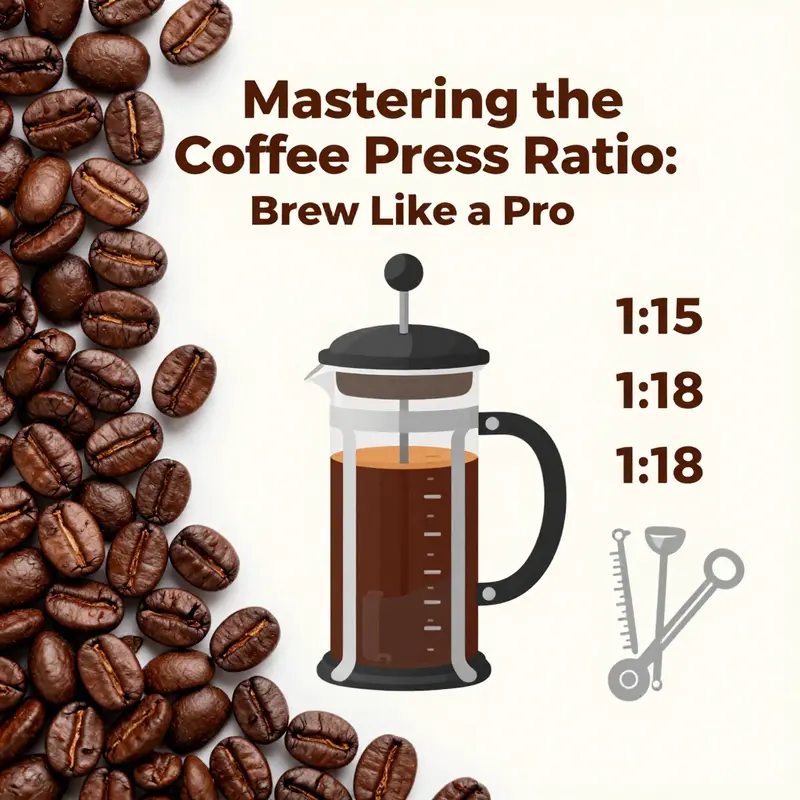
In the quiet choreography of brewing, ratio is the conductor. The French press invites you to balance extraction and body, to coax sweetness from bitterness rather than mask either with heat or time. The common starting point is the 1:20 ratio, one part coffee to twenty parts water by weight. It is a practical compass that many baristas clutch when calibrating a new batch of beans. Yet seasoned brewers know that formulas are guides, not laws. The range often cited in professional circles spans from 1:15 to 1:18, which sits inside a framework that aims for a specific extraction window and a particular flavor profile. The idea is to tune the ratio to the bean, roast level, and more importantly, to how you like your coffee to feel in the mouth: bright and clean, or rich and velvety, or somewhere in between.
Behind the numbers lies the golden cup principle: a target concentration in the cup of roughly 1.15 to 1.35 percent dissolved solids, with an extraction yield between 18 and 22 percent. These benchmarks come from data driven guidelines that try to ensure harmony among acidity, sweetness, and body. A cup off the mark either under extracted or over extracted manifests as sourness and thinness or bitterness and harshness. The ratio alone cannot guarantee perfection, but it anchors a repeatable process that can be refined with technique and observation.
A reliable starting point for most French press experiments is 15 grams of coffee and 300 milliliters of water, a clean 1:20 ratio by weight. This setup fits neatly inside the higher end of the typical range and tends to produce a balanced cup when the other variables align: water near 92-96 C, a brew time around four minutes, and a coarse grind that respects the press metal mesh and filtration. If the cup feels too light, a small increase in coffee say to 16 or 17 grams paired with a modest bump in water to 320 or 340 milliliters nudges the strength upward without collapsing into heaviness. Conversely, removing a gram or two of coffee or trimming water to 290-300 milliliters can yield a crisper, more delicate cup. This is the art of calibration: small, deliberate changes that ripple through perception.
Roast level matters too. Darker roasts tend to carry more bitterness and a heavier mouthfeel, so a slightly higher concentration closer to the upper reaches of the recommended range and a slightly lower extraction rate might suit them better. Light roasts sparkle with acidity and aroma, so dialing toward a lower concentration and pushing extraction toward the higher end can reveal more nuance, sweetness, and clarity. The same starting point can feel very different if you adjust the beans origin, age, and roast profile. The dial is not simply a knob for strength; it is a lever for character, letting you coax specific notes from a coffee rather than bluntly masking flaws with heat.
Take practice into account and adjust the brew with intention. The starting recipe 15 g and 300 ml water 92-96 C four minutes serves as a baseline, not a decree. After your first attempt, note the cup balance: aroma, acidity, body. If the result carries a dull aftertaste, consider adjusting the ratio in small increments as you taste: add more coffee to raise concentration and push toward a deeper sweetness, or water to soften the profile. If sweetness is overshadowed by sourness, extend the brew by thirty seconds or grind a touch finer, but proceed cautiously to avoid bitter extraction. Each small adjustment teaches you how the components interact: solubility, water ability, and the vessel filtration.
The data driven approach behind the golden cup helps keep the experiment grounded. It isnt about chasing a single perfect number but about chasing a repeatable result across beans and roasts, a cup that lands consistently in a sweet balanced zone. The 1:20 baseline is a practical anchor; the 1:15-1:18 range offers a broader field for fine tuning to taste and bean personalities. If you want a crisp route to translation from theory to practice, you can explore deeper discussions on the topic in a dedicated guide that dissects French press ratios and the variables that accompany them. It walks through how small adjustments reverberate through aroma, mouthfeel, and aftertaste, and it helps translate numbers into sensory outcomes.
As you advance remember that the numbers are not a talisman but a framework. The goal is a cup that reflects the bean with honesty its origin, its roast level, and its age while appearing balanced to your palate. The French press thrives on coffee that is neither over filtered nor under extracted; the press metal mesh and ritual of immersion demand patience and precision. The more you align your measurements with a clear extraction target the less the process feels arbitrary. The science of extraction tells us that unwavering parameters can still yield wines of flavor but that the magic is in the gentle patient adjustment that respects each batch personality. This is why a starting ratio and a predictable brew time matter because they anchor the tasting notes you are trying to bring forward.
For readers who want a broader data driven framework the golden cup standard provides a rigorous reference. It offers measurements that inform how much of the dissolved solids should appear in a cup and what extraction percentage best preserves the balance of flavors. While the exact numbers may shift with technique and equipment the underlying principle remains a measurement based recipe helps you reproduce a consistent cup. The official guidelines reinforce that precision and calibration remain central to quality coffee even when individual taste preferences push you toward slightly different ratios or times. The path to reliable results is anchored in careful observation methodical adjustment and a willingness to taste with intent.
Ultimately mastering the coffee press ratio becomes a circular practice. You start with a defensible baseline observe the cup adjust with intention and re seat your calibration. In this way you honor both the science of extraction and the art of taste. The journey from 1:20 to 1:15-1:18 is not a linear climb but a dimly lit path that curves with each batch you brew. The next step in this exploration will be to explore how grind size and water composition further refine extraction so the ratio remains the anchor even as the brew evolves.
External resource: https://www.coffeeinstitute.org/golden-cup-standard
null
null
null

null
Immersed in Variation: Tuning the French-Press Ratio Through Bean Type and Grind Size
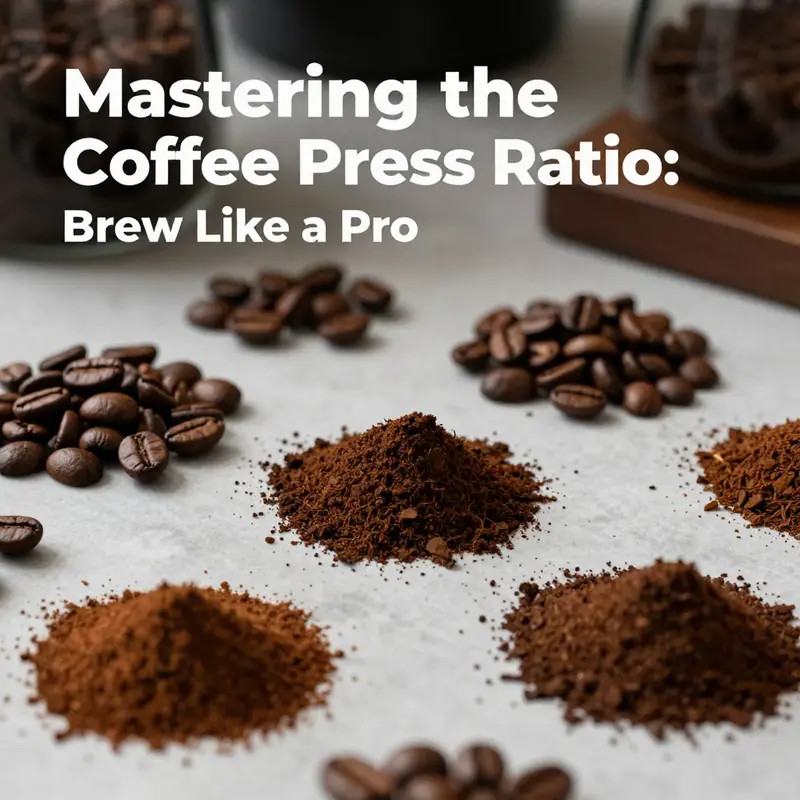
The conversation about a perfect cup often begins with numbers, and for the French press those numbers are not merely a count of scoops and seconds but a careful dialogue between bean type, grind size, and water. The foundational idea is straightforward: a coffee-to-water ratio establishes how much dissolved solids you can coax from the beans. The classic guidance from the Specialty Coffee Association sits at a golden range of about 1:15 to 1:18. In practical terms, that means one part coffee to 15 to 18 parts water by weight. But the French press—the method that relies on immersion and a metal filter—tends to reward a slightly different discipline. The immersion allows more contact between water and grounds, and the metal filter passes through more oils and fine particles. This naturally leans the brew toward a fuller body and more nuanced depth when ratio and grind are aligned with the bean’s character. Within that general framework, bean type and grind coarseness become the levers that shape flavor, mouthfeel, and clarity without tipping the cup toward bitterness or sourness.
Lighter roasts carry delicate, often floral or citrus notes. They can reveal intricate profiles that are easy to mask with too much coffee or overly aggressive extraction. When you’re working with lighter beans, a slightly lighter ratio—closer to 1:16 or 1:17—helps preserve those nuances. The goal is to support sweetness and lift without burdening the cup with the harsher edges that can emerge from over-concentration. In practice, using 28 to 32 grams of lighter-roast grounds with 420 to 512 milliliters of water tends to paint a more faithful portrait of the bean’s character, while remaining within a comfortable extraction window. It’s not merely about chasing strength; it’s about letting the bean’s inherent complexity breathe through a controlled immersion.
Darker roasts, by contrast, present bolder, more robust flavors and a body that can carry higher intensities. They often tolerate, and sometimes benefit from, a stronger ratio in the 1:14 to 1:15 neighborhood. The perception of strength here is not a proxy for over-extraction; rather, it reflects the roast’s reduced acidity and the oils that carry flavor forward. A darker roast can stand up to, and benefit from, a slightly leaner ratio because the coffee is already carrying more roast-derived sweetness and deeper, toastier notes. Practically, this might look like 30 grams of dark roast with 420 milliliters to 450 milliliters of water. The aim remains to extract within the same general window—roughly 18% to 22% of soluble solids—so the cup stays balanced, without bitterness or a hollow finish.
The grind size you choose for a French press is another voice in this dialog. A finer grind increases the surface area of the coffee exposed to water, accelerating extraction. The trade-off is a higher risk of over-extraction in an immersion method where the grounds stay in contact with water for several minutes. If you’re grinding finer to push a lighter roast’s profile forward, you may need to trim the coffee amount a notch or shorten the steep time. In ratio terms, that could mean dialing from 1:15 toward 1:16 or 1:17 while keeping a vigilant eye on the aroma and the aftertaste. Conversely, a coarser grind slows the release of soluble compounds. When the grind is coarse, a slightly higher coffee-to-water ratio, such as 1:14, can help preserve fullness and body, ensuring the cup remains satisfying even as you lean into finer bean flavors. Consistency in grind size is critical here—aim for a texture somewhere between coarse sand and coarse breadcrumbs. Irregular grounds can create an uneven extraction, leaving some notes underdeveloped and others overstated.
In practice, the relationship among roast level, grind, and ratio becomes a dance of judgment and calibration. Start with a baseline that respects the wider SCA guideline—but bias it toward the end of the range that seems to protect the bean’s personality. For many, a reliable starting point in the French press is near 1:16 for a standard 30-gram dose with about 480 milliliters of water. From there, you can consider adjustments in two directions: lighter roasts with finer or equal grind and slightly higher water-to-coffee proportions, or darker roasts with a touch more intensity at the upper end of the ratio spectrum. The goal is not a single universal solution but a reproducible approach that respects the bean’s temperament and the cup you want to drink.
The practical arithmetic behind these adjustments is simple. If you begin with 30 grams of coffee and aim for a 1:16 ratio, you’ll need 480 milliliters of water. If you move to a 1:17 ratio for a lighter roast, you’re looking at 510 milliliters. If you tilt toward 1:14 for a bolder, darker roast, you’ll use 420 milliliters. Those numbers are not commandments but references that anchor your tweaks. The reason this math matters in the French press is the way immersion and filtration interact. The metal mesh permits more particulates and oils into the cup, which can magnify both body and perceived sweetness, but it can also magnify any harsh notes if extraction runs too long or too aggressively. Time can be a silent collaborator or a troublesome adversary, depending on how fine or coarse the grind is and how strong or delicate the roast is. The ratio, however, provides the framework within which time and grind can safely operate.
A practical, repeatable workflow helps translate this theory into a dependable cup. Start by heating water to just off the boil, about 93 to 96 degrees Celsius. Grind fresh, aiming for a consistent texture that matches your chosen ratio. Weigh the coffee and water carefully, because small errors in weight become more noticeable in the bold environment of the French press. Bloom the grounds briefly by pouring enough water to saturate them and allow a moment for the surface to become moistened; this pre-wetting can help unify extraction as the rest of the water is added. Pour slowly, in a steady circle, to ensure even saturation and to avoid channeling the grounds. Place the plunger gently atop the carafe, set the timer, and allow the full immersion to unfold. When the steep time ends, press with smooth, even pressure. This is not a race; it is a controlled, patient embrace of the grounds. The result should feel weighty on the tongue, with a clean finish and a lingering aftertaste that speaks to the roast’s character rather than the cup’s bitterness.
The elegance of this approach is its adaptability. There is value in acknowledging that no one ratio is welded to a single bean or roast. The SCA guidelines provide a broad map, but the specifics—for a lighter roast, a finer grind and a 1:16 or 1:17 ratio; for a darker roast, a coarser grind with a 1:14 to 1:15 ratio—are where your palate gets to curate the experience. The key is to treat the ratio as a living variable rather than a fixed decree. Keep notes on the coffee origin, roast level, grind setting, ratio, water temperature, steep time, and the final sensory impression. Over time, patterns emerge: paired by bean type and grind coarseness, the same ratio will reveal different facets of flavor, sweetness, aroma, and mouthfeel. Documenting these choices is not pedantry; it is the craft of mastering extraction, ensuring that a well-prepared cup reflects the true potential of the bean and your technique.
As you refine your practice, you may find yourself drawn to a consistent ratio that respects the bean’s idiosyncrasies while still delivering the iconic body of the press. The beauty of this method lies in its capacity for nuanced expression, not in a single universal secret. It invites you to explore how frost and flame in the roast reveal themselves only when the water and grounds meet in the right proportion, with the grind size doing the delicate, unseen work of presenting those notes clearly. This is the craft behind the science: you honor the bean’s origin by choosing a ratio that lets its voice be heard, then adjust the grind and steep time to translate that voice into a balanced cup with presence, without sacrificing elegance.
For readers who want a structured framework while still embracing exploration, a closer look at the French press ratios provides a practical complement to the philosophy described here. You can explore a more comprehensive guide on the topic at the internal resource: French press ratios: the ultimate guide. As you venture into bean varieties and grind sizes, remember that the ratio is a threshold for extraction—one that allows your chosen roast to express itself with fullness and fidelity. The science of extraction is consistent, but the art of tasting is personal, evolving with your palate and your preferences. In time, the method becomes less about chasing a universal standard and more about cultivating a disciplined curiosity: how does my preferred roast respond to a slightly higher or lower ratio, a minute more or less of steep time, a finer or coarser grind? Each adjustment teaches you something about the coffee you love and the method you choose to brew it.
For those seeking a more formal scaffold beyond intuition, the official guidelines from the Specialty Coffee Association remain a valuable compass. They anchor the practice in a measured extraction window, reminding us that a mindful balance between coffee solids and water yields a cup with body, sweetness, and clarity. The path to that cup, however, is personal and practical, built one batch at a time, one ratio at a time, with a notebook ready to capture the notes that matter most: aroma, sweetness, acidity, body, and aftertaste. In the end, the right ratio for your bean and grind will feel like a conversation that finally makes sense—the coffee speaks, and you listen, adjusting gently until the cup sings.
External resource for further detail on extraction frameworks and best practices can be found at the official guidelines from the Specialty Coffee Association: https://sca.coffee/
The Quiet Balance: Mastering the Home French Press Ratio for Everyday Brilliance

The simplest lever in a careful coffee routine is the ratio of coffee to water. It is a quiet, almost invisible constraint that governs extraction, flavor, and the sense of balance in the cup. When you approach a French press with a clear sense of ratio, you do more than measure; you invite consistency, repeatability, and a pathway to flavor that you can trust from one morning to the next. The conventional guidance from the specialty coffee conversation places the ideal range for a French press somewhere in the vicinity of 1:15 to 1:18, one part coffee to 15 to 18 parts water by weight. This range anchors a sweet spot where a cup can reveal its sweetness, body, and nuanced acidity without tipping into bitterness or sourness. In practical terms, this is the window where 18% to 22% of the coffee’s soluble solids are extracted—enough to maximize aroma and depth while avoiding over-extraction that dulls brightness or under-extraction that leaves a flat, hollow taste. It is within this margin that the magic of the press reveals itself, where oils and fines mingle with water to craft a cup that feels both familiar and alive with character.
Most home brewers begin with a reliable, straightforward starting point that blends ease of measurement with the likelihood of success: a 1:20 coffee-to-water ratio. This baseline is a dependable launching pad, especially for those new to the French press, because it provides a balanced canvas without inviting excessive bitterness or dullness. Yet the beauty of the ratio lies in its flexibility. Personal taste matters as much as calibration. If you seek a stronger, bolder cup, drifting toward a 1:18 ratio makes a tangible difference in mouthfeel and presence. If you prefer a milder, more delicate cup, drifting toward a 1:22 ratio softens the cup’s bite while preserving clarity. The science behind this flexibility is straightforward: closely related to extraction dynamics, the ratio determines how much solubles are drawn into the brew during the contact period. It is a practical handle you can turn, whether you are refining a single-origin bean or dialing in a blend with a particular roast profile.
Consider a concrete example to anchor these ideas. If you measure 30 grams of coffee, a 1:15 ratio would call for about 450 grams of water. A 1:18 ratio would use roughly 540 grams, and a 1:20 baseline would land around 600 grams. In a kitchen or a home cafe, those numbers translate into volumes that are easy to manage with a kitchen scale. Water’s density makes the conversion nearly seamless, so grams and milliliters effectively align. While a higher water ratio—more water per gram of coffee—will dilute intensity, a lower ratio tends to push the cup toward concentration and assertiveness. The sweet spot remains the window where extraction stays within the 18–22% range, delivering a balance that remains faithful to the bean’s origin while maintaining the press’s characteristic track between body and brightness.
But ratio is not a lone dial. It cooperates with grind size, contact time, and the overall brewing rhythm. The research perspective you take matters as much as the numbers you dial in. For example, adjusting the grind size in tandem with the ratio can dramatically alter the extraction trajectory. A coarser grind gradually reduces the surface area available for extraction, effectively lengthening the contact time before oils and soluble compounds saturate the water. In this scenario, a longer steep time often harmonizes with a coarser grind, maintaining a consistent extraction level without pushing the cup toward bitterness. Conversely, a finer grind increases surface area and speeds extraction, so a shorter contact time can help preserve clarity and prevent over-extraction. When you adopt these adjustments in concert, you gain a much finer level of control over the final cup.
Several practical implications emerge from this interplay. First, a measured approach to grind consistency is crucial. Even small variations in grind size can tilt the extraction toward more pronounced fruit notes or a pronounced chocolatey profile, depending on the bean. Second, timing becomes a responsive tool rather than a fixed rule. Rather than clinging to a rigid steep time, you can align your grind to the desired pace of extraction. Third, water quality and temperature—though helpful considerations—take a back seat here to the core variables of ratio, grind, and time. The more you align these core factors, the more consistent your results will be, and the more readily you can translate your preferences into repeatable practice.
In the process of calibrating your technique, the experience of repeated trials matters as much as the numbers themselves. Start with a straightforward, reproducible method: weigh your coffee and water, set a middle-ground ratio such as 1:20, and use a standard grind that feels appropriate for a longer steep. Once you taste the result, you can nudge either direction—toward a stronger profile with a tighter ratio and finer grind, or toward brightness and clarity with a more generous water proportion and a coarser grind. The goal is not to find a single perfect formula but to arrive at a stable, repeatable process that consistently yields a cup that matches your preferred flavor profile. To support this exploration, you can explore a more comprehensive, home-focused perspective on French press ratios and their practical application in a dedicated guide that aggregates practical tips and tested settings: French press ratios guide.
The flavor consequences of ratio adjustments can be subtle yet meaningful. Within the 1:15–1:18 range, a bean’s natural character can shine through with a balanced acidity that isn’t overpowering and a body that remains cohesive rather than muddy. If you push toward 1:18 or 1:19, the cup often gains an almost velvety thickness and a more pronounced mouthfeel, which can help beans with delicate flavors carry through the cup without flattening. Move toward 1:22, and you may notice a smoother, more subdued cup where acidity softens and the overall impression tends toward comfort and ease. These are not universal laws but tendencies that emerge from the interaction of extraction percent with grind surface, contact time, and the coffee’s intrinsic chemistry. In practice, you will feel the difference in aroma and aftertaste as you adjust the ratio and the grind in the same session, and you’ll learn to anticipate how a particular origin or roast profile responds to these changes.
What makes the ratio such a reliable guide is its ability to center the brewing process within a repeatable framework. A well-chosen ratio, followed by thoughtful grind and method adjustments, acts as a scaffold for the other variables that influence taste, such as roast level and bean freshness. You can treat ratio as your home barista’s variable, the knob you turn to emphasize body or brightness, sweetness or clarity, depending on the coffee you’ve chosen for the day. The result is not a rigid prescription but a practiced intuition, a way to translate the bean’s story into a cup that you can savor and share. In this sense, the French press becomes more than a brew method; it becomes a device for translating the character of a given bean into a beverage that feels personal and alive.
For readers seeking a deeper, more technical walk-through of precise timing and grind adjustments, a broader, hands-on resource exists that consolidates a lot of the practical know-how into a single guide. This resource is particularly valuable for those who want to trace how small adjustments in the grind size, water volume, and steep time influence extraction and flavor outcomes. It offers a structured approach to testing and tasting, turning a morning routine into a disciplined, almost scientific practice. External references should be consulted as you refine your method, but the core ideas remain remarkably consistent: start with a solid ratio, calibrate grind and time to taste, and then apply your own sensory judgments to arrive at a brew that you recognize as distinctly yours.
In sum, the coffee press ratio provides a reliable, flexible framework for extracting flavor from any bean at home. The goal is to use the 1:15–1:18 range as a target for optimal extraction while recognizing that a 1:20 baseline is a practical starting point for most people. By pairing ratio with thoughtful grind adjustments and mindful timing, you empower your French press to become a versatile instrument for daily coffee enjoyment. The process rewards curiosity, discipline, and patience, turning a simple morning routine into a personal craft. If you want to explore more about how to apply these principles in your kitchen, the linked guide offers additional context and tested configurations you can try as you refine your approach. For broader guidance on optimizing your French press brewing process, the community resource at CoffeeGeek provides a detailed, technique-focused perspective on timing and grind as they relate to the press method: CoffeeGeek French Press Coffee Guide.
Final thoughts
Mastering the coffee press ratio is a vital step toward creating exceptional coffee experiences that resonate with customers. By understanding the dynamics of coffee-to-water proportions, the chemistry of flavors, and the influence of various factors like bean types and grind sizes, business owners can offer an unparalleled cup of coffee. This knowledge not only enhances brewing skills but also builds a community of coffee enthusiasts who appreciate the craft behind each cup. As you apply these insights in your business, you’ll find that a focus on the details of brewing can transform casual drinkers into loyal customers.