
Caffeine is a crucial ingredient in many beverages, especially in popular soft drinks like Mountain Dew. Known for its vibrant flavors and energizing properties, Mountain Dew contains varying levels of caffeine depending on the product variant. Owners of businesses that serve or sell soft drinks can benefit significantly from understanding these nuances. The following chapters delve into the caffeine content in Classic Mountain Dew, explore variations across flavors, analyze the influence on consumer choices, discuss health considerations, and compare these caffeine levels to other soft drinks in the market, providing actionable insights to enhance your business strategy.
Buzz by the Can: Decoding the Caffeine Profile of Classic Mountain Dew
Each sip of Mountain Dew carries more than citrus brightness; it carries a caffeine signature that helps define how the drink slots into daily routines. In markets where the beverage has earned its place, the classic formulation is widely recognized for delivering a steady, clear lift rather than a jittery spike. That lift is not accidental; it is engineered around a specific serving size and a carefully calibrated amount of caffeine that many fans come to rely on during long afternoons, late-night study sessions, or quick mid-morning pick-me-ups. The standard single serving most people encounter is a 12-ounce can, roughly 355 milliliters, a size that has become the default reference point when people discuss how much energy a can offers. The number attached to that serving matters because it sets expectations not just for a single moment of alertness, but for the cumulative effect a person might feel if they reach for more than one can in a day.
A 12-ounce can of the classic formulation contains approximately 54 milligrams of caffeine. That figure is widely cited and observed across most standard cans and bottles, making the original flavor’s energy profile a reliable benchmark. In the spectrum of caffeinated beverages, this level sits above many soft drinks, yet it remains below some of the most potent sources measured per 12 ounces. This consistency across standard formats means consumers can rely on a familiar baseline whenever they reach for a cold can during a busy afternoon or a late-night pull.
Some variants in the Mountain Dew lineup carry a heftier caffeine load, though there is no need to name them specifically here. The general pattern is that many flavors hover around the mid-50s milligrams per 12 ounces, preserving that high-caffeine identity even as other attributes—sweetness, acidity, and flavor notes—change. There are also low-sugar or sugar-free options, and while these can show a modest dip in caffeine, the difference is usually small enough that the beverage still delivers a noticeable kick. The takeaway is that for the typical can, most fans still encounter a robust caffeine presence, even when the sugar content is modified. For someone who watches total daily caffeine intake, this distinction matters, but the moment of sipping carries the practical impression of a quick lift rather than a lengthy caffeine saga.
Consistency across packaging formats matters because the same day’s caffeine budget can be influenced by how the drink is packaged. No dramatic shifts are expected between a standard can and a widely available bottle, but minor batch-to-batch variation and storage conditions can introduce small, almost imperceptible differences. A careful consumer will consider serving size and frequency. If caffeine is a constraint, noting that a common single-serving can typically hovers around the 54-milligram mark provides a solid baseline for planning meals, coffee breaks, or social gatherings without losing track of the total caffeine load. The effect, in practice, is to empower readers to translate label numbers into real-life choices without guessing.
Viewed through the broader lens of daily energy sources, the classic Mountain Dew sits comfortably between the more caffeine-forward beverages and the gentler, everyday soft drinks. It is powerful enough to influence focus in a pinch, but not so intensely caffeinated that it becomes a daily breakfast substitute for all but the most caffeine-tolerant readers. This middle-ground positioning explains why many people reach for it during study sessions or late work sessions when a quick and predictable lift is helpful. Yet the effect of caffeine depends on more than milligrams: sleep history, other sources of caffeine that day, hydration, and even the acidic tang of the beverage can shape how the caffeine feels in the body. Understanding a standard reference point—the classic 12-ounce can with about 54 mg—helps readers place this drink within their individualized energy budgets and makes it easier to compare it with other options in the same family of beverages. For a deeper dive into this dimension, see the focused overview linked here: caffeine-content-mt-dew.
To broaden the context, those who want a more precise sense of how Mountain Dew’s caffeine stacks up against other caffeinated drinks will find it useful to consult dedicated comparisons that place one beverage against another. For a deeper dive into this dimension, see caffeine-content-mt-dew. The central takeaway remains straightforward: a single 12-ounce serving in the classic formulation delivers a reproducible amount of caffeine that can anchor daily planning and help readers calibrate their intake across a spectrum of drinks that carry different caffeine loads.
Ultimately, the 54-milligram benchmark for the classic can anchors consumer expectations and helps illuminate why this particular soda has earned a reputation for energizing bite in a crowded soft-drink aisle. It is high enough to feel like an energy boost for many but modest enough to be included in routines that depend on regular, measured caffeine exposure rather than abrupt, intensive surges. In a world with a dizzying array of caffeine sources—from coffee and tea to energy drinks and beyond—this single, well-defined number provides a clear reference point. The ability to parse a label, understand the serving size, and translate milligrams into practical daily plans is what turns a beverage choice into a straightforward piece of health-conscious decision-making. For readers seeking a broader spectrum of caffeine data beyond Mountain Dew alone, the external reference provides a credible cross-check: https://www.caffeineinformer.com/caffeine-in-mountain-dew.
Beyond numbers, the sensory and behavioral effects matter. The classic Mountain Dew delivers its caffeine with a citrus-forward flavor, a bright acidity, and a medium-sweet profile that many drinkers associate with a quick, palatable energy lift. The perception of caffeine is intertwined with other beverage components; sugar content elevates energy, but acidity can intensify alertness as well. People often pair Mountain Dew with tasks that require quick reaction time or sustained attention, such as driving or studying; the drink’s carbonation and flavor are part of the overall experience that makes caffeine feel more immediate. However, this is also where mindful consumption matters: if you are sensitive to caffeine, the same 54 mg can feel double or nothing on certain days, especially if your sleep was limited or you have built up tolerance. In short, caffeine numbers tell part of the story, but the way you drink it shapes the lived experience as much as the milligrams do.
Finally, the chapter invites readers to reflect on their own patterns and to use caffeine deliberately rather than reflexively. The classic Mountain Dew offers a concrete, checkable figure—54 mg per 12 ounces—that can anchor a personal caffeine diary or a quick math exercise before a shopping trip or a gym session. When you learn to read serving sizes and understand the caffeine load you are taking in, you can decide whether a single can fits into today’s plan or whether a smaller or sugar-free alternative would be more appropriate. The chapter closes not with a hard rule but with a practical approach: know the baseline, compare it with other outlets for caffeine, and tailor intake to your goals, timing, and tolerance. In that sense, the story of the classic can is really a study in practical measurement—a reminder that even everyday beverages carry a real, measurable impact on energy, mood, and daily rhythm.
External reference: https://www.caffeineinformer.com/caffeine-in-mountain-dew
null
null
Caffeine as Catalyst: How Mountain Dew’s Potent Kick Shapes Taste, Focus, and Youthful Identity

Caffeine is more than a chemical cue in a can; it is a cultural signal that helps explain why certain beverages rise to the top of the energy-leaning shelf. In the case of Mountain Dew, the caffeine content functions as a precise amplifier of the drink’s identity. A standard 12-ounce can delivers about 55 milligrams of caffeine, a level that aligns Mountain Dew with many energy-forward beverages while preserving the sensory signature that defines its citrus-forward profile. This combination—moderate-to-high caffeine paired with a bold, tangy flavor and aggressive carbonation—produces a compound effect: taste that strikes the palate with a zesty bite and a sustained mental lift that users report as a practical edge during demanding tasks. The 355-milliliter footprint of the familiar can makes the experience portable, repeatable, and easy to schedule into a study session, a late-night gaming marathon, or a long shift when alertness is non-negotiable. In the narratives surrounding the drink, caffeine is not merely garnish but a core attribute that helps shape choice, preference, and brand loyalty. The effect is both functional and symbolic; the caffeine boost is imagined as a companion to productivity and focus, a kind of portable toolkit for moments when stamina is essential and time feels compressed.
Within its target demographic—primarily young adults and gamers—this caffeine level has become part of Mountain Dew’s brand grammar. The drink is often framed as an “unofficial energy source,” an identity reinforced by marketing that leans into intensity, speed, and a certain rebellious energy. The effect of caffeine here is twofold: it provides a physiological lift and amplifies the sensory assault of the drink’s flavor and carbonation. The sharp lemon-lime core of Original Mountain Dew, with subtle grapefruit undertones and a relentless fizz, works in concert with caffeine to create a taste that is not just refreshing but constantly re-energizing. The result is a drinking experience that feels like a short, efficient sprint rather than a long endurance effort, even when the user’s objective is sustained concentration.
The chemistry of the moment matters, but so does the social context. In gaming rooms, dorms, and late-night study nooks, caffeine becomes a shared shorthand for staying alert without breaking the rhythm of a session. The mythos of Mountain Dew as a performance aid is reinforced online, where anecdotes circulate about pairing the drink with crunchy snacks or biscotti—snacks that, in some keyboard-heavy cultures, become ritual accompaniments to extended focus times. The cultural narrative matters because it shapes expectations. If a consumer believes that the drink will help sustain attention, they are more likely to perceive real benefits, at least in the short term. This expectancy can color actual experience, producing a self-fulfilling loop: caffeine raises alertness, the taste remains engaging, and the consumer seeks another can to maintain momentum.
Diet Mountain Dew does not break the pattern. It preserves the same caffeine payload—roughly 55 milligrams per 12-ounce serving—while offering a zero-sugar alternative. For a segment of health-conscious consumers or those monitoring sugar intake, this can be appealing without sacrificing the perceived cognitive lift. The alignment of caffeine with flavor in the Diet variant suggests that the brand’s core value proposition remains consistent: potent energy and a distinctive citrus profile, delivered in a form that feels both accessible and capable of supporting long hours of study, work, or play. Such consistency across product lines helps maintain consumer trust; the caffeine content stays as a predictable variable while flavor and sweetness offer choices that suit different contexts and preferences.
From a sensory psychology perspective, caffeine’s role extends beyond alertness. It interacts with taste perception and arousal in ways that make the overall experience more memorable. The bite of the citrus, the crisp tang, and the tingle of carbonation are all heightened by a caffeine-driven sense of urgency and focus. This makes Mountain Dew not only a beverage but a small, portable cockpit—where flavor, energy, and tempo align to support tasks that demand rapid decision-making or sustained motor activity. The product’s branding—its call to action to “Do the Dew”—sits atop this combination of caffeine potency and sensory intensity, inviting a particular kind of participation that resonates with youth culture’s emphasis on immediacy, competence, and shared experience.
A closer look at the data suggests that caffeine content is a central pillar of consumer preference across variants. The 55 mg per 12-ounce unit is not accidental; it is a deliberate calibration that positions Mountain Dew as a high-energy option without crossing into the fields of stronger caffeine formulations found in certain energy drinks. That balance—potent enough to deliver a lift, but familiar and approachable enough to be consumed in casual settings—explains why many users return again and again. The brand’s ability to couple this stimulant effect with a bold, aggressive sensory profile helps it stand apart from other carbonated beverages that might lean more heavily on sweetness or milder carbonation. The end result is a drink that feels both functional and expressive: a tool for focus, a badge of identity, and a social cue that signals involvement in a fast-paced, digitally oriented culture.
For readers curious about how the caffeine comparison stacks up against other common caffeinated beverages, there is a straightforward takeaway: Mountain Dew’s caffeine content sits in a high-but-balanced range for a cola-type beverage, and this fixed point anchors a broader understanding of why the drink resonates with its audience. The experience is not solely about energy; it is about how energy integrates with taste, texture, and social meaning. The effect is often felt most acutely during moments when mental effort is prolonged and attention is taxed—moments when a quick lift is welcome, and a distinctive taste is preferred over a neutral beverage. In those situations, caffeine helps transform a simple sip into a component of a broader strategy for staying awake, maintaining focus, and enjoying a sensory ritual that aligns with personal tempo and group norms.
For those who want to explore the caffeine conversation further, an internal resource considers how Mountain Dew’s caffeine content compares with other popular caffeinated beverages. The discussion highlights that taste and function can coexist in ways that reinforce consumer preference rather than compete with it. You can explore a comparative perspective on this topic here: caffeine content of Mountain Dew vs Coke. In addition to the internal dialogue, the broader literature and brand narratives point to a consistent pattern: caffeine acts as a catalyst that helps bind flavor, function, and identity into a single, repeatable experience. The final takeaway is simple yet powerful. Caffeine content is not a mere numeric detail; it is a key driver of how a specific, bold citrus beverage earns its place in the daily rituals of its core audience, shaping preferences, expectations, and the sense of belonging that comes with participating in a shared, caffeinated culture.
External resource: Mountain Dew Official Website – Products: https://www.mountaindew.com/products
Raising the Pulse: The Caffeine Equation in Mountain Dew and Its Health Implications

Caffeine is a quiet conductor in many everyday rituals, a spark that can sharpen focus, fuel late-night sessions, or simply steady a mood long enough to finish a task. In beverages that aim to wake the senses with bright citrus and a high-spirited fizz, caffeine becomes more than a chemical note; it helps shape how people pace themselves through long studies, gaming marathons, or busy workdays. This chapter examines the caffeine content of Mountain Dew and its kin, weaving together not just the numbers, but how those numbers interact with health guidelines, individual sensitivity, and the broader patterns of sugar-laden energy consumption that many readers unknowingly balance each day. When you consider the caffeine math, you begin to see how a single 12-ounce can sits inside a larger system of daily intake, risk, and habit formation. For readers seeking a precise, variant-level breakdown, the detailed caffeine content of Mountain Dew is laid out in the relevant article that anchors this inquiry caffeine content of Mountain Dew. That reference helps ground the discussion here in a shared metric while we explore the broader implications.
A typical 12-ounce can of Mountain Dew delivers about 54 to 55 milligrams of caffeine. This is often described as moderate by coffee standards, where a standard cup averages about 95 milligrams. The effect, however, does not scale perfectly with the number on the label. The same caffeine dose can feel more or less potent depending on timing, other substances in the body, and one’s own sensitivity. In practical terms, many people who routinely drink multiple cans during a gaming session or a long workday may accumulate a caffeine load that mimics a stronger coffee experience, especially when paired with the product’s other active ingredients and its sugar content. Flavor variants—whether classic, Code Red, or Live Wire—generally maintain the same ballpark of caffeine per 12 ounces, offering a consistent lift across choices. The picture shifts a little with sugar-free or low-sugar versions, where the caffeine amount is often preserved but the overall metabolic load can differ because of reduced sugar, a factor that can influence energy dynamics in the hours that follow.
Regulatory perspectives add another layer to this conversation. Health regulators have evaluated caffeine’s safety in carbonated beverages and concluded that caffeine levels up to a certain threshold can be acceptable for the general population. Health Canada recently expanded the allowable caffeine content in carbonated soft drinks, including non-cola varieties, to as high as 150 parts per million. For beverages with a density close to water, 150 ppm roughly translates to about 150 milligrams per liter. When you translate that into a 355-milliliter can, the caffeine content aligns with the roughly 53 to 55 milligrams that some products already deliver. The regulatory conclusion—that such a level poses no significant health risk for the general population—rests on a broad, evidence-based review of caffeine’s short- and long-term effects. Yet doses matter, and context matters more. The same 150 mg/L metric suggests that a single can sits far below the daily ceiling that medical authorities commonly acknowledge for safe consumption in healthy adults, but it does not erase the importance of mindful use.
Beyond the numbers is the simple reality of individual sensitivity. People metabolize caffeine at different rates, and the same amount can produce a wide array of experiences. Some drinkers notice faster heartbeats, jitters, or a racing mind when they exceed a certain threshold, while others feel little effect. The other side of the coin is the social and behavioral context: a can or two during a study session can sharpen attention and reduce perceived fatigue, but two or three in a short span can generate symptoms that mirror a stronger stimulant effect. This is particularly relevant for those who combine caffeine with high-sugar beverages, where there can be a quick lift followed by a sharper energy crash during the latter hours of the day. In short, two or three Mountain Dew cans in rapid succession may approximate the intensity of a robust cup of coffee for some people, which raises questions about sleep, mood stability, and appetite regulation the next day.
Sugar content compounds the caffeine conversation. A typical Mountain Dew can carries about 46 grams of sugar. When this amount is consumed in tandem with caffeine, the body receives a double-edged signal: caffeine offers alertness while sugar provides a rapid energy source, followed by a potential crash as insulin and glucose levels respond. For people who rely on caffeine to maintain focus, the pairing with sugar can create a reliance on a quick energy surge instead of sustainable stamina. Over time, repeated cycles of sugar-driven energy ups and caffeine-driven arousal may contribute to weight fluctuations, metabolic stress, and mood swings. The combination thus matters as much as the caffeine dose itself, and it invites readers to consider whether the pattern serves long-range goals like steady energy, consistent performance, and stable sleep.
Moderation emerges as the central theme when we bring together regulatory guidance, physiology, and daily behavior. The U.S. Food and Drug Administration has historically suggested that up to 400 milligrams of caffeine per day is safe for most healthy adults. Translating that into beverage units, you would need roughly seven to eight standard cans of this citrusy drink to approach that daily limit—a scenario unlikely for many readers, but not impossible in a high-output, stimulant-seeking pattern. The practical takeaway is not to fixate on a single can but to think in terms of cadence across the day. For someone trying to balance school, work, or gaming with sleep, spacing caffeine use—especially across long sessions—can reduce the risk of an energy crash, jitteriness, or anxiety. In such planning, caffeine is not merely a chemical count; it becomes a tool for regulating attentional stamina and mood stability across the hours when concentration matters most.
Another layer to consider is cumulative intake. Caffeine comes from many sources: coffee, tea, energy drinks, chocolate, some medications, and even certain supplements or beverages chosen for hydration and focus. A chapter-wide view of caffeine behavior recognizes that Mountain Dew is rarely the sole source in a day. For readers who rely on caffeine as a focus aid during extended tasks, the prudent approach is to monitor total daily intake and to diversify strategies for maintaining alertness. Spacing out caffeine consumption, hydrating with water, and using non-stimulant strategies—like structured breaks, movement, or brief resets—can help prevent energy crashes and reduce dependence on a single product for sustained performance. In practice, this means acknowledging the value of variety and timing as essential elements of a healthy caffeine plan rather than treating any one can as an unchangeable norm.
The chapter’s thread ties back to the broader aim of understanding caffeine content not as a standalone figure but as a piece of a living system of behavior. For readers who want a more precise, per-variant breakdown, the linked article on caffeine content of Mountain Dew offers a granular view of how caffeine sits across flavors and packaging formats. This is not a call to abandon the beverage, but a reminder that context matters: how much is consumed, when it is consumed, and what else accompanies it in that moment. The cultural practice surrounding caffeine—whether to sharpen focus during a late-night project, to stay alert during extended gaming, or to brighten a long commute—must be weighed against the body’s signals and the day’s demands. Taken together, the numbers, the guidelines, and the lived patterns point toward a balanced approach: enjoy the lift when it serves a clear purpose, but be mindful of the cumulative load, the sugar companion, and the rhythms of sleep that determine tomorrow’s energy.
In closing, the caffeine story in Mountain Dew offers a case study in how a familiar beverage can function as both a tool and a test. It invites readers to ask practical questions: How many cans fit into a healthy daily rhythm? How does one recognize caffeine sensitivity and modulate intake accordingly? What are the trade-offs of sugar-laden energy boosts for long-term health and daytime function? Answering these questions requires more than arithmetic; it requires a daily practice of mindful consumption and attentive self-observation. As the article landscape expands, this chapter anchors the discussion in real-world impact, guiding readers toward choices that support focus, mood, and sleep—without sacrificing the small moments of enjoyment that come with a familiar citrus fizz. For readers seeking a more precise, ingredient-by-ingredient map of caffeine across Mountain Dew varieties, consult the linked caffeine content resource; and to ground the broader safety and dietary considerations in official guidance, see the Health Canada announcement linked at the end of this discussion. The balance of energy, health, and habit remains a personal calculation, and awareness is the first and most powerful tool in making that calculation work for you.
External reference: Health Canada expands caffeine use in soft drinks. https://www.canada.ca/en/health-canada/news/2025/03/health-canada-expands-caffeine-use-in-software-drinks.html
The Caffeine Benchmark: Mountain Dew’s High-Energy Profile in the Soft-Drink Landscape
Caffeine content in soft drinks is a detail that often sits in the background, until you start comparing the numbers side by side. When we look at the familiar citrus-flavored cans that people reach for for a quick lift, one brand line consistently stands out for delivering a noticeably stronger caffeine jolt per serving than many peers. This chapter situates that distinctive profile within the broader spectrum of caffeinated sodas, tracing what the numbers mean for daily caffeine budgeting and consumer choices without getting lost in brand-name minutiae. In doing so, we hone in on the standard 12-ounce serving as the common frame for comparison, a size roughly equivalent to 355 milliliters, which makes the math straightforward for most readers and for everyday consumption decisions.
Across the board, caffeine content in these beverages is a function of formulation choices, variant variants, and the intent behind the drink. The standard reference point for this particular line is a 12-ounce can that carries about 54 milligrams of caffeine. That figure isn’t a fluke or a single outlier; it’s consistently echoed across the lineup. The Original variant, the bright Code Red edition, and the Live Wire (the wild orange option) each clock in at roughly 54 milligrams per 12-ounce serving. The uniformity of this caffeine level across several flavors underscores a deliberate positioning: this beverage is crafted to be a more robust stimulant option within the soft-drink category, aimed at consumers who want a more pronounced boost than traditional colas typically provide.
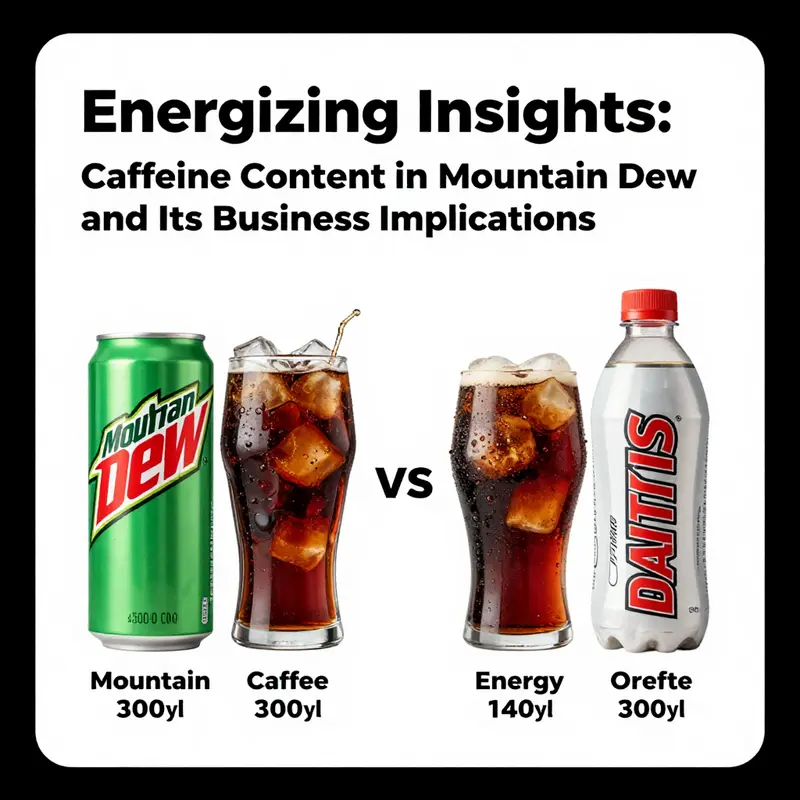
To put these numbers in perspective, consider the broader slate of popular, widely available sodas. A standard 12-ounce cola commonly lands in the range of 34 to 35 milligrams of caffeine per can. That’s still caffeine-rich compared to caffeine-free beverages like certain lemon-lime sodas, which offer little to no caffeine, but it is notably lower than the higher-brace profile described above. The contrast becomes even starker when you extend the comparison to other citrus-flavored sodas known for being caffeine-light or caffeine-free. In that broader landscape, the line under discussion maintains a markedly higher caffeine density per can, which translates into a different sensory and physiological experience: a more noticeable quick pick-me-up with each sip.
A key takeaway from the data is consistency. When you navigate the Mountain Dew lineup—original, Code Red, Live Wire—the caffeine content remains in the same neighborhood, with only slight allowed variations depending on batch and production specifics. That consistency is not accidental. It reflects a strategic product positioning that aligns with consumer expectations: a reliable, higher-energy option in the realm of mainstream soft drinks. For readers who track caffeine across their day, that predictability is valuable. It means you can plan, more or less, how much caffeine you’ll encounter if you reach for a single can of this citrus-focused beverage.
The practical implications extend beyond the can. The broader conversation about caffeine in beverages is really about how caffeine contributes to daily intake, how it interacts with sugar and other ingredients, and how people manage their personal thresholds. The typical adult daily caffeine target often lands somewhere in the 200 to 300 milligram range, though this can vary with sensitivity, medical considerations, and total caffeine from all sources. In this context, a single 12-ounce can of the higher-profile citrus soda accounts for roughly a quarter of that upper-bound daily limit. It is enough to be meaningful for energy balance and alertness, yet not so overpowering that it demands careful planning for the rest of the day. Of course, individuals with higher tolerance or with different health circumstances may experience this differently, underscoring the importance of listening to one’s body and keeping track of total caffeine intake across coffee, tea, energy drinks, and other caffeinated foods.
The caffeine story in this category is inseparable from sweetness and caloric content. This particular beverage line has a reputation for delivering a robust caffeine hit alongside a sweet, fizzy experience. For some consumers, that combination is appealing for a quick, pleasurable lift during midafternoon slumps or during tasks that demand sustained attention. For others, the same level of caffeine, paired with high sugar content, raises questions about energy crashes, sugar load, and long-term dietary goals. The food-and-beverage landscape offers a spectrum of choices, and the higher-caffeine offering sits near the more energetic end of that spectrum, especially when compared with non-caffeinated or lightly caffeinated sodas. It’s a reminder that caffeine is not a neutral additive; it interacts with taste, texture, and personal energy needs in ways that influence how and when people choose to drink.
Among the variations in the lineup, some are marketed as low-sugar or sugar-free options. In those versions, caffeine content can shift modestly, but the overall picture remains one of a relatively high caffeine level compared with many mainstream sodas. The magnitude of the shift is rarely dramatic, which means that even the sugar-conscious consumer may still encounter a meaningful caffeine dose with each serving. This reality invites a nuanced discussion about how people balance caffeine with sugar, calories, and other dietary goals. It’s not just about the caffeine milligrams; it’s about how a beverage fits into a larger daily routine and how it complements or competes with other caffeine sources, from coffee to tea to energy products.
For readers who want to go deeper into the exact numbers and the official breakdowns, there is a straightforward resource that consolidates ingredient and nutritional data. While this chapter aims to present a cohesive narrative rather than a catalog of minutiae, it’s useful to note that a detailed, product-by-product accounting exists and is accessible for those who want the granular numbers. A focused reference can provide confirmation of the line’s caffeine consistency across flavors, as well as the relative difference versus classic colas and other caffeinated beverages. If you’re curious about the precise figures or want to compare this line against other beverages in the same family, a dedicated overview is available through a targeted content hub that specializes in caffeine content across beverages, including the higher-profile sodas discussed here. For readers who prefer a quick, teachable anchor, you can explore the dedicated resource at the internal link labeled caffeine-content-mt-dew, which offers a concise synthesis of the caffeine profile in this particular beverage family. This link serves as a practical entry point for readers seeking a compact numerical reference without wading through broader product sheets.
From a consumer perspective, the takeaway is straightforward: the beverage in question consistently offers a higher caffeine punch per 12-ounce serving than many other well-known soft drinks. That makes it a deliberate choice for anyone who needs a stronger stimulant effect from a non-coffee option, but it also calls for mindful consumption, especially for those who are monitoring total caffeine intake, are sensitive to stimulant effects, or are balancing energy needs with sleep, anxiety, or digestion. The numbers tell a story of intention: a caffeine-forward profile that aligns with an expectation of rapid alertness and a brisk, refreshing finish. Within the broader ecosystem of caffeinated beverages, this profile sits confidently on the spectrum that favors energy and immediacy, while still providing an enjoyable, carbonated experience.
External references can provide a broader context for caffeine content trends across beverages and help readers understand how this particular line compares to other popular drinks in real-world consumption patterns. For those who want to explore beyond the internal discussion, the official product site offers extended nutritional details and serving guidance that can illuminate how caffeine content translates into consumer experience in practice. See the external resource at https://www.mountaindew.com for the official data and product notes that ground this discussion in a primary source. And for readers who want a built-in, navigable comparison rooted in the same dataset, the internal reference to caffeine-content-mt-dew provides a concise overview tailored to quick lookups and cross-checks within this chapter’s broader argument.
In sum, the caffeine content story within this beverage family is a clear example of how formulation decisions shape consumer perception and usage patterns. The roughly 54 milligrams per 12-ounce can across Original, Code Red, and Live Wire places this line in a distinct tier among widely available sodas, markedly above the caffeine levels of standard colas and well above caffeine-free options. Consumers who track caffeine intake or who rely on a consistent energy signal can use these figures as a practical guide for daily planning, alongside considerations of sugar, calories, and personal health goals. The numbers themselves are not just abstract data; they illuminate how a single product can carve out a particular niche in a crowded market, offering a reliable, higher-energy option for those who want more caffeine without venturing into energy drinks or coffee cups. The fidelity of the numbers across flavors reinforces the idea that this beverage line is designed as a robust, predictable option for a targeted energy experience, while still existing within the familiar rituals of enjoying a cold soft drink.
Final thoughts
Understanding the caffeine content in Mountain Dew is not just vital for consumers but also for business owners aiming to meet customer demands and health considerations. Analyzing variations in caffeine levels across different flavors aids in tailoring marketing messages and product selections. Moreover, recognizing consumer preferences related to caffeine content can enhance sales strategies. As businesses navigate the beverage landscape, a keen insight into these elements can significantly influence profitability and customer satisfaction, making informed choices essential in maximizing success.