
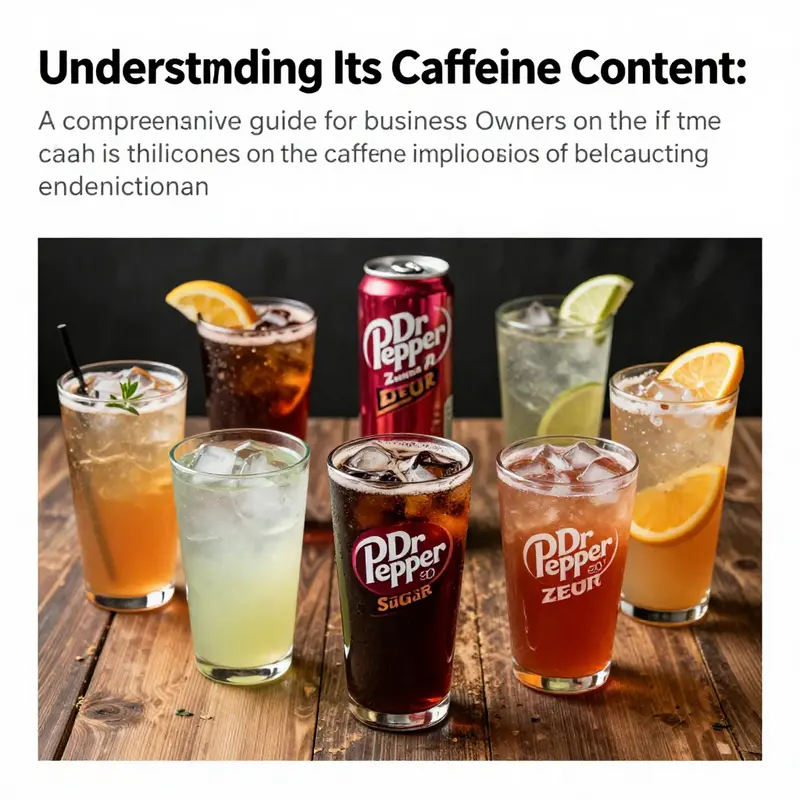
As consumer preferences shift towards low-calorie beverages, business owners must navigate the nuances of products like Dr Pepper Zero Sugar. This drink not only appeals with its iconic 23-flavor blend but also raises important questions about caffeine content and health implications. This article delves into key aspects such as the caffeine content in Dr Pepper 0, how it may affect health considerations, and its role in enhancing the drink’s flavor profile. Each chapter is designed to provide valuable insights for business owners looking to understand this beverage’s impact on their offerings and customer preferences.
Caffeine in a Zero-Sugar Cola with a 23-Flavor Blend: A Practical Look
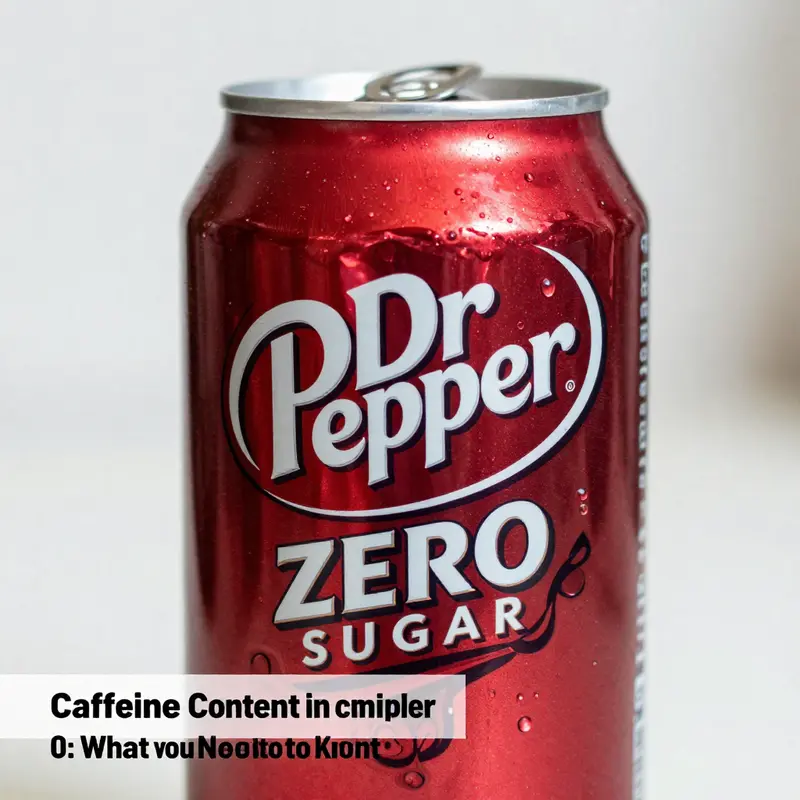
Caffeine often travels in quiet company with sweetness, bitterness, and a familiar fizzle. In zero-sugar colas built around a 23-flavor profile, caffeine plays a dual role: it contributes to flavor balance and supplies a mild energy signal. This chapter summarizes what is known about caffeine content, why caffeine is included in this beverage, how it compares to other caffeine sources, and what that means for daily choices. It is a careful walk through numbers, taste, and health considerations that matter to anyone who wants to understand the small kick behind a calorie-conscious drink.
From a numerical standpoint, a standard 12-fluid-ounce serving of this zero-sugar cola contains about 41 milligrams of caffeine. That amount sits in the mid-range for caffeinated soft drinks, higher than most non-caffeinated sodas, yet well below a typical cup of coffee and far below many energy drinks. The figure is large enough to be noticeable to caffeine-aware consumers, but modest enough to fit into many daily routines for adults who tolerate caffeine. The labeling of caffeine follows common industry practice: it is included intentionally, not as an afterthought, and its presence helps define the drink’s edge and balance. That balance matters because the drink earns its appeal not only from sweetness and aroma but also from a subtle bitterness that caffeine helps provide.
The way caffeine interacts with flavor is instructive. The cola rests on a bold 23-flavor blend, relying on spices, fruit notes, and botanicals to create a cohesive taste. Caffeine’s bitterness is not merely a stimulant; it acts as a counterweight to sweetness, a small but meaningful nudge that helps prevent the drink from feeling cloying. In a zero-sugar context, where sweetness is moderated by artificial sweeteners, this bitter edge anchors a finish-heavy flavor and supports a more layered mouthfeel rather than a single-note sweetness. The interplay between bitterness and sweetness is widely recognized in beverage science as a mechanism for flavor complexity without added sugar. Caffeine, in this sense, contributes to that complexity.
Why include caffeine in a zero-sugar beverage? For many producers, caffeine serves two linked purposes. First, it adds a bitter nuance that complements other taste elements, helping create a more rounded and balanced profile. Second, it provides a mild stimulant effect that some consumers seek as part of daily routines. This effect is typically modest compared with coffee or energy drinks, but not negligible. Individual tolerance varies, and some people may notice heightened alertness or, conversely, jitters or sleep disruption with higher intakes. Public health guidance suggests tailoring caffeine use to personal health, tolerance, and lifestyle. It is worth noting that even beverages marketed as zero sugar can contribute meaningfully to daily caffeine intake, especially when multiple caffeinated drinks are consumed.
In the broader context, the 41 milligrams per 12-ounce serving is comparable to many regular colas, yet far less than most cups of coffee and well below many energy drinks. These comparisons matter for people tracking caffeine for health reasons, pregnancy planning, sleep quality, anxiety management, or cardiovascular concerns. The key takeaway is that the product does contain caffeine and that its presence is a deliberate attribute of the beverage, not an accidental inclusion. This allows consumers to plan their caffeine consumption with awareness rather than guesswork.
Alongside caffeine, the zero-sugar formulation relies on artificial sweeteners to deliver a sugar-free taste. The standard blend typically includes aspartame and acesulfame potassium (Ace-K). These sweeteners replicate sweetness without calories. In practice, caffeine and these sweeteners create a specific sensory experience: caffeine modulates bitterness and depth, while the sweeteners provide a crisp, clean sweetness that resolves on the palate. Some people notice a slight cooling or dry-mouth sensation from Ace-K, a perceptual nuance that can subtly affect overall impression. In a zero-calorie framework, this yields a flavor profile that feels modern, bold, and convenient for those who want the taste of a cola without calories or sugar. This combination supports a crowd-pleasing, everyday beverage choice for many adults.
From a health perspective, understanding caffeine invites a broader reflection on personal limits and health status. People who are particularly sensitive to stimulants, pregnant individuals, or those managing conditions such as anxiety or certain cardiovascular issues may be affected by even moderate caffeine amounts. Monitoring daily intake, limiting caffeinated beverages, or opting for caffeine-free alternatives can be prudent in such cases. The general public should bear in mind that caffeine is an active ingredient that can influence energy, sleep, and nervous-system arousal. Reading labels, tallying caffeine from all sources, and considering timing can support balanced choices. The beverage discussed here is not caffeine-free and contributes to daily caffeine intake in a predictable, moderate way, which matters for those integrating it into a broader dietary pattern or wellness plan.
This chapter also recognizes that caffeine consumption rarely happens in isolation. People may consume multiple caffeinated drinks in a day, and cumulative caffeine intake matters for sleep, anxiety, and overall well-being. A practical approach is to limit the number of caffeinated drinks, choose decaffeinated options sometimes, and spread caffeine use across the day to minimize sleep disruption. Knowing the exact milligrams per serving and keeping track of total daily caffeine empowers readers to align beverage choices with personal health goals and lifestyle needs.
The broader conversation about caffeine in zero-sugar colas also centers on transparency and consumer knowledge. The stated figure—41 milligrams per 12-ounce serving—provides a concrete datum for comparison with other caffeinated drinks. It is reasonable to expect that when labels advertise zero calories or zero sugars, caffeine content is clearly disclosed as well. This clarity makes it possible to calculate daily intake by simple arithmetic. The manufacturer’s information confirms the ingredients and caffeine content and offers deeper notes on how caffeine interacts with other ingredients and how the product fits expectations for taste, convenience, and calorie-conscious choices. This is not merely about caffeine existence; it is about how its presence shapes mouthfeel, balance, and the overall sensory impression fans connect with when enjoying a cold beverage that fits a particular dietary framework.
For readers who want quick cross-checks or additional angles, referenced resources discuss caffeine content in this zero-sugar variant and how it compares with other caffeinated drinks. The interplay of caffeine with the flavor architecture and the broader dietary implications becomes clearer when the data and sensory cues are linked. This chapter weaves those threads into a cohesive narrative, emphasizing that caffeine is purposeful and has practical consequences.
If you want to explore related questions or compare caffeine across similar beverages, a concise resource exists that places caffeine in the larger landscape of popular caffeinated drinks. The takeaway remains practical: this zero-sugar cola contains caffeine, and understanding that fact helps readers make informed decisions aligned with taste, energy needs, and wellness priorities.
For those who value direct, actionable information, a quick pointer to manufacturer data can deepen understanding without extraneous details. The official ingredients page provides a focused look at ingredients and caffeine content, serving as a reliable entry point for readers who want to confirm the numbers and see how they compare with other caffeinated beverages in the same category. It is part of a broader ecosystem of content aimed at demystifying caffeine in everyday drinks and helping readers navigate choices with clarity.
If you enjoy the distinct flavor profile of the zero-sugar cola with a 23-flavor blend and you’re mindful of caffeine intake, you can enjoy it as part of a balanced day. If you are avoiding caffeine for any reason, a caffeine-free alternative is often available, but label checks are important, as not all zero-sugar colas are caffeine-free. The essential point remains: caffeine is present in this beverage, and its amount—like the drink’s other ingredients—has been documented and disclosed to help readers make informed choices aligned with health, schedule, and taste preferences.
External reference: for a more detailed look at the official ingredients and caffeine content as of February 2026, see the manufacturer’s ingredients page. https://www.drpepper.com/dr-pepper-zero/ingredients
Caffeine Beneath the Bubbles: The Real Caffeine Equation Behind Dr Pepper Zero Sugar
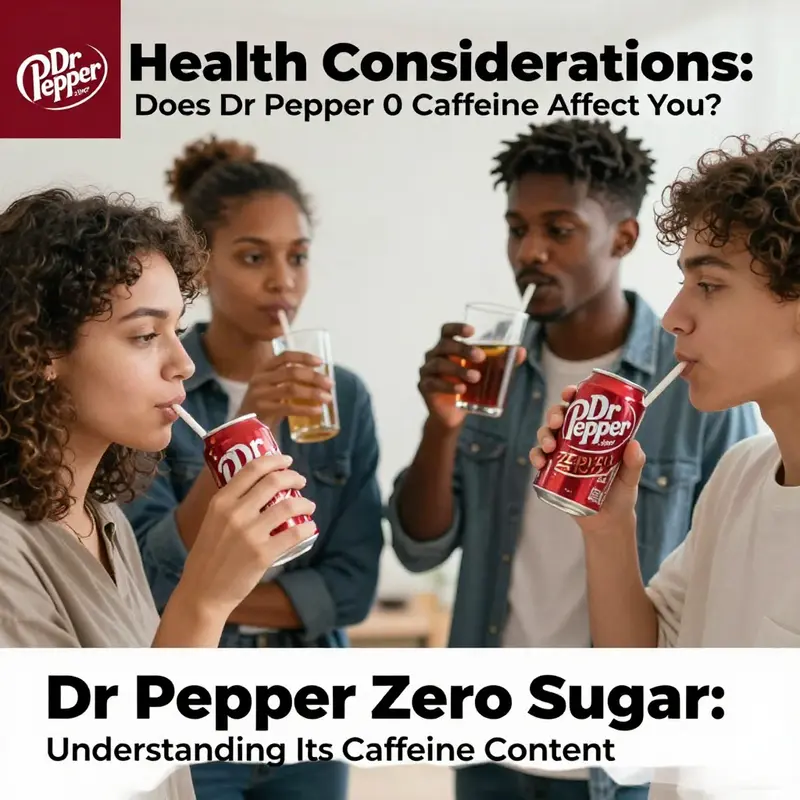
When people encounter a label that reads “Zero Sugar,” the leap to “zero caffeine” often follows. Yet in practice, the zero in calories or sugars does not automatically translate to zero in caffeine. The central question—does a zero-sugar, zero-calorie cola variant carry caffeine—unfolds as a careful balancing act between flavor science, labeling accuracy, and consumer health expectations. The chapter you’re reading unpacks this nuance with a steady, clear thread: Dr Pepper Zero Sugar does contain caffeine, and the amount matters for many readers who navigate daily caffeine intake with care. It isn’t merely a number on a can; it’s a lever in a broader conversation about how much caffeine people actually absorb, and how that caffeine interacts with taste, mood, and health. In the case of this particular beverage, the caffeine is not hidden or incidental. It is a deliberate ingredient, chosen to contribute to the drink’s overall profile just as the signature 23-flavor blend is chosen to define its character. This interplay—between sweetness, bitterness, aroma, and a mild stimulant effect—helps explain why a beverage with zero calories can still leave a distinctive impression on the palate and on alertness at the same time.
Behind the label, the figure most often displayed for Dr Pepper Zero Sugar is roughly 41 milligrams of caffeine per 12-ounce (355-milliliter) can. That figure places the drink in the same neighborhood as many regular colas, yet it sits noticeably below the caffeine content of a typical mug of coffee, which commonly ranges from about 95 to 200 milligrams per serving depending on brew strength and preparation. The difference matters for people who monitor caffeine as a daily total, not just an occasional indulgence. It matters especially for those who consume multiple caffeinated beverages across the day or who combine caffeinated drinks with chocolate, tea, or energy products. The arithmetic of caffeine intake is cumulative, and even modest amounts can accumulate to exceed personal comfort zones or medical cautions when added to other sources. For some, this is a thoughtful reminder to count not just the calories but also the caffeine tally across beverages, snacks, and supplements.
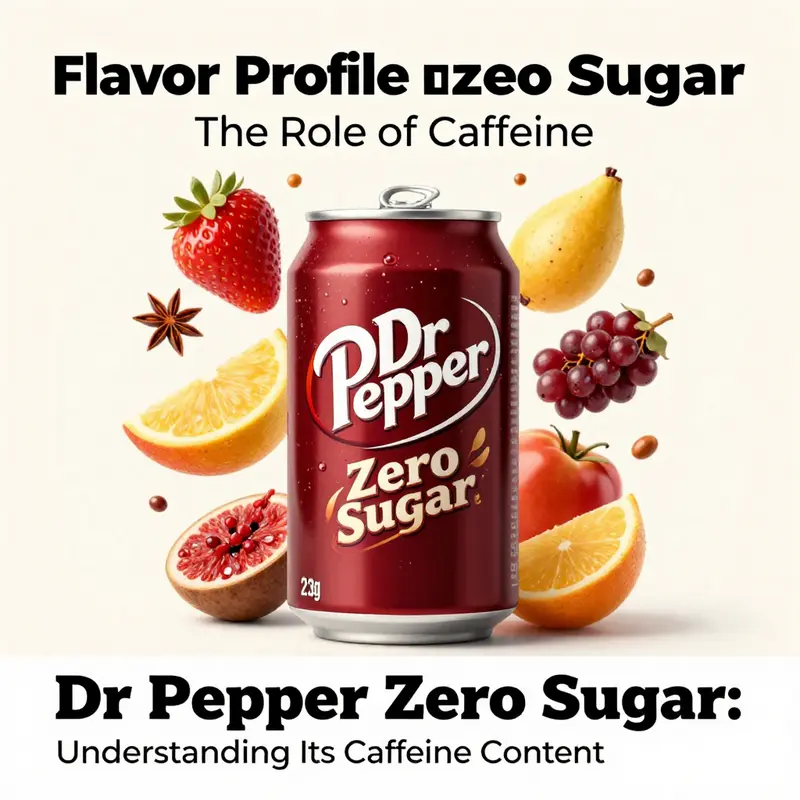
Flavor and chemistry walk hand in hand here. Caffeine’s presence in beverages does more than wake the senses; it in some way shapes perception. It enhances bitterness and can balance sweetness, lending a mouthfeel and aromatic lift that complement the drink’s complex 23-flavor profile. The exact way those flavors interact is not merely a marketing stroke. It’s a carefully tuned palate engineering effort that helps the beverage feel robust, crisp, and refreshing rather than flat or cloying. In other words, caffeine isn’t an afterthought slotted into the formulation; it is part of the architecture that makes the drink feel complete on the tongue and in the mind. That is why even products marketed as zero-calorie or zero-sugar can still carry a caffeine signature that matters to tasters, habitual consumers, and those who read labels with a calculator in hand.
With numbers in mind, it’s helpful to consider the practicalities of daily caffeine limits. The most widely cited guideline for healthy adults suggests up to 400 milligrams of caffeine per day as a general upper bound. This benchmark doesn’t apply uniformly to everyone; individual sensitivity varies, and health conditions may alter what is acceptable. For someone who consumes one Dr Pepper Zero Sugar can, the intake is a fraction of that 400-milligram ceiling. But if the day includes multiple caffeinated beverages—perhaps a cup of tea, a can of an energy drink, and some chocolate—these sources begin to add up. The subtlety here is that the same drink may feel deliciously innocuous in isolation but contribute to a cumulative budget that nudges mood, sleep, or heart rate in ways the consumer prefers to avoid. The nuance is not a warning about one product; it’s an invitation to understand how a single product fits within a daily caffeine economy, one that is highly personal and context-dependent.
This is where confusion about the term “0” can arise. The misinterpretation is understandable. If a label proclaims zero calories, zero sugar, or zero fat, consumers may assume zero caffeine, because caffeine often accompanies other energy-boosting ingredients in some products. Yet, caffeine is not primarily a calorie driver. It’s an active compound with a distinct sensory and physiological footprint. The result is a scenario where a drink can be marketed as zero-calorie and still contribute a meaningful amount of caffeine to the daily total. Clarity on this point helps readers set expectations. It also underscores the importance of checking the exact caffeine content, rather than relying on a general assumption that a “zero-sugar” label implies no stimulant effect whatsoever.
The conversation about caffeine and health can also drift into special populations. For individuals who are particularly sensitive to caffeine, even smaller quantities can provoke heightened symptoms such as jitteriness, restlessness, insomnia, or palpitations. People with anxiety disorders, certain cardiovascular conditions, or hypertension may experience amplified effects from caffeine, even at modest doses. Pregnant individuals, too, are commonly advised to manage caffeine intake more conservatively, recognizing that caffeine crosses the placenta and can affect fetal development. These cautions aren’t warnings against everyday enjoyment; they’re reminders to tailor caffeine choices to personal health contexts and to discuss concerns with a medical professional when situations—like pregnancy or arrhythmic histories—arise.
Label literacy becomes a practical skill in this environment. Reading a “zero sugar” beverage and assuming it is caffeine-free is a simple heuristic that can trip up even careful readers. In the case of Dr Pepper Zero Sugar, the official data confirms a specific amount of caffeine: about 41 milligrams per 12-ounce can. This is not an arbitrarily chosen number. It reflects a formulation decision aimed at delivering flavor balance and a recognizable sensory profile while maintaining the product’s calorie-free promise. For readers who want to verify the figure themselves, it’s worth turning to the brand’s product information page, where the caffeine content is stated in the context of the drink’s overall profile. The nuance is that the number is a product attribute; it does not render the drink a caffeine-guaranteed energy source. The same caffeine quantity that heightens the taste can also contribute a modest stimulant effect that some individuals notice more than others.
As readers look further into the topic, a few practical guidelines emerge that help connect the numbers to daily life. First, moderation remains a useful principle. A single can may fit comfortably within a personal caffeine plan for many adults, particularly when the rest of the day’s sources are moderate and steady. Second, pay attention to total daily intake across all caffeine-containing products. It’s easy to fall into a pattern of sipping through several beverages—each with its own caffeine dose—without recognizing the cumulative effect. Third, consider timing. Caffeine consumed late in the day can disrupt sleep. If one is sensitive to sleep disturbances, reserving caffeine for the morning or early afternoon can help ensure rest remains undisturbed. Finally, for those with unique health considerations, a conversation with a clinician can help tailor intake guidance to individual risk factors and needs. In this landscape, Dr Pepper Zero Sugar is a reminder that beverages can carry meaningful stimulant properties even when their calorie counts are fought to zero.
It is worth noting the reliability of the data guiding these conclusions. The caffeine content figure for Dr Pepper Zero Sugar has appeared in multiple consumer-facing sources and has been cross-checked by health media outlets that monitor beverage ingredients. The precise figure referenced here—41 milligrams per 12-ounce can—helps anchor discussions around caffeine in zero-sugar sodas, enabling readers to compare with other beverages that share the same goal of flavor fidelity and calorie control. This information is particularly relevant for people who are actively tracking caffeine for fitness, sleep quality, or medical management. It also makes room for more nuanced comparisons with other carbonated beverages, both caffeinated and decaffeinated, so readers can map out their caffeine budgets with greater confidence.
An important thread in this discourse is the persistence of misinformation about caffeine content in zero-sugar drinks. The online landscape can include misleading claims that “zero” products are caffeine-free. Several factors contribute to these myths: misreading packaging, inconsistent product lines across regions, label updates that lag behind reformulations, or simply the spread of inaccurate rumors. Clarifying the actual caffeine content helps restore trust and provides a factual basis for decisions about consumption. The path to clarity often involves consulting authoritative ingredient panels and cross-referencing multiple reputable sources. In practice, readers who want to maintain a transparent caffeine log will benefit from noting the exact milligram amount per serving and accounting for any variation across packaging or batch batches—a practice that becomes a habit with ongoing product observation.
From a consumer-research perspective, the story of Dr Pepper Zero Sugar’s caffeine content also invites reflection on how people form expectations about taste and energy. The sensory cues—bitterness, aroma, mouthfeel—are all part of a relationship with caffeine that goes beyond pure stimulation. Caffeine adds a brisk edge to the drink’s taste, and for some tasters, that edge can enhance perceived refreshment, especially when the drink is served cold and fizzy. For others, the same caffeine presence might be a signal to moderate intake in anticipation of sleep or anxiety. The broader takeaway is that caffeine content interacts with personal preferences and physiological responses in a way that makes straightforward judgments about safety or suitability more complicated than a single label might suggest.
If you are curious about how other diet or zero-sugar beverages compare to Dr Pepper Zero Sugar on caffeine content, there is a path to explored comparisons without leaving the topic. For instance, exploring how diet variants of popular beverages fare in caffeine terms can help calibrate expectations about taste and energy impact. If you want to see a related examination, consider this resource that discusses caffeine content across diet versions of common soft drinks. The comparison can illuminate whether you should expect the same caffeine presence in diet variants or if the caffeine content shifts with formulation changes. Does Diet Dr Pepper Have Caffeine? is a relevant reference that can anchor your broader reading on how zero-calorie and zero-sugar drinks handle caffeine while maintaining familiar flavor profiles. It’s a reminder that even within brands and product lines, caffeine content can vary more than casual readers might assume, and that the careful reader benefits from checking labels and consulting credible sources when planning caffeine intake.
As the discussion loops back to the everyday decision-making readers confront, the practical message remains steady: a caffeine-containing, zero-calorie beverage is not a contradiction. It is a formulation choice that preserves taste, balance, and sensory satisfaction while offering a calorie-free option. For many people, this offers a useful compromise—enjoyment without added calories, while staying mindful of caffeine totals. For others, the caffeine content may be a reason to limit consumption to certain times of the day or to opt for a decaffeinated alternative when evenings beckon.
For readers who want to anchor these insights with a single, accessible external source, a detailed account of caffeine content in Dr Pepper Zero Sugar provides an authoritative reference point. The Spruce Eats published an analysis that confirms the caffeine content as part of a broader discussion about caffeinated beverages and their role in daily life. Their article, which consolidates measurements and context, can serve as a practical companion to the label data and health considerations outlined here. See the discussion at The Spruce Eats for a deeper dive into the data behind the caffeine figure and how it compares to other widely consumed drinks. The Spruce Eats – Dr Pepper Zero Caffeine Content.
In sum, the question of does Dr Pepper Zero Sugar contain caffeine is answered with specificity: yes, about 41 milligrams per 12-ounce can. The magnitude can matter in everyday life, especially for caffeine-sensitive individuals, those watching total intake, or pregnant readers who need to moderate consumption. The presence of caffeine is a reminder that zero-calorie does not always equate to caffeine-free. Understanding the context—flavor balance, total daily intake, personal health considerations—helps readers make informed choices that align with their goals for taste, mood, and well-being. As with many nutritional questions, the answer sits not in a single label line but in a broader reading of the product’s formulation, individual physiology, and daily consumption patterns. The dialogue between chemistry, sensory science, and health continues to shape how we approach beverages labeled as “zero” in one dimension while remaining clearly nonzero in another. To readers who want a broader perspective, the topic invites ongoing attention to how formulation decisions reflect consumer desires for flavor, function, and control over daily caffeine budgets.
null
null
Final thoughts
Understanding the caffeine content and its implications in Dr Pepper Zero Sugar is essential for business owners aiming to cater to health-conscious consumers. The moderate level of caffeine, combined with its unique flavor profile, offers an appealing option that satisfies diverse preferences. By staying informed about the beverage’s attributes, business owners can make strategic decisions that align with customer demands, ultimately enhancing their product offerings and customer satisfaction.