
The landscape of carbonated beverages has evolved significantly over the years, with many consumers increasingly concerned about their caffeine intake. Mountain Dew, a popular choice among soft drink aficionados, stands out not only for its distinct flavor but also for its notable caffeine content. It is crucial for business owners in the beverage industry to understand these nuances, especially in a market that prioritizes health and wellness. This article will first delve into the specific caffeine levels in Mountain Dew products, before comparing them with other sodas. Finally, we will explore the effects of this caffeine on health and lifestyle surrounding the consumption of Mountain Dew, providing essential insights for making informed business decisions.
Citrus and Caffeine: Mountain Dew’s Consistent Charge

Caffeine in Mountain Dew acts as a brisk companion to a bright citrus palette. The classic 12-ounce can is commonly listed at about 55 milligrams of caffeine, a level that places the drink toward the upper end of mainstream sodas. This is a deliberate choice that aims for a steady lift rather than a sharp spike. The result is a perceptible caffeine feel that supports alertness without the intensity of specialty energy drinks. Across the core lineup, the caffeine figure remains remarkably consistent, which makes it predictable for consumers who enjoy a familiar energy baseline while exploring a range of fruity flavors.
Beyond the original lemon lime base, Mountain Dew expands into flavors such as cherry citrus and wild orange, yet most variants retain a similar caffeine backbone. In some flavor updates the exact milligram count may shift by a few milligrams due to formulation tweaks, but the target stays around the same range in every can. This parity matters because it lets taste experimentation coexist with predictable caffeine delivery, appealing to fans who want both flavor variety and a reliable lift.
The presence of caffeine sits alongside sugar in many versions. The standard sugared variants carry the caffeine in tandem with a substantial sugar load, while the diet or zero sugar versions deliver the same caffeine level in a sugar-free context. In practice this means a person choosing diet Mountain Dew can expect almost the same energy cue as a sugar containing version, differing mainly in caloric and sugar content.
From a public health and consumer perspective, the 55 mg per 12-ounce serving figure provides a useful anchor for comparing caffeinated beverages. It also emphasizes that caffeine content is only one piece of the experience; the timing of consumption, body weight, caffeine tolerance, and concurrent caffeine sources all shape how the drink feels in real life.
As flavors diversify, the brand preserves a straightforward message: energy that is steady, flavor rich, and easy to measure against other daily sources. The citrus brightness remains the common frame, while taste profiles offer variety without sacrificing the core stimulant function. The result is a product family that invites exploration while maintaining a dependable energy baseline.
Peak Caffeine in a Can: Mountain Dew’s Jolt Amid the Soda Landscape
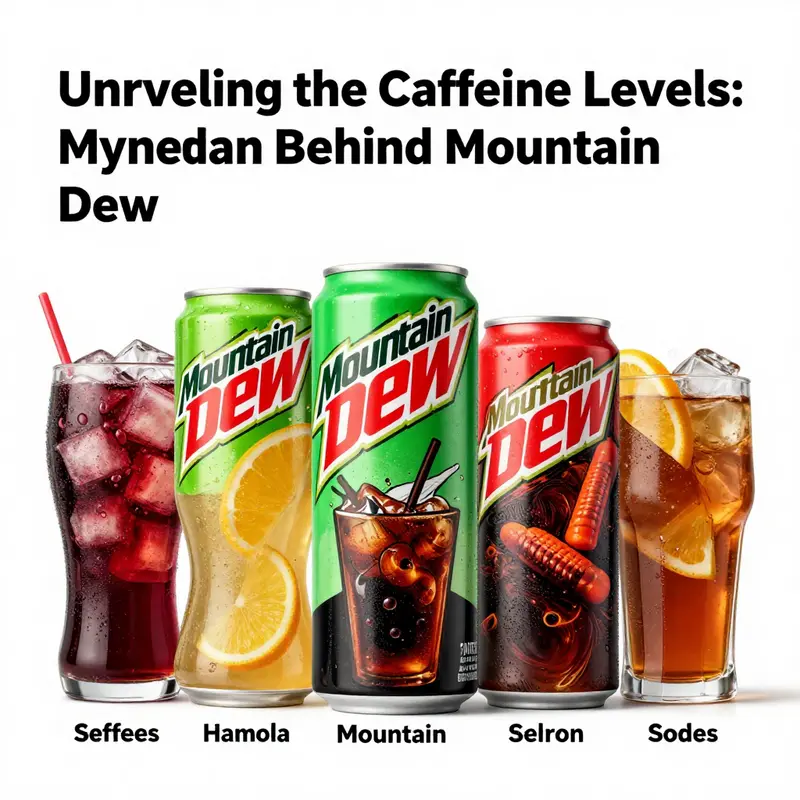
Caffeine has long defined how we judge the energy value of beverages, and in the realm of soft drinks, Mountain Dew occupies a distinctive niche. Its bright lemon-lime character is more than a flavor profile; it also signals a caffeine profile that many consumers associate with a robust, instantly noticeable lift. In practical terms, a standard 12-ounce (355-milliliter) can of the classic formulation delivers roughly 54 to 55 milligrams of caffeine. This figure isn’t conjured from a single source alone; it appears consistently across analytical reports of commercially available beverages and is echoed by multiple independent analyses that track the caffeine content of prepackaged drinks. The numbers matter not just as trivia but as a benchmark in a crowded market where consumers increasingly compare a drink’s cognitive kick to its hydration promise and taste appeal. When we say Mountain Dew is a high-caffeine soft drink, we aren’t relying on folklore; we are describing a measurable strength that places it above many of its traditional cola peers and aligns it with a subset of beverages that blur the line between soda and energy-boosting drink, at least in terms of caffeine load.
The story of Mountain Dew’s caffeine is not a tale of a single product line. The brand has a family of variants and flavors, each with its own slight deviations in taste and formulation. Yet the caffeine story tends to stay remarkably close to the original’s baseline. Diet Mountain Dew, which preserves the same caffeine cadence, clocks in at about 55.2 milligrams per 12-ounce serving. Code Red, a red-tinted version with its own fan base, tracks in at roughly 54 milligrams per 12-ounce serving—the margin here is small, but the consistency is meaningful. Even when a flavor deviates in other dimensions, such as sweetness or color, caffeine is not pushed far from the central level that has made Mountain Dew a go-to option for those seeking a brisk, edge-enhancing effect from a carbonated beverage. This consistency matters for consumers who choose a drink not only for taste but for the predictable profile they expect from a familiar brand.
Where does Mountain Dew sit in the broader spectrum of caffeinated soft drinks? The landscape is diverse, but a straightforward comparison helps illuminate its position. Among well-known colas and clear sodas, the contrast is clear: Diet Coke, a staple that many people reach for in daily routines, delivers around 46 milligrams per 12-ounce can; Coca-Cola Classic sits closer to 34 milligrams; Pepsi hovers near 38 milligrams; and Dr Pepper, another perennial favorite, lands around 41 milligrams per 12-ounce serving. In this lineup, Mountain Dew stands taller, offering caffeine levels that are noticeably higher than the mainstream colas that dominate many store shelves. However, it’s important to place it in context: those numbers still fall short of energy drinks that are explicitly engineered as concentrated caffeine beverages. For example, an energy drink in an 8.4-ounce can might deliver around 80 milligrams of caffeine, more than Mountain Dew in a single serving, and at a different price point and marketing frame. The overall takeaway is that Mountain Dew’s caffeine content is high enough to deliver a sincere lift, yet it remains within the spectrum of beverages widely regarded as sodas rather than energy shots. This positioning—high caffeine within a carbonation-first product—explains why it has earned a dedicated following among people who want quick alertness without venturing into the more intense world of energy drinks.
This chapter doesn’t merely quantify a number; it invites readers to think about how caffeine interacts with taste, energy needs, and daily routines. The average adult who consumes a can of Mountain Dew may anticipate a certain mood shift: a more alert focus, a faster pace of thought, and a boost that makes it easier to navigate a demanding afternoon. The effect is not purely chemical. It’s also psychological and cultural. The caffeine signal reinforces a broader association with vitality and quick, accessible energy, one that fits neatly into moments when a person wants a refreshing, flavorful drink without resorting to coffee or a heavily caffeinated energy product. And because caffeine’s impact is not uniform across all individuals—genetics, tolerance, and even time of day all play roles—the real-world experience of Mountain Dew can vary from person to person. For some, the lift is crisp and immediate; for others, it is subtler, a sprinkle of extra wakefulness that complements a snack or a lunch break. For those who monitor their caffeine intake, the numbers provide a practical frame. If a single can delivers about 55 milligrams, two cans would bring the total close to 110 milligrams, a level that begins to approach the daily intake that health authorities typically monitor for safety and sensitivity. Yet for many, the daily picture includes multiple caffeinated sources across coffee, tea, and an assortment of sodas, so the nitty-gritty becomes a matter of total daily load rather than a discrete, standalone figure from one product.
To understand Mountain Dew’s place more deeply, consider the way caffeine functions in the body. Caffeine is rapidly absorbed in the small intestine and reaches peak blood levels within about 30 to 60 minutes after consumption. It acts as an adenosine receptor antagonist, which means it dampens signals that would otherwise promote sleepiness and fatigue. The result is a perception of heightened alertness, faster reaction times, and a sense of energy that can be beneficial during long drives, late study sessions, or moments when focus is crucial. The duration of these effects is variable, but the half-life of caffeine in healthy adults typically ranges from three to five hours, depending on factors such as age, liver function, smoking status, and concurrent medications. This pharmacokinetic reality helps explain why people often plan caffeine intake around work, exercise, or other activities that require attention and stamina. It also means that even a drink with a modest caffeine content can contribute meaningfully to a person’s overall energy profile if consumed regularly or in the middle of a long day. The Mountain Dew formula thus becomes a practical choice for those who want a quick, flavor-forward caffeine source that fits into a busy lifestyle without the ritual of brewing coffee or the more aggressive profile of high-caffeine energy drinks.
The social and cultural dimensions of Mountain Dew further illuminate why its caffeine content matters. The brand’s identity—bright, energetic, youthful—aligns with a consumer base that values immediacy and a certain trend-forward vibe. In many consumer settings, a 12-ounce can is a pocket-sized energy tool, easy to carry into a work break, a classroom, or a late-evening study session. The predictability of caffeine content across variants reinforces trust: a Diet variant, a bold red version, or a standard lemon-lime option still delivers a caffeine payload that fans can count on. This reliability can influence purchasing decisions just as much as flavor or price. For parents shopping for teens or adults juggling schedules that require sustained attention, the available data on caffeine per serving offers a concrete metric to guide choices. It’s not simply about whether a beverage tastes good; it’s about how its caffeine contributes to daily energy management and how that blends with other dietary factors, including sugar, hydration, and overall nutrient intake. While caffeine alone is not a dietary villain, its presence in a familiar, refreshing drink shapes patterns of consumption that have begun to define modern snacking and sipping habits across generations.
In the broader research landscape, these numbers have a long provenance. An influential, widely cited study—often referenced in nutritional analyses of soft drinks—aggregates caffeine content across national-brand and store-brand beverages, providing a baseline that helps calibrate expectations for a product like Mountain Dew within the soda category. While the original data collection dates back more than a decade, the values remain a touchstone because, for many mainstream beverages, caffeine is a relatively stable component, adjusted only by flavor variants or minor formula tweaks. The practical implication for readers is simple: when you reach for a can, you are not chasing a moving target; you are selecting from a family of products that maintain near-identical caffeine payloads, at least per 12-ounce serving, across the core lineup. This consistency allows for more predictable planning—whether you’re tracking caffeine intake for school, work, or personal health needs—without sacrificing the sensory experience that makes Mountain Dew recognizable on shelves and in fridges around the world.
For readers who want to explore the topic further, a deeper dive into Mountain Dew’s caffeine content across varieties can be found at a dedicated resource that presents the data in a comparable format. The internal reference here helps connect the chapter to the broader conversation about how this particular beverage stacks up against other caffeinated options. In that vein, the comparison remains robust: Mountain Dew’s caffeine level, hovering in the mid-fifties per 12-ounce serving, clearly places it above many traditional sodas yet below most energy-focused beverages. This places it in a unique position in the market—a carbonated drink with a caffeine component that is substantial enough to be meaningful, but not so concentrated that it becomes an energy shot in a can. That middle ground contributes to its enduring appeal for consumers who want both flavor and a swift lift, without the intensity or cost of more extreme caffeinated options.
From a consumer education perspective, the chapter’s numbers encourage a practical, informed approach to drinking choices. If you frequently drink Mountain Dew and are mindful of caffeine intake, you can train your daily pattern around a clear, repeatable metric. You can also calibrate how many 12-ounce servings fit into your personal tolerance and daily limit. The numbers invite readers to consider not only the caffeine content but the context in which they consume it: whether it’s during a long conference afternoon, a soccer practice break, or a late-night study session. The pattern is simple: a can delivers roughly 55 milligrams; two cans deliver about 110 milligrams; three cans would approach or exceed 150 milligrams. For someone who limits daily caffeine to around 200 to 400 milligrams—a range commonly discussed in health guidance—these cans add up quickly when combined with coffee, tea, chocolate, and other caffeinated sources. The practical takeaway is that Mountain Dew’s caffeine is substantial enough to influence day-to-day energy management, but it is also easy to plan around with a little attention to serving size and total daily intake.
In closing, the caffeine truth about Mountain Dew is neither sensational nor obscure. It sits at the intersection of taste, energy, and routine, a can that headlines a simple, repeatable experience: crisp carbonation, bright flavor, and a dependable lift. The data points—roughly 54 to 55 milligrams per 12-ounce serving in the classic form, with other variants showing a similar pattern—frame a reality in which this beverage remains a popular option for people seeking a fast, flavorful way to feel more alert. The consumer who minds caffeine knows what to expect; the curious reader gains a clearer sense of how a familiar soda can function within a broader strategy of daily energy management. For a concise reference to the caffeine content across Mountain Dew’s lineup, see the dedicated resource linked here: caffeine-content-mt-dew. This internal link anchors the discussion in a network of related analyses that compare Mountain Dew to other caffeinated beverages, helping readers place the can on a continuum—from cola cousins to the overt energy profiles that dominate less taste-focused categories. Ultimately, the conversation about Mountain Dew’s caffeine is also a conversation about how we approach our daily caffeine budgets, choose our beverages, and navigate a world where quick energy often comes in a can that you open with a smile and a satisfying fizz.
External resource: For an external overview of caffeine content in popular sodas, see https://www.caffeineinformer.com/caffeine-in-soda. This resource provides a broad, up-to-date landscape of caffeine levels across major brands and formats, helping readers contextualize Mountain Dew within the wider spectrum of soft drinks and caffeinated beverages.
null

null
Final thoughts
As the demand for beverages with recognizable caffeine levels continues to rise, understanding the specific content and implications of Mountain Dew becomes paramount for business owners. This analysis not only highlights the caffeine content in Mountain Dew but also contextualizes it within the larger market of soft drinks. By evaluating its comparative caffeine levels and considering the health implications associated with its consumption, businesses can better cater to the needs and preferences of their clientele, ultimately positioning themselves for success in a competitive marketplace.