
The beverage industry has experienced a growing interest in caffeine content as consumers become more health-conscious. Mountain Dew stands out not only for its bold flavor but also for its significant caffeine levels. For business owners and operators, understanding the caffeine content in Mountain Dew is crucial for product offerings, marketing strategies, and consumer knowledge. This article explores the caffeine landscape in Mountain Dew, comparing it with other soft drinks, addressing health implications for consumers, and assessing its cultural significance. Each chapter is crafted to equip you with essential insights that will help you navigate the complexities of caffeine in this popular beverage.
Caffeinated Clarity: Unraveling Mountain Dew’s Caffeine Content and Its Everyday Impact
The allure of Mountain Dew has always rested as much in its bright, almost electric color as in the promise of a quick lift when energy flags. For fans and curious readers alike, the central question seems almost ritualistic: is there caffeine in Mountain Dew? The answer, grounded in both product labeling and the broader analysis of soft drink formulations, is yes. The original Mountain Dew contains approximately 54 milligrams of caffeine per 12-ounce (355 ml) can. This figure is not just a dry number on a nutrition panel; it anchors a long-running reputation: this is a beverage designed to provide a noticeable, daytime-friendly boost without tipping into the territory of energy drinks. The caffeine content helps explain why many people reach for a can when the afternoon slump hits, or when a morning drive requires a little extra focus. The quantifiable presence of caffeine also sets Mountain Dew apart from many other carbonated soft drinks that typically offer little more than sugar, fizz, and flavor. And while 54 mg per can is the standard reference for the flagship product, the landscape across variants is nuanced. The official labels for each flavor and edition list caffeine content, and though the numbers can shift slightly from one formulation to another, most variants maintain a significant level. In practical terms, that means a consumer swapping between Original Mountain Dew, Code Red, Voltage, Baja Blast, or other versions can still expect a caffeine kick, with only modest differences between products. The exact amount, however, is always printed on the can or bottle, and those precise figures can matter to anyone balancing caffeine intake for health, work, or personal preference.
To translate that into everyday understanding, consider the caffeine scale in coffee. A typical cup of coffee—the 8-ounce size that many people reach for first thing in the morning—often runs around 95 milligrams of caffeine, though this can vary widely depending on bean, roast, and brewing method. In that light, Mountain Dew’s 54 mg per 12-ounce can sits lower than a standard cup of coffee on a strict mg-per-serving basis. Yet the effect people notice is not purely a function of milligrams per se; other factors—sugar content, carbonation, and individual sensitivity to caffeine—shape how alert or jittery a person feels after a can. The beverage’s reputation for delivering an energy-like lift, rather than simply quenching thirst, is both a marketing and a physiological reality. When someone drinks Mountain Dew, the caffeine interacts with their nervous system in ways familiar to coffee drinkers and tea lovers alike, albeit in a form that blends with a high-sugar, highly-carbonated experience. The combination can feel both immediate and reinforcing, a reason the beverage has attracted a dedicated following among those seeking a quick boost without resorting to traditional energy drinks.
From a consumer education standpoint, the caffeine content is best understood as a baseline rather than a universal standard. The original formulation establishes a baseline of around 54 mg per can, a figure repeatedly echoed across authoritative sources, including the product’s own labeling and reviews that examine the caffeine landscape in soft drinks. The baseline is complemented by a family of variants that sometimes present slightly different caffeine portraits. In practice, the caffeine in Mountain Dew variants tends to cluster around a similar magnitude; some editions may edge a bit higher or lower, but the difference is seldom dramatic. This consistency is part of why fans who enjoy one version of Mountain Dew can often count on a familiar energy profile when trying another variant. If a consumer is watching caffeine intake across multiple beverages in a day, the simplest rule remains: read the nutrition facts label for the exact figure on that specific product. In other words, the exact mg can vary by flavor, region, or production batch, even as the overall character of caffeine’s presence stays consistent across the Mountain Dew lineup.
Understanding the mechanics behind this caffeine presence invites a broader appreciation of how such beverages are formulated. Caffeine is a legal, widely studied stimulant whose inclusion in many soft drinks is both traditional and strategic. In Mountain Dew’s case, caffeine is not added solely for the sake of a jolt; it acts in concert with the drink’s sugar content, acidity, and carbonation to shape the sensory and perceptual experience. The caffeine’s energizing effect interacts with the brain’s adenosine pathways, helping to blunt fatigue and increase perceived alertness. But that action is personal. For some, 54 mg in a single can provides a crisp lift that lasts through a mid-afternoon meeting or a long drive. For others, especially those with caffeine sensitivity, the same amount can produce stronger effects, such as jitters or disrupted sleep when consumed late in the day. This variability underscores why the labeling is essential. It invites consumers to make informed choices that align with their tolerance, daily routines, and health considerations.
From a public health perspective, awareness of caffeine content in popular beverages matters as part of a broader conversation about dietary stimulants. The fact that Mountain Dew carries a meaningful dose of caffeine challenges assumptions about soft drinks being “harmless sugar” drinks. It also invites consumers to consider the cognitive and physiological trade-offs of caffeine consumption alongside other daily sources, including tea, coffee, chocolate, and certain medications. The practical takeaway is straightforward: know what you’re drinking. The nutrition facts label on the can or bottle provides an exact caffeine value for that specific product, which is especially important for children, adolescents, pregnant individuals, and anyone monitoring total daily caffeine intake. For those seeking a quick reference, there is a public, accessible body of analyses that corroborate the 54 mg figure for the flagship product, while noting that the caffeine content in other variants is typically in the same general range. The important theme here is measurement, not mystique. A can’s caffeine content is a quantifiable detail, and it should guide choices as precisely as any sugar content or caloric information.
For readers who want to trace the caffeine landscape across Mountain Dew’s various forms, there is a useful, more detailed snapshot that discusses the caffeine content across products. This resource distills the available data into a readable form and is worth consulting for those who want a quick yet thorough sense of how the lineup compares. Within that broader discussion, one finding remains consistent: caffeine is a real and notable component of Mountain Dew, embedded in the fabric of its flavor and branding. The official product pages and nutrition panels are the most reliable sources for the exact figures, and they typically reinforce that the caffeine content remains a constant feature across the core and many variant products. To dive deeper into a focused comparison of caffeine content across Mountain Dew varieties, readers can consult the dedicated analysis that explores how much caffeine each Mountain Dew product contains. For a concise, direct look at a specific variant’s caffeine figure, see the deeper exploration here: caffeine content of Mountain Dew.
Beyond the numbers, the caffeine story of Mountain Dew intersects with consumer behavior in telling ways. The beverage’s marketing often positions it as an on-the-go, I-can-do-anything kind of option. That positioning naturally attracts people who value efficiency and quick energy. A can fits neatly into a busy day: a quick swap at a desk break, a post-lunch pick-me-up during a long drive, or a momentary focus boost before a late-evening project. The caffeine content is not just a placebo; it is a real physiological signal that helps explain why the drink is chosen with intention in certain moments. The taste profile—citrusy, bright, and intensely flavored—complements the caffeine by making the experience feel more invigorating than a plain water or a non-caffeinated soft drink might. In that sense, Mountain Dew offers both sensory and stimulant cues in a single package, a combination that appeals to a particular rhythm of daily life.
If readers are trying to map out caffeine exposure across a day, Mountain Dew becomes a piece of a larger puzzle. The 54 mg per 12-ounce can is a core reference point, but it’s not the only piece to consider. A single can can occupy a role in meeting or exceeding a personal caffeine threshold, depending on how many beverages a person drinks in a day and how many variants they might consume in the same period. For instance, consuming a can in the late afternoon could interact with other caffeine sources, such as coffee or tea, potentially affecting sleep onset for sensitive individuals. This is not a warning against enjoying the drink but a reminder to balance intake with other sources and with one’s own tolerance levels. As always, the label is the best guide. If you’re curious about the exact caffeine content of the specific Mountain Dew product you’re drinking, check the nutrition facts panel. And if you want a consolidated view across several products to inform your daily planning, the linked article on Mountain Dew caffeine content provides a thorough, accessible reference.
The broader takeaway is simple: Mountain Dew does contain caffeine, and the typical reference point for the flagship formulation is about 54 mg per 12-ounce can. Variants tend to keep this energizing profile, though exact numbers can vary a little, and health-conscious readers should verify the label on each package. For those who enjoy comparing beverages, the discussion within the caffeine landscape offers a framework for thinking about how Mountain Dew stacks up against other caffeinated drinks—whether you measure by milligrams per serving or by the subjective experience of alertness and vitality. The science behind caffeine’s effects on alertness and fatigue is well established, but the personal experience is never universal. Your own caffeine tolerance, the timing of consumption, and the context of your day all shape how Mountain Dew lands in your routine. In this sense, the beverage functions not only as a flavor-driven treat but as a practical, measurable component of daily caffeine management.
External resource note: For a general reference on caffeine intake and safe limits, consider consulting trusted health information from official sources such as the U.S. Food and Drug Administration. More details can be found at https://www.fda.gov/consumers/consumer-updates/caffeine-how-much-is-too-much.
null
null
Caffeine, Boundaries, and Daily Choices: Interpreting Mountain Dew’s Kick for Consumer Health

A bright citrus fizz can feel like a spark to start the day, a quick lift between tasks, or a simple, familiar ritual. Yet the caffeine hidden behind that familiar glow invites careful consideration. For many, Mountain Dew delivers a reliable jolt, a reminder that taste and energy sometimes travel together in the same can. The question people ask most often is straightforward: how much caffeine is in Mountain Dew, and what does that mean for health, daily routines, and long-term well-being? The answer hinges on precise figures, clear labeling, and a framework for thinking about caffeine that goes beyond one beverage. The original Mountain Dew contains about 54.8 milligrams of caffeine per standard 12-ounce can, with Diet Mountain Dew clocking in at roughly 55.2 milligrams. Those numbers are widely cited and sit near the upper-middle range for non-alcoholic sodas, especially when one compares them to other well-known sodas that hover around the 40-milligram mark per 12-ounce serving. The takeaway is not just that Mountain Dew carries caffeine; it is that the amount is substantial enough to influence daily intake when consumed regularly or in combination with other caffeinated products. When people learn these figures, they often realize that their caffeine exposure from beverages adds up more quickly than they expect, particularly if they habitually reach for more than one caffeinated drink in a day. The caffeine content is not a fixed trophy of energy; it is a variable that can shift with flavor, edition, or formulation, though the overall profile remains clearly caffeinated in most versions. For readers seeking precise numbers across variants, the official product labels and trusted databases provide the exact figures for each item, and a quick reference to the caffeine content page can help readers compare different Mountain Dew offerings with other beverages. the caffeine content of Mountain Dew. Beyond the numbers, the real question is what those milligrams mean in everyday life, what thresholds matter, and how people can navigate caffeine in the context of health goals, sleep quality, and individual sensitivity.
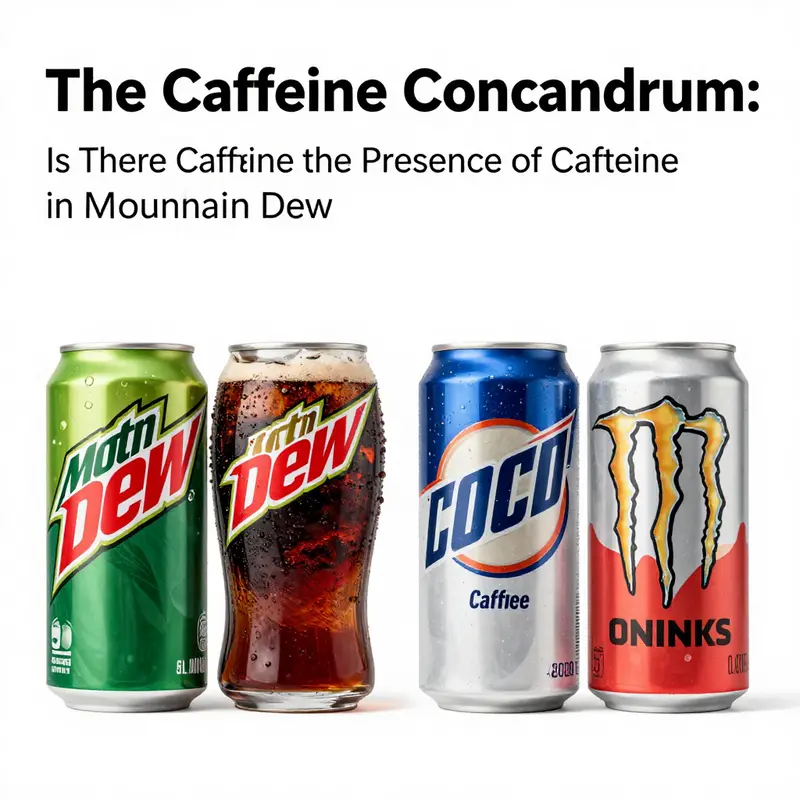
To place Mountain Dew in context, consider the landscape of caffeinated soft drinks. In direct comparisons, Mountain Dew tends to sit higher than several popular competitors. For example, a 12-ounce serving of some well-known sodas commonly lands around the mid-30s to low-40s milligrams, with Dr Pepper often at the upper end of that band and other cola-style beverages trailing behind. Those differences matter for people who are tracking caffeine for health reasons, whether they are managing anxiety, sleep disorders, or cardiovascular considerations. The caffeine in Mountain Dew is part of a broader picture: every caffeinated product you consume—coffee, tea, energy drinks, chocolate, even certain medications—adds to a daily total. The cumulative exposure can become a relevant health factor, especially for individuals who aim to limit caffeine for sleep, mood regulation, or heart-rate concerns. In short, that familiar can is a potent reminder that “energy” is not free; it comes with a dosage that matters for daily choices and overall health.
From a safety standpoint, established guidelines offer a practical compass. The European Food Safety Authority (EFSA) has set broad safety benchmarks for caffeine consumption. The agency notes that up to 400 milligrams of caffeine per day is safe for most healthy adults, and acute doses should generally not exceed 200 milligrams in a single sitting. Put another way, one Mountain Dew can delivers roughly 14 percent of that daily limit. For someone who enjoys several caffeinated beverages, it becomes crucial to account for every source of caffeine, not only the soft drink on a midafternoon break. The EFSA framework emphasizes moderation and awareness, recognizing that caffeine can produce benefits—enhanced alertness, improved focus, a feeling of momentum—while also carrying risks when intake is excessive or when combined with other stimulants or medications. The public health message aligns with common-sense guidance: be mindful of total caffeine exposure from all foods and drinks, read labels carefully, and tailor consumption to personal health needs, sleep patterns, and activity levels. It is worth noting that EFSA also highlights variations in individual response; some people may experience jitteriness, heart palpitations, digestive upset, or sleep disruption even at lower doses. Those signals should guide personal boundaries rather than a one-size-fits-all rule.
This is not merely a matter of counting cans; it is a matter of daily life rhythms and personal health histories. For someone who works night shifts or whose schedule requires late-day wakefulness, caffeine timing becomes as important as total intake. A single can in the late afternoon might be manageable for many adults, especially if the person maintains a regular sleep schedule and avoids caffeine in the hours leading up to bedtime. Conversely, those who are caffeine-sensitive—whether due to anxiety, insomnia, hypertension, or arrhythmias—may find that even modest quantities cause noticeable effects. Pregnant individuals are often advised to monitor caffeine more closely, and parents may be mindful of caffeine exposure for children and adolescents, whose developing bodies can respond differently to stimulants. In all these cases, the relevant baseline is not just a number but a personal conversation with health information, tailored to one’s life circumstances and health goals.
Label literacy plays a critical role in making informed decisions. The labeling on Mountain Dew and similar beverages is designed to help consumers gauge caffeine content and plan their intake accordingly. But labels are not always a complete map of how caffeine will feel in real life. The context—your body’s unique sensitivity, your use of other caffeine sources, your sleep history, your activity level—changes the picture. That is why many health professionals emphasize that caffeine is a supplement to daily routines rather than a substitute for sleep, hydration, or balanced meals. It is also why some people choose to rotate through variants with slightly different caffeine profiles, or to alternate sugary, caffeinated sodas with non-caffeinated or lower-caffeine options. The choice, ultimately, is about balance rather than abstinence: a balance that respects both the appeal of Mountain Dew’s bold citrus flavor and the need to protect sleep, mood, and cardiovascular comfort.
An essential piece of practical guidance is to view caffeine as part of a larger diet picture. The American Beverage Association and the FDA encourage consumers to read product labels, understand daily caffeine exposure, and consider how other foods and beverages contribute to the total. It is easy to underestimate caffeine from sources like sweets, chocolate, or even certain medicines. When planning daily caffeine, it helps to tally not just what you drink, but what you eat and take in pill form. The result is a more accurate sense of how much caffeine you are consuming and whether that total remains within personal safety margins. This approach is especially important for individuals who must manage conditions such as anxiety or sleep disorders, or who are at risk for high blood pressure or cardiovascular concerns. It is a reminder that caffeine is part of a broader health equation, not an isolated ingredient to be enjoyed without consideration.
For those who want to minimize caffeine while preserving a sense of flavor and novelty, there are practical pathways. You can opt for non-caffeinated sodas that mimic the texture and brightness of citrus flavors, or choose beverages with clearly labeled reduced caffeine levels. Some readers may find it helpful to keep a simple log—writing down how many caffeinated beverages they consume each day and noting sleep quality and energy levels. Over time, this kind of tracking can reveal patterns and help identify the point at which caffeine begins to interfere with rest or well-being. It is also wise to set practical boundaries, such as avoiding caffeinated drinks late in the day or keeping one or two moderate servings as a daily limit. The core aim is not to demonize a beloved beverage but to empower people to enjoy it within a framework that supports health and vitality.
The broader takeaway for consumers is clarity and intention. Mountain Dew offers a robust caffeine dose that can be a helpful tool for alertness or mood on some days, but it should be consumed with awareness of the bigger caffeine picture. If you regularly consume multiple caffeinated drinks, or if you are pregnant, nursing, or sensitive to stimulants, it is prudent to deliberate before adding more caffeine to your day. When in doubt, consult healthcare providers about personal caffeine targets, especially if any health conditions are present. In the end, the choice to drink Mountain Dew is not a moral verdict but a practical decision about how to balance taste, energy, rest, and overall health.
For readers seeking deeper details on the exact caffeine profile and how it compares across beverages, the topic deserves a closer look at authoritative sources. Understanding the full spectrum—from a single can to daily exposure—helps people align their habits with their health priorities. The caffeine content page mentioned earlier provides a concise, accessible comparison across Mountain Dew variants and other drinks, offering a practical reference point for readers who want a quick numeric snapshot alongside the broader guidance on safety and moderation. This kind of information supports responsible choices without diminishing the consumer’s enjoyment of a familiar, refreshing beverage. As with many health-related topics, the path forward is illuminated by precise data, clear labels, and thoughtful attention to how caffeine interacts with your daily life.
External reference for further safety context: EFSA’s scientific opinion on caffeine offers a comprehensive examination of safe intake levels and considerations for different population groups. Readers who want to explore the regulatory and scientific backdrop can consult the EFSA resource for a detailed analysis and the latest guidance on caffeine safety. https://www.efsa.europa.eu/en/efsajournal/pub/4203
Caffeine, Citrus, and Culture: Mountain Dew’s Enduring Imprint on Pop Imagination

A can, bright and electric, has become a symbol more than a beverage. In the cortex of youth culture, in stadiums and late-night streams, and in the quick cuts of music videos and action movies, Mountain Dew has etched itself as a shorthand for energy, urgency, and a certain kind of audacious momentum. The question at the heart of this chapter—whether caffeine lives in Mountain Dew—unfolds into a larger story about how a caffeinated drink can become a cultural emblem. The original formula, delivering roughly 54 milligrams of caffeine per 12-ounce can, is not merely a nutritional fact on a label. It is a beacon that signals a readiness to power through long gaming sessions, to chase the next big moment, to keep pace with a world that seems to demand more than ordinary stamina. And while variations exist, the through-line remains clear: caffeine underwrites the drink’s kinetic personality, infusing it with a sense of propulsion that fans have internalized and repeated in countless contexts.
This caffeine-driven identity has helped Mountain Dew become a cultural touchstone beyond its nutritional profile. For many, the drink signifies a sprint of energy—a quick surge before a match, a late-night cram session, or a push through a demanding day. The brand’s reputation for delivering a jolt is not merely about the boost itself; it is about the social meaning attached to that boost. When a gamer cracks open a can during a marathon session, the moment feels choreographed by a shared culture that equates caffeine with focus, reflex, and a willingness to push boundaries. The aroma of citrus and the buzz of carbonation become the sensory shorthand for momentum, a mood that says, in effect, anything is possible when you’re charged for action.
In the broader landscape of beverages, Mountain Dew’s caffeinated profile is a deliberate differentiation strategy that has paid dividends in pop culture’s memory. The original formula’s caffeine content sits alongside the drink’s branding as a high-energy, no-nonsense option—an amplifier for intense moments. Yet Mountain Dew does not rest on a single archetype of energy. Variants such as Mountain Dew Kickstart push caffeine even higher, up to about 92 milligrams per 16-ounce can, a figure large enough to seed a narrative about endurance and late-night problem solving. The existence of these variants reinforces a cultural motif: energy is something you negotiate and curate, not something you passively receive. The beverage becomes a co-pilot for decisions made during the flood of youth culture—decisions about gaming, sports, and spectacle.
The cultural imprint is reinforced by marketing that leans into the idea of being “charged for anything.” It is a slogan that binds the drink’s stimulant properties to a broader ethos of readiness and willingness to engage with the world on your own terms. The language of charge—of fuel, of momentum, of ignition—resonates with a generation that measures moments by the intensity of their experiences. In this sense, the caffeine content is not a mere label; it is a narrative device that helps propel scenes in which characters perform at peak energy, where the stakes feel higher and the clock seems to move faster. The drink becomes a prop in stories that celebrate rapid response, instant alertness, and the thrill of pushing past fatigue to reach a desired outcome.
This dynamic is not confined to the realm of gaming or sports. Mountain Dew’s caffeine identity threads its way into music videos, action films, and the visual grammar of modern entertainment. A character in a high-stakes scene might reach for a can as a signpost of readiness, a tactile cue that the moment demands adrenaline, precision, and quick reflexes. The beverage appears as a cultural shorthand for focus, a small, portable engine that powers the narrative forward. The result is a mythos in which caffeine is not just a chemical property but a character trait—one that aligns Mountain Dew with spontaneity, risk, and the kind of boldness that makes for memorable scenes.
The brand’s evolving portfolio—ranging from traditional caffeinated formulas to alcohol-infused and non-caffeinated variants—adds a layer of complexity to this cultural story. The launch of Hard Mountain Dew Livewire, a segmented departure with no caffeine and an alcohol component, was positioned as a contemporary twist on the legacy. This strategic move highlights how the brand is reconfiguring its own identity while maintaining a throughline rooted in energy and boldness. The contrast invites audiences to reflect on what caffeine has always stood for within the Mountain Dew universe: a signal of readiness, a badge of stamina, and a source of cultural chatter about what it means to be energized in a world that rewards velocity. Even as new products stretch the brand into non-caffeinated or adult-oriented categories, the original caffeinated formula remains a cultural anchor—a touchstone that fans invoke when they discuss memory, revival, and the thrill of living charged for anything.
The cultural gravity of Mountain Dew’s caffeine also finds expression in consumer loyalty and flavor experimentation. The Mountain Dew 3 Flavor Major Melon Variety Pack, which pairs the classic Original Dew with complementary flavors, signals how fans seek familiar energy with a twist. The pack’s popularity mirrors a broader appetite for energizing experiences—where the familiar kick of caffeine becomes a baseline around which enthusiasts crave variety, social rituals, and shared taste experiences. In this sense, caffeine becomes less about a single moment of alertness and more about a lifestyle cue—a promise that one can indulge in a moment of exhilaration while staying connected to a larger community of like-minded fans. The social dimension of this consumption pattern—sharing cans during games, posting about your best late-night strategies, or trading flavor preferences—further cements caffeine as a cultural artifact. It moves from a simple stimulant to a signal of belonging, a shared language that marks a generation’s preferred ways of engaging with energy, performance, and entertainment.
Within this tapestry, we glimpse a nuanced conversation about energy, health, and choice. Public dialogue around caffeine often centers on balancing performance with well-being, on recognizing individual tolerance, and on navigating guidelines about daily intake. Mountain Dew’s presence in this conversation is less about a prescriptive health message and more about a cultural pedagogy: it teaches, through experience and repetition, how caffeine can be a tool for focus and momentum when used thoughtfully, and how it can also be a source of debate when consumption becomes habitual or excessive. The brand’s narrative—dynamic, irreverent, and relentlessly forward-looking—encourages fans to think of energy not as an abstract ideal but as something you actively assemble in your daily rituals. The can’s gleam becomes a reminder that energy, like culture, evolves with time, tastes, and the needs of the moment.
If one listens closely to how fans talk about Mountain Dew’s caffeine, a tangible pattern emerges. The discourse centers on reliability and timing: the beverage appears when an individual needs a quick upgrade—before a game, before a stream, before a crucial decision. It appears as a symbol in moments that demand quick reflexes and sustained attention. It appears in the rituals that define a particular subculture—the late-night practice, the weekend tournament, the spontaneous road trip fueled by a desire to push beyond ordinary limits. In these moments, caffeine is not just a chemical; it is a cultural accelerant, a portable catalyst that makes possible the kind of shared, time-bound excitement that characterizes pop culture today.
To bring the thread to a close within this chapter, the caffeine story of Mountain Dew is best understood as a multi-layered braid of chemistry, marketing, and cultural memory. The chemical fact—a precise milligram count on a label—frames a broader social phenomenon: a drink that becomes a shorthand for energy, a canvas for stories of hustle, competition, and improvisation, and a catalyst for moments when people choose action over rest. The brand’s willingness to experiment—across caffeinated variants, non-caffeinated offshoots, and alcohol-infused lines—speaks to a dynamic that is as much about cultural resonance as it is about taste. In the end, caffeine in Mountain Dew is a spur for narrative, a cue that signals readiness, and a perpetual invitation to participate in a culture that values speed, wit, and the audacity to keep going.
Readers who want to explore the precise caffeine content across different Mountain Dew variants can dig into related data that delves into these figures and how they compare with other popular beverages. For a detailed look at caffeine content in MT Dew, see the resource linked here: caffeine-content-mt-dew.
External resource: For a product listing that exemplifies how caffeinated beverages are marketed and perceived in consumer culture, see an example on a major e-commerce platform: https://www.amazon.com/dp/B07FQK4T4P?th=1
Final thoughts
Understanding the caffeine content in Mountain Dew is not merely a matter of curiosity; it has significant implications for business owners and consumers alike. The beverage’s caffeine levels position it similarly to many caffeinated drinks in the market, impacting consumer choices based on health concerns and preferences. Its strong cultural associations also highlight the necessity for businesses to align their marketing strategies accordingly. By acknowledging these factors, businesses can enhance their product offerings and better connect with their audience. Engaging with consumer knowledge about caffeine becomes essential in today’s competitive landscape.