
Ginger ale is a beverage often enjoyed for its refreshing qualities and comforting properties, especially during times of illness. Business owners and beverage entrepreneurs must be aware of the intricate details surrounding its ingredient composition, particularly whether it contains caffeine. Understanding this aspect is crucial, not only for product formulation but also for catering to consumer demands. This exploration begins with a comprehensive overview of ginger ale’s ingredients, followed by an analysis of its caffeine content across different brands. The evolving popularity of caffeine-free options will also be examined in depth. Additionally, we will compare ginger ale with other caffeinated soft drinks to provide a clearer context. Finally, this article will touch upon the health implications associated with caffeine consumption, particularly in beverages like ginger ale. Together, these chapters offer insight that may help business owners make informed decisions about product offerings.
Ginger, Bubbles, and Caffeine: Unraveling the Truth Behind Ginger Ale
Ginger, bubbles, and caffeine—three elements that often collide in the minds of beverage lovers who want a comforting drink without a stimulant aftertaste. The question is dense not because the answer is long, but because it touches on ingredients, processing, labeling, and the subtle differences between ginger-based sodas. At the root, ginger itself does not contain caffeine. Caffeine is a compound most commonly associated with coffee, tea, cacao, and certain nuts or kola-based ingredients. Ginger root, the flavoring backbone of ginger ale, does not contribute caffeine to the mix. This means that, for the vast majority of commercially available ginger ales, the caffeine question resolves almost entirely in favor of “no.” The real nuance lies in labeling, the occasional craft variation, and the way manufacturers describe their products to the public.
To understand why most ginger ales are caffeine-free, it helps to look at the typical formulation. A standard ginger ale is built from carbonated water, a sweetener (which may be sugar or high-fructose corn syrup), natural or artificial flavorings that mimic the warmth and bite of ginger, plus acidity and preservation to keep the drink fresh. None of these core ingredients inherently contains caffeine. In ordinary practice, there is no caffeine listed as an active component in the regular lineup of mainstream brands, and the nutrition facts panels frequently advertise the absence of caffeine. This alignment between ingredients and labeling makes ginger ale a convenient pick for those who want to limit or avoid stimulants altogether, whether for children, late-evening sipping, or personal caffeine budgeting.
That said, the landscape is not absolutely monochrome. Among the world of traditional, craft, or “ginger beer” styles—where fermentation and botanicals can introduce a broader spectrum of flavors—trace amounts of caffeine can appear. In some of these versions, the caffeine content may originate not from any added stimulant but from botanicals that carry tiny amounts of caffeine-like compounds or from the fermentation process itself. The resulting caffeine levels are generally negligible, often described in ranges like 0 to 5 milligrams per 12-ounce serving. For most casual consumers, such trace amounts are unlikely to produce noticeable effects, especially when compared to a standard cup of coffee that can easily contain 95 milligrams or more.
What matters in everyday shopping is transparency on the label. The simplest way to avoid caffeine entirely is to choose a product that is clearly labeled as caffeine-free. Reputable brands in the mainstream market tend to print “caffeine-free” on their packaging or nutrition panel, confirming that the product contains zero milligrams of caffeine per serving. If you are especially sensitive to caffeine or are trying to keep caffeine out of certain meals, this explicit labeling is the most reliable signal. When a beverage does not prominently advertise itself as caffeine-free, or when you are uncertain about a craft or regional product, the nutrition facts panel becomes your most valuable guide. If caffeine is present at all, it must be disclosed as part of the total milligrams per serving, enabling you to weigh it against your personal limits.
The nuance extends beyond the bottle or can, into the way people think about these drinks. Some readers assume that any beverage labeled as “ginger” will inevitably carry caffeine. This assumption can be reinforced by the broader beverage landscape where energizing products borrow the ginger note as a flavor profile while simultaneously delivering caffeine. Ginger ale, however, still sits in a different category from caffeinated colas and energy drinks. Its reputation as a naturally flavored, caffeine-free option persists precisely because the base ingredients do not contain caffeine, and the formulation aims to remain free of stimulants.
If curiosity drifts toward related questions—such as whether other ginger-based products might secretly carry caffeine—the broader answer remains nuanced. The ginger flavor itself is neutral with respect to caffeine content. The presence of caffeine is more about the other ingredients introduced in a specific product and the processing method used. You can explore a closely related topic by looking at whether ginger beer, which can begin as a fermented beverage, ever carries caffeine in practice. For a related discussion, see Does Ginger Beer Have Caffeine?
In practice, your own awareness and labeling diligence largely determine your experience. If you are choosing a beverage for a group with mixed caffeine tolerance, a quick check of the nutrition facts panel will settle the matter. Those who prefer to avoid caffeine completely can rely on products that declare themselves caffeine-free, knowing they are choosing a drink that won’t contribute to stimulant intake. For people who enjoy a bit of zing from ginger but also must watch caffeine, the distinction between a true caffeine-free option and a craft product with a trace amount becomes meaningful. In many cases, the decay of caffeine from daily routines comes down to simple choices and mindful reading of labels rather than any hard rule about what ginger flavoring can or cannot carry.
Beyond the label, there is also a broader etiquette to consider. Some households keep caffeine out of late-evening drinks to support restful sleep or to reduce nighttime awakenings. Schools, parents, and caretakers often prefer caffeine-free beverages for children and adolescents, reinforcing the practical guidance that ginger ale, in its standard form, is an excellent option for those needs. In social settings, the availability of caffeine-free choices can simplify planning and ensure that no one feels the need to monitor or regulate others’ intake too closely. The sociocultural layer of beverage choices—when to sip, with whom, and under what circumstances—helps explain why the caffeine question persists in public conversation even as product labels clarify the matter.
If you want more context on related ingredients and caffeine dynamics in similar beverages, consider exploring connected topics about ginger and caffeine content in related drinks, including ginger beer. For a related discussion, see the linked article above. Internal curiosity can be complemented by practical steps: read the label, consider the serving size, and weigh the caffeine content per serving against your daily limit. If you are trying to avoid caffeine entirely, select products that explicitly state they are caffeine-free, and double-check the serving size to ensure you are not unintentionally surveying a larger amount that could increase caffeine exposure in total.
In summary, standard ginger ale is a caffeine-free choice for most consumers. The dominant and consistent ingredients—carbonated water, sweeteners, ginger-flavor compounds, acid, and preservatives—do not include caffeine. The occasional exception exists in craft or traditionally brewed varieties where trace amounts could appear through fermentation or botanicals, but these levels are typically negligible and not likely to create noticeable stimulant effects. Absolute certainty for a given bottle comes from the label itself: if it says caffeine-free, you can trust that your serving contains zero milligrams of caffeine per serving. If you ever encounter a product that isn’t clearly labeled, take a moment to review the nutrition facts and ingredients list, and when in doubt, consult the brand’s official information or contact customer support for confirmation.
External resource: https://www.coca-cola.com/us/en/products/seagrams-ginger-ale.html
This nuanced understanding reinforces a practical takeaway for readers: for those seeking a completely caffeine-free experience, standard ginger ale remains a reliable, widely available choice. For broader curiosity about how caffeine might appear in related ginger-based beverages, a quick dive into the ginger beer caffeine discussion can illuminate how different fermentation methods and botanical choices influence caffeine presence. The simple truth stands: caffeine is not inherently tied to ginger in the way it is tied to other plant sources, and in the realm of everyday beverages, ginger ale largely fulfills the promise of a refreshing, caffeine-free sip.
null
null
null
null
Quiet Fizz, No Stimulants: Ginger Ale’s Caffeine-Free Stance in a Caffeinated Soda Landscape
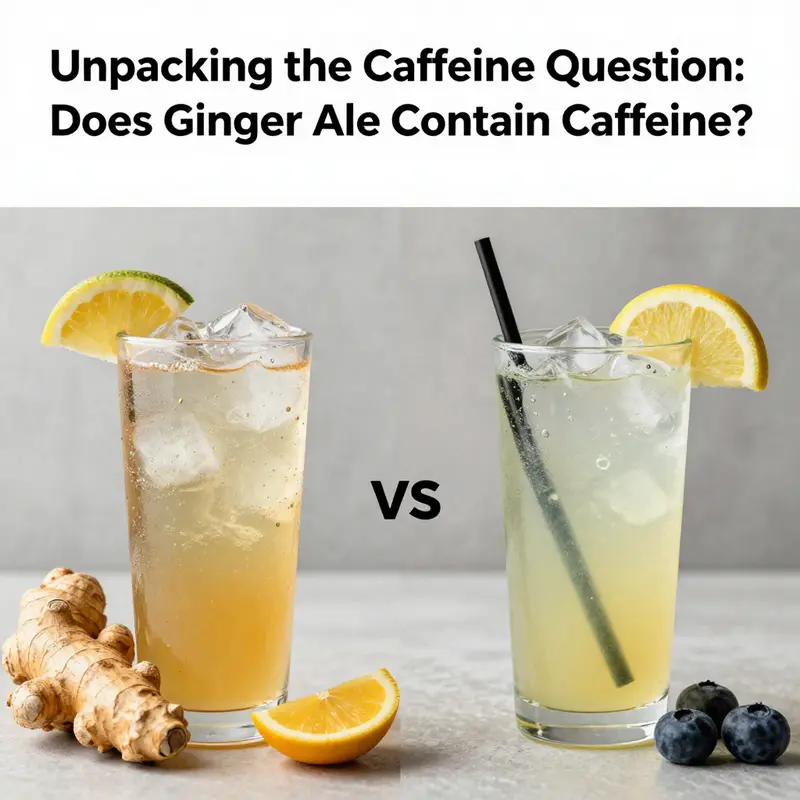
When you pour a glass of ginger ale, a question often drifts to the surface: does this pale, bubbly drink carry caffeine with it? In the crowded world of sodas, ginger ale tends to stand out for its clean stamina in the caffeine department. It is among the beverages most commonly labeled caffeine-free, a choice that matters to families, travelers, and anyone trying to limit stimulants. The absence of caffeine in the standard version is not a mere marketing flourish; it reflects a straightforward formulation goal: deliver a crisp ginger-forward taste without the kick of stimulants. For a consumer navigating shelves and labels, this distinction can shape both daily hydration choices and late-evening beverages, especially for children, pregnant individuals, or anyone sensitive to caffeine’s effects.
Most mainstream ginger ales offer a simple, reliable promise: flavor first, caffeine second. The labeling frequently states that the product is naturally flavored and caffeine-free, signaling a clear absence of stimulants. This stance is reinforced by standard product formulations that rely on carbonated water, sugar, citrus notes, and ginger without the addition of caffeine-containing ingredients. The practical upshot is a familiar, approachable flavor profile—bright, zesty ginger with a refreshing lift from carbonation—without the jittery aftertaste that caffeine can bring to some palates. In a retail environment, this means many consumers can reach for a familiar, comforting option without needing to check the caffeine box. A well-known ginger ale brand’s official materials have consistently asserted the caffeine-free status of its regular and zero-sugar variants, underscoring a long-standing alignment between label claims and consumer expectations. Such consistency matters when someone is choosing a drink for a child’s lunchbox, a late-evening mixer, or a daytime refresher when alertness is not the goal.
The backdrop of this caffeine-free stance is more nuanced than a single label claim. Ginger itself brings a pungent, warming note that contributes to the drink’s overall character, but caffeine is not inherently tied to that flavor. In practice, ginger juice or extract provides the spice and brightness, while the base composition—water, sweetener, and acid—provides balance. As a result, the typical ginger ale remains a reliable non-stimulant option. The distinction becomes especially pronounced when compared with other popular carbonated beverages. Colas, for example, have caffeine baked into their identity and nutrition panels, often delivering roughly 30 to 40 milligrams of caffeine per 12-ounce serving. The contrast is not merely academic; it translates into real choices for people who limit caffeine for sleep, health, or personal preference. Even beyond colas, the broader soft drink landscape includes energy drinks and some tonic variants that either feature caffeine or offer only sporadic exceptions. In this spectrum, the ginger ale’s routine caffeine-free labeling stands out as a stable reference point for consumers who want a crisp, ginger-forward experience without stimulants.
Of course, the landscape is not perfectly uniform. There are exceptions, mostly within craft or traditional ginger beer categories rather than mainstream ginger ales. Some of these beverages may carry trace caffeine, a remnant that can arise from the natural compounds present in ginger root or from processing methods used by small producers. When caffeine does appear in such products, it tends to be minimal—often cited in single-digit milligrams per 12-ounce serving—and is not a universal feature across all ginger beers or ginger-flavored drinks. For someone who wants to avoid caffeine entirely, this nuance points to the importance of label scrutiny, especially with smaller brands or artisanal batches that may not adhere strictly to mass-market labeling conventions. In practice, if a product is marketed as caffeine-free, it is still wise to scan the ingredients list and the nutrition facts panel, just to confirm there are no added caffeine sources. The caution is not to discourage curiosity but to empower informed choices in a diverse marketplace.
Label reading, in turn, becomes a small act of literacy that translates into daily routine. If you’re choosing a drink for a late afternoon gathering or a bedtime toast, the caffeine-free declaration on the label acts as a guardrail. For those managing sleep or caffeine sensitivity, the absence of stimulants can simplify planning, enabling a beverage that satisfies thirst and palate without disrupting rest. The same reasoning applies to pregnant individuals who may be particularly mindful of caffeine intake, or to anyone who simply prefers a gentler sensory experience. It is the interplay between flavor and stimulant content that makes ginger ale a dependable option in many households. This reliability is not about denying complexity but about acknowledging a core preference that many consumers consistently seek: a crisp, refreshing option that does not meddle with sleep cycles or nervous energy.
In the broader context of caffeinated beverages, ginger ale’s position becomes especially meaningful. Colas deliver caffeine, as do many energy drinks, and some tonic waters may carry caffeine depending on brand and formulation. The result is a spectrum where ginger ale tends to occupy the non-caffeinated, non-stimulating end. This positioning supports its use as a mixer, a stand-alone refresher, and a safe choice for mixed drinks that should not be overshadowed by caffeine’s effects. The practical value is evident when someone wants a drink that pairs well with a light snack or dessert without altering the perception of flavors through caffeine-induced alertness. The clean weight of a non-caffeinated profile ensures that the ginger notes can shine, whether sipped slowly or poured in a tall glass with ice, a wedge of citrus, and a splash of soda water for extra fizz.
For readers who crave a deeper dive into the chemistry behind these choices, the question of caffeine in ginger beverages can be explored through related inquiries about ginger-derived drinks. Does ginger beer have caffeine? is a pertinent line of inquiry that helps distinguish the nuances between ginger beer and ginger ale. The answer varies with production methods and the producer, but the core ginger ale category remains largely caffeine-free. If you are curious about that side of the spectrum, you can explore the topic further here: Does ginger beer have caffeine?.
As labels guide everyday decisions, the practical takeaway emerges with clarity. When you want a drink that aligns with a caffeine-free lifestyle, standard ginger ale provides a consistent, widely available option. The zero-sugar variants extend this assurance, maintaining the same caffeine-free profile while offering a lighter caloric footprint. This compatibility with various dietary preferences—whether you are watching sugar intake, managing calories, or simply enjoying a crisp and clean finish—helps explain why ginger ale remains a staple on many shelves. Yet this stability should not lull readers into complacency. The small caveats around craft products remind us that remarkable flavor innovation can coexist with minor caffeine variance. The onus, therefore, falls on label literacy, curiosity, and a willingness to verify claims when stepping beyond mainstream, widely distributed products.
In summary, the question does ginger ale contain caffeine finds a straightforward answer in the vast majority of markets: no, it does not. The consistency of caffeine-free labeling across regular and low-calorie versions makes it a dependable choice for those seeking a non-stimulating, refreshing beverage. The rare exceptions in the craft space are worth noting, but they do not redefine the general category. For readers who want to understand the broader caffeine landscape, this baseline—an unambiguous, caffeine-free standard—helps anchor comparisons to other caffeinated beverages while remaining a reliable option when the goal is taste without stimulation. The journey through this topic can continue by exploring related questions about other ginger beverages, or by tracing how different brands balance flavor, sweetness, and caffeine content as they innovate in the world of fizz.
External reference: https://www.coca-colacompany.com/drinks/seagrams/seagrams-ginger-ale
Gentle Fizz, No Jolt: Unpacking Caffeine in Ginger Ale and What It Means for Curious Drinkers
Ginger ale has long carried the reputation of a light, comforting fizz that won’t jolt you awake. For many people watching caffeine intake, it has become a reliable option in the late afternoon or after dinner without the jitters that come with cola or energy drinks. This assumption is not just popular lore; it is grounded in labeling and formulation practices that have, for decades, kept mainstream ginger ales caffeine-free. Yet the space around caffeine in soft drinks has evolved, and consumer curiosity often centers on two questions: is this beloved mixer truly caffeine-free, and could regulatory shifts someday change that?
In broad terms, the answer for standard ginger ale is straightforward: it is typically caffeine-free. The roots of this lie in how the beverage is formulated. Ginger ale is usually built from carbonated water, sugar, and natural ginger flavoring, sometimes accented with citrus notes. The stimulant caffeine, which originates from the caffeine alkaloids in tea, coffee, kola nuts, and certain flavorings, simply has not been a necessary ingredient in the traditional recipe. As a result, major commercial brands have often labeled their products as caffeine-free, and many beverages on store shelves state this explicitly on the bottle or can. The simplicity of the ingredient list is part of what makes ginger ale appealing to those seeking a non-stimulating fizz in the first place.
A regulatory nuance adds texture to this picture. Health authorities around the world have evaluated caffeine in soft drinks and, in some cases, set thresholds that permit low-level additions rather than complete abstinence. In Canada, for example, regulatory changes allowed up to 150 parts per million of caffeine in certain soft drinks, including ginger ale and tonic water, after a thorough scientific review. This framework acknowledges that small amounts can be introduced without posing clear safety concerns for the majority of consumers, while still providing labeling and consumer information. In practice, however, the vast majority of mainstream ginger ales remain at zero caffeine. This stability is reinforced by a corpus of industry statements and consumer health resources that confirm major brands formulate these beverages without caffeine. For someone monitoring caffeine intake, this is reassurance rather than a banner to assume all soft drinks can be trusted as caffeine-free by default; reading labels remains the prudent step.
It is worth foregrounding a subtle distinction that can be easy to overlook. Ginger beer, which is often sold in the same sections as ginger ale, is typically brewed rather than simply flavored. Some traditionally brewed varieties may carry trace caffeine, derived from the ginger root itself or from fermentation processes when certain ingredients are used. The numbers are modest—often cited as roughly 0 to 5 milligrams per 12-ounce serving—but they are not the same product category as mass-market ginger ale. This is where consumer education matters: the label ginger ale rarely treads into the same territory as ginger beer, and the presence of caffeine in one does not imply it in the other. For the curious reader, the contrast is worth noting because it highlights how much careful reading and product knowledge matter when managing a specific dietary constraint.
For those who approach beverages with a precise dietary lens—whether due to pregnancy, caffeine sensitivity, or medical advice—the ethical responsibility of manufacturers to disclose caffeine content is a crucial touchstone. Labels, ingredient lists, and nutrient panels are the primary tools for verification. The absence of caffeine in standard ginger ale is not merely a tradition but a market reality that aligns with consumer expectations and safety norms. Yet the broader context—ongoing research, regulatory flexibility, and varying product lines—means that a careful stance persists: assume caffeine is present only if the label confirms it, and treat any non-declared content as a potential trace rather than a promise.
If there is a teachable thread in this discussion, it is the importance of reading the packaging. Even when the common version of a product is marketed as caffeine-free, there can be subtleties based on regional formulations or limited-edition runs that experiment with caffeine. The consumer who wants complete certainty should seek products that clearly state caffeine-free on the front label and, if in doubt, consult the ingredient list for caffeine or caffeine-containing compounds. This diligence extends to the broader beverage landscape where a regulatory framework exists to balance safety and consumer choice. The existence of such a framework is a reminder that the beverage world is not static; it is a field of ongoing negotiation between science, policy, and taste.
For readers who seek a connection to related discussions, a gentle guidance point can be found in the broader category of ginger-derived drinks. The question of whether ginger beer contains caffeine carries its own set of nuances, and exploring that topic can illuminate how closely linked product identity is to the ingredients and processing methods used. If you want to explore this distinction more directly, see Does Ginger Beer Have Caffeine. It offers a concise comparison that clarifies where caffeine may appear in what is often sold side by side with ginger ale, and it helps keep the focus on ginger as a root rather than any single brand or recipe. Internal link: Does Ginger Beer Have Caffeine.
Ultimately, the practical takeaway for the average consumer is reassuring. If you are seeking a completely caffeine-free beverage, standard ginger ale remains a safe choice across the market. The reason lies not only in tradition but in the careful attention to formulation and labeling that has guided producers for years. The caffeine question, in this light, is less about dramatic shifts in the product category and more about the precision of packaging and the clarity of what is stated on the label. For a broad audience, this means you can enjoy the refreshing effervescence of ginger ale without worrying about caffeine intake, provided you select a product that is explicitly described as caffeine-free and check the label if you happen to be in a market with diverse product lines.
This picture is not intended to close the conversation but to illuminate how a simple beverage can reveal layers of regulatory practice, consumer preference, and product design. If you move through store aisles, you will notice that the caffeine story in ginger-based drinks is nuanced but consistent: mainstream ginger ale is caffeine-free, even as the regulatory horizon evolves to accommodate small additions in some products. In practical terms, that means you can plan a late-evening treat, mix a comforting ginger-based cocktail, or simply sip a cold glass of fizz without fear of an unplanned caffeine intake. The nuance—the rare trace in certain craft ginger beers—serves as a reminder that the beverage world values specificity and transparency.
External resource: https://www.sodahead.com/health/youre-checking-ginger-ale-for-caffeine-its-always-zero/
Final thoughts
In conclusion, the question of whether ginger ale contains caffeine is largely straightforward, as most commercial varieties are caffeine-free. This important distinction is relevant for business owners aiming to cater to consumer preferences. With increasing trends favoring caffeine-free beverages, understanding the dynamics surrounding ginger ale could enhance product offerings and align with market demands. Furthermore, comparing ginger ale with caffeinated alternatives reveals not only consumer choices but also health implications which should influence product decisions. In a landscape where health-conscious consumers are increasingly prioritized, ginger ale emerges as a trusted option. Being informed on these facets could ultimately aid business operators in gaining a competitive edge in the beverage industry.