
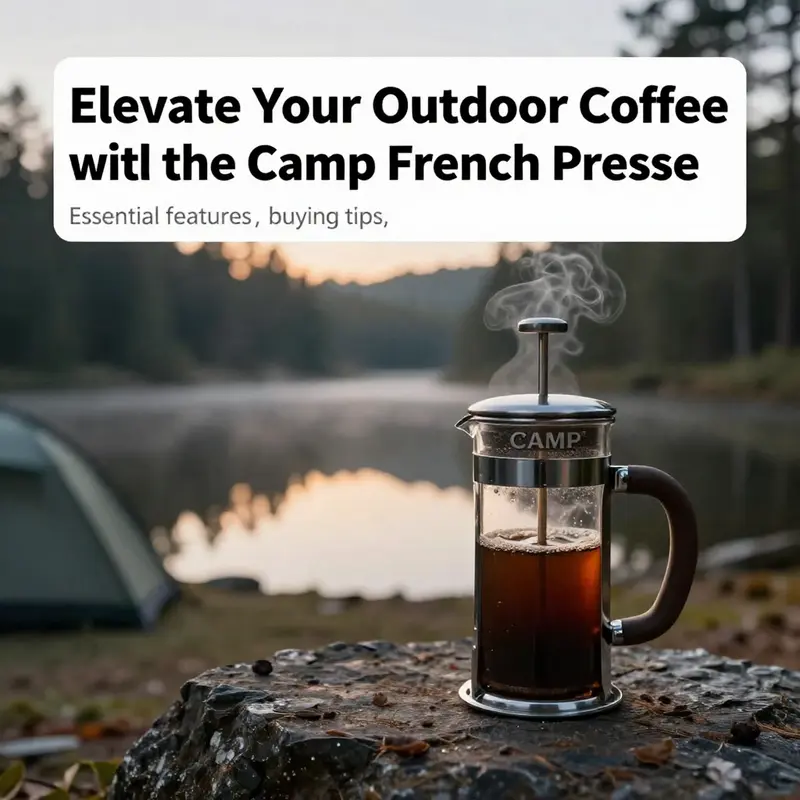
A Camp French Press is an indispensable tool for outdoor enthusiasts who want great-tasting coffee without electricity. This article explores its core advantages, how to choose the right capacity, material considerations, practical usage scenarios, and a curated look at popular products based on market feedback. Each chapter aims to deepen your understanding and help you make informed decisions for outdoor adventures.
Brewing Beyond the Campsite: The Core Characteristics and Advantages of a Camp French Press
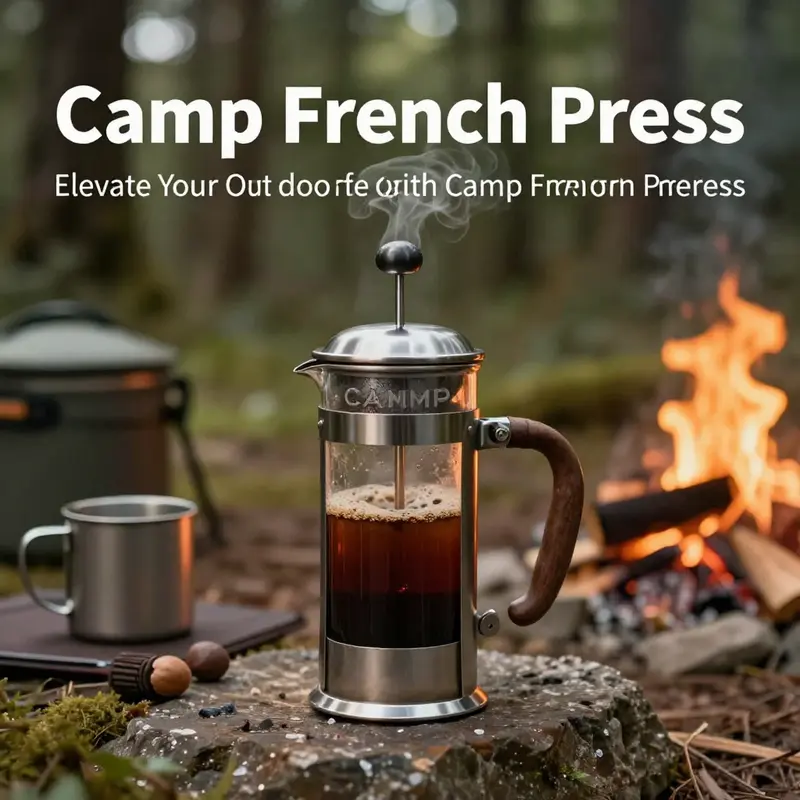
The morning air on a remote trail has a way of heightening senses, making the simple act of making coffee feel almost ceremonial. A Camp French Press sits at the center of this small ritual, a compact ally that turns heat, water, and rough terrain into a cup of coffee that tastes like a pause button on the day’s adventures. What makes this tool indispensable in the outdoors is not merely its ability to produce a respectable cup without electricity. It is the way its core characteristics align with the realities of camping life—lightweight design, rugged durability, and the opportunity to exert precise control over the brew, even when the wind gusts or the water dries to a simmer. The essence of the Camp French Press lies in a combination of portability, autonomy, and the respect it affords for the integrity of the coffee itself. In a landscape where every gram matters, and every second of heat exposure can alter flavor, the press becomes a trustworthy travel companion that respects the constraints of the environment while delivering a cup that carries the story of its maker in every sip.
The most immediately striking feature is portability. In the field, gear is measured not just by capacity but by how it travels. The Camp French Press is designed to be slim and light, a stark contrast to the bulky apparatus that sometimes accompanies a weekend away. Its compact form is not a compromise so much as a deliberate balance: small enough to slide into a backpack or a pannier, yet sturdy enough to withstand the bumps and jolts of a day spent climbing, trekking, or foraging for a meal. The materials chosen for these devices reinforce that balance. A robust stainless steel body or a high-temperature-tolerant alloy keeps the unit resilient under heat and cold, while maintaining a weight that won’t turn a hike into a burden. Some variants purposefully pair a titanium interior with a steel exterior to preserve both heat efficiency and structural integrity, especially when camp kitchens are set up on uneven ground or next to a crackling camp stove. The result is a tool that disappears into the pack until it’s needed, then re-emerges as the motor of a morning ritual rather than as a thing to be wrestled with.
But portability is more than a matter of mass and dimensions. It is also about how a device operates in the absence of electricity. The Camp French Press reaffirms the art of manual coffee making, a discipline that many outdoor enthusiasts return to with relief. There is no need for batteries, no electrical outlet to chase, just a straightforward sequence: heat water, grind the beans to a quality grind—rough enough to avoid silty textures but fine enough to extract a full spectrum of flavors—pour, steep, and press. This sequence makes room for a slower, more intentional breathing between boil and brew that modern coffee routines often skip. The immersion method at the heart of the press rests on a simple premise: coffee and hot water mingle in careful, unhurried contact. The metal mesh and the plunger work together to separate grounds from liquid, delivering a clean pour that still feels full-bodied. The absence of paper filters is not merely a cost or waste consideration; it is also a flavor decision. The metal filtration preserves the oils and aromatic compounds that are sometimes filtered away in other methods, a small mercy that can make a muddy morning feel more vibrant and alive.
The immersion approach is a core advantage for outdoor use because it accommodates variability in water quality and temperature with grace. In many campsites, water is drawn from streams, springs, or rain barrels that may not be perfectly clean or consistently hot. The press thrives on a wider margin for error than more delicate brewing methods. The coffee’s body benefits from the oil-infusion that is characteristic of the press, and that body can help carry flavor through the chill of early morning air. A well-managed steep time—adjusted by feel and observation rather than a timer—lets a camper coax sweetness and nuance from the chosen beans. This control is not about perfect science or laboratory precision; it is about marrying intuition with technique, a synergy that becomes second nature after a few trials in the wind and the damp.
Durability is another cornerstone of the Camp French Press’s appeal. Outdoor environments are tough on gear, and the press answers that challenge with a straightforward, almost minimalist approach. The design emphasizes a simple, robust mechanism: a sturdy plunger, a reliable filter screen, and a sealed lid that minimizes heat loss while keeping debris out. The body’s materials are chosen for resilience: stainless steel resists rust and dents, while high-temperature glass may be used in some variants but protected by a metal shell to guard it from impact. The result is a device that stands up to a sequence of campsites, never demanding delicate handling or a special care routine. The durability translates into peace of mind for the user—knowing that the device can be packed, unpacked, washed in a stream, and left to air dry without fear of corrosion or breakage. In the backcountry, where every ounce matters, the wisdom of a tough, simple design becomes obvious in the quiet confidence it inspires during cold mornings and rough terrain.
The flavor performance of the Camp French Press is frequently cited as its most tangible reward. The metal filter allows the natural oils in coffee to pass through, contributing to a richer, more layered mouthfeel than many other methods. This intensity matters outdoors, where the sensory cues can be blunted by wind, altitude, and temperature. When the coffee’s aromatic compounds remain more intact, the brew can still present notes of cocoa, berry, citrus, or floral tones that often vanish in other preparations. The sensory experience is heightened not because of extreme precision but because the apparatus honors the coffee’s intrinsic profile. This is a delicate balance: too fine a grind or too long a steep can produce a heavy, astringent cup; too coarse or too short a steep can yield a weak, insipid brew. The Camp French Press, in its uncomplicated design, invites the user to tune these variables with intention. The result—rich, textured coffee with a comforting sense of presence—becomes a signature of the outdoors, not a mere caffeine fix.
Part of the press’s appeal is its ecological footprint. In a world where many outdoor setups rely on disposable filters and single-use accessories, the Camp French Press represents a minimalist, reusable approach. There is no paper waste to manage after a morning brew, and the device itself can be cleaned with a quick rinse and a gentle scrape. Cleanliness matters as much in the wild as it does at home, not only for taste but for preservation of equipment and the surrounding environment. A quick rinse with potable water, followed by air drying, helps prolong the life of the press and keeps the campsite tidy. The absence of waste aligns well with a broader ethos among campers who aim to leave no trace while still enjoying the comforts of a well-made cup of coffee. It is a small, practical way to honor both the craft of brewing and the landscapes that sustain us.
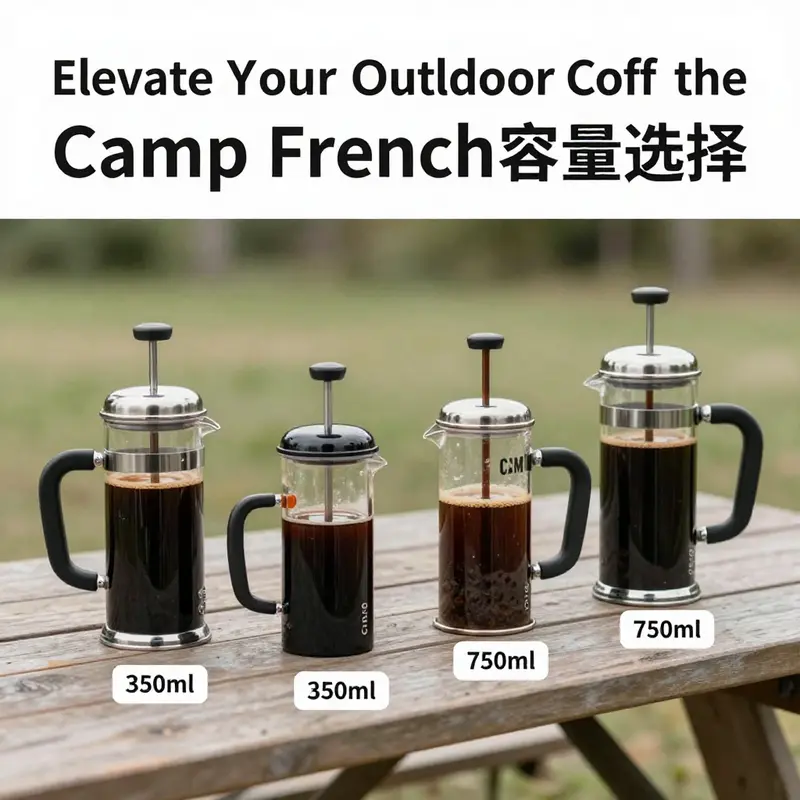
Capacity and versatility are the last threads in the fabric of the press’s core strengths. In practice, campers choose sizes that correspond to the team sharing the coffee ritual. A compact unit around 350 ml is ideal for a solo adventurer who values speed, weight, and stealthy packing. A larger option, around 750 ml, serves two, turning the campsite into a small coffee bar that can keep pace with a companion’s appetite for warmth. Some groups opt for multi-serving configurations that balance the need for social ritual with the realities of carrying capacity. The same device that handles espresso-like concentrations by adjusting the grind and temperature can also be coaxed into a tea or light soup by using different materials or filters. This multi-use capability—brewing beverages and improvising on-the-go meals—speaks to the spirit of adventure and the desire to maximize a small kitchen’s outcomes without lugging extra gear.
The practical implications of these features extend beyond individual taste. The Camp French Press becomes a focal point for camp etiquette and efficiency. It offers a reliable workflow that can be learned quickly by new hikers and seasoned backpackers alike. A consistent routine—heat water, grind, bloom, steep, press, pour—reduces the cognitive load in variable conditions. When the mind is not preoccupied with coffee calculations, it can stay focused on safety, route choices, or the care of companions. The shared ritual of brewing fosters a sense of camaraderie, a subtle social glue that keeps groups cohesive on challenging days. And because no electricity is required, the passively warm cup can be enjoyed at the moment when the rest of the camp is still waking up or winding down. The fold of the lid against the warm metal and the steam rising in the morning air can become a cue that a day of exploration holds both rigor and reward in equal measure.
Any discussion of the Camp French Press should acknowledge the practical wisdom of experience. Seasoned campers often learn to judge water temperature by feel rather than by thermometer, to gauge grind size by the time the coffee has spent in contact with the water, and to anticipate how altitude affects boiling points. These are not measures dictated by a manual but by a practice that matures with time spent outdoors. The press invites that maturation. It is a tool that teaches patience and attentiveness, qualities that are as valuable on a mountain pass as they are in any quiet morning kitchen. In this sense, the Camp French Press is less a gadget and more a living practice—the convergence of craft, endurance, and a love for the outdoors into a single, pragmatic contraption that respects both the landscape and the person who carries it.
For readers seeking a more analytical take on outdoor brewing—and a deeper dive into how to optimize the French press method for camp conditions—there is a thoughtful resource that lays out considerations about grind size, coffee-to-water ratios, and timing. This guidance complements the hands-on wisdom of field practice and helps campers approach each brew with greater clarity. If you want to explore a structured framework for camp coffee, you can find it here: why choose a French press for camp coffee. Such guidance can help turn a good cup into a memorable one, even when weather or trail conditions are less forgiving. Alongside practical tips, the broader discourse on outdoor coffee emphasizes how a deliberate, patient approach to extraction preserves the integrity of the beans and the experience of drinking them in a landscape that often demands resilience and adaptability.
Ultimately, the core characteristics and advantages of the Camp French Press converge into a simple truth: in the wild, brewing well is a form of care. It is care for the coffee, for companions, and for the environment that hosts your journey. The press embodies a philosophy of restrained, respectful efficiency. It asks for a measured heat, a courteous agitation, and a mindful moment to appreciate aroma before the first sip. It sidesteps complexity, not by ignoring detail, but by prioritizing the essentials—the beans, the water, the time, and the will to enjoy the process. The result is a cup that can steady a day, anchor a conversation around the campfire, and remind everyone that good coffee, even when brewed from a rugged setup, can carry a sense of home into the mountains, deserts, or forests where your path unfolds.
External resource for broader context on outdoor coffee brewing can be found here: https://www.thespruceeats.com/french-press-coffee-making-outdoors-4771368. It offers a complementary perspective on technique and tradition that enriches the practical insights discussed above, bridging the craft of the kitchen with the demands of the trail. The synthesis of field-tested practice and accessible theory—whether you are a weekend camper or a long-term trekker—helps ensure that the Camp French Press remains not just a tool, but a trusted companion in the ongoing dialogue between human effort and natural beauty.
Camp French Press Selection: Capacity, Materials, and the Practical Brew in the Wild
The campfire crackles, and the kettle begins to sing a soft whistle as dawn light creeps across the pines. In that quiet, a trusted Camp French Press becomes more than a coffee maker; it becomes a companion for the hours before the day’s climb or the trek back to the trailhead. The choice of a camp press is rarely about chasing the perfect barista shot in a remote setting. It is about balancing weight, heat, durability, and ease of use so that the moment you scoop the grounds and pour, you are in command of the brew even when the wind changes or the water boils a little too aggressively. Capacity is at the heart of that balance. It guides how many cups you can share with friends around a sleeping map, and it also nudges you toward a design that won’t bog you down on the trail. In the wild, a coffee ritual should feel effortless, precise, and repeatable, because those are the qualities that keep a morning from slipping into a fragile, lukewarm sipper of a day instead of a steady, flavorful start that carries you through the next switchback.
Capacity, at first glance, looks like a straightforward arithmetic: how many people, how much coffee, how many minutes to wait. Yet the field conditions demand nuance. For solo mornings or intimate bivouacs, a 0.5 to 1 liter vessel often strikes the right chord. It’s light enough to slip into a corner of the pack, and it preserves enough heat to deliver a satisfying cup without forcing a marathon wait for water to reach a stable simmer. A compact press of this size can brew a couple of generous cups, enough for a solitary adventurer who values warmth as the first currency of the day. The logic of this size rests on a simple habit—allocate roughly 250 to 300 milliliters of coffee per person. When the morning calls for a quick, reliable dose, that range becomes a reliable baseline whether you are buckled into a low-oxygen pass or warming your hands over the stove in a dew-damp campsite. In practice, you may find that a 0.75 liter model is your sweet spot for the occasional night where you want to press a single cup and still have enough reservoir left for a second, if the moment calls for it.
But as the group grows or the routine changes, so too must the vessel. For a small crew of two to four, a capacity around 1 to 1.5 liters often provides a flexible margin. It allows a couple of strong morning cups while leaving space for a shared press after a mid-morning hike, or for a second round later in the day when the wind has dropped and the kettle finds its rhythm again. Some camp presses push toward 1.36 liters, which roughly translates to about five to six cups, depending on size and whether you pour scantly or generously. In practical terms, the 1 to 1.5 liter range accommodates a typical mix of morning coffee rituals: a small, precise brew for one, then a larger, communal refill for the trail crew. The guiding rule remains: estimate the number of drinkers, multiply by the desired cup size, and then add a margin for seconds and seconds and seconds. If you’re cooking for a larger party or you know you’ll be brewing often for a group around a camp table, a model approaching 1.5 liters or beyond becomes the logical choice. The trade-off, of course, is weight and bulk, and here the tale of the press diverges into a deeper conversation about materials and construction.
Materials. They shape how long you can stay warm, how robust the device feels in the hand, and how clean the aftertaste of coffee will be in a setting where metal, plastic, and heat meet unpredictable weather. In the field, the most dependable option tends to be a double-wall stainless steel design with vacuum insulation. This configuration excels at heat retention, sometimes keeping the brew hot for several hours, which matters when you wake early to frost on the tent and want that first cup to deliver comforting warmth. Stainless steel presses are resilient, they shrug off a few bumps against a rock, and they resist corrosion in varied water chemistries. Their downside is weight, and in ultralight setups, that weight is a real consideration. Yet, when the goal is a reliable morning routine that survives cold camps, the trade-off is often worth it. A robust double-wall stainless press also tends to be inert to flavors, meaning less risk of metallic aftertaste sneaking into the cup—a common annoyance in harsher environments.
Glass, in contrast, offers a visual feast: you can watch the bloom and the extraction unfold, and the vessel often feels elegant enough to justify a celebratory pour at the trailhead. In practice, glass within a double-walled enclosure is a capable option, but it carries a caveat. The outer shell must cushion the inner glass against the inevitable bumps of packing and travel. For remote or dynamic camps where sacks bounce and rocks lie in wait, glass doubles down on fragility. It remains a viable choice in a fixed campsite where the press can sit on a stable platform, but for rugged journeys, it’s usually reserved for careful use rather than continuous, all-season deployment.
Plastic, often a Tritan or similar food-grade material in a double-walled design, brings weight down and resilience up. The bite of a hot cup held in a cold wind becomes more manageable, and the overall carry is friendlier on the shoulders. The flip side is heat retention; these plastics generally hold heat for a shorter period and may impart faint flavors if used aggressively or repeatedly. In the field, this is a trade-off: lighter weight for shorter heat endurance. For quick trips and first-light coffee in brisk conditions, a plastic double-wall press can be a very practical choice. In longer expeditions where you’ll be brewing multiple times daily and need to hold the temperature through a dawn-to-dusk routine, a metal double-wall press remains the more repeatable solution.
Within these material families, design details matter as well. A well-formed handle that stays cool in the presence of a boiling kettle helps maintain balance while pouring with a gloved hand. A lid that seals adequately minimizes spillage during movement or on a windy ridge, and a nested design that allows the press to be packed with the rest of your cooking gear makes a big difference in total pack weight. A robust, easy-to-clean filter system is another essential feature. In the backcountry, you may not have the luxury of a thorough kitchen cleaning ritual, so a filtration unit that can be disassembled for quick rinse and easy drying can prevent stubborn coffee oil buildup that spoils future cups.
The question of a multi-use camp press—one that can dispense coffee, tea, or even a light soup—also looms large in the mind of the careful buyer. Some hikers appreciate a press that can double as a small cooking vessel, a lightweight pot for warming liquids, or a makeshift cup for sharing. In practice, the most flexible options present a careful balance: a relatively wide mouth and a stable base to serve as a small kettle for warming water or brothy liquids, and a thoughtful filter design that can handle tea leaves with the same ease as ground coffee. This multi-functionality can be the deciding factor when the pack has to shoulder a long day and a longer night, and the line between coffee and nourishment becomes delightfully blurred in the glow of a camp stove.
Brewing technique naturally follows from capacity and material. In a camp press, the water temperature is the frontier where flavor emerges. In the field, water often comes to a near boil, and the key is to let it cool briefly before pouring over the grounds. Aiming for a brew around 92 to 96 degrees Celsius—just off the edge of boiling—helps preserve delicate floral notes while preserving the body that coffee lovers crave. If the water is hotter, extraction can accelerate too quickly, yielding a harsh profile or scorching the brew. A simple way to manage this in the wild is to preheat your press with hot water before you grind and load the coffee. This preheating reduces heat loss through the vessel walls, ensuring a more stable extraction and a consistent cup that tastes like it did in the kitchen but with a wilder spirit.
Grinding is another place where a camp press reveals its character. Coarser grounds tend to yield a cleaner extraction with less risk of over-extraction in a longer steep. You want a grind that resembles table salt in size to avoid muddy textures or bitter, snappy notes. The immersion time—usually three to four minutes in a camp setting—should be adjusted to the batch size and the grind coarseness. If you’re making coffee for two or three people, a 1 liter model invites a more forgiving routine: grind a little more, pour a little faster, and still reach a balanced cup within a manageable span. If you’re cooking for one and a half cups, a tighter pour schedule paired with a slightly shorter steep can help you keep that crisp, clean finish that makes you smile as you take the first sip against a chilly morning.
Cleaning in the backcountry is a ritual in itself. You want a setup that can be disassembled to rinse each component with minimal effort. A good filter system will separate grounds from the brew with ease, allowing you to dump the grounds into a compostable or designated waste area and rinse the metal or plastic parts in clean water. The easier the disassembly, the more likely you are to maintain good hygiene, avoid stale flavors, and keep your gear ready for the next morning. After you return from a trip, a more thorough cleaning at home is wise, but in the field the principle is simple: rinse, dry, store, and repeat. A little care now saves you from a heavier maintenance task later and helps preserve the breath of life in your next morning cup.
As you consider the selection, a practical note about capacity emerges: the safest, simplest approach is to tailor the vessel to your trip length and your typical group size. If you travel light and alone for most expeditions, a compact 0.5–1 liter press may be perfect, achieving warmth and comfort with minimal weight. If you hike with a friend or two, a 1–1.5 liter model becomes a reliable, shared space for a moment of morning calm or that mid-hortensia coffee break during a long ascent. And if you routinely camp with a small crew, a larger model near 1.5 liters or a touch beyond becomes a practical anchor for your campsite routine, a reliable ritual that might involve tea, hot cocoa, or broth for those late evenings around the table. In all cases, the core aim is consistent control: control of heat, control of extraction, and control of the experience itself, so that coffee remains an act of confidence rather than a fragile, improvised ritual that dissolves with a gust of wind.
If you’d like a broader, more compact perspective on how to integrate portable coffee devices into your outdoor kit, consider a quick read on a concise guide to compact solutions that still perform well on the trail. It offers a useful touchstone for balancing weight with function. Best portable travel coffee makers for great coffee on the go.
In this quiet craft of decision making, the question of “which capacity” becomes less a question of numerals and more a reflection of your hiking rhythm. A solo hiker who starts at dawn, ends far after dusk, and values the ritual of a warm cup will happily lean toward the 0.75 to 1 liter region. A team that gathers after a chilly camp makes, perhaps, a single pot that can be shared with a touch of ceremony and a touch of conversation before the day’s route is drawn in the dirt on a map. A mid-sized crew can cradle a 1.2 to 1.6 liter vessel, one that allows everyone to savor the moment without a long wait or crowding around a single urn. The aim, ultimately, is to preserve the quality of what you brew while ensuring it can be brewed reliably, even in a landscape that loves to complicate the simplest of tasks.
The final piece of the puzzle—how to align your choice with the rest of your gear—should be read in the same breath as the decision about capacity. The camp press fits most elegantly into a simple kit: a compact kettle or pot, a small mug or two, and a compact cooking setup that can be stacked or nested together. The interplay of these elements forms a small ecosystem that makes the coffee ritual feel almost luxurious in a place where a clean, reliable morning can set the tone for the day. A press that nests beside your stove, a lid that seals securely for transport, a handle that remains comfortable in cold weather, and a filter system that can be cleaned without tools—all of these details contribute to a sense of competence that makes the wild feel less like a challenge and more like a trusted friend. The selection thus becomes less about chasing the perfect flavor and more about cultivating a dependable routine that travels with you, season after season, across rock, wind, and rain.
To extend your understanding of how to balance compact design with robust performance, you can explore a focused external resource that contrasts different brewing approaches in outdoor contexts. The discussion contrasts portable espresso-like methods with classic immersion brewers, delving into how each approach preserves flavor under wind and cold and what that means for the Camp French Press experience. See the article here: Portable Espresso Maker Vs French Press For Camping: Which Brews Richer Coffee?. This reference helps illuminate the thermodynamics behind extraction in a field setting and underscores why a well-chosen camp press—strong, stable, and well insulated—often outperforms other methods for reliability and warmth when the weather doesn’t cooperate.
Finally, the journey from selection to cup is not a single leap but a daily practice. The right capacity, the right materials, and the right approach to heat and timing transform a simple press into a dependable companion. It becomes the tool through which the outdoors speaks in a familiar voice: the sweetness of a well-made coffee shared between friends after a long climb, the quiet pause of savoring a morning cup as birds begin their chorus, the sense that you can rely on your gear to perform when hard weather and remote trails test your resolve. That is the essence of a well-chosen Camp French Press—a sustainable, repeatable ritual that honors coffee’s heritage while embracing the realities of life on the trail. And with each outdoor season, the question of capacity evolves with your plans, reminding you that the best choice is the one that makes the ritual feel effortless, no matter the path.
External reading: For a deeper dive into how extraction and heat management influence the perceived richness of a camp brew, consider this comparative discussion on outdoor brewing methods: Portable Espresso Maker Vs French Press For Camping: Which Brews Richer Coffee?.
Camp French Press 的材质对比与使用场景
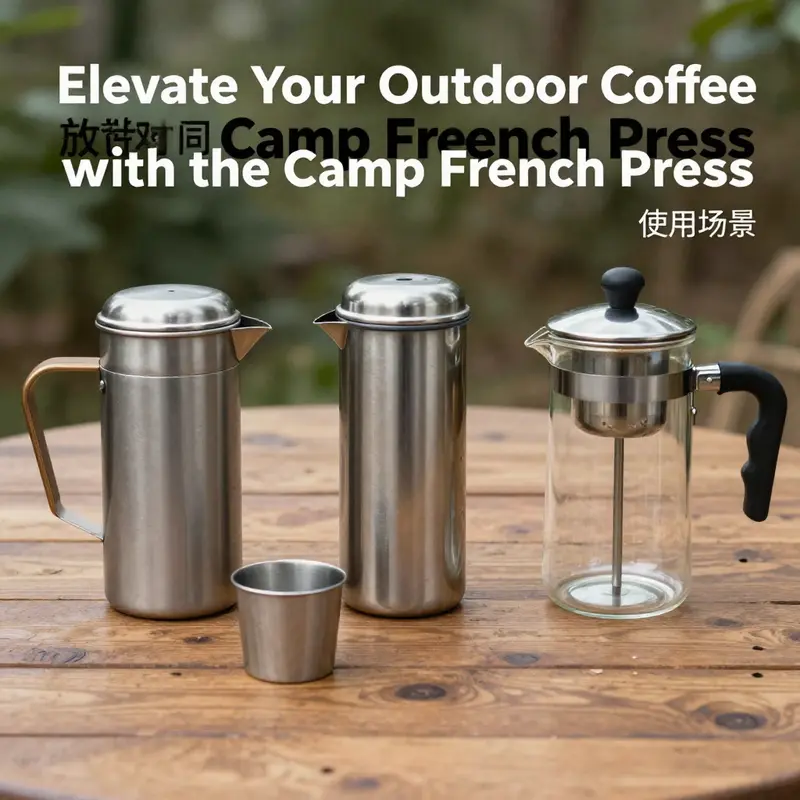
在野外露营的场景里,法式压滤壶不仅是一件冲泡咖啡的工具,更是掌控温度、时间与口感的助手。\n材料的选择影响热保留、重量、耐用性与安全性。\n双层不锈钢提供出色保温和耐用,但重量较重,价格较高;玻璃壶则轻量、便于观察风味细节,但易碎且保温性差;食品级塑料轻便、可折叠、抗摔,适合应急或极简装备;陶瓷壶带来传统炉灶式风味与仪式感,但较重且易受冲击。\n不同场景对应不同选择:长途跋涉与寒冷环境偏好双层不锈钢;需要观测冲煮过程或追求轻量则选玻璃或塑料;寻求传统风味与炉上加热则可尝试陶瓷。\n容量方面,单人约350ml、双人约750ml,视团队规模与保温需求调整。最终的取舍在于场景、容量与材质的综合权衡。
Trail-Brewed Confidence: Reading Market Echoes and Choosing Camp French Presses
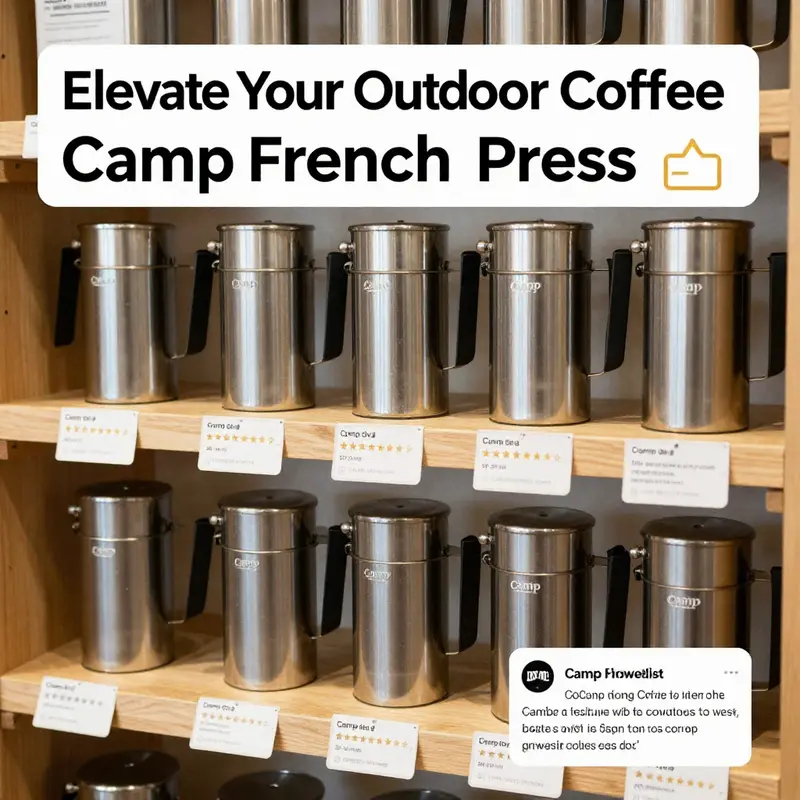
Morning in camp has its own language. The air is crisp, the light is pale, and the first task is to wake with intention. A camp French press is more than a coffee maker; it is a compact instrument of comfort that turns simple grounds into a ritual amid pine needles and the sound of wind in the trees. The appeal is clear: a reliable brew without power, a simple tool that travels well, and a promise that in the backcountry there can still be a cup that feels crafted rather than improvised. But as any camper who has lugged gear up a trail can tell you, the magic is not in the idea alone. It rests in the details—the weight you carry, the way the vessel stands up to heat and weather, how cleanly it pours after a day of use, and how well the flavor translates from a controlled kitchen table to a windy alpine ledge. The camp French press sits at the intersection of portability, durability, and infusion quality, and understanding how these factors interact helps explain both the market feedback and the practical choices a hiker or camper makes when selecting one for their pack.\n\nIn the field, the essence of choosing a camp French press is a balancing act. Portability matters because every gram counts when you are shouldering a pack through scrub oak or scrambling along a ridgeline. Durability matters because squinting at a crack in the mug, dropped coffee grounds, or a dented chassis after a chilly night will shape your next decision about weight versus robustness. And brew quality matters because, for all the clever gear that can accompany a trip, the moment of truth is still the cup—how it tastes, how forgiving the process feels, and whether the flavors can translate from a pristine kitchen to a wind whipped campsite. The modern camp French press is designed to address these concerns with a triad of design choices: material, capacity, and thoughtful features that reduce the friction of outdoor use.\n\nMaterial decisions define how the press behaves in the wild. Stainless steel offers rugged resistance to drops and a robust heat tolerance that helps preserve temperature during the brew and after it leaves the pot. Titanium, lighter still, adds a level of ultralight performance prized by fast and light trekkers, though it can carry a premium and sometimes a slight trade-off in heat retention if not paired with adequate insulation. Borosilicate glass, when used in a frame or sleeve, provides a visually satisfying brew scene and a clean flavor profile, especially for those who want to watch the coffee bloom in real time. The tradeoffs are familiar: glass is delicate but delightful for observation and mouthfeel; metal is sturdy and efficient at retaining heat but may alter how the brew temperature profile evolves during the pour; titanium pushes weight down without fully sacrificing thermal performance if designed with proper insulation. The best solutions often blend these strengths—glass or borosilicate with a protective outer shell, or metal interiors wrapped in heat-resistant sleeves—so that camp life can preserve the integrity of the brew without forcing a compromise between safety and taste.\n\nCapacity is not merely a number; it is a social decision translated into pack weight and kitchen logistics. A 350- to 400-milliliter model suits solo adventurers who want a compact footprint, quick heating, and a smaller amount to manage when water is scarce or when digestion needs a gentler start after a long ascent. A 600- to 750-milliliter press speaks to groups, pairing with the shared ritual of morning or apres hike coffee, while still aiming to stay within a reasonable weight envelope. The habit of the camper—whether to drink coffee as a single, precise dose or to serve a small band of hikers—will often guide the choice more than any other factor. The best designs recognize this practical logic and provide a range that preserves heat and diffusion quality across sizes. They also tend to offer modular accessories that can adapt to a growing crew or a shifting itinerary, such as spill-resistant lids, insulated sleeves, and compact carry pouches. These features, though seemingly minor, reduce the friction of routine use in the field: hot cups, steady pours, and a gear package that can withstand rain and dust without becoming unwieldy.\n\nThe market feedback around camp French presses echoes these practical priorities, underscoring where real users place value when wilderness miles accumulate. Across reviews and field tests, the most praised models tend to exhibit a coherent blend of rugged construction and real-world convenience. Reviewers emphasize durability in rough terrain, noting that a well-made press resists denting and maintains tight seals after repeated heating and cooling cycles. They highlight heat retention as a crucial factor, especially in cold environments where a hot cup can set the tone for a long day. Many campers applaud ease of cleaning, a deceptively simple attribute that becomes a major advantage after a long hike or a day spent in damp conditions. The ability to rinse quickly, dry the exterior, and stow away the press without residual coffee odors is frequently cited as a deciding point when choosing between competing options. In terms of flavor, the feedback tends to align with the principle that even small changes in water temperature, grind size, or immersion time can swing the balance of body, acidity, and aftertaste. The camp French press, in this sense, becomes a device of controlled experimentation as much as a means of convenience. Users appreciate when the device forgives minor missteps in technique—when a slightly coarser grind or a touch cooler water still yields a drinkable, pleasantly structured cup rather than a flat or muddy brew.\n\nThis consumer wisdom translates into practical guidance about what to look for on the trail. First, weight and bulk matter not merely as theoretical concerns but as daily realities that influence whether a press remains a reliable companion or becomes a burden after a long ascent. A press designed to nestle into a mug or cup with a snug lid, a secure plunger, and a compact handle will travel more comfortably than one with protruding components that snag on packing straps. Second, the reliability of seals and threading is not cosmetic—it determines how long a press stays functional in the field. A stubborn plunger that binds after a few uses will ruin a morning ritual; a lid that leaks while you hike at altitude is not merely an annoyance, it interrupts the brew process and potentially risks spills on gear. Third, the ease of maintenance matters more than the aesthetics of a flawless pour. A device that offers straightforward disassembly for quick rinsing, with minimal crevices where grounds linger, will prove itself again and again when you are hours from a kitchen sink. In this sense, the market’s favorable feedback tends to converge on a philosophy: the best camp French press is the one that reduces the friction of brewing in adverse conditions and makes the work of camping coffee feel almost second nature.\n\nThe chapters of this conversation about camp French presses reveal a broader truth about outdoor gear: the best options are those that become invisible through routine use. When a press becomes a trusted part of a morning routine, it ceases to be a choice between flavors or brands and becomes a dependable bridge between place and ritual. The user experience is enriched when the device complements the environment rather than competing with it. A press that maintains warmth for longer durations allows the camper to discover the aroma as it lingers in the air while early light spills across the campsite. A sturdy design reduces the mental energy spent protecting fragile gear while negotiating rocky terrain, and a user-friendly lid or carabiner-friendly carrying system makes the act of brewing a shared moment rather than a solitary chore. The market feedback, therefore, signals more than consumer preference; it maps a philosophy of field coffee as a balanced blend of performance, simplicity, and resilience.\n\nIn forming a practical purchasing frame, it helps to look at a few thematic touchpoints. Start with the question of capacity and group size—how many cups will you routinely prepare, and how often will you be away from a base with a kitchen? Then consider weight and durability in concert—are you more likely to be on a multi-day ascent where every ounce matters, or in a family-friendly campsite where a little extra bulk can be tolerated for enhanced heat retention and stability? Next, assess how you value the sensory experience of your brew. Do you want to watch the coffee steep in the glass walls of the carafe, savor the ritual of a transparent process, or do you prefer a more rugged, all metal finish that echoes a sea of white-capped gear? These questions are not merely abstract; they shape how campers approach the brew, how they time the extraction, and how they adjust grind size and temperature to exaggerate note development or to minimize bitterness in variable conditions.\n\nTo support this decision-making with a concrete, field-tested perspective, it is useful to consult the literature on camp coffee preparation and to compare notes from fellow travelers who have tested gear in similar environments. For readers seeking a structured rationale that connects the practical with the experiential, a concise online guide that emphasizes camp-specific considerations can be an excellent resource. It distills the core ideas without sacrificing nuance, offering a framework for evaluating new designs as the market expands to meet growing demands for lighter gear, more durable builds, and smarter accessories. For a deeper look into the strategic considerations that underpin camp coffee gear, you can explore why many campers opt for a French press as a preferred method in camp settings, a discussion that connects to broader breathing room in backpacking routines and the evolving expectations of outdoor cooking gear. This kind of resource helps situate the user’s decision within a larger pattern of adapting a beloved ritual to the rigors and rhythms of the outdoors.\n\nIn parallel with the consumer-facing narrative, the market provides a practical map of what to expect from the newest designs in the press genre. The spirit of the feedback is clear: campers want gear that is lighter, stronger, and easier to clean, with an emphasis on products that can be used reliably across a range of environments—from a sunny lakeside morning to a windy alpine pass. The best options demonstrate that the quest for better taste does not have to be sacrificed for ruggedness or simplicity. A well-engineered camp French press will deliver a balanced cup with a pleasing body, a gentle acidity that does not shout, and an aroma that fills the tent with a comforting sense of morning. The feedback suggests that the modern camper does not need a delicate instrument to be pleased; they need a robust tool that respects the craft of coffee while acknowledging the realities of outdoor life.\n\nUltimately, the appeal of the camp French press rests on its capacity to translate a ritual into a portable, repeatable experience. It is about translating the warmth of a home kitchen into a moment of outdoor hospitality, a small circle of people sharing a cup while the world wakes outside the shelter. The chapter of market feedback and product design that informs this reality is not a ledger of attributes but a story about how gear becomes part of the terrain itself. The more seamlessly a press can slip into a day’s routine without demanding special handling, the more likely it is to become a trusted companion on countless journeys. And in that quiet, consistent reliability lies the ultimate recommendation for any camper: choose the press that makes brewing feel effortless, that protects the integrity of the coffee flavor in the face of wind and cold, and that keeps you focused on the moment rather than on the mechanics of equipment. The result is not merely a better cup of coffee; it is a better shared experience, the kind that travels with you long after the hike has ended. The external resource: https://www.bonappetit.com/story/how-to-brew-french-press-coffee
Final thoughts
In summary, the Camp French Press is not only about brewing a perfect cup of coffee in the great outdoors but also reflects the essence of camping and hiking experiences. Understanding its core features, selecting the right capacity, comparing materials, and recognizing top products allows outdoor gear retailers and enthusiasts to make informed choices that cater to customers’ needs. Equipping yourself and others with a reliable Camp French Press can significantly enhance outdoor adventures and create lasting memories.