
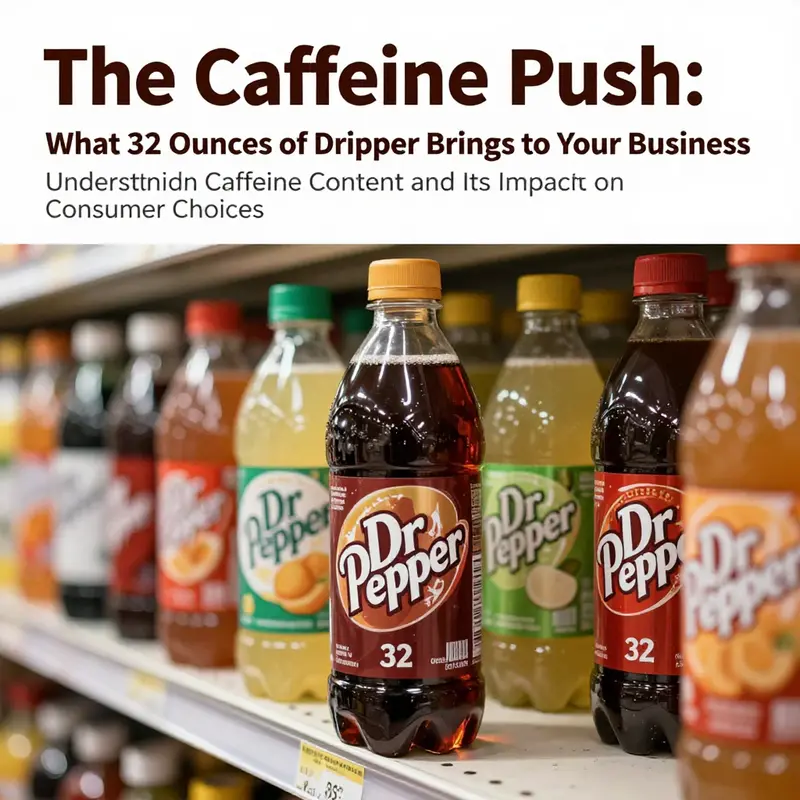
Caffeine is a daily staple for many consumers and an important factor for business owners in the beverage industry. Among carbonated drinks, Dr Pepper stands out with its unique flavor and significant caffeine levels. This article delves into the caffeine content of a 32-ounce serving of Dr Pepper, providing business owners with insights into how this can influence consumer behavior and preferences. We’ll explore the caffeine analysis in the beverage, compare it to other popular options, consider health implications, and analyze how these factors might affect consumer choices at your business.
The Big Sip: Unpacking Caffeine in a 32-Ounce Cola
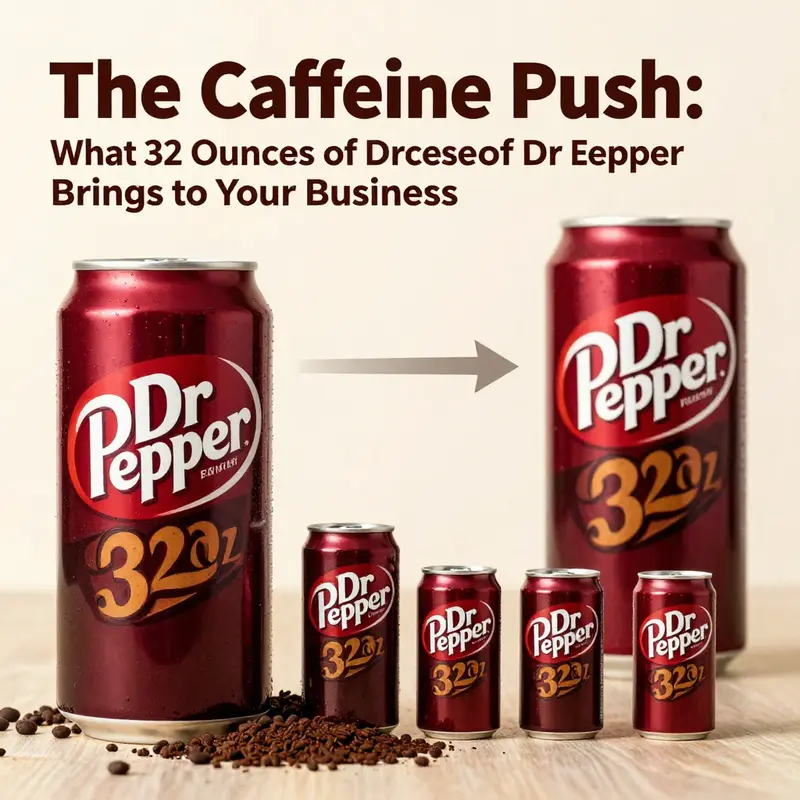
The 32-ounce bottle presents more than volume; it carries a caffeine payload that quietly shifts the energy you feel. In beverage form, caffeine is a small molecule with a big impact on alertness, mood, and focus. For a widely enjoyed cola-flavored drink, the caffeine content is typically listed around 41 to 42 milligrams per 12 fluid ounces. When you scale up to 32 ounces, the math is straightforward: roughly 2.66 times the caffeine of a single 12-ounce serving. That puts the total in a practical range of about 109 to 112 milligrams. In practice, many official nutrition panels quote approximately 110 milligrams for a 32-ounce serving, acknowledging slight batch-to-batch variation and labeling tolerances. The important point for readers is that caffeine per ounce stays nearly constant, so the total dose rises in a near-linear fashion with the amount you drink. A single 12-ounce can offers a modest lift; a 32-ounce bottle delivers a noticeably stronger boost, though it remains below the higher caffeine levels found in many energy-focused beverages. The central takeaway is a simple one: size matters when it comes to caffeine, but the relationship is predictable enough to help people plan their day.
Label data for this and similar beverages illustrate a broader principle. If one 12-ounce serving contains about 42 milligrams of caffeine, two and two‑thirds servings contain around 112 milligrams, give or take a few milligrams. The precise number on any given bottle will reflect rounding on the label and minor formulation differences between batches. Still, the practical conclusion is clear: a 32-ounce serving represents a meaningful caffeine dose, but not an extreme one for most adults who regularly consume caffeinated drinks. This clarity helps people gauge where a drink fits within their daily caffeine budget, especially when the same bottle is consumed in one sitting or split into portions over several hours. The linearity in caffeine content with volume is a helpful feature for those who want to compare beverages not on flavor alone but on stimulant load as well.
To place these numbers in a broader context, consider the spectrum of common caffeinated beverages. Coffee often carries a higher caffeine punch, with a typical 8-ounce cup ranging from about 70 to 140 milligrams depending on brew strength. A standard can of cola usually hovers around 30 to 45 milligrams per 12 ounces, depending on the product. Energy drinks, by contrast, frequently report 150 milligrams or more per serving, and some offerings exceed 200 milligrams. Against that backdrop, a 32-ounce cola offering that clocks in around 110 milligrams sits between a gentle wakefulness and a more assertive alertness—enough to feel more awake without necessarily feeling hyperactive, assuming the drink is consumed earlier in the day and not too close to bedtime. For someone who already relies on multiple caffeine sources across a day, this size represents a reliable incremental boost rather than a radical shift in total stimulant exposure. For others who are more caffeine-sensitive, the same amount can produce noticeable effects, such as quicker reaction times or a more focused mental state, alongside potential side effects like jitters or an unsettled stomach if consumed rapidly on an empty stomach.
The practical implications for daily intake are worth underscoring. The Food and Drug Administration does not set a hard universal limit for caffeine across all adults, but many health authorities reference about 400 milligrams per day as a general upper bound for healthy adults. Pregnant individuals are commonly advised to keep caffeine intake lower, often around 200 milligrams daily, and some healthcare providers suggest even lower amounts for certain trimesters. In that framework, a single 32-ounce serving contributes a significant chunk of the daily budget. For someone who also drinks coffee, tea, and additional caffeinated products, it becomes essential to map out how much caffeine is already in the day before deciding to reach for a larger bottle. The timing of caffeine matters as well. Consuming a large amount in the late afternoon or evening can disrupt sleep for many people, particularly those who are more sensitive to stimulants. The balance among sleep, mood, and energy becomes a matter of personal rhythm, not a universal right or wrong.
Beyond the numbers, there is also a sensory dimension to caffeine in this context. Caffeine has a subtle bitterness that interacts with the drink’s sweetness, providing a counterpoint that keeps the flavor from feeling syrupy in large volumes. This bitter note is more than a sensory curiosity; it helps shape how the beverage is experienced as a whole. In smaller amounts, the same caffeine can seem almost undetectable, while in larger servings it contributes to a perception of balance rather than mere sweetness. The idea that caffeine can modulate flavor—beyond its physiological effects—adds another layer to how people evaluate and enjoy such beverages. This is a reminder that caffeine is not just an energizer; it’s also a contributor to taste perception and overall drinking experience.
A corollary of the per-volume stability is that regular and zero-sugar variants tend to deliver similar caffeine content per ounce. For those watching sugar intake, this consistency is helpful: you can choose a version that aligns with your carbohydrate goals without sacrificing the predictable caffeine amount per volume. Of course, formulation nuances and labeling conventions can introduce minor differences, so a quick glance at the nutrition panel remains a prudent habit if precision matters for you. In practical terms, if you switch between versions within the same product family, you can expect roughly the same caffeine contribution from a 32-ounce bottle, even as sugar content varies. For readers who want a straightforward method to manage caffeine intake, treating caffeine as a fixed dose per serving makes planning simpler and more reliable, especially on busy days when meals and beverages are consumed in quick succession.
That said, caffeine biology reminds us that not everyone reacts the same way. Metabolism plays a central role; some people break caffeine down quickly, while others retain it longer in the bloodstream. Body weight, age, genetic factors, medications, and sleep history all influence how caffeine translates into wakefulness, anxiety, or sleep disruption. In practice, this means the same 32-ounce serving can produce a different subjective experience from one person to the next. For some, the effect is a clean, crisp uplift that helps with focus, while for others it can manifest as restlessness or a racing heartbeat if taken late in the day or on an already stressed physiological system. The takeaway is practical: use the 32-ounce benchmark as a guide, not a guarantee of how you will feel. If sleep tends to be fragile or anxiety is a concern, it may be wise to front-load caffeine earlier in the day and limit larger evening portions.
From a consumer perspective, this kind of clarity about quantity and timing makes it easier to incorporate caffeine into a daily routine with intention. Instead of relying on vague impressions of “a little pick-me-up,” readers can translate the numbers on the nutrition label into a concrete plan. If the 32-ounce bottle is a staple in a busy day, you know you’re delivering roughly 110 milligrams of caffeine in one sitting. If you’re juggling multiple daily caffeinated beverages, you can allocate a daily budget, track it across coffee, tea, and soft drinks, and adjust as needed to stay within personal health goals. The simplicity of proportional scaling—one 12-ounce unit equals about 42 milligrams, so a 32-ounce unit equals roughly 110 milligrams—helps demystify caffeine labeling and makes it easier to compare choices across brands and products. It also aligns with a broader aim of mindful consumption: enjoying the beverage while staying mindful of how it fits into overall wellness and sleep quality.
For readers who want to place this figure in a broader reference framework, this discussion is a reminder that caffeine content varies by product and size, yet tends to scale predictably within a given beverage family. The numbers become more meaningful when you pair them with your own patterns—how late you drink caffeine, how much you’ve already consumed that day, and how sensitive you are to stimulants. With the 32-ounce option, you’re looking at a dose that sits comfortably within a typical daily window for many adults, but outside it for others. The key is to know the dose and to align it with your personal health priorities and daily routine.
If you want to explore related questions about caffeine in other beverages and how sizes affect intake, you can look at how caffeine scales in non-cola beverages such as orange soda. This can offer a useful point of comparison and broaden your understanding of caffeine distribution across different drink families. orange soda caffeine.
For those seeking official data to verify these figures, consult the brand’s nutrition facts page. It provides the per-serving and per-container details that anchor these discussions in real-world labels. External resources can complement personal tracking, helping you calibrate your daily caffeine intake with greater confidence. Official nutrition facts are available here: https://www.drpepper.com/nutrition-facts.
How a 32 oz Dr Pepper Stacks Up: Caffeine Compared to Coffee, Energy Drinks, Tea, and Sodas
How a 32 oz Dr Pepper Stacks Up: Caffeine Compared to Coffee, Energy Drinks, Tea, and Sodas
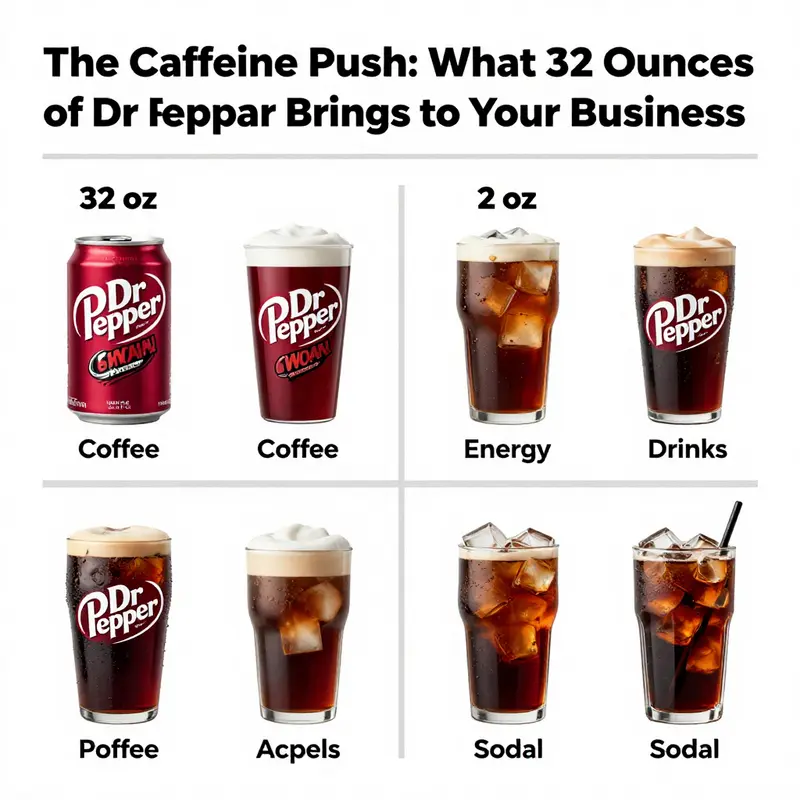
Understanding the caffeine punch in a 32-ounce Dr Pepper means more than memorizing a number. It requires putting that number beside familiar beverages so you can gauge effects, plan your day, or compare choices. A 32 oz serving of Dr Pepper contains about 109 mg of caffeine, derived from the brand’s typical concentration of roughly 41–42 mg per 12-fluid-ounce can. That single figure becomes meaningful when you see how it relates to an average cup of coffee, an energy drink, a can of cola, or a mug of tea.
Consider brewed coffee first, because most people use it as the baseline. An 8-ounce cup of brewed coffee typically contains between 95 and 120 mg of caffeine. That range reflects variables like bean type, roast level, grind size, and brewing method. Compared to that, a 32 oz Dr Pepper sits comfortably within the coffee range, delivering caffeine equivalent to about one to one and a half cups of brewed coffee. In other words, if you swap a morning cup of coffee for a 32 oz Dr Pepper, you could receive a comparable stimulant boost—but the timing and sensations may differ. Coffee often produces a sharper, quicker rise in alertness because of both its preparation and typical consumption pattern. Sipping a large soda over an hour spreads absorption out, leading to a gentler plateau.
Energy drinks compress a strong dose into a small volume, and many consumers equate them with intense stimulation. An 8-ounce energy drink, such as a mainstream variety, usually contains around 80 mg of caffeine. A 32 oz Dr Pepper therefore offers roughly 30% more caffeine than that single energy drink serving. But energy drinks commonly contain additional stimulants and sugar substitutes that alter the subjective experience. The composition of an energy drink promotes a faster onset of perceived effects; a colas’ caffeine blended with sweeteners produces a slower, steadier effect. That means Dr Pepper’s 109 mg might feel less abrupt than an energy shot, though the total stimulant load is higher.
When you compare Dr Pepper to other sodas, the differences become clearer. A 12-ounce colabeverage often contains around 34 mg of caffeine, making Dr Pepper noticeably stronger per volume. Expressed another way, a 12 oz can of Dr Pepper tends to have about 41–44 mg, which is already higher than many cola options. Scaling up to 32 ounces amplifies that gap: a 32 oz serving of a typical cola would deliver close to 90 mg or less, while Dr Pepper reaches approximately 109 mg. For soda drinkers seeking a caffeine boost, Dr Pepper sits in the upper tier of mainstream soft drinks.
Tea is variable but tends to be lower in caffeine than coffee. An 8-ounce serving of black tea contains roughly 40–70 mg of caffeine depending on steep time and leaf strength. Green teas are generally lower still. Comparing volumes, a 32 oz Dr Pepper contains more than double the caffeine of a standard cup of black tea. Yet tea’s tannins and L-theanine can moderate caffeine’s effects, creating a calmer focus. A soda’s sugar or sweeteners and carbonation change the pacing of caffeine absorption, often producing a more energetic, less centered stimulation.
Espresso and specialty coffee drinks operate on a different scale. A single espresso shot contains approximately 60–75 mg of caffeine depending on the roast and dose. Some specialty beverages add multiple shots, quickly exceeding the 109 mg mark. So while a 32 oz Dr Pepper can match or exceed the caffeine in a single espresso shot, it rarely beats a double or triple espresso-based drink. The real distinction is intensity and duration: espresso’s concentrated caffeine hits quickly and fades sooner, whereas a large soda tends to provide a longer, milder effect.
The real-world impact of 109 mg of caffeine depends on individual sensitivity, habitual intake, body weight, and timing. For someone who rarely consumes caffeine, 109 mg can produce noticeable jitteriness, elevated heart rate, and disrupted sleep if consumed late in the day. For habitual coffee drinkers, it may be a routine pick-me-up with minimal side effects. Health authorities often cite a general safe limit of about 400 mg per day for healthy adults; a 32 oz Dr Pepper is roughly a quarter of that limit. That puts it in a range that is generally safe for most adults when consumed sensibly, but not negligible.
The sugar and calorie content of a soda also matters when comparing beverages. Coffee is frequently consumed black or with modest additions, while many sodas contain a substantial sugar load. This co-occurrence of sugar and caffeine affects how energy and fatigue are experienced. The sugar provides a rapid but short-lived energy spike that can mask or interact with caffeine’s stimulant effect. Diet or zero-sugar versions remove the calories but keep the caffeine, which may be preferable for those watching caloric intake while still seeking a stimulant effect.
Context matters beyond physiology. Many people drink soda for flavor, carbonation, and refreshment rather than a calculated caffeine intake. Still, when you choose a 32 oz Dr Pepper, you’re opting for a beverage that gives you the caffeine equivalent of nearly two standard cups of coffee. That equivalence is useful for planning: if you combine that soda with a morning coffee, you can quickly reach levels that may cause nervousness or interfere with sleep. For shift workers, students, or anyone relying on steady alertness, knowing that a single large soda approximates a substantial caffeinated load helps with pacing.
Children and adolescents require special consideration. Caffeine affects developing bodies differently, and recommended limits are much lower. A 32 oz Dr Pepper is not an appropriate caffeinated beverage for young children and should be limited for teenagers. Even a single large soda can exceed guidelines suggested for adolescents, and repeated consumption adds up quickly.
Beyond direct caffeine comparisons, the mode of consumption affects experience. Coffee is often consumed hot and quickly; soda is usually cold and sipped over time. The colder temperature and carbonation can mask the stimulant’s speed of onset, creating a perception of smoother energy. That perception can influence behavior—people may drink more of a soda because the effects feel less intense, inadvertently increasing total caffeine intake.
For those monitoring their caffeine closely, the math helps. With Dr Pepper’s per-12-ounce caffeine concentration near 41–42 mg, you multiply by 2.67 to estimate a 32 oz portion. That multiplication yields approximately 109 mg. If you mix beverages, tally each item’s contribution toward daily intake. If you want alternatives with lower caffeine, consider herbal teas or decaffeinated coffee. If you need a stronger, faster effect, espresso or concentrated energy beverages will do that, but often at the cost of a sharper crash or undesired side effects.
Practical choices also hinge on timing. Caffeine’s half-life in the body averages about five hours but can range from three to seven hours depending on metabolic factors. Drinking a 32 oz Dr Pepper late in the afternoon could therefore impact sleep that night. If you need a late-day lift, a smaller, more targeted dose—like a single espresso shot or a small energy drink—may produce less interference with sleep than a large soda consumed over an hour.
In short, a 32-ounce Dr Pepper is a moderate but meaningful source of caffeine. It compares closely to a standard cup of brewed coffee in total caffeine, exceeds a typical 8-ounce energy drink, and outstrips most cola and tea servings. That positions it as a noteworthy option for those seeking a stimulant effect without reaching the levels typical of concentrated espresso drinks or high-caffeine specialty beverages. Knowing that a single 32 oz serving contains about 109 mg of caffeine allows you to plan intake, prevent unwanted sleep disruption, and make informed choices about combining beverages.
If you want more detail about how diet versions compare or how Dr Pepper stacks up versus similar sodas, there’s a focused discussion available on the caffeine content of diet and zero-sugar soft drinks. For a closer look specifically at the caffeine content of the brand’s zero-sugar option, see this post about how much caffeine is in Dr Pepper Zero. For official manufacturer data on caffeine content, consult Dr Pepper’s own published information here: https://www.drpepper.com/caffeine-content
This comparative view helps you see past just a number. It frames 109 mg in the context of daily limits, typical beverage patterns, and personal tolerance. With that perspective, choosing a 32 oz Dr Pepper becomes a conscious decision about the timing, intensity, and cumulative impact of your caffeine intake.
Sizing Up Alertness: The Health Footprint of a 32-Ounce Cola Beverage
A 32-ounce serving of a cola-flavored soft drink is more than a single sip; it is a defined dose of caffeine that sits at the intersection of daily energy needs, sleep quality, and long-term health. When you pour or buy a 32-ounce bottle, you are not simply choosing a flavor profile. You are also choosing a caffeine load that, for many people, roughly equals a small cup of coffee in terms of stimulant effect. The average 12-ounce can of regular or zero-sugar cola contains about 41 milligrams of caffeine. Multiply that by the scale of 32 ounces, and you arrive at roughly 110 milligrams of caffeine in a single 32-ounce serving. In practice, that’s a rounded figure—about 109 to 110 milligrams—depending on the exact formulation and the brand’s batch. This level is not trivial; it sits in a zone where alertness increases, but so do the possibilities of restlessness and sleep disruption if consumed late in the day or by someone highly sensitive to caffeine.
To understand what this means for health, it helps to compare this caffeine dose to other common beverages. A typical 8-ounce cup of brewed coffee can contain anywhere from about 95 to 200 milligrams, depending on the roast, grind, and brew method. A 32-ounce cola serving, therefore, can be viewed as a mid-range caffeine option: ample enough to sharpen focus for a few hours, yet still well below the upper end of a strong cup of coffee. That comparison matters, because many people rely on soft drinks for quick energy during the workday, while also balancing other caffeine sources such as tea, chocolate, energy drinks, or medications. The cumulative caffeine from all sources can add up quickly, and for some individuals that cumulative total crosses thresholds linked to sleep disturbances, jitteriness, or cardiovascular symptoms.
Caffeine acts primarily by binding to adenosine receptors in the brain, blocking the signaling that normally makes us feel tired. When adenosine is blocked, alertness improves, mood can brighten, and reaction times may quicken. The body responds by releasing other stimulants, and the overall effect can be a temporary lift in mental performance and daytime energy. Yet caffeine is not a one-size-fits-all substance. Metabolism varies with age, sex, genetic makeup, liver function, and concurrent medications. The same 110-milligram dose that keeps one person pleasantly alert can trigger anxiety, an irregular heartbeat, or sleep trouble in another. This reality underscores a simple but important point: the same drink can have very different health implications depending on the person and the time of day.
When we talk about a 32-ounce serving, it is also worth acknowledging the broader context. Regular versions of cola beverages come with a substantial amount of added sugars. A 32-ounce bottle of most regular colas carries a significant sugar load, contributing to calories that can accumulate rapidly if such beverages are part of a daily pattern. The zero-sugar versions swap in artificial sweeteners but still carry caffeine in the same per-volume amount. In other words, those who switch to a zero-sugar or diet option may reduce calories but still ingest a meaningful caffeine dose, which can influence sleep and anxiety just as caffeine does from other sources. This distinction matters for people watching their weight, their dental health, or their metabolic markers, as sugar itself has potential implications for weight management and metabolic health independent of caffeine.
The health implications of consuming roughly 110 milligrams of caffeine in one sitting extend beyond the immediate effects. For individuals with certain health considerations, the impact can be more pronounced. People who are sensitive to caffeine may notice jitteriness, a rapid heart rate, or digestive upset even at modest doses. In sensitive individuals, these sensations can escalate with larger or more frequent intakes, especially if caffeine is consumed later in the day. Those with sleep disorders may find that caffeine in a 32-ounce serving significantly worsens sleep onset or sleep continuity. Even for healthy adults, later-day caffeine can shorten sleep duration, reduce deep sleep, and increase sleep fragmentation, which compounds daytime fatigue and reduces cognitive performance the following day. For some anxiety-prone individuals, caffeine can exacerbate symptoms such as restlessness or feelings of tension. These nuanced responses make it clear that caffeine is not merely a stimulant; it is a biologically active compound whose effects ride on a personal landscape of sensitivity, timing, and total daily intake.
Another layer to consider is how caffeine interacts with the rest of the day. If a 32-ounce cola beverage is consumed in the morning or early afternoon, it may align with natural energy requirements and work alongside meals without major disruption. If consumed late in the day, however, the same amount can interfere with falling asleep or with sleep quality, signaling a switch from work to rest. Sleep is a critical pillar of health, influencing mood, immune function, metabolism, and cognitive performance. The timing of caffeine intake relative to one’s natural circadian rhythm is an important, practical consideration for anyone trying to balance daily energy with sleep hygiene.
Special populations merit explicit caution. The American Academy of Pediatrics and other health authorities encourage limiting caffeine intake in children and adolescents, given their smaller body size and developing nervous systems. For adults who are pregnant or breastfeeding, caffeine intake is often advised to remain under a total daily limit—typically around 200 milligrams or less—depending on individual risk factors and medical guidance. In people with hypertension, arrhythmias, or certain anxiety disorders, caffeine can exacerbate symptoms, especially when consumed in larger quantities or close to sleep. The message is not that a single 32-ounce serving is universally dangerous; rather, it is that a fixed dose of caffeine interacts with personal health status, sleep patterns, and daily total caffeine exposure in ways that can be predictable for some and unpredictable for others.
In considering how this 32-ounce option fits into a person’s overall diet, it is also essential to recognize the sugar and calorie implications of the regular version. A large portion of the calories in a typical 32-ounce regular cola comes from added sugars. Regular sugar intake in such quantities over time has been associated with weight gain, metabolic disturbances, and dental erosion. The zero-sugar version removes the caloric load from sugar but does not alleviate caffeine content, so the stimulant effect remains. Some people may choose the zero-sugar variant precisely to reduce sugar intake while maintaining caffeine-driven alertness during the day. Others may choose to limit caffeine by rotating beverages, switching to water or unsweetened tea for a portion of the day to create a balanced caffeine budget that aligns with personal health goals.
From a practical standpoint, readers can translate this information into everyday choices by imagining a simple daily caffeine budget. If you drink a 32-ounce cola beverage around midday, you might have a finite amount left to consume from other sources. A typical adult might aim for a daily caffeine ceiling somewhere near 400 milligrams, though individual considerations will push this number higher or lower. For someone who enjoys a 32-ounce cola on workdays, the remaining capacity could affect decisions about coffee, tea, energy drinks, or chocolate consumption later in the day. It is not merely the caffeine in one drink that matters; it is how that drink contributes to a pattern of intake. A pattern of two or more caffeine-containing beverages daily, especially with late-day consumption, can erode sleep quality and cumulatively raise heart rate and blood pressure in sensitive individuals.
The chapter would be incomplete without acknowledging how consumer choices intersect with public health guidance. Reliable resources provide broad safety envelopes rather than prescriptive one-size-fits-all rules. For most healthy adults, occasional or moderate caffeine intake is generally considered acceptable and can be part of a balanced routine. However, the key emphasis remains: know your own response, track your total caffeine intake from all sources, and be mindful of timing. If sleep is a priority or if you have conditions that caffeine could aggravate, the prudent move is to limit the late-day caffeine load and consider alternative beverages that offer hydration and flavor without adding stimulant pressure.
An additional layer worth noting concerns the sensory and behavioral associations that can accompany regular caffeine consumption. Beverages with caffeine often become cues for habit and routine—moments of a break, a transition between tasks, or a ritual that signals a switch from work to leisure. When caffeine is tied to comfort or routine, it can reinforce habitual patterns that may be hard to reverse if sleep and health are compromised. Mindfulness about such patterns—recognizing when caffeine is truly needed versus when it is a default choice—can empower individuals to align intake with actual energy needs rather than simply chasing a quick lift in the moment. In this light, a 32-ounce serving becomes not just a numeric figure but a behavioral decision with potential health consequences and benefits alike.
For readers seeking to place this information in a broader context, consider how other common beverages compare in caffeine content and health impact. A general rule of thumb is that caffeine content per fluid ounce varies by product, and that the same serving size does not guarantee the same stimulant effect across beverages. This is partly due to the differing matrices: the presence of sugar, fat, or other ingredients can influence gastric emptying and, consequently, the timeline of caffeine’s effects. The practical takeaway is straightforward: look at caffeine per serving, consider the sugar or calorie count, and factor in your own sensitivity and sleep goals when choosing a 32-ounce option or any larger serving.
To deepen your understanding while remaining grounded in everyday choices, you might explore a related question about other cola-like beverages and caffeine content. For instance, does orange soda have caffeine? This inquiry can illuminate how caffeine distributes across popular, non-cola soft drinks and how labeling can guide better decisions about timing and total daily intake. The discussion around the generic caffeine content of soft drinks can help readers calibrate expectations when they encounter a 32-ounce bottle in the store or at a gathering, reminding them that caffeine is a quantifiable, and sometimes predictable, component of many beverages.
As you navigate these considerations, keep in mind that the numbers themselves are a tool—one that helps you balance alertness with rest, energy with health, and preference with long-term well-being. The 32-ounce serving represents a defined dose of caffeine, but its real meaning arises from how it fits into your personal health profile, daily habits, and longer-term goals. When used thoughtfully, this information about caffeine content becomes part of a broader conversation about hydration, energy management, and the ways we align our choices with the body’s needs rather than simply chasing a quick lift in the moment.
External resources can offer additional context and guidance on safe caffeine consumption. For authoritative data and practical limits, see the Centers for Disease Control and Prevention’s guidance on caffeine in foods and beverages, which summarizes typical caffeine levels in common drinks and provides a framework for safe daily intake across age and health status. https://www.cdc.gov/nutrition/data-statistics/caffeine-in-foods-beverages.html
Internal reference for further context: If you’re exploring how caffeine content translates across popular beverages, you can read about the caffeine content of a commonly asked-for topic here: Does orange soda have caffeine. This discussion helps place caffeine amounts in soft drinks into a broader spectrum of everyday choices without focusing on a single brand. The goal is to empower readers to make informed decisions based on caffeine per serving and total daily exposure, rather than relying on memory of a single product’s label.
The 32-Ounce Caffeine Equation: How a Big Dr Pepper Shapes Taste, Energy, and Beverage Choices
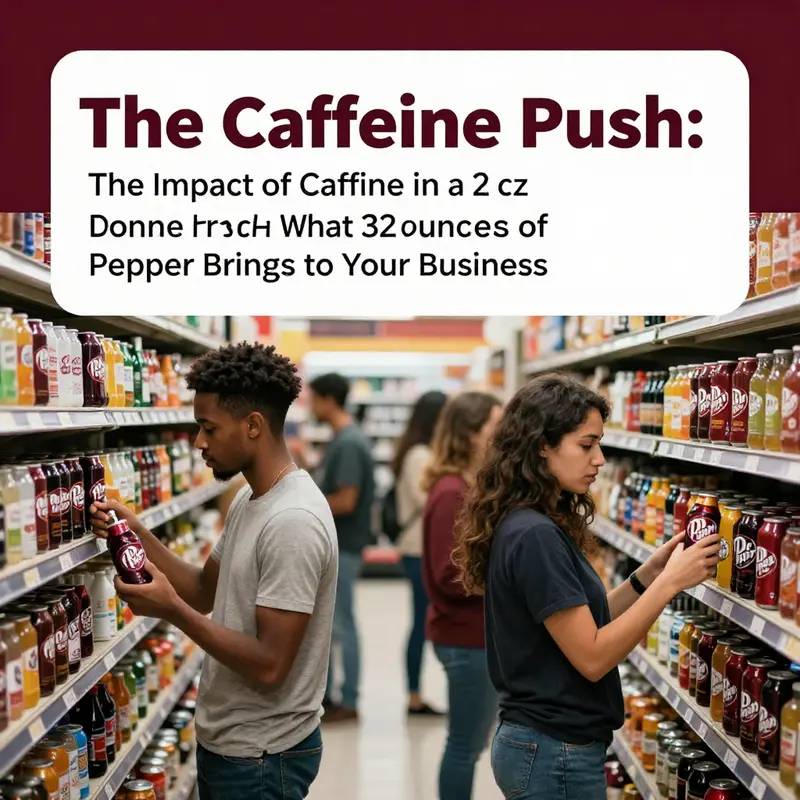
A 32-ounce bottle of Dr Pepper sits in the fridge like a promise: a familiar, fizzy moment that sits between a quick sip and a longer, lingering session. The caffeine story behind that bottle is quieter than an espresso shot, but it is not insignificant. For those who watch daily caffeine intake, size matters as much as flavor, because the container helps shape how long the lift lasts and how it fits into the day.
When you scale caffeine from 12 ounces to 32, the math follows a simple pattern: roughly 41 milligrams per 12-ounce can times about 2.67. That yields around 109 milligrams in a 32-ounce bottle, though label rounding and market variations can shift the exact figure toward the high 90s or low 110s. The important point is that the 32-ounce format typically places caffeine in a middle ground—a noticeable but manageable boost rather than a caffeine spike.
This positioning matters for choices beyond taste. A drink of this size can support a steady afternoon pick-me-up, influence pacing of workload, or affect when someone chooses another caffeinated source later in the day. Health considerations—tolerance, sleep, and any medical guidance—help determine whether this size is a good fit at a given moment.
Beyond the raw numbers, readers are encouraged to check official product pages for current figures and variants (regular vs. zero-sugar) and to consider how per-ounce content compares across sizes. The broader takeaway is that caffeine in a 32-ounce Dr Pepper offers a modest, practical boost that sits between a gentle nudge and a relaxed lift, contributing to how the beverage fits into routine moments of refreshment and alertness.
Final thoughts
Understanding caffeine content is crucial for business owners who wish to cater effectively to consumer needs. The analysis highlights the significant caffeine levels in a 32 oz Dr Pepper, which could influence purchasing decisions. By knowing how Dr Pepper compares with other beverages and the health implications tied to caffeine, operators can make informed choices about their product offerings. Ultimately, enhancing consumer awareness of caffeine can lead to more strategic marketing and sales approaches, helping businesses thrive in a competitive market.