
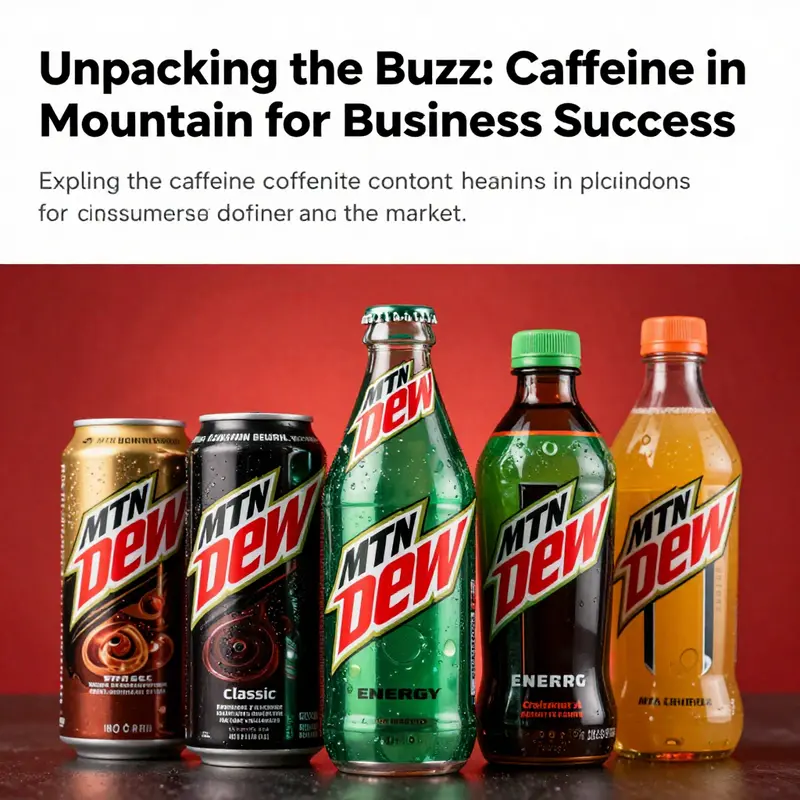
Caffeine is a key component in many beverages, and its presence in drinks like Mountain Dew has significant implications for business owners. Classic Mountain Dew holds a caffeine content of approximately 55 mg per 12 ounces, while its energy counterpart, MTN DEW RISE ENERGY, elevates this quantity to about 180 mg per serving. Understanding these differences is vital for business operators as consumer preferences evolve. This article explores the caffeine dynamics in various Mountain Dew products, including potential health implications and market trends, helping entrepreneurs navigate this vibrant beverage landscape more effectively.
Beyond the Buzz: Decoding Classic Mountain Dew’s Caffeine and Its Real-World Effects on Focus and Energy
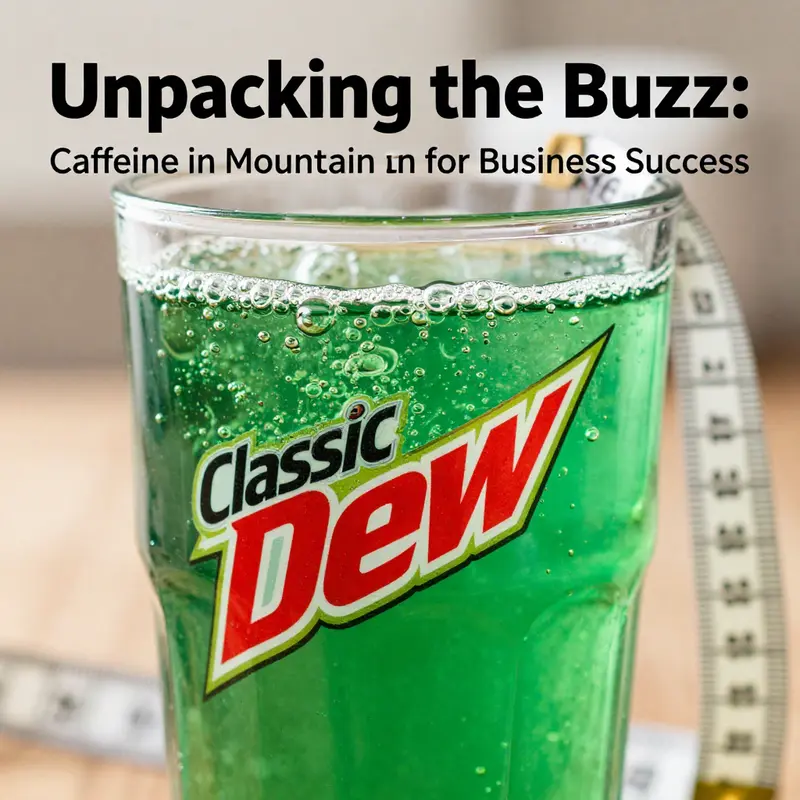
The caffeine content of classic Mountain Dew sits at a neat crossroads between everyday refreshment and the jittery edge of energy. At 55 milligrams per 12-ounce can, this citrus-fueled beverage offers a moderate caffeine lift—enough to sharpen attention for a while, but not so much that it becomes a driving force behind sustained, high-stakes performance. That balance matters because caffeine is not a one-size-fits-all compound. Its effects ebb and flow with individual tolerance, timing, body weight, and even what else is in the day’s intake. For many consumers, the drink’s appeal lies not just in flavor but in the quick, approachable boost that can help push through a mid-afternoon lull or give a momentary lift during a long gaming session or a demanding task that requires steady attention rather than a heavy, prolonged stimulant effect. As with any caffeine source, the story of classic Mountain Dew is less about a single number and more about a pattern of use that lines up with personal goals and boundaries.
The numerical baseline—55 mg per can—is a useful point of comparison when evaluating how Mountain Dew fits into the broader caffeine landscape. It sits comfortably below typical caffeine levels found in a standard cup of coffee, which can range widely but often lands in the 70–120 mg range per 8-ounce serving. It is also lower than most energy drinks marketed explicitly for peak performance, many of which push well above 100 mg per serving. Yet, the presence of sugar compounds the experience in a distinctive way. The combination of caffeine and sugar in the classic version can deliver an initial, satisfying surge of energy, followed by a sharper decline in focus as the sugar rush wears off. That pattern is not accidental; it reflects how the body metabolizes both caffeine and glucose. Caffeine tends to enhance alertness and reaction time, while sugar can momentarily elevate blood glucose and mood, only to yield a crash if consumption is not balanced with ongoing intake or if caffeine sensitivity is high.
From a cognitive standpoint, caffeine in this dosage tends to support core functions that matter in everyday tasks and more focused activities. Attentional control, vigilance, and quicker reaction times are among the faculties most commonly reported to benefit from moderate caffeine exposure. In practice, this often translates to a greater capacity to maintain focus during repetitive or mentally demanding tasks—think extended screen time, data analysis, or long bouts of gaming or streaming where consistent attention matters as much as peak bursts of energy. Importantly, the size of the effect is not a universal constant; individuals differ in how sensitive they are to caffeine’s wakeful effect. Some people feel a noticeable lift with a small amount, while others may need more to perceive a similar benefit or risk unwanted side effects like jitteriness or sleep disruption if consumed late in the day. The practical implication is clear: pacing matter, and mindful timing tends to produce a smoother experience than sprinting through a drink in a hurried burst.
That pacing principle echoes the broader guidance scientists and clinicians emphasize when caffeine is used to support performance. Moderate intake spread over a period—rather than a single, large dose—helps maintain alertness without darker edges of the caffeine spectrum, such as headaches or irritability. In the realm of activities that require sustained cognitive effort, such as long streams or productivity sprints, consistent intake can help preserve a steady state of focus. Yet, even within that framework, the body’s response remains personal. Some readers may notice their thoughts becoming a bit clearer, their reaction times marginally quicker, while others might feel only a mild uplift or a quick tired spell after the sugar crash fades. The takeaway is not that caffeine is a universal solution, but that when integrated thoughtfully, it can complement regular sleep, hydration, and nutrition for those who seek a consistent cognitive edge without tipping into dependence or disruption.
The existence of variants within the Mountain Dew family adds another layer to this narrative. For those who crave a more pronounced caffeine experience, a higher-caffeine energy drink version is available, with a caffeine load around 180 mg per serving. That option is designed for individuals seeking a more intense mental and physical lift, sometimes accompanied by ingredients intended to support focus and immune function. The higher caffeine content naturally carries a greater risk of side effects for caffeine-sensitive individuals, including jitters, anxiety, or sleep disturbances if used too late in the day. It also demonstrates how a single brand line can span a spectrum—from moderate, everyday refreshment to a robust energy product—intentionally tailoring caffeine exposure to different consumer needs.
Another practical dimension for the caffeine-conscious consumer concerns calories and sugar. The standard, sugar-containing variant delivers a quick energy spike that can coincide with flavor enjoyment. For those guarding against sugar-related energy fluctuations, there is a sugar-free option that retains the same caffeine content while eliminating the caloric and glycemic load of sugar. This sugar-free alternative can provide a steadier caffeine-associated alertness without the post-consumption sugar crash, which makes it an appealing choice for gamers, students, or workers who prefer a more predictable energy curve. The choice between classic sugar, sugar-free, or even a higher-caffeine option, thus, becomes a question of how the caffeine interacts with one’s own physiology and daily rhythm, rather than a simple math problem of mg per serving.
Within this fluid landscape, consumer behavior and personal experimentation become essential. A useful practice is to align caffeine intake with planned activities and environmental factors—lighting, screen exposure, and ambient cues can all influence how alertness feels. If someone is planning a long, screen-based project, starting with a moderate caffeinated beverage early in the session and spacing additional servings over time can help mitigate the risk of a mid-session crash. Conversely, when a crisp, steady focus is desired for a shorter window, a single, well-timed dose can suffice. The sensory element—the bright, citrus-forward flavor that accompanies the caffeine—also matters. Flavor can influence consumption patterns; a more palatable option may be sipped more slowly and enjoyed over a longer stretch, which itself helps sustain a steadier level of alertness than rapid, large intake.
To round out this picture, a note on accessibility and information sources is worthwhile. For readers seeking a compact reference on caffeine content across Mountain Dew variants, a dedicated summary can be found in online resources that track caffeine levels in beverages. This kind of information supports informed decision-making, especially for individuals who must monitor caffeine intake for health reasons, religious or dietary practices, or personal well-being goals. If you want a concise explanation of caffeine content specifically in this brand’s lineup, you can consult a resource that breaks down the numbers and the associated physiological considerations. And for readers who want to see how this product stacks up against other popular caffeinated beverages, there are comparisons that examine mg-per-serving across a range of drinks, which can illuminate why some people prefer a milder lift with flavor they enjoy versus a stronger, more disruptive energy surge.
For readers who want to explore the topic further, a targeted internal explainer can provide a deeper dive into caffeine content in Mountain Dew and related beverages. See this resource for a concise breakdown of caffeine content in Mt Dew, which offers a clear snapshot that can be useful when planning consumption alongside meals, study sessions, or workout routines. After considering the numbers, the practical question remains: how do you want to structure your caffeine experience in daily life? The answer is deeply personal, but the framework is simple—start with moderate intake, heed individual sensitivity, and choose the formulation that best aligns with your goals for focus, energy, and rhythm.
As a concluding thought within this chapter, it is helpful to remember that caffeine is a tool, not a substitute for good sleep, hydration, and balanced nutrition. The best results often come when caffeine usage is aligned with other healthy habits rather than used as a sole strategy for staying awake. For many, classic Mountain Dew provides a reliable, moderate lift that complements a balanced day, offering a flavorful option that supports attention and quick decision-making without overwhelming the system. For those who require a stronger or more tailored effect, the higher-caffeine variant offers an option with a distinctly different profile, while sugar-free versions extend the same caffeine benefits without adding sugar-driven fluctuations. In any case, awareness of one’s own tolerance, careful timing, and mindful consumption remain the core practices for leveraging caffeine’s potential while preserving long-term focus and well-being.
Morning Momentum: The Caffeine Engine Behind MTN DEW RISE ENERGY
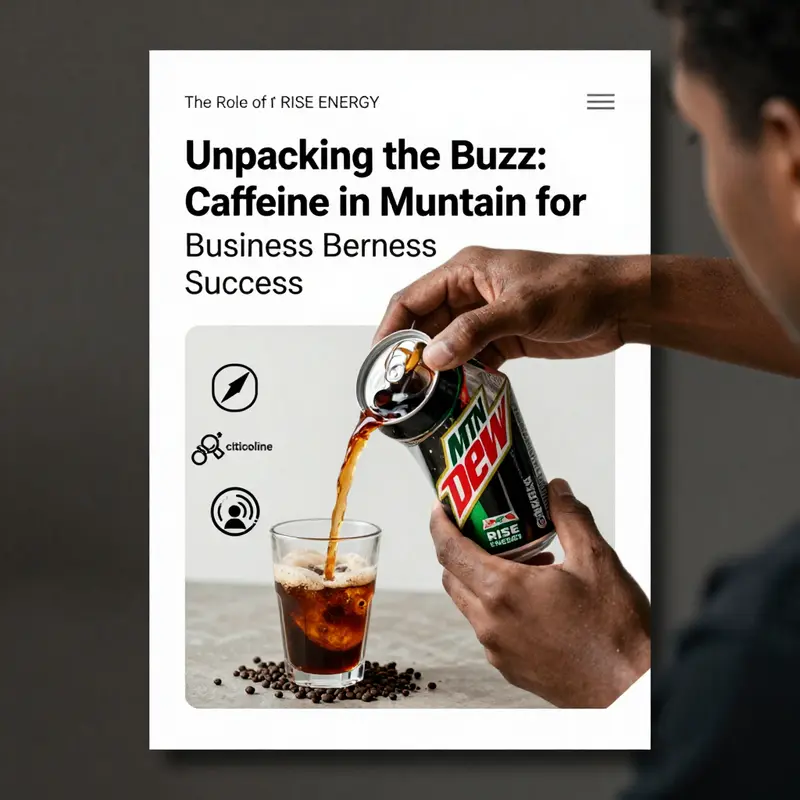
Morning momentum is less about a gentle start and more about a deliberate unlock. In the landscape of beverages designed to spark alertness, MTN DEW RISE ENERGY stands out not merely for its flavor or branding, but for the precise role caffeine plays as its central, purpose-built functional ingredient. At the heart of each can lies a bold proposition: a potent caffeine dose that pushes the boundaries of what an everyday morning ritual can deliver. With about 180 milligrams of caffeine per can, this beverage delivers the kind of lift that many drinkers associate with a strong cup of coffee, yet packaged in a sleekly convenient, portable form. The comparison is simple yet telling: roughly two standard cups of coffee in a single, ready-to-drink can. This is the kind of energy profile that positions the drink as a powerful option for those who want a decisive start to the day, especially when the clock seems to demand more momentum and less hesitation.
Caffeine functions here as more than a jolt. It is the engine that sparks mental readiness, helping to overcome the inertia that mornings can bring. For people facing demanding tasks—from early morning meetings to challenging mental workloads—the promise of a sharp cognitive edge is compelling. Caffeine’s well-documented effects on alertness, reaction time, and perceived effort translate into a practical advantage: increased focus when the day’s first decisions hinge on quick thinking and sustained attention. This is the flavor of energy that isn’t merely about speed but about keeping intention intact as the brain moves from resting mode to working mode. In MTN DEW RISE ENERGY, caffeine is positioned as the primary functional ingredient, and the numbers bear out the intention: a single can equals a substantial caffeine infusion that can set a trackable trajectory for a morning or a long stretch of work.
What makes this formula more than a caffeine spike is the thoughtful layering of ingredients aimed at supporting the brain’s performance. Citicoline, included in the blend, is a dietary supplement known for supporting brain health and promoting clearer thinking, sharper focus, and improved memory recall under demanding conditions. Citicoline’s presence signals an intent beyond mere stimulation. It suggests a pairing of energy with cognitive resilience, a combination that can help someone transition from a state of fog to a state of directed attention. The idea is to offer not just wakefulness but a mental steadiness that can carry a person through tasks that require sustained concentration rather than a brief, highs-and-lows type of energy ride.
Complementing this cognitive toolkit are vitamins A and C, included to bolster overall well-being and provide antioxidant activity. While caffeine is the star for alertness, these vitamins serve as a supporting cast that can mitigate some of the daily stressors that often accompany long workdays, late nights, or early starts. Zinc’s presence, noted in the product’s formulation, adds another layer by supporting immune function—an important consideration for anyone balancing high workloads with a busy social and professional calendar. Taken together, the drink presents a holistic energy proposition: a robust caffeine hit fused with brain-supporting nutrients and immune-supportive vitamins that aim to keep the body and mind performing in tandem.
The marketing frame for MTN DEW RISE ENERGY aligns with its positioning as a morning beverage designed to help conquer the day. Its messaging emphasizes reliability and a predictable boost when the day seems to demand more than a gentle nudge. That positioning resonates with workers who must arrive prepared, students facing exams or long lectures, and professionals who want to maintain a steady tempo through complex tasks. The product’s design hint—high caffeine, cognitive support, immune-friendly vitamins—speaks to a broader category of consumers who view energy not as a fleeting feeling but as a strategic asset. In this sense, the drink is less about a single moment of exhilaration and more about a reliable rhythm of alertness that can be sustained across hours of cognitive labor.
Yet with a high caffeine content comes a note of caution that is both honest and necessary. For individuals who are sensitive to stimulants, or for anyone who is trying to moderate daily caffeine intake, 180 milligrams per can is a substantial figure. The caffeine ceiling recommended for adults by health authorities is typically discussed in terms of daily limits, and MTN DEW RISE ENERGY sits comfortably within a framework that allows for mindful consumption. It is not a beverage to be treated as an everyday default without consideration of personal tolerance, sleep patterns, or existing health conditions. The product invites a disciplined approach: enjoy it when a strong cognitive lift is genuinely needed, avoid stacking multiple caffeinated products, and be mindful of total daily intake. For some, that means reserving it for mornings when the day’s demands are highest or for tasks that require intense focus for several hours, while others may choose to limit it to specific moments in the week.
In the broader conversation about caffeine in Mountain Dew variants, the high-energy formulation stands out for its explicit blend of wakefulness with cognitive support. It challenges the simple equation of “more caffeine equals more energy” by explicitly incorporating a brain-supporting compound and immune-friendly vitamins. This nuanced approach helps explain why some consumers feel a more purposeful enhancement of mood, clarity, and concentration, rather than a quick, short-lived surge followed by a crash. It reflects a growing understanding that energy products today aim to do more than simply stimulate; they seek to support sustained performance across mental tasks, decision making, and tasks that demand both vigilance and nuance.
For readers who want to place MTN DEW RISE ENERGY in a broader context, it’s useful to compare its caffeine footprint with other beverages that occupy the same shelf space. The canonical takeaway is that this variant sits toward the upper end of the caffeine spectrum for readily available, ready-to-drink options. The practical implication is straightforward: the more caffeine a product contains, the more important it becomes to account for total daily intake and to consider how caffeine interacts with sleep, stress, and individual metabolism. With this understanding, a consumer can appreciate the deliberate design choices that balance a strong energy profile with cognitive and immune-supporting ingredients, rather than choosing caffeine as a one-note stimulant.
As with any energy-forward product, the user’s experience remains personal. Some may perceive a crisp onset, a smoother plateau of alertness, and a steady ability to maintain focus through a challenging morning. Others may feel sensitivity to the caffeine dose, a jittery feeling, or a sleep disturbance if consumed too late in the day. The recipe’s intention is clear: provide a robust tool for those who need a reliable morning resurgence, while acknowledging that individual responses will vary. This tension between universal design and personal experience is at the heart of any discussion about energy beverages that push the caffeine envelope.
For readers who want a deeper, data-informed comparison of caffeine levels across Mountain Dew variants, a deeper dive into how caffeine content translates into real-world effects can be enlightening. See our detailed discussion on caffeine content of MT DEW for a grounded sense of where this high-energy option fits within a spectrum of options, and how it stacks up against other caffeinated beverages. caffeine content of MT DEW.
To close the arc of this chapter, MTN DEW RISE ENERGY occupies a unique niche: it is a coffee-accessing, brain-supporting, morning-focused energy drink that blends stimulant intensity with cognitive-enhancing ingredients. The result is a product that communicates intention—an energy aid built for moments when focus and momentum matter most. It is not simply about waking up; it is about awakening a mental tempo that can carry a person through the hours ahead. The narrative around this beverage is a reminder that the caffeinated landscape has evolved from a single-ingredient stimulant into a more sophisticated toolkit designed to support attention, mood, and resilience in the morning hours. For many, that combination may be exactly what a demanding day requires, as long as consumption remains mindful and aligned with personal tolerance and daily rhythms. External resources that document the product’s official formulation and caffeine content provide a factual anchor for this interpretation, grounding the discussion in verifiable details about what goes into each can and how it may translate into daily practice. External reference: https://www.pepsico.com/products/mtndew-rise-energy
Tracing the Caffeine Engine Across Mountain Dew’s Variant Spectrum
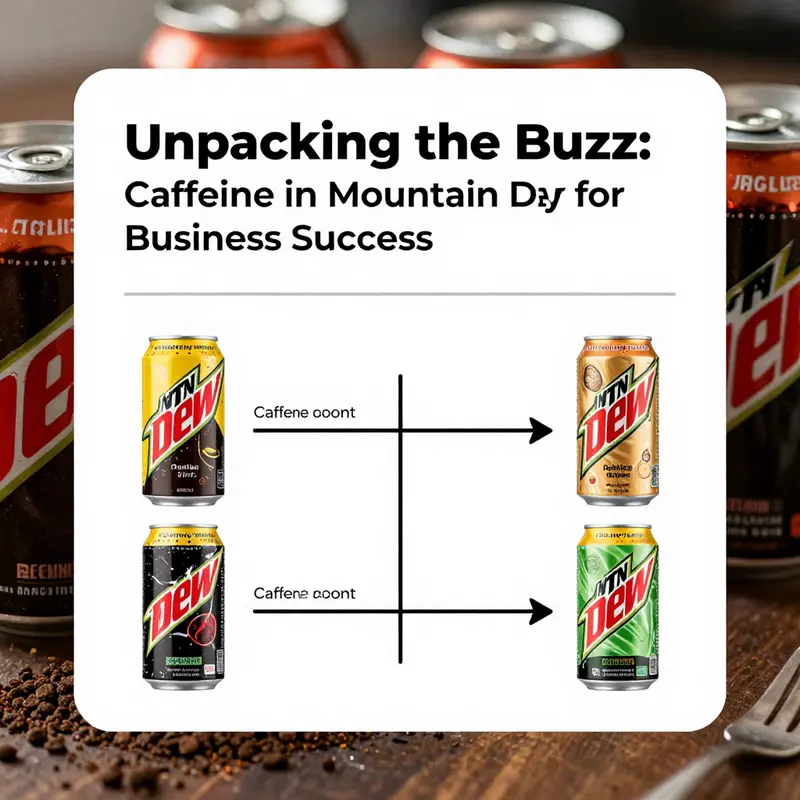
Caffeine has long been the motor behind Mountain Dew’s cultural footprint, a citrus-forward signal that energy can come in a can as much as in a cup. Across the brand’s variant lineup, the caffeine story unfolds with a clear throughline: some versions lean into a milder, familiar pull, while others push the ceiling higher, offering a sharper jolt for those who want more than a quick lift. This chapter follows that thread, not by naming every product line, but by tracing how the caffeine profile shifts as the formula migrates from the flagship citrus soda to the more specialized, energy-focused variants and then to the broader, flavor-rich family of options. The result is a nuanced map of how caffeine content can shape consumer expectations, flavor experiences, and daily routines alike, all while remaining anchored to the same citrus signature that first drew people in.
Take the original citrus baseline. In periodic analyses of caffeinated beverages, this flagship has consistently registered caffeine in the mid-twenties to low-twenties per ounce, a profile that, when scaled to a standard 12-ounce (355 ml) serving, lands around the mid-50s in milligrams. A study conducted in the mid-2000s—often cited in reviews of soft drink caffeine content—placed the original formulation at roughly 54.8 mg per 12 ounces. Those numbers position the beverage as one of the more caffeinated sodas on the market, especially when you consider the typical cola range and the wide variability across carbonated drinks. That near-55 mg mark is not just a datum; it’s a behavioral signal. It says, in effect, you’ll feel a dependable lift, enough to sharpen focus or give a telephone call a little more momentum, without delivering the kind of surge that requires careful management of caffeine intake later in the day. For readers revisiting these facts, the official nutritional information often reinforces the message that caffeine is part of the core identity of the drink, carried in a format that is readily accessible in most mainstream markets. The precise 12-ounce benchmark matters because it gives a baseline from which consumers can compare other beverages in the same shelf space, and it makes it easier to translate caffeine expectations when a different can size enters the lineup.
What happens when the sugar content is removed but the caffeine content remains almost the same? The sugar-free variant—a version designed to deliver the same caffeine kick with zero sugar—offers a startling illustration of how formulation choices can interact with caffeine delivery. In this sugar-free variant, caffeine content per 12-ounce serving clocks in at about 55.2 mg, a figure that mirrors the original so closely that the difference becomes a study in packaging, labeling, and consumer perception rather than a meaningful difference in energy. The near-identical caffeine concentration suggests that, for many consumers, the decision to choose the sugar-free option is driven more by caloric or metabolic preferences than by caffeine considerations. It also raises a subtle point about the role of sugar in modulating stimulant perception: even when the chemical dose remains nearly the same, the absence of sugar can alter the immediate sensory experience, affecting how quickly the caffeine delivers its lift and how long that lift lasts. In practical terms, the sugar-free version can feel like a parallel track rather than a departure, maintaining a familiar energy profile while catering to those who prefer to limit sugar intake.
Beyond these two baseline forms, the caffeine story becomes more varied when the lineup introduces dedicated energy-focused formats. In the spectrum of Mountain Dew variants, one variant clearly stands apart in caffeine density: an energy-oriented formulation that has a significantly higher caffeine load per serving. Reports and product disclosures place this variant at about 180 mg of caffeine per serving. That level is not merely a little higher; it represents a strategic shift in the product’s purpose, aligning with what energy-drink enthusiasts expect: a robust, sustained lift capable of supporting longer stretches of concentration or more demanding physical activity. Alongside the caffeine, this energy-focused variant is often marketed with additives intended to complement mental acuity and immune support, such as citicoline to potentially enhance mental clarity and zinc for immune function. The inclusion of these ingredients signals a broader design intention: to package not simply a sugar boost, but a cognitive and physiological support package into a single caffeinated beverage. The experience, consequently, reads differently. The beverage channel is less about a quick flavor-forward buzz and more about a sustained, multi-faceted energy experience that spans taste, alertness, and resilience. For readers who track the science, this distinction emphasizes the importance of serving size, formulation, and added-nutrient claims in interpreting “how much caffeine” meaningfully.
The variability across flavors and packaging further shapes the caffeine narrative. Packaging formats—from standard cans to smaller mini-cans—serve as practical cues about the intensity of the caffeine experience. Mini cans, for instance, carry caffeine labeling, signaling that caffeine is a core feature across the brand family, even when the size and flavor profile vary. In the broader catalog of flavors, many options contain caffeine; however, precise amounts per serving are not always disclosed on the packaging itself. This inconsistency can complicate consumer comparisons, especially for those who rely on caffeine content to manage daily intake. Yet the overarching pattern is clear: the brand’s caffeinated footprint is broad, with the original and the sugar-free variants occupying the top tier in terms of per-12-ounce caffeine, while the energy-focused lineup pushes the ceiling far higher. The spectrum—from roughly 55 mg in the base forms to around 180 mg in the energy-forward variant—serves as a useful framework for understanding how a single brand can accommodate both casual, flavor-first consumption and more intensive energy needs without requiring a consumer to abandon the familiar citrus taste.
For consumers and researchers alike, accuracy and currency are essential. Nutrition facts can shift with formulation updates, regulatory labeling changes, or regional product variations. The most reliable path to up-to-date information remains the brand’s official nutritional disclosures. Within this context, a reader can use the internal link to a dedicated resource that analyzes caffeine content across the MTN Dew lineup, providing a snapshot that complements the historical figures mentioned here. For readers seeking a deeper dive, see the caffeine content of MT Dew. caffeine content of MT Dew. This cross-reference is not merely academic; it helps ground the discussion in a living catalog where numbers are revised as formulations evolve, helping readers orient their intake relative to current product availability and serving sizes. It also underscores a practical habit: consult the most recent panel on the manufacturer’s site or the labeled facts on the can when planning consumption, especially if one relies on caffeine for study, shift work, or athletic performance.
The broader take-away from this comparative cadence is that caffeine, while a shared trait across Mountain Dew variants, is not a single, monolithic attribute. It behaves like a dial that can be turned up or down by design—whether to accommodate sugar-conscious consumers, to offer a higher-octane option for longer tasks, or to maintain a familiar energy quotient across multiple flavors. The numbers—54.8 mg per 12 ounces for the original, 55.2 mg for the sugar-free version, and 180 mg per serving for the energy-oriented form—provide a practical map for anyone curious about how a single brand can negotiate flavor fidelity with energy delivery. In practice, this means that a person who enjoys the brand’s citrus flavor can tailor their caffeine experience by choosing a formulation that matches their day’s demands, from light, taste-forward consumption to heavier, performance-oriented energy needs. The enduring appeal lies in that delicate balance: flavor first, energy second, with the caffeine line quietly threading through every variant.
As a closing note, readers should consult official sources for the most precise, up-to-date numbers. In parallel, the broader landscape of caffeinated beverages offers a comparative framework—how one brand positions its caffeine alongside flavor and functional additives—and invites readers to consider their own caffeine budgets. The story of Mountain Dew’s variant spectrum is not simply about numbers; it is about how a brand negotiates taste, speed, and endurance in a single product line, giving consumers a choice that respects both appetite and alertness. External resources provide an anchor to the wider product family and its official disclosures. External resource: https://www.mountaindew.com/flavors
The Quiet Buzz: How Caffeine in Mountain Dew Shapes Health for Everyday Consumers
In the world of popular beverages, Mountain Dew stands out not just for its bright citrus glow or its high-octane branding, but for the way it blends caffeine with a sugar-forward profile that often accompanies busy days and late-night study sessions. The classic version, a staple for many, carries roughly 55 milligrams of caffeine per 12-ounce can, a level that sits lower than a typical cup of coffee yet can still weight the day with a noticeable lift for many consumers. There are other offerings within the MTN DEW family, most notably MTN DEW RISE ENERGY, which pushes caffeine to a much higher tier—about 180 milligrams per serving, paired with ingredients aimed at sharpening mental clarity and supporting immune function. The existence of these variants already hints at the central tension in consumer health: caffeine is a stimulant with real, tangible effects, but it travels through a matrix of other ingredients, primarily sugar and acids, that can compound potential risks when consumed in excess. These factors together shape how the beverage interacts with the body across a spectrum of daily routines and individual susceptibilities. A consumer navigating this landscape does not merely weigh taste against energy; they weigh a constellation of short- and long-term health considerations that ripple through sleep, mood, dental health, and metabolic regulation.
The nutritional profile of a single can reinforces why many health conversations about Mountain Dew center on sugar and caffeine. A standard 355-milliliter can delivers approximately 46 grams of sugar. That level exceeds the daily added sugar limit recommended by major health authorities for many people, and it underscores how regular, frequent consumption of such drinks can contribute to caloric excess, weight gain, and broader metabolic risk. Sugar is not an inert companion to caffeine; it catalyzes a rapid rise in blood glucose and insulin that can set the stage for energy crashes, mood fluctuations, and long-term metabolic consequences if the pattern repeats day after day. When sugar and caffeine combine in a single beverage, the experience is not simply a longer buzz. It is a pulse of energy that may be followed by a more pronounced lull, particularly for those who consume multiple sources of caffeine or who have diets already high in refined carbohydrates.
Caffeine itself, even outside the sugar context, carries its own set of considerations. The classic can’s caffeine load—roughly 54 to 55 milligrams—while modest compared with many other caffeinated beverages, remains potent enough to influence sleep, anxious arousal, and cognitive performance in sensitive individuals. For students, professionals, or shift workers who rely on caffeine for focus, the risk profile is not uniform. Some people tolerate daily caffeine without noticeable issues, while others experience sleep disturbance, jitteriness, palpitations, or heightened anxiety with relatively small amounts. The relationship between caffeine and mood is nuanced. In some populations, higher caffeine intake has been associated with depressive symptoms, a link that appears to be mediated in part by withdrawal and rebound effects when caffeine is missed or reduced. This nuance matters for consumers who cycle between periods of high intake and attempts to cut back; the very drink that helps them power through tasks can also seed symptoms that undermine long‑term well‑being if not managed thoughtfully.
Beyond caffeine and sugar, Mountain Dew’s acidity factors into the health equation. The beverage contains citric acid and phosphoric acid, which contribute to its tangy profile and, over time, can erode dental enamel. Enamel erosion increases susceptibility to cavities and can lead to greater dental sensitivity. The interplay of frequent consumption with a high-sugar environment creates a double-barreled threat to dental health: sugar fuels acid-producing bacteria, and the acids themselves wear away the protective enamel layer. For a person who drinks several sodas a day, or who sips sugary beverages late into the evening, the cumulative effect on teeth can be meaningful. It is not merely about one can; it is about the habit’s momentum, how often it repeats, and what else a person’s overall diet looks like.
Digestive comfort is another area where the Mountain Dew profile matters. The combination of high sugar content and acidity can irritate the gastric mucosa, particularly in individuals with gastroesophageal reflux disease (GERD) or gastritis. The acidity can provoke heartburn or general abdominal discomfort in some people, even when caffeine is not a prominent issue. For those with preexisting digestive sensitivities, the beverage’s acidity and sweetness may act as a catalyst for symptoms, prompting practical adjustments such as consuming it with meals, limiting late-day intake, or opting for lower-acid alternatives. While the desire for a quick lift is understandable, the body’s signaling mechanisms—disrupted sleep, niggling stomach discomfort, or restless nights due to sleep fragmentation—often remind consumers to respect personal tolerance thresholds.
The health implications discussed here are not purely theoretical. They reflect patterns observed in broader research on caffeine-containing beverages and consumer behavior. A growing body of literature points to how caffeine use relates to sleep disturbance, mood regulation, and cardiovascular risk when intake is chronic or excessive. In the context of Mountain Dew, the caffeine dose interacts with a large sugar load and a acidic matrix, generating a composite health effect that can vary from person to person. It is this combination—the stimulant effect, the sugar-driven energy dynamics, and the dental and digestive implications—that makes Mountain Dew a particularly instructive case for examining everyday caffeine consumption.
Given this complexity, practical guidance emerges not as a prohibition but as a framework for mindful consumption. For many people, a single can consumed earlier in the day may fit comfortably within a balanced lifestyle, particularly if overall daily sugar intake remains moderate and sleep is not compromised. For those who rely on caffeinated beverages as a primary energy source, or who frequently choose higher-caffeine variants such as MTN DEW RISE ENERGY, the health considerations intensify. In such cases, pacing intake, rotating with non-caffeinated or sugar-free options, and pairing caffeinated beverages with meals rather than on an empty stomach can help blunt some adverse effects. Monitoring how caffeine affects sleep quality and daytime energy is crucial; even those who feel they tolerate caffeine well can experience subtle shifts in sleep architecture or mood if consumption is aligned too close to bedtime.
The conversational takeaway for consumers is pragmatic. Treat Mountain Dew as one element within a broader dietary and lifestyle context. Read labels, note caffeine and sugar quantities, and consider personal health goals and sensitivities. If the goal is to minimize potential downsides while still enjoying a citrusy lift, exploring lower-sugar or sugar-free variants, or moderating portion size and frequency, can be a valuable strategy. For those who wish to understand how Mountain Dew compares to other caffeinated beverages, the landscape of caffeine content varies widely across products, and a simple, targeted comparison can be enlightening. A helpful resource that surveys the caffeine content across Mountain Dew variants is available here: caffeine-content-mt-dew.
In threading together the health implications with real-world consumption, it becomes clear that the daily decision to reach for a can of Mountain Dew is more than a momentary choice. It is a small health decision that can ripple through sleep, mood, appetite, dental health, and digestive comfort. For educators, students, caregivers, and professionals who juggle demanding schedules, recognizing how caffeine and sugar in popular beverages intersect with mental and physical health can empower more deliberate self-care choices. The goal is not to demonize a single product but to illuminate how its ingredients interact with human physiology across contexts—work shifts, study weeks, social routines, and wellness goals—and to offer practical pathways for balancing enjoyment with long-term health.
External resources provide broader context and empirical grounding for these considerations. For readers who want to explore the patterns of caffeine beverage consumption and their health implications in more depth, an authoritative English-language source offers a comprehensive overview of caffeine-containing beverages, consumption patterns, and associated health outcomes. This broader literature complements the specific case of Mountain Dew by situating it within a wider nutritional and behavioral framework: NCBI caffeine beverage consumption study.
How Caffeine Shapes Mountain Dew’s Market: Trends, Taste, and the Young Consumer
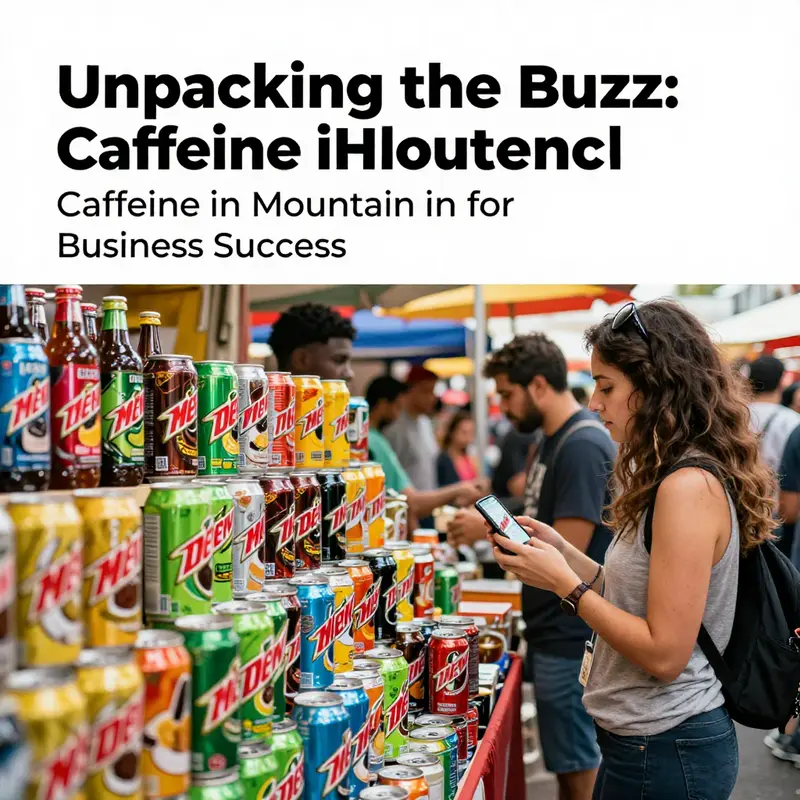
Mountain Dew has built much of its identity around a bright, stimulating experience, and caffeine sits at the center of that identity. Over the past decade, beverage makers have responded to shifting consumer appetites for functionality, taste, and lifestyle alignment by offering beverages that promise alertness as well as flavor. For Mountain Dew, this meant preserving the classic moderate caffeine kick in its original formulation while expanding into higher-caffeine formulations aimed at people seeking a more intense boost. That dual approach allows the brand to remain familiar to long-time drinkers while also tapping into the thriving energy-drink segment.
Advertising and product strategy work together to position caffeine as more than an ingredient; it becomes symbolic. Campaigns routinely highlight high-energy activities and high-profile personalities to create an association between the drink and daring, high-visibility pursuits. That messaging resonates particularly well with younger male consumers, who often value products that reinforce a bold self-image. The presence of extreme sports, competitive athletes, and music figures in advertising reinforces caffeine’s role as a performance enhancer and social signifier. Those cues matter: they change caffeine from a mere stimulant into a lifestyle signal that consumers use to express identity.
Consumer preference data shows a clear appetite for beverages that combine pronounced flavor with functional benefits. For many younger drinkers, flavor intensity is non-negotiable; they expect a product to taste distinct and memorable. At the same time, many of these consumers want a perceptible cognitive lift — sharper focus, more energy, or just a reliable wake-up nudge during busy days. Mountain Dew’s strategy of offering versions with different caffeine levels allows customers to choose how much stimulant they want, without sacrificing the core flavor profile they associate with the brand. Sales rankings and customer reviews indicate that this combination performs well. Products that maintain bold taste while delivering a clear energizing effect tend to secure high ratings and repeat purchases, suggesting the positioning is effective.
The product line’s expansion into formulations with significantly higher caffeine per serving reflects broader market trends. Energy drinks have normalized higher caffeine levels, and many consumers now compare offerings based on milligrams per serving. One branch of the brand delivers a higher caffeine payload alongside cognitive-supporting additives, targeting people who want more than a simple lift. These high-caffeine variants sit closer to energy drinks in terms of function, even when their flavor and packaging recall the brand’s soda roots. The coexistence of moderate- and high-caffeine options allows the brand to straddle two adjacent categories: traditional carbonated soft drinks and functional energy beverages.
Health and safety considerations inevitably shape how consumers perceive caffeine-based marketing. Awareness of issues like dental erosion from acidic ingredients and the physiological effects of excessive caffeine influences some purchasing decisions. Many consumers balance desire for a stimulant against long-term health priorities, moderating intake or opting for lower-caffeine choices. Yet, despite these concerns, demand has remained robust. The brand manages this tension by keeping caffeine levels transparent and by diversifying options. For consumers who worry about acidulants or sugar, alternative formulations and occasional consumption are common strategies to reduce perceived risk without abandoning favorite flavors.
Retail performance and online ratings speak to the effectiveness of this market positioning. Products that offer the classic moderate caffeine experience continue to perform strongly among mainstream shoppers. At the same time, higher-caffeine variants attract customers seeking more functionality, driving growth within convenience and specialty channels. The two-pronged approach also supports promotional flexibility. Retailers can stock a baseline product that appeals to a broad audience while allocating shelf space for specialized variants that deliver higher margins or generate buzz.
Social and cultural contexts amplify caffeine’s appeal. For younger consumers, the stimulant is often associated with study sessions, late-night creativity, gaming marathons, and social events where sustained energy matters. Brands that embed caffeine into narratives about achievement, creativity, or endurance tap into real behaviors and aspirations. The result is a product that consumers see as useful across multiple scenarios. That flexibility increases occasions for consumption beyond traditional soda moments and helps explain why brands with caffeine-forward messaging can maintain relevance.
Packaging and flavor innovations further influence preferences. Bright, bold labeling and language that emphasizes intensity attract attention on crowded shelves. Flavor extensions that push boundaries — whether with fruity, tangy, or sour notes — complement the idea of an energetic experience. When packaging signals intensity, consumers infer a stronger functional effect even before checking caffeine content. Conversely, clear labeling of milligrams per serving appeals to more informed shoppers who make direct comparisons between products. Both approaches work together to broaden the brand’s market reach.
Retailers and foodservice operators respond to these consumer signals by curating assortments that reflect local tastes. Convenience stores in high-traffic urban areas or near college campuses tend to stock a wider range of higher-caffeine options, anticipating demand from late-night customers and younger shoppers. Supermarkets often balance shelf sets, keeping core variants in high-visibility bays while allocating space for specialized energy-focused SKUs. This assortment strategy supports discovery: shoppers who start with a familiar, moderate-caffeine product may trade up to a higher-caffeine variant when seeking more functionality.
Research and tracking of consumer sentiment show a steady preference for transparency. Shoppers appreciate clear caffeine disclosures and ingredient lists. They also value contextual information about serving size and recommended limits. Brands that communicate responsibly around caffeine and health concerns tend to earn trust, particularly among consumers who are health-conscious but still enjoy stimulant-driven beverages. This trust matters; it can determine whether a consumer sticks with a brand or switches when a rival promises similar functional benefits.
Looking ahead, the interplay between taste innovation, caffeine levels, and marketing narratives will continue to shape the brand’s market position. As consumers diversify how and when they consume stimulants, opportunities arise for new formulations that blend moderate caffeine with other functional ingredients. The challenge will be to maintain the bold flavor that defines consumer expectations while continuing to offer clear, responsible choices on caffeine strength. Doing so will keep the brand relevant across both everyday and performance-oriented consumption occasions.
For readers who want a closer technical comparison of caffeine levels across beverages, a useful resource explains how the caffeine in these sodas compares with other popular drinks. That analysis helps put milligrams per serving into perspective and supports informed choices about when and how much to consume: https://www.mountaindew.com
For a deeper dive into measured caffeine amounts and how those figures stack up against other soft drinks, see this internal guide to the caffeine content of Mountain Dew that summarizes per-serving levels and context for comparison: https://coffeerichlife.com/blog/caffeine-content-mt-dew/
Final thoughts
As the beverage market continues to evolve, understanding the caffeine content in Mountain Dew products is crucial for business owners. From Classic Mountain Dew’s 55 mg of caffeine to the impactful 180 mg found in MTN DEW RISE ENERGY, these figures influence consumer choices heavily. Awareness of these details not only aids in tailoring marketing strategies but also shapes product offerings to meet consumer demands and preferences. By engaging with these insights, businesses can create a competitive edge and foster a loyal customer base that values the unique benefits these beverages offer.