

Achieving the perfect cup of French press coffee hinges on understanding the coffee-to-water ratio, a critical factor that significantly influences flavor, strength, and aroma. For business owners in the café industry or those managing coffee-centric venues, mastering these ratios is not just about brewing; it’s about creating an exceptional coffee experience that keeps customers coming back. This article delves into the standard, bold, and light ratios for French press, along with best practices and recommendations to help you optimize your brewing process and elevate your offerings. Whether aiming for a robust cup to energize your regulars or a delicate brew for those who favor subtlety, you’ll find valuable insights across each chapter, ensuring your coffee service stands out in the competitive market.
The 1:15 Benchmark: How a Simple Coffee-to-Water Ratio Shapes the French Press Experience

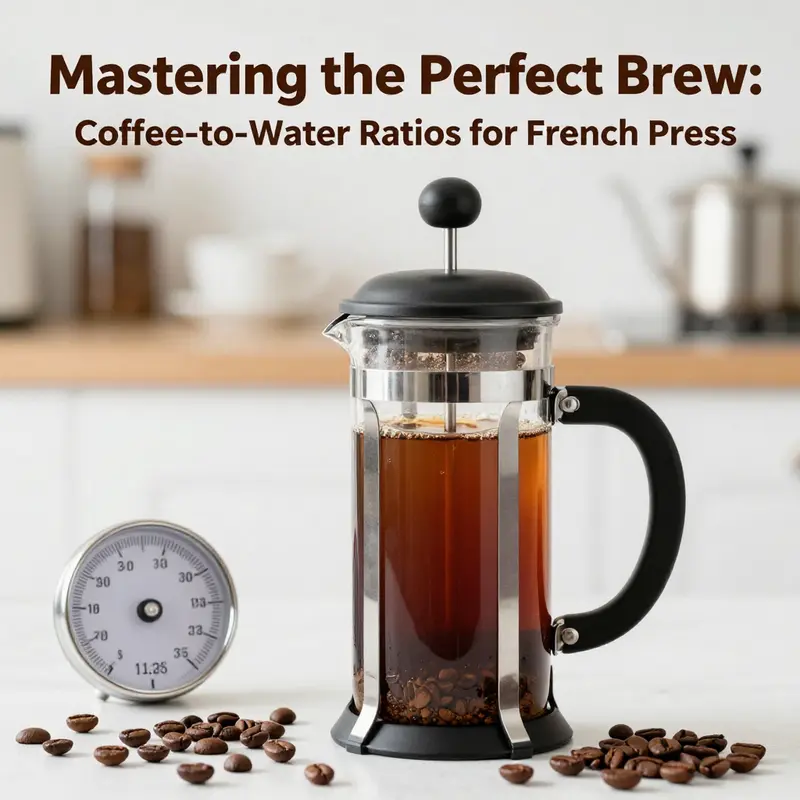
If you could tune the flavor of a French press coffee the way you tune a radio dial, the ratio of coffee to water would be the central frequency that determines how much brightness you hear, how much warmth you feel, and how clearly the cup carries its aroma from the mug to your senses. The standard that most professionals and specialty coffee organizations point to is not a secret recipe but a practical starting point: 1 gram of coffee to 15 grams of water. In coffee circles, water and coffee are treated as equal partners in a chemistry experiment that happens in your cup, so the number of grams of water is simply the number of milliliters you pour, and the ratio becomes a basic map for extraction. The widely cited guideline, 1:15, has become a touchstone for consistency and quality, a baseline that allows your beans to reveal their acidity, sweetness, and aroma without tipping into bitterness or a slurry of fines. It is a guideline that invites experimentation while offering a dependable, repeatable result when you want a balanced, robust brew that speaks of the coffee’s origin and its natural fruit tones.
To translate the ratio into concrete measurements, consider a few practical examples. If you start with 40 grams of coffee, the corresponding water amount at 1:15 is 600 milliliters. The math is straightforward: water equals coffee times 15. If you dial down to 30 grams of coffee, 450 milliliters of water keeps you at the same 1:15 ratio. These numbers aren’t just about precision; they are about ensuring the cup has body and clarity without leaning too far toward either dullness or overpowering bitterness. The 1:15 ratio is not a one-size-fits-all decree, but rather a balanced baseline from which you can adjust up or down depending on your preferred strength. Some home brewers or professionals prefer a bolder profile and might tilt toward 1:13, which would translate to roughly 46 grams of coffee for 600 milliliters of water. Others gravitate toward a lighter, smoother cup at 1:17, which would imply about 35 grams of coffee for the same 600 milliliters of water. While a 1:20 starting point exists in some guides, the consensus in expert circles is that such a dilution reduces the potential for complexity and intensity, making it less ideal for the traditional French press experience.
This standard ratio—1:15 in particular—rests on a constellation of factors that together shape the brew’s character. The aim is a cup that carries a natural acidity and sweetness in balance, with a mouthfeel that feels substantial yet not gritty. The body should be present, but not heavy to the point of masking the coffee’s nuanced aromas. In practice, the 1:15 approach invites the coffee’s intrinsic traits—the fruity brightness of some beans, the cocoa-like depth of others, the aromatic oils that give a lingering finish—to come forward without being overwhelmed by an overly concentrated extraction or washed out by over-dilution. In the world of specialty coffee, where consistency and repeatability matter as much as the cup’s personality, the 1:15 ratio offers a robust, versatile baseline that aligns with professional guidelines. It is a starting point that supports a grit-free, flavorful experience when handled with care during grind size, agitation, and brew time. In this sense, the standard ratio is less about a rigid rule and more about a reliable framework that allows the coffee to reveal itself with clarity and character.
Why 1:15, though? The reasoning lies in the interplay between extraction, mouthfeel, and the preservation of distinctive flavors. When you use too little water for too much coffee, you risk under-extraction. The cup might taste flat, with a sign of sourness or a metallic edge and a lack of sweetness. Conversely, using too much water with too little coffee can push the extraction into overdrive, drawing out bitter compounds and muddying the cup’s aroma. The 1:15 ratio, when paired with proper grind size and a thoughtful brew time, tends to produce a brew that carries a clean and balanced profile. The mouthfeel remains substantial enough to convey body, but the clarity of acidity and aroma remains discernible, letting the coffee’s origin and roast profile show through in a way that’s easy to appreciate in a routine morning ritual or a slow, deliberate tasting session.
Among the published examples that illustrate the 1:15 standard, you’ll often encounter straightforward calculations that make practical sense in a home kitchen. For instance, a standard recipe states 40 grams of coffee for 600 milliliters of water, a ratio neatly labeled as 1:15. Another common pairing shows 30 grams of coffee for 450 milliliters of water, reinforcing that the same ratio scales with different batch sizes. These measurements underscore a larger principle: the ratio is not just about a single brew but about consistency across different quantities. It allows you to approach each batch with the same proportions, ensuring that your chosen strength and flavor profile persist even as you adjust the total volume to accommodate guests, a travel mug, or a smaller test batch for a sensory comparison.
For readers who want to explore the topic more deeply, the 1:15 ratio appears in professional brewing guidelines that emphasize a balanced extraction as the aim. The Specialty Coffee Association’s brewing guidelines, a benchmark for many specialty coffee businesses and trained baristas, highlight 1:15 as a widely accepted starting point. This is the kind of guidance that helps a café or a home brewer align expectations about what a “good” cup should taste like while providing a foothold for experimentation when a different flavor emphasis is desired. The core idea remains that the ratio is a lever you can pull to influence body, brightness, sweetness, and aroma, without sacrificing overall balance. Even when enthusiasts tilt toward 1:13 or 1:17 to tailor the cup to a particular bean or roast level, the underlying logic remains intact: approximate extraction, sensible body, and a clean finish. For many, this balance signals the sweet spot where coffee’s natural properties can be found beneath the surface of the brew rather than being obscured by either too little extraction or too much dilution.
The practical implications extend beyond the numbers on a scale. They reach into the sensory world of grinding, agitation, and timing. The standard ratio is paired with other variables that influence flavor outcomes. The grind size, for example, determines the surface area of the coffee that interacts with water, affecting how quickly flavors release during immersion. A grind too coarse can lead to under-extraction, producing a cup that feels thin and insipid, while a grind too fine risks over-extraction and a cup that battles with bitterness and a gritty texture. The 1:15 ratio serves as a stabilizing backbone, but it relies on careful alignment with grind setting and the length of immersion to fully reveal what a given coffee has to offer. Some guides discuss these interconnections in the context of a grit-free, flavorful French press experience, pointing out that the ratio works best when paired with a balanced approach to grind size and brewing time. This reinforces the idea that successful French press brewing is a choreography of related choices rather than a single, isolated adjustment.
As you consider applying this ratio to your own routine, keep in mind that the 1:15 standard is not meant to lock you into a single practice. It is meant to serve as a reliable starting point that invites you to explore your preferences and the coffee’s personality. If you crave a stronger cup with more presence, edging toward 1:13 makes sense, especially for beans with fuller body and bolder roast notes. If you prioritize a lighter, smoother cup that preserves delicate acidity and nuanced aromatics, a 1:17 ratio can be a wise choice. The practical takeaway is that your measurements, when anchored to a 1:15 baseline, become a predictable foundation from which you can depart as you refine your technique and your palate.
To make this more tangible, the mathematics are simple enough to guide everyday practice. With 500 milliliters of water, a 1:15 ratio would require roughly 33 grams of coffee—often approximated as about four level, heaping tablespoons if you measure by volume rather than by weight. Yet the recommendation emphasizes using a digital scale for accuracy. Differences in bean density, roast level, and grind size can cause volume measures to vary, so a scale helps you reproduce the same extraction in successive batches. In practice, many home brewers begin with a scale-based approach, then adjust by small increments to discover the precise balance that aligns with their taste preferences while still honoring the core 1:15 principle.
While the 1:15 ratio stands as the standard, the broader conversation in the coffee world recognizes that there is value in controlled experimentation. The range of 1:13 to 1:17 represents a spectrum of intensity, body, and brightness. Some enthusiasts find 1:13 to be a more robust, caffeinated experience that emphasizes depth and boldness, while others choose 1:17 to emphasize clarity and a smoother mouthfeel. A starting point of 1:20 is mentioned in some guidelines, but it is generally considered too dilute for the classic French press experience, especially if you are seeking the stronger, more tactile mouthfeel that the method can deliver. The practical approach is to begin with 1:15, taste, adjust by small steps, and document how the changes affect the final cup. This is where the craft of coffee tasting meets the science of measurement, and where your preferences gradually become a framework for your own personalized standard.
In this context, the role of measurement goes beyond accuracy. It becomes a habit that transforms a routine pour into a repeated practice. The moment you pour water onto ground coffee, you begin a tiny extraction experiment. The ratio tells you whether you are on track to extract the compounds that contribute sweetness and acidity in a balanced way, or whether you might be leaning toward over- or under-extraction. A cup that successfully walks the line between body and clarity is not the result of a single step but the outcome of harmonizing ratio, grind, batch size, and stirring (or agitation) in a way that respects the coffee’s inherent profile.
For readers seeking further context and a deeper dive into the mechanics behind these numbers, consider exploring the deeper guide on French press ratios and how to optimize grind and brew variables in tandem. That resource offers a comprehensive view of how to approach the process with a focus on grit-free, flavorful outcomes, and provides additional insights that complement the ratio-centric framework presented here. French-press-ratios-the-ultimate-guide. It’s not about chasing a single perfect formula but about understanding how a reliable baseline can coexist with your evolving preferences and your beans’ evolving personalities.
As you prepare to apply these ideas to your own brewing, remember that the goal is consistency paired with taste. The 1:15 ratio is a reliable, starting point that aligns with professional standards and offers a sensible balance of strength, body, and aroma. It gives you a practical method to scale up or down with batch size while maintaining the same flavor profile, and it leaves room for experimentation with slight adjustments in the future. The approach invites you to be mindful of your grind, your water quality, and your immersion time, recognizing that each variable is a brushstroke in a larger painting—the cup you’ll drink as part of your daily ritual or your sensory exploration with friends.
External reference for a broader framework: https://sca.coffee/learn/brewing-guidelines
null
null
1:17 French Press: A Light, Balanced Cup

A well-made cup from a French press can feel like a quiet conversation between heat, grind, and time. The goal of a light, smooth cup is not to erase character but to reveal it with a cleaner sweetness, brighter acidity, and a body that remains balanced. The 1:17 ratio is a discipline of restraint and nuance. It invites enough water to extract aroma while limiting extraction so that bitterness or astringency do not dominate the finish. The result is a cup that feels approachable and expressive at once.
To appreciate why 1:17 is often recommended as a light or smooth approach, view the brew as an equation balancing extraction dynamics with the filter’s personality. The French press uses a metal mesh that permits more oils and fine particles into the final cup than many other methods. This feature can amplify texture and mouthfeel, which, without careful balance, might skew toward heaviness or a gritty finish. The 1:17 ratio nudges you toward that sweet spot: enough coffee to deliver body and aroma, but not so much that the cup becomes oily or overwhelming in aroma. Specialty coffee experts recognize a golden range roughly 1:15 to 1:17 for many methods. The French press often sits toward the stronger end due to immersion that extracts more solubles. Within that range, 1:17 serves as a practical anchor for a smooth, well-rounded cup.
Consider a standard balance point: 35 grams of coffee with 600 milliliters of water, a classic 1:17 baseline. The math is straightforward, and the result is familiar—a cup that carries sweetness and brightness with a defined but not aggressive body. For many home brewers, this zone provides reliability across different roasts and grinds. It’s not the loudest or strongest brew you can extract, but it is precise and repeatable, allowing you to tweak toward your preferred flavor targets without losing balance.
The science behind the ratio is pragmatic rather than dogmatic. Immersion lets the grounds mingle with water, and the metal filter passes more solubles and oils into the cup. Oils carry aroma and texture; they can also deepen perceived body. Too little coffee and the cup can feel thin; too much and oils may feel heavy and the finish may drift toward bitterness. The 1:17 ratio nudges you toward the sweet spot, a stable compromise that delivers body with clarity of flavors. In this zone, fruit notes, chocolate undercurrents, and floral accents can peak without being smothered by excessive solubles.
If you are curious about broader variations, you can think of 1:17 as the lighter side of an intensity continuum. Move toward 1:15 and the cup gains a stronger mid-palate and more pronounced body. The aroma can feel richer, and the aftertaste can linger with more cocoa or caramel tones. Shift toward 1:13 and the same coffee becomes bolder, with more oils and a sturdier backbone; texture thickens, and bitterness can rise if grind or water temperature isn’t controlled. On the lighter end, at 1:17, the cup remains approachable and forgiving of minor deviations in grind size or stirring technique. If your goal is a daily brewer that respects the coffee’s inherent sweetness and acidity, the light end of the range offers resilience and readability in the cup.
The practical steps begin with a reliable scale and a consistent grind. A 35-gram dose with 600 milliliters of water is a practical embodiment of the 1:17 ratio, but exact numbers can flex with bean origin and roast level. A medium grind tends to work well for this ratio, enabling sufficient extraction without too much particulate matter. It is easy to overstep the line if you crowd with too fine grounds, which can push extraction toward bitterness and a muddy finish. Conversely, too coarse a grind can yield a weak, underdeveloped cup. The key is to arrive at a grind that offers uniformity across the batch, with enough surface area to extract sweetness and aroma in a reasonable time frame.
Time is another critical lever. A typical steep for a French press hovers around four minutes, though some prefer five for a deeper profile. With a light ratio, you may want to favor shorter contact to preserve clarity, especially with delicate fruit notes. The bloom helps hydrate the coffee and begin measured extraction. Gentle stirring at the outset ensures even saturation. After the bloom, the rest of the brew should proceed with steady patience, avoiding aggressive stirring that could introduce excess suspended solids.
The water temperature also shapes the outcome. Target around 92 to 96 degrees Celsius provides a gentle extraction for most medium roasts. Water that is too hot can rush the oils and solubles, pushing toward bitterness; water that is not hot enough may fail to unlock full sweetness. The light ratio helps mitigate variables by giving you a firm baseline. With practice, you will notice how slight adjustments to grind, bloom time, agitation, or pour technique ripple through the cup, gradually revealing the nuances of the beans.
Brewing with a light ratio also invites you to experiment calmly. If a batch seems underwhelming, try a small adjustment toward 1:16 by a gram or two of coffee, checking for a measurable increase in body and aroma. If the cup seems overly light, you can experiment in the opposite direction, but small, incremental changes are easier to track. The aim is not to chase intensity but to cultivate a consistent, elegant balance that invites a second sip rather than rushing through the first.
In the end, the 1:17 baseline is a starting line, not a finish line. Treat it as a compass that helps you map toward the coffee’s inherent sweetness and acidity while preserving a clean, comfortable mouthfeel. With practice, you may find that this ratio stays in your routine as a reliable, flexible template that adapts to different beans and moods, always inviting you to pause, reflect, and savor the nuanced cup you’ve earned.
Balancing Body and Clarity: A Deep Dive into the French Press Coffee-to-Water Ratio
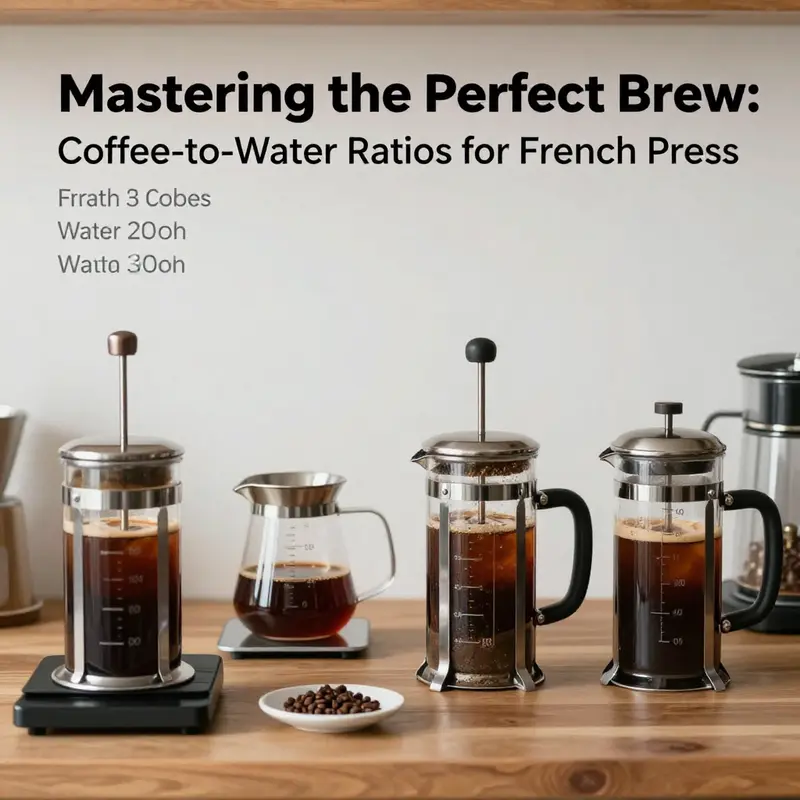
The French press invites a tactile, almost ritualistic approach to coffee. The ratio of coffee to water is not a mere measurement; it’s the script that guides the extraction’s tempo. Too little ground relative to water and the brew can feel thin or underdeveloped. Too much coffee invites heaviness and a muddy, dominating presence. The art lies in finding a balance where oils and aromatics are coaxed from the grounds without dragging in excessive bitterness or sourness. In this space, the numbers matter, but so do the hands that measure, grind, and time the brew. A well-chosen ratio becomes the backbone of a cup that is both expressive and repeatable, a foundation that supports the aroma and mouthfeel you want to carry into the first sip.
Among the practical targets discussed by seasoned brewers and careful guides, a ratio of 1:14 has gained traction as a reliable balance point. In this convention, one gram of coffee meets fourteen milliliters of water. On a practical scale, 35 grams of coffee to about 500 milliliters of water lands very close to this mapping. The precision of the ratio is useful, but home brewers often round to the nearest practical measure, and many find that 500 milliliters still lands squarely in the intended neighborhood. The take-away is simple: start with proportionate accuracy, then allow a little rounding to keep the process pleasant and repeatable. This emphasis on precision-with-purpose is what helps a routine become a dependable habit rather than a guessing game.
Yet the wider landscape of guidance for French press brewing includes a spectrum of ratios. Some sources advocate 1:15 to 1:17 for a more balanced or lighter cup, emphasizing clarity and a smoother finish while preserving body. A bolder, more intense cup can be pursued around 1:13, where the same water quantity paired with slightly more coffee intensifies the extraction and the perception of oils. Conversely, a lighter cup can be achieved with a 1:17 ratio, offering a smoother, more delicate profile with a cleaner finish. There are even mentions of starting around 1:20, but many enthusiasts find that level too dilute for the French press, particularly when seeking expressive dark-roast notes or a pronounced sweetness. In practice, many brewers trial a few ratios across a single batch to discover which balance best suits their grinder, their kettle, and their palate. The result is less a single rule and more a spectrum of options that can be tuned to taste and roasting style.
To translate ratio into a dependable routine, measurement remains essential. A scale that reads to the tenth of a gram allows you to pin down coffee weight with confidence, while water in milliliters preserves a direct, intuitive link to the ratio. Ground coffee should be medium-coarse and freshly ground; this size helps the grounds interact with the mesh filter in a way that yields a clean, full-bodied cup without a gritty aftertaste. Water temperature matters, too. Aim for 195 to 205 degrees Fahrenheit—just shy of boiling—and give the grounds time to bloom briefly before full immersion. The classic four-minute steep acts as a reliable anchor for most sources of guidance. After four minutes, press the plunger slowly and steadily to maintain a calm flow that preserves clarity while coaxing out the coffee’s oils and flavors. These steps—precise weighing, appropriate grind, precise temperature, and a measured steep—form a practical framework that makes the ratio meaningful in everyday use.
The danger of over-extraction is a constant reminder that the numbers alone cannot guarantee perfection. Leaving grounds in contact with water too long invites bitterness and a sharper acidity. The four-minute rule is a safeguard, and many brewers adjust their approach only when their current setup fails to align with taste. If sourness lingers, you might consider a slight tweak in grind size, water temperature, or the ratio itself rather than extending the brew time. Another easily overlooked factor is the filter itself. A clean, properly seated metal mesh is crucial to keeping sediment from clouding the cup and interfering with the perceived brightness of aromatics. The goal is a cup that tastes lucid and vibrant, not muddy or dull. This attention to the interplay of elements—ratio, grind, temperature, time, and filtration—turns the brewing process into a refined, repeatable practice rather than a one-off experiment.
The flavor outcomes tied to 1:14 and nearby ratios reveal a broad spectrum. A brew at 1:14 tends to deliver reliable body and a crisp, clear aftertaste. The mouthfeel carries enough weight to feel substantial without tipping into heaviness. Pushing toward 1:13 amplifies intensity, intensifying the oils and enriching the finish. Reducing the coffee slightly or increasing the water to approach 1:17 lends a smoother profile with more pronounced clarity, highlighting delicate notes that may recede at stronger ratios. These relationships are about more than strength; they shape how acidity, sweetness, and roasted character present themselves. The grind and water temperature interact with the ratio to emphasize or soften traits, and the result becomes a tailored experience rather than a universal standard. In other words, ratio is a compass, not a command, guiding you toward your preferred expression as you learn the behavior of your beans.
Roast level and bean origin further color how the ratio plays out. Darker roasts release oils more readily and can take a slightly lower ratio to bolster presence without tipping into harshness. Lighter roasts, with their brighter acidity, often respond well to a ratio that leans toward a touch more coffee, helping body carry the brightness rather than letting it sprint away. The same 1:14 framework can adapt to a range of beans, from different origins and processing styles, with adjustments staying small but meaningful. Because coffee is a living material, with flavors that shift with harvests and even with grinder settings, the best practice remains the same: approach the process with curiosity, and keep a notebook. Note how a consistent grind scale, a fixed water temperature range, and an exact steep time produce a cup, then record the differences when you vary the ratio by a gram or two or adjust the water by a few milliliters. In time, the notebook becomes a personal guide for your palate, turning numbers into a precise, repeatable experience.
For readers who want a deeper technical touchstone, there is a comprehensive resource that charts grind size, water temperature, and timing against sensory outcomes. It helps connect the arithmetic of 1:14 to tasting reality, offering practical steps for scaling a recipe from a single cup to multiple servings without losing balance. If you’d like to explore more, you can consult the guide linked here: French Press Ratios: The Ultimate Guide. This resource helps translate the numbers into actionable steps and often includes tips for adjusting a recipe to your equipment and preferences.
Brewing remains a practice of consistency married to personal taste. The numbers provide a starting point, the palate provides the verdict. If you’re starting from scratch, try a 1:14 ratio with 500 milliliters of water and 35 grams of coffee, then taste and assess. If that feels bold yet balanced, you can maintain the approach or nudge toward 1:13 for a stronger cup. If you crave a softer, lighter experience, move toward 1:17 with the same grounds and a larger water quantity. The grounds themselves carry a fingerprint—their grind, age, and density shape how the ratio expresses flavors. The filter matters, too; a clean, well-maintained mesh ensures clarity without sediment. With patience, your daily cup can reveal layers of sweetness and depth tied to the roast’s journey and the way you breathe life into a simple press of metal and hot water.
The routine culminates in a taste-focused ritual. Pour the brew into a prewarmed mug, inhale the aroma, and listen to your palate as the first sip guides your next adjustment. If your aim is a robust cup with a pronounced chocolate hint, a 1:13 ratio with a slightly coarser or finer grind and a warmer end of the temperature range may suit you. If you seek a precise balance with brightness held in check by body, a 1:14 or 1:15 ratio paired with careful timing is often effective. For a cleaner, more refined finish, a 1:17 ratio may become your preferred path. The beauty of the French press is its adaptability; it invites constant refinement through mindful practice rather than dictating a single outcome. This malleability makes morning brewing a personal, evolving craft rather than a fixed routine.
Beyond the kitchen, the ratio informs travel, camping, and daily routines. A well-chosen ratio scales with water and portions, preserving consistency across cups and circumstances. With a scale and a steady hand, you can bring café-like precision to a press setup even when your routine shifts. Weighing, timing, and temperature become small rituals that anchor the day rather than sources of stress. In the end, the aroma, the first cup’s memory, and the sense of starting well set the tone for the hours to come. The overarching message is clear: treat ratio as a flexible framework, respect the physics of extraction, and let your taste lead the final judgment.
To close the loop on practicalities, remember these best practices: grind fresh, heat water to just below boiling, and steep for four minutes before a deliberate, slow press. Keep the plunger aligned and moving smoothly. If you notice grounds slipping through, revisit grind size, ensure the filter basket seats correctly, and clean the screen regularly. These routine checks keep the cup clean, vibrant, and faithful to your chosen ratio. The ratio guides the brew, but technique shapes the personality of the cup. With patience and attention to detail, a daily cup can reveal nuanced sweetness, balanced acidity, and depth that reflect both the roast and the journey from bean to cup.
External resource: https://roastcoffee.com/brewing-guide-french-press/
Final thoughts
Understanding the coffee-to-water ratio is indispensable for business owners looking to fine-tune their coffee offerings. Each ratio—from standard, bold, to light—caters to distinct preferences, and embracing these variances will enable you to appeal to a broader customer base. In a market where quality is paramount, perfecting your French press technique will not only differentiate your coffee but also enhance your reputation as a provider of exceptional brews. By implementing the insights shared here, you can redefine the coffee experience for your clients, ensuring satisfaction and loyalty.