

As the beverage market continues to evolve, frappes have emerged as a popular choice for consumers seeking a tasty, chilled coffee option. However, the caffeine content in frappes can greatly influence customer preferences and choices. Recognizing whether frappes contain caffeine—and the extent of that caffeine—is crucial for business owners looking to optimize their menus and cater to their clientele’s needs. This article delves into the caffeine content in popular frappes, examines the variability of ingredients, and discusses health considerations to provide a comprehensive understanding for business owners. From large chains to local cafes, knowing how to manage caffeine offerings can be a distinctive advantage in appealing to health-conscious consumers.
Frosted Footprint: Tracing Caffeine in Frappes Across the Menu

The first sip of a frappé is a small event in a busy day. Ice crystals crackle as the drink collides with the straw, a chill that can feel almost ceremonial. Beyond the cold sweetness, however, there is a more persistent presence: caffeine. It is this invisible energy that makes the frappé more than a dessert-like treat and turns it into a familiar pick-me-up for many people. Yet caffeine in frappés is not fixed; it moves with the recipe, the base, the size, and the way the drink is built.\n\nCaffeine in frappés primarily comes from the coffee or espresso that anchors the drink, or from coffee-based syrups that carry real coffee compounds. In practice, most frappés at major coffee-forward retailers start with a coffee-derived base. That base can be as straightforward as a shot or two of espresso folded into ice and milk, or it can be a flavored syrup that contains coffee extract. Caffeine’s presence is reliable but variable, reflecting the diversity of frappé design.\n\nThis variability is not a flaw but a feature, enabling brands to meet different tastes and caffeine sensitivities. For someone who relies on a steady caffeine habit, the exact punch can differ not just by brand but by day, depending on preparation and serving method.\n\nOn average, frappés are caffeine-rich relative to many non-coffee ice beverages, but not always equal to a straight espresso. In practical terms, a standard frappé often sits in a mid-to-upper range for caffeine among coffee beverages. For a 12-ounce serving, typical ranges hover roughly from 60 to 130 milligrams, with larger sizes pushing totals higher. The base content and size drive the total, while dairy, flavorings, and toppings add texture without dramatically changing caffeine.\n\nA common rule of thumb: many frappés rely on one or two shots of espresso. A single shot contributes roughly 60 to 63 milligrams of caffeine. Two shots can push toward 120 milligrams or more, depending on dilution and syrups.\n\nNot all frappés are equal. Some use decaf bases or caffeine-free flavorings, which are common in some menus. But most frappés retain a caffeinated backbone because the coffee flavor is part of the recognizable frappé experience.\n\nThe variation across outlets is where the real complexity lies. There are café-style frappés with a strong coffee base and dessert-forward frappés where flavorings mimic coffee notes without a heavy caffeine backbone. The practical effect is a spectrum rather than a single recipe. Consumers can adjust by choosing decaf, requesting fewer shots, or selecting smaller sizes.\n\nFor caramel frappés, caffeine depends on whether the base uses real coffee or relies on flavorings. Caramel can ride on a coffee-forward foundation or on non-coffee flavors, yielding different caffeine realities. If you want to explore this angle, see external discussions like Caramel Frappe Have Caffeine.\n\nMenu labeling and nutrition panels are increasingly transparent about caffeine ranges, and it is worth checking the size you order. A 12-ounce frappé can differ from a 16-ounce version in caffeine, even if the name is the same.\n\nFrom the science of caffeine, peak levels occur roughly between 30 and 60 minutes after ingestion, with effects varying by individual. For daily planning, frappés offer a flexible option: lighter lifts with a single shot or decaf base, or stronger energy with a concentrated coffee backbone and a larger size.\n\nThere are non-coffee cousins too. Some frappés rely on dairy, cocoa or vanilla to evoke a dessert sensation without a strong caffeine bite. These can be appealing for chocolate lovers or those avoiding caffeine, while still enjoying the frappé texture.\n\nThe takeaway is practical: frappés do have caffeine, but amounts vary. You can influence caffeine by size, base, and shot count, or choose decaf options. If you want a more concrete reading, check the linked resource for broader caffeine content in frappés: https://www.caffeineinformer.com/frappe-caffeine-content\n\nIn closing, frappés sit at the intersection of flavor, texture, and physiology. The caffeine story is not a single data point but a spectrum shaped by base and size. The goal is clarity: check the caffeine content, understand how your size affects total, and decide how much lift you want for the day.
Caffeinated Confections: Tracing Caffeine Through Frappes Across Recipes and Brands

Frappes sit at a curious crossroads between a frosty dessert and a morning pick‑me‑up. They are ice‑blended, creamy, and often irresistibly sweet, yet they carry the daylight‑bright kick of caffeine that can linger for hours. The presence of caffeine in a frappe is not a simple yes or no; it is a spectrum shaped by how the drink is built, the base used, and the size in which it is served. The caffeine you get from a typical frappe depends on the coffee component—whether it is espresso, brewed coffee, or even a cold brew concentrate—the milk or dairy alternative, the flavor syrups, and any extras that might amplify or mute the caffeine punch. In practice, caffeine content in frappes tends to fall within a fairly broad range, often cited as roughly 60 to 130 milligrams per serving, but with meaningful variation that can swing the number in either direction depending on the recipe and the vendor. This variability is not a quirk; it is a function of the ingredients and the preparation method, and understanding it helps one navigate choices with greater confidence, especially for those who are caffeine sensitive or monitoring daily intake.
To appreciate why frappes differ so much, it helps to parse the caffeine source. When a frappe relies on coffee or espresso as its primary base, caffeine content tracks closely with the amount of coffee used and the extraction strength. A drink built around a standard coffee base will typically deliver less caffeine than one made with a concentrated espresso or a cold brew concentrate, simply because the latter two pack more caffeine per fluid ounce. The influence of size cannot be overstated. It is intuitive that a larger drink holds more caffeine, but the incremental caffeine gain depends on how the drink is formulated. A frappe that scales from a small to a larger size often adds more coffee base rather than proportionally increasing dairy or syrups, which means the caffeine jump can be substantial as you move up a size.
Consider the broader landscape of frappes beyond the coffee‑forward version. Some shops offer frappes and similar blended beverages that pivot away from coffee entirely, using decaf coffee, espresso substitutes, or non‑coffee bases such as cocoa, flavored syrups, or tea infusions. In these cases, caffeine can be significantly reduced or even nearly absent, depending on the ingredients. Even within “coffee light” iterations, there can be caffeine present from cocoa solids or chocolate syrups, which carry their own modest caffeine content. This means a frappe labeled as caffeinated can still vary in how much of that energy actually reaches you, particularly if you choose a flavor that leans on chocolate or other ingredients with intrinsic caffeine. The result is a menu where two frappes that share a name may taste alike but deliver different caffeine experiences, driven by the exact recipe, the base beverage, and the size you choose.
The practical upshot for consumers is clear: if you require precise caffeine accounting, you must look beyond the drink’s name and toward the nutrition information. This is especially important because caffeine labeling on menus is not always uniform across outlets. In one case, a shop may publish a caffeine range for a given frappe that spans a wide interval; in another, there may be no caffeine data listed at all. When in doubt, the most reliable path is to consult the official nutrition information provided by the retailer or to reference a trusted database such as the USDA FoodData Central. The variability described here explains why blanket statements like “all frappes have caffeine” or “frappes have no caffeine” miss a crucial nuance. The reality is more subtle: most traditional frappes derived from coffee or espresso contain caffeine, but the exact amount hinges on the recipe and the execution.
From a consumer‑education perspective, this variability can be challenging yet empowering. It means that a fan of frappes who is watching caffeine intake can still enjoy them by selecting options with more information. If a brand offers a variety of frappes, the caffeine content will differ among flavors, even when the drinks share a common name. A frappe flavored with chocolate often carries a small additional caffeine contribution from cocoa solids or chocolate syrups, while those built around cold brew concentrate may present notably higher levels. It is also worth noting that some versions may use decaf coffee or non‑coffee bases, which can reduce caffeine substantially or remove it entirely. In practical terms, this means that a “coffee frappe” label does not guarantee a fixed caffeine level; instead, it signals a general category that could swing across a spectrum.
The actual numbers reflect these dynamics. Across widely available options, the caffeine content for frappes tends to fall within an approximate range of around 60 to 130 milligrams per serving, with the dispersion arising from factors such as the coffee base used, the drink’s size, and any added caffeinated components like chocolate or syrups. A frappe that relies on a cold brew concentrate, for instance, will typically present a higher caffeine profile than one brewed with standard coffee, even if the final volume is similar. Conversely, a version built on decaf coffee or a non‑caffeinated foundation can substantially lower the caffeine content, sometimes to the point of near‑zero. These distinctions illuminate why the same “category” drink can feel both familiar and unexpectedly different from one outlet to the next.
In addition to the base and size, the presence of flavorings and add-ins further complicates the caffeine map. Vanilla, caramel, hazelnut, or mint syrups do not themselves deliver caffeine in meaningful quantities, but if the flavoring is tied to a chocolate sauce or a cocoa‑based component, that chocolate element can contribute a nontrivial caffeine amount. The mixed effect of syrups, milks, and toppings means that two frappes with the same coffee base can diverge in caffeine content depending on how heavily they’re sweetened or how much flavoring is included. The practical implication for readers is straightforward: if you are keeping a careful eye on caffeine, treat each drink as a distinct recipe rather than a generic category. The nutrition label or the brand’s official information will be your most reliable guide, and when that is not available, a cautious estimate grounded in the drink’s components is the best available approach.
To anchor this discussion in the way such information is typically presented, consider the role of official nutrition data. Retailers that publish detailed nutrition labels often break out caffeine as part of the beverage’s energy profile, sometimes alongside other stimulants. This data can be especially useful when comparing similar drinks across sizes or flavors. For many consumers, the easiest path to clarity is to consult the brand’s nutrition information page or a trusted database, rather than relying on memory or guesses from past experiences. The USDA FoodData Central can also serve as a reasonable reference for general caffeine values associated with common ingredients found in frappes, such as coffee, espresso, cocoa, and syrups.
From a health and habit perspective, the caffeine conversation around frappes intersects with wider daily guidelines. For most healthy adults, a common daily limit cited by health agencies is up to about 400 milligrams of caffeine. This boundary provides a buffer that allows people to enjoy a morning frappe without inadvertently pushing their total daily intake into discomfort, insomnia, or jitters, especially if they also drink coffee, tea, or energy drinks elsewhere. Yet caffeine tolerance varies—some people feel effects at much lower doses, while others may metabolize caffeine more slowly, experiencing extended alertness or disrupted sleep. Pregnant individuals, people sensitive to caffeine, or those with certain medical conditions may need to limit caffeine intake further, underscoring why personalized guidance from a healthcare professional is wise. In practice, frappes aren’t inherently risky for everyone, but they do offer a caffeine doorway that requires awareness, particularly if you routinely consume multiple caffeinated products in a day.
The conversation around frappes and caffeine also invites a reflection on how these beverages are crafted in different contexts. Fast‑service outlets, regional coffeehouses, and grocery‑store or cafe delis all present frappes that look and feel alike but diverge in caffeine content because of their core ingredients and preparation. A few general principles emerge from observing these differences. First, the coffee base matters most: more espresso or concentrated coffee translates into higher mg of caffeine. Second, the drink’s size matters: larger servings compound caffeine as more coffee base is used. Third, non‑coffee bases and decaf options can substantially alter the final figure, sometimes reducing caffeine to near negligible levels. Fourth, the way flavor components interact with the base—such as chocolate syrups or cocoa toppings—can add caffeine modestly, even if the base is not the primary source. These principles help explain why a consumer might notice two frappes that taste quite similar but differ in their energy lift.
As a practical matter, what should a curious reader do to estimate caffeine in frappes when exact data isn’t readily visible? A reasonable approach is to consider the drink’s composition and size, and to triangulate using known ranges for common bases. If a frappe is described as espresso‑based and comes in a large size, you can expect caffeine toward the higher end of the spectrum, perhaps around 100 mg or more. If the base is brewed coffee in a mid‑sized serving, the caffeine might cluster around 70 to 100 mg. If the drink uses a decaf base or relies heavily on non‑coffee flavors, caffeine could be 20 mg or less, or effectively zero. It is also helpful to remember that some chocolate flavors contribute a small ceiling to the caffeine count, so even a “coffee‑free” update to a frappe may not be entirely caffeine‑free. In short, a blend of recipe familiarity, size awareness, and data checking yields the most reliable personal assessment.
The broader takeaway is that frappes are not uniformly caffeinated; they are variably caffeinated, and the exact figure can hinge on ingredients you may not notice at first glance. For those who drink frappes regularly, this means that your caffeine exposure from these beverages can shift from day to day depending on the precise recipe you encounter. For someone watching caffeine, a strategy emerges: when you order or make a frappe, opt for transparent nutrition information, consider decaf or non‑coffee bases if you want a lighter lift, and remember that flavor intensity does not always equate to higher caffeine. If you want to explore a narrative thread that links a specific flavor profile with caffeine content, you can trace a caramel‑forward frappe through its caffeine pathway. The caramel‑frappe‑related discussion shows how recipe details influence caffeine in ways you might not expect, and you can read more on this topic here: caramel-frappe-have-caffeine.
In connecting all these threads—ingredient choices, size, and labeling—the chapter closes a loop between the sensory experience of frappes and the chemical reality behind their energy‑giving kick. The science of caffeine is not mysterious, but applying it to a specific drink is a practice of careful consideration rather than an assumption. The next time you reach for a cold, creamy frappe, you can ask: What coffee base is in this drink, what size is it, and what flavorings accompany it? With those questions answered, you gain a practical sense of how much caffeine you’re likely to encounter. And as a final note, when you want to verify, turn to official nutrition information or trusted databases—these sources demystify caffeine content and help align your choices with your caffeine goals. For readers seeking a concrete reference point on one widely used retailer’s nutrition data, the official nutrition page provides the authoritative figures to guide your decisions. External resource: https://www.mcdonalds.com/us/en-us/nutrition.html.
The Variable Buzz: Understanding Caffeine in Frappés and What It Means for Your Day
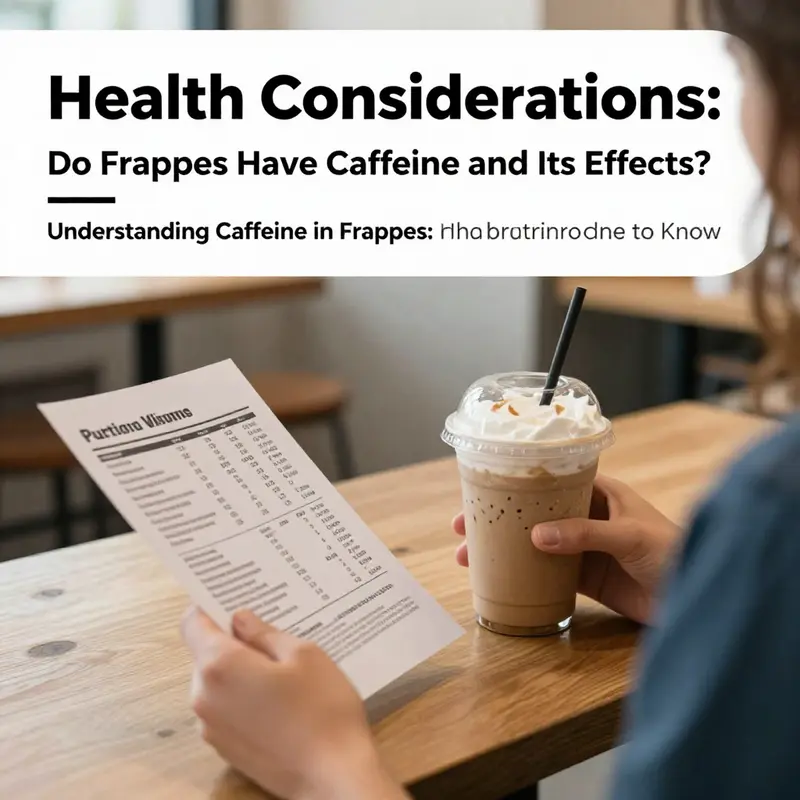
Frappés lure with creaminess, chill, and a coffee aroma, but the caffeine in each cup is not a fixed figure. The amount depends on the base, the amount of espresso or coffee concentrate used, the serving size, and whether decaf components are involved. Because recipes and serving practices vary, you can see a broad range in caffeine across brands and even between similar drinks.
Typical numbers show the variability: McDonald’s frappés often land in a wide band around 75 to 130 mg per serving, while Starbucks frappés are commonly in a similar range, but exact values depend on flavor and size. These numbers matter because caffeine is a stimulant that can affect sleep, mood, and energy differently depending on the person and timing.
Where caffeine comes from matters: the coffee or espresso in a frappé usually sets the ceiling. More coffee concentrate means higher milligrams; a lighter hand or a decaf base lowers it. Some frappes use non-coffee bases or decaf ingredients entirely, dramatically cutting caffeine. Still, even decaf or non-coffee versions can carry trace caffeine from chocolate, flavorings, or cocoa products, and the total can add up with larger sizes.
Practical takeaway: when possible, check the nutrition label or ask staff about caffeine content. If you want to spread caffeine across your day, consider a mid morning frappé and save a decaf or lower caffeine option for later. For sensitive individuals, half caf or single shot options can reduce the total while preserving the frappé experience.
Health and daily rhythm: caffeine can affect sleep quality if consumed late and can heighten anxiety or stomach upset in some people. Hydration, meals, and existing tolerance all influence how you feel after a frappé. The goal is mindful enjoyment: savor the flavor and texture while staying within your personal caffeine plan. Transparent labeling from retailers helps you compare drinks and choose confidently.
Bottom line: frappés do contain caffeine, but the exact milligrams vary widely by recipe and serving size. Use the label, know your tolerance, and tailor your choices to your day so you can enjoy the treat without compromising sleep or calm.
Final thoughts
In conclusion, understanding the caffeine content in frappes is not merely a detail for beverage menus; it shapes customer expectations and health considerations. By informing your customers about the caffeine levels in the frappes you offer, you’re not only addressing their health concerns but also fostering transparency that can build loyalty. Business owners should consider how differing recipes can affect caffeine content, including those crafted with decaffeinated or non-coffee bases, to cater to varied consumer preferences. With the appropriate knowledge, you can effectively tailor your offerings to accommodate both caffeine aficionados and those seeking lower caffeine options. This not only enhances customer satisfaction but also drives informed purchasing decisions.