

As business owners, understanding the products we offer is crucial to catering effectively to our clientele. One popular refreshment among consumers is Mountain Dew, notable for its vibrant flavor and energizing kick—thanks largely to its caffeine content. This article dissects how much caffeine is in a can of Mtn Dew, compares it with other beverages, and examines the natural sources and health considerations associated with caffeine consumption. By the end, you will not only grasp the caffeine landscape of Mtn Dew but also how this knowledge impacts your business decisions.
Decoding the Neon Buzz: How Much Caffeine Flows in a Can of the Citrus Soda

When people ask how much caffeine sits in the familiar neon citrus can, they’re usually looking for a single, simple number. But the truth is a little more nuanced. Caffeine content is usually expressed in milligrams per serving, and that depends on the size of the can, the specific variant, and sometimes even the batch from which the beverage came. In many markets, the standard can size is about 330 milliliters, and the typical caffeine level lands in the mid‑fifties in milligrams. In plain terms, a standard 330 ml can delivers roughly 54 to 56 milligrams of caffeine. That range captures the common figure you’ll find in nutrition panels and product listings, though you’ll sometimes see a figure rounded to 55 mg for simplicity on labels and in consumer guides. The arithmetic behind this number is straightforward: the beverage carries about 16 to 17 milligrams of caffeine per 100 milliliters, so multiplying by 3.3 gives you that mid‑fifties result. It’s a tidy way to translate micrograms into something most people can relate to when choosing a beverage for a quick pick‑me‑up or just for comparison against a regular cola or an energy drink.
This isn’t a rigid, one‑size‑fits‑all rule, however. The exact caffeine content can vary a touch depending on the exact variety, the production run, or regional formulation. A higher‑energy variant, produced with a larger serving size, can push caffeine higher. For instance, a 16‑fluid‑ounce bottle with a more stimulant‑focused formulation can contain around 92 milligrams of caffeine, illustrating how the same family of drinks can span a wide range of stimulant content while still belonging to the same overall category. When you read the label on any can or bottle, you’ll notice that caffeine is listed as part of the Nutrition Facts panel. The information is there to help you make an informed choice based on personal preferences, dietary needs, or sensitivity to stimulants. The practice of labeling caffeine content is now common across many regions, and it serves as a practical reference for anyone tracking total daily intake.
Beyond the numbers on the panel, there’s a larger landscape to consider. Caffeine, a central nervous system stimulant, is absorbed quickly in the body, and the timing of its rise can influence how alert you feel. The rate at which caffeine reaches peak concentration depends on several factors, including whether you’ve eaten, your individual metabolism, and how your body responds to caffeine in general. For most adults, the effects begin within 15 to 45 minutes of consumption, with half of the caffeine being cleared from the system over the next several hours. That half‑life can be shorter in some people and longer in others, which means two people can react quite differently to the same beverage. In the context of a can’s caffeine content, this is worth noting: the same 55‑mg serving can keep one person alert for a few hours while producing only a mild buzz for another.
Comparisons matter when you’re trying to place a can in the broader caffeine map. A standard regular cola, depending on the brand and market, typically contains about 30 to 40 milligrams of caffeine per 355 milliliters (about 12 ounces). That places it on the lower end of the spectrum and makes it a gentler option for someone who wants a lift without a pronounced kick. By contrast, a typical energy drink—often marketed for quick, high‑octane energy—ranges widely, commonly around 50 to 80 milligrams per 250 milliliters. The citrusy, carbonated drink in question sits between cola and energy drinks on average, sometimes closer to energy drinks in sections with higher‑caffeine formulations but still generally lower than many pure energy beverages marketed for sustained performance boosts. When you consider the per‑serving math across these beverages, the medium of a 330‑ml can with roughly 55 milligrams of caffeine stands as a meaningful midpoint: enough to be noticed, but not an overwhelming dose for most adults in a single sitting.
Labels tell part of the story, but daily life adds complexity, too. It’s common to sip a can alongside meals, workouts, or long days that require sustained focus. In such contexts, it’s easy to drift from a binary yes/no on caffeine to a more practical question: how will this amount interact with coffee, tea, or other caffeinated products I’ve already consumed? The answer is almost always: account for total intake. A person who starts the day with a strong cup of coffee and then tops off with a 55‑mg can will accumulate caffeine from more sources than someone who avoids other caffeinated beverages entirely. This layering effect is why many health professionals recommend tracking caffeine from all sources to avoid tipping over personal thresholds.
From a safety standpoint, most health authorities describe caffeine as safe for the general adult population when consumed in moderation. The precise thresholds can vary depending on age, health status, pregnancy, and medication interactions, but a common guideline is to keep daily caffeine intake well below 400 milligrams for healthy adults. For pregnant individuals, for whom caffeine intake is often advised to be more limited, the recommendations tend to be stricter—often around 200 milligrams per day or less, depending on medical guidance. Children and adolescents usually have even tighter limits, reflecting differing sensitivities and developmental considerations. In practice, the can in question contributes a modest portion of a day’s caffeine budget, especially for someone who doesn’t drink other caffeinated products or who consumes them earlier in the day.
This line of reasoning underscores why labeling matters. The nutrition facts panel is designed to empower readers to make sense of their own caffeine budgets. You’ll typically see a number that’s consistent with the commonly cited 16 to 17 milligrams per 100 milliliters, which aligns with the practical rule of thumb for a 330 ml can: roughly 50 to 56 milligrams. The margins are small, but they matter if you’re tracking caffeine intake for personal health, for a child’s daily limits, or for a sensitive stomach or nervous system. In many markets, that labeling also helps differentiate this beverage from non‑caffeinated options in the same family or from other caffeinated drinks that may be perceived as “stronger.” Consequently, readers who want to compare across beverages can use the Nutrition Facts as a starting point for more precise planning.
For readers seeking a broader frame for comparison, a quick look at how caffeine content translates into real‑world choices can be enlightening. If you’re weighing this beverage against a typical cola, you’ll notice that the difference is not just a number but a feel. A can with about 55 milligrams of caffeine tends to offer a noticeable lift but doesn’t usually deliver the same intensity as a high‑caffeine energy drink in a single sitting. If your goal is a modest, daytime alertness without radical jitters, a can in this range can be a reasonable middle ground. If you’re sensitive to caffeine, or you’re trying to manage intake for a child or someone who is pregnant, that same simple calculation becomes a practical guide: total daily caffeine equals sum of all servings from all sources, and a single can adds a legible, countable piece to the puzzle.
As you navigate these choices, you’ll often encounter language around “natural sources” of caffeine and how it gets into beverages. The beverage in question is commonly described as deriving caffeine from natural origins, such as citrus extracts, rather than relying on artificial caffeine additives alone. This nuance can matter for readers who care about the source of stimulants in their drinks, even though the practical effect on caffeine intake remains the same—the number on the panel. In this sense, the science and the labeling converge: you can read the label, do the quick math, and understand the sensory and cognitive effects in concert with your own physiology. The bottom line is that the caffeine you’re measuring in a can of this citrusy drink is a real, quantifiable dose, and it sits comfortably within the mid‑range of common caffeinated beverages. Whether you choose to use it for a gentle midday lift or to keep you company during a long drive, the key is awareness and moderation.
If you’re curious about how this value stacks up against other beverages in the same family, you can explore a focused comparison that sits alongside this discussion. The page dedicated to caffeine content in this product line provides a concise snapshot of how these numbers translate across variants and serving sizes, offering a quick reference point for readers who want to calibrate their own caffeine budgets without wading through multiple labels. caffeine-content-mt-dew is a good starting point for that deeper dive, should you wish to see a side‑by‑side view of how the numbers shift with different formulations.
In the end, the question “how much caffeine is in a can?” has an answer that’s not a single figure but a small set of closely related numbers tied to serving size, product variant, and regulatory labeling. For the standard 330 ml can, the 54–56 mg range is a reliable, widely observed benchmark. Across the catalog, you’ll encounter higher numbers when portions are larger or formulations are designed for a stronger stimulant effect. And while numbers tell a story, personal experience matters too. Some people feel a noticeable lift, others experience only a gentle nudge, and a few might feel unsettled if they’re particularly caffeine‑sensitive. That variability is precisely why the label matters so much: it gives you the data you need to tailor your intake to your own body and your day.
For readers who want to verify any claims or explore official information directly, the producer’s product information site is a reliable reference. It can provide the most current official statements on serving sizes, caffeine content by variant, and any regulatory disclosures that may apply in different regions. This kind of primary resource helps anchor your understanding in the most up‑to‑date data the manufacturer offers, rather than relying solely on secondary summaries that may drift over time.
External resource: Official product information site for reference and confirmation, which provides current data on serving sizes and caffeine content across formulations: https://www.mountaindew.com.
Caffeine in a Can: Mountain Dew’s Place in the Beverage Landscape

Caffeine sits at a curious crossroads in the world of everyday drinks. It is a molecule that can lift alertness and mood for a while, yet its effects depend not just on the amount you swallow but on your body, your health goals, and how you mix it with the rest of your day. When we consider a standard 330 ml can of Mountain Dew, the picture becomes a little more nuanced than a single number. A practical takeaway is that this popular citrusy soda, by the usual measures, sits toward the higher end of what many soft drinks deliver, though it remains far from the realms of most energy drinks. The commonly cited figure for a 330 ml can settles around 54 milligrams of caffeine. That value aligns with a broader range reported in product summaries and nutrition databases, which often place caffeine in Mountain Dew at roughly 16 to 17 milligrams per 100 milliliters. If you do the math across 100 milliliters and then scale up to 330, you arrive at the same neighborhood—well within a few milligrams of that mid 50s mark. This framing matters because it helps readers calibrate their expectations: this is not a coffee cup level of wakefulness, but it is decidedly more caffeinated than many standard colas.
The flavor and feel of Mountain Dew are inseparable from its caffeine profile. The drink’s caffeine content is sometimes described as arising from natural sources such as citrus extracts rather than being artificially added. That distinction may be less important to the average consumer than the practical implication: how a single can, or a single day’s intake, translates into energy levels, focus, sleep, and even heart rate for sensitive individuals. When we compare Mountain Dew to other beverages, the ordering becomes clearer. A typical cup of brewed coffee—about 240 milliliters—delivers roughly 95 to 200 milligrams of caffeine, depending on the roast, grind, and brew time. Even on the lower end of that spectrum, coffee generally contains two to four times as much caffeine as a can of Mountain Dew. In other words, if you are seeking a quick, robust caffeine jolt, coffee is the workhorse; Mountain Dew provides a lighter, more measured lift that fits more readily into a daily routine that includes meals, school, or work without the intensity of a strong cup of joe.
Serving size matters, of course. The 330 ml can is the standard in many markets, but not all Mountain Dew variants stay within the same size. Some special versions—often marketed as higher caffeine variants or energy formulations—are larger and designed with a different caffeine target in mind. In those cases, a 473 ml can (16 ounces) can carry as much as 180 milligrams of caffeine. That figure points to a markedly different category: it edges toward the caffeine content typically associated with energy drinks rather than with ordinary soft drinks. When you spread 180 milligrams across 473 milliliters, you get approximately 0.38 milligrams per milliliter. Extrapolate to an eight-ounce serving (about 237 milliliters), and you’re looking at roughly 90 milligrams—almost the caffeine equivalent of a small coffee by many standard measures. It’s easy to see how a single can of one of these larger or more intense versions can shift someone’s daily caffeine tally markedly, especially if they routinely replace a morning coffee with a caffeinated variant or pair both in the same day.
Placed alongside other beverages, Mountain Dew’s position becomes more precise. Tea often lands somewhere between 30 and 50 milligrams per eight-ounce cup, depending on the type and brewing time. That puts standard Mountain Dew above many teas in caffeine content per typical serving, and certainly above most regular sips of cola, which usually hover in the 30 to 40 milligram range per can. Yet energy drinks, as a category, routinely push higher still, with popular formats typically resting around the 80-to-100 milligram mark per can or bottle, and some specialty lines climbing higher. In this landscape, Mountain Dew’s standard format occupies a middle ground: more caffeine than a classic soda, less than the powerhouse energy drinks, and more per unit volume than many teas. When paired with a full day’s other caffeine sources—coffee, tea, chocolate, or other caffeinated products—the total daily intake grows more quickly than expected if one assumes the 54 milligrams per can to be a one-off.
The broader take-home is not simply a tally of milligrams but an invitation to relate caffeine to daily activity. For a student burning the midnight oil, a can of this soft drink can provide a short, bright lift that threads into afternoon fatigue without the heavy jitter that sometimes accompanies strong coffee. For a worker who already consumes multiple caffeinated products, those 54 milligrams are part of a cumulative total that can approach or exceed daily safe limits, particularly for sensitive individuals or those who are pregnant or trying to limit caffeine for other health reasons. The general guidance many health authorities offer—up to about 400 milligrams per day for healthy adults—frames Mountain Dew within safer bounds for most people when consumed in moderation. But the same rule of thumb also prompts a practical question: how should one navigate a day that includes not just this can but also tea, chocolate, a cup of coffee, and perhaps an energy drink on the same calendar day? The answer is often personal and situational: it depends on how your body metabolizes caffeine, how late in the day you consume it, and what other stimulants or medications you might be taking.
To dig into the numbers a little more, consider the direct comparison to other popular beverages: Mountain Dew contains more caffeine per can than many standard colas, yet it typically delivers less than most energy drinks. The result is a beverage that offers a noticeable lift without the intensity of an energy shot in a can. It’s a drink that can be tuned to individual routines: a morning pick-up, a midday refresher, or an afternoon zinger when you’re not ready to switch entirely to coffee or an energy formulation. This nuance matters to parents trying to gauge what their teenagers are drinking, to athletes planning training days, and to anyone who is trying to balance caffeine within a carefully structured daily regimen. The exact numbers do matter, but so does the context: what you drink, how much, and when.
If you want the simplest, fatigue-fighting reference for the exact product you’re considering, there is a concise, centralized resource that aggregates the numbers into a readable format. It frames the caffeine content of Mountain Dew in plain terms and situates it against common beverages. For readers who prefer to see the numbers quickly and then come back to the nuance, this page provides the clearest snapshot: Caffeine content in Mountain Dew. See the dedicated page for a precise breakdown across the primary Mountain Dew variants. Caffeine content in Mountain Dew.
Beyond the numbers, the practical implications are often about timing and personal sensitivity. A can at noon can sustain routine tasks through the early afternoon, but consuming several caffeinated drinks in rapid succession can push you past your personal comfort threshold. Some people find they sleep more easily if they cap caffeine intake before late afternoon; others can metabolize caffeine faster and may not experience the same sleep disruption. It’s important to consider not just the caffeine content but also other ingredients and your overall daily energy plan. For instance, caffeine interacts with your meals, hydration, and rest patterns. While Mountain Dew offers a reliable, familiar lift, it is not a zero calorie, zero risk performance enhancer. Like any stimulant, it is most effective when used thoughtfully rather than compulsively.
In sum, the caffeine story of Mountain Dew is not simply a single datum. It is a calibration tool—a way to measure how a specific beverage fits into a wider pattern of consumption. The typical 54 milligrams in a 330 ml can place Mountain Dew somewhere between the gentler end of the caffeine spectrum and the sharper edge of everyday stimulants. When you move to larger or more intense variants, that line shifts toward the range commonly associated with energy drinks, underscoring why people often treat these beverages with care, especially when combining them with late afternoon activities or late night study sessions. The key takeaway for readers is straightforward: know your serving, know your daily total, and align your choices with how you want to feel across the day. The numbers provide a map; how you navigate them depends on your goals, your health, and your daily rhythm.
Fuel in the Fizz: Distinguishing Natural Origins from Added Power in Mountain Dew’s Caffeine

Caffeine often sneaks into the eye-catching fizz of popular soft drinks the way a drumbeat underlies a pop song: not always visible at first, but central to the rhythm of the experience. In the case of Mountain Dew, that rhythm is powered more by what is added than by what is naturally present. The beverage’s caffeine profile reflects a deliberate formulation choice: a fixed, reliable amount of caffeine introduced during production to produce a consistent energy kick across flavors and batches. The result is a drink that shares the bright, citrus-forward flavor of its base ingredients while delivering a wakeful note that resembles the energy-forward perception of some dedicated energy drinks. What this means in practical terms is that the caffeine you taste in a can of Mountain Dew is largely an engineered component, not something drawn from the natural potency of its flavor compounds or from the fruit-derived components themselves. The distinction between natural and added caffeine matters for understanding why the numbers look the way they do, how the caffeine behaves in your body, and what it signals about the overall product profile you’re consuming.
All of this centers on a straightforward idea: the caffeine content in Mountain Dew is the result of added caffeine, typically in the form of a purified, concentrated substance known in the industry as caffeine anhydrous. Caffeine anhydrous is a stable, consistent form of caffeine that allows manufacturers to dose a beverage to an exact target. It is common in energy drinks and certain fortified sodas because it offers precise potency, predictable onset timing, and a long shelf life without the variability that can come with caffeine extracted from natural botanicals. This is not to say that the drink contains no natural stimulants or no citrus-extracted flavors. Rather, the natural components—like the citrus oils, sweeteners, and flavor compounds—serve to define the taste and aroma, while the caffeine itself is a separate, added component designed to deliver a measurable amount of stimulation. In short, the caffeine in Mountain Dew is a crafted, controlled ingredient rather than a byproduct of its natural flavor chemistry.
If you’ve ever wondered whether caffeine in Mountain Dew comes from a plant-based source such as guarana or kola nut, the research results point in a different direction. Unlike several other beverages on the market that rely on botanical caffeine sources to enhance perceived energy, Mountain Dew does not depend on these natural stimulants as part of its caffeine strategy. There is no deliberate inclusion of guarana or other caffeine-bearing botanicals in the standard formulation that fans of the drink encounter in most markets. This distinction matters not only for labeling purposes but also for how a consumer might calculate daily caffeine intake. When you estimate your total caffeine, you can treat the caffeine in Mountain Dew as a fixed, added quantity rather than a variable derived from plant-based caffeine sources that might fluctuate with harvests or supply conditions.
The exact amount varies a little depending on the size and governmental labeling practices in different regions, but the typical figure lives in a familiar range for a standard can. In practice, a standard 12-ounce can — roughly 355 milliliters — contains about 50 to 60 milligrams of caffeine. In more compact terms, the commonly cited metric for an everyday 330-milliliter can aligns with roughly 54 milligrams of caffeine. The approximate range of 16 to 17 milligrams of caffeine per 100 milliliters aligns with this assessment, underscoring that Mountain Dew sits above traditional cola in caffeine content while staying below many mainstream energy drinks. These figures are not just trivia; they inform how people manage caffeine intake in daily life, especially for those who are sensitive to stimulants, are trying to limit caffeine during pregnancy, or are advising children or teens about consumption. The consistency across cans is the product of how caffeine anhydrous is blended into the formula, rather than a variable derived from the drink’s juice or citrus essence.
The crossing point between the natural and the added is where taste meets measurement. The citrus-derived flavors and extracts provide the signature bright lemon-lime profile that defines Mountain Dew, and they do so without contributing caffeine in any meaningful, measurable way. In this sense, the beverage’s energy quality comes from the additive caffeine that is carefully weighed and integrated with other ingredients. The formulation is designed to deliver a reliable energy cue without compromising flavor, aroma, or mouthfeel. In other words, the caffeine acts as a separate lever that the producers can adjust independently of the flavor profile, ensuring that a faithful approximation of the drink’s energy kick remains consistent across seasons, production lines, and packaging formats.
For consumers who are cautious about caffeine intake, these nuances matter. A cup of coffee might offer a wide range of caffeine depending on roast, grind, and brew method, while a can of Mountain Dew offers a fixed dosage once you know the can size. That fixed dosage is why nutrition labels and manufacturer communications emphasize the amount of caffeine per serving. It means you can plan your day around a predictable bump, rather than dealing with a caffeine amount that might drift with batch-to-batch natural variation. Yet even with a fixed target, most beverages of this class can show minor variations from batch to batch. Those variations are typically small and well within regulatory allowances intended to protect consumers who track caffeine consumption closely. For people monitoring intake for medical or personal reasons, this is an important reminder to consider the whole day, not just the momentary impact of a single can.
A practical takeaway for readers is to appreciate the difference between the perception of natural energy and the science of added caffeine. The natural flavor agents and the citrus character you smile at when you take a first sip are separate from the energy you feel after the swallow. The energy component is not a natural side effect of the flavor chemistry; it is the result of a deliberate additive strategy. This distinction also speaks to the broader category of beverages that straddle the line between everyday refreshment and energizing drinks. While the caffeine in Mountain Dew is there to provide a lift, it is not marketed as an energy drink in the same way as products that rely on botanically sourced caffeine or additional ingredients like amino acids or taurine as core selling points. The brand identity remains rooted in flavor and refreshment, with caffeine serving as a functional enhancement rather than the defining attribute.
From a consumer education standpoint, the clarity offered by sources of caffeine in Mountain Dew is valuable. If you are curious about the precise current figure or how much caffeine you would get from multiple cans, you can consult the official product information and keep a running tally that aligns with your daily limits. The information on the product, including the caffeine content, is typically presented per serving and per container, allowing you to compute intake across your day with ease. And because caffeine is an additive for this beverage, the labeled amount remains stable across flavors and forms, ensuring that whether you reach for a classic can or a variant with a new twist, the caffeine anchor stays the same—or nearly so—across production runs.
For readers seeking deeper nuance, a closer look at the formulation reveals that the caffeine is not derived from a natural plant-based stimulant as a primary ingredient. Instead, it is introduced in a purified form to meet a target that aligns with consumer expectations for alertness and energy without altering the beverage’s character. This approach underscores a broader truth in beverage formulation: the line between natural flavor and functional additive can be subtle, yet the engineering behind it is explicit. The citrus note remains authentic to the fruit-derived flavor array, while the caffeine’s presence is the result of precise application of an additive that is widely used for predictable potency. The result is a product that is at once familiar in taste and clear in function, a combination that helps explain why many people reach for it as a midday pick-me-up rather than as a substitute for a dedicated energy drink.
As you navigate these considerations, a practical mental model can help. Treat Mountain Dew as a beverage that offers a consistent caffeine level, independent of the natural flavor components. You can think of the caffeine as a separate knob that the manufacturer tweaks to deliver a steady experience across flavors, promotions, and regional formulations. This model helps when you compare it with other caffeinated beverages. If you compare it to classic colas, you will notice the higher caffeine range in Mountain Dew. When you compare it to energy drinks, you may spot similar caffeine levels but without the same marketing emphasis on energy-centric ingredients beyond caffeine. In every case, the underlying principle remains: caffeine content in Mountain Dew is largely an added, controlled element designed to achieve a predictable stimulating effect without sacrificing taste or brand identity.
To further ground your understanding and connect the numbers to real-world choices, consider exploring a dedicated resource that compiles current caffeine figures across Mountain Dew variants. The link to a focused breakdown helps translate the label into daily planning. how-much-caffeine-in-a-mountain-dew [how-much-caffeine-in-a-mountain-dew] provides a clear, accessible reference point for readers who want to verify numbers or see how the caffeine amount stacks up against other popular beverages. This kind of resource complements the official nutrition facts and offers a practical context that supports responsible consumption. It is especially useful for readers who juggle multiple caffeinated beverages and want to maintain a steady daily total without overdoing any single source.
In closing, the caffeine in Mountain Dew sits squarely at the intersection of science and flavor. The added caffeine ensures an exact, reliable dose that lovers of the drink have come to expect, while the natural flavor components deliver the enduring taste that keeps it recognizable across generations and markets. This separation of function from flavor is a hallmark of thoughtful beverage design: you can enjoy the bright, crisp zing of the citrus profile while knowing that the energy kick comes from a controlled additive, not from fluctuations in the fruit’s natural chemistry. For anyone tracking their caffeine intake, understanding this distinction is empowering. It allows you to make informed choices about when and how many cans to enjoy, and it clarifies why the numbers you see on a nutrition label are what they are. As you continue to explore the landscape of caffeinated beverages, this framework—natural flavor versus added stimulant—will help you interpret labels, compare products, and balance enjoyment with daily caffeine goals.
External reference: for official formulation details and nutrition facts, see the product’s nutrition information page: https://www.mountaindew.com/nutrition-facts/.
Safe Limits and Sugar Highs: Unpacking How Much Caffeine a Mountain Dew Can Contains
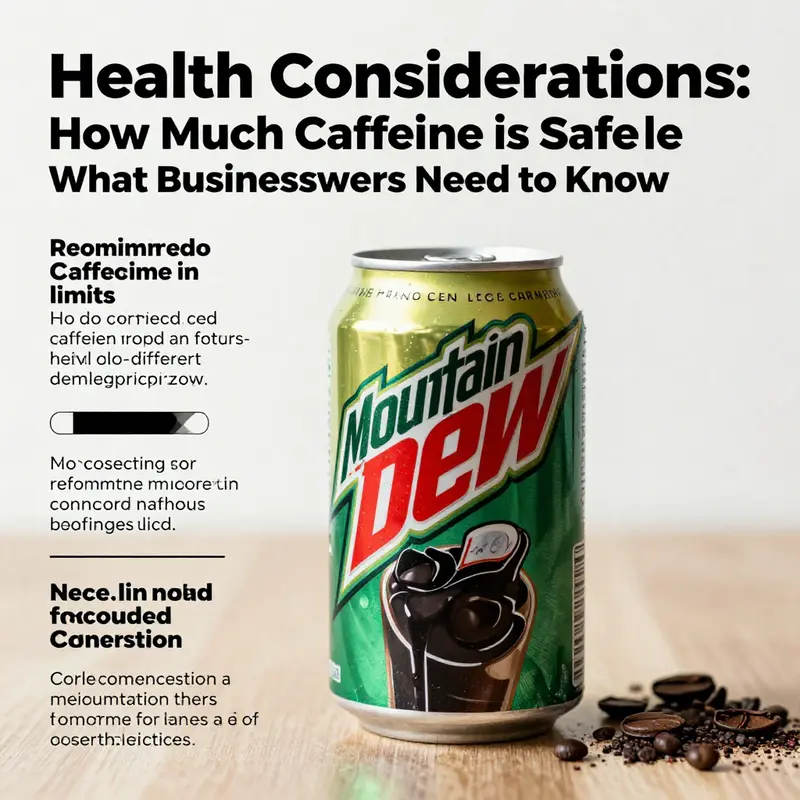
Caffeine lives in a curious balance of promise and pressure. It greets the mind with a sharper sense of alertness and the body with a quickened heartbeat, yet it can also disrupt sleep, raise anxiety, or spur jitters in sensitive individuals. When we look at a familiar can of Mountain Dew, the caffeine inside is not a mere number on a nutrition panel; it’s a signal about how a single beverage can fit into a daily rhythm of work, study, and leisure. The standard benchmark for caffeine intake helps translate that signal into a practical gauge. In the data that guide everyday choices, a standard 12-ounce can of Mountain Dew holds about 54 milligrams of caffeine. Break that down against common serving sizes and you get a clearer picture: roughly 16 to 17 milligrams of caffeine per 100 milliliters, a density that places Mountain Dew in a middle ground—higher than regular cola, but generally lower than most energy drinks. Those numbers have wide implications for how the drink can be included in a daily plan without tipping into overconsumption. For context, a typical 330-milliliter can of cola tends to carry around 30 to 40 milligrams of caffeine, while a standard 250-milliliter energy drink can range from 50 to 80 milligrams. Those comparisons illuminate not just caffeine content, but the role of expectation—whether you’re seeking a little morning lift, a mid-afternoon pick-me-up, or a social, sip-and-go break.
The caffeine in Mountain Dew, according to the overview that frames this chapter, arises from natural sources associated with the beverage’s ingredients. It’s not framed as an artificially injected dose; rather, the caffeine is linked to the drink’s composition, including citrus-derived extracts and other components. This nuance matters for readers who track where their caffeine comes from and how it contributes to the broader experience of the drink. If you’re curious about the exact distribution of caffeine per serving and how it scales with different can sizes, there’s a helpful resource that lays out the breakdown in accessible terms. See the section on caffeine content in Mountain Dew for a detailed, serving-by-serving look. caffeine content in Mountain Dew.
In practical terms, 54 milligrams per can is enough to produce a noticeable lift for many adults, particularly if the caffeine is consumed in a relatively empty stomach. The speed and duration of that lift depend on several factors: your body weight, your habitual caffeine intake, and how your metabolic system processes stimulants. People with higher tolerance may notice only a mild effect, while those who rarely consume caffeine might feel a more pronounced response. The metabolism of caffeine varies substantially from person to person, and these differences can shape everything from improved focus to sleep disruption. It’s not merely about whether a can is “too much” or “not enough”; it’s about how the caffeine content interacts with your daily schedule and personal physiology. The 54 milligrams per can place Mountain Dew near the upper end of typical soft drinks, a reminder that this beverage sits closer to energy-boosting territory than a standard, caffeine-light cola. Yet it remains well below the levels often found in dedicated energy beverages, which frequently push caffeine upward toward the two- to three-hundred-milligram mark per serving. That distinction matters when you’re choosing beverages to accompany work tasks, late-night study sessions, or social occasions that run long.
But caffeine is only part of the story. Mountain Dew is also notable for its sugar content, a factor that frequently travels in tandem with caffeine in many popular drinks. A can contains about 46 grams of sugar, a figure that compounds the health considerations surrounding regular consumption. Sugar is not a mere additive; it shapes metabolic responses, influences energy highs and crashes, and contributes to long-term health concerns when consumed in excess. The combination of caffeine and sugar can feel like a double-edged sword—an immediate cognitive lift paired with a longer-term metabolic load. When you weigh this against the caffeine ceiling set by daily guidelines, the picture becomes more complete: a single can brings a modest caffeine boost but also a substantial sugar load that can challenge dietary balance if the can is part of a habitual pattern.
From a health perspective, the broader context matters. For most healthy adults, the widely cited daily caffeine limit is up to 400 milligrams. In theory, that limit would allow for around seven cans of Mountain Dew per day if one were to rely solely on this beverage for caffeine. The practical reality, however, is more nuanced. Seven cans would deliver roughly 378 milligrams of caffeine, which stays within the numerical ceiling but would also translate to nearly 322 grams of added sugar. That level of sugar, absorbed repeatedly across a day, approaches or surpasses recommended limits for most adults and poses significant risks for weight management, cardiovascular health, dental wellness, and insulin sensitivity over time. The sugar intake alone becomes a critical constraint, independent of caffeine. It’s a vivid example of how a single product can test the boundaries of multiple health guidelines at once.
This layered reality invites a broader conversation about moderation and substitution. It’s not just about tallying milligrams of caffeine against a daily cap; it’s about recognizing how sugar, particularly in a drink that many reach for for a quick lift, compounds the impact on energy, mood, and long-term health. The sugar in Mountain Dew interacts with the body’s metabolic pathways in ways that can blunt the clean, sustained energy some people crave. After the initial jolt, the body may experience a sugar-driven energy spike followed by a crash, potentially triggering more snacking or coffee breaks that stack caffeine and sugar in cycles. In short, the drink can be part of a plan, but it rarely represents a simple, single-issue choice. If your aim is to reduce both caffeine and sugar intake, alternatives—ranging from lower-sugar varieties to caffeine-free options—offer options that preserve hydration and taste while easing the metabolic load.
For those who need or want to keep caffeine under closer control, label literacy becomes essential. Checking the can’s exact caffeine per serving and comparing it to other daily sources helps create a well-balanced intake profile. The same logic applies to sugar: knowing the grams per serving turns a familiar can into data you can act on. It’s worth noting that the can’s 46 grams of sugar roughly equates to almost 12 teaspoons, depending on how you measure. That is a substantial sugar hit that can accumulate quickly in a day if several caffeinated beverages are consumed. In scenarios such as athletes preparing for training, students cramming for exams, or professionals navigating back-to-back meetings, the combination of caffeine and sugar can seem tempting, even efficient. The challenge lies in recognizing longer-term effects and choosing strategies that align with health goals. Some people find that staggering caffeine sources, limiting high-sugar beverages, and pairing treats with meals can soften the energy cycle and support steadier focus.
Where does this leave the everyday consumer who wants a reliable, flavorful option without overshooting either caffeine or sugar? Moderation remains the clearest path. If you’re aiming for a low-to-moderate caffeine plan, one can of Mountain Dew can comfortably fit within the 400-milligram daily cap for many adults. But the sugar content calls for a more cautious stance, especially if you consume other high-sugar foods and drinks throughout the day. Those who are sensitive to caffeine—whether due to anxiety, sleep disturbances, or heart-rate variations—should consider even smaller portions or choosing alternatives with reduced caffeine or no caffeine at all. The health considerations extend beyond caffeine alone; the cumulative effect of sugar and caffeine on mood, sleep, dental health, and metabolic wellness becomes the center of the decision-making process.
What about special populations? Children and adolescents typically should restrict caffeine exposure more than adults, given developing nervous systems and different metabolic rates. Pregnant individuals are often advised to limit caffeine intake to modest levels, with guidelines framed by healthcare providers to reflect individual circumstances. For anyone with cardiovascular concerns, diabetes risk, or specific dietary restrictions, consulting a clinician before regular Mountain Dew consumption is prudent. The conversation then shifts from a single can’s content to a broader lifestyle approach: how soda choices align with one’s overall nutrition, hydration, and energy strategy. In this broader frame, the caffeine and sugar content in Mountain Dew serves not only as a fact to be memorized but as a data point guiding healthier, more intentional consumption.
In the spirit of informed decision-making, readers can take advantage of practical steps. First, track your daily intake across beverages, noting both caffeine and sugar grams. Second, compare Mountain Dew with alternatives that offer lower sugar or caffeine content, or consider caffeine-free varieties when the goal is hydration without stimulation. Third, remember that caffeine’s impact is personal; some people do well with a can or two in a day, while others experience jitters or sleep disruption with even smaller amounts. Fourth, think about timing: consuming caffeinated drinks earlier in the day minimizes potential sleep disturbances and helps you maintain a stable daily rhythm.
For readers seeking a concise reference, the idea is simple: Mountain Dew provides a modest caffeine boost per can, paired with a relatively high sugar load. The combination is not inherently dangerous in moderation, but it does demand attention when the drink becomes a daily staple or a primary energy source. When you weigh the caffeine content against your total daily intake, and you consider how sugar might amplify long-term health risks, you begin to see why the beverage begs more mindful consumption rather than reflexive sipping. This is where the value of a measured, data-informed approach shows itself. A single can can be a permissible part of a varied and balanced diet, but it should not be treated as a free pass for high sugar intake or unmoderated caffeine exposure.
If you want a deeper dive into the caffeine mechanics behind Mountain Dew, you can explore a more detailed breakdown of caffeine content in Mountain Dew. It provides a serving-by-serving look that helps translate grams and milligrams into practical decisions for your day. The link above offers another layer of clarity for readers who crave precision in tracking caffeine across different beverages. Additionally, the broader landscape of caffeinated and non-caffeinated options means there are pathways to enjoy flavor and refreshment without tipping the scales toward excess. The choice, as with many nutrition questions, rests in balancing immediate needs with long-term health goals.
External reference: For a broader, external perspective on Mountain Dew caffeine content and related discussions, see Cafely’s detailed examination of how much caffeine is in Mountain Dew. This resource complements the in-text figures and helps ground the numbers in a real-world, consumer-focused frame: https://www.cafely.com/mountain-dew-caffeine-content/.
Final thoughts
In summary, understanding the caffeine content of Mountain Dew is essential for business owners seeking to align their offerings with consumer preferences and health considerations. With approximately 54 mg of caffeine per 330 ml can, it positions Mountain Dew as a viable option for energizing refreshment. By comparing it with other beverages, recognizing its natural caffeine sources, and appreciating health guidelines, you can better navigate product offerings. This knowledge helps not only in promoting informed choices but also in ensuring your offerings resonate with customers’ health-conscious perspectives.