
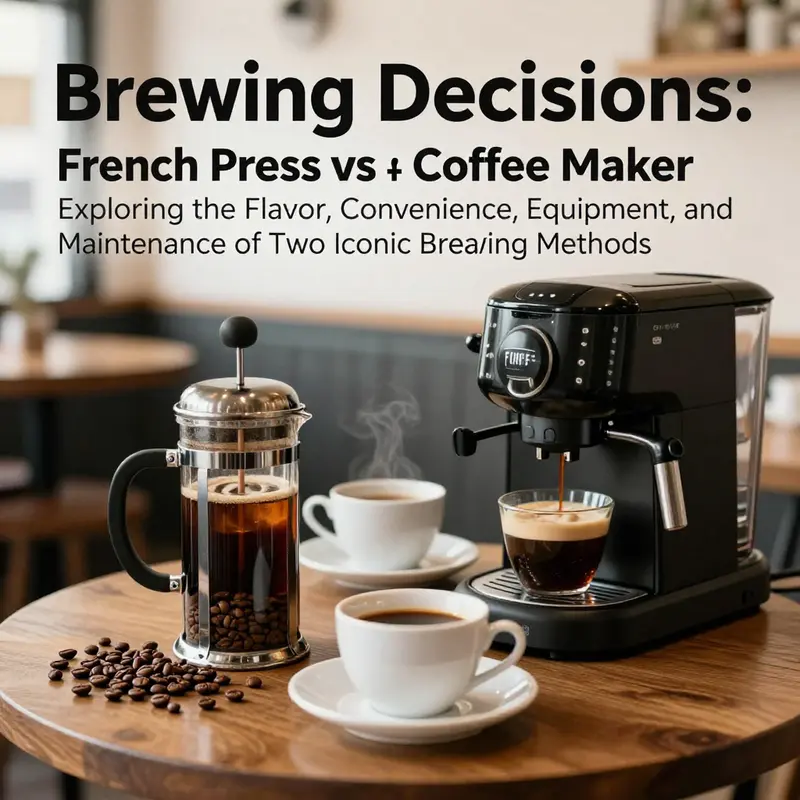
Choosing the right coffee brewing method is a fundamental decision for business owners who want to enhance their coffee offerings. Whether it’s the rich, robust flavor of French press coffee or the convenience of an automatic coffee maker, your choice will influence customer satisfaction and experience. Each brewing method brings its unique characteristics, making it essential to analyze their flavor profiles, convenience factors, equipment requirements, and maintenance needs. This examination will guide you to select the coffee brewing equipment that best fits your business’s goals and enhances your customers’ enjoyment.
null
null
Brew on Your Own Terms: Navigating Convenience Between the French Press and Automatic Drip Coffee
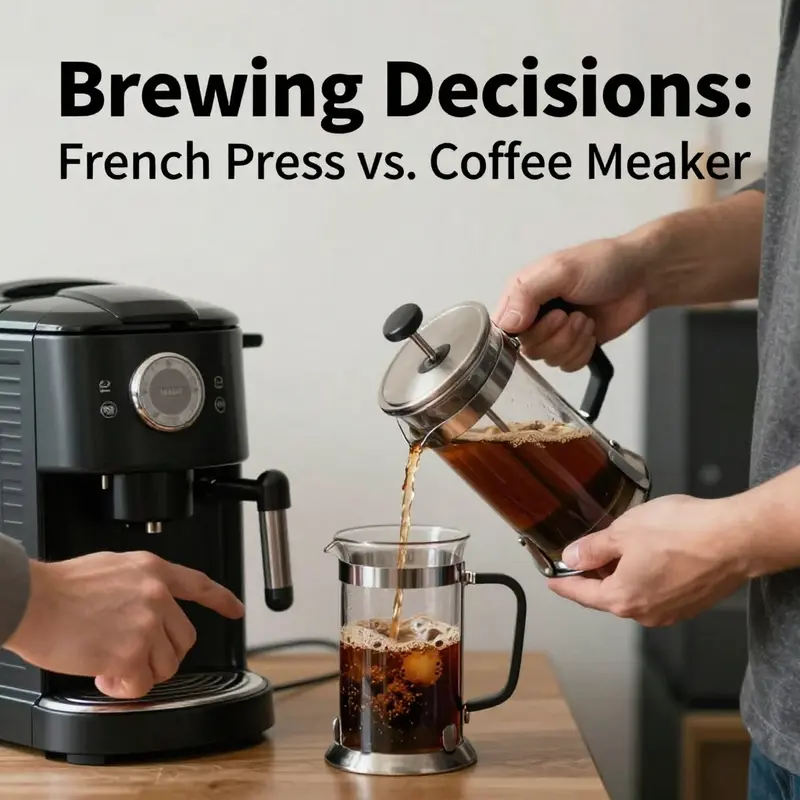
The choice between a French press and an automatic drip coffee maker often betrays more about daily rhythm than it does about taste alone. Convenience is both a practical and a psychological factor, shaping how quickly a cup appears in your hand and how much of your morning you want to invest in the ritual. On one side sits the French press, a compact, hands-on device that invites you to participate in every stage of the brew. On the other, the traditional coffee maker promises a set-and-forget cadence, delivering warmth and aroma with minimal attention once the water is heated and the grounds are loaded. Both approaches can yield excellent coffee, yet they do so through markedly different pathways of effort, control, and consistency. Understanding these paths helps you align your equipment with your life as it unfolds each day, rather than forcing your routines to fit a single method.\n\nThe French press embodies simplicity in its purest form, but simplicity here also means involvement. You grind fresh, heat water, pour, and stir, then wait a few minutes while the coffee steepes. The final step—pressing the plunger—brings the brew into the world with a distinct, almost tactile certainty. The entire process is short in duration, typically four to five minutes of active work, and perhaps a total of around ten minutes from start to finish when you count warming the water and cleaning up after. The payoff is a cup that carries the oils and solids from the ground coffee, delivering a fuller body and a more textured mouthfeel. That texture is not merely a sensation; it reflects a deliberate choice to embrace immersion brewing, where flavor development happens in the cup as much as in the coffee itself. In environments where electricity is scarce—camping, remote offices, or during a travel lull—the French press becomes a reliable ally, because its operation requires nothing more than hot water and a stable surface. The device’s portability and independence from power sources make it a quiet champion of freedom, especially for those who prize personal control over every variable.\n\nControl itself is the core of the convenience argument for the French press. With this method, you decide the grind size, water temperature, and how long the coffee steeps before you press. You can tailor the texture and extraction to your bean choice and roast level, a flexibility that many enthusiasts savor as part of the craft. Yet that same flexibility demands a modicum of discipline. A slight misstep in grind size or steep time can tilt the balance toward under-extraction or over-extraction, muddying the cup or muting delicate notes. In practical terms, this means that convenience is a double-edged sword: the press offers immediacy and a heightened sense of involvement, but it also requires attention. If your mornings are brief and you prefer to minimize decision-making, the French press still remains a viable option, but you’ll likely lean toward a routine that optimizes timing and consistency rather than improvising with every brew.\n\nThe automatic drip coffee maker, by contrast, executes many tiny and invisible tasks with a degree of precision that feels almost invisible at the counter. You load the grounds and water, press a button, and walk away, returning later to a ready-to-drink pot. The result is a form of convenience that scales beautifully with routine and volume. If your household begins the day with a chorus of clock alarms and early departures, a drip machine can become the star player of your kitchen theater. It can produce multiple cups in quick succession, often with a programmable start that lets you wake up to the aroma already filling the room. The payoff is consistency: every cycle aims to deliver a familiar profile, provided the beans, grind, and water are steady. The machine’s automation reduces the chance of human error on busy mornings, creating a reliable baseline that helps you maintain a smooth morning rhythm even when attention is divided among children, pets, or deadlines.\n\nThe predictable, hands-off convenience of the drip coffee maker extends beyond the act of brewing. It often integrates into a morning routine that requires minimal manual intervention. You set the timer the night before, and by the time you rise, coffee is ready to pour. The trade-off, however, is that much of the control rests with the machine, not with you. Temperature distribution, water flow, and brew time are governed by the device’s design, and while modern machines have improved in consistency, they still operate within the bounds of built-in presets. For households that rely on back-to-back cups, this automated cadence is a compelling benefit. It reduces the mental load of measuring, timing, and re-checking the brew, freeing you to focus on other morning tasks or simply savor a moment of quiet before the day begins.\n\nWhen weighing maintenance, the convenience debate sharpens. A French press has a remarkably straightforward upkeep. After the cup is poured, you discard the grounds, rinse the carafe and plunger, and ensure the rubber seal remains intact and clean. There are no intricate parts to disassemble, no filters to replace, and no reservoirs to sanitize. This simplicity translates into a lower ongoing maintenance burden and a lower cognitive load for regular users who prefer to keep things uncomplicated. The trade-off is that the coffee may carry more oils and fine sediments, which some find desirable for body but others may find less tidy. The texture can lean toward a richer mouthfeel, but the cleanup is not as elaborate as some might fear; it simply requires thorough rinsing to avoid lingering coffee oils.\n\nA traditional drip coffee maker, in contrast, is a more complex machine. It holds water in a reservoir, heats it with a built-in element, directs the flow through a filter basket, and then dispenses the brewed coffee into a carafe. The mechanical sophistication that drives automation also demands regular maintenance. Descale as needed to combat mineral buildup, particularly in areas with hard water. Clean the filter basket to prevent clogs and ensure that the carafe and hot plates remain free of coffee stains. Some models keep track of the number of brews or alert you when filters need replacement, which can be a practical feature for households juggling many tasks. The maintenance routine is less about hands-on ritual and more about scheduled care to sustain performance. In this sense, convenience has a longer horizon: less daily effort, but more periodic upkeep to maintain the machine’s reliability and the flavor profile you expect.\n\nThe functional differences between the two methods also shape how they fit into daily life. The French press shines when you want a compact, portable approach that respects the craft of brewing. Its minimal footprint makes it ideal for single servings, travel, or an office desk where space is at a premium. In these contexts, convenience is measured by flexibility: the ability to brew where you are, why you are there, and how you want the coffee to feel on your palate. The drip coffee maker, however, excels in environments where routine and capacity matter more than ritual. It supports the morning timetable of a busy household or a shared workspace, where many mouths need their coffee at roughly the same moment. In such settings, the machine’s automation fosters predictability and reduces the bottlenecks that could otherwise derail a well-planned morning. The result is a cup that arrives on time with consistent strength and clarity, especially when you pair it with a steady grind and fresh water.\n\nCrucially, the decision about convenience is rarely about one attribute in isolation. It is about the balance of factors that define your day: how quickly you need your coffee, how much you value being part of the brewing process, how much space you have, and how much cleaning you want to undertake. For some, the ritual of the French press is a daily boundary between work and morning life—a moment to center themselves with the tactile act of brewing. For others, the automatic drip machine is the trusted ally that keeps hands free for other tasks, offering dependable consistency during periods of high demand. In both cases, the goal remains the same: a reliable, satisfying cup that aligns with your time constraints and your sense of control over the process.\n\nAs this chapter threads through the convenience landscape, it also acknowledges an often overlooked reality: the comfort of one method does not preclude the benefits of the other. Some households maintain both devices, using the French press on weekends or for an experimental morning, and turning to the drip machine on busy weekdays. Others choose to upgrade or standardize on one approach, driven by space, budget, or the desire to minimize decision fatigue. The important point is not to declare a universal winner but to recognize the unique convenience language each method offers. The French press is a trusted companion for those who value tactile involvement and portability; the automatic coffee maker is a quiet engine of consistency for routines that demand steady throughput with minimal daily effort. When you weigh these factors against your lifestyle, a choice emerges that feels less like compromise and more like alignment with your day’s tempo.\n\nFor readers seeking a broader framework on brewing methods, a practical overview can offer additional context. A reliable source on brewing methods outlines how immersion and filtration shape flavor and clarity, and how automation changes the daily calculus of coffee. This chapter’s exploration of convenience is rooted in those larger principles, but it remains anchored in the real-world trade-offs that people experience as they pour a cup each morning. If you want to explore the topic further, a complete comparison guide on French press versus traditional drip brewing provides an extended, structured look at the mechanics, the flavor implications, and the practicalities of upkeep across different setups. French press vs traditional drip coffee maker: a complete comparison guide. For a concise external perspective that complements these ideas, an accessible overview is available at The Spruce Eats, which distills the practical differences and helps anchor choices in everyday use. See https://www.thespruceeats.com/french-press-vs-drip-coffee-maker-1283795 for a balanced external reference that echoes many of the points discussed here.\n
Equipment Insights: Immersion versus Automation in the French Press and Drip Coffee Makers
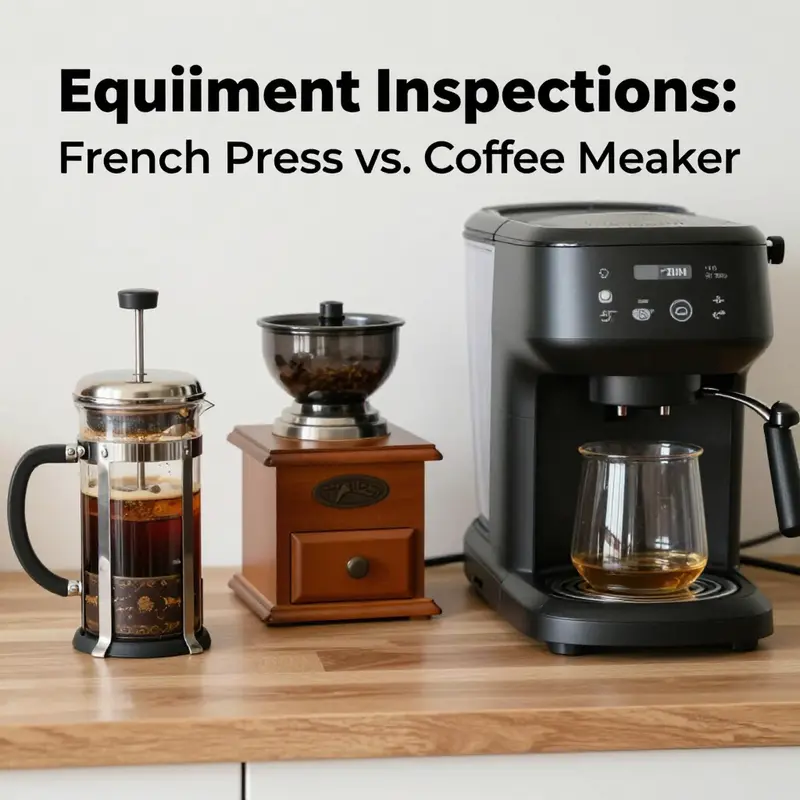
The choice between a French press and a drip coffee maker rarely comes down to mere equipment. It’s a decision about how you want coffee to present itself on the palate, how much hands-on involvement you crave, and how the morning rhythm of your kitchen aligns with your taste and time. In this chapter, we explore the two distinct brewing universes—immersion and automation—without losing sight of how they shape flavor, routine, and upkeep. The aim is to illuminate how each method negotiates heat, contact, filtration, and the subtle grammar of extraction, so you can see more clearly how your daily cup becomes a reflection of your brewing philosophy. For those who want a compact side-by-side reference, a detailed comparison exists that dissects methods, grind sizes, and water temperatures. French press vs traditional drip comparison.
At the core, the French press is an instrument of immersion. Coarse-ground coffee is submerged in hot water, allowing the grounds to mingle with the liquid for several minutes before a metal mesh plunger crowds the brew into a carafe. The absence of paper filtration means oils and fine particles remain, carrying a texture and depth that many describe as full-bodied and robust. The story here is tactile as much as it is gustatory: you feel the richness on your tongue, taste the cocoa and nut notes that often ride beneath the surface, and sense the weight of a cup that carries the themes of roasted depth and the sometimes earthy, chocolatey resonance of darker profiles. This is not a delicate cup by any stretch; it is a mouthful with presence, and that presence is amplified by the way the coffee oils are carried through the brew. The mechanism is simple, almost elegant in its unadorned honesty: full contact, no paper filter to strip away oils, and a moment of patience that rewards accuracy in grind size, water temperature, and timing.
The drip coffee maker, by contrast, operates within the realm of automated precision. Ground coffee rests in a filter (usually paper), and hot water passes through it by gravity, exiting as a steady stream into a carafe. The paper filter acts like a sieve, trapping much of the oils and fine sediments that would otherwise mingle with the beverage. The result is a cup that tends to be cleaner, brighter, and more transparent in character. The flavors you notice here often emphasize the bean’s inherent acidity, citrus notes, berries, or a tea-like brightness that speaks to cleaner extraction and a lighter mouthfeel. In practical terms, this means a cup that can be easier to drink for long stretches, particularly when you are balancing multiple tasks or late mornings. Yet the very filtration that clarifies the cup can also mute some of the body and deeper resonance that the oils contribute in an unfiltered brew. The difference between immersion and filtration here isn’t only about texture; it’s about the way flavor compounds are liberated and then presented to the drinker.
The distinction between the two methods extends beyond flavor into the realm of ritual and convenience. The French press asks for a degree of manual involvement that some find elevating. You measure, grind fresh, heat water, pour, stir, steep, and press. Each step is a small act of care, a moment of intention that can transform a routine into a mindful ritual. The process is forgiving in tone but precise in technique: grind size, steep duration, and even water quality all matter because the coffee’s destiny is tied to how thoroughly those grounds mingle with water. It is not the fastest route, but for many, it is the most satisfying, especially when you want a sense of craft in your morning. In this light, the French press becomes almost a ritual object—an instrument that invites you to slow down, observe the bloom of aroma, and savor a linear, bold cup that carries the echo of the roast’s personality.
Automatic drip machines embody a different form of engagement. They deliver consistency with the push of a button, a template you can repeat day after day. They excel in predictability: the same grind size, the same water temperature window, the same brew time. If your priority is wake-up reliability, convenience, and scalability—whether you’re brewing for yourself, a partner, or a household with several early commuters—drip machines offer a dependable routine. The price you pay for that convenience is a degree of tonal rigidity: while some models offer adjustable temp or strength settings, the cup tends to present a more uniform profile from pot to pot, and often with less of the aromatic volatility that a freshly pressed immersion brew can carry. In environments where routine matters most—an apartment kitchen, a shared office, or a busy morning kitchen—the automatic coffee maker shines as a practical workhorse.
The practical implications of these mechanical realities matter when you consider maintenance and long-term operation. The French press is deliberately minimal: a carafe, a lid with a plunger and mesh, a kettle, and a grinder. Cleanup is straightforward, but it requires attention to the tiny crevices of the plunger’s screen and the carafe’s lid. Oils that cling to the mesh can become rancid if left unwashed, and the glass or stainless carafe deserves a quick rinse after use to prevent lingering aromas and flavors from interfering with future brews. A lighter touch with the sponge helps preserve the integrity of the metal filter, and occasional deep cleaning—sometimes with a mild vinegar solution—can prevent buildup that might otherwise degrade performance or flavor. The maintenance loop here is simple, and if you are willing to invest a few minutes after each brew, the press remains a reliable companion for years.
An electric drip machine, by contrast, introduces more moving parts and a different set of care tasks. The reservoir, the filter basket, the heating element, and the carafe all demand routine upkeep. Paper filters contribute to a clean, predictable result but create ongoing supply costs and waste. The internal systems benefit from regular descaling to remove mineral buildup that creeps into temperature consistency and flow rate, especially in regions with hard water. Each manufacturer may suggest slightly different maintenance rhythms, but the principle holds: the more complex the machine, the more there is to clean and calibrate. The upside is a machine that can stay in steady service with minimal daily attention, provided you keep up with water quality and periodic cleaning cycles. Descaling, replacing worn filters, and keeping the water lines clear are all part of preserving consistent performance over time.
In terms of performance, the two approaches map onto different tastes and coffee strategies. The French press often yields a higher perceived caffeine content and a denser aroma, with a strong emphasis on body and mouthfeel. It rewards a roast that stands up to immersion and a grind that stays coarse enough to avoid slurry but fine enough to maximize surface area for extraction. The cup can reveal a layering of flavors—earthy, chocolate, nutty, sometimes with a hint of smoky or caramel notes—where the oils contribute to a tactile experience that sits on the tongue. For those who favor bold, unfiltered coffee with a sense of heft, the press is an ally. The drip machine, meanwhile, tends to deliver a more balanced and consistent profile across a range of roasts. Its filtration tends to mute the oils, creating a cleaner canvas where brightness, acidity, and the delicate notes of a lighter roast can emerge with a crisp clarity. This makes drip brewing well-suited to everyday drinking, especially when you want a reliable baseline taste that doesn’t demand precise calibration every morning.
There is also a matter of practicality that influences choice. For travel, camping, or situations where electricity is flexible, the French press remains a remarkably portable option. It requires little more than a kettle and a grinder and its non-electric nature makes it resilient in off-grid contexts. It is also forgiving in terms of spacing and technique; beginners can achieve a pleasant result with a straightforward approach, while seasoned brewers can leverage minute adjustments to explore texture and flavor depth. The drip machine, however, tends to be the stalwart of homes and offices where multiple cups are needed or where a routine is built around a predictable morning rhythm. It demands a power source and can be less forgiving in the hands of a novice, yet its automation and consistent batch output are hard to beat when speed and reliability are the priorities.
From a maintenance perspective, the decision often narrows to how much time you want to invest in care, and how important persistent flavor consistency is to you. The French press rewards a simple, attentive routine: rinse, scrub the plunger and carafe, and ensure the seal remains pliable. The drip machine rewards a disciplined descaling schedule and a regular check of filters and reservoirs. The more complex the machine, the more you must manage the potential for mineral buildup, stale flavors, and mechanical wear. The trade-off is clear: a cuisine-level ritual with a bold, textured cup versus a streamlined, dependable process that yields a cleaner cup with less variation. Neither approach is inherently superior; each aligns with distinct taste ambitions and daily routines.
If your aim is to understand how to harmonize the brewing method with your life, it helps to anchor your choice in how you perceive flavor, how much ceremony you want, and how much maintenance you’re prepared to perform. For some, a single method will dominate their kitchen, while others will keep both options within reach to suit moods, beans, or the time of day. The core distinctions—immersion versus filtration, oils and body versus brightness and clarity, ritual versus automation—are not abstractions; they are practical levers you can pull to shape your coffee’s character. They determine not only the sensory profile of a cup but the rhythm of your morning and the pace of your day.
As you weigh these factors, consider that the ultimate measurement isn’t a lab-grade score, but your own satisfaction with the first sip. If you crave a cup that arrives with a sense of gravity and texture, the French press can be your faithful ally. If you value a clean, quick, and repeatable experience that travels well through the week, a drip coffee maker provides a reliable backbone to your caffeine routine. You might even discover a preference that shifts with roast level, bean origin, or changes in your schedule. The beauty of this equipment landscape is not in declaring a winner, but in recognizing that the right tool for you is the one that aligns with your palate, your time, and your willingness to participate in the brew.
For readers seeking to deepen their understanding beyond taste and routine, the landscape of guidance is broad. A side-by-side assessment can reveal how specific grind sizes interact with immersion time, how water temperature influences extraction, and how subtle differences in filtration shape the final cup. The literature supports the practical senses: immersion preserves more oils and yields a richer body, while filtration clarifies and brightens the cup. The best approach is to test, observe, and adjust. Keep a small journal of grind sizes, temperatures, and steep times, then compare notes on mouthfeel, aroma, and aftertaste. Over time, your notes will reveal patterns tied to your taste preferences and the beans you favor. The aim is not to chase a perfect recipe but to discover a dependable method that consistently delivers your preferred flavor profile when you reach for your morning cup.
In the end, the French press and the drip coffee maker each occupy a valid, if distinct, corner of the morning coffee ritual. One invites you to participate in a slower, more tactile process that highlights body and aroma; the other offers a reliable, clean, and quick cup that respects time and routine. The decision rests on what you value most in the brewing experience—the sensory drama of immersion or the steadiness of automation. Either way, you are engaging with coffee as a craft, guided by a machine that reflects your priorities as surely as your taste buds do. And if you ever want to explore the topic further through a comprehensive, side-by-side framework, you can consult a complete comparison that specifically maps the pros and cons of each approach and helps you align your equipment with your daily life and taste ambitions.
External reading: For a detailed expert overview of immersion and filtration in French press brewing, see a practical guide that explores the full spectrum of flavor extraction in this method: The Spruce Eats French press coffee guide.
Maintenance as Flavor Strategy: Keeping French Press and Drip Coffee Makers in Peak Form
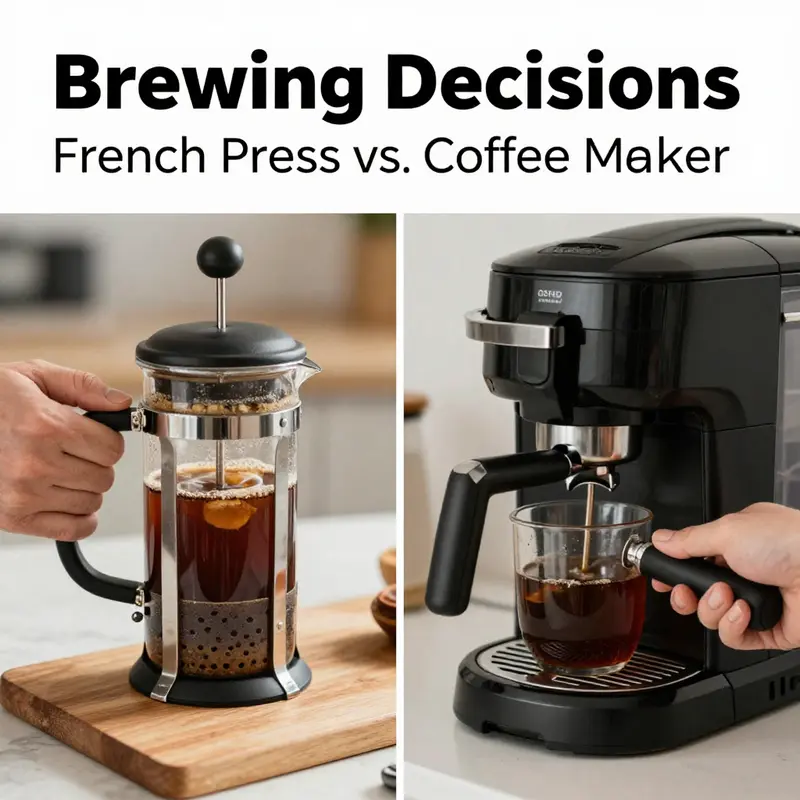
Maintenance is less a chore than a craft step in the daily ritual of coffee. It quietly shapes flavor, texture, and the ease with which a good cup emerges from a morning routine. When you compare a French press with an automatic drip coffee maker, you’re not just choosing between two brew methods; you’re choosing between two philosophies of upkeep. One city—roughly speaking—lives in the tactile, hands-on moment of brewing, where warmth, time, and touch are the ingredients. The other city runs on automation, where reliability and consistency are the primary currencies. Yet both paths demand attention to how the equipment is cared for. The health of the machine, the cleanliness of the components, and the regular removal of mineral or oil buildup all converge to determine whether the first sip is clean and bright or heavy with oils and sediment. In this light, maintenance becomes a flavor strategy, a deliberate choice about how much time and care you are willing to invest to preserve your desired cup profile over months and years.
The French press, at its core, is a relatively simple device. Its appeal rests on immersion brewing: coarse grounds bask in hot water, steeping for a few minutes while a metal mesh plunger holds back the bouquet of grounds. The beauty—and the risk—of this design lies in its minimal filtration. The metal mesh does not trap the oils and fine particles as a paper filter does, so the cup is full-bodied and textured. But those same oils carry with them a potential for residue and a suggestion of sediment if the press isn’t maintained. The result is a cup with depth and gravity, often described as earthy, chocolatey, or nutty, especially with darker roasts. The maintenance implication is straightforward: keep the parts clean and free of oil film to preserve that body, but also keep the mesh free of oils that can clog or dull the extraction over time. Cleaning after each use is essential, and more thorough care—like a periodic soak for the filter—helps prevent the faint but persistent notes of rancidity or oil buildup from leaking into future brews.
A practical routine for the French press emphasizes simplicity without sacrificing flavor. Rinse the carafe and plunger with hot water immediately after use to loosen oils and fine grounds. A light wash with mild dish soap is acceptable for many users, but the emphasis should be on thorough rinsing to avoid any soapy aftertaste. The filter assembly deserves special attention; it should be disassembled and rinsed, with the mesh and screen cleared of any trapped grounds. Occasionally, a gentle vinegar soak can help dissolve stubborn oils that cling to the mesh, followed by a thorough rinse until the aroma of vinegar dissipates completely. This ritual of cleansing is not just about avoiding bad tastes; it preserves flow. A clogged mesh can impede water flow during pressing, creating uneven extraction and a coppery or sour note in the cup. In short, the maintenance rhythm for a French press is a quick rinse after each use, a more deliberate disassembly and wash every week or two, and a light descaling or oil-removal soak when the brewer begins to smell or taste the off notes that oil buildup can breed.
Transitioning to the automatic drip machine, maintenance takes a different shape. The drip coffee maker relies on a combination of gravity and a paper filter to produce a clean, bright cup, with most of the oils left behind in the paper and most of the fines captured by the filter bed. But this design does not eliminate maintenance: mineral buildup from hard water, coffee oil residues that cling to reservoir walls, and filter debris that can accumulate in narrow passages all threaten the even distribution of heat and water that define a reliable cup. Descaling becomes a routine fixture, not a rare intervention. Depending on the hardness of your water and how often you brew, you may find it best to descale every one to three months. Descaling solutions, whether commercial or home-made with citric acid mixtures, work to dissolve mineral scale that clogs the heating element and internal tubing. Without this step, a drip brewer can heat unevenly, leading to longer brew times, uneven extraction, and a flat or metallic aftertaste.
The process of descaling is matched by a disciplined cleaning of removable parts. The water reservoir, the carafe, the filter basket, and any removable tubing or pathways should be rinsed and dried; coffee oils that accumulate in the filter basket and carafe can transfer to the next brew, dulling aroma and reducing perceived body. Some manufacturers recommend a cleaning cycle with a dedicated cleaner at least once a month, while others suggest a simpler routine of rinsing with warm water and a gentle wipe-down. The goal is not only to prevent clogs but to maintain the appliance’s ability to heat water evenly and pour with consistent speed. A neglected coffee maker can harbor mold and slimy residues in the reservoir or within the filter housing, particularly in machines that do not fully dry between uses. Regular cleaning and careful maintenance, therefore, protect both your health and the integrity of the flavor profile you expect each morning.
Maintenance philosophy also extends beyond the machine’s innards. It reaches into the quality of water you use, the freshness of the grounds, and the environmental conditions in which the equipment sits. Hard water contributes more mineral buildup, which accelerates the maintenance cycle for drip machines. In contrast, filtered water reduces scale, making descaling intervals longer and protecting the heating elements from rapid mineral accumulation. For the French press, water quality matters in another way: if your water tastes flat or chlorinated, the equilibrium between the perceived body and the coffee’s inherent notes shifts. The immersion method amplifies what the water carries—oils, minerals, and dissolved solids—so even small amounts of inorganic flavor can alter the final cup. Consequently, a simple, proactive habit—using clean, fresh water and boiling it only to the proper temperature—goes hand in hand with the cleaning routine. When you combine the ritual of washing and the discipline of descaling, you reduce the risk that maintenance becomes a daily surprise rather than a planned step.
A larger practical thread runs through both methods: the cost of maintenance versus the cost of flavor stability. The French press is deceptively simple, with fewer parts to go wrong and less infrastructure to clog. Its maintenance is easy to schedule, requires minimal tools, and scales with how deeply you want to invest in the ritual. The drip brewer, with its more complex architecture, invites a different calculus. It may require more time and a more robust descaling regimen, but it rewards you with consistent performance and a cleaner, brighter cup day after day. The trade-off is not merely about the sheen of the final brew; it is about the relationship you want with your equipment. Do you want to cultivate a hands-on, nearly meditative routine that treats your coffee as a ritual, or do you want a dependable, hands-off workflow that gets you coffee with minimal friction? The answer will shape how you approach maintenance, the frequency of cleaning, and how you perceive the role of your device in your kitchen world.
To make the maintenance journey practical and tangible, consider a few integrated tips that bridge the two systems. For the French press, after you rinse and reassemble, give the plunger a quick wipe with a damp cloth and check the rubber seal for signs of wear. A worn seal can leak, allowing oils and grounds to bypass the filter and re-enter the brew, dulling clarity and contributing to a muddy mouthfeel. Replacing seals when they show cracks or stiffness is a small investment that pays in consistent texture. For the drip machine, keep an eye on the filter basket and carafe seals; over time, gunk can form around the rim of the carafe, creating minor leaks or coffee residue that shows up as specks in the cup. The most sustainable approach is a rhythm that combines daily quick cleans with monthly deeper interventions. On a weekly cycle, rinse the carafe, wipe the exterior housing, and check for any build-up around the filter area. On a monthly cycle, perform a full descaling, run a cleaning cycle if your model supports it, and make sure all parts dry completely before reassembling. Keeping the machine dry also reduces the risk of mold and mildew in the reservoir, which, even if subtle, can subtly influence flavor over time.
Flavor lives in the details, and maintenance is the keeper of those details. When you invest a few minutes in each routine, you protect the integrity of the brew and the memory of a cup that tastes as intended. The French press rewards your attention with a richer body and a tactile sense of immersion; the drip maker rewards your attention with consistent brightness and a clean finish. The maintenance philosophy that serves both devices is not a rigid protocol but a flexible practice you adapt to your water, your schedule, and your taste. If you crave a stronger emphasis on the precise grind and brew balance for the French press, you can explore a practical resource dedicated to ratio control and technique. French press coffee ratios offers straightforward guidance on how much coffee to use per liter of water, how long to steep, and how grind size shifts the outcome. This reference helps to align the ritual of maintenance with the science of extraction, ensuring that clean, well-maintained gear translates into consistent, high-quality results.
In practice, maintenance becomes the throughline that makes both brewing options reliable rather than capricious. It is not merely about avoiding failure; it is about preserving the relative strengths of each method—the voluptuous mouthfeel of the French press and the crisp clarity of the drip machine—through disciplined care. The discipline today protects flavor tomorrow, and the flavor you savor tomorrow reinforces the discipline you practiced today. In other words, maintenance is flavor’s quiet ally, not a separate chore to be checked off a list. It quietly tucks away uncertainty and invites you to start your morning with steadiness, confidence, and a clean slate for the next brew.
For a deeper, science-backed take on technique and maintenance, see Serious Eats French Press Coffee Guide. It offers detailed, methodical advice on using, cleaning, and maintaining French presses, including tips on preventing sediment, removing oil buildup, and prolonging the life of the filter. https://www.seriouseats.com/french-press-coffee-guide
Final thoughts
In the realm of coffee brewing, both French press and automatic coffee maker bring valuable qualities. The choice revolves around the flavor experience you aim to provide, the level of convenience you desire, and the resources you have for equipment and maintenance. A French press can elevate your coffee’s richness while creating a personal touch in brewing; conversely, an automatic coffee maker offers outstanding convenience and efficiency for busy operations. Assess your business’s priorities to find the method that resonates most with your coffee vision and customer satisfaction.