

The beverage market is increasingly influenced by consumer awareness regarding ingredients, particularly caffeine content. Mountain Dew, a popular soft drink, has specific caffeine levels that may impact its appeal amidst various customer preferences. Understanding these levels is crucial for business owners aiming to optimize their product offerings. This article delves into the caffeine content of regular Mountain Dew, compares it with competitor beverages, and discusses health implications surrounding caffeine consumption, providing a comprehensive framework for business decisions in beverage sales.
Regular Mountain Dew Caffeine Unpacked: An In-Depth Look at How Much Caffeine Comes with the Orange Spark
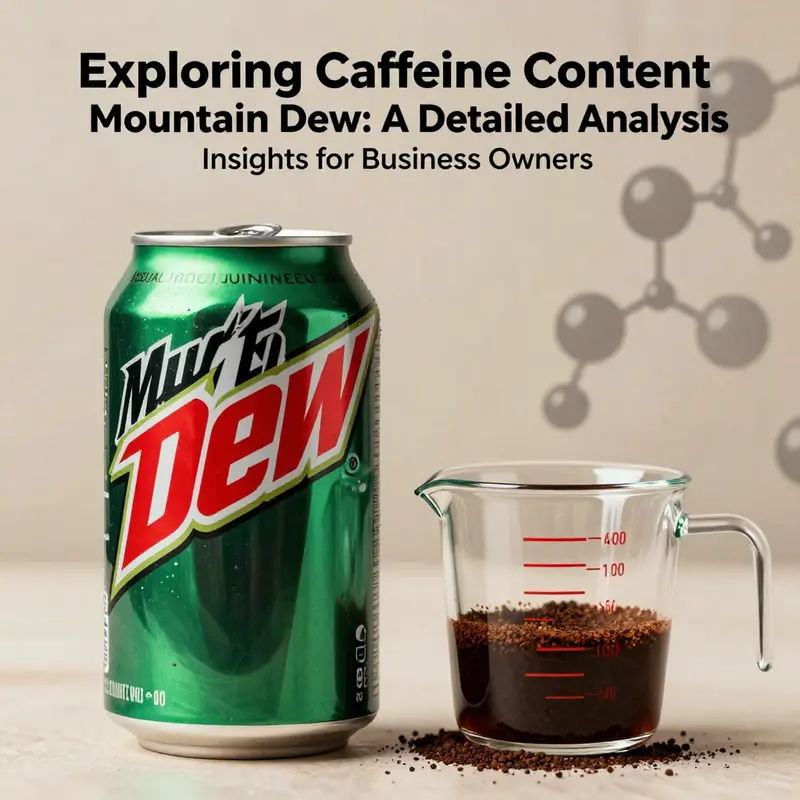
Caffeine sits at the center of many everyday beverages, yet its presence in a flagship citrus soda often surprises readers who assume a lighter profile from a non-coffee option. The exact amount of caffeine in Regular Mountain Dew does not simply rest on one number; it reflects a blend of packaging formats, regional formulations, and the gradual adjustments manufacturers make in response to regulations and consumer feedback. Official data place the standard 330 milliliter can at about 54 milligrams of caffeine. When translated to a more common serving size in some markets, a 12-ounce can or bottle, the figure converges around 55 milligrams. This small delta between 54 and 55 milligrams might seem trivial, yet it matters for people who track caffeine intake with precision or who are balancing multiple sources of caffeine across a day. The per-100-milliliter range—roughly five to ten milligrams—captures the essence of variability that can occur from one production run to another, from one country to the next, and from one recipe tweak to the next. In other words, the caffeine story behind Regular Mountain Dew is a snapshot of how large-scale beverage production translates into a specific, measurable dose for the consumer.
That dose, though modest by the standards of coffee, still represents a meaningful energy cue for many people. A single can supplies enough caffeine to produce a noticeable lift without pushing into the realm of jitteriness for most adults. It is precisely this middle ground that helps explain the drink’s popularity as a quick pick-me-up. In casual terms, it sits between a mild afternoon stimulant and a more cautious daily input, especially for those who prefer not to commit to a cup of hot coffee when a cold, fizzy, fruit-forward option seems more appealing. The social and sensory aspects of the beverage—its bright citrus flavor, the familiar hiss of opening a can, and the cold rush of carbonation—work together with the caffeine content to create a perceived boost that is as much about mood and ritual as it is about actual chemical stimulation.
A crucial caveat accompanies these numbers: individuals vary widely in how caffeine affects them. Metabolism, tolerance, body mass, and even genetics can shape how quickly caffeine is absorbed and how long its effects linger. For some, the 55-milligram dose can feel like a crisp lift that lasts for a couple of hours. For others, the same amount may feel more modest, contributing to a gentle surge or simply enhancing focus for short periods. This variability is why general guidelines on daily caffeine intake emphasize personal response as much as numerical targets. If you are sensitive to caffeine or if you are monitoring total daily intake, the single-can count for Regular Mountain Dew becomes a piece of a larger puzzle rather than a standalone metric. In practical terms, it means you might count this one can as part of a broader plan that includes other caffeinated beverages, tea, or even chocolate, all of which can pile up quickly if not tracked.
The landscape of caffeine content is not static. In some regions, labeling practices reflect local regulations or company policy changes that affect how caffeine levels are reported or rounded. The mathematical truth behind the numbers—five to ten milligrams per 100 milliliters, with typical can sizes hovering around fifty-five milligrams for a standard serving—remains stable, but the precise figure you see on a label can shift by small margins. For anyone who is meticulous about their daily totals, this means a habit of checking the nutrition information each time you purchase, especially if you switch between packaging formats or try a different variant within the line. It is not unusual to encounter minor deviations among markets, and those deviations are usually well within the broader range established by regulatory guidance and scientific benchmarking.
From a consumer’s perspective, the takeaway is straightforward: while Regular Mountain Dew does deliver caffeine, it does so in a moderate amount relative to other caffeinated beverages. It is enough to offer a noticeable boost for many people, without the intensity associated with high-caffeine drinks. Comparing it to a typical cup of coffee, which often totals around ninety to one hundred milligrams in an eight-ounce serving, Mountain Dew sits on the lower end of the spectrum for caffeine-normalized energy drinks. Yet the exact experiential outcome still depends on the person. Some may feel a crisp lift that enhances alertness and reaction time for a couple of hours, while others might notice only a mild shift in energy or mood. The subjective experience is a reminder that caffeine’s effects are not purely a numbers game; they are intertwined with an individual’s unique physiology and daily context.
As dose awareness becomes more central to personal health, many readers naturally turn to the labels themselves for guidance. The standard 55-milligram per 12-ounce figure is widely cited and has been consistently reported across beverage-industry references and nutrition databases. The most recent confirmation of this figure, as of 2024, continues to align with the Healthline analysis, which synthesizes product data and regulatory disclosures to provide a clear, consumer-facing reference point. The alignment across sources reinforces the idea that the caffeine content in Regular Mountain Dew is reliable enough for general planning, even as the exact milligram count may vary slightly with packaging and geography. For readers who crave a compact, comparative view, a concise cross-drink reference can be illuminating. A convenient, internal resource outlines how Mountain Dew stacks up against other common beverages, and it can be accessed here: Caffeine content MT Dew. This link offers a straightforward portal to consider how this soda fits within a broader caffeine portfolio, alongside other popular choices that people reach for in different moments of the day.
It is also worth acknowledging that the Mountain Dew family has more than one flavor profile and packaging option, including sugar-free or reduced-sugar variants. In many cases, these versions maintain a caffeine level close to the standard formulation, so the 55 milligrams per regular serving remains a reliable baseline for most consumers who rely on the brand as a standard setter in the citrus-soda category. Yet the caveats persist: different markets may present small differences due to formulation tweaks, and some limited-edition or regional variants could diverge from the baseline by a few milligrams. The prudent approach for caffeine-conscious consumers is simple—treat the label as the authority for the given product in hand, especially when you crave precise totals for dietary planning.
Beyond the numeric values themselves lies a broader question about how a beverage like Regular Mountain Dew integrates into daily routines. For many, the appeal rests not only on the energy cue but also on the sensory satisfaction—bright citrus notes, effervescence, and a cold, refreshing finish. Caffeine becomes the quiet accelerant in a moment of need or a predictable ritual that punctuates a task, a commute, or a study session. In this light, the caffeine content is part of a larger narrative about how people curate their intake and balance stimulants with other beverages, meals, and activities throughout the day. That balance speaks volumes about consumer behavior: caffeine is not consumed in isolation but layered into patterns that shape focus, mood, and productivity in nuanced ways.
From a research perspective, the evidence consistently frames Regular Mountain Dew as a moderate source of caffeine. The standard 330 milliliter can delivering roughly 54 milligrams and the typical 12-ounce serving at about 55 milligrams position the drink within a predictable range that many adult consumers can approximate in daily planning. The differences observed across regions and packaging do not upend the overall message; instead, they invite careful label-reading and mindful tracking when people juggle multiple caffeinated sources. For those who monitor caffeine intake closely, keeping a simple count of the number of standard servings consumed per day—and noting the possible contributions from other beverages—remains the most practical method to stay within personal comfort and health guidelines.
If you need a concise benchmark, think of Regular Mountain Dew as a moderate stimulant that complements a diverse beverage lineup rather than as a primary energy source. It offers a measurable dose that can help with brief concentration or an afternoon lift, but it does not deliver the high caffeine punch associated with some energy-focused drinks or with multiple cups of coffee in quick succession. This distinction matters for people who are sensitive to caffeine, who have specific health considerations, or who are coordinating intake with other stimulants or medications. In those cases, prioritizing label information, understanding serving sizes, and recognizing how each source contributes to daily totals becomes essential.
In sum, the caffeine content story for Regular Mountain Dew is anchored by a near-consensus figure in the mid-50 milligrams range for a standard serving, with minor regional and packaging-driven variations. The numbers have held steady through later reviews and remain a practical reference point for consumers, health professionals, and researchers who aim to map caffeine exposure across everyday beverages. When integrated into a broader dietary plan, this information helps illuminate how a seemingly simple soda can fit into the tapestry of caffeine consumption without overwhelming daily limits. As with any caffeinated product, awareness, labeling, and moderation remain prudent tools for making informed choices that align with personal health goals and daily routines.
External reference: Healthline provides an accessible synthesis of caffeine content in Mountain Dew and related beverages, with the latest verification of the commonly cited figure around 2024. For readers seeking an external resource to corroborate and expand on these numbers, the Healthline page is a reliable starting point: https://www.healthline.com/nutrition/caffeine-in-mountain-dew
Beyond the Buzz: Mapping Mountain Dew’s Caffeine Footprint Against Colas and Energy Drinks
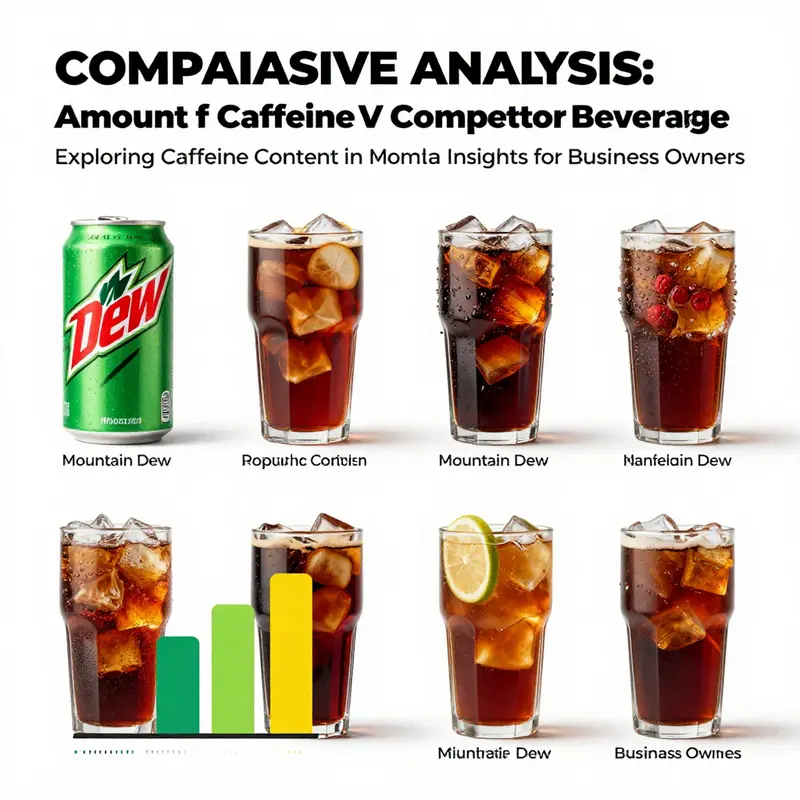
Caffeine has a way of whispering through the afternoon, turning dull moments into potential sprint starts. When we peel back the label on Mountain Dew, the question people most often ask is not simply whether it wakes you up, but how much of that wakefulness is packed into a single can. The caffeine content of Mountain Dew, like the drink itself, is not a single fixed number. It shifts with the product type, the packaging, and even the region where it is sold. Official data consistently show that the standard Mountain Dew, typically sold in a 330 milliliter can, carries about 54 to 55 milligrams of caffeine. That numeric baseline—roughly 5 to 10 milligrams per 100 milliliters—offers a useful frame for readers who want to map their daily caffeine intake against their beverage choices. Yet, as with any mass-market product, the details matter: a different variant, a larger package, or a regional tweak to the formula can nudge that caffeine count upward or downward. The takeaway is simple and practical: if you want a stable reference point, start with the standard can’s caffeine content and always check the label on the exact product you reach for, because the caffeine footprint is not written in stone across every Mountain Dew product line.
In the broader landscape of caffeinated beverages, Mountain Dew positions itself in a curious middle ground. It’s more caffeinated than a typical cola, yet it does not reach the concentrated levels commonly associated with energy drinks. This middle ground is precisely why it earns attention from people seeking a noticeable but not overpowering stimulant effect, especially during midday lumbles or moments when a quick pick-me-up is desired without stepping into the world of energy-focused drinks. To illuminate this position, consider how Mountain Dew compares with other popular beverages: a standard 12-ounce can of Coca-Cola, for example, delivers about 34 milligrams of caffeine, while Pepsi clocks in around 38 milligrams. In contrast, energy drinks—those marketed specifically for an energy boost—disproportionately increase caffeine content, with brands delivering roughly 80 milligrams per 8.4-ounce can in the case of a well-known energy drink, and much higher figures in larger servings from other brands. Against that backdrop, Mountain Dew’s caffeine content is unmistakably moderate in the traditional soft-drink category, yet distinctly higher than many other mainstream colas. This contrast helps explain its appeal: it offers more kick than a standard cola while staying outside the dedicated energy-drink category, allowing consumers to enjoy a noticeable lift without a heavier stimulant profile.
The precise measurement of caffeine in Mountain Dew gains nuance when we widen the lens beyond the “one can, one number” view. The 54–55 milligram baseline applies to the standard 330 milliliter can, but the 100 milliliter figure, roughly 5 to 10 milligrams, hints at regional and formulation subtleties. In some markets, regulators and manufacturers adjust flavors, sweeteners, or other ingredients in ways that can cause small shifts in caffeine content. And there are product lines that intentionally skew higher or lower than the standard. Mountain Dew Kickstart, for instance, is marketed as a caffeinated beverage aimed at a different consumer moment and often carries a caffeine content that diverges from the classic formula. Similarly, voltage-themed variants and other limited releases can display noticeable differences in caffeine load. The core message for the consumer is straightforward: label literacy matters. If you are watching your caffeine intake or you are coordinating caffeine from multiple sources, the label on each product you drink is your most trustworthy guide. Slender differences across variants can accumulate when you sip multiple beverages in a day, turning a casual outing into a cumulative caffeine tally that might surprise you by snack-time.
From a consumer psychology perspective, Mountain Dew’s caffeine footprint also aligns with how people structure their daily caffeine rituals. For some, a mid-mafioso boost in the late morning or early afternoon feels earned, not coerced, and Mountain Dew delivers that nudge with a flavor profile that keeps the experience lighter and more refreshing than the heavier, more concentrated energy drinks. This positioning works in a crowded beverage aisle, where people are balancing taste preferences, brand identity, and a perceived level of stimulation. The caffeine content thus functions not only as a chemical dose but as a signal about what kind of experience the drink promises: a crisp, citrus-forward lift that’s energetic without the intensity of a pure energy formula. This is an important distinction for readers who want practical guidance on how to structure their caffeine intake across different beverages in a typical day, and it explains why Mountain Dew, even at its standard caffeine level, remains a popular choice for those who want a reliable, mid-range boost.
To deepen the practical picture, it is useful to place Mountain Dew in the context of the broader beverage family by looking at the numbers with careful attention to serving size. The classic 12-ounce can—roughly 355 milliliters—usually contains about 55 milligrams of caffeine. This translates to a caffeine density of around 0.15 milligrams per milliliter, a metric that helps when comparing to other drinks with different can sizes or bottle volumes. If you happen to opt for a larger can or bottle, you should recalculate the caffeine load using the same density rule. The math is not complicated, but the arithmetic matters when you plan your day around caffeine consumption, especially if you are balancing other sources such as coffee, tea, or other caffeinated beverages. The density concept also clarifies why some people feel more energized by larger servings even when the per-serving caffeine count is not dramatically higher—the broader the container, the larger the total dose becomes, and the cumulative effect may feel distinct, especially for individuals with lower caffeine tolerance.
For readers who want a quick reference point beyond the day-to-day label checks, there is value in a broader comparative glance. When a beverage line claims a higher caffeine position, it usually accompanies a marketing narrative that emphasizes longer-lasting alertness or a stronger kick. Mountain Dew’s general alignment below the high-energy spectrum helps explain why some people turn to it as part of a casual caffeine strategy, rather than as a staple for sustained focus in high-stakes situations. Yet the precise caffeine content will always depend on the exact product variant and packaging size. The same line can show a noticeable deviation from the baseline when the can size shifts from 12 ounces to 16 ounces, or when a particular flavor or promotional edition alters the formula. Readers who rely on caffeine counts for dietary or health reasons will appreciate the consistency offered by tightly regulated label information, and should be aware that variations exist and labels may differ by region. This is not merely a matter of curiosity; it is a practical matter of responsible consumption.
In continuing this thread, it is helpful to reference a concise base that captures the essence of Mountain Dew’s caffeine footprint while acknowledging the existence of higher-caffeine variants. For a quick baseline and a focused comparison with the base formula, consult the detailed segment that outlines caffeine-content-mt-dew. This resource offers a compact reference that aligns with the numbers discussed here and can be a starting point for readers who want to track their caffeine intake across different Mountain Dew products. In practice, the baseline stays stable for the classic formula, and the label on the specific product you purchase will confirm the exact caffeine amount you are consuming in that moment. The lesson is practical: do not assume uniformity across all Mountain Dew products; verify the label when you are calculating daily totals.
The broader health context adds another layer of nuance. Health authorities typically set practical daily limits for caffeine intake to minimize potential adverse effects, with general guidelines around 400 milligrams per day for most healthy adults. For pregnant individuals or those sensitive to caffeine, the recommended limit is often lower. In this framework, a standard Mountain Dew can contributes a modest chunk to the daily total, easily integrated into a larger caffeine budget that includes coffee, tea, or other caffeinated beverages. If you drink several Mountain Dew products in a day, or if you pair Mountain Dew with other caffeinated sources, it is wise to perform a quick tally to ensure you stay within personal comfort and safety thresholds. The goal is a balanced approach: enjoy the flavor and the lift Mountain Dew offers, while remaining mindful of the cumulative effect of caffeine across all sources. This balance, more than any single number, informs how people choose to incorporate Mountain Dew into their daily beverage repertoire.
To emphasize the fluid nature of the caffeine story, the chapter underscores a practical habit: always read the label and remember that product lines evolve. The same brand can release formulas with modest adjustments to caffeine content due to taste testing, regulatory compliance, or supply chain considerations. Consequently, even if you carried a mental image of Mountain Dew as a fixed caffeine amount, the sensory reality on the store shelf can be different enough to warrant a fresh glance at the nutrition panel. For readers who want a quick, reusable reference, there is a concise, no-fuss baseline available in the caffeine-content-mt-dew resource. This internal link, anchored as caffeine-content-mt-dew, serves as a handy reminder that a seemingly small product detail can carry meaningful implications for daily routines and health-conscious planning.
In sum, Mountain Dew provides a caffeine experience that sits comfortably between the cola crowd and the dedicated energy drinks, offering a perkier profile than many soft drinks without venturing into the more intense territory of specialty energy formulations. Its standard can profile, around 54–55 milligrams per 330 milliliter serving, invites readers to think in practical terms about daily consumption. The real-world takeaway is clear: know your can, know your count, and calibrate your day with an eye on total caffeine intake. As you explore the shelves, appreciate how formula tweaks, packaging choices, and regional regulations subtly reshape the caffeine landscape. The journey from label to effect is not a single step but a small, ongoing calculation—a routine that helps you align taste, energy, and wellness in a way that fits your personal rhythm.
Internal reference: For a focused, baseline view on Mountain Dew’s caffeine content, see caffeine-content-mt-dew. caffeine-content-mt-dew.
External resource for deeper context: How the caffeine profile of Mountain Dew stacks up in the broader research landscape can be explored through external research summaries and nutrition analyses. External reference: mountain-dew-caffeine-content.
The Buzz and the Balance: Understanding Mountain Dew’s Caffeine and Its Real-World Health Impacts

Mountain Dew has long been marketed as a bold, bright spark for those who want a quick lift without surrendering flavor. Yet behind its citrus kick lies a precise chemical reality: caffeine, the central nervous system stimulant that gives the drink its signature edge. The caffeine content of Mountain Dew is not a single, fixed number. It varies with product type, packaging size, and regional formulation tweaks. Official data commonly place the standard 330-milliliter can at roughly 54 milligrams of caffeine, while other packaging standards translate to about 55 milligrams per typical 12-ounce serving. In practical terms, this means Mountain Dew sits toward the upper end of caffeine content among common soft drinks, especially when compared with more modestly caffeinated alternatives. The per-100-milliliter caffeine range—roughly five to ten milligrams—reflects a similar picture, though the exact figure can drift with local regulations, formulation changes, and the precise can or bottle you pick up at the store. Even when the sugar story is kept separate, readers can recognize that this caffeine burden is not trivial for a beverage often enjoyed in social settings, during gaming sessions, or as a quick pick-me-up between tasks.
To understand how this caffeine load translates into daily life, it helps to place Mountain Dew in the broader context of caffeine exposure. While the caffeine content of a single standard can is well below the daily threshold established by health authorities, the real-world pattern of consumption matters. A single can may be a modest amount for some adults, but for others it becomes one of several caffeinated inputs across a day. The official guidance from the U.S. Food and Drug Administration points to a generally safe upper limit of about 400 milligrams of caffeine per day for most healthy adults. That ceiling is a useful rule of thumb, but it is not a safety passport: it does not speak to timing, sleep quality, or interactions with other stimulants and macronutrient loads. In practice, drinking multiple Mountain Dew servings or pairing the drink with coffee, tea, energy drinks, or caffeinated medications can push total daily caffeine well past the simple arithmetic of one can, creating a cumulative effect that can disrupt sleep, elevate anxiety, or provoke physical symptoms in sensitive individuals.
This discussion is not merely about numbers; it is about how caffeine in Mountain Dew interacts with real-life routines. Caffeine acts as a central nervous system stimulant, and even moderate amounts can sharpen alertness, bolster concentration, and momentarily lessen perceived fatigue. These effects help explain why Mountain Dew remains popular among gamers, students, or professionals engaged in long, attention-demanding tasks. In research circles, including studies published up to 2025, caffeine at this range is associated with improved wakefulness and enhanced performance on certain cognitive tasks, especially when fatigue is already present. The presence of caffeine in Mountain Dew can thus be a practical tool for staying awake during a late-night session or a long stretch of work. Yet the same stimulant that improves focus can also tilt balance in less desirable directions if used unchecked.
The potential downsides of caffeine exposure from Mountain Dew begin to loom when consumption becomes habitual or is timed in ways that clash with the body’s natural rhythms. Anxiety, insomnia, increased heart rate, jitters, and digestive upset are all commonly reported adverse effects of higher caffeine intake or poor timing. For individuals with anxiety disorders or sleep disturbances, these symptoms can be magnified even with what may appear to be a modest daily dose. Chronic, unremitting caffeine exposure can contribute to disrupted sleep patterns and heightened stress responses, creating a self-perpetuating cycle: fatigue in the day, a need for more caffeine, and then further sleep disruption at night. The picture becomes more complex when we add Mountain Dew’s other defining characteristic—the sugar content.
A standard 12-ounce can of Mountain Dew typically contains around 46 grams of sugar, a figure that compounds the stimulant effect of caffeine. The combination of high sugar and caffeine introduces a “double whammy” for the body. Sugar prompts rapid increases in blood glucose, followed by faster declines, which can collude with caffeine to produce mood swings, energy fluctuations, and daytime crashes. Caffeine itself can mask fatigue, blunting the signal that would normally prompt a person to rest or switch to a lower-energy option. Put together, the high sugar-Caffeine pairing can entrench patterns of overconsumption, especially among individuals who rely on Mountain Dew as a quick fix rather than a balanced lifestyle habit. The sensory appeal—bright flavor, fizzy texture, and a familiar caffeine buzz—may obscure the longer-term picture of how the body handles such a nutrient load when consumed repeatedly over days or weeks.
What does this mean for someone aiming to optimize well-being while still enjoying a refreshing beverage? The answer leans toward mindful consumption and context rather than abstinence or alarm. First, understand your own caffeine sensitivity and daily routines. Some people tolerate 200 or 300 milligrams of caffeine daily with only minor side effects, while others notice jitters or sleep disruption with far smaller amounts. Second, consider the timing of Mountain Dew within your day. Early-day consumption is less likely to interfere with sleep, whereas a late-afternoon or evening can disrupt rest for hours. Third, account for total daily caffeine exposure from all sources. A single can is not a singular obligation; it is part of a larger caffeine budget that includes coffee, tea, chocolate, certain medications, and even some over-the-counter supplements. When this budget is stretched across several sources, the risk of adverse effects rises, even if no single source seems overwhelming on its own.
Moderation remains the simplest, most practical guideline. Health professionals commonly advise limiting intake to one can per day or reducing the number of daily caffeinated beverages if sleep quality or anxiety levels begin to suffer. For anyone who loves Mountain Dew and wants to stay within healthier boundaries, there are straightforward strategies. Swapping one can for a lower-caffeine or caffeine-free option on some days can maintain the ritual of refreshment while reducing cumulative exposure. If flavor is the priority, unsweetened sparkling waters with natural citrus essences provide a similar sensory experience without the sugar load or caffeine punch. If the goal is to preserve energy and mood stability over the long term, consider pairing a more moderate caffeine source with a protein-rich snack, which can help blunt blood sugar spikes and support steadier energy through the day.
In the context of public health guidance, the conversation about Mountain Dew’s caffeine is inseparable from how individuals structure their caffeine intake. The FDA’s caffeine FAQ and related regulatory guidance emphasize that caffeine is generally recognized as safe in moderate amounts for adults, but they also underscore the importance of individual differences and the cumulative effects of multiple caffeine sources. The safety envelope narrows for pregnant people, adolescents, and individuals with certain health conditions, where more conservative guidelines often apply. These nuances reinforce the message that a single number—54 or 55 milligrams per can—cannot capture the full spectrum of how Mountain Dew interacts with a person’s physiology, sleep, and daily routine. In practical terms, the beverage should be enjoyed with awareness rather than without consideration.
For readers seeking a compact, evidence-informed snapshot that pivots from numbers to behavior, an essential takeaway is this: Mountain Dew contributes a meaningful amount of caffeine to the daily diet, and it does so alongside a substantial sugar load. The result is a combination that can be energizing in the moment but potentially destabilizing when used too often or at the wrong times. The sweet spot for many adults lies in using Mountain Dew strategically rather than habitually, treating it as a near-term energy aid rather than a default choice for every afternoon slump. This approach helps preserve sleep quality, supports mood stability, and reduces the likelihood of sugar-driven energy crashes.
In describing how to balance refreshment with health, it helps to frame the discussion around real-world scenarios. A student burning the midnight oil may reach for Mountain Dew to stay alert and complete a critical assignment. A gamer might relish the crisp, bright flavor during a marathon session. A worker navigating a long shift in a heat-filled environment may appreciate the quick lift to maintain focus. In each case, the caffeine provides a short-term benefit, but the broader health implications hinge on how the beverage fits into a larger daily pattern. If such a pattern becomes a habit—daily multiple cans, or a routine that coincides with late-night gaming and skipped meals—the odds tilt toward sleep disruption and metabolic stress. When viewed through this lens, the caffeine content of Mountain Dew is less a fixed risk factor and more a component of a lifestyle mosaic, one that can be managed with intention and information.
To connect this discussion to practical reading and further exploration, consider a focused comparison that specifically examines how Mountain Dew’s caffeine stacks up against other popular beverages. For a focused comparison, see the article on caffeine content of Mountain Dew. This internal resource helps readers calibrate expectations by situating Mountain Dew within a broader spectrum of caffeinated drinks, clarifying where its caffeine sits relative to peers and how those differences matter in daily consumption patterns. Such comparisons are not merely academic; they offer a tangible handrail for readers seeking to optimize their routines without sacrificing moments of enjoyment. The goal is not to vilify Mountain Dew but to place its caffeine in a practical frame, one that acknowledges both the immediate vigor it can provide and the longer-term considerations that come with sustained use.
Looking ahead to personal practice, the guidance remains straightforward: be mindful of how much caffeine you take in a day, recognize when Mountain Dew is contributing to that total, and adjust your choices as needed to align with sleep, mood, and overall energy management. The drink can remain a part of a balanced life, provided its use is deliberate and informed. If a person is looking to reduce sugar and still enjoy a refreshing, citrus-forward beverage, there are many alternatives on the market that offer zero or low sugar with little to no caffeine. If the aim is to sustain focus during demanding tasks, pairing a measured caffeine source with steady hydration and nutrient-dense foods often yields better long-term outcomes than relying on a high-sugar, high-caffeine pattern.
In sum, Mountain Dew’s caffeine content—while modest on a per-can basis—is best understood as a piece of a larger daily caffeine and sugar puzzle. Its impact on well-being depends not only on the dose in a single can but on how that dose interacts with the body’s rhythms, the timing of consumption, and the other foods and drinks that accompany it. The right balance varies from person to person, and the path to healthful use lies in information, mindfulness, and moderation. As with many popular beverages, the numbers matter, but the choices people make in response to those numbers matter even more. The next part of this chapter will continue to weave these insights into a practical, human-centered approach to enjoying Mountain Dew—one that respects taste, energy needs, and long-term health alike.
External reference: https://www.fda.gov/food/food-additives-petitions/caffeine-frequently-asked-questions
Final thoughts
In summary, understanding the caffeine content in Mountain Dew allows business owners to make informed decisions about their beverage offerings. By analyzing its caffeine levels in comparison to competitors and considering the health implications for consumers, businesses can tailor their product strategies effectively. This knowledge equips operators to meet market demands while fostering consumer trust through transparency and health-conscious choices.