
For business owners, a reliable coffee maker is essential in creating a vibrant and welcoming workplace. BLACK+DECKER coffee makers stand out for their user-friendly features and affordability, making them ideal for homes and offices alike. This comprehensive guide delves into the specifications and features of BLACK+DECKER models, highlights user reviews and feedback, offers essential buying tips tailored for business needs, and shares practical maintenance strategies to ensure longevity and optimal performance of your coffee machine. Each chapter is designed to equip you with knowledge that will help you make an informed decision, ensuring that your choice supports both your operational needs and your employees’ coffee cravings.
Grounded in Simplicity: The Practical Guide to Black Decker Drip Coffee Makers, Specifications, and Everyday Reliability
The daily ritual of brewing coffee is as much about reliability as it is about the aroma that fills the kitchen. In the landscape of home appliances, the drip coffee makers from which this ritual often begins are valued for one clear reason: they do what is expected, without fuss. For households and small offices seeking steady performance at a friendly price, a family of drip machines from the Black Decker line has long stood out. These machines tend to emphasize practicality over novelty, offering enough versatility to please busy mornings while remaining straightforward enough to avoid the friction that can come with more feature rich options. When you consider a Black Decker drip coffee maker, you are looking at a device designed for everyday use, built to brew a consistent pot, and easy to maintain. It is the kind of appliance that earns a quiet trust, turning a simple cup into a dependable start to the day rather than a source of decision fatigue or surprise every time you press brew.
At the heart of the discussion is capacity. A common configuration in this family of machines is a 12 cup brew pot, a size that balances usefulness with a compact footprint. The size helps most kitchens and break rooms fit the appliance comfortably on a countertop without crowding nearby outlets or cabinets. The physical presence of a compact brewer should not be mistaken for a lack of thoughtful design. The dimensions typically reflect a profile that is unobtrusive yet ergonomic, allowing easy access to the carafe handle, the water reservoir, and the brew basket. The overall finish—often a sleek black or a neutral tone—complements a wide range of kitchen styles. The design philosophy leans into a clean silhouette and simple lines, so the machine blends into the background of daily routines rather than dominating the counter space.
The interior is equally oriented toward straightforward reliability. A reusable, permanent filter is a defining feature in many models in this family. Eliminating disposable paper filters reduces waste, lowers ongoing costs, and minimizes the chance of supply shortages interrupting a brewing routine. A permanent filter also invites a cleaner, more hands-on experience that many users appreciate. There is a tangible connection between choosing a device that favors long-term sustainability and the sense that coffee making becomes a practice of routine stewardship rather than a cycle of ongoing purchases. This feature is not simply about convenience; it is about a mindset that treats the kitchen as a space where practical choices can yield meaningful benefits over time.
A second anchor in the feature set is programmable brewing. The ability to schedule a brew in advance is a quiet luxury that translates into real-world convenience. In a household where mornings begin with a flurry of activity, the option to have a fresh pot ready at a precise time can transform the experience from rushed improvisation to steady routine. Programmable settings enable users to tailor the brew to the moment—wake to a pot that is ready when the alarm stops, or arrive at the office to the familiar scent that signals the workday has begun. The built-in timer, often a straightforward interface that cycles through a few easy steps, reinforces the sense that the machine is designed to cooperate with the user rather than demand constant attention. This alignment between user intention and machine action is one of the reasons the basic Black Decker drip coffee maker has remained a staple in many households.
What makes programmable capability genuinely practical goes beyond the numbers on a control panel. It is the quiet promise of predictability. You know that when the morning routine calls for coffee, the moment you press a few buttons the apparatus will take over for you. The result is not about a grand theater of features but about consistent performance, a steady pot that preserves warmth long enough for you to complete other morning tasks, and a brew that tastes familiar and reassuring every time. In this sense, the feature becomes a backbone of daily life, a dependable rhythm that allows other parts of the morning to unfold without delay. The machines under discussion often balance this reliability with a compact control arrangement. The user interface is designed to be intuitive, so even a first-time user can feel confident navigating the basic options without referencing a manual every morning.
Yet no appliance is perfect for every user, and the conversation around the Black Decker family does not shy away from trade-offs. Some reviewers note that heating speed and the duration of warmth can feel modest compared to higher-end machines. The same design choices that keep the price accessible and the footprint sensible can result in a pot that takes a bit longer to reach full temperature, and a warmer plate that sustains heat at a steady but less aggressive pace. For many, this is an acceptable compromise because the overall experience remains reliable and uncomplicated. The familiar rhythm of filling the reservoir, selecting a time, and walking away with coffee ready at the right moment still plays out with gratifying consistency. The trade-off, in practice, is a reminder that affordability and simplicity often go hand in hand with a gentler performance envelope.
In daily life, this approach translates into a machine that is not competing with other gadgets for attention. It is not a feature playhouse, but a workhorse built for efficiency and consistency. The appeal is especially strong for homes that value a calm, predictable morning routine—a routine that allows the coffee pot to start the day in its own quiet, dependable way. The appeal also extends to small office settings where a user-friendly device can serve more than one person without devolving into a debugging session every morning. It is not essential that every brew is a definitive exhibit of innovation; what matters is that coffee arrives consistently, the machine remains easy to clean, and the experience remains pleasant enough to encourage a daily ritual rather than a chore.
From a design and usability perspective, the balance between form and function is central. The machines in this family often present a straightforward power switch and easy on/off control, with a straightforward brew basket that accommodates either a permanent filter or a compatible reusable option. The focus on ease of use does not dwindle when the user needs a robust cleaning ritual or descaling routine. These are the moments when a well-built, uncomplicated appliance proves its worth: a familiar routine is preserved even when life gets busy or schedules tighten. In practice, this means a device that remains reliable across weeks of daily use, with parts that resist unnecessary wear and a build that keeps the coffee tasting consistent. The narrative of reliability is not just about one morning or a single week; it is about the months and seasons of use that shape a home’s coffee culture.
The conversation about specifications naturally invites a closer look at dimensions and footprint. A compact profile is not simply a matter of aesthetics; it is a real-world consideration for kitchens with limited counter space, shared countertops in small offices, or dorm rooms where space is at a premium. The ability to place the unit where it can be reached easily, along with a carafe that fits snugly into the guest area or break room, matters for everyday usability. The careful attention to dimensions reflects a broader philosophy: design should align with practical realities, letting function govern form rather than forcing compromise through unnecessary complexity. The result is a machine that feels appropriate to its purpose—an appliance that is there when you need it and unobtrusive when you do not.
Within the broader context of a complete guide to Black Decker coffee makers, this model family stands out for its straightforward approach to the essentials. It offers dependable brew quality, a user-friendly interface, and a sensibly sized footprint, all while staying mindful of the consumer’s budget. The combination of a permanent filter, programmable settings, and a stable, efficient design makes it a compelling option for consumers seeking reliability without the lure of high price tags or feature bloat. It is no accident that such machines hold steady appeal as entry points into a coffee making routine that feels consistent, approachable, and easy to master. This is not a glossy showcase of the latest gadgets; it is a reminder that the simplest solutions—when well executed—often deliver the most enduring value.
For readers who want to broaden their understanding beyond the specific model narrative, the following reflection can deepen appreciation of how these machines fit into daily life. The timeless combination of a practical brew system and a sustainable approach to materials and waste presents a compelling case for responsible consumer choices. By choosing a device that favors a permanent filter, the user reduces waste and simplifies upkeep. By embracing programmable features, the user gains control over the cadence of the day, turning coffee into a reliable ritual rather than a frantic morning scramble. And by appreciating the honest trade-offs between speed, warmth, and price, one learns to select a device that aligns with personal priorities rather than chasing the latest hype. The overarching lesson is clear: the right drip coffee maker is one that integrates smoothly into the fabric of daily habits, supporting them with dependable performance and unobtrusive design.
As part of a complete guide, this chapter invites readers to consider how their own routines align with the strengths of a pragmatic, value-driven machine. If the goal is to cultivate a calm, predictable morning, a model that emphasizes ease of use, low maintenance, and reliable awakening is a natural fit. The user experience—the act of turning a key, filling a reservoir, selecting a time, and returning to a ready pot—unfolds in a way that is almost ceremonial in its simplicity. The joy of coffee is often in its consistency as much as in its aroma, and a well designed drip coffee maker can reinforce this consistency without demanding more time or attention than are necessary. In the end, the value of this approach lies not in the number of features offered but in the quiet assurance that the routine will work when it matters most.
To explore broader perspectives on daily coffee rituals and to see how a simple, well built machine can influence the mood and pace of a morning, consider this resource for extended ideas and lifestyle context: Coffee Rich Life. The synergy between thoughtful gadgetry and daily rituals can illuminate how even a modest piece of equipment participates in shaping a satisfying, repeatable morning routine. This broader lens helps frame the discussion not as a chase for features, but as an exploration of how the right tools support the human rhythms that begin the day. For readers who crave a more granular sense of how specifications translate to real world use, the external reference that provides more granular specification and user reviews offers a practical anchor for further reading. External reference: https://www.amazon.com/dp/B000K3X46O
Voices from the Morning Cup: Real-World Feedback on a Budget-Friendly Coffee Maker Line
Across a broad, budget-conscious segment of the home appliance market, the voices of everyday users form a telling chorus about how these machines fit into real life. In a world where trusted routines hinge on a simple, reliable cup of coffee, the reviews rotate around two central themes: value and consistency. For many households, a line of affordable coffee makers represents not just a convenience but a practical choice that aligns with busy schedules, small kitchens, and the desire to avoid frequent, costly replacements. The common thread in these narratives is straightforward: when a machine offers dependable basic brewing at a price that leaves room for other essentials, it earns a steady place in daily life. The praise tends to focus on simplicity, quick setup, and an interface that anyone can master without consulting a manual that reads like a user agreement. In kitchens that double as shared workspaces, dorm rooms, or compact apartments, these devices are prized for their unpretentious operation. The fact that they deliver a familiar, comforting ritual every morning without demanding a steep learning curve matters as much as the coffee itself.
Yet no product line used by a broad audience is devoid of critique. The most persistent concerns in the reviews orbit around two realities: durability over time and the pace of preparation. A number of users report that these machines hold up well under regular daily use for months, if not years, but eventually small gaps appear. Leaks surface after repeated use, seals can loosen, and the consistent performance that once felt effortless can begin to falter. These aren t dramatic failures in most cases, but they remind buyers that a budget option is often a balance between upfront affordability and the longer arc of maintenance. In households that rely on multiple cups throughout the day, even minor issues with a warm plate, a stubborn carafe seal, or the stubborn habit of a drip that mineral buildup can encourage can translate into noticeable inconveniences. The message embedded in these reviews is clear: a low-cost machine can be wonderfully reliable for a while, yet routine care becomes essential if the goal is steady performance over the long haul.
The single-serve style within the lineup is frequently highlighted for its compact footprint and convenience. For individuals who drink decaf or who want a fast cup without brewing a full pot, this small unit can feel like a win. The appeal is not only space-saving but also the prospect of a quick, minimal-cleanup ritual that fits neatly into a rushed morning routine. Reviewers who value this speed and simplicity often emphasize how the device slips into a routine without demanding extra steps. However, even here a note of caution appears in reviews: the tradeoffs are real. While the single-serve option excels at speed and portion control, it typically avoids the more sophisticated capabilities that some users crave. Customizable brew strength, integrated grinders, or fancy flavor-enhancing features are rarely part of the package in a budget model, and some reviewers miss those options when they compare with higher-end machines. The tradeoff is understood; for many, the straightforward design remains its own form of appeal, especially for those who want a purely uncomplicated morning ritual.
When the conversation shifts to the larger multi-cup configurations, the tone becomes more nuanced. Programmability is a recurring point of praise. The ability to set a brew time in advance resonates with busy mornings, ensuring that the first cup of the day arrives with the aroma of a fresh brew. This feature speaks to a broader demand in the audience: machines that partner with human rhythms rather than interrupt them. Reviewers often remark that the user interface is intuitive, with clear indicators and a straightforward control panel. In the context of a household where several people rely on coffee to start their days, the promise of a dependable auto-brew cycle becomes a practical convenience rather than a luxury. And yet, even with programmable functions, some users express longing for deeper customization. Brew strength remains a common wish list item, especially for households where caffeine tolerance and taste preferences vary from person to person. In these voices, the gap between budget-friendly machines and premium models becomes a litmus test for what the line is capable of delivering at a given price point.
Maintenance emerges as a practical topic that permeates user feedback. The constancy of performance depends not only on a machine s original design but also on how well it is cared for. A recurring recommendation in user discussions is to stay on top of cleaning and descaling, particularly for households in areas with hard water. Mineral buildup can dampen flavor, shorten the life of seals, and slow down the heating cycle. The discipline of regular cleaning becomes the quiet, often overlooked partner to any machine in this segment. Users who embrace a simple maintenance routine report a longer horizon of reliable brewing, fewer leaks, and a more consistent temperature in the pot. In contrast, those who delay descaling notice a decline in taste and performance that can mislead a quick comparison with newer, budget-friendly options. This contrast underscores a fundamental truth about this class of machines: longevity is as much about care as it is about the initial build.
Another layer in the feedback comes from the realities of different living situations. For solo dwellers or roommates with varying schedules, a compact unit that fits a small kitchen and offers an uncomplicated brewing path can feel precisely right. For small families or home offices with steady caffeine demand, the same line may feel insufficient in capacity or features, yet the appeal endures because the price point makes it feasible to rotate models or to use the devices in a mix-and-match approach. In these environments, the same basic design is pressed into different service roles, from a quick morning cup to a steady, practical staff-side option for a shared break room. The reviews also reflect an awareness of the limits of a budget lineup. People who work in kitchens prone to temperature fluctuations or who rely on heavy daily use occasionally report slower heating or shorter thermal holds. These are not universal flaws but rather common experiences that help potential buyers calibrate expectations. The result is a more informed consumer base that reads reviews not as a verdict but as a map of likely outcomes based on daily realities.
What makes these user stories particularly instructive for a comprehensive guide is not merely what users say, but how they say it. The tone often blends practical detail with a pragmatic optimism. Many reviewers describe themselves as value-minded buyers who are seeking what they call a reliable workhorse rather than a high-tech gadget. Their assessments tend to balance important questions: Does it brew a decent cup at a fair price? Is it easy to set up and to operate without a manual the length of a novel? Can it be kept in service with routine care, and will it still do the basics a year or two down the line? In short, the portrait that emerges from these reviews is of a product line that earns trust through consistency and accessibility. The strongest endorsements come from households that regard coffee making as a daily habit rather than a hobby project. In those kitchens, a straightforward, dependable machine does not merely produce coffee; it anchors a routine that supports the day ahead.
For readers who want to see how these insights translate into practical buying decisions, the evidence points toward a simple framework. Start with the scale of your needs: a compact unit for a single person or a small space, or a larger model with programmable features for a household with varied schedules. Consider how much you value straightforward operation versus the opportunity for customization. Then weigh the maintenance expectations against the realities of your water supply and your willingness to descale on a regular basis. The reviews remind us that the most satisfying choice is often the one that aligns with daily life as it is, not as we imagine it to be in a showroom. In this sense, the conversation around these machines becomes less about chasing perfection and more about finding a dependable companion for the morning ritual.
To enrich the reader s understanding beyond the plain facts of features and prices, consider how such devices fit into broader lifestyle choices. A well designed, budget-friendly coffee maker can support a calmer morning, a more organized kitchen workflow, and even a more mindful approach to routine. It becomes less about the gadget and more about how the device enables small, meaningful rituals. This perspective aligns with a broader conversation about how people curate their kitchens to reflect daily values, whether that means prioritizing speed, simplicity, or sustainability. For those who want to explore how coffee culture informs home routines and gadget choices, a useful companion read from a lifestyle-focused coffee blog offers broader context and practical ideas for integrating brews into a balanced, mindful morning. Coffee Rich Life provides perspectives on how everyday coffee rituals shape the way people approach their days and their kitchens.
In sum, the user reviews for this budget-conscious line of coffee makers reveal a community of practical, value-driven consumers who prize reliability and ease of use. They celebrate the devices for helping them start their day with minimal fuss and with a consistency that makes morning planning predictable. They also remind prospective buyers that long-term satisfaction depends not only on the design but on ongoing care, including regular cleaning and descaling, careful handling to prevent leaks, and a clear-eyed understanding of what a budget model can and cannot deliver. For readers navigating the complete guide, these insights are a reminder that a successful purchase balances price with performance, fits the user s daily rhythm, and remains adaptable as life changes. The chapter that follows will build on this foundation by translating these real-world experiences into concrete criteria for evaluating models, so readers can move from listening to what others say to making a choice that feels right for their own kitchen and daily cadence.
External resource: Official product page.
External resource note: The official product page provides current specifications, user manuals, and updated feature lists that complement the practical insights gathered from user feedback. This resource helps readers verify the specific capabilities discussed in the reviews and compare how different configurations align with their own needs.
Brewing for Everyone: A Practical Guide to Selecting the Right Black & Decker Coffee Maker
Choosing the right coffee maker for a home or small office is less about chasing the latest feature and more about aligning capabilities with daily rhythms. The brand that spans a broad spectrum of practical, affordable appliances has built its reputation on reliability and value. When you start from your own routine—how many cups you brew, how much time you have in the morning, whether you prefer a simple drip routine or enjoy occasional experimentation with stronger brews—you can translate those habits into a clear picture of which unit makes the most sense. The aim is not to tire of a gadget but to welcome a trustworthy helper that does not demand constant tinkering. In this light, the core decisions revolve around how you brew, how much you brew, how easy the machine is to care for, and what you are willing to invest for convenience and longevity. The path to the right model becomes less about novelty and more about consistency, ease of use, and a long horizon of dependable mornings.
Brewing versatility matters because households drift between routines. Some mornings call for a quick single cup before the day starts, while others involve a carafe for the whole family or for a small office that sees a steady stream of coffee lovers. In the brand’s lineup, standard drip units cover most of these needs with dependable performance. Yet a portion of the range also includes more feature-rich options that blend multiple functions into a single station. When evaluating these, it helps to separate function from noise. Ask whether you truly need features like a built-in grinder, multiple brew-strength settings, or a frothing attachment. If your daily ritual rarely strays from conventional drip coffee, a streamlined machine that prioritizes straightforward operation often serves you better than a feature-packed model that complicates the morning routine. The goal is to find a machine that disappears into the background, letting the coffee take center stage.
Capacity is another anchor in the decision. A compact home setup may revolve around four to six cups, ideal for a couple or a compact space where coffee is consumed in measured, regular doses. For larger households or a small office, ten cups or more becomes a practical threshold. Programmable large-capacity machines help you balance the two by letting you wake to a pre-set brew without needing to monitor each morning. The practical question is how many people you serve routinely and how often you entertain guests who expect a reliable pot at a moment’s notice. If you anticipate growth in usage, prioritizing a model with clear capacity indicators and a flexible carafe can reduce daily friction and spare you from unnecessary refills during peak times. The balance between everyday use and occasional gathering is where capacity informs the long-term fit as much as the short-term convenience.
Build quality is a quiet but essential consideration. The carafe and brew basket bear the most daily wear, so durable materials matter even in a budget-friendly range. A well-constructed carafe, whether glass or stainless, should feel sturdy and resist chipping through regular washing. The brew basket should snap in and out with ease, and the lid should close firmly without sticking. The housing’s plastic or metal components influence how well the unit ages and how much heat is retained in the brew. In many cases, the most durable machines are those that emphasize straightforward design over an abundance of fragile, gimmicky parts. A well-made chassis supports consistent performance across years, which translates into fewer repairs, less downtime, and a more economical choice over time. In the end, sturdiness is a form of reliability, the kind that turns a cup of morning coffee into a small moment of steadiness rather than a reminder of a recently broken appliance.
Ease of cleaning is the unsung hero of long-term performance. Removable, dishwasher-safe parts are highly convenient for daily maintenance, especially if your routine oscillates between busy workdays and weekend leisure. Descaling features or built-in cleaners simplify maintenance in environments with hard water, where mineral buildup can dull flavor and reduce brew speed. When you select a model, check how easily the carafe, filter basket, and water reservoir detach and reattach. An intuitive design minimizes the guesswork during cleaning and helps you establish a regular, quick routine that keeps the coffee tasting bright. If you do not enjoy frequent disassembly, a unit with clearly labeled parts and simple rinsing becomes a quiet asset, allowing you to preserve performance without spending precious time on upkeep.
Value, of course, threads through every consideration. A budget-friendly option can deliver dependable drip coffee and basic programmability with surprising consistency. Yet the same budget line can also present a dilemma where features that seem attractive in theory add complexity without delivering meaningful daily benefits. Where the higher end shines is in convenience and emotional payoff: built-in grinders that let you grind fresh beans for every pot, thermal carafes that keep coffee hot without sacrificing flavor, or advanced programmable functions that allow you to set multiple brewing times. The math here is about long-term savings, not just the sticker price. A model that saves steps in the morning, preserves heat without degrading flavor, or minimizes waste through reliable filter mechanisms will likely pay for itself in more than just money saved on coffee. The equation becomes straightforward when you map how often you would reach for specific features and whether those features align with your standard practice rather than a possible but unused capability.
As you navigate the spectrum, it helps to remember a few practical heuristics. First, define your baseline: do you want a machine that starts with a touch of a button, or one that you program the night before and wake up to a ready pot? Second, quantify capacity in terms of how many seasoned mornings you expect to brew at once, not just the theoretical maximum. Third, assess build quality by tactile cues—how heavy is the carafe, how smooth is the basket release, how solid is the control panel. Fourth, consider maintenance as part of the overall cost of ownership. A unit that invites easy cleaning and straightforward descaling will reward you with clean taste and reliable performance for longer. When you place these practical questions at the heart of your search, the path through the brand’s lineup becomes less about chasing trends and more about securing a dependable companion for daily rituals.
For those who want to supplement their understanding with broader context, a useful step is to explore how coffee culture and daily routines intersect with appliance design. A resource like the Coffee Rich Life blog offers perspectives on how enthusiasts think about coffee rituals and the tools that support them. You can learn more there by visiting the Coffee Rich Life page. Coffee Rich Life.
Of course, the most current and specific guidance will come from direct comparisons and feature breakdowns published by the manufacturer. The official site hosts model comparisons, feature tables, and user reviews that illuminate which units align with different lifestyles, from minimalists who crave speed to home baristas who value control and variety. When you consult those resources, you gain clarity about what is truly possible within your budget and how the everyday experience of brewing can be streamlined without sacrificing flavor. Keep in mind that every household has its own tempo, and the right choice is the one that fits your tempo rather than the one that sounds impressive in an ad. The right model should feel like a natural extension of your kitchen workflow, a small but dependable ally that makes it easier to turn good coffee into a reliable daily ritual.
In the final tally, selecting a coffee maker from this brand becomes an exercise in disciplined curation rather than impulse shopping. Consider your routine, your space, and your willingness to engage with maintenance. If you value simplicity, a compact, straightforward drip unit with clear controls and an easily removable basket may be the best fit. If you prize long-term flavor, a larger, programmable machine with features such as a programmable timer, a readable digital display, and a reliable warm-keeping option can deliver consistent results with minimal daily effort. The balance you strike will shape your morning experience for years to come, and it will influence how you begin each day—whether you rise to a quietly humming machine or a device that quietly fades into the background as soon as the aroma of coffee fills the room. In the end, the right choice is the one that aligns with your cadence, your space, and your pocketbook, turning coffee into a pleasant, routine habit rather than a variable in the morning equation. For the most up-to-date recommendations and a comprehensive guide on choosing the right Black & Decker coffee maker based on these criteria, visit the official Black & Decker Coffee Makers page.
null
null
Final thoughts
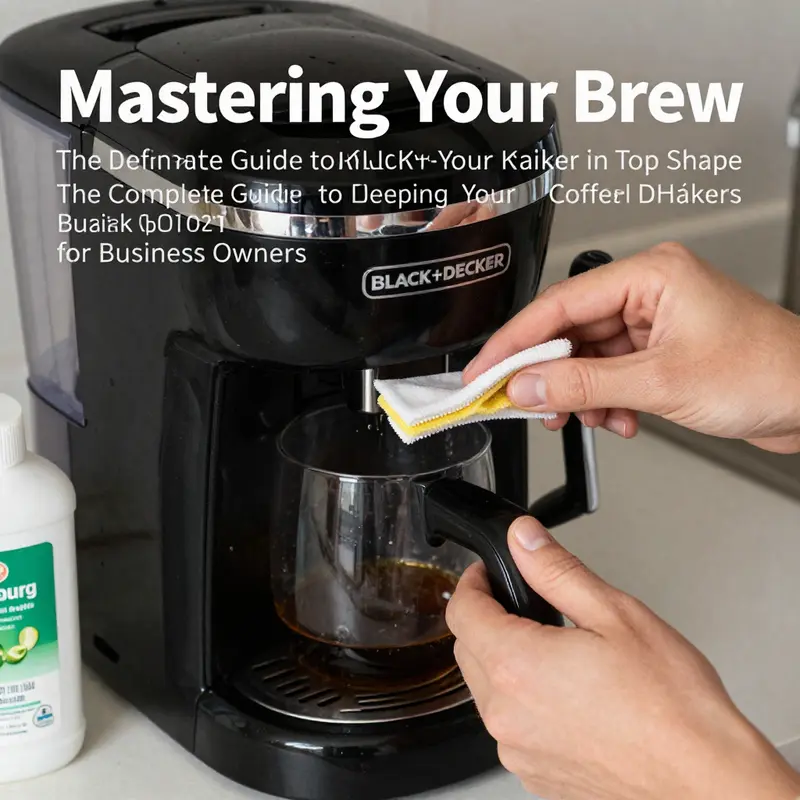
Investing in a BLACK+DECKER coffee maker can significantly enhance your workplace coffee culture. By understanding the specifications, heeding user feedback, making informed purchasing decisions, and adhering to proper maintenance guidelines, you ensure that your coffee machine consistently delivers quality brews. This guide serves as a comprehensive framework to navigate the intricacies of selecting and maintaining BLACK+DECKER coffee makers, enabling you to cultivate an environment that fosters productivity, satisfaction, and enjoyment for all. Keep your employees energized and engaged—one cup at a time.