

Caffeine consumption is a pivotal aspect of modern beverage choices, especially for business owners aiming to cater to consumer preferences. While both Coca-Cola and coffee are widely consumed, they differ significantly in caffeine content. Coca-Cola averages around 34-46 mg of caffeine per 12-ounce can, while a brewed cup of coffee typically contains between 95-200 mg. This article takes a deeper dive into the caffeine content comparison, health implications, consumer preferences, variability factors, and the cultural significance of both Coca-Cola and coffee. Through this exploration, business owners will gain insights to make informed decisions about product offerings and marketing strategies that align with consumer expectations.
Fizz and Fiber: Understanding Caffeine Levels in Cola Versus Coffee

Caffeine sits at the intersection of flavor, habit, and physiology, quietly shaping how we approach the daily menu. In the ordinary act of reaching for a drink, many of us overlook the numbers behind the lift we feel. A can of the regular fizzy cola offers a gentle nudge, while a cup of brewed coffee delivers a more assertive push. The contrast is not simply about preference; it is a study in how a single molecule can travel through the body and influence attention, endurance, and even sleep patterns. When we set out to compare caffeine content in cola with coffee, we begin with the baseline realities that researchers and nutrition databases converge on: caffeine in a standard 12-ounce serving of regular cola is modest, roughly in the low three-dozen milligrams range, whereas an 8-ounce cup of brewed coffee lands in a much higher zone, commonly between the mid hundreds of milligrams. The practical upshot is clear: coffee typically supplies three to six times as much caffeine as a single regular cola serving, with diet versions offering slightly higher amounts in some instances due to formulation tweaks, though still far below the typical coffee dose. These figures, while seemingly straightforward, become more meaningful once we consider how people actually use these drinks in daily life.
The numbers themselves—about 33 to 34 milligrams for a regular 12-ounce can, around 46 milligrams for the diet version, and a coffee range from 95 up to 200 milligrams per 8-ounce cup—frame a spectrum of stimulants that can shape mood, focus, and even reaction time. But they also remind us that caffeine content is not a fixed badge on a bottle or a mug. It is a function of manufacturing choices, bean chemistry, extraction methods, and, for sodas, the decision to add caffeine as a deliberate ingredient rather than a natural relic of the drink’s primary source. In the soda world, caffeine is the additive rather than the atmospheric consequence of processing a plant. In coffee, caffeine is intrinsic, a natural byproduct of the plant’s chemistry and the roaster’s choices. These origins matter because they shape how caffeine behaves in the body. When caffeine is naturally present, as in coffee, the extraction during brewing and the particles you ingest can interact with other compounds—acids, oils, and polyphenols—in ways that influence both perceived energy and stomach comfort. When caffeine is added, as in many cola formulations, the amount is more predictable per serving but also bound to the drink’s overall profile of sugar, acidity, and carbonation. The result is a sensory and physiological package that varies not only with the mg value on the label but with the context in which the beverage is consumed—the pace of the day, the presence of other stimulants, and the person’s own metabolic tempo.
To place these numbers in a broader landscape, it helps to look at other widely consumed soft drinks. A mid-range caffeination exists across several options: a standard 12-ounce serving may hover around the high thirties for some colas and near forty for others. Even as some brands flirt with the mid-forties, the gap to coffee—while not astronomical—remains substantial. The message here is not that one beverage is a risky outlier, but that coffee occupies a distinctly higher tier of caffeine content by design. This is not meant to discourage cola or diet cola consumption; rather, it is to illuminate how the caffeine you sip accumulates as a simple count of milligrams. Readers who track caffeine intake for reasons of sleep quality, medical guidance, or athletic training often rely on databases and labeling to manage total daily exposure. The U.S. Department of Agriculture’s FoodData Central, for example, contains comprehensive nutrient profiles that help translate a serving into a real number you can tally across foods and drinks. A quick reference reiterates the scale: regular cola about 33–34 mg per 12 ounces, diet versions around 46 mg, and coffee escalating to 95–200 mg per 8 ounces. If a person’s goal is to limit caffeine, the choice becomes a calculation: how many servings, at what sizes, and in what combinations will keep the daily total within a safe or comfortable range?
That calculation becomes more nuanced when we consider the broader ecosystem of beverages beyond the cola-coffee dichotomy. For instance, a non-trivial number of caffeinated soft drinks exist in the same general range, sometimes lingering in the high thirties or low forties per serving. Acknowledging this helps in planning a day’s beverage schedule, especially for someone who sips multiple drinks across a work shift. Yet even with this wider context, the coffee option remains the outlier in caffeine heft. A single cup can supply enough caffeine to markedly sharpen alertness or, if consumed late in the day, disrupt sleep for some people. This is not a universal law, because individual metabolism and sensitivity play a large role. Half-life—the period during which caffeine remains active in the body—varies from person to person, commonly stretching a few hours. The net effect is a personal caffeine curve: some people experience a clean, brisk lift, while others notice jitteriness, stomach upset, or a sleep disturbance even at comparable milligram totals.
The safety framework surrounding caffeine adds another layer of practical guidance. Regulators regard caffeine as safe within moderate limits. The U.S. Food and Drug Administration places a general guideline of up to 400 milligrams per day for most healthy adults. Reaching that threshold would require consuming an ample number of regular colas or other caffeinated beverages in a single day—roughly ten 12-ounce servings would be needed to approach the upper limit. That kind of intake is well beyond the average pattern for most people. Still, for individuals who are pregnant, who have certain medical conditions, or who are particularly sensitive to stimulants, even smaller daily totals can be consequential. For these readers, the practical takeaway is not to demonize a single drink, but to map out a daily rhythm that aligns with medical advice and personal well-being.
In a world where labels and databases increasingly guide choices, it is also worth noting the availability of caffeine-free options. If the aim is to enjoy the flavor and fizz of a cola-like beverage without caffeine, there are staples designed to provide the familiar experience minus the stimulant. These caffeine-free options enable consumers to maintain hydration and satisfaction without accumulating caffeine over the day. They also highlight a broader point about consumer agency: caffeine is a tool, not a necessity, and readers can tailor their intake in line with goals, schedules, and sensitivities.
As a final strand of the discourse, the question of why coffee contains so much more caffeine than a standard cola invites a quick tour of the chemistry and culture behind these drinks. Coffee’s caffeine load is a product of its botanical heritage. The beans’ caffeine concentration, the roast level, and the extraction method all contribute to the final cup’s potency. A darker roast does not always mean a weaker brew; it often means changes in perception and solubility, which can alter the experience of alertness without dramatically altering the caffeine’s chemical footprint. In contrast, caffeine in soda is a deliberate addition, calibrated to deliver a modest lift that complements sweetness, acidity, and the carbonated mouthfeel. The end result is a beverage that, while capable of waking the senses, rarely delivers the sustained mental energy that a cup of coffee can provide for many people.
For readers curious about how these dynamics play out in real-life choices, a helpful route is to explore how caffeine interacts with routine and context. One day may call for a quick, low-key lift—one that a can of regular cola can supply without overdoing the caffeine tally. Another day may demand a more robust alertness that a small morning cup of coffee reliably delivers. Across weeks and months, those small decisions accumulate, shaping energy patterns, sleep routines, and even appetite. The crucial insight remains simple: caffeine content is not a single measure of quality or effectiveness. It is a tool, a number to remind us that we are choosing among different doses, different flavors, and different social rituals. If we want to go deeper, we can consult the data in official nutrient databases to understand the exact mg per serving for various beverages and adjust our consumption accordingly. For a broader look at caffeine in cola versus non-coffee sources, see coffee-vs-mountain-dew.
To anchor these reflections in a reliable reference, readers can consult the U.S. Department of Agriculture’s FoodData Central for official caffeine values and comprehensive nutrient data across beverages and foods. For example, a detailed entry confirms the approximate caffeine amounts discussed here and situates them within a larger dietary context. As a practical habit, keeping a simple log of caffeine intake—listing the beverage type, serving size, and caffeine content—can illuminate patterns and help maintain a comfortable daily total. This approach allows a person to enjoy both the familiar fizz and the comforting warmth of coffee without losing track of how much caffeine has entered the system. The numbers are not a verdict; they are a tool for mindful routine-building, a way to align taste, energy, and health in a single day’s choices.
External resources offer a reliable anchor for readers who want to verify details and explore related questions. For a detailed nutrient reference and deeper data on caffeine content, see https://fdc.nal.usda.gov/fdc-app.html#/food-details/170664/nutrients. Keeping spares of information handy helps maintain accuracy when plans shift or when social drinking occasions involve multiple beverages. In the end, the choice between a cola and coffee is less about one being inherently better than the other and more about recognizing the different roles caffeine plays in each; it is about choosing the appropriate stimulus for the moment and the context in which you find yourself. The next chapter will extend this exploration by considering how the timing of caffeine intake affects sleep, performance, and daily rhythms, returning to the heart of the topic: how much caffeine does each beverage actually deliver, and how should that knowledge shape our daily hydration and energy strategies.
Small Buzz, Big Differences: Reading Caffeine in Cola versus Coffee and What It Means for Daily Habits
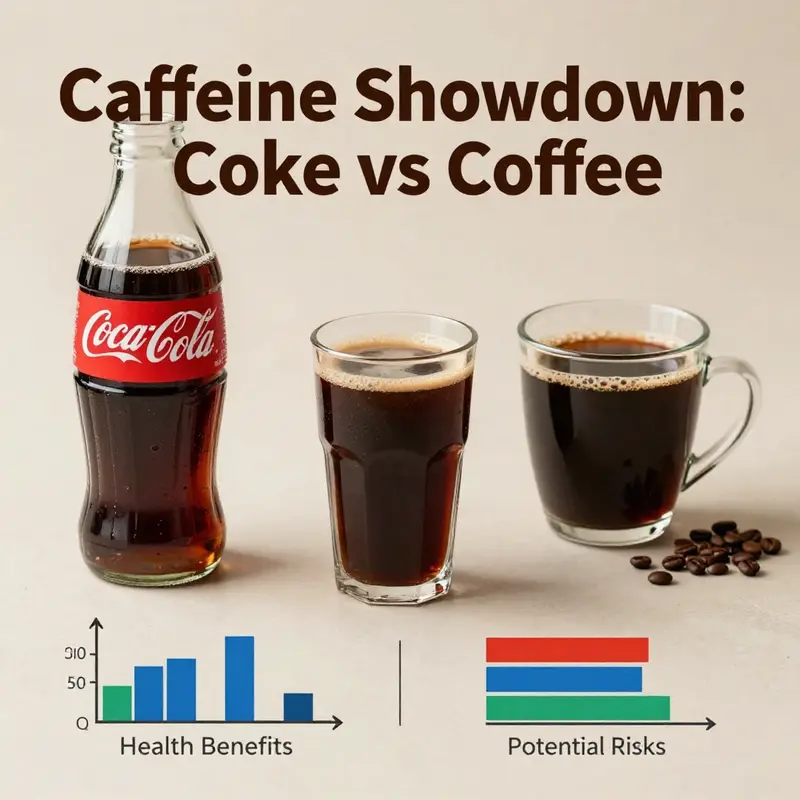
Caffeine travels through daily routines with quiet persistence. It is a small biological nudge that helps many people wake up, stay focused, or push through a midafternoon slump. The way caffeine behaves depends on what accompanies it as much as on the amount itself. When comparing cola and coffee we are not simply counting milligrams; we are looking at a matrix of sugars, acids, antioxidants, and fibers that shapes energy, mood, sleep, and long‑term health.
The caffeine in coffee generally comes with antioxidants, notably chlorogenic acids, which have been studied for potential health benefits. Cola relies more on water, carbonation, sugar or nonnutritive sweeteners, and flavorings, and provides less by way of nutritional value aside from hydration and alertness. The sugar in regular cola adds another metabolic dimension that can influence energy fluctuations and appetite over time. Diet colas replace sugar with artificial sweeteners, which changes the metabolic equation but not the caffeine content.
In terms of safety, many adults can tolerate caffeine up to about 400 milligrams per day, though sensitivity varies. That limit could translate to roughly eleven to twelve cans of regular cola or two to four cups of coffee, depending on how it’s prepared. Individual factors such as sleep patterns, anxiety, cardiovascular history, and pregnancy status require personalized guidance from healthcare providers.
From a practical standpoint, the caffeine dose is less important than timing and overall dietary context. Coffee is often consumed as part of a morning ritual, while cola is chosen for quick hydration and a fast lift. Spacing out caffeine across meals and choosing lower-caffeine options at times when sleep might be affected can help maintain steadier energy levels and better sleep quality.
The broader message is balance. If you value the antioxidant potential of coffee, you might favor brewing methods with modest sugar additions. If you’re monitoring total caffeine exposure for sleep or anxiety, consider diversifying caffeine sources and moderating late‑day intake. For more on caffeine content across beverages, see related discussions and reference materials such as EFSA safety assessments.
Gentle Stimulants and Morning Rituals: Reading Caffeine Through Coke and Coffee

Caffeine is a companion in daily routines, a small but steady nudge that helps many people start, sustain, or shift their day. When readers ask which is a better pick for staying alert—the familiar cola or a classic cup of brewed coffee—the question rewards a careful look at both chemical content and everyday use. The common assumption is that coffee dominates caffeine in our menus, and indeed a standard cup of coffee delivers a robust jolt. But the landscape of caffeinated beverages is broader and trickier than a single number. Across cola beverages, the caffeine content sits in a narrow range that makes these drinks a milder, more predictable stimulant for many people. The contrast becomes meaningful when we consider how caffeine is absorbed, how long its effects last, and how people structure their days around it. A precise look at the numbers helps remove guesswork from everyday choices.\n\nIn practical terms, the caffeine in a typical 12 ounce serving of a standard cola is around the mid thirties milligrams. Specifically, recent measurements place the amount at about 33.9 milligrams for a 12-ounce can. This is a fraction of what a cup of brewed coffee delivers in the same 8-ounce measure. Coffee is widely recognized for delivering roughly 95 to 200 milligrams per cup, a range that depends on brewing method, bean type, and how finely the grounds are ground. That spread matters because it highlights how the same unit of measure—one cup, one can—produces very different stimulant experiences. If caffeine were a single number, the choice would be simple; with a range, it becomes a matter of timing, tolerance, and the vibe a person seeks from a drink. The arithmetic is clear: coffee generally contains three to four times as much caffeine as a regular cola, and far more than a diet- or zero-sugar variant, which can hover in a similar belt as the standard but often lands in a slightly different zone depending on the product formulation. Keeping this in mind, many consumers intentionally turn to cola when they want a milder lift—enough to feel refreshed without the abrupt, caffeinated surge that coffee can deliver.\n\nWhat makes the cola option appealing for some is not just the number on the can but the way caffeine interacts with the day’s rhythm. For those who are sensitive to stimulants, or who must avoid a sharp jolt due to health considerations or sleep patterns, a milder stimulant can be more compatible with daytime activities, social schedules, and even work tasks that require steadier focus rather than a quick spike in alertness. In addition, the broader beverage lineup—ranging from zero-sugar variants to non-caffeinated options—adds a layer of versatility that supports different dietary goals and lifestyle choices. The existence of non-caffeinated or low-sugar options means consumers can tailor their intake without sacrificing the social and sensory enjoyment of familiar beverages. The flavors and textures of cola, after all, are part of its cultural resonance: the fizzy bite, the sweet-sour balance, and the familiar mouthfeel contribute to why this category remains a staple even as health goals shift.\n\nThis balanced flavor profile is not merely a matter of tradition; it translates into concrete choices about when and how to drink. A mid-morning pick-me-up might lean toward a drink with a gentler caffeine exposure, giving a soft lift without robbing energy later in the day. The same drink, consumed earlier, can set the stage for a steady afternoon, whereas a much stronger source might provoke a longer lag in the sleep window. The beverage landscape also changes with the introduction of variational formulations lower sugar or zero-calorie versions that appeal to people tracking calories or sugar intake. In practice, the routine becomes a negotiation between stimulation, calories, and taste preferences. The capstone of this dynamic is the recognition that people do not only drink for caffeine; they drink to fit a lifestyle, a palate, and a schedule. A single number cannot capture that human complexity, but the numbers do illuminate the margins of difference between the two most common daily pillars: cola and coffee.\n\nThe comparison becomes even more nuanced when we widen the lens to consider how much caffeine is present in other popular cola-style beverages and how that content stacks up against coffee. The science behind the numbers is straightforward: a standard cola gives roughly in the 34 mg range per 12 ounces, while a diet-variant tends to be higher, often around the mid-to-high forties. Even more variation exists when looking at zero-calorie or sugar-free variants, where caffeine content can reach into the lower-to-mid forties depending on the formulation. These figures are not merely trivia; they influence how people time their consumption during the day. Someone who spends mornings sipping a small, steady caffeine dose might avoid a heavy coffee dose until late morning, preserving mental energy without triggering jitteriness or a looming afternoon slump. The overall message is that the presence of caffeine in cola beverages is not a negligible afterthought; it is a real, measurable factor that informs personal taste and daily pacing.\n\nA broader perspective helps connect the data to lived experience. For some, the routine of coffee is about sensory pleasure in addition to stimulation: the aroma, the ritual of grinding beans, the warmth of the cup, and the social ritual of sharing a beverage with others. For others, the appeal of a cola-based option lies not only in the caffeine content but in the convenience of a portable can, the crisp bite on the palate, and the predictable way it sits in their day. The caffeine content, while a key variable, interacts with these experiential cues to yield a composite choice. People who prefer a milder kick might opt for a standard or diet cola for late-morning or early afternoon needs, while those seeking deeper focus or a more intense morning surge may lean toward coffee. The real distinction is not simply which drink contains more caffeine, but how that caffeine aligns with a person’s schedule, tolerance, and goals for focus, mood, and energy.\n\nAs readers continue to map their own caffeine landscapes, a helpful approach is to consider not just the raw milligrams, but the timing and duration of caffeine’s effects. Coffee’s higher caffeine content typically brings a faster onset and a longer potential window of influence, though individual metabolism can vary widely. Cola-based caffeination tends to deliver a steadier, more modest lift, with a shorter half-life in many cases, which can support a less disruptive daily pattern for those working across hours that demand endurance but not dramatic spikes. It is this flexibility—the capacity to choose a milder, reliable stimulant versus a stronger, shorter jolt—that makes the cola option a meaningful component of modern caffeine strategy for many people. For readers intrigued by how these patterns fit into a broader caffeine routine, exploring how coffee can be woven into daily life—without overwhelming the senses—offers productive guidance. A helpful reference point is to look at how coffee can be integrated into a balanced rhythm, and you can read more about that approach at the URL inserted below.\n\nTo anchor these reflections in a practical frame, it helps to consider not only caffeine, but the spectrum of options across beverages. Within the cola category, many drinks also offer non-caffeinated variants, which broadens the decision space for individuals who must limit caffeine entirely or who are seeking to reduce their total stimulant intake. The presence of non-caffeinated choices means that a person can satisfy thirst, enjoy familiar flavors, and maintain hydration without introducing caffeine into the mix. This flexibility makes the cola family a versatile companion for people negotiating energy levels, dietary goals, and personal preferences. It is a reminder that the beverage aisle, far from being a simple battleground of brands, is a spectrum of choices designed to accommodate different days, moods, and responsibilities.\n\nUltimately, the choice between a cola and coffee as a daily stimulant is less about which one is universally better and more about which one aligns with an individual’s needs at a given moment. The data illuminate a spectrum rather than a verdict: a standard cola offers a modest, predictable caffeine lift; a diet or zero-sugar variant often runs a bit higher; coffee delivers a stronger, quicker, and longer-lasting effect. For people who manage caffeine sensitivity, sleep concerns, or health considerations, this spectrum can be navigated with intention rather than reliance on habit alone. The best choice in any moment depends on factors such as how long one intends to stay alert, how late in the day it is, and how caffeine fits with meals, hydration, and overall wellness goals. The aim is to cultivate a mindful caffeine routine—one that respects personal limits while still supporting daily performance and enjoyment. Reading the numbers is just the first step toward that mindful balance.\n\nExternal data point for reference and deeper context can be found in official nutrient databases that document caffeine levels across beverages and foods. For official data on caffeine levels across beverages, see the USDA FoodData Central entry: https://fdc.nal.usda.gov/fdc-app.html#/food-details/170664/nutrients
Measuring the Buzz: Why Coke and Coffee Differ in Caffeine Content and What It Means for Your Day

External resource: For a detailed methodological perspective on how caffeine content is measured in beverages, see the Journal of Instrumental Analysis study on caffeine determination by HPLC: https://www.mdpi.com/1424-8220/25/16/4078
The Caffeine Balance: How Coke-Like Colas and Coffee Coexist in Our Daily Pulse

The Caffeine Balance sits at the intersection of tradition and speed, ritual and convenience. It is not merely a chemical distinction between a cup and a can; it is a window into how societies structure wakefulness, productivity, and sociability. When we ask how caffeine content in cola compares with coffee, we are really asking how two timeless beverages fit into the modern rhythm of life. Coffee has long stood as a companion to dialogue, study, and reflection, a drink that invites patience and craft. Cola, by contrast, has often been marketed as a quick lift, a portable spark in a busy day. Taken together, they reveal a cultural economy built on steady, manageable caffeine—each product offering a different tempo for the same global impulse: to feel awake, alert, and time-efficient in a world that never quite stops moving.
The numbers provide a clear baseline. In a standard 12-ounce (355 ml) serving, a familiar cola usually contains around thirty-something milligrams of caffeine. The exact figure varies slightly by brand and formulation, but the order of magnitude remains consistent: a modest stimulant relative to coffee. A typical 8-ounce (237 ml) cup of brewed coffee can hold roughly ninety-five to two hundred milligrams of caffeine, depending on the bean, roast, grind, and brewing method. The consequence is straightforward: a cup of coffee generally delivers three to four times as much caffeine as a can of regular cola, and even more than a cola labeled as “diet” in most cases. Those numbers matter for anyone who tracks caffeine intake, whether for study schedules, athletic performance, or health considerations. They also matter when weighing daily beverage choices, especially for people who are caffeine-sensitive, pregnant, or managing conditions that caffeine can influence.
In broader terms, the caffeine landscape across common beverages is shaped not only by the raw milligrams per serving but by the contexts in which people encounter them. A person might reach for a cola in the afternoon to pair with a quick snack and conversation, a habit anchored in convenience and nostalgia. Another person might begin the day with a cup of coffee, savoring the ritual of grinding beans, the aroma rising with the steam, the sense of intentional preparation that frames the day. This distinction isn’t merely about taste; it mirrors a distinction in how societies value time. Coffee culture often emphasizes mindfulness, craftsmanship, and deliberate pacing, whether in a quiet kitchen, a bustling café, or a campus coffee bar where ideas are exchanged over cups that invite lingering. Cola, by contrast, often occupies a different cultural niche: it is portable, instantly satisfying, and deeply associated with spontaneous moments, sports events, road trips, and low-friction social interaction. The caffeine in cola becomes less about ceremony and more about speed—an accelerant for routine tasks, quick breaks, and the small energy boost that can sustain familiar patterns of daily life.
Advertising and branding have long reflected this duality. Early messaging around caffeinated soft drinks framed them as invigorating companions in daily tasks—refreshment plus stimulation. As regulatory scrutiny and health concerns evolved in the early to mid-twentieth century, the conversation shifted toward balance and choice. Today, manufacturers offer a spectrum of options, from regular varieties to caffeine-free alternatives and sugar-free formulas, underscoring a broader cultural shift toward personal selection and health awareness. This flexibility resonates with consumers who want to curate their caffeine intake with awareness rather than accident. The social meaning of caffeine thus travels with the drink itself: coffee embodies a lifestyle of intentionality, while cola stands for immediacy, accessibility, and shared moments that fit into a fast-moving schedule.
Of course, the chemistry of caffeine is only part of the equation. The way caffeine is delivered matters as well. Coffee’s caffeine content is highly variable because it hinges on the beans, the roast, the grind, and the extraction process. A darker roast may taste stronger but can have slightly less caffeine by volume, while a lighter roast can deliver more caffeine per bean mass. Brewing methods—from a robust French press to a delicate pour-over—alter not only flavor but the caffeine that reaches the cup. The whole picture invites a simple truth: coffee is a dynamic, craft-oriented medium whose caffeine impact can be tuned with technique as readily as with attempting to measure a dose. Cola-based beverages, on the other hand, offer a relatively uniform caffeine delivery, a predictable lift that takes little time to obtain and has a longer, more storied presence in mass-market culture. The predictability of the cola caffeine profile complements the ritual freedom of coffee, and together they create a versatile toolkit for wakefulness.
This versatility has practical implications. For people juggling academic deadlines, work shifts, or family responsibilities, understanding the caffeine content in common beverages is a practical form of self-management. A single cup of coffee might provide a strong cognitive lift for intense study sessions or complex tasks that require sustained attention. In contrast, a can of cola can deliver a quicker jolt to reset a stalled afternoon or maintain momentum during a mid-day sprint. The different caffeine payloads influence not just how alert someone feels but how long those effects last, how easily they might disrupt sleep, and how they fit into a larger daily pattern of consumption. In that sense, the caffeine content story is not a binary comparison but a nuanced toolkit—an array of options that enable people to tailor their energy to the demands of a given moment.
Health considerations shape the ongoing conversation as well. Moderate caffeine consumption is generally regarded as safe for most adults, yet sensitivity, medical conditions, and pregnancy status can shift the equation. Some individuals experience jitters, increased heart rate, or sleep disturbances with even modest caffeine doses, while others tolerate larger amounts without noticeable adverse effects. The timing of caffeine intake is another piece of the puzzle; the same amount in the morning may support productivity, while later in the day it can interfere with rest. In this context, the relative caffeine content of coffee and cola informs daily decisions, encouraging people to balance wakefulness with rest, taste with health, and convenience with craft. For those who monitor caffeine across a day or week, the numbers become more than curiosities; they become practical guardrails that help preserve sleep quality, mood balance, and overall well-being.
The social life of caffeine—how it travels through conversations, study rooms, and living rooms—adds depth to the numerical picture. Coffee houses have proven conducive to idea exchange, offering spaces where time slows just enough for reflection and dialogue. Cola, by maintaining a lively presence in social rituals—watching a game, sharing a quick break during a commute—demonstrates how a stimulant can participate in community without demanding a long, ceremonial ritual. In this way, caffeine content is not simply a measure of milligrams per serving; it is a lens on how societies orchestrate everyday energy. The two beverages together reveal a spectrum of choices that support different kinds of social engagement: the quiet, contemplative, and cooperative energy of coffee, and the brisk, communal, on-the-go energy of cola. Across cultures, these roles shape when and how people reach for a pick-me-up, and they illuminate why a single question about caffeine content can open a broader conversation about time, health, and the social act of drinking.
For readers seeking a deeper understanding of caffeine’s health footprint and consumption patterns, the scientific literature offers a detailed map of how caffeine interacts with the body, how it is metabolized, and how public health messaging has evolved in response to shifting consumption patterns. This broader context helps ground the cola-versus-coffee comparison in a longer arc of research and policy, reminding us that our everyday beverages are part of a complex system of nutrition, culture, and personal choice. To explore this wider landscape, consider the recent synthesis of research on caffeine consumption, health impacts, and media coverage, which provides a robust reference point for how society negotiates caffeine’s place in modern life.
In sum, the caffeine content story—whether in a can or a cup—offers more than a numerical comparison. It reveals competing tempos of contemporary living and a culture that embraces both the craft of coffee and the convenience of cola. It helps explain why a morning routine can feel complete with a carefully prepared brew and why a mid-afternoon pause can feel equally satisfying with a chilled, familiar fizz. The result is a nuanced ecosystem of caffeine that supports different needs, moments, and memories. This is the heartbeat of the discussion: not which beverage is better, but how each one meets a distinct human impulse—to wake up, to connect, and to carry on with clarity and intention. For anyone curious about how these choices accumulate over a day or a week, the conversation begins with the simple, practical facts about caffeine content and grows into a broader understanding of how culture, health, and personal rhythm intertwine on the everyday stage of drinking.
For further reading on the specific caffeine content in one popular Diet Cola variant, see the following internal resource: caffeine-content-of-diet-dr-pepper.
External research for deeper context can be explored here: https://www.ncbi.nlm.nih.gov/pmc/articles/PMC11348762/
Final thoughts
Understanding the differences in caffeine content between Coca-Cola and coffee is essential for business owners looking to meet consumer needs. With Coca-Cola offering a lower caffeine option compared to coffee, which has a higher caffeine concentration, there are distinct market segments to consider. Also, health implications, consumer preferences, and cultural significance shape how these beverages are perceived and consumed. By leveraging this knowledge, businesses can craft effective marketing strategies and product offerings, ensuring they remain competitive in a caffeine-conscious market.