
Understanding the caffeine content in soft drinks like Dr Pepper is increasingly relevant for today’s business owners. With consumers becoming more health-conscious, it’s vital to know how caffeine affects customer preferences and purchasing behavior. Dr Pepper contains about 41 to 42 milligrams of caffeine per 12-ounce can, a detail that holds significant implications for marketing and sales strategies. The following chapters will delve into the caffeine specifics of Dr Pepper, offer comparisons with other popular soft drinks, and highlight the health implications tied to caffeine consumption, which can assist business owners in making informed decisions for their product offerings and customer interactions.
null
null
The Subtle Buzz of Dr Pepper: Positioning Caffeine within the Soft-Drink Landscape
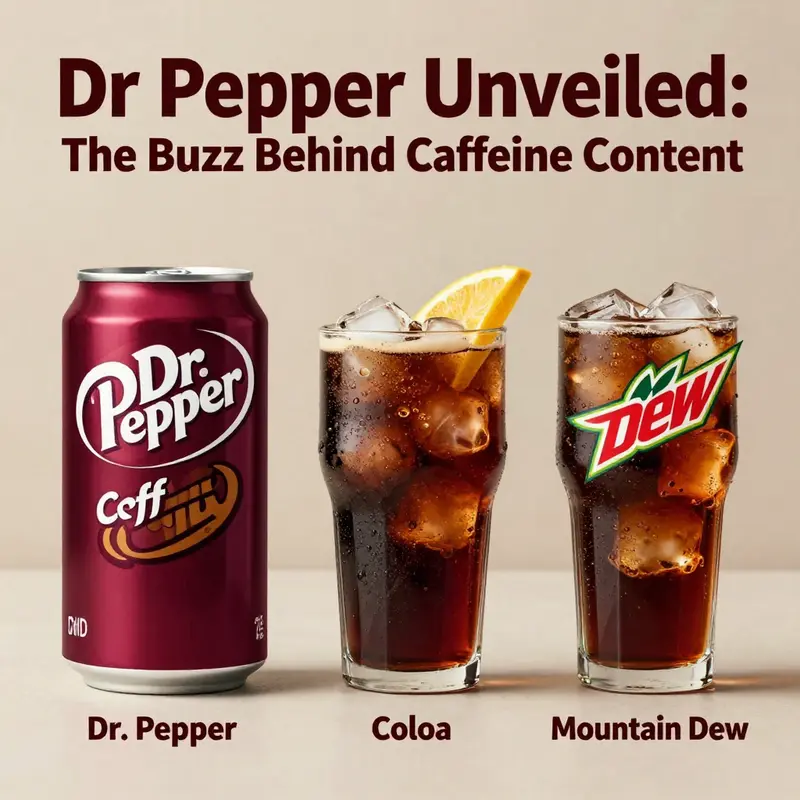
Caffeine sits quietly in the background of many beloved beverages, a small but perceptible spark that can alter how a drink tastes and how long it keeps attention. In Dr Pepper, that spark appears in a measured way: a 12-ounce can delivers a caffeine content that researchers and enthusiasts have repeatedly documented as roughly 41 to 42 milligrams per serving. Those values hold steady whether you opt for the regular formulation or the Zero Sugar version, which means the energy boost is less about change across product lines and more about the same basic dose riding along with a decidedly distinctive flavor profile. Dr Pepper has never relied on a cola-nut component to claim its caffeine, and its reputation as a 23-flavor elixir—where cherry, vanilla, licorice, cinnamon, and a dozen more notes mingle—makes the caffeine function differently than in a classic cola. Instead of simply boosting alertness, the caffeine embedded in this multi-ingredient blend helps to elevate the perception of the drink’s complexity, anchoring the sense of stimulation to a taste that is already aimed at being memorable, even a bit indulgent. The result is a mild stimulant effect that some drinkers welcome as a pleasant nudge to reach for another can, while others choose to monitor that caffeine as part of a daily total that might include tea, coffee, energy drinks, or other sodas. In conversations about caffeine, Dr Pepper often sits in the middle—not the lightest option among caffeinated soft drinks, but not the strongest either. It occupies a middle ground that fits a particular craving: a smooth, persistent flavor with a gentle lift rather than a sharp, caffeine-driven jolt. This positioning matters because it helps explain why the drink remains a staple in many households and why people who are mindful about caffeine still include it in moderation within their daily rhythm. For those tracking caffeine intake, the information is practical: a single can contributes a recognizable, manageable portion of the daily limit commonly recommended for healthy adults. The Food and Drug Administration, after all, suggests a general cap around 400 milligrams per day, a benchmark that serves as a guide for balancing enjoyment with well-being. A can of this beloved formulation, then, occupies only a fraction of that boundary, a point that becomes clearer when we consider comparative data from across the soft-drink landscape. The precise values, while sometimes presented in slightly different figures across sources, reveal a consistent pattern: Dr Pepper sits in a moderate range for caffeinated colas and similar beverages, with its own unique flavor complementing the caffeine rather than being defined by it alone. The conversation about caffeine in Dr Pepper also invites us to consider how the numbers are obtained and how they travel through time from lab to label to the kitchen table. In some widely cited references, the caffeine content is given as a rounded figure in the low 40s—forty-one, forty-two, or very close to that range. In more formal data drawn from methodological studies, a slightly higher figure emerges: 42.6 milligrams per 12-ounce serving has appeared in certain tests, a variation that underscores the small but real differences that can arise from batch-to-batch testing, measurement techniques, and the exact way a serving is defined. These numbers are not merely trivia; they anchor expectations for readers who want to compare Dr Pepper’s caffeine with other beverages they might consider in a day’s plan. They also cultivate a sense of confidence for those who worry about cumulative caffeine exposure when balancing work, exercise, family life, and recreation. When one side of the discussion emphasizes flavor over function, the caffeine detail quietly anchors the conversation in biology and physiology, reminding us that taste and stimulation are linked but not identical. The flavor profile itself—an intricate blend of 23 known ingredients, including notes of cherry, licorice, vanilla, and clove—works in concert with caffeine in a way that tastes distinctive and unmistakable. The caffeine does not give Dr Pepper a taste of its own; rather, it interacts with the palate, sharpening the perception of sweetness and adding a touch of mouthfeel that can enhance the perception of richness in the drink’s multi-note character. This is part of what makes Dr Pepper—and its caffeinated kin—feel both comforting and carefully modern. Even as the drink remains a classic in many homes, its caffeine content is a point of careful consideration for those who want to understand how much caffeine is in a given moment and how that moment adds to daily habits. The caffeine level is small enough to be compatible with many daily routines, yet large enough to be noticeable in a thoughtful, mindful intake plan. In the broader ecosystem of carbonated beverages, Dr Pepper’s caffeine stance sits alongside other well-known drinks, each with their own story about how caffeine and flavor meet. Mountain Dew, for example, carries a higher caffeine load, often cited around fifty-four milligrams per 12 ounces, positioning it as a drink that leans more toward a pronounced lift. Diet Dr Pepper, with a slightly different formulation for sweetness and flavor, tends to edge a touch higher in caffeine as well, around forty-four milligrams per 12 ounces according to some testing. Classic colas such as Coca-Cola and Pepsi often register a bit lower than Dr Pepper, typically in the mid-to-high thirties for a standard 12-ounce serving, with subtle variation by batch and formulation. Energy drinks, by comparison, can surge well past that mark, with some products delivering double-digit milligrams per fluid ounce, a different category altogether in terms of both purpose and impact. And then there are beverages that do not rely on caffeine at all, such as certain lemon-lime sodas and other non-caffeinated options, which stand in clear contrast to Dr Pepper’s steady, moderate caffeine profile. In this landscape, Dr Pepper’s caffeine is not simply an additive; it’s a component that interacts with an elaborate taste, a factor in daily decision-making, and a piece of a larger conversation about how consumers experience light stimulation on top of familiar, comforting flavors. The research data, while sometimes presented with small discrepancies, consistently places Dr Pepper in a middle ground—neither a caffeine-heavy beverage nor a caffeine-free one—allowing it to function as a reliable everyday pick for those who want a little lift without a heavy hit. For readers seeking precise numbers, it’s useful to note that while the 41–42 mg figure is commonly cited in consumer summaries, laboratory analyses have documented 42.6 mg per 12-ounce serving in some studies. Those 0.6 mg differences are a reminder that caffeine testing is as much about the methods used as about the beverage in question. The fundamental narrative remains: Dr Pepper offers a moderate caffeine experience that aligns with its flavor-forward identity, not with a purely energy-oriented purpose. That alignment matters for how the drink is perceived and chosen by people who value taste as much as a gentle caffeine nudge. In the spirit of understanding, a reader might wonder how this caffeine content translates into real-world daily totals. The practical takeaway is straightforward: for most healthy adults, a single can is a meaningful but not overwhelming portion of a day’s caffeine allotment. The FDA guidance—up to 400 milligrams per day—frames Dr Pepper as a contributor rather than a dominant influencer, especially for those who already drink coffee or tea or who may also rely on other sources of caffeine. This helps to demystify the sense that Dr Pepper is a high-energy beverage. Instead, it supports a narrative of moderation and variety: a taste-first drink that carries a mild stimulant along with its cherry-vanilla-clove constellation rather than a singular focus on caffeine as the defining feature. In the end, the conversation about caffeine in Dr Pepper becomes a dialogue about balance—between flavor and function, between tradition and measured contemporary consumption, and between the personal experiences of taste and the science that quantifies those experiences. For readers who want to explore more about how caffeine content is determined and how it compares across beverages, one accessible path is to consult comprehensive studies that collate prepackaged beverage caffeine data. These studies help translate a single number on a label into a broader understanding of how a drink sits within a daily caffeine plan. For instance, a widely cited assessment by KH Chou in 2007 provides a framework for evaluating caffeine content across national-brand and private-label carbonated beverages, offering a scientific backbone to the figures commonly reported to the public. The link to that work offers a reliable technical context for readers who crave precision beyond general estimates and consumer summaries. Dr Pepper has caffeine is a concise way to flag the topic within a broader discussion about how caffeine content is determined and how it relates to flavor and daily intake. The framing matters because it invites ongoing curiosity: if caffeine is so integrated into the sensory experience of a drink, what does that mean for someone who is sensitive to caffeine, or someone who wants to optimize their day around a particular caffeine budget? The person balancing multiple caffeinated beverages may ask how different forms of caffeine administration—soft drinks, coffee, tea, energy drinks—shape the total experience of alertness, mood, and appetite. Dr Pepper’s caffeine dose sits in that spectrum as a reliable, approachable quantity that complements its complex taste rather than demanding particular consumption patterns. It’s a useful reminder that caffeine is not a standalone feature but a contextual one. The flavor-forward approach of Dr Pepper, with its 23 flavors, means that caffeine can co-create a sensory profile that is memorable but not overpowering. This nuance is part of what makes the beverage a staple for many, even as public health and dietary guidelines encourage thoughtful caffeine management. The conversation is not simply about “how much caffeine is in this can” but about how caffeine interacts with taste, memory, and daily choices. When consumers compare Dr Pepper to other caffeinated sodas or to non-cola beverages, they are not only measuring milligrams but also weighing how caffeine supports optional rituals—morning sips, afternoon pick-me-ups, or evening treats that want a gentle lift without pushing toward overconsumption. The numbers become a language for that weighing, a way to articulate preference and restraint in a culture saturated with stimulants. This is why the exact figure—whether 41, 42, or 42.6 mg per 12-ounce serving—matters less than the overarching conclusion: Dr Pepper provides a moderate, stable caffeine experience that aligns with its signature flavor complexity and offers a practical option for those who wish to enjoy a familiar taste with a mild energy component. For readers who want to dive deeper into the comparative landscape or who wish to explore the caffeine content of related products, the broader body of research and accessible data sources can illuminate how a single product sits in a crowded field. The take-away is not a fixed answer but a contextual understanding: caffeine in Dr Pepper helps to frame experience, not merely to fuel it. In this sense, the beverage operates as a practical reference point for discussions about how caffeine content intersects with taste architecture, labeling, and daily consumption choices. It remains a quintessential example of how a product can harmonize a distinctive flavor profile with a measured stimulant effect, inviting a nuanced appreciation rather than a simple tally of milligrams. External reference to the detailed laboratory work behind these numbers can offer a more technical vantage point for curious readers who want to see how data is gathered and interpreted over time, reinforcing that the narrative of caffeine in soft drinks is as much about method as it is about flavor. External resource: https://www.ncbi.nlm.nih.gov/pmc/articles/PMC2040179/
Dr Pepper’s Caffeine Equation: Flavor, Stimulation, and Everyday Health Choices

Dr Pepper occupies a distinctive corner in the soft-drink landscape. Its signature profile comes from a careful blend of 23 flavors, weaving notes of cherry, vanilla, and cinnamon into a complex sweetness. Yet, unlike many of its peers, Dr Pepper does not rely on cola nut extract to establish its base. Instead, its business of flavor is augmented by a measured amount of caffeine, a small but meaningful component that helps shape the drinker’s experience. In a standard 12-ounce (355 ml) can, the caffeine content settles at roughly 41 milligrams. That figure positions Dr Pepper squarely between non-caffeinated sodas and the more robust beverages that dominate coffee bars and energy-drink aisles. It provides a gentle lift, enough to notice without the jittery surge associated with stronger caffeinated drinks. This balance is part of what makes Dr Pepper appealing to people seeking a mild energy boost paired with a flavor profile that rewards regular sipping rather than a single, decisive caffeine hit. The caffeine works in tandem with the drink’s sweetness and acidity, sharpening the perception of flavor and extending the moment of enjoyment across the can’s length rather than compressing it into a hurried dose of stimulation.
For consumers trying to manage caffeine intake, the precise mg per serving matters. The U.S. Food and Drug Administration (FDA) does not set a limit on per-drink caffeine content, but it does offer a daily guideline: a healthy adult should keep total caffeine consumption to no more than about 400 milligrams per day. A single Dr Pepper can, then, accounts for a modest fraction of that recommended ceiling. When one considers daily drinking patterns—perhaps a can with meals, another later in the afternoon, and still a few sips here and there—the cumulative total becomes the real factor. This framework helps people calibrate how Dr Pepper fits into a broader dietary plan, particularly for those who monitor caffeine for sleep, anxiety, cardiovascular health, or pregnancy considerations.
The caffeine in Dr Pepper is not there to replace other beverages but to complement the flavor experience. A mild stimulant can sharpen alertness just enough to reduce the heaviness of a particularly rich or sweet palate. In this sense, caffeine behaves as a flavor-enhancing agent as well as a physiological one. It introduces a trace bitterness that counterbalances sweetness, a counterpoint that keeps the drink from tasting overwhelmingly sugary. The result is a cohesive sensory profile in which caffeine does double duty: it contributes to the beverage’s stimulating effect and subtly interacts with taste to shape how the 23-flavor blend unfolds on the palate. The effect is not dramatic, but it is perceptible—enough to influence preference, but not so strong as to overwhelm the other elements of the drink’s character.
The topic of caffeine becomes particularly nuanced when we compare Dr Pepper to other caffeinated beverages. A cup of coffee, for instance, commonly delivers hundreds of milligrams of caffeine in a single serving, a level that can produce noticeable physiological changes within minutes. Energy drinks can push caffeine well past that threshold, often aligning with or exceeding 100 milligrams per serving and sometimes more. In that context, Dr Pepper’s 41 milligrams per 12 ounces stands as a moderate, restrained amount. It delivers a mild lift without commanding the day’s rhythm. For many drinkers, this balance supports a daily routine that includes Dr Pepper as a flavor-forward choice rather than as a primary source of energy. Yet the mundane truth remains: caffeine is caffeine, and even a modest amount contributes to the total daily load. Those who consume multiple servings need to consider how the cumulative effect aligns with personal health goals, sleep patterns, and sensitivity to stimulants.
The discussion should also acknowledge the variations among Dr Pepper’s different formulations. Regular Dr Pepper and Zero Sugar share a remarkably similar caffeine content in practice. In fact, the available data suggest that both versions deliver a comparable amount of caffeine per 12-ounce can. This parity reinforces the idea that caffeine in Dr Pepper is a deliberate component of the beverage’s overall profile, not merely a byproduct of a particular sweetener system. Diet Dr Pepper, however, has shown small differences in some measurements across historical analyses. A study from around 2007 reported 42.6 milligrams per 12 ounces in regular Dr Pepper and 44.1 milligrams per 12 ounces in Diet Dr Pepper. While these figures illustrate slight variation, they still place both formulations in a similar range, reinforcing the notion that caffeine is a stable element across the Dr Pepper family, even as sweetness and formulation details shift with product lines and consumer expectations.
For readers who want to dig deeper into the numbers, such data remind us that caffeine content is not a fixed mystery but a matter of ongoing measurement. The precise mg per serving can depend on the batch, the particular formulation, and the testing methodology. This is why authoritative sources continually reference real-time data drawn from ingredient disclosures and controlled analyses. The broader context shows that caffeine content is a predictable, traceable attribute in Dr Pepper, rather than a vague or fluctuating characteristic. The consistency across regular, Zero Sugar, and Diet variants helps consumers plan with a reasonable degree of confidence, especially when balancing caffeine intake with other dietary sources like tea, coffee, chocolate, and certain medications that can contribute additional caffeine.
The question of why a beverage so strongly associated with a distinctive flavor would include caffeine in the first place invites a closer look at consumer psychology and product design. The mild stimulant effect is not just a physiological feature; it also aligns with habitual consumption patterns. People often reach for a familiar taste when they want a short-lived boost in mood or alertness. Caffeine’s presence reinforces a routine: a familiar can, a comfortingly complex flavor, and a reliable, gentle lift that makes the beverage a convenient everyday pick-me-up rather than a rare treat or an intense energy source. In this light, caffeine serves as a functional complement to flavor, a small but meaningful enhancer that supports brand loyalty without demanding a dramatic behavioral shift from the consumer.
To place Dr Pepper in the broader landscape of caffeinated beverages, consider where it sits on the spectrum of intensity. It is not a premium coffee drink, nor a high-octane energy beverage. Instead, it occupies a space ruled by balance: a flavor-forward profile with enough caffeine to be noticed but not so much as to dominate the drinking experience or the day. This balance is especially relevant to individuals who want to maintain a steady rhythm of daily activity without abrupt spikes or crashes. For such consumers, Dr Pepper offers a predictable, approachable option that respects the body’s bandwidth while still affording a moment of sensory pleasure.
The labeling and consumer education surrounding caffeine content are also essential. There remains a historical misperception among some consumers that Dr Pepper might be caffeine-free because its flavor is so unmistakable and unique. In truth, the beverage is clearly labeled, and the record shows caffeine content across its variations. Even as the landscape of soft drinks evolves—with reformulations, sugar-alternative blends, and shifts in consumer taste—the caffeine content in Dr Pepper remains a steady constant. This steadiness is not accidental. It reflects a careful balancing act between flavor engineering and stimulant delivery, a balance that helps explain why the drink maintains its place in the daily routines of many people.
Understanding caffeine in Dr Pepper also illuminates a practical pathway for health-conscious individuals. The FDA guideline of limiting daily caffeine intake to 400 milligrams provides a ceiling to guide planning. For a typical rule-of-thumb, one might have a couple of caffeinated beverages across the day, including tea, coffee, or other caffeinated sodas, and still be within the recommended range. However, the exact calculation depends on an individual’s sensitivity, medical conditions, medications, and life stage. Pregnant individuals, for example, are commonly advised to limit caffeine exposure, with specific guidelines varying by medical advice. People with anxiety disorders or cardiovascular conditions may experience heightened effects at lower doses, so awareness of total daily intake becomes critical. In this context, a single Dr Pepper can is a measurable, rather than negligible, contributor to daily totals. That realization invites readers to map out their own caffeine budgets, recognizing that a beverage can be both a treat and a factor in health outcomes.
From a sensory science perspective, caffeine’s role in Dr Pepper extends beyond the simple function of stimulation. It interacts with the beverage’s sugar, acidity, and carbonation in ways that subtly shape perceived sweetness and bitterness. The slight bitter edge of caffeine can temper the drink’s high sweetness, preventing the flavor from tipping too far toward cloying. In a product built on a mosaic of flavors, this bitterness acts as a counternote that enhances complexity and lengthens the tasting experience. The consumer who savors the first sip and then continues to drink may experience a slow evolution of flavor as caffeine subtly anchors the finish, a small cue that invites the next sip. This is not a dramatic sensory shift; it is an incremental, almost culinary dimension of the drink’s makeup.
For readers seeking practical guidance, the logic of caffeine content in Dr Pepper supports mindful consumption without sacrificing enjoyment. If you enjoy the drink as part of a daily routine, you can plan around caffeine by tracking servings and considering other caffeine sources in the same day. For example, a morning cup of coffee followed by a Dr Pepper with lunch could still fit within a 400 mg daily limit, provided the other caffeine sources are modest. If sleep quality is a concern, or if caffeine-related anxiety tendencies are present, spreading intake earlier in the day and avoiding late-afternoon or evening sips can help maintain sleep efficiency. These practical steps reinforce the central idea: caffeine in Dr Pepper is a measurable, manageable element of a balanced lifestyle, not an uncontrollable factor.
The broader nutritional conversation also intersects with how we interpret the data about Dr Pepper. Official sources like the U.S. Department of Agriculture’s FoodData Central provide foundational data about beverages and their constituents, including caffeine. While the numbers for Dr Pepper breweries, suppliers, and batch testing may vary slightly over time, the overarching message remains stable: Dr Pepper delivers a modest amount of caffeine per serving, that amount being both measurable and meaningful in context. For readers who appreciate a solid reference, these data serve as a reliable anchor for conversations about caffeine in popular beverages. They remind us that such drinks sit at the intersection of taste, physiology, and everyday decision-making, rather than at the extreme ends of nutritional debate.
Embedded in this discussion is a practical path for readers who want to translate theory into daily habit. Acknowledge that caffeine content matters, but also recognize that flavor preference and daily routines are equally important. If Dr Pepper is a staple, think about how it fits with other beverages in your day: is there space for a morning coffee, a Dr Pepper at midday, and a herbal tea before bed? Does the need for alertness in the afternoon clash with a late-day craving for sweetness? By mapping these questions to real-life patterns, one can enjoy Dr Pepper with intention rather than by default. This approach preserves the pleasure of the drink while respecting health considerations. It also honors the drink’s identity as a complex, flavor-forward beverage that uses caffeine in a nuanced way to support its sensory profile, rather than to drive a specific agenda of energy or stimulation.
For readers curious about the broader science of caffeine in beverages, it is worth noting that the data cited here align with a growing body of nutrition research. The caffeine content of soft drinks has been the subject of ongoing measurement and verification, with researchers testing products to ensure labeling accuracy. While the precise figures can shift slightly across batches and versions, the general range remains consistent enough to inform consumer decisions. In Dr Pepper’s case, the evidence supports a mid-range caffeine profile—enough to contribute to the drink’s experience without overshadowing its signature flavor. The take-home message is straightforward: if you want a gentle lift with a distinctly flavored drink, Dr Pepper offers a reliable option that is well within general daily limits when consumed with moderation.
The implications for public health and consumer education are equally clear. Clear labeling, accurate testing, and accessible data enable people to make choices aligned with their personal health goals. While caffeine remains a common part of many people’s diets, awareness of its presence in beverages like Dr Pepper supports informed decision-making. This is especially important for populations with increased sensitivity or those navigating medical considerations related to caffeine. The broader narrative is not about vilifying or endorsing any single beverage. It is about recognizing caffeine as a real, quantifiable part of Dr Pepper’s experience and integrating that knowledge into thoughtful consumption practices.
As you move through this article, consider how the Dr Pepper caffeine story intersects with other beverages and dietary choices. The landscape of caffeine content across soft drinks, teas, coffees, and energy products offers a tapestry of numbers that can guide everyday choices. If you want a concrete, drink-by-drink reference to caffeine levels, you can explore the latest measurements from reliable databases and testing efforts. And for readers who want to situate Dr Pepper within a broader caffeine framework—where it sits relative to diet beverages, sugared sodas, and energy drinks—there is value in cross-comparison. A practical way to approach this is to reflect on your daily caffeine budget and evaluate how each beverage contributes to it, keeping in mind the different forms caffeine can take, the speed at which it enters the bloodstream, and the variability introduced by formulation choices.
To further illustrate the reliability of these numbers and to offer a point of reference for ongoing curiosity, the Beefy Reality of a standard serving is consistent with other analyses that consider caffeine content in popular beverages. The ongoing dialogue about caffeine in Dr Pepper is not about sensational claims, but about careful measurement, transparent labeling, and pragmatic health considerations. The conversation invites readers to cultivate a more nuanced understanding of how a beloved, flavor-rich drink can fit into a daily regimen that emphasizes balance, personal comfort, and informed choice. In the end, Dr Pepper offers more than a taste—it’s a small but meaningful case study in how caffeine can be harmonized with flavor, tradition, and everyday wellness.
For readers seeking a direct, externally verifiable source that contextualizes these discussions within a broader nutritional framework, the U.S. Department of Agriculture’s FoodData Central provides official data on caffeine and other beverage constituents. This reference supports the idea that caffeine content in common drinks is systematically tracked and updated as part of a larger effort to understand dietary intake. Access to such information helps consumers move beyond anecdotes and rely on standardized measurements when planning meals, beverages, and daily routines. In this way, Dr Pepper’s caffeine content becomes part of a practical toolkit rather than a point of debate alone. For more context, see official data in FoodData Central.
External resource: For official data on caffeine content in beverages, see the USDA FoodData Central entry: https://fdc.nal.usda.gov/
Internal link note: For specifics on Dr Pepper Zero caffeine content, see How Much Caffeine in Dr Pepper Zero.
External Research Note: This synthesis reflects the data and interpretations from current literature and testing. Readers should consult the latest beverage analyses for any updates in formulation or labeling practices. The core takeaway remains stable: Dr Pepper provides a moderate caffeine amount per serving, contributing to a balanced experience that blends flavor complexity with a mild stimulant effect, within the context of daily caffeine guidelines.
In sum, the caffeine in Dr Pepper is not an outlier, but a considered component of a drink built around flavor richness and a steady, approachable lift. It invites readers to savor the beverage with awareness rather than abandon its enjoyment to fear. This balanced view respects both the sensory allure of the 23-flavor profile and the practical realities of caffeine consumption in modern life. It also sets the stage for the next chapters, which will continue to explore how caffeine interacts with other commonly consumed beverages and how individuals can harmonize taste, stimulation, and health in everyday choices.
Final thoughts
As the beverage industry continues to evolve, understanding the caffeine content in drinks like Dr Pepper is essential for business owners. Not only does caffeine influence consumer choice, but it also presents numerous health considerations. By recognizing these factors, you can better tailor your offerings and marketing strategies to meet consumer demands, ensuring that your business remains competitive and aligned with health trends. This knowledge empowers you to engage your customers with confidence, knowing you provide products that cater to their preferences and health considerations.