
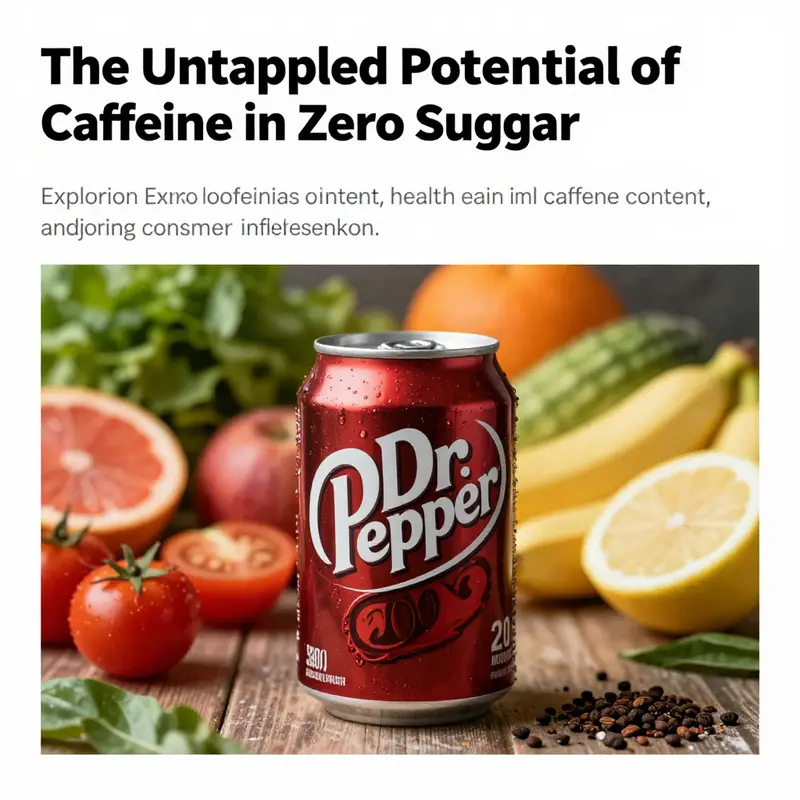
Caffeine, a widely consumed stimulant, often drives consumer choices in beverages. This article delves into the caffeine content of Zero Sugar Dr Pepper, revealing that it contains 41 milligrams of caffeine per 12-ounce serving—the same as its sugared counterpart. Business owners in the beverage industry will find this information crucial as they navigate changing consumer preferences towards low-sugar options. By analyzing caffeine’s role within Zero Sugar Dr Pepper, we can better understand its health implications, explore consumer inclinations towards caffeine content, and compare it against other caffeine-rich beverages. This comprehensive analysis aims to equip business owners with insights necessary to thrive in the competitive beverage market.
null
null
Caffeine in a Sugar-Free Can: Understanding Dr Pepper Zero Sugar’s Stimulant and Its Health Footprint

Caffeine tends to travel with the idea of choice—a choice to forego sugar while still seeking the quick, waking lift that a familiar cola once offered. In the case of Dr Pepper Zero Sugar, the caffeine content is not reduced or altered by the zero-sugar formula. It remains 41 milligrams per 12-ounce (355 ml) can, the same caffeine measure as the regular Dr Pepper. This detail might seem small at first glance, but it carries a meaningful signal about what zero sugar really means in practice. The public-facing promise of zero sugar often focuses on carbohydrate and calorie counts, yet the caffeine embedded in these beverages is a separate dimension of the product’s health profile. When we speak about health implications, we must look at caffeine in the context of the whole daily intake, individual sensitivity, and the ways caffeine interacts with sleep, anxiety, digestion, and cardiovascular function. In other words, the zero-sugar label does not imply a caffeine-free experience, and understanding that distinction is essential for making informed choices in a landscape crowded with caffeinated options.
For most healthy adults, a daily caffeine intake up to about 400 milligrams is not associated with serious health risks. That benchmark is widely cited by nutrition and medical authorities, though individual responses can vary widely. The 41 milligrams found in a single 12-ounce can of Dr Pepper Zero Sugar sit well within that moderate range, especially when balanced against other sources of caffeine we encounter daily—coffee, tea, energy drinks, chocolate, and even certain medications. Put simply, if you sip one can here and there as part of a broader caffeine budget, you’re operating within a comfortable margin. Yet a budget is only as good as the account you keep. If you already consume caffeine from multiple sources, this 41 mg becomes part of a larger sum that could tip you into effects you’d rather avoid.
From a physiological standpoint, caffeine acts as a central nervous system stimulant. It blocks adenosine receptors, which can delay the onset of fatigue and improve alertness. It can enhance concentration and, for some, even mood. But those same mechanisms can also trigger side effects when caffeine is consumed in excess or late in the day. People who are particularly sensitive to caffeine may notice increases in heart rate, jitteriness, or a sense of restlessness after a small amount. In others, caffeine can disrupt sleep architecture, making it harder to fall asleep or to sleep deeply. Those potential responses are not a universal verdict; they are probability bands that shift based on genetics, tolerance, and the timing of consumption. And when we consider Dr Pepper Zero Sugar specifically, the absence of sugar does not automatically remove the potential for sleep disruption or heightened arousal. The stimulant effect lives in the caffeine, not in the sugar content or its absence.
The conversation about caffeine in zero-sugar beverages becomes more nuanced when we factor in broader health goals and conditions. For individuals managing blood pressure, anxiety disorders, or sleep challenges, every caffeinated beverage needs to be evaluated within a daily pattern rather than in isolation. The zero-sugar label may appeal to those trying to curb carbohydrate intake or reduce caloric load, but caffeine remains a separate variable that can still influence cardiovascular metrics, stress responses, and circadian timing. In practice, this means that someone who is actively monitoring their caffeine intake for a health reason should account for all caffeine sources, including decaffeinated drinks and the small, sometimes surprising amounts found in foods and medications. The 41 mg from the can thus becomes a meaningful data point in a larger calculus of daily caffeine exposure.
A telling layer to this conversation is the real-world reminder that product labeling and formulation are not static in a consumer environment. In early 2026, Dr Pepper faced a recall related to a labeling issue in which certain batches of the Zero Sugar product were incorrectly filled with a full-sugar formula but still labeled as Zero Sugar. This incident did not change the caffeine content of correctly labeled products, but it did highlight a critical health risk tied to mislabeling. For diabetics and others carefully managing carbohydrate intake, the incorrect sugar content in mislabeled cans could create serious health consequences even as caffeine content remained unchanged. The episode underscores the importance of verifying product labels and the value of manufacturers’ transparency around what is in the can and what is not. It also reinforces the point that caffeine considerations should be made in concert with sugar and carbohydrate management, especially in products marketed as sugar-free or low-sugar alternatives.
This recall event, while specific in its cause, also illustrates a broader consumer takeaway: labels matter, and they do not exist in a vacuum. A zero-sugar badge implies a particular nutritional profile, but the profile often includes multiple interacting factors—caffeine, sodium, artificial sweeteners, and other additives—that together influence how a beverage affects health. When a consumer looks at a can and sees zero sugar, it is reasonable to assume a lower carbohydrate load, but one should not make assumptions about caffeine, caffeine sources, or how those jitters or the sleep impact will play out in a given day. The careful reader may even choose to examine multiple days of caffeine intake, noting not only the caffeine milligrams per serving but also the timing of consumption. Consistency across days helps reveal patterns more clearly than any single can does.
If we extend the practical implications, the key takeaway is balance and mindfulness rather than fear. A single can of Dr Pepper Zero Sugar contributes a predictable 41 mg of caffeine to the day. The broader question becomes: what else is on your caffeine plate? If your day already includes several cups of coffee, a couple of energy drinks, and perhaps tea in the afternoon, that 41 mg might be a small drop in a larger tide. On the other hand, if you primarily rely on light caffeine sources or if you are sensitive to stimulants, that same 41 mg could feel more pronounced. For pregnant people, adolescents, or individuals with specific medical conditions, the general guidance is even more conservative. In those cases, a healthcare provider may recommend significantly lower daily caffeine limits, and the 41 mg from a single can becomes an important part of a much tighter budget. These nuances suggest that a one-size-fits-all threshold is less useful than a personalized plan that accounts for total daily caffeine sources, timing, and individual tolerance.
From a consumer education perspective, the persistent presence of caffeine in zero-sugar beverages also invites a more critical approach to labeling and marketing. It is easy to focus on sugar content or the absence of calories, but caffeine remains a separate component with its own regulatory and health considerations. The 41 mg figure—reconfirming that zero sugar does not equal caffeine-free—serves as a practical reminder to readers and shoppers: always look at the complete facts on the label, and consider how those facts interact with your personal health context. For readers seeking a concise, evidence-based snapshot, a clear line is that 41 mg per 12-ounce serving is moderate by general standards, but it becomes a personal variable depending on total daily intake, timing, and sensitivity. In turn, this conversation circles back to a broader narrative about how people navigate caffeine in a world where many beverages compete for attention with seemingly simple promises: zero sugar, zero calories, and a quick energy lift.
For readers who want a more granular sense of where this caffeine sits relative to other options, a helpful reference point is the comparative landscape of common caffeinated beverages. A standard cup of brewed coffee can range from about 70 to 140 mg, often falling well above a single can of Dr Pepper Zero Sugar depending on how it is brewed. A strong black tea might sit around 40 to 70 mg per cup, while a typical energy drink might fluctuate widely from 80 mg to over 200 mg per serving. In this context, the 41 mg from Dr Pepper Zero Sugar is modest in comparison to a single coffee or a robust energy drink, yet it still constitutes a nontrivial dose, particularly for those who choose multiple caffeinated beverages throughout the day. The social and cultural pattern of sipping a fizzy, caffeine-backed beverage during meals, commutes, or study sessions means that this dose can accumulate quietly, influencing sleep quality and alertness without attracting overt attention on any one can alone.
The practical implications are straightforward in execution. If you are mindful of sleep hygiene, you might consider limiting caffeine intake after mid-afternoon, acknowledging that a 41 mg can in the early evening could still be enough to disturb sleep for some. If you are managing anxiety or a heart rate sensitivity, you might adopt a simple rule: track caffeine by source and total daily intake, and set a ceiling that feels comfortable for you. The zero-sugar attribute remains attractive for those seeking to minimize sugar-driven energy crashes and to support blood sugar stability, but it does not excuse avoiding caffeine awareness. Informed choices come from knowing that a zero-sugar label does not negate the stimulant, and a healthy routine often relies on moderation across all sources rather than relying on one beverage as a sole solution.
The chapter’s thread wends back to the central idea: caffeine content is a constant, sugar content fluctuates with labeling accuracy and product formulation, and health outcomes hinge on how individuals integrate these factors into daily life. The fact that a familiar, widely consumed drink carries 41 mg of caffeine per can provides a concrete datum that can ground personal decisions. It invites readers to think not just about what they drink, but when they drink it, and how that timing aligns with their sleep schedule, daily stressors, and long-term health goals. By anchoring the discussion in the tangible caffeine amount, the narrative remains anchored to real-world practice rather than drifting into abstract health warnings. In that sense, the story of Dr Pepper Zero Sugar’s caffeine—plainly 41 mg per 12-ounce can—becomes a microcosm of how modern consumers navigate a beverage landscape that is simultaneously healthier and more complex.
For readers who want to explore how this specific caffeine content fits into a broader understanding of caffeine in similar beverages, I recommend checking a dedicated breakdown that delves into caffeine content across popular zero-sugar and low-sugar options. This comparison can illuminate where Dr Pepper Zero Sugar sits on the spectrum and how small differences in formulation can shift daily caffeine totals in meaningful ways. To deepen the understanding further, consider exploring the linked resource that provides official nutrition facts for the beverage family in question, which can offer context for label accuracy, regulatory standards, and how caffeine content is determined and disclosed on packaging. See the linked reference below for a direct, official data point and its surrounding nutritional details.
Internal reference for further context: How much caffeine is in Dr Pepper Zero?
External resource for official facts: https://www.coca-colagb.com/dr-pepper-nutrition-facts-and-ingredients
null
null
The Caffeine Balance: Zero Sugar Dr Pepper Called to Duty in a Caffeinated World
Caffeine has a way of traveling through everyday choices, quietly shaping alertness and mood without the fanfare of a grand caffeine launch. In the realm of sugar-free sodas, Zero Sugar Dr Pepper introduces a precise equation: a familiar 12-ounce can delivers 41 milligrams of caffeine. That is the same amount found in a regular Dr Pepper, a fact that settles quickly into readers’ minds as a baseline for comparing other caffeinated options. What matters, though, is not just the number itself but how that number sits within a broader landscape of beverages that people reach for at work, at home, or during a momentary pause in a busy day. The 41 milligrams mark places Zero Sugar Dr Pepper in what many caffeine trackers would call the moderate range. It is enough to feel a noticeable lift for some and a comfortable refresh for others, but it sits far enough below the crowding of energy drinks and far above decaf choices to offer a predictable, steady nudge rather than a dramatic jolt.
To understand what that moderate level means in practice, it helps to look at how Zero Sugar Dr Pepper stacks up against a spectrum of popular picks. In the same 12-ounce serving size, a classic Coca-Cola clocks in with about 34 milligrams of caffeine, while a Pepsi hovers around 38 milligrams. These figures sketch a neighborhood where Zero Sugar Dr Pepper sits just a hair above the average soda and a touch below some rival colas. The caffeine landscape widens further when you widen the aperture to include energy drinks and coffee. An energy drink such as Red Bull, which comes in around 80 milligrams per 8.3-ounce can, sits nearly twice as high as Zero Sugar Dr Pepper. Coffee, even when measured modestly, tells a different story: an 8-ounce cup of black coffee commonly contains about 95 milligrams of caffeine, which is more than double the caffeine in Zero Sugar Dr Pepper. In this wider frame, the soda’s caffeine is clearly moderate, comfortable for daily routines that want a gentle lift rather than a dramatic pep talk from the caffeine gods.
The conversation about caffeine in Zero Sugar Dr Pepper cannot ignore non-carbonated beverages, where the caffeine story often changes shape. Green tea, for example, delivers roughly 20 to 35 milligrams per 8-ounce serving—a range that mirrors some variability in green tea blends and brewing strength. Decaffeinated coffee remains a standard reference point for very low caffeine intake, typically under 5 milligrams per cup. On the sugar-free soda front, Diet Coke serves as a near twin to Zero Sugar Dr Pepper in caffeine content, offering about 42 milligrams per 12-ounce serving, which almost perfectly brackets the 41-milligram figure of Zero Sugar Dr Pepper. Sprite Zero, by contrast, contains no caffeine at all, illustrating how the caffeine map diverges within a family of beverages that share zero calories, zero sugar, yet not zero caffeine. These comparisons matter because many consumers track caffeine across the day, not just in isolated drinks. A moderate caffeine option in one category might push someone over their preferred limit when combined with other sources from morning to afternoon.
The consistency of 41 milligrams per 12-ounce serving across Zero Sugar Dr Pepper and its regular counterpart carries practical implications beyond taste and branding. It means that choosing a sugar-free option does not necessarily reduce caffeine exposure, a point that matters to anyone monitoring total daily intake. People who are sensitive to caffeine often talk about the cumulative effect of multiple sources—coffee in the morning, a can of soda with lunch, perhaps even a later afternoon energy drink. The reality is that the body metabolizes caffeine at a rate that varies from person to person, with a half-life that commonly falls in the range of three to five hours. That means a single 41-milligram dose can influence alertness well into the afternoon for some and be almost fully processed for others by mid-afternoon. Genetic differences, medications, and even sleep patterns can tilt this balance, so the same can may feel different depending on the day.
The narrative around Zero Sugar Dr Pepper as a caffeine source also interacts with dietary aspirations. For many readers, the appeal lies in getting a familiar flavor and a reliable caffeine lift without adding calories or sugar. In this sense, the product functions as a practical bridge between taste preference and daily energy needs. The absence of sugar matters for those watching calories or managing glucose responses, yet the caffeine remains a constant that cannot be traded away without altering the energy profile. The decision to reach for a sugar-free beverage with 41 milligrams of caffeine is, for some, about maintaining routine without compromise. It is a choice that strives for balance: recognizable flavor, predictable stimulation, and a sugar-free profile that aligns with broader health or weight-management goals.
From a consumer perspective, then, Zero Sugar Dr Pepper occupies a niche where caffeine content serves as a steady anchor rather than a stimulant-driven spike. This steadiness is appealing in workplaces, study sessions, and social moments where people seek consistent alertness without a sugar crash or a caffeine overdose. The environment in which a person consumes caffeine—whether on a busy commute, during a late-night assignment, or at a social gathering—shapes how the 41 milligrams feel. Some may notice a gentle lift that enhances focus without jittery tendencies; others may find it perfectly adequate to cut through mid-morning fatigue. The variability underscores a broader truth: caffeine is not a one-size-fits-all substance, and even within a single product line, the subjective experience will differ.
This is also where the broader conversation about daily caffeine limits comes into view. The general guidance that many health authorities follow places a limit around 400 milligrams per day for healthy adults. Within that framework, a single 12-ounce serving of Zero Sugar Dr Pepper contributes a modest portion of the daily budget. The challenge is not so much the individual beverage as the arithmetic of total consumption. If a person habitually consumes multiple caffeinated drinks—perhaps starting with coffee, enjoying a can of soda at lunch, and topping off with an evening tea—the cumulative intake can approach or exceed recommended limits without any single source appearing extreme. In that sense, Zero Sugar Dr Pepper becomes a useful reference point for planning a caffeine budget: a clear, known quantity that helps people gauge what else they drink within a day.
A note on accuracy and sourcing helps ground these reflections in reliability. The 41 milligrams per 12-ounce serving figure is supported by official nutrition facts from the brand’s information pages, which provide a transparent accounting of caffeine alongside other ingredients. This alignment with the manufacturer’s data—confirmed by multiple credible sources—helps ensure that readers are not chasing approximate values or rumors. For readers who want to verify the exact caffeine figure themselves, a straightforward path exists through the brand’s nutrition facts and ingredients pages, which present the same 41-milligram metric for Zero Sugar Dr Pepper and its standard counterpart. These pages are designed to give consumers a clear baseline for comparisons with other beverages and to support informed choices about caffeine within a sugar-free context.
In navigating the caffeine landscape, it is helpful to acknowledge how flavor and caffeine content coexist in Zero Sugar Dr Pepper. The zero-sugar formulation preserves the signature, bold, and slightly spiced flavor that fans associate with the Dr Pepper name, while offering a sugar-free alternative that aligns with modern dietary preferences. The caffeine content remains a central, measurable attribute—one that is stable across the regular and zero-sugar versions, reinforcing a simple truth: for many consumers, the decision to choose Zero Sugar Dr Pepper is not about changing caffeine intake but about reducing sugar intake while preserving a familiar taste profile. When someone quotes the caffeine figure, they are not only referencing a number; they are signaling a decision about how they want to manage energy and appetite while staying within a preferred flavor universe.
For readers who crave a deeper dive into the exact caffeine value and its comparative posture within the broader caffeinated ecosystem, a concise, reliable resource is available that focuses specifically on Dr Pepper Zero. How much caffeine is in Dr Pepper Zero? This resource, which consolidates official figures and context, offers a precise answer and situates the 41-milligram figure within the wider landscape of caffeinated beverages. It is a useful anchor for readers who wish to anchor their own caffeine budgeting to a reliable, single-source reference while still appreciating the nuances described above. See the detailed exploration here: How much caffeine is in Dr Pepper Zero.
Ultimately, Zero Sugar Dr Pepper’s caffeine content embodies a practical middle ground. It provides a dependable level of stimulation that many people find comforting without crossing into the realm of high-caffeine beverages. The value sits among other popular sodas and sits just below the more intense options that are designed for rapid energy boosts. It also demonstrates that sugar-free does not automatically imply a reduced caffeine load, a distinction that matters for readers who are actively managing both energy and dietary goals. The clinical or health implications of caffeine, after all, are not determined by a single number but by the accumulation of intake, timing, and individual sensitivity. When combined with mindful consumption of other caffeine sources, Zero Sugar Dr Pepper can fit neatly into a balanced approach to daily caffeine consumption—a balance that values flavor fidelity, sugar reduction, and a predictable caffeine profile as its core strengths.
External perspective can further illuminate how this product is positioned within consumer choices. The official brand nutrition page anchors the discussion with explicit caffeine values and ingredient disclosures, reinforcing trust for readers who want to ground their decisions in manufacturer-provided data. For those who seek a broader, more global view of caffeine labeling and standards, consulting a reputable external reference can complement the direct brand data, offering comparative insight without altering the central takeaway that Zero Sugar Dr Pepper delivers 41 milligrams of caffeine per 12-ounce serving. The synthesis of internal facts and external corroboration helps readers appreciate not only the numeric value but the context in which it operates within personal, dietary, and cultural frameworks.
In the end, the chapter arrives at a straightforward, practical takeaway: Zero Sugar Dr Pepper provides a moderate caffeine boost without sugar, aligning with the needs of readers who want taste and energy without added sugar or calories. The 41-milligram dose sits comfortably between milder caffeinated beverages and the higher-end energy drinks and coffees, offering a reliable option for those conducting a daily caffeine inventory. The decision to reach for this drink, therefore, becomes part of a broader habit—one that values consistency, flavor, and mindful caffeine management. Reading the nutrition facts, comparing with other beverages, and considering personal sensitivity will guide readers to a choice that preserves both energy and flavor, without sacrificing health goals or daily routines.
External resource note: For official caffeine content and ingredient details, see the brand’s nutrition information here: https://www.coca-colagb.com/brands/dr-pepper
Final thoughts
Zero Sugar Dr Pepper offers the same caffeine buzz as its original counterpart, making it a relevant option for health-conscious consumers. As preferences shift towards lower sugar options, understanding the caffeine content becomes vital for business owners looking to cater to this demand. The health implications of caffeine consumption can drive purchasing decisions, emphasizing the need for clear communication around beverage options. With comparative insights to other caffeinated drinks, business owners can strategically position Zero Sugar Dr Pepper in their product offerings, tapping into the growing market of health-focused consumers seeking familiar flavors without the sugar. In navigating this evolving beverage landscape, leveraging data on caffeine content can enhance product appeal and drive sales.