
With the popularity of energy-boosting beverages, understanding the caffeine content in beverages like Mountain Dew holds immense significance for business owners. Mountain Dew is well-known for its unique flavors and high caffeine levels. Each 12-ounce serving carries approximately 55 mg of caffeine, making it one of the stronger contenders among soft drinks. This article will delve into the caffeine content within Mountain Dew, compare it with other beverages, examine the health implications for consumers, analyze how this knowledge influences drinking habits, and explore the market trends impacted by its caffeine levels. Each chapter provides crucial insights for business owners aiming to cater to consumer demands and stay competitive in the beverage market.
Decoding Mountain Dew: How Its Caffeine Load Stacks Up Against Coffee and Other Drinks
Mountain Dew is widely recognized for delivering a noticeable caffeine kick, especially when compared with many other sodas. A standard 12-ounce can contains about 55 milligrams of caffeine, a figure that places it toward the higher end of the soda spectrum. This is not a trivial amount; it translates into a tangible alertness for many and helps explain why the drink has earned its reputation as a quick energy lift. When people weigh their caffeine choices, the can’s bright slogan and brisk taste often go hand in hand with the idea of a fast mental and physical nudge.
The caffeine level stays fairly consistent across several popular flavors. Original Mountain Dew, Code Red, and Live Wire all hover around the mid-50 milligram mark per 12 ounces, give or take a milligram. Flavor might vary slightly due to formulation tweaks or batch differences, but the caffeine baseline remains a defining feature. This consistency is deliberate; the brand positions the beverage as a high-energy option within the soda category, not merely a taste experience.
Caffeine content is only part of the picture. The drink also packs a hefty dose of sugar, which amplifies the perceived energy boost by fueling quick glucose uptake. The combination of caffeine and sugar can produce a sharper, shorter-lived spike than caffeine alone, and for some people it can feel almost like a small stimulant cocktail. Relative to coffee, the caffeine amount is smaller, but the timing and rapid onset from carbonation can still feel intense, especially for someone who does not regularly consume caffeine.
If you measure caffeine by the strict scale of milligrams per serving, Mountain Dew sits lower than a typical cup of coffee and far below many energy drinks. A typical cup of brewed coffee often contains roughly 95 to 200 milligrams, depending on bean, roast, and method. In that sense, soda caffeine is modest but not negligible. For someone who drinks one can as a mid-afternoon pick-me-up, it can be a substantial portion of daily caffeine intake, especially when paired with other caffeinated foods or beverages.
For people who are caffeine-sensitive, the numbers matter more than the taste. A few sips can produce heightened alertness, jitters, or trouble sleeping later in the day if consumption is late. It’s wise to factor in total daily caffeine from all sources, including chocolate, tea, and certain medicines. The official nutrition information published by the brand helps with this planning, and consumers can check the specific caffeine figures for different sizes and flavors as they vary.
The beverage’s high caffeine content is not just about a momentary lift; it shapes how people use it in daily routines. Some reach for a can as a stand-alone afternoon ritual, others pair it with physical activity or work tasks that require quick focus. The caffeine’s metabolic effects can influence heart rate and blood pressure in sensitive individuals, so timing and quantity matter. Practically speaking, if you know you respond strongly to caffeine, it may be prudent to limit servings to one per day or consider non-caffeinated alternatives for later hours.
For readers who want to verify the numbers or compare across flavors and sizes, the best source is the brand’s official nutrition page where the caffeine data is published in context with sugar, calories, and other ingredients. For a detailed breakdown, see caffeine content in Mountain Dew. This reference helps situate the soda’s caffeine alongside other caffeinated beverages, including many non-coffee options.
Beyond the numbers, it’s helpful to think about how caffeine interacts with your day. In many work and school settings, people use caffeine to reduce perceived fatigue and increase focus. The effect is influenced by habit, tolerance, and even genetic differences in caffeine metabolism. For some, a single 12-ounce serving may be enough to stay sharp through a task, while others will require more or may experience diminishing returns as the day advances.
Another layer of context comes from the broader beverage market. Mountain Dew’s caffeine strategy fits a category that values immediate saturation of taste with a brisk, energizing sensation. This approach competes with both other sodas and energy-themed drinks, but it tends to lean on sugar as a supporting player rather than a separate energy profile. When people compare beverages, it helps to separate caffeine content from total energy payload. You might drink a high-caffeine soda but still consume less caffeine overall if you avoid other caffeinated sources.
In sum, Mountain Dew does carry a relatively high caffeine load for a nonalcoholic soft drink. The standard can delivers around 55 mg of caffeine, a level that justifies its status as a brisk pick-me-up. While not the strongest option available, it remains a potent choice for those seeking a quick energy lift without reaching for a full-size energy drink or a cup of coffee. Consumers who track caffeine for health, sleep, or performance reasons will benefit from treating it as part of a larger daily plan rather than as an isolated product.
To keep the conversation grounded, remember that caffeine is one tool among many when planning daily energy. The sugar content, hydration, and overall daily caffeine ceiling matter as much as the headline figures. If you want to explore more nuanced comparisons, including how this soda stacks up against cola or other caffeinated beverages, that broader discussion is the next logical step in this chapter and the chapter after it. For now, the upshot is clear: this drink supplies a meaningful caffeine dose that can be part of a balanced caffeine strategy, or a cautionary note for those monitoring caffeine intake.
External resource: https://www.mountaindew.com/nutrition
Voltage in a Can: Where a Neon-Citrus Soda Stands in the Caffeine Landscape of Soft Drinks
Caffeine content in everyday drinks often stretches the imagination as much as the palate. People reach for a familiar citrus-flavored soda when a quick lift is needed, yet few pause to compare its stimulant punch with that of other non-alcoholic beverages. The question at hand—does this popular neon-hued cola deliver a lot of caffeine?—can feel deceptively simple, yet it opens a broader conversation about how we measure and experience energy in our daily choices. The story is not merely about a single number on a label; it’s about where that number places a drink in a crowded field of refreshment, technology, and consumer health. In this chapter, we follow the thread of caffeine content through the spectrum of mainstream soft drinks, focusing on one flagship citrus option whose profile has long been associated with a strong energy lift. Rather than naming brands directly, we’ll refer to it as the neon-citrus soda for clarity and continuity with the broader topic of caffeine in non-alcoholic beverages. The core takeaway is precise: this drink carries a caffeine load that lands in the upper tier of its category, a fact that carries practical implications for everyday consumption, athletic performance, and even children’s and teens’ intake when viewed alongside other beverages.
Per can, the canonical formulation holds around fifty-four to fifty-five milligrams of caffeine for a standard 12-ounce (355 ml) serving. That range—captured consistently across the flagship product and its most popular variants—signals a deliberate branding choice. It is not a marginal amount; it is a substantial amount for a non-energy-drink category, especially when compared with the caffeination levels of many non-cola soft drinks. In practice, this means a single can delivers roughly the same kick that some people once got from a small cup of coffee, albeit with the flavors and aftertaste that accompany soda rather than brewed beverages. The exact figures, expressed plainly, are bold: 54–55 mg per 12 oz can for the original formulation, with the same high caffeine ceiling appearing in the Code Red flavor and in Live Wire (Wild Orange). While flavor variants bring their own personalities—tart, fruity, or zesty—the caffeine story remains remarkably uniform across the lineup, reinforcing the brand’s identity as a high-energy option among mainstream soft drinks.
That constancy matters, because it frames how this neon-citrus soda sits in the broader market. In the landscape of non-cola sodas, it sits near the top end of caffeine content. The common benchmark for a standard cola is notably lower, often ranging around 30–35 mg per 12 oz can. Even when you widen the lens to include a variety of citrus-flavored sodas and other non-cola beverages, the flagship’s caffeine load still often dwarfs many peers. The pattern is not merely anecdotal; it is reflected in peer-reviewed and regional analyses that benchmark caffeine across widely available soft drinks. In one solid cross-sectional study of caffeine content in selected soft drinks, New York State samples showed colas with a wide spread—from as low as less than 1 mg to about 50.8 mg per can. Even at the upper end of that range, the highest figures fell short of the can’s 54 mg mark, underscoring just how unusual and, for many, how noticeable the neon-citrus option’s caffeine level can be among mainstream beverages. This places the drink firmly in the upper tier, a niche that is reinforced by consumer perception. The drink is often marketed and perceived as a quick, practical energy booster, a perception that aligns with the actual content on its label and with the broader body of data on soft-drink caffeine.
Regional differences are a reminder that the caffeine story is not monolithic. Across different markets, formulation can shift. In some locales, comparable beverages patch the same caffeine range only up to about half that amount, with Ontario-available products, for instance, recorded at around 29.4 mg per can in similar serving sizes. That discrepancy is not trivial; it illustrates how manufacturing choices, regulatory environments, and consumer expectations shape the final caffeine tally that reaches the shopper. For readers who live outside North America or who frequently travel, this variability underscores a practical point: caffeine content in non-alcoholic beverages is not a fixed, universal standard but a field of slightly different realities depending on where you buy and which flavor you choose. Yet in the context of a global market, the neon-citrus soda consistently demonstrates that it is among the higher-caffeine offerings in the mainstream category, not merely a casual refreshment but a beverage with a distinctive stimulant edge.
What does that mean in real-life terms? It means that for those who drink this soda regularly, the caffeine load can contribute to a noticeable energy lift, particularly if the day has been long or if the person is already sensitive to stimulants. For someone who consumes several caffeinated beverages in a day, adding this soda can quickly approach or exceed the upper limits suggested by many health guidelines for daily caffeine intake. It is important to recognize that caffeine affects individuals differently. Some people feel sharper and more alert with relatively small amounts, while others may experience jitters, heightened heart rate, or sleep disruption if they exceed their personal threshold. The high caffeine content in a widely available, affordable, and flavorsome beverage makes this a practical consideration for parents mindful of teen intake, athletes planning for competition, or professionals monitoring their consumption during long workdays. In other words, the caffeine narrative of this neon-citrus drink is not just about physics—how much caffeine is in a can—but about the lived experience of energy, focus, and potential tension in the body’s regulatory systems.
This is where the value of cross-category context becomes clear. When you compare a single 12-ounce can to a cup of coffee, the numbers can be surprisingly similar, though the delivery differs. A standard 8-ounce cup of coffee can carry roughly 95 mg of caffeine on average, but many people drink larger servings, and espresso-based drinks can deliver high doses in relatively small volumes. The neon-citrus soda’s measured payload sits well below the higher end of coffee, yet it remains higher than many other soft drinks, including several popular citrus competitors and most non-cola varieties. For consumers who regulate caffeine intake, this positioning means that your choice between the neon-citrus option and a milder soft drink will have a meaningful impact on your daily total. It also invites a broader reflection on how we schedule caffeinated sips around work, exercise, and sleep patterns, rather than treating each can as an isolated decision.
The story does not end with a single can or a single flavor. The brand’s energy-forward appeal benefits from consistent caffeine levels that reinforce its identity as a go-to option for a quick lift rather than a slow, lingering pick-me-up. Flavor variety is a strength, yet the caffeine content is the common thread that binds these products together. This makes it easier for curious readers to understand why some people reach for that neon citrus drink in particular when they want a reliable, noticeable edge, rather than sampling a broader array of beverages that might offer smaller, more variable boosts. As with any stimulant-containing product, there is value in knowing what you are consuming and how it fits into your daily caffeine budget. An informed approach helps consumers balance taste, energy, and rest, rather than letting a single habit drift into patterns that become hard to manage over time.
For readers who want a concise reference to how this family’s caffeine content stacks up against other beverages, there is a dedicated overview that highlights the key comparisons and flavors while keeping the discussion grounded in the data. See this overview for a focused look at caffeine content across the family: caffeine-content-mt-dew. This internal resource is helpful for readers who wish to see a quick snapshot of where the neon-citrus option sits, without wading through pages of numbers and regional variability. It serves as a bridge between the raw measurements and the practical choices people make in daily life.
Ultimately, the question remains nuanced. Yes, the neon-citrus soda carries a relatively high caffeine load for a mainstream soft drink, especially when compared with many of its non-cola peers. It is not the sole benchmark of caffeine in the soft-drink aisle, and it certainly does not eclipse all caffeinated beverages available today. Yet the combination of a clearly published caffeine content—consistently around the mid-50 milligram range per can—and a broad flavor slate secures its place in the upper portion of the spectrum. For readers who value a clear, direct answer: yes, it has a lot of caffeine for a standard soda, and that attribute is a defining part of its appeal for those seeking a quick energetic effect, balanced with taste and accessibility. For the broader picture, the industry-wide data and regional variations remind us that “a lot” is relative, and the most responsible approach is to read labels, monitor intake, and align consumption with personal health goals and daily routines. External data provide a wider context for this conversation and underscore that the caffeine landscape of soft drinks is varied and evolving, just as consumer tastes are. External reference: https://www.ncbi.nlm.nih.gov/pmc/articles/PMC7600557/
High-Caffeine, High Stakes: Understanding What a Popular Citrus Soda’s Caffeine Means for Consumers
Caffeine is a familiar companion in many everyday drinks, but its meaning shifts when it arrives in a popular citrus-flavored soda that many people reach for as a quick pick-me-up. In practical terms, a standard 12-ounce can of this beverage contains about 54 to 55 milligrams of caffeine. That figure places it above many non-coffee sources of caffeine, yet far below a typical cup of coffee. The difference matters because it shapes how people experience stimulation: not a thunderclap of energy, but a steady nudge that can add up across the day, especially when the beverage becomes a regular habit. For readers trying to gauge what this level means for health, this chapter aims to translate numbers into everyday consequences without sensationalism, acknowledging that a single can is rarely the whole story. If you want a quick reference to the caffeine content of this beverage, you can explore the internal resource linked here: caffeine-content-mt-dew.
The core concern is not one can alone but total daily caffeine intake. A single can leaves room for other caffeinated sources, but multiple cans, especially when paired with coffee, energy drinks, or caffeinated teas, can push daily totals into a range where the stimulant effects become more noticeable. This matters most for people who are sensitive to caffeine or who have conditions that caffeine can influence. It also matters for younger readers, whose developing bodies may react more strongly to stimulants and sugar, a combination that is common in this type of beverage. When thinking about health effects, it helps to keep the picture wide: caffeine is only one piece of the puzzle, and total intake from all sources provides a clearer signal of risk or benefit over time.
Guidance from health organizations offers a benchmark that helps translate cup-by-c cup consumption into a bigger picture. The Mayo Clinic, along with other nutrition authorities, generally supports a daily limit for most healthy adults around the 400-milligram mark. That guideline is not a rigid prescription but a framework to assess risk. It means that a single can of this beverage accounts for roughly one-eighth of that upper limit, leaving room for other daily caffeine sources if one’s health is stable. It also implies that the real question for many people is not the caffeine in one drink but how many drinks and what other caffeine-containing items accumulate over a day. Those differences matter because caffeine’s effects are dose-dependent: what feels like a minor perk to one person can feel intrusive to another if the day’s total dose climbs higher. For readers seeking authoritative context on caffeine thresholds, the Mayo Clinic overview provides a clear starting point and can be found at the external resource cited at the end of this chapter.
The health implications of higher caffeine consumption extend beyond just alertness. Anxiety and stress are among the most common concerns when people ingest larger amounts. A 2025 review summarized in contemporary literature indicates that while small doses of caffeine may have minimal or neutral effects for many people, higher doses can exacerbate anxiety and stress. The nervous system is stimulated in ways that can magnify sensations of restlessness, irritability, or tension, particularly in those who already experience heightened anxiety. In practical terms, if someone is frequently reaching for this beverage to cope with daily stress, the cumulative stimulant effect can amplify discomfort rather than alleviate it. This is especially relevant for teens and young adults, who may be more reactive to caffeine’s effects. The takeaway is not to demonize a single drink but to understand how frequent consumption, combined with other stressors, can compound mood-related challenges over time.
Another dimension that cannot be ignored is cardiovascular health. Caffeine is a stimulant that can acutely increase heart rate and blood pressure in some individuals. While many people tolerate moderate amounts without issue, a substantial or chronic intake can be problematic for those with underlying heart conditions or hypertension. A broader 2023 review of energy drinks—categories that often contain caffeine in similar ranges to this beverage—highlights risks that extend beyond temporary jitters. The review notes potential nervous system effects and the possibility of developing a taste for high-caffeine products, which can lead to more frequent use and dependence. The pattern matters: occasional consumption may pose little risk for a healthy adult, but habitual, higher-dose intake can introduce a cumulative cardiovascular load, particularly for those who are already managing heart-related concerns.
Sleep is another domain where caffeine leaves its imprint. The stimulant’s pharmacokinetics mean it can linger in the body for several hours, and even a late-afternoon or early-evening can can disrupt the ability to fall asleep or reach restorative sleep stages. Sleep disruption compounds daytime fatigue, mood shifts, and cognitive performance, creating a cycle where people seek more caffeine to stay alert, further amplifying the problem. For adolescents and young adults, the impact on sleep can be especially pronounced given ongoing development and variable schedules. The message here is simple: caffeine can help with wakefulness, but it also has the power to erode sleep quality when used late in the day.
Dependency and withdrawal are part of the conversation for regular consumers. Caffeine can create a mild form of dependence in which the body adapts to daily intake and signals discomfort when that intake is reduced, delayed, or stopped. Common withdrawal symptoms include headaches, fatigue, irritability, and difficulty concentrating. These symptoms can complicate attempts to cut back, especially for individuals who rely on this beverage as part of a broader daily routine. Understanding this dynamic is important for anyone who is trying to moderate caffeine intake or reduce consumption gradually. It shifts the focus from a one-off choice to a long-term habit with potential physical and emotional signals that deserve attention.
The health considerations also intersect with other ingredients common to this beverage. Sugar content is notably high in citrus-soda formulations, and when sugar and caffeine appear together, the metabolic and cognitive effects can be amplified. The combination can contribute to energy spikes followed by crashes, a cycle that affects mood, appetite, and energy levels across the day. Over the long term, frequent exposure to high sugar alongside caffeine is linked to elevated risks for metabolic conditions such as obesity and type 2 diabetes, as well as dental problems. These risks are not inevitable for everyone who drinks the beverage, but they become more plausible when intake is frequent and when overall dietary patterns include high sugar consumption. For families and individuals who are mindful about health outcomes, this dual-edged nature of caffeine and sugar invites careful consideration of how often such drinks appear in weekly routines.
Youth exposure deserves special emphasis. Adolescents and children often respond more acutely to caffeine’s stimulating effects. In conjunction with sugary beverages, caffeine can disrupt sleep, mood, and behavior in ways that ripple through academic performance, sports, and social interactions. Pediatric and adolescent health guidance generally recommends limiting or avoiding high-caffeine products for younger populations. This isn’t a claim about personal preference; it reflects a precautionary stance aimed at supporting healthier development during critical years.
With these realities in view, the practical takeaways center on balance and awareness rather than prohibition. Caffeine can offer benefits in terms of alertness and concentration, which some readers may appreciate in certain contexts. The key is to balance potential benefits with a clear sense of how much caffeine is in your day and where it comes from. For many adults, recognizing total daily intake and choosing lower-caffeine alternatives or sugar-free options at times can help maintain that balance. Mindful labeling, portion control, and fatigue-aware scheduling—such as avoiding caffeine late in the day—can support healthier patterns without demanding a drastic lifestyle change.
In a broader sense, this discussion ties into the article’s larger question: does this widely available beverage carry a lot of caffeine? Relative to soft drinks with similar branding and to some energy-boosted alternatives, the amount is substantial but not extraordinary. The real story emerges when this caffeine is one piece of a daily mosaic—an accumulation that changes how sleep, mood, and health interact over weeks and months. People are increasingly attentive to how caffeine fits into their overall diet, sleep, and activity levels. The ongoing conversation is less about labeling one drink as dangerous, and more about understanding how frequent consumption, individual sensitivity, and coexisting dietary choices shape the real costs and benefits.
For readers who want a deeper dive into the caffeine landscape and want to compare this beverage with other caffeinated options, an internal reference is available here: caffeine-content-mt-dew. This resource complements the chapter by offering a concise snapshot of caffeine quantities across common beverages, helping readers calibrate daily habits without relying solely on memory or guesswork. The idea is to empower informed decisions that reflect personal health goals and lifestyle realities.
To close the thread on the health implications, it is important to emphasize context. A single beverage with roughly 54 milligrams of caffeine per 12-ounce can is not inherently dangerous for most adults when consumed in moderation. The concern arises when consumption becomes frequent, when multiple caffeine sources are present, or when personal health conditions amplify sensitivity. The body is remarkably adaptable, but it also rewards thoughtful management of stimulants and sugars. By understanding dose, acknowledging individual variation, and applying simple moderation strategies, readers can preserve the positive aspects of alertness and focus while minimizing adverse outcomes. In the chapters that follow, we turn to how sugar content interacts with caffeine in this beverage and what that means for long-term health, environments of use, and practical day-to-day choices.
External source: https://www.mayoclinic.org/healthy-lifestyle/nutrition-and-healthy-eating/in-depth/caffeine/art-20049376
Awareness, Buzz, and Beverage Choice: How Knowledge of Mountain Dew’s Caffeine Content Shapes Drinking Habits

The simple act of picking a drink is seldom simple. Consumers don’t just weigh taste and price; they weigh what they know about a beverage’s effects. When the topic is caffeine, the decision becomes a little more analytical, a touch more deliberate. The citrus-tinged energy drink widely popular in many markets sits at a caffeine level that stands out in its category. Roughly twelve ounces, or about 355 milliliters, deliver around 55 milligrams of caffeine. That figure may feel modest in the world of coffee or energy shots, but within carbonated drinks it registers as a relatively high dose. The range across flavors–Original, Code Red, Live Wire–hovers near the same mark, with labels indicating roughly 54 to 55 milligrams per twelve-ounce can. The sameness of caffeine content across flavors, despite differences in sweetness, acidity, and aftertaste, helps explain why the brand has long positioned itself not just as a flavor line but as a source of rapid, noticeable energy.
The practical implication of this level is not only the sensory experience of alertness but also the behavioral one. For many consumers, especially those who are caffeine-sensitive, the effect is tangible: a quicker heartbeat, faster mental tempo, improved focus, a sense of readiness for tasks that demand stamina. Yet caffeine is a double-edged sword. Put differently, the same caffeine that boosts state of alertness can also disrupt a later sleep window if consumed late in the day. In real-world terms, a student on campus or a night-shift worker might appreciate the boost but worry about the aftereffects as dusk approaches. The knowledge that a standard serving carries a high caffeine load tends to sharpen a consumer’s sense of timing. Rather than reaching for refills without thought, people begin to plan around afternoon and evening consumption, mindful of how caffeine might interfere with rest or with the quality of sleep that underpins next-day performance.
This behavioral sharpening is not just anecdotal. In a broader sense, awareness of caffeine content—especially when it is clearly disclosed on labeling and official channels—shapes how people think about quantity. A study focusing on college students found that when participants were aware of caffeine content and the potential sleep-disrupting effects, they tended to reduce the frequency of late-evening consumption and to read product labels more closely. The pattern suggests a rational calculation: if the caffeine load is high, the perceived value of additional servings declines during hours when sleep matters most. The capability to translate information into action—choosing smaller portions, spacing out intake, or selecting lower-caffeine alternatives—emerges as part of a broader movement toward informed consumer choice.
Within this context, Mountain Dew’s position in the market offers a compelling case study of how knowledge interacts with preference and brand loyalty. The beverage line has long balanced aggressive flavor innovation with attention to energy-boosting effects. The product family’s formula and flavor innovations–ranging from the classic Original to other flagship flavors–are described in official disclosures as responses to consumer feedback and evolving market trends. The underlying premise is straightforward: if a beverage is designed to deliver a noticeable lift, the content information surrounding that lift becomes a meaningful part of the customer’s decision matrix. In practice, this means that suppliers and manufacturers invest in transparent communication channels. When consumers encounter precise caffeine numbers, they are more likely to equate a flavor profile with a predictable physiological response, turning a simple taste choice into a considered health and energy decision.
To many observers, the caffeine count seems high for a soda by most standards. But the scientific and consumer research landscape supports a more nuanced view. The same body of literature that links caffeine awareness to more cautious consumption also notes that high-dose caffeine users may exhibit a higher propensity for risk-taking, stress, and sleep disturbances. This is not a condemnation but a reminder of caffeine’s broad physiological footprint. The conversation around Mountain Dew thus extends beyond taste and branding into questions of daily rhythm, work-life balance, and mental well-being. When information is framed clearly—on official product pages, nutrition labels, and educational channels—consumers gain a tool, not a constraint. The tool enables them to calibrate their intake in relation to personal sensitivity, activity level, and sleep needs. The ripple effect can be meaningful: a culture that values transparency about ingredients, a market that encourages responsible use, and a shift among some drinkers toward lower-caffeine options on certain days.
What makes this dynamic particularly interesting is the way content information circulates in the digital age. Social media sentiment, focus groups, and regional sales patterns feed into how a brand characterizes a product’s role in everyday life. The cycles of feedback—gathered through internal reviews and external conversations—inform ongoing product development. In this context, the caffeine content ceases to be a static attribute and becomes a signal about a drink’s place in consumer routines. The alignment between what a beverage promises and what it delivers is crucial. Transparency about caffeine acts as a bridge between taste-driven preference and health-conscious behavior. It helps consumers make decisions consistent with their longer-term goals, whether those goals involve stable sleep, steady energy, or simply a preference for lower-caffeine options on certain days.
For people who crave the engagement of an energy-boosting beverage without the edges of overconsumption, the presence of precise caffeine data can become a cue toward moderation rather than deprivation. In the long arc of consumer culture, such cues matter: they cultivate a habit of looking beyond flavor and price to the physiological demands a drink places on the body. The psychological effect—knowing what you consume—can be as meaningful as the stimulant effect itself. And when consumers know they are facing a high-caffeine product, the act of self-regulation can be framed not as self-control but as self-awareness, a way to harmonize a love of flavor with personal comfort and sleep quality.
Within the industry, the dialogue about caffeine content and consumer knowledge reverberates through labeling practices and marketing ethics. A data-driven approach to flavor development, as described in industry disclosures, shows how a brand can remain responsive to consumer preferences while maintaining a clear, consistent message about energy content. Instead of presenting caffeine as a mere hook, this perspective treats caffeine information as part of a transparent communication strategy. The emphasis shifts from pushing a product’s buzz to inviting informed decision-making. In this sense, the consumer learns to anticipate how they might feel after a given serving, and perhaps to compare that expectation with other beverages in the same category. The result can be a more thoughtful consumption pattern across the day, a pattern that respects sleep cycles and personal limits while still enjoying the tastes and rituals associated with a popular brand.
For researchers and practitioners alike, the story of caffeine content in Mountain Dew—and the way knowledge shapes drinking habits—offers a lens for examining broader questions about consumer behavior. How do people interpret numerical information on labels? How does the salience of caffeine content affect weekend versus weekday consumption? Are there demographic differences in how people respond to high-caffeine products, and how do those differences feed back into marketing strategies? The literature suggests that the answers are nuanced. Education, trust in official sources, and personal caffeine sensitivity all interact with marketing signals to influence behavior. For some, a high-caffeine product becomes a dependable source of daytime energy during busy periods; for others, it becomes a cautionary tale about late-night sleep patterns. The crucial point is that awareness matters. It does not automatically reduce intake in every case, but it increases intentionality. It makes the choice to drink closer to the right time and right amount, rather than relying on habit or impulse alone.
To connect theory with practical implications, consider a simple daily routine. An individual finishes a late afternoon workout, eyes the clock, and reaches for a familiar citrus-scented can. If the caffeine content is clearly understood and the person has slept well the night before, that post-workout lift can be beneficial without tipping into restlessness. If, however, it is late in the evening and sleep has already become precarious, the same decision may be revisited. In either scenario, the knowledge of caffeine content acts as a regulator—a mechanism that aligns daily routines with our longer-term health and energy goals. The same knowledge can influence how markets position products, how retailers merchandise them, and how the media frames the energy narrative around everyday foods and beverages. The net effect is a more sophisticated consumer culture, one that values content transparency as a component of personal decision-making and market accountability.
From a practical standpoint, readers curious about the numerical side of the equation can access official sources for exact caffeine figures, and they can consult comparative analyses that place Mountain Dew in relation to other caffeinated beverages. The bottom line remains straightforward: the caffeine load per standard serving is substantial relative to many non-caffeinated soft drinks, and it is comparable to other popular caffeinated options in everyday contexts. The real difference lies in how individuals respond to that load, how they integrate it into their day, and how they weigh the trade-offs between energy and sleep. The conversation thus moves beyond a single label on a can to a broader dialogue about mindful consumption, transparency, and the evolving expectations consumers hold for the beverage industry.
For further detail, see the internal analysis on caffeine content: caffeine content of Mountain Dew.
External resource: https://www.mountaindew.com
Power, Flavor, and Focus: How a High-Caffeine Citrus Beverage Shapes Market Trends
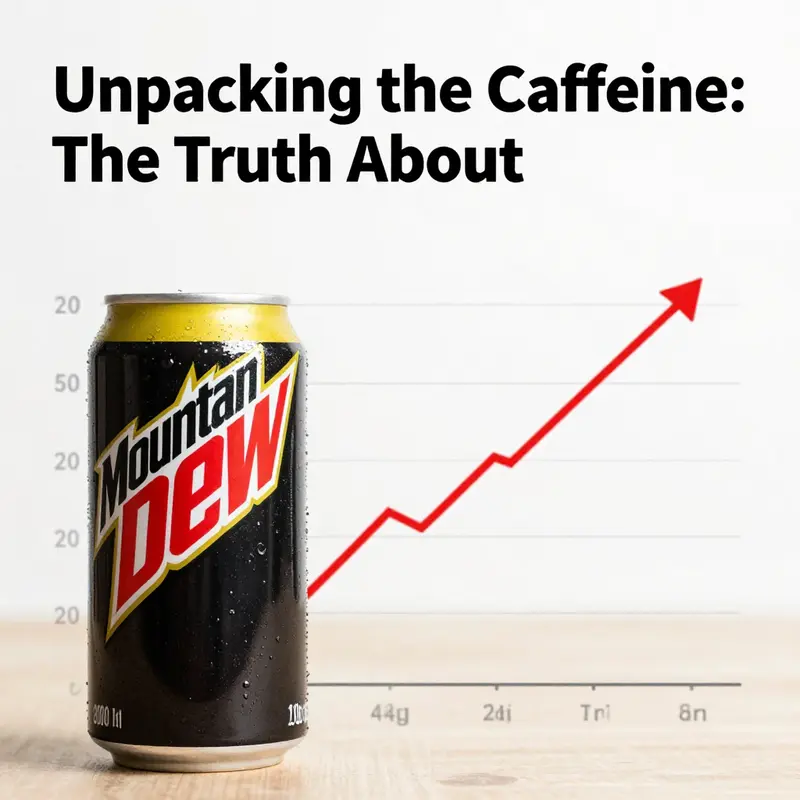
Across the crowded shelves of soft drinks, a bright citrus-forward option has carved out a persistent niche by offering a noticeable caffeine kick in a familiar can. When you pour the facts into that familiar beverage math, you find a number that surprises more than a few skeptics: roughly 54 to 55 milligrams of caffeine per 12-ounce (355 ml) serving. That level sits well above many other sodas and sits squarely in the territory of a strong, quick-acting energy lift. It is not simply about caffeine as a buzz; it is about caffeine as a promise of sustained focus during long, demanding activities. The appeal is pragmatic as much as it is sensory. For a consumer who wants to stay alert through late-night study sessions, marathon gaming sessions, or extended work sprints, the citrus profile provides a familiar refreshment while the caffeine offers a cognitive nudge. The combination can feel less bitter than coffee and more controllable than a pure energy shot, making this category naturally attractive to those who want to maintain a steady tempo without a heavy, roasted- bean aftertaste. The result is a product that occupies a distinct space in consumer imagination: familiar flavor, unexpected depth in energy, and a readiness to fuel moments that demand attention rather than a quick, jittery jolt.
This positioning does more than attract individual buyers. It creates a rhythm in market trends that other beverages try to emulate but rarely replicate with the same balance of taste and performance. The high caffeine level becomes a differentiator in a sea of refreshment options that compete on sweetness, mouthfeel, or brand heritage. In a world where people tasked with long hours—students pulling all-nighters, gamers streaming for hours, professionals managing back-to-back meetings—need reliable fuel, a beverage with a clear energy profile can become a default choice. It is not merely a momentary lift; it is a signal that the drink is designed for a specific cadence of activity. The effect on purchasing behavior is subtle but powerful. When consumers pair this high-caffeine profile with a bold, citrus-forward flavor and a packaging design that feels energetic and unapologetic, the product becomes a ritual ally. The ritual aspect, in turn, reinforces repeat purchases, enabling a stable revenue stream for retailers and a durable position in brand assortments.
From a consumer-segment perspective, the beverage lineage has found its strongest resonance among groups that perform well with structural, prolonged attention. The gaming community is often cited as a primary user cohort, but the pattern extends beyond that circle. Students, information workers, and athletes in endurance-focused disciplines also find value in a liquid companion that can support extended focus periods. In this light, caffeine content is more than a statistic; it is a practical tool that aligns with a lifestyle defined by extended concentration windows. In turn, the market responds not only with more of the same but with variants that respect this cadence. The product line expands with lower-calorie or zero-sugar options, preserving the high caffeine level while addressing health-conscious consumer concerns. The strategic implication is clear: a brand can broaden its reach by offering a spectrum that satisfies both taste preferences and energy needs, capturing a wider share of the audience that seeks performance without compromising flavor.
The marketing logic behind this approach is data-driven and iterative. Insight teams parse social-media sentiment, track regional sales fluctuations, and test new flavor concepts in controlled markets to learn how the caffeine profile translates across contexts. The idea is not to chase novelty for novelty’s sake but to exploit a durable attribute—the energy lift—while pairing it with flavor and branding that speak directly to active, time-bound lifestyles. Seasonal releases and limited editions become the accelerants of consumer excitement rather than mere curiosity drivers. When a brand toggles between themes tied to sports, esports, or outdoor events, the high-caffeine core remains the constant engine, and the accompanying flavors ride along as the visual and taste cues that invite trial. In this sense, caffeine content is not a peripheral feature but the keystone of product development and go-to-market strategy.
Yet the story is not without its complexities. Health considerations hang over the discourse like a cautious consensus. For some individuals, even a modest amount of caffeine delivered in a familiar, easy-to-consume format can provoke sensitivity symptoms—the kind of jitteriness, heart-rate awareness, or sleep disruption that can undermine longer-term well-being. This reality nudges manufacturers to diversify portfolios. It motivates the introduction of variants with reduced calories or zero sugar that still deliver meaningful energy. It also prompts clearer labeling and consumer education about caffeine timing and daily intake guidelines. The aim is not to suppress demand but to balance it responsibly, ensuring that loyalty to a high-energy option does not outpace the consumer’s comfort with how caffeine fits into their daily life. In practice, this means marketers and product developers must stay attuned to regional preferences, cultural norms around caffeine consumption, and evolving public health guidance. The best outcomes come when the science of the product—caffeine content and its physiological effects—meets the art of branding, delivering a message that is both honest and compelling.
There is also a broader cultural dimension to how a high-caffeine citrus beverage influences market dynamics. The visual language of the product—bold colors, aggressive typography, and packaging that signals speed and vitality—speaks to a consumer who sees energy as a personal performance metric. It is a posture rather than a mere preference. The beverage becomes a shorthand for readiness, the kind of shorthand that supports a culture of late-night collaboration, online competition, and flexible work hours. In this sense, caffeine content functions as a bridge between utility and identity: the drink promises to support action, while branding invites the consumer to claim a role in a larger community of focus and endurance. As that community expands through digital communities, streaming platforms, and cross-cultural exchanges, the product is positioned to ride the wave of ongoing demand for reliable focus aids that taste good and feel familiar.
The intersection of taste, energy, and culture also influences how retailers curate their shelves. A high-caffeine citrus option naturally finds a home in convenience channels and mass-market spaces where quick consumption and impulse buys are common. It earns a spot alongside other daily staples that people reach for when time is tight, when a meeting runs long, or when the next level in a game requires a mental reset. The ripple effect spreads to marketing calendars, where launch timing around school calendars, major esports events, or long-haul travel periods can translate into noticeable sales spikes. The story, then, is not just about one can with a big caffeine claim; it is about a beverage category that becomes a reliable on-ramp to sustained activity, a product that teaches consumers how to pair flavor with performance in a way that feels natural rather than forceful.
In sum, the high caffeine content of this citrus-forward energy beverage is a central driver of its market strength. It anchors a competitive proposition that blends energy with flavor, habit with culture, and health-conscious optioning with a bold, performance-oriented brand personality. The chapter-to-chapter arc in this article will continue to explore how this balance evolves as consumer expectations shift, how competing brands respond to the same set of opportunities, and how the broader beverage landscape adapts to a world where focus, taste, and branding are inseparable from one another. The caffeine story is not a monologue about alertness; it is a narrative about how a single, measurable attribute can shape choices, communities, and commerce in a modern market that prizes speed, clarity, and connection.
Final thoughts
Understanding the caffeine content in Mountain Dew, which stands at approximately 55 mg per 12-ounce serving, reveals important insights not only for consumers seeking energy but also for business owners navigating the beverage market. The comparative analysis shows that Mountain Dew is on the higher end of the caffeine spectrum among soft drinks, which could influence consumer preference based on their caffeine sensitivity and health considerations. Furthermore, awareness of caffeine’s effects may shape drinking habits, ultimately impacting sales trends in the beverage industry. For businesses, recognizing these dynamics is crucial for product offerings and marketing strategies in a competitive market.