
The caffeine game between beverages shapes consumer preferences and brand identities. With the escalating energy needs of consumers, understanding how products like Mountain Dew and Coca-Cola stack up in caffeine content is crucial for businesses. Mountain Dew boasts a caffeine content of 54 mg per 12 oz. can, while Coca-Cola offers 34 mg. This difference is vital as it influences market perception, consumer choices, and health implications. Each chapter will explore these intersections, guiding business owners in understanding their market better.
The Caffeine Gap in a Can: Citrus vs Cola
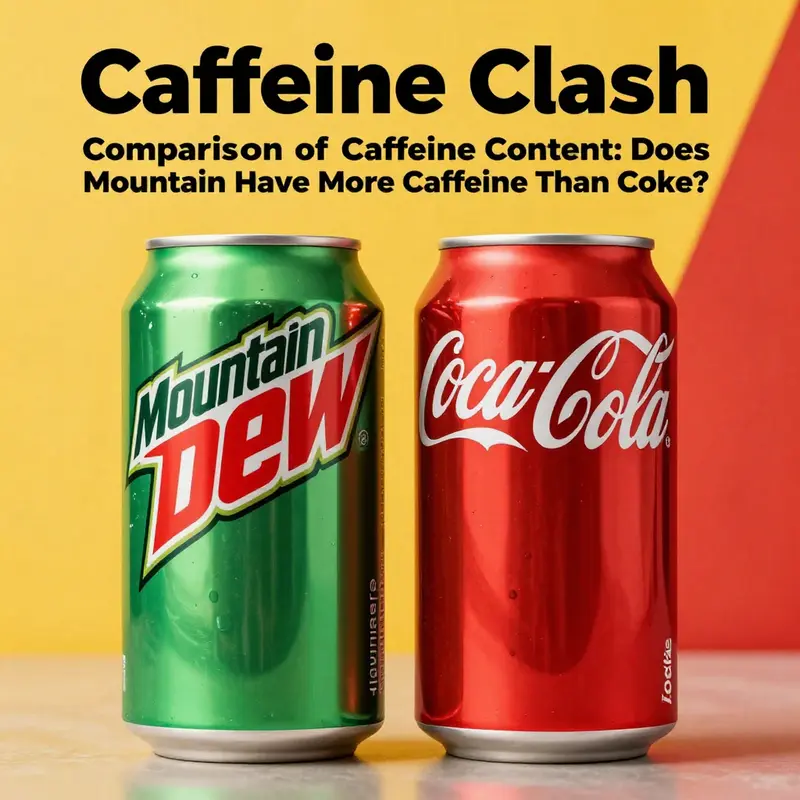
Caffeine sits in the margins of daily routines, stepping into morning rituals, afternoon pick-me-ups, and late-night study sessions. A typical 12-ounce neon-green citrus beverage contains about 54 mg of caffeine, while a classic 12-ounce cola clocks in around 34 mg. The diet variant of the cola runs about 46 mg. Put plainly, the citrus option carries roughly 20 mg more caffeine per serving, about 59 percent higher than the traditional cola. These numbers are useful guidelines for comparing beverages without getting lost in marketing rhetoric, and they illustrate how caffeine content scales with serving size and formulation. Real world consumption matters: if a person drinks larger servings or more than one caffeinated drink in a few hours, total intake can rise quickly. The broader context includes how sugar, acidity, and product design interact with caffeine to influence energy perception, sleep, and daily routines. Health guidance often cites a general daily limit around 400 mg of caffeine for most healthy adults, with adjustments for pregnancy, conditions, or sensitivity. Individual tolerance matters, so these figures should be used as rough benchmarks rather than exact rules. In short, the neon-green citrus beverage tends to deliver more caffeine per standard serving than the traditional cola, with the diet version offering a middle ground for those watching calories. This chapter keeps the comparison grounded in typical 12-ounce servings while acknowledging variability across brands and formats.
Caffeine as a Signal: How Mountain Dew’s Higher Kick Reframes Market Perception and Brand Identity
The question of which soda carries more caffeine travels beyond a simple numerical comparison. It taps into how a drink feels in the throat, how quickly a person perceives alertness, and how a brand frames itself in the crowded world of flavor and function. When you line up the numbers, Mountain Dew delivers more caffeine per 12-ounce serving than Coca-Cola Classic. Official specifications show Mountain Dew Original at 54 milligrams, while Coca-Cola Classic sits at 34 milligrams. That is a difference of 20 milligrams per can, a delta that translates into roughly 59 percent more caffeine for Mountain Dew. The contrast is not merely academic; it becomes a signal about energy, urgency, and the tone a brand adopts in the marketplace. In practical terms, the higher caffeine content helps position Mountain Dew as a beverage that can deliver a stronger stimulant effect—an attribute that resonates with momentary demands for focus, momentum, and wakefulness that many consumers experience in daily life or during moments of leisure that blur into the late hours of the night.
This caffeine edge is inseparable from Mountain Dew’s broader market narrative. The brand has long leaned into boldness, brightness, and a sense of kinetic energy. It markets itself not as a mere quaffer of sugar and citrus but as an option for those who want a sharper emotional and physical nudge—an energy drink-influenced demeanor within the soft drink category. The higher caffeine content reinforces that stance by aligning the product with experiences that demand speed, responsiveness, and a quick cognitive lift. The effect is especially pronounced among younger consumers—teens and young adults—who often seek intensity in flavor, sound, visuals, and the overall brand environment. In gaming sessions, late-night study stretches, or social moments that blur into nightlife, the drink’s energy-forward identity becomes part of the decision calculus. The perception that this beverage offers more “oomph” can tilt preferences in environments where alertness or a rapid tempo is valued.
From a brand-management lens, caffeine becomes a shorthand for energy and edge. Marketers frequently speak of hedonic risk—the emotional stake a consumer carries when a brand promises a sensory or experiential payoff. When a product delivers a strong citrus bite alongside a pronounced caffeine kick, consumers may form a more intense, sometimes protective, attitude toward the brand. The combined sensory hit of the taste and the energy surge creates a confident, almost ritualistic association: a go-to choice for when the moment calls for courage, speed, or a sense of audacity. This is not merely about feeling awake; it is about feeling part of a lifestyle and an attitude. The marketing language around “extreme” flavor and “high-energy” experiences reinforces this stance, which, in turn, shapes loyalty in ways that extend beyond taste preferences. In other words, caffeine is not just a stimulant; it is a narrative device that helps the product occupy a distinctive place in the consumer psyche, a place that blends appetite with action.
The practical implications of this caffeine differential ripple into how people actually choose beverages in different contexts. A student burning the candle at both ends might reach for a drink with a stronger caffeine profile to maintain focus during late study sessions. A gamer onboarding into a marathon session may expect more immediate arousal and sustained mental energy, and the higher caffeine content supports that expectation. A night out with friends can be framed as a choice for a bolder sensory moment—the bright citrus punch paired with a more noticeable stimulant effect. These user scenarios are not purely about taste; they are about timing, alertness, and the mood the beverage helps sustain. When a brand positions itself as a source of high energy, it also invites a form of self-expression. Consumers adopt the narrative to signal boldness, rebellion, or a readiness to push boundaries. That attribution—whether consciously acknowledged or not—becomes deeply entwined with brand preference, and caffeine becomes a key driver of perceived identity.
Of course, all measurements of caffeine content come with caveats. The figures cited—54 milligrams for Mountain Dew and 34 milligrams for Coca-Cola Classic per 12-ounce serving—reference standard, labeled servings. In the real world, factors such as batch variation, temperature, aging, and even the specific product line within a brand can shift the exact amount slightly. A can at the high end of the range may approach or surpass a modest additional milligram count, while other production cycles could yield slightly lower values. The essential point remains: Mountain Dew generally carries more caffeine per 12-ounce serving than Coca-Cola Classic, and that delta is substantial enough to influence consumer perception and functional experience. In a market where energy and taste compete for attention, the caffeine differential becomes a tangible differentiator that supports Mountain Dew’s positioning as a stronger stimulant option within the wider soda landscape.
This dimension of caffeine content intersects with broader questions about health, behavior, and consumer education. Regulators around the world watch caffeine content and labeling with interest, because caffeine can shape alertness and sleep patterns, particularly among younger people. Brand messaging, therefore, sits at a crossroads: it invites consumption in moments of positive mood and social interaction, while also encouraging awareness of personal limits. For brands, balancing energy messaging with responsible consumption is not only prudent public relations but also a way to sustain long-term trust with a wary audience that increasingly considers wellness alongside taste and excitement. In the context of Mountain Dew, the higher caffeine signal must be understood as part of a larger storytelling framework that celebrates vigor and verve while acknowledging the practical realities of caffeine intake in a modern lifestyle. The story is not simply “more caffeine equals more energy” but “more caffeine equals a more pronounced energy experience that aligns with a bold, boundary-pushing identity.”
For readers who want to anchor these numbers in a broader exploration of caffeine content across beverages, there is a wealth of depth available in well-structured analyses. A detailed post that surveys caffeine content across Mountain Dew and related beverages provides a granular view of the numbers, helping readers juxtapose different brands, flavors, and variants. You can find that dedicated discussion here: caffeine content MT Dew.
Beyond the raw figures, the discussion invites a reflection on how consumers learn to interpret energy signals in beverages. When a company consistently foregrounds “extreme” flavor and “high energy” in its branding, caffeine becomes a key communicative device. It signals not only a physical effect but also a social cue—an invitation to engage in experiences that feel urgent, dynamic, and a touch rebellious. The persona crafted around Mountain Dew—bold, fast, and ready for action—draws a particular audience into a shared culture. It helps explain why some consumers piece together a mental map where this drink sits at the intersection of flavor intensity, cognitive uplift, and social identity. In that map, caffeine content is less about a laboratory number and more about how it supports a lifestyle narrative that many people want to inhabit, at least for a while.
The interplay of taste, energy, and branding also illuminates why a single sensory attribute can carry disproportionate influence. Taste and aroma are the most immediate drivers of preference, yet caffeine content can quietly modulate the perceived effectiveness of the beverage. When you experience a citrus-forward bite with a noticeable stimulant kick, the memory of that moment tends to fuse with the brand’s image: a compact package of flavor and momentum. Consumers who repeatedly reach for this combination may develop a pattern of association that reinforces their perception of the brand as a reliable ally in busy, demanding, or entertaining settings. In such cases, caffeine content becomes part of the experiential grammar—the shorthand by which a consumer communicates with their own moment-to-moment needs. The result is a durable, though nuanced, relationship: higher caffeine content aligns with higher expectations of energy, and those expectations, when met, solidify brand loyalty in ways that mere sweetness or branding alone cannot.
In light of these dynamics, the chapter of the story about caffeine content is not just a footnote in the annals of product specifications. It is a window into how products are engineered to speak to consumer desires and how those desires are framed by cultural moments—gaming marathons, school nights, late-night work sprints, and social gatherings that demand a quick, reliable lift. The bedrock figures, still grounded in the official numbers, act as a compass for marketers and researchers alike, guiding hypotheses about why certain beverages resonate more in particular contexts. As readers, we observe that the power of caffeine in this scenario is less about a single metric and more about a cascade of perceptions: energy, boldness, social fit, and identity. When all these elements cohere around a brand, the caffeine content ceases to be a mere statistic and becomes a pillar of a living, breathing image that shoppers carry with them into the aisle, the vending machine, and the moment of purchase.
For those who want to connect this data with broader trends in the beverage world, it can be helpful to examine how caffeine content interacts with flavor strategy, packaging, and cultural cues. Mountain Dew’s citrus-forward profile, combined with a higher caffeine baseline, positions it distinctly among mainstream sodas and alongside energy-oriented offerings in the broader market. The nuance is not simply in the number itself but in how the number is leveraged in messaging, in consumer stories, and in the rituals around consuming the drink. In the end, caffeine content is a lens—one that clarifies why a beverage can feel more like a lifestyle choice than a refreshment alone. It reveals how a brand negotiates speed, action, and social signaling in a marketplace that highly prizes immediacy and individuality.
External resources can offer additional context to readers seeking a fuller picture of how caffeine figures into product design and consumer perception. The Mountain Dew product line and its official guidance provide a primary source for the numbers discussed here, anchoring the conversation in verifiable data. For those who want to see how this information fits into a wider spectrum of caffeinated beverages, the official site is a useful starting point for exploring the brand’s stated energy narrative and its position within the beverage ecosystem.
External reference: Mountain Dew official site — https://www.mountaindew.com
Caffeine Calculus in the Beverage Aisle: When a Citrus-Forward Soda Delivers More Kick Than a Classic Cola
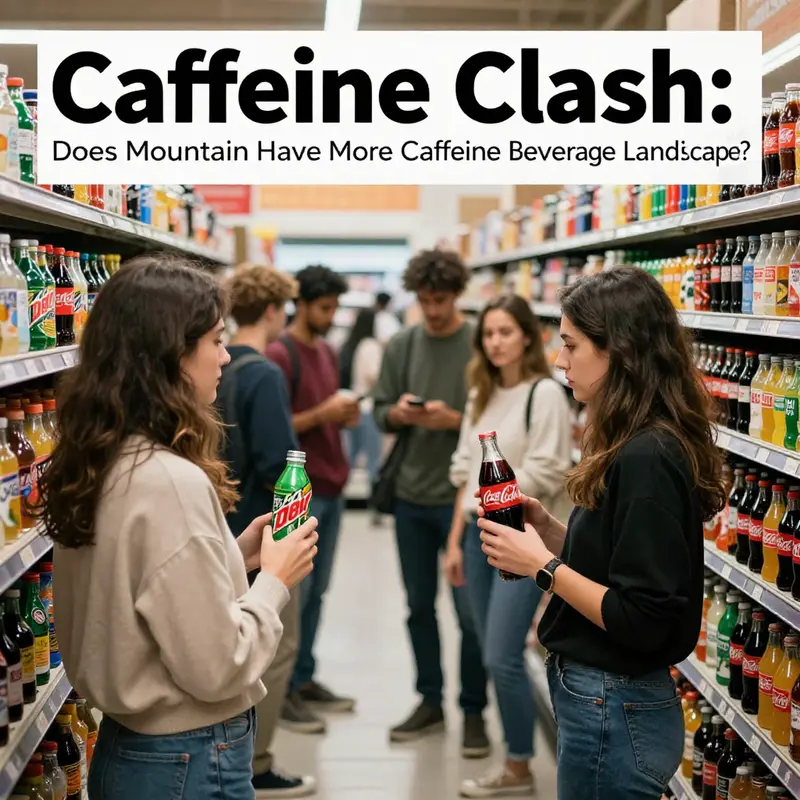
Across the gleaming shelves of the modern store, it’s common to see two popular choices positioned as go-to options for a quick energy lift. One is a citrus-forward, tingly-fresh beverage that has long branded itself as a high-energy pick-me-up, while the other sits in the familiar lineage of classic colas, tied to tradition and everyday refreshment. The question readers keep returning to is simple in form, yet layered in implication: which one carries more caffeine per standard serving, and what does that mean for how we plan our days, manage our energy, and balance our caffeine budgets? The straightforward answer, grounded in standard nutrition panels, is that the citrus-forward option generally contains more caffeine per 12-ounce serving than the classic cola. In numbers, the citrus-forward beverage runs around 54 milligrams per 12-ounce can, while the classic cola comes in at about 34 milligrams per 12-ounce serving. That difference—about 20 milligrams—adds up, especially for people who rely on caffeine as a regular part of their daily routine.
This numerical gap matters not just as a trivia fact but as a practical signal about how we experience lift, how we time our caffeine intake, and how we negotiate our personal limits. A 20-milligram edge might translate into a perceptible difference for some, particularly those who are more caffeine-sensitive or who consume caffeine infrequently. For others, especially those with higher tolerance, the difference may feel less dramatic, a subtle nudge rather than a full sprint. What shapes this experience goes beyond the raw milligrams. It includes how quickly the caffeine is absorbed, how it interacts with other ingredients on the label, and how the body metabolizes caffeine over the course of the day.
To understand the practical implications, it helps to anchor the discussion in context. Caffeine is absorbed into the bloodstream within about 20 to 45 minutes after consumption, with peak concentrations typically reached within that window. The way caffeine makes people feel—whether as a clear-headed boost, a gentle lift, or a jittery unsettling sensation—depends on several factors. Body weight, metabolic rate, prior exposure, and concurrent intake of other stimulants or sugars all color the experience. It’s not merely a matter of dose, but of dose in relation to the person’s unique biology at that moment.
Size matters too, because the beverage market offers more than a single standard serving. A 12-ounce can is a widely used reference, but many people drink larger portions, especially in casual settings or during long workdays. When the standard 12-ounce measure is scaled up, caffeine content scales accordingly, so a 16-ounce portion would deliver roughly one and a third times the caffeine of the 12-ounce reference, assuming similar formulation per ounce. In other words, if you pour or purchase a taller can or a larger bottle, the caffeine difference between the citrus-forward option and the classic cola will grow in proportion to the serving size. Those who routinely sip larger portions to chase a lift should be mindful of how the cumulative caffeine intake stacks up over the day. Equally, those who sip options with lower caffeine per ounce might find themselves choosing a beverage with a smaller total dose simply because they prefer the flavor or the lower sugar impact, and that choice can still fit within a balanced caffeine plan.
Marketing and brand identity also shape how people perceive caffeine content, even when the numerical gap is small. The citrus-forward choice has, for years, cultivated a persona that frames caffeine as a performance ally, something that can accompany workouts, afternoon deadlines, or a mid-commute wake-up. The classic cola, by contrast, often anchors itself in nostalgia and social rituals—the shared bottle or can that signals a casual break or a familiar craving. Those associations influence consumer expectations: the citrus option promises intensity, while the cola promises steadiness. In practice, this means some people may seek out the citrus-forward option precisely because they want a stronger, quicker onset of energy, while others may opt for the classic cola to maintain a steady mood and a familiar taste profile without expecting a dramatic spike in alertness.
When we talk about caffeine in this context, it is also important to separate the caffeine signal from the broader nutritional profile. Both beverages are carbonated and sweetened, and both deliver a caffeine boost that many rely on at different times of day. Yet the sugar load and other ingredients on the label can amplify or attenuate the overall wakefulness or bodily response. For some, the sweetener and carbonation interact with caffeine to create a sensation of a more pronounced lift, while for others the experience may feel more like a gentle perk, with taste and mouthfeel driving the choice more than the caffeine content alone. In short, caffeine is a key factor, but it operates within a larger sensory and metabolic system that includes flavor, temperature, texture, and the eating or drinking context.
A practical takeaway emerges when people begin budgeting their caffeine intake with intention. A standard 12-ounce reference shows a 54-milligram dose for the citrus-forward beverage and 34 milligrams for the classic cola. The difference is real, and for people who are balancing multiple daily caffeine sources—coffee, tea, energy shots, and other caffeinated beverages—the 20-milligram delta can accumulate. In a day with several servings, the citrus-forward option can contribute meaningfully more caffeine than the classic cola, all else being equal. The conversation moves beyond single servings to consider patterns of consumption: Do you habitually drink a can with lunch, another with a late afternoon snack, and a third after dinner? Does your day include early meetings, workouts, or long stretches of concentration where alertness is essential? Each scenario has a cadence and a caffeine budget that can be tuned to personal needs and goals.
The numbers also invite readers to examine how serving size choices interact with taste preferences and energy needs. Some people crave a stronger lift to power through a workout or a long afternoon project, and the citrus-forward option aligns with that aspiration. Others prioritize consistency, avoiding sharp spikes in energy that might lead to a crash later, and may opt for the classic cola not as a compromise of value, but as a rational choice within a broader caffeine strategy. The key is to recognize that caffeine content is a piece of a larger puzzle, not the sole determinant of a beverage’s suitability for a given moment. Taste preferences, timing, daily schedule, and sensitivity all influence which choice feels right at any specific hour.
For readers who want to see the content in a more structured way, a deeper dive into the caffeine content of these beverages can be found through a dedicated resource that examines the same topic in detail. This internal link provides an additional lens on how the numbers are determined, how they can vary by formulation and market, and how readers can interpret those figures in real-world settings. caffeine-content-mt-dew
Beyond the numbers, it is useful to place these beverages within the broader landscape of daily caffeine sources. Coffee remains the most concentrated and familiar daily source for many adults, with a typical cup ranging from about 70 to 140 milligrams depending on brewing method and strength. Tea, cocoa, and certain soft drinks contribute varying amounts, and some beverages marketed as “energy” or “performance” drinks can push caffeine content significantly higher per serving. When comparing the citrus-forward option to the classic cola, the difference in caffeine per serving becomes a signal about where a given choice fits on a person’s overall caffeine budget. A careful shopper who tracks caffeine intake across the entire day might use the 12-ounce reference as a baseline, then adjust based on how much other caffeine they’ve already consumed, how sensitive they are to caffeine, and what the rest of the day requires. For someone who is sensitive or who aims to avoid sleep disruption, that extra 20 milligrams can be a meaningful factor in planning when to consume the next caffeinated source and how late in the day it is prudent to sip.
Alongside the caffeine metric, the sensory and ritual components of consumption cannot be ignored. A beverage’s flavor profile, temperature, and mouthfeel contribute to the subjective strength of the experience. The citrus-forward option often delivers a tangy, bright finish that can feel sharper on the palate, which some people interpret as a stronger lift. The classic cola usually carries a smoother, more familiar sweetness and a longer, lingering mouthfeel. When people describe an energy boost, they may not always be able to separate the effect of caffeine from the taste and texture they associate with that moment of consumption. In practice, diners and desk workers alike may reach for the citrus-forward drink not merely to chase a caffeine jolt but to complement a sensory cue—a bright start to a task, a cooling break on a hot day, or a moment of refreshment after a workout. The cola, with its classic lineage, may be chosen for routine refreshment, a steady accompaniment to conversation, or a predictable companion during a familiar daily rhythm.
Of course, consumers should also be mindful of safety and moderation. The daily limit many health authorities indicate for caffeine is around 400 milligrams for a healthy adult, though sensitivity varies widely. If a person’s day includes multiple caffeinated beverages, plus possible sources like chocolate or certain medications, it is easy to exceed that threshold without realizing it. The citrus-forward option, at 54 milligrams per 12 ounces, contributes more quickly toward that daily ceiling when consumed in combination with other caffeinated products, while the classic cola’s 34 milligrams per 12 ounces makes it somewhat easier to keep the sum manageable. For individuals who are caffeine-sensitive, pregnant or nursing individuals, or those with heart rhythm concerns, these numbers take on even more importance. In such contexts, choosing a lower-caffeine option per serving or limiting the number of servings becomes a prudent strategy, and readers should consult health guidance tailored to their circumstances.
Beyond individual choices, there is a communal dimension to how people think about caffeine. The caffeine content can influence what people choose when they’re out with friends, when they’re on a long drive, or when they want a quick lift before a workout. Some will opt for the citrus-forward option in a scenario that calls for sustained alertness, while others will prefer the classic cola for its familiar, steady presence. The social and cultural cues around caffeine consumption shape how people perceive the impact of a given product, sometimes amplifying or dampening the perceived effect based on expectations. The numbers remain the anchor, but interpretation is colored by habit, mood, and the surrounding environment.
In practical terms, readers can translate these insights into a few actionable guidelines. If you frequently reach for a 12-ounce serving of a caffeinated beverage to power through a mid-afternoon slump, the citrus-forward option will deliver a larger starting push. If you want a lift that feels more modest and steady, or you’re drinking later in the day, the classic cola might be the more appropriate choice to minimize sleep disruption while still providing some alertness. When you’re planning a day that includes strenuous physical activity, consider not only caffeine’s amount but timing. Consuming caffeine about 30 to 60 minutes before a workout can optimize performance for some people, but that window can shift with tolerance and metabolism. Being mindful of timing helps align caffeine intake with energy needs while reducing the chance of a late-day crash that could undermine performance or sleep quality.
Readers who are curious about the nuances behind these numbers will find it worthwhile to consult detailed sources that explain how caffeine content is measured, how formulation changes can alter mg per serving, and how regional variations in labeling may influence the figures. Such resources provide context for the raw numbers and illuminate how a consumer can interpret them in everyday life. External references can illuminate patterns that are not obvious from a single snapshot on a label, such as how caffeine interacts with other ingredients, how market-specific recipes may shift the mg per serving, and how consumer perception can diverge from objective measurements. External reference: https://drinkstack.com/mountain-dew-caffeine-content/
Caffeine Ledger in a Can: How a High-Caffeine Citrus Soda Stacks Up Against Classic Cola in Wakefulness, Habits, and Health

Caffeine, in the end, is a simple molecule with a complicated story. It travels from the stomach to the brain, nudging receptors, altering perception of effort, and shaping how we experience both fatigue and focus. In the marketplace, caffeine becomes a branding tool as much as a stimulant. The citrus-flavored, high-caffeine soda that sits next to the ordinary cola in the beverage aisle is designed not just to quench thirst but to alter mood and energy tempo. When you tilt the can and hear the fizz, you’re hearing more than a sensory cue; you’re hearing a promise of wakefulness. But how much wakefulness does it actually deliver, and what does that imply for consumption patterns across different ages and lifestyles? The story, grounded in data and lived experience, suggests a clear answer: yes, the high-caffeine citrus option contains more caffeine per typical serving than a classic cola, and this difference helps explain some of the distinct consumption behaviors surrounding these drinks.
The numerical landscape is straightforward enough. In a standard 12-ounce serving, the citrus-flavored beverage typically clocks in around fifty-four milligrams of caffeine. The traditional cola, by comparison, sits closer to the mid-thirties. A refined look at the numbers from an earlier, widely cited analysis adds nuance: about 33.9 milligrams for the classic cola, and roughly 54 milligrams for the high-caffeine citrus option, with the diet version of the cola providing its own twist at around 46.3 milligrams per 12 ounces. Those figures reveal a real, measurable gap—the citrus option delivers roughly twenty milligrams more caffeine per can than the classic cola. That delta matters not just in a lab, but in real life: it translates into a more potent subjective lift, a longer perceived duration of effect, and a different rhythm of use across a day. The brand identity built around the citrus soda emphasizes speed of delivery and a bolder energy lift; the cola’s brand story leans toward steadier, more restrained caffeine signaling. The gap is not a marketing curiosity—it is a pharmacological and behavioral reality that helps explain why people reach for one drink over the other in certain moments of need.
This distinction in caffeine content does not occur in a vacuum. It interacts with sugar, labeling, habitual cues, and social context to shape how people choose, crave, and even withdraw from these beverages. The energy-boost narrative attached to the citrus option is appealing in fast-paced work environments, during late-night study sessions, or on days when the body signals a deficit in alertness. The more modest but still present lift from the classic cola may be enough to smooth an afternoon slump or accompany a light meal. For some, the choice is strategic: a higher caffeine option for days demanding sustained focus; a lower-caffeine alternative for moments when heightened arousal feels unnecessary or potentially disruptive to sleep. The decision is rarely only about caffeine content; it is about how a person experiences wakefulness, mood, appetite, and risk tolerance in a particular moment.
The lived experience of caffeine is inseparable from mood and fatigue patterns. In the literature, researchers have observed that higher-caffeine beverages often correlate with certain health and behavior patterns, though causality remains complex and bidirectional. A body of work from around the late 2000s and early 2010s notes that people who consume caffeinated beverages in larger quantities sometimes report mood fluctuations that can be linked to caffeine withdrawal when consumption declines. In plain terms, when a person who habitually relies on a strong lift stops consuming caffeine, they may experience headaches, fatigue, and irritability. This withdrawal can create a self-perpetuating cycle: the need for a quick, reliable uplift drives regular intake, and withdrawal symptoms prompt further use. In cross-sectional observations, the correlation between depressive symptoms and caffeine use has been reported in some samples, with withdrawal effects suspected as one mediating mechanism. While this is not a universal rule—caffeine use impacts individuals differently—the pattern helps illuminate why high-caffeine beverages can become a part of daily routines for some and a source of stress or dependence for others.
Sugar compounds the picture. The citrus high-caffeine option often carries a substantial caloric load from added sugars, which adds another layer to the behavior story. The combination of high sugar and high caffeine can create a rapid energy spike followed by a crash, a cycle that some young adults and adolescents may find particularly appealing as a quick fix for fatigue, social energy, or mood lift. The appeal is not solely about physical stimulation; it also intersects with social rituals—ordering a drink during a break, pairing it with snacks, or using it as a social cue in caffeine-centered routines. Those patterns can become habitual, particularly in environments that prize quick problem-solving, long study hours, or high-demand workloads. In such settings, the difference of twenty milligrams per can can translate into meaningful differences in how long alertness is sustained and how strongly a person’s mood is affected after the first sip.
The health implications, however, deserve careful attention. The scale of caffeine intake matters. For adults, general guidance emphasizes moderation and awareness of individual tolerance. For adolescents and young adults, many health authorities advocate tighter limits, given developing systems and differing sleep and stress patterns. The fact that one option provides a higher caffeine dose per can does not automatically mean it is dangerous, but it does mean that the margin of error for overconsumption grows larger with frequent use. When high-caffeine drinks are used to push through fatigue on a regular basis, the body’s tempo shifts. Sleep may fragment, and the balance between caffeine, sugar, and overall caloric intake can influence weight, energy regulation, and metabolic health. Consumers who prize a mental edge should also remain mindful of how caffeine interacts with medications, anxiety, and insomnia. While caffeine itself is not inherently harmful in moderate amounts, repeated high-dose exposure can complicate sleep architecture and daytime functioning for some people.
From a behavioral standpoint, the presence of a higher-caffeine option complicates how people structure their day. If a worker anticipates a need for sustained focus in the late afternoon, they may plan for a larger caffeine intake earlier in the day to avoid a mid-afternoon lull. Conversely, someone who wants to avoid sleep disruption might choose the lower-caffeine cola in the evening. The interplay of caffeine with social scheduling matters as well. A study of beverage consumption patterns suggests that people often tune their intake to align with work shifts, academic deadlines, or social activities. In these contexts, the higher-caffeine citrus option can serve as a tactical tool for meeting demands that require prolonged alertness, while the classic cola might be reserved for moments of casual uplift or habit rather than strategic energy management.
Labeling and consumer information shape these choices too. When caffeine content is visible and clearly communicated, consumers can better calibrate their intake to fit personal limits and health goals. The broader beverage ecosystem also offers alternatives that vary in caffeine content, sugar, and calories, enabling a spectrum of choices for different lifestyles. The key is not simply to know the numbers but to understand how those numbers translate into daily rhythms. A single can can contribute a noticeable amount to the daily caffeine budget, particularly for individuals who drink several caffeinated beverages in a row or who are sensitive to caffeine’s effects. This awareness invites readers to reflect on their own patterns: Do you reach for the high-caffeine citrus option when fatigue hits, or do you choose the classic cola to avoid a later sleep disruption? Do you pair either choice with dessert, a snack, or a late-night study session? Each question is a window into personal habits that can accumulate into meaningful health outcomes over time.
A broader lens reveals how these beverages fit into public health conversations about sugar consumption and energy regulation. The high-caffeine citrus option, with its stronger lift, often accompanies higher sugar content, which has its own health considerations. Excessive sugar intake links to weight gain, dental concerns, and metabolic shifts that can affect energy management and mood. When both caffeine and sugar are elevated, the body experiences a rapid energy surge and a potential crash that can promote a cycle of repeated intake. Understanding this cycle helps explain why some individuals gravitate toward high-caffeine, high-sugar drinks during demanding periods while others opt for lower-caffeine or sugar-free alternatives to maintain steadier energy levels.
The science invites a balanced perspective. The higher caffeine content in the citrus option is a clear factor in its energy-provision profile, and the numbers are robust enough to establish a real difference from the classic cola. Yet caffeine’s effects are mediated by metabolism, sleep, stress, and overall diet. A person’s vulnerability to sleep disturbance, anxiety, or mood fluctuations can modulate how they experience a given caffeine dose. For some, the difference of twenty milligrams per serving will be noticeable in wakefulness and mood; for others, it may be a subtle shift that matters mainly in cumulative daily intake. This nuanced understanding helps readers resist oversimplified conclusions: caffeine content alone does not determine consumption patterns, but it powerfully nudges behavior when combined with habit, environment, and individual physiology.
In recognizing these dynamics, it becomes possible to approach beverage choices with practical wisdom. If a reader values predictable sleep, they might reserve higher-caffeine drinks for daytime hours and opt for lower-caffeine or caffeine-free alternatives later in the day. If mood stabilization is a concern, they might consider how caffeine interacts with mood fluctuations and withdrawal, planning withdrawals strategically or spacing caffeine breaks to minimize discomfort. If weight management is a goal, they could factor in the sugar content alongside caffeine as part of a holistic lifestyle plan. The takeaway is not to vilify one beverage or to elevate another beyond its real use case. Instead, it is to equip readers with a more complete picture of how caffeine content translates into daily life, how it shapes consumption patterns, and how personal choices align with health priorities.
For readers who want to explore the topic further, a detailed breakdown of caffeine content across common beverages can be a useful reference. The resource linked here offers a data-driven look at how caffeine stacks up in different drinks and can help cross-check the magnitudes discussed above. caffeine-content-mt-dew This internal resource complements the broader narrative by anchoring the numbers in a practical, accessible format. Together with the narrative above, it provides a clear sense of how a real-world choice—between a higher-caffeine citrus option and a classic cola—can ripple through daily life, mood, and health considerations.
In sum, the higher caffeine content in the citrus-flavored beverage is a defining feature that contributes to its energetic identity and its appeal for those seeking a robust lift. That lift, however, comes with a set of behavioral and health implications that are worth recognizing. The classic cola, with its lower caffeine dose, expresses a different energy philosophy—one that aligns with steadier pacing and perhaps a broader tolerance for consistent, moderate arousal. Between these two, consumers navigate a landscape of taste preferences, energy needs, sleep schedules, and health goals. The numbers illuminate the terrain, but the journey through it is guided by personal choice, habit, and context. And as research continues to unfold, the practical takeaway remains straightforward: awareness of caffeine content, paired with mindful consumption, supports healthier, more intentional beverage choices.
External reading note: For a broader scientific perspective on caffeine content and its health implications, see the linked external resource. https://www.ncbi.nlm.nih.gov/pmc/articles/PMC1868728/
Final thoughts
In closing, the caffeine levels in Mountain Dew versus Coca-Cola serve not just as a numerical comparison, but as a reflection of how each brand positions itself in the market. Understanding these dynamics is essential for business owners, as it ultimately shapes consumer preferences and purchasing behaviors. With Mountain Dew offering higher caffeine content, it appeals to consumers seeking an energetic boost, whereas Coca-Cola’s lower caffeine level may resonate with those seeking a classic refreshment. Brands must continuously adapt to these insights to thrive in the competitive beverage landscape.