
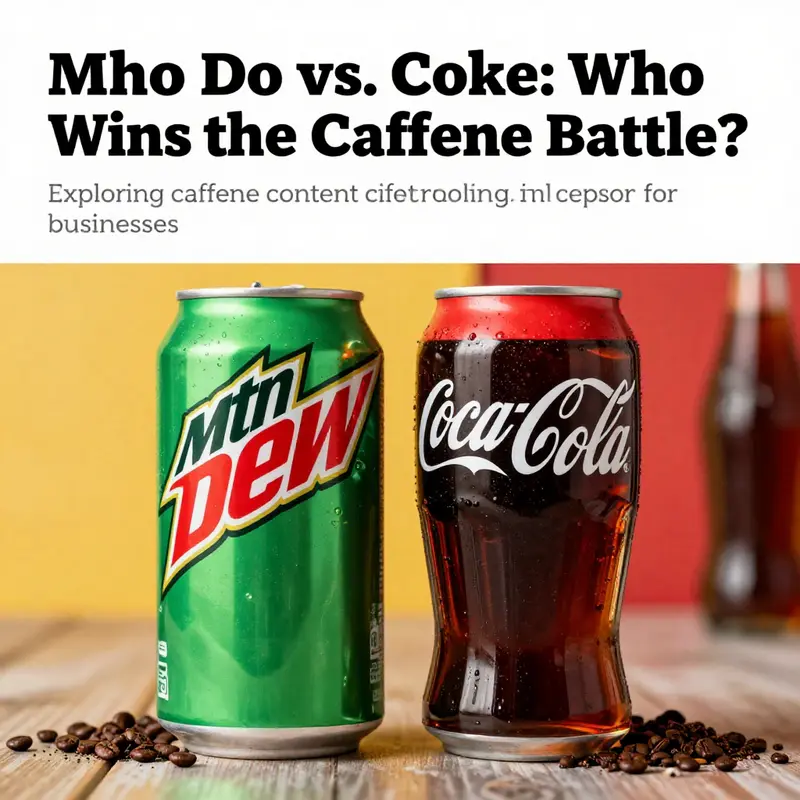
Understanding the caffeine content in popular beverages like Mtn Dew and Coke is vital for business owners in the beverage industry. With Mtn Dew containing approximately 54 mg of caffeine per 12 oz, compared to Coke’s 34 mg, this difference has significant implications. The following chapters delve into the caffeine comparison, health implications of high caffeine consumption, and evolving consumer preferences that influence market trends. Each aspect provides clarity on how to position your offerings effectively in a highly competitive market.
Caffeine Clash: A 12‑Ounce Benchmark Between Mountain Dew and Coca‑Cola
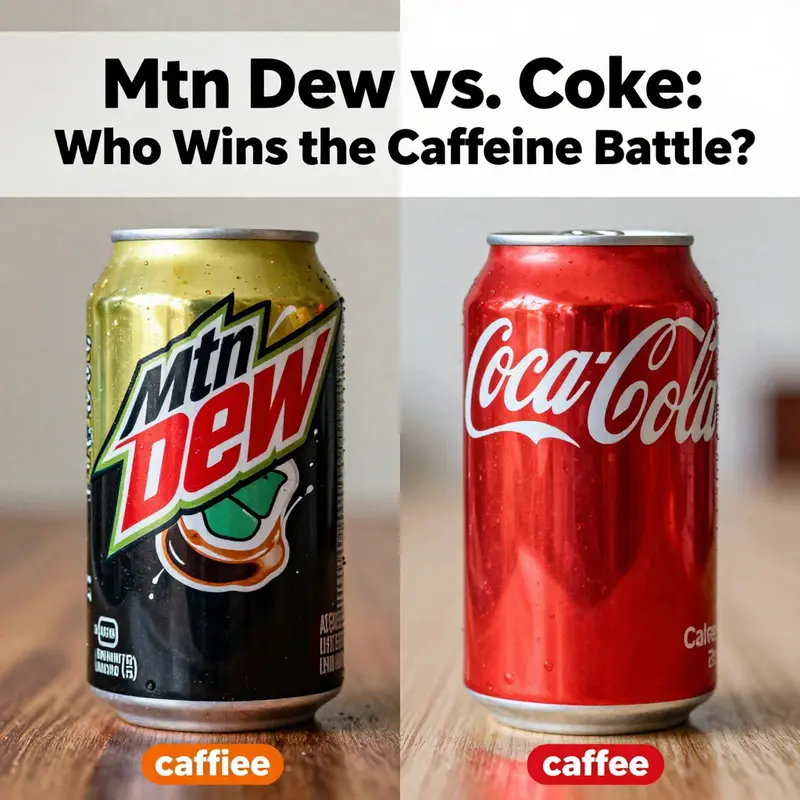
The question of whether Mountain Dew carries more caffeine than Coca‑Cola invites more than a simple yes or no. It invites a careful reading of the numbers and a sense of how people actually drink these beverages in everyday life. When we talk about caffeine content, the yardstick is almost always the 12‑ounce serving, a standard that helps compare different drinks on a level field. In that familiar 12‑ounce measure, Mountain Dew typically contains around 55 milligrams of caffeine, while Coca‑Cola hovers around 34 milligrams. Those figures are not just digits; they map onto real sipping habits and daily caffeine budgets. The difference—roughly 20 milligrams per can—might seem modest at first glance, but it translates into a noticeable gap when you consider how often people reach for a cold can or bottle during a day or a work session. Put differently, Mountain Dew delivers roughly 60 percent more caffeine than Coca‑Cola in the same 12‑ounce amount, a distinction that matters to those who monitor caffeine intake for work, study, or sensitive digestion.
There is a broader landscape behind these numbers. The same rule of a 12‑ounce serving does not apply uniformly across all product lines or regional formulations. Some variants—especially those marketed with sugar substitutes or altered caffeine blends—can drift from the baseline. In the broad context of caffeine in popular beverages, Diet Coke clocks in higher than Coca‑Cola’s classic formula, at about 46 milligrams per 12 ounces, which still remains below Mountain Dew’s 55 milligrams. These nuances matter because many readers will encounter multiple variants in a supermarket or vending machine. It also reminds us that the caffeine content is not a fixed badge; it is a variable that shifts with product line, regional recipes, and even batch-to-batch differences that emerge from the production process itself.
To ground the discussion in practical terms, imagine you open a can of one of these drinks for a quick afternoon pick‑me‑up. The caffeine load from Mountain Dew, at roughly 55 milligrams, is enough to contribute to wakefulness and focus for many people but may be perceptible in those who are caffeine‑sensitive. Coca‑Cola, with about 34 milligrams, provides a gentler lift that still aligns with the familiar, everyday caffeine rhythm. The comparison starts to matter when you pair these beverages with other caffeine sources in a single day, such as coffee, tea, or energy drinks. On a busy day, someone who has a cup of coffee in the morning and then a can of Mountain Dew in the afternoon is already accumulating around 100 milligrams of caffeine in a relatively short window, a total that constrains the rest of the day’s caffeine choices. Conversely, pairing Coca‑Cola with a light morning coffee might keep total intake closer to the mid‑hundreds rather than pushing well beyond.
The numbers, however, exist within a larger social and dietary frame. People drink these beverages for taste, mood, or a quick energy boost, not as precise caffeine measurements. Yet the caffeine content becomes especially relevant in contexts like studying, shift work, or athletic training, where individuals actively manage their caffeine intake to balance alertness with sleep quality or digestive comfort. The difference between 55 and 34 milligrams per 12 ounces may influence decisions about how many cans to consume in a day, what other caffeine sources to include or omit, and how to pace caffeine consumption to avoid jitteriness or disrupted sleep later on. In that sense, the data serve not as a rule book for every situation but as a guide to understanding the potential wakefulness payoff and the cumulative load across a typical day.
For readers who want to trace the insights back to a compact reference, a deeper look into caffeine content across similar beverages can be instructive. A concise profile of how caffeine content scales with serving size helps translate the 12‑ounce benchmark into real‑world choices. If you drink more than 12 ounces, the caffeine figures scale roughly in proportion to the volume. For instance, a 20‑ounce bottle would carry about 91–92 milligrams of caffeine for Mountain Dew and about 57 milligrams for Coca‑Cola, assuming linear scaling from the 12‑ounce baseline. Of course, real products do not always scale exactly linearly due to formulation differences, but these calculations offer a practical approximation for planning a caffeine budget across a day. The takeaway is simple: larger servings magnify the gap that exists in the baseline 12‑ounce comparison, amplifying the practical difference in how these beverages affect alertness and energy rhythm.
Context matters here as well. The caffeine in these drinks is just one piece of a broader profile that often includes sugar and other stimulants. Mountain Dew’s profile, for many consumers, pairs a fairly robust caffeine lift with a pronounced sweetness, creating a quick, robust sensation that feels different from Coca‑Cola’s more restrained caffeine presence. The sensory pairing—sharp citrus notes with a caffeine kick versus a smoother cola finish with a lighter lift—shapes consumer choices beyond mathematics alone. People notice not just the caffeine numbers but the overall sensory and psychological effect: the tempo of energy, the duration of focus, and how ready the mind feels to continue a task. These factors, while intangible, guide everyday decisions about which beverage to reach for at a desk, in a break room, or during a late‑afternoon study surge.
From a public health perspective, the numbers offer a baseline for informed dialogue about caffeine consumption. The majority of health guidelines acknowledge that caffeine can be a part of a balanced routine for most adults, with typical safe daily limits around 400 milligrams. That ceiling leaves room for several servings of many caffeinated beverages, but it also underscores why knowing the per‑serving content matters when planning a day of sipping. A single can of Mountain Dew contributes a meaningful portion of that daily budget, while a can of Coca‑Cola adds less but still contributes to the day’s cumulative load. For people who monitor caffeine intake for sleep, anxiety, or stomach sensitivity, these details become practical tools for decision making. The numbers enable consumers to calibrate expectations about how much alertness they’ll feel, how long it might last, and how it might interact with meals or other stimulants.
In this sense, the comparison is not merely a numeric contest but a lens into everyday caffeine economies. The two beverages sit at an intersection of flavor preference, caffeine strategy, and daily routine. A citrus‑forward, higher‑caffeine option might appeal to someone who needs a stronger midday lift to power through a long task—perhaps while juggling multiple responsibilities or studying late. A lighter caffeine option may suit someone who aims for steady energy without a pronounced surge or who is more sensitive to caffeine’s effects. The broader takeaway is that the caffeine content in a single 12‑ounce serving is a meaningful data point, but the personal impact depends on how the drink fits into a larger pattern of consumption and daily rhythm.
To connect this discussion to a wider conversation about caffeine content in beverages, a quick cross‑reference can be illuminating. For readers who want to explore this topic further, a focused resource on the caffeine content of Mountain Dew offers a deeper dive into how this brand’s formulations compare specifically to other caffeinated drinks. See the dedicated page on caffeine content for Mountain Dew for a deeper, data‑driven look at how the numbers stack up across the brand’s lineup. caffeine-content-mt-dew provides a concise snapshot that complements the broader discussion here and helps readers translate the headline numbers into everyday choices.
Beyond the core pair, it is worth acknowledging that the landscape of caffeinated beverages is diverse. While the 12‑ounce benchmark provides a clear face‑off, many people opt for larger quantities, mix beverages with other caffeinated sources, or choose low‑caffeine or caffeine‑free variants for nighttime consumption. The pattern remains consistent: when serving sizes grow, caffeine totals rise; a slightly higher baseline in one brand will translate into a larger total for any given volume. This is why, in discussions of caffeine, numbers should be paired with context—the serving size, the other caffeine sources in a day, and the person’s own tolerance and goals.
To close the loop on the core question: yes, in a standard 12‑ounce measure, Mountain Dew generally contains more caffeine than Coca‑Cola. The margin is substantial enough to influence decisions in the moment and in daily planning. The data are not placeholders; they reflect real formulations that have lasting effects on energy, focus, and daily rhythm. For those who want to explore the numerical landscape further, a quick, practical reference point is the Mountain Dew caffeine content overview linked above. It anchors the comparison in a concise format and invites readers to consider how different serving sizes change the math of caffeine in daily life.
External resource for further reading: https://www.coffeeinsider.com/soda-caffeine-content/
Internal reference for a deeper dive into caffeine content in Mountain Dew: caffeine-content-mt-dew
Caffeine Currents in a Can: Does Mountain Dew Carry More Stimulation Than Coke—and What It Means for Your Day

A quick spark can nudge a late morning or late-night task into motion, but not all sparks are created equal. In the realm of everyday beverages, two names surface again and again when people think about a caffeine kick: Mountain Dew and Coca-Cola. The question—Does Mountain Dew contain more caffeine than Coca-Cola?—is popular precisely because the answer matters for how people plan their days. The numbers are surprisingly straightforward on the surface: a standard 12-ounce can of Mountain Dew typically carries about 55 milligrams of caffeine, while a like-sized Coca-Cola can contains about 34 milligrams. Put differently, Mountain Dew delivers roughly sixty percent more caffeine per can than regular Coke. And even within this comparison, there is nuance: sugar-free or reduced-sugar variants and regional formula changes can shift caffeine content slightly, though the general pattern remains that Mountain Dew leans higher on the caffeine scale. For readers who care about the exact figures, a handy post dedicated to the caffeine content of Mountain Dew provides a precise breakdown and context, and it sits just a click away in the internal links. Caffeine content of Mountain Dew.
The arithmetic is clear enough, but the meaning behind the numbers requires a broader look at caffeine as a stimulant. Caffeine works by blocking adenosine receptors in the brain, which helps to reduce the feeling of tiredness and can sharpen attention for a while. The effect is usually felt within half an hour of ingestion and can last several hours, depending on a person’s metabolism, body mass, and tolerance. The same dose can feel quite different to different people. For some, the 55-milligram level per can provides a gentle lift that complements a cup of coffee or a snack. For others, it can feel like a more pronounced nudge, enough to make a plan for staying awake through a long day or late-night revision session. The key point is that caffeine is a dose-dependent signal: more caffeine tends to produce stronger stimulation, but it also raises the chance of side effects if the amount becomes excessive or poorly timed with sleep.
From a public health standpoint, it helps to anchor the discussion to a practical daily ceiling. For most healthy adults, up to about 400 milligrams of caffeine per day is generally considered safe. That means a single Mountain Dew can be a sizable portion of the daily limit if a person consumes more than one can, along with coffee, tea, energy drinks, or other caffeinated products. The Coca-Cola figure, at about 34 milligrams per can, represents a smaller chunk of that daily budget, but it can still accumulate quickly if someone drinks several servings or combines it with other caffeine sources. It is worth noting that broader product lines and regional variants do show some deviation. In the same family of beverages, a diet version may carry different caffeine levels, yet even then Mountain Dew tends to remain higher in caffeine content than regular Coca-Cola. This observation aligns with a broader theme in consumer beverages: caffeine tends to be a deliberate component chosen to support a particular brand identity—one that promises alertness alongside taste.
The health implications of consuming higher caffeine levels in a sugary, acidic drink are not limited to alertness or energy. Caffeine only tells part of the story. The metabolic and cardiovascular responses to caffeine can include temporary increases in heart rate and blood pressure, especially for sensitive individuals or for those who consume caffeine later in the day. Sleep disruption is a common consequence when caffeine enters the bloodstream near bedtime. Even if the immediate effects feel manageable, the downstream impact can manifest as reduced sleep quality, longer time to fall asleep, and a restless night that leaves the next day feeling foggy or depleted. This is particularly relevant for people who are already operating on a tight sleep schedule, students juggling coursework, shift workers, or anyone whose daily rhythm hinges on a reliable sleep-wake cycle.
An additional lens through which to view caffeine is its interaction with sugar and acidity. Mountain Dew, like many caffeinated sodas, supplies a significant amount of added sugar. The energy boost people seek often accompanies a rapid rise in blood glucose, followed by a crash that can prompt another round of caffeine intake or another sugary beverage. This cyclical pattern can complicate efforts to manage energy levels, mood, and cravings throughout the day. Beyond sugar, Mountain Dew’s citric acid and phosphoric acid contribute to the drink’s sharp tang but also pose concerns for dental enamel when consumed frequently or in large amounts. Acids can erode enamel over time, and frequent exposure to acidic, caffeinated beverages can amplify the risk of dental issues, especially when oral hygiene is not meticulous. For those balancing caffeine with dental health goals, this is a practical reason to monitor frequency and to pair such beverages with water, fluoride toothpaste, and regular dental care.
The issue is not simply a matter of “more caffeine equals more danger.” Context matters. The American Heart Association emphasizes that caffeine safety interacts with overall cardiovascular health, sugar intake, and individual sensitivity. Their guidance highlights that caffeine can be part of a healthy pattern for many adults but cautions against excessive intake and overreliance on sugary, caffeinated drinks as a primary energy source. The take-home message is that a high-caffeine beverage like Mountain Dew can contribute a meaningful portion of the daily caffeine budget, but it should be understood in the larger frame of a person’s total diet, sleep, stress, and activity levels. Readers who want a deeper evidence-based overview can consult the American Heart Association’s caffeine guidance, which discusses heart health considerations and safe consumption patterns. The resource provides a broader context for when caffeine crosses from a temporary stimulant to a factor that should be monitored, especially for those with certain health conditions or caffeine sensitivity.
In considering the practical choice between Mountain Dew and Coca-Cola, many people look beyond caffeine alone. They balance thirst, taste, sugar craving, and the social or convenience context in which a drink is consumed. If the goal is to minimize caffeine while still enjoying a fizzy, refreshing beverage, Coca-Cola offers a lower caffeine option per can. If the goal is to maximize caffeine within a familiar flavor profile, Mountain Dew is a straightforward choice. Yet the decision is rarely driven by caffeine alone. The same can of beverage can be a source of hydration or a source of energy, but it can also contribute to a crowded daily caffeine tally when paired with coffee, tea, energy drinks, or other caffeinated products. The broader picture includes dietary patterns, sleep routines, and activity levels.
What this means for daily life is practical and personal. For a student burning the midnight oil, a single Mountain Dew may be an efficient way to maintain focus during a study session, especially when coffee isn’t available. For someone who begins the day with a coffee mug and then reaches for a soda later, the cumulative caffeine load may push past comfort or sleep boundaries. For parents navigating school drop-offs and evening chores, a lower caffeine choice or a caffeine-neutral beverage might fit better with a family’s daytime rhythm. And for those who are particularly caffeine sensitive or who have certain heart or anxiety-related conditions, even the Mountain Dew level may feel excessive on days with little physical activity or sleep loss. The point is not to demonize a single beverage but to recognize how the numbers translate into daily behavior and health outcomes.
As with many nutrition-focused questions, context and personalization matter. If you’re curious about the exact caffeine profile of a specific Mountain Dew variant or a particular Coca-Cola product you buy, it is worth checking the nutrition facts panel on the can or bottle. The figures can vary by flavor, regional formula, or product line, and keeping a simple log can make a noticeable difference in total daily caffeine intake. This is especially relevant for people who are trying to keep caffeine within a target range, children and adolescents who are more susceptible to caffeine’s effects, or adults who are balancing caffeine with other stimulants like sleep deprivation, high stress, or intense physical training. The greater lesson is clear: caffeine is a tool, and like any tool, its value depends on how and when it is used.
For readers who want a quick reference to the exact caffeine figures and a concise comparison, the linked post on caffeine content of Mountain Dew provides a precise breakdown with the latest tested values. Taking a moment to review that resource can help translate the numbers into everyday choices. Understanding the caffeine gap between Mountain Dew and Coca-Cola helps set expectations for what a typical can can contribute to daily energy, rather than relying on memory alone.
From a consumer perspective, the choice often comes down to appetite, schedule, and a personal tolerance for caffeine and sugar. If you want to keep caffeine within a safe corridor while still enjoying a fizzy drink on occasion, consider alternating with water or unsweetened beverages. If you crave the flavor profile of Mountain Dew but want to keep caffeine in check, a half serving paired with a noncaffeinated beverage could offer a balanced compromise. If taste and alertness align with your daily routine, a single can can serve its purpose without tipping the scales, so long as it fits into a broader, thoughtful approach to caffeine and sugar intake.
For readers seeking a broader health perspective, this discussion sits within a larger conversation about how caffeine intersects with sleep, heart health, and dental care. The guidance from health authorities is not meant to scold but to empower individuals to make choices aligned with their health goals and daily demands. In this context, the caffeine difference between Mountain Dew and Coca-Cola becomes a practical data point rather than a moral verdict. It serves as a reminder that even everyday beverages carry health implications, and mindful consumption is often the best path. The responsibility lies with consumers to balance taste and energy with rest, nutrition, and dental hygiene, and to use the information about caffeine content as a guide rather than a rule.
If you’re curious how these numbers compare across the broader landscape of caffeinated beverages, a careful look at the nutrition information for other popular drinks can provide additional perspective. The same analytical lens can apply to energy drinks, iced teas, and even some fruit-forward caffeinated beverages that enter the market with bold claims about energy and focus. The bottom line remains consistent: Mountain Dew tends to deliver more caffeine per 12-ounce serving than regular Coca-Cola, with all the caveats about variants and regional formulas. And with that understanding, readers can tailor their choices to fit personal health goals, sleep patterns, and daily routines, rather than relying on instinct alone.
In closing, caffeine content is a real factor in how a beverage fits into a given day, but it is only one piece of a larger health puzzle. The numbers matter, yet the real impact comes when they interact with sleep, diet, hydration, and stress. For a concise, evidence-based check on caffeine safety and heart health, see the guidance from the American Heart Association. Their resource offers a broader framework for making informed choices about caffeine in daily life. https://www.heart.org/en/healthy-living/healthy-eating/eat-smart/nutrition-basics/caffeine-and-heart-health
Voltage and Flavor: Reading the Caffeine Gap Between Mountain Dew and Coke
Caffeine is more than a jolt of energy in a bottle; it is a signal about who a beverage is for and what that beverage promises beyond taste. When people ask whether Mountain Dew has more caffeine than Coca-Cola, they are touching a broader conversation about how modern beverage brands position themselves in a crowded marketplace. The question is rarely just about a number on a label. It is about how a brand frames energy, speed, and focus as a lifestyle choice. In that sense, the simple comparison—Mountain Dew carrying a higher caffeine punch per 12-ounce serving than Coca-Cola—reads like a microcosm of contemporary market dynamics. It is a story of how taste and function meet in the hands of consumers who want both a flavor experience and a sense of momentum in their day. The numbers, when anchored to real-world serving sizes, tell a clear tale: per standard 12-ounce servings, Mountain Dew delivers around 55 milligrams of caffeine, while Coca-Cola clocks in at roughly 34 milligrams. That roughly 20-milligram difference is not a trivial distinction for many buyers. It is a difference that shapes shopping choices, gaming sessions, study nights, and the casual moments when a quick pick-me-up is enough to reset attention or lift mood. The contrast sits at the intersection of flavor identity and functional promise, a crossroads where marketing meets physiology and where consumer expectations become product design decisions.
To understand why that gap matters, it helps to consider the broader landscape of consumer preferences and market trends. In a world where beverages are increasingly assessed on more than taste—where clarity about caffeine, sugar, and other stimulants matters to health-conscious buyers, athletes, students, and shift workers—Mountain Dew’s stronger caffeine profile positions it as a distinctly energizing option within the cola family. The product’s branding, with its bold color, high-energy imagery, and associations with speed, sports, and late-night activity, reinforces the idea that a caffeinated boost can accompany momentum without sacrificing flavor. Coca-Cola, in contrast, leans into a classic, balanced profile. The sweetness, the familiar caramel notes, and the steady, moderate caffeine level work together to offer a reliable, milder stimulant that aligns with a broad audience and a more traditional drinking ritual. This divergence in caffeine content aligns with a broader consumer appetite for beverages that deliver not just refreshment, but a perceived enhancement in alertness, focus, or quick energy during a busy day. The market has evolved beyond the simple dichotomy of “sugar versus caffeine” to a more nuanced expectation: a product should taste good, feel satisfying, and offer a measurable, credible functional benefit that matches the consumer’s pace.
In this context, the numerical difference becomes a signal to a particular segment of buyers. People who routinely engage in late-night study sessions, long gaming marathons, or fast-paced workdays may perceive Mountain Dew as a tool that helps them push through moments when a longer-term energy plan would require a combination of sleep, hydration, and nutrition. The higher caffeine content can be interpreted as a practical cue—a quick way to regain a degree of mental clarity when attention starts to drift. For many, that cue is enough to convert a casual purchase into a repeat habit, especially when the flavor profile also satisfies a craving for something bold and distinctive. Coca-Cola, with its timeless appeal and broad social flavor, tends to anchor consumption in moments of social connection, shared breaks, and everyday refreshment. The caffeine difference, in this framing, becomes part of a broader narrative about timing, intention, and the setting in which the beverage is consumed. The consumer’s choice then reflects not only a taste preference but also the perceived need for a sharper cognitive or physical nudge at a particular moment.
From a market-trend perspective, this caffeine gap mirrors a shift toward products that offer functional benefits beyond simple enjoyment. Across many beverage categories, consumers increasingly seek brands that deliver a sense of energy, focus, or wakefulness—without committing to a separate energy-drink category. Mountain Dew’s positioning as a high-energy option, paired with its bold, unmistakable flavor, taps into a demographic that values immediacy and intensity. The caffeine content acts as a differentiator in a crowded shelf where many drinks compete on sweetness, branding, and social signaling. Coca-Cola’s enduring strength rests in familiarity, versatility, and a broader demographic reach; its caffeine level, while still providing a noticeable lift, resonates with a wide audience that values consistency, tradition, and the social rituals of sharing a cold cola in a moment of leisure. In other words, caffeine content is not an isolated fact; it is a strategic signal that influences how brands cultivate loyalty and how consumers frame their own routines around refreshment and focus.
The research results supporting this narrative are straightforward, but they demand careful attention to measurement context. A 12-ounce serving of Mountain Dew contains approximately 55 milligrams of caffeine, whereas a 12-ounce can of regular Coca-Cola contains about 34 milligrams. Those numbers come from standard formulations intended for typical consumer packaging and consumption patterns. It is important to note that product lines and regional formulations can shift the figures. Diet or zero-sugar variants, for instance, may show different caffeine levels due to formulation choices designed to maintain taste while delivering the desired stimulant effect. Similarly, some markets may offer slightly different caffeine benchmarks in response to local regulations or consumer expectations. Yet the overarching pattern endures: Mountain Dew tends to deliver a higher caffeine boost per standard serving than Coca-Cola, reinforcing its market positioning as a more energizing option within the cola ecosystem. The existence of this pattern is not merely a curiosity for ingredient nerds; it informs how retailers stock shelves, how marketers craft messaging, and how casual readers interpret their own energy needs in a single, convenient choice.
For readers who want to see a more granular breakdown, consider how caffeine interacts with other beverage ingredients and how those interactions shape overall experience. The caffeine dose is not consumed in isolation. It interacts with sugar, acidity, carbonation, and the presence of other stimulants that might appear in adjacent product lines or seasonal variants. The sugar content, too, matters in how the experience feels. A higher sugar load can intensify a quick energy spike and then a subsequent crash, or it can simply contribute to a long-satisfying flavor profile that people associate with a full sensory experience. In Mountain Dew, substantial sweetness and bold, citrus-forward notes combine with caffeine to create a sensory and physiological package that many interpret as a complete energy-forward experience. Coca-Cola, with a smoother, more balanced flavor and a comparatively lower caffeine count, often delivers a steady, satisfying lift that fits into everyday routines without demanding a dramatic battery of consequences while finishing a can.
This dynamic also invites consideration of how marketing narratives frame energy and alertness in a way that resonates with different life rhythms. For younger audiences, the idea of powering through a gaming session or early-morning classes with a strong caffeine kick can be a persuasive story. The brand narrative may emphasize intensity, speed, and a sense of momentum—traits that align well with a higher caffeine content and a bold flavor profile. For a broader, more diverse consumer base, the message may lean toward reliability and comfort, presenting a familiar taste with a predictable lift. In both cases, caffeine serves as a communicative tool that helps sellers connect with buyers who are increasingly mindful of caffeine content as they manage caffeine intake, daily schedules, and personal health considerations.
The nuances of caffeine content extend beyond the two flagship beverages and into the wider discourse on how we evaluate beverages in the digital age. Consumers now frequently search for precise caffeine numbers, compare them across brands, and consider how these figures align with their own caffeine tolerance and daily limits. In this environment, manufacturers and retailers benefit from clear labeling and consistent data, which helps to build trust. The numbers cited above—55 milligrams for a Mountain Dew 12-ounce serving and 34 milligrams for a Coca-Cola 12-ounce serving—offer a baseline that can guide shoppers as they navigate the grocery aisles and online carts. They also provide a reference point for journalists, bloggers, and educators who are explaining the caffeine landscape to a public increasingly invested in how much caffeine they consume and why.
To those who crave a precise, source-driven confirmation, it helps to consult the manufacturer’s data and related resources. The official information on caffeine content published by the brand’s parent company offers a transparent view of how much caffeine is present in standard formulations. This is especially important in a marketplace where regional variants and product line extensions can alter the numbers, sometimes in subtle ways. For readers seeking a direct, verified reference, the internal breakdown often cited by enthusiasts and researchers aligns with these results and supports the broader narrative of a caffeine gap between the two beverages. In addition to recognizing the numerical difference, readers should be mindful of context: serving size matters, as does the possibility of different formulations in different markets. An 8-ounce or 16-ounce serving can shift the caffeine-per-serving calculation and change the perception of how strong a beverage truly is. The bottom line remains that, in standard 12-ounce servings, Mountain Dew offers a higher caffeine content than Coca-Cola, a difference that persists across many markets and product iterations even as brands refine flavors and marketing stories to fit evolving consumer preferences.
For those who want to explore this topic further beyond the numbers, the internal resource provides a detailed, accessible breakdown of caffeine content across relevant Mountain Dew formulations. It is a useful companion to the general market narrative, offering a more granular view that helps readers understand how the caffeine profile is crafted and how it can shift with formulation changes or regional adaptations. The conversation about caffeine is not a static one; it evolves as brands experiment with taste, texture, and legislative or health considerations. The key takeaway is that the caffeine gap between Mountain Dew and Coca-Cola is a meaningful data point in a broader ecosystem where energy, taste, and consumer identity intersect. It speaks to how today’s beverage brands are simultaneously flavor companies and functional brands, each with a distinct approach to helping people move through their days with a bit more clarity, focus, or momentum.
For readers who want a concise reference to the exact figures, here is the essence of the comparison: per 12-ounce serving, Mountain Dew contains about 55 milligrams of caffeine, while Coca-Cola contains about 34 milligrams. This is not a universal verdict for every variant or market, but it remains a robust guideline that helps explain why Mountain Dew is often perceived as the higher-energy option within the traditional soda category. The broader implication for consumer behavior is that caffeine matters not only as a physical stimulant but as a signifier of brand intent. When a beverage markets itself as a source of quick, undiluted energy, it naturally appeals to a segment of users who prioritize immediacy and intensity. When a beverage markets itself as a classic, trusted companion for everyday moments, the caffeine level becomes a background signal that supports reliability and routine rather than a dramatic energy shift. Both strategies coexist in today’s beverage landscape, and both inform how people choose what to drink in different contexts and at different times of day.
The narrative above also invites a practical note about how readers, researchers, and casual consumers should approach caffeine data. If you are comparing two beverages, the simplest, most apples-to-apples approach is to compare equal serving sizes. In the soda world, 12-ounce equivalents are a common standard, but many people drink from 16-ounce cans or bottles, or even buy multipacks that encourage larger daily intakes. When the serving size changes, the total caffeine amount changes, but the relative difference may stay similar or become more pronounced. A careful reader will also pay attention to other stimulants or additives that might accompany caffeine in some product lines, and will consider the total stimulant package rather than caffeine alone. The conversation, therefore, moves beyond a single figure to a more nuanced understanding of how brands craft an energizing experience that blends taste, sensation, and perceived mental clarity. This level of nuance is what makes the caffeine question a useful lens for examining consumer preferences and market dynamics, rather than a mere arithmetic exercise.
Readers curious about the exact, official data beyond the narrative should consult the manufacturer’s information on caffeine content for Mountain Dew and related products. This external reference adds a layer of verification to the numbers discussed and helps anchor the discussion in verifiable, primary-source data. For a broad sense of official data and brand context, see the external resource linked here: https://www.pepsico.com/our-brands/mountain-dew. Alongside this, researchers and curious readers can explore related analyses of caffeine content across popular sodas in the referenced internal guide, which consolidates data and clarifies how to interpret it in real-world consumption scenarios. The combination of sample figures and authoritative references provides a solid foundation for understanding not just which drink has more caffeine, but what those numbers imply for consumer choice, marketing strategy, and the evolving preferences of a caffeinated, flavor-seeking public.
In sum, the caffeine gap between Mountain Dew and Coca-Cola is a substantive marker of how modern audiences evaluate energy and refreshment. It signals a shift toward beverages that offer tangible cognitive or physical benefits while still delivering flavor and brand identity. It also highlights how manufacturers balance taste with function to capture different moments in a consumer’s day—from the quick pick-me-up during a demanding work shift to a casual, social moment of sharing a familiar beverage with friends. The numbers are important, but the story they tell is even more compelling: a dynamic market where caffeine content informs identity, choice, and the ongoing conversation about how we drink to stay alert, stay engaged, and stay on pace with the rhythms of contemporary life.
Final thoughts
The caffeine content in beverages like Mtn Dew and Coke not only impacts health but significantly shapes consumer choices and market dynamics. As a business owner, understanding these nuances allows for more informed decisions regarding product offerings, marketing strategies, and customer engagement. Adapting to consumer preferences and health considerations can provide a competitive edge in a crowded marketplace.