
Caffeine is a key ingredient that influences consumer choices in the beverage industry. For business owners in the soft drink sector, understanding the caffeine content in products like Dr Pepper and Diet Dr Pepper can inform marketing strategies and consumer engagement. In this exploration, we’ll first dissect the exact caffeine levels in these popular drinks, followed by a comparative analysis with other leading soft drinks. Lastly, we’ll tackle the misconceptions surrounding caffeine in Diet Dr Pepper, offering insights that can shape customer perceptions and sales tactics.
Buzz in a Can: Unraveling the Subtle Caffeine Balance in Dr Pepper and Diet Dr Pepper
Caffeine lives in the everyday rituals we barely notice, tucked into the fizz and the bite of drinks we reach for on a crowded shelf or a late-night desk. When we talk about Dr Pepper and its zero-sugar counterpart, the conversation often centers on flavor, sweetness, and a peculiar blend of spice and fruit notes that give the beverage its unmistakable character. Yet beneath that flavor profile lies a simple, steady stimulant: caffeine. The practical question for most readers is not whether caffeine exists in these drinks, but how much, and what that means for a person’s daily intake. Numbers matter here, not as abstract trivia but as real metrics that shape how a beverage fits into a broader pattern of daily caffeine consumption. And because many people assume that a Diet version would be caffeine-free, the actual figures can surprise even the most caffeine-aware snackers. The latest measurements place regular Dr Pepper and Diet Dr Pepper in a familiar neighborhood of caffeine content, a neighborhood where the difference between the two is small enough to feel almost negligible, yet meaningful when you are tracking every milligram.
Across reputable analyses, the caffeine content in a standard 12-fluid-ounce (355-milliliter) serving of Dr Pepper sits in the low forties of milligrams. A commonly cited figure is 41 milligrams for regular Dr Pepper, with Diet Dr Pepper landing at 42 milligrams per 12-ounce can. Those values place both beverages in a mid-range tier when you compare them to other well-known sodas. For instance, Coca-Cola generally clocks in around 34 milligrams per 12 ounces, and Pepsi comes in near 38 milligrams for the same serving size. The picture is consistent enough to suggest that the caffeine level is not a dramatic outlier in this category, but it is also clear that Diet Dr Pepper does not escape the caffeine footprint simply by virtue of being sugar-free. In fact, the Diet variant tends to hover at a slightly higher figure than the regular version in many official analyses. That small edge, a matter of a few milligrams, is not a dramatic caffeine boost for most people, but it can be relevant for those who monitor every milligram, or who are trying to calibrate caffeine intake across multiple drinks in a day.
The presence of caffeine in Diet Dr Pepper, despite its zero-sugar formulation, invites a closer look at how these beverages are crafted. The consistent takeaway from the data is that caffeine content tends to mirror the beverage’s need to preserve a certain sensory balance. In Diet Dr Pepper, sweeteners such as aspartame and Ace-K (acesulfame potassium) are used to replace sugar, and the formulation adjustments made to maintain flavor can interact with other ingredients in subtle, technical ways. Caffeine, however, is not merely a flavoring component; it is a stimulant that contributes to mouthfeel and perceived energy. Its level is adjusted in the recipe alongside flavor compounds, acidity, carbonation, and the delicate weight of sweeteners. In a practical sense, caffeine in Diet Dr Pepper is a fixed element of the mix, a similar stimulant to its regular counterpart, even though one carries zero calories from sugar. The upshot is that you should not assume a zero-caffeine experience just because the beverage is labeled Diet. In this respect, the brand’s design aligns with the broader category of carbonated beverages that maintain caffeine as a stable feature, despite any changes in sugar content or sweetness strategy.
This nuanced picture becomes clearer when you compare the caffeine payload to the typical caffeine content of coffee or energy drinks. A standard cup of brewed coffee often delivers around 95 milligrams of caffeine, though the range can vary widely with roast level and brewing technique. By those standards, a 12-ounce can of Dr Pepper or Diet Dr Pepper offers roughly one-third or less of the caffeine found in a cup of coffee. The story looks different when you consider energy drinks, which can range from the low tens to several dozens of milligrams per serving and sometimes explode into well over 100 milligrams per can. In that spectrum, Dr Pepper and Diet Dr Pepper sit in a middle ground: enough caffeine to impart a mild lift, but not so much as to resemble an energy drink or a robust coffee experience. For many people, that level is sufficient to feel a gentle, steadier alertness, a stimulation that can be described as a steady hum rather than a sharp spike. The practical implication is that these beverages can function as a modest caffeine source for those who prefer a softer stimulant profile, or they can be integrated into a broader pattern of caffeine consumption with careful planning around other sources.
What counts as a “moderate” amount is, of course, context dependent. The numbers discussed here—roughly 41 milligrams for regular Dr Pepper and 42 milligrams for Diet Dr Pepper per 12-ounce serving—sit within a band that many health guidelines interpret as moderate. For most adults, limiting caffeine intake to roughly 200 to 400 milligrams per day is considered a general safe range, though individual sensitivity varies. For someone who drinks one can in the morning and another during the afternoon, the caffeine load adds up in a way that can affect sleep quality if late-day consumption is not mindful. And for individuals with caffeine sensitivity, a lower tolerance can turn a typical can into a noticeable stimulant, potentially causing jitteriness, increased heart rate, or disrupted sleep even when the intake is spread across a day. Pregnant individuals are often advised to limit caffeine intake further, though the exact threshold can depend on medical guidance and personal health considerations. Reading labels with an eye toward the serving size and the cumulative caffeine load helps translate the numbers on the page into practical daily choices.
The small difference between regular and Diet Dr Pepper—Diet edging out by a milligram or two in certain datasets—merits a moment of reflection beyond the arithmetic. Formulators do not set caffeine as an afterthought; it is a fixed parameter that interacts with sweetness, acidity, carbonation, and taste. When sugar is removed, the overall sensory balance shifts. The chemists and sensory scientists who work on these products adjust other ingredients to compensate for the changes that sweetness and texture would otherwise bring. In that light, the slightly higher caffeine figure in Diet Dr Pepper can be seen as part of a broader strategy to preserve the familiar flavor profile while using non-nutritive sweeteners. The result is a product that tastes like the traditional experience but carries a caffeine contribution that remains in the same neighborhood as the regular version. It is a reminder that zero calories do not translate into zero caffeine, a fact that surprises some readers who assume the label alone tells the whole story.
If you peer into the way people talk about caffeine in soft drinks, you will often hear a mix of curiosity and reassurance. The numbers—around 40 milligrams per can—are not a guarantee of energy to rival a strong coffee but rather a signal of a mild stimulant. This is precisely the space where many shoppers place Dr Pepper and Diet Dr Pepper in their daily routines: a flavor-forward choice that offers a small but tangible lift without the intensity associated with more concentrated caffeine sources. It is a place where routine becomes habit, and habit can shape daily energy rhythms as surely as any cookie-cutter caffeine policy. For some, that mild lift is enough to sustain attention during a long afternoon, to maintain focus while juggling errands, or to provide a gentle nudge after a late dinner. For others, especially those who must monitor caffeine intake for health or sleep reasons, the key takeaway is that even zero-sugar beverages can contribute to overall stimulant exposure. The lesson is not to demonize an everyday drink but to understand and manage its place within a broader dietary pattern.
From a consumer perspective, there is value in knowing that the caffeine content figures are not a rigid, one-size-fits-all statistic. The numbers come from standardized serving sizes and controlled measurement practices, yet real-world intake reflects variability in pouring, can size, and even regional formulations. A 12-ounce can remains the benchmark, but you might encounter variations in tiny batches or regional differences that shift the exact milligram count by a small margin. The bottom line remains clear: in most ordinary contexts, you can expect regular Dr Pepper to contribute about 41 milligrams of caffeine per can and Diet Dr Pepper to contribute about 42 milligrams. That proximity makes the decision to choose one over the other largely about taste preference and sugar considerations, rather than dramatic differences in stimulation. Yet for someone who is tracking caffeine strictly, those few milligrams do matter and should be accounted for alongside other caffeine sources such as tea, coffee, chocolate, and certain medications. The practice of monitoring intake slowly builds a more accurate picture of how caffeine daily life adds up, and that is exactly the kind of awareness that helps people balance enjoyment with health goals.
If you want a concise, shareable summary of the data and a quick reference for those who track caffeine, the takeaway remains straightforward. Regular Dr Pepper contains around 41 milligrams of caffeine per 12-ounce serving, while Diet Dr Pepper contains around 42 milligrams per 12-ounce serving. Both sit in a moderate range relative to coffee and energy drinks, offering a mild but noticeable stimulant without the high-intensity peak that some beverages deliver. The resemblance between the two drinks’ caffeine content also speaks to a shared manufacturing philosophy: preserve the core flavor while maintaining a stable stimulant profile regardless of sugar content. This alignment is helpful for consumers who rotate between the two products depending on their diet or taste preferences, knowing that the caffeine there remains within a predictable band.
The broader story is not only about numbers but also about how consumers interpret those numbers. Marketing and labeling sometimes create assumptions that a zero-sugar option implies a radically different physiological effect. In practice, the data tell a more nuanced story: zero sugar does not equate to caffeine absence. This nuance matters for people who are sensitive to stimulants, for pregnant individuals, and for anyone who is trying to manage caffeine intake across a day that already includes tea, coffee, chocolate, or certain medications. By mapping the caffeine content onto a wider daily routine, readers can make informed choices about when to reach for a can for flavor and a modest lift, and when to reserve caffeine for other moments in the day. It is a small, practical example of how nutrition labeling and formulation science intersect with everyday life, and how even seemingly simple beverages carry implications for health, energy, and habit.
For readers seeking further context on the caffeine content of Diet Dr Pepper and related topics, a detailed explainer available at Does Diet Dr Pepper Have Caffeine? Get the Truth provides a focused look at why the Diet version carries caffeine and how it compares to the regular formulation. This resource offers a practical bridge between the numbers and the lived experience of consuming the drink in various settings. Does Diet Dr Pepper Have Caffeine? Get the Truth
As we circle back to the original topic of caffeine in Dr Pepper and Diet Dr Pepper, the numbers begin to anchor a broader understanding: these beverages deliver a moderate caffeine punch that fits within everyday rhythms, complements flavor, and remains a steady option for those who want a familiar taste without the intensity of coffee or some energy drinks. The story is not about a dramatic stimulant burst but about a reliable, manageable lift that can be harmonized with a varied daily schedule. The next chapters will expand this theme by placing these soft drinks within a broader landscape of caffeine-containing beverages, exploring how caffeine interacts with taste, with sleep, and with personal health goals. In that larger context, the simple 12-ounce can becomes more than a carbonated treat; it becomes a data point in a nuanced caffeine ecosystem that shapes our routines, our decisions, and our memories of the moments when a can of soda sparked a brief, comforting pause in the middle of the day.
External reference for further detail on the exact caffeine measurements and nutrient data can be found in the USDA FoodData Central database, which provides verified nutritional information for Dr Pepper and related beverages. https://fdc.nal.usda.gov/fdc-app.html#/food-details/170699/nutrients
Measuring the Buzz: Dr Pepper and Its Caffeinated Companions in the Soda Spectrum
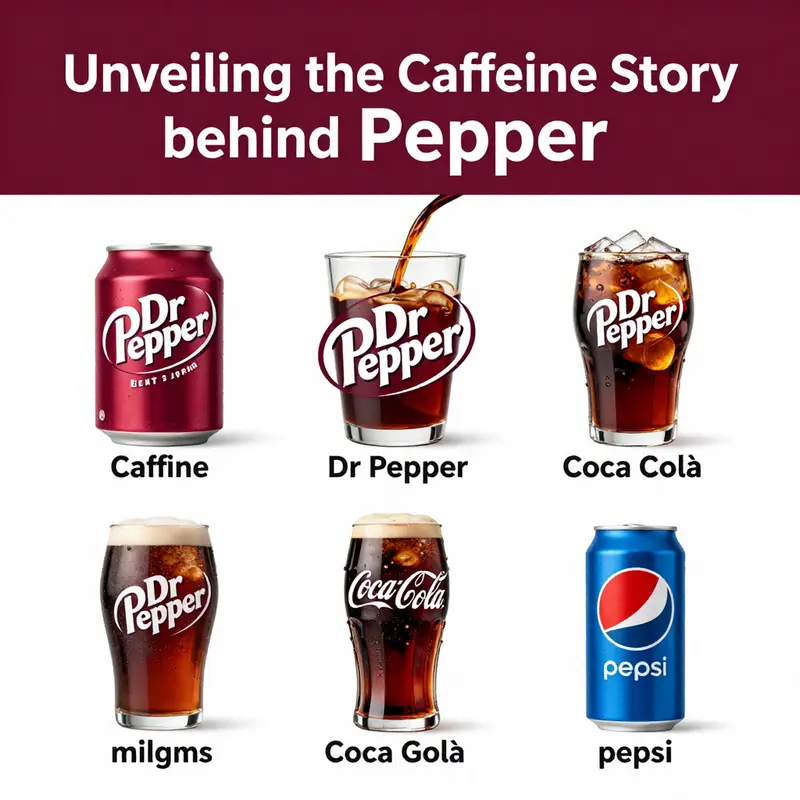
Caffeine is a simple molecule with a complicated footprint in the beverage world. It travels through the marketplace as a tiny, precise measure on a label. In a standard 12-ounce can (355 milliliters), caffeine levels in popular sodas fall roughly from a few milligrams to the low forties. The pepper flavored cola tends to sit in the upper range among non-energy drinks, around the low 40s per serving. This is not an outlier; it is a stable reference point across many markets and readings, useful for anyone tracking daily caffeine intake.
To anchor the bigger picture, consider benchmark values that appear in nutrition panels and product tests. The same pepper flavored option often measures about 41 to 43 milligrams per 12-ounce serving, with slight variation by batch and market. Diet versions may mirror or even slightly exceed the sugared variant, depending on regional formulations. Classic colas without diet labels frequently show caffeine in the upper 30s to mid-40s across markets.
Across datasets, regional analyses show notable spread: some beverages register under 1 mg per can, while others reach the high forties in certain markets. Differences come from formulation, labeling, and measurement methods, reminding readers that a single number is a snapshot within a broader continuum. The pepper flavored cola thus sits toward the upper end of the non-energy category, distinct from high-caffeine energy drinks, yet still clearly differentiated from milder colas.
For decision-making, per-serving caffeine density matters: roughly 0.11 milligrams per milliliter in a typical 12-ounce serving translates to a manageable daily plan for many people, especially when other sources like coffee or tea are counted. Do not assume that a diet label means lower caffeine. In many cases the caffeine content is similar to, or slightly higher than, the sugared version.
In short, this pepper flavored cola offers a predictable caffeine footprint within the non-energy family, making it a useful reference point for daily budgeting and for comparison with other beverages. For readers seeking deeper, product-specific data, consult the official nutrition information from the manufacturer and region-specific resources referenced in the article.
Caffeine, Clarity, and the Pepper Diet Soda: Debunking Myths About Diet Dr Pepper

Caffeine sits quietly in many drinks, a small molecule with outsized effects on wakefulness, mood, and daily routines. In the peppered realm of soda, one drink often becomes a focal point for debate: how much caffeine does it actually contain, and does the label “Diet” mean clean of caffeine or free from pep? The plain answer is more nuanced than a single label would suggest. Take a moment to examine the landscape of caffeine in the pepper-flavored diet soda world, and the conversation about misconceptions in particular. The truth, once laid out, helps readers make smarter choices about their caffeine intake without chasing shadows or myths.
To begin with the basics, caffeine is a stimulant that crosses the blood-brain barrier and nudges alertness upward. It also carries a caffeinated aroma and a familiar bitterness that can shape the overall perception of a drink’s flavor. In the realm of carbonated beverages, caffeine counts as a standard ingredient for many formulations, not merely as a fringe additive. The beverage in question—call it by its familiar nickname if you like—has long been a subject of both curiosity and debate in consumer circles. Central to that debate is the misconception about the so-called Diet version. For many, a Diet label implies a caffeine-free or low-caffeine option; for others, it signals a lighter taste and fewer calories, with caffeine seemingly incidental. The reality, supported by independent analyses, reveals a different story: the Diet version of this peppery soda contains nearly the same caffeine punch as its regular counterpart, at least per 12-ounce serving, with minor variation depending on the batch and the lab performing the measurement.
The numbers themselves have a curious oscillation across sources. Some early analyses and manufacturers’ data place caffeine in a 12-ounce can of regular Dr Pepper at around 40 to 42 milligrams, while the Diet version hovers in a similar range, often cited around 41 to 44 milligrams. These figures are not a single precise number etched in stone; they reflect the reality of real-world production where recipes shift slowly over time, equipment variance, and the natural differences among batches. By comparison, other well-known carbonated colas sit lower on the caffeine scale—roughly 34 milligrams for classic cola and about 38 milligrams for a major competitor’s cola. The takeaway is not a race to a lower caffeine number, but an understanding that caffeine content is an ordinary, measurable factor in many mainstream sodas, including the Diet variant that many assume to be caffeine-free.
This misperception—“Diet means caffeine-free”—is among the most persistent. Indeed, the label Diet is synonymous with sugar-free or lower-calorie, not caffeine absence. The Diet version of this pepper-flavored soda leans into its complexity, using caffeine as a flavor-enhancement tool and a modest source of lift. The goal here is flavor and a subtle freshness that caffeine can help achieve without tipping into the realm of a strong stimulant, at least in the quantities typical of a single serving. That nuance matters for consumers who monitor caffeine intake for health or sleep reasons. The reality is that a single 12-ounce can contributes about the same caffeine load as a cup of black tea, roughly in the 40 to 45 milligram range. It is not an explosion of energy, but it is not negligible either for sensitive individuals or for those who drink multiple servings in a day.
The nuance extends beyond the raw numbers into the everyday experience of taste and stimulation. Caffeine’s presence affects aroma, bitterness perception, and overall balance with the drink’s other ingredients. In a formulation with a signature peppery profile, caffeine interacts with the natural flavor compounds to shape the perception of lift and brightness in the palate. This interaction helps explain why even small variations in caffeine content can subtly change how a drink finishes on the palate. It is not merely a matter of “more or less caffeine,” but how caffeine behaves alongside sweeteners, carbonation, and flavor notes that give a product its distinctive character. In the broader context of caffeinated beverages, the discussion of Diet versus Regular often ends up being less about moral judgments of caffeine and more about consumer expectations: what kind of lift are you seeking, and at what cost to taste and sleep? The dialogue is not about vilifying caffeine but about aligning expectations with the empirical reality of what the label indicates and what independent labs have measured.
A critical part of navigating these waters is understanding that measurement can vary. In some laboratory analyses, caffeine contents reported for regular and Diet versions have front-loaded slightly different numbers depending on the method. For example, some independent lab work from a university setting has reported a 12-ounce can of the Diet version containing about 41 milligrams of caffeine and the regular version around 40 milligrams. The difference, if present, is not robust enough to justify a sweeping claim that one version is dramatically more caffeinated than the other. It’s a subtle distinction, easily overshadowed by the realities of how a consumer might sip across a day, or how a producer might tune a batch to preserve flavor while maintaining a consistent caffeine profile. These variances underscore a fundamental point: caffeine content in these drinks is real and measurable, but not fixed to a single exact value across all products and times.
It is also useful to place these figures in the context of a daily caffeine budget. Health authorities commonly discuss a practical upper limit in the neighborhood of 400 milligrams per day for most healthy adults. This ceiling is not a rigid line that must be crossed only to trigger harm; rather, it’s a guideline that helps people understand how caffeine fits into total daily intake. For someone who drinks one can of the Diet version and a cup of tea or another caffeinated drink later in the day, the total can approach a comfortable portion of that recommended range. For others, especially those with caffeine sensitivity, pregnancy considerations, or certain medical conditions, even modest amounts may warrant tighter control. In other words, the caffeinated experience is not only about the content in a single can; it is also about how that content stacks with other sources of caffeine and with individual physiology. The more you know about these numbers, the more you can tailor your day to maintain focus when needed and sleep when darkness falls.
A broader lesson emerges from the dialogue around these misperceptions: the labeling and the content are not always as aligned as casual readers might assume. The Diet designation often signals a sugar-free formulation, not a caffeine-free one. The exact caffeine content remains a function of the recipe, the batch, and the measurement technique. In practice, this means that a consumer who wants to tighten or loosen caffeine exposure should consider not only whether a drink is labeled Diet or Regular but also the timing of consumption and the total number of servings in a given day. If you are someone who enjoys a late-afternoon can to keep alert on a long day, you are not crossing a mysterious caffeine threshold you didn’t anticipate; you are simply consuming a moderate amount that aligns with common caffeinated beverages. If you are caffeine-averse or sleep-sensitive, you may wish to limit your intake or choose non-caffeinated alternatives as the day winds down. The balance is a practical one: informed choices based on real data rather than assumptions about what the Diet label implies.
In the spirit of transparency, it is worth noting that authoritative analyses—such as university-led laboratory studies—continue to refine our understanding of caffeine content in such beverages. While the precise figures for any given can may drift a little, the overarching pattern holds: the Diet version does not offer a caffeine-free alternative, and the caffeine level is broadly similar to the regular version. This is the core takeaway for readers who seek to demystify the caffeine question and approach their beverage choices with clarity rather than guesswork. The broader implication stretches beyond one product line to the way consumers think about caffeine in the modern beverage landscape. It invites skepticism toward simplistic narratives and encourages a closer look at what the numbers actually say, how they are measured, and how they fit into a daily caffeine plan.
For those who wish to dive deeper into the question of caffeine content in this pepper-forward, sugar-leaning drink, there is a useful resource that aggregates and analyzes the available data from independent labs. The discussion is not about sensational claims but about the measured reality of caffeine in the Diet variant and its regular counterpart. If you want to see a concise summary of the caffeine content and how it stacks up against other cola beverages, you can explore more detail here. caffeine content of Diet Dr Pepper. This resource provides a focused look at the numbers and their implications for everyday consumption, helping readers understand what a typical serving contributes to their daily caffeine budget.
In closing, the central misconception—that Diet means caffeine-free—rests on a friction between labeling conventions and consumer expectations. The evidence, drawn from independent laboratory analyses, suggests that the Diet version of this pepper-flavored soda carries caffeine in roughly the same range as its regular counterpart. The practical effect is that a single serving yields a moderate amount of caffeine—enough to be noticeable for some and negligible for others, depending on sensitivity and daily caffeine load. The rest is context: the timing of consumption, the other caffeine sources in a person’s day, and the user’s individual tolerance. When these elements align with accurate data, readers can sip with confidence, knowing that their interpretation of the Diet label is not the enemy of truth but a doorway to a more precise understanding of caffeine’s role in a familiar beverage. For broader reference and verification, see the authoritative lab analysis linked below. For a concise, external perspective on these measurements, an independently conducted study from a university laboratory provides a rigorous examination of caffeine content in this specific product line. UF lab analysis on caffeine in Diet Dr Pepper.
Final thoughts
Understanding the caffeine content in Dr Pepper and its diet version is pivotal for businesses. With varying caffeine levels comparable to competitors, being informed can help companies tailor marketing strategies and clarify consumer misconceptions. By addressing the myths concerning caffeine in Diet Dr Pepper, business owners can better position their products within the competitive soft drink market, thus optimizing their approaches and enhancing customer trust.