

Understanding caffeine is essential for business owners in the beverage industry. As consumers become more health-conscious, clarity around product ingredients directly influences purchasing decisions. Dr Pepper, a beloved soft drink, contains caffeine, but many are unaware of its presence or how it compares to other beverages. This article delves into the caffeine content in Dr Pepper, analyzes its levels in comparison to other drinks, addresses health considerations, and dispels common misconceptions. By the end, business owners will gain valuable insights into how the caffeine presence in Dr Pepper can affect consumer perceptions and market strategies.
The Gentle Buzz Behind a Southern Icon: Unpacking How Dr Pepper Keeps Its Caffeine
In the crowded landscape of soft drinks, caffeine often plays the quiet, loyal role of a backstage energizer. It is not always the loudest accent, yet it shapes how a beverage feels from the first sip to the lingering aftertaste. When we turn our attention to Dr Pepper, that modest spark matters as much as the distinctive blend of flavors that gives the drink its name and character. The most current data place caffeine content at about 41 milligrams in a standard 12-fluid-ounce can, a figure that stays consistent across the regular and zero-sugar formulations. This consistency makes Dr Pepper a dependable option for a gentle lift without the kind of jolts associated with energy drinks or highly caffeinated colas. It is enough to wake the mind and smooth the edges of the afternoon without overpowering the palate or the senses. In that sense, caffeine becomes part of the drink’s signature, a companion to its multi-note flavor profile rather than an intrusive afterthought.
Caffeine content in Dr Pepper sits squarely in the middle of the caffeinated spectrum for non-energy beverages. It is higher than Coca-Cola’s approximate 34 milligrams but lower than Diet Coke’s roughly 46 milligrams. The placement matters more than the exact number because it frames the experience: a steady, approachable lift that invites you to reach for another can without fear of a harsh caffeine surge. For people who want a modest, day-long buzz—enough to sharpen attention, enough to feel steady—Dr Pepper offers a reliable cadence. This is especially relevant when a drink needs to be both refreshing and lightly stimulating, a combination that makes it a familiar choice across many meals and moments.
Beyond the caffeine clock itself, the substance also threads into the drink’s flavor chemistry. Caffeine carries a natural bitterness, a contrast that helps balance sweetness and rounds out the overall taste. In Dr Pepper, where the flavor is famously described as a complex blend of 23 distinguishable notes—including cherry, licorice, vanilla, and almond—the caffeine helps modulate the bitterness that prevents the sweetness from tipping into cloying territory. The result is a profile that reads as both bright and grounded: a soft lift that supports the flavor architecture rather than overpowering it. This is not accidental. Producers carefully calibrate caffeine levels to preserve the integrity of the 23-flavor symphony, so the drink’s personality remains consistent across batches and formats.
The cultural resonance of Dr Pepper adds another layer to why caffeine content matters. In the American South, the drink has earned an almost iconic status, often appearing in barbecue glazes, sauces, and family gatherings. The caffeine lift becomes part of the sensory memory—cold can in hand, tangy-sweet aroma rising, the tongue catching the first hints of cherry before the other notes reveal themselves. That interplay between flavor and wakefulness makes the beverage feel both comforting and a touch adventurous. It’s a reminder that caffeine can be a subtle partner in tradition, not just a stimulant for the moment.
From a product-design perspective, Dr Pepper is produced and distributed by Keurig Dr Pepper, whose global reach ensures the same baseline caffeine content across many markets and formats. This consistency matters for people who track intake—pregnant individuals, those with anxiety, or anyone managing cardiovascular considerations. Knowing that the regular and zero-sugar versions share the same caffeine baseline allows for more informed choices. The brand’s commitment to maintaining a stable caffeine profile across variants underscores a broader principle in beverage design: flavor and function should advance in harmony, not at cross purposes. When a drink is both flavorful and predictable in its stimulant effect, it earns a place in daily routines rather than becoming a novelty that is consumed only on occasion.
In practical terms, that steadiness also means consumers can compare Dr Pepper with other beverages with greater clarity. The caffeine in Dr Pepper sits between some traditional colas and many energy-forward drinks, which makes it a flexible option for casual sipping throughout the day. For someone who wants a mild boost while keeping a careful eye on total caffeine intake, the 41-milligram figure offers a useful reference point. It helps set expectations for how long the effects might last, how quickly they might fade, and how the drink will interact with meals, work, or study sessions. In this sense, caffeine becomes part of a careful balancing act: enough to be helpful, not so much that it interrupts rest or triggers discomfort.
An often-overlooked aspect is how caffeine content interacts with the drink’s broader sensory profile. The slight bitterness of caffeine can heighten perceived complexity, nudging the palate toward noticing the cherry and vanilla layers rather than just sweetness. This is a reminder that caffeine is not merely a jolt; it is a small chorus within the larger melody of flavor. For a drink that claims a singular identity built from many notes, caffeine helps keep the tune from flattening into a simple sugary note. The chemistry is not about overpowering sweetness but about creating a dynamic tension that invites another sip and another. In a culture where taste is a memory as much as a moment, that little tension can be the difference between a drink that’s merely refreshing and one that feels thoughtfully composed.
The conversation about caffeine in Dr Pepper also invites practical health-minded considerations. For individuals who must monitor caffeine intake, the exact milligram content matters. The 41 milligrams per standard serving places Dr Pepper squarely in the mid-range tier of caffeinated beverages. It is a reasonable option for light to moderate daytime consumption. Yet, for pregnant people or those with anxiety, hypertension, or certain heart conditions, tracking this figure becomes part of a broader management plan. Health professionals often recommend staying mindful of the total daily caffeine load, factoring in coffee, tea, and other caffeinated beverages. In that context, Dr Pepper can fit into a measured regime, particularly for those who appreciate its distinctive flavor and do not want a high-caffeine alternative perched on the shelf. The key is awareness and moderation, not avoidance.
Misconceptions about caffeine content are another reason this topic deserves attention. Some people assume that Dr Pepper’s unusual flavor profile signals a caffeine-free drink, perhaps because the aroma and mouthfeel evoke something softer or more delicate. In truth, caffeine is a deliberate component of the recipe, contributing both to the drink’s lift and its bitterness. The consistent caffeine baseline across regular, diet, and zero-sugar formulations reinforces the idea that flavor and stimulation are engineered together rather than treated as separate concerns. For curious readers who want to see the official line behind the numbers, the source from the brand’s own information can be consulted for detailed nutritional data and formulation notes.
For readers seeking a deeper, more technical dive into how these numbers play out across different Dr Pepper variants, there is a dedicated path to explore the specifics of diet formulations. For a closer look at the caffeine content across diet variants, see does-diet-dr-pepper-have-caffeine-in-it. That piece expands on how sugar substitutes and flavor adjustments interact with caffeine, and it reinforces the central point that the caffeine baseline remains steady even as other ingredients evolve. This is the kind of detail that helps consumers make informed choices without sacrificing the pleasure of a uniquely flavored beverage.
From a sourcing and reliability standpoint, the official company site remains a trustworthy reference for the broad strokes: the caffeine baseline, the standard serving size, and the general formulation philosophy. While the exact caffeine content can vary slightly by batch and region, the standard 12-ounce can of Dr Pepper and its Zero Sugar counterpart consistently illustrate the same caffeine footprint. This consistency supports both everyday enjoyment and nutritional planning, ensuring that the drink remains a familiar companion in a busy day. The broader lesson here is that small, deliberate choices in beverage formulation—like maintaining a constant caffeine level—can blend with a deeply rooted flavor identity to yield a product that feels both traditional and thoughtfully modern.
Ultimately, the discussion of caffeine in Dr Pepper illuminates a larger truth about modern beverages: caffeine is rarely a single ingredient, but a design principle. It threads through the sensory experience—balancing bitterness, enhancing aroma perception, and stabilizing sweetness—while also informing health-conscious choices. The drink’s cultural footprint, particularly in Southern cuisine and convivial meals, rests on that balance. The caffeine content is not a mere statistic; it is an integral part of how the drink ages with you through the day, offering a steady rhythm rather than an abrupt beat. As you reach for a cold can, you are not just choosing a flavor—you’re choosing a cadence that accompanies you through conversations, errands, and quiet moments alike. For readers who want to connect the dots between flavor, caffeine, and everyday life, this integrated view offers a compelling lens on a familiar icon.
External reference: Keurig Dr Pepper official site
Caffeine Content in Dr Pepper: What You Need to Know and How It Shapes the Flavor
Dr Pepper stands out not just for its 23-flavor profile, but for a quiet, steady caffeine presence that affects both mood and palate. The beverage market often emphasizes bold caffeinated options, yet this particular drink sits in a middle ground. It isn’t a high-octane energy boost, but it isn’t caffeine-free either. In the landscape of soft drinks, its caffeine content provides a gentle lift that many find compatible with daytime routines, meetings, and errands without delivering the kind of sharp jolt associated with some other caffeinated products. The result is a drink that offers a light, sustained lift—enough to keep you moving through the afternoon, while still keeping a sense of balance with its complex flavor profile. This balance between taste and stimulation is at the heart of why caffeine is considered an integral part of its identity, rather than simply an additive tucked away from the spotlight.
The most commonly cited figure for a standard 12-ounce can of regular Dr Pepper, as well as its zero-sugar counterpart, lands around 41 to 42 milligrams of caffeine. This range is supported by contemporary data, including updates from the last few years, and it places the drink in a distinct tier among popular non-alcoholic beverages. It sits higher than the classic Coca-Cola, which typically clocks in around 34 milligrams per 12-ounce can, yet it trails behind many energy drinks that routinely push past 200 milligrams per serving. For someone who weighs the trade-offs between flavor and stimulation, this midpoint offers a predictable, approachable option for daytime refreshment. The caffeine content, therefore, becomes part of the drink’s character, contributing to a mild, steady energy lift that can help sustain focus and alertness—without the pronounced buzz that can accompany some stronger caffeinated choices.
In addition to the regular formulation, the same caffeine level appears in Dr Pepper Zero, which maintains zero sugar and zero calories. That consistency across versions underscores caffeine’s role beyond mere stimulation; it anchors the drink’s identity as a flavor-forward option that also satisfies a modest caffeine preference. The caffeine’s presence interacts with the drink’s flavor chemistry in a subtle, telling way. Caffeine is bitter by nature, and that bitterness can temper sweetness, adding depth to the drink’s signature profile. This bitterness is not aggressive, but it does lend a counterpoint to the blend of fruit and spice essences that define the drink’s complex taste. The result is a layered experience: a familiar sweetness with a trace of bitterness that makes the flavor feel more grounded and less syrupy.
For consumers who track caffeine intake for health or lifestyle reasons, the numbers matter. A typical daily target for healthy adults is broadly recognized as up to about 400 milligrams of caffeine, though individual tolerance varies widely. For pregnant people, individuals with anxiety disorders, or those managing sleep conditions, experts often advise limiting caffeine intake more stringently—down to roughly 200 milligrams per day or less, depending on personal health circumstances. In this context, knowing the exact caffeine content of a favorite drink helps people make informed decisions about how it fits into their daily patterns. It also helps clarify potential interactions with medications, sensitivity to stimulants, and timing around sleep. The fact that a single 12-ounce can delivers roughly 41 milligrams makes it an option that can be incorporated into many daily routines with relative ease, provided one remains mindful of total daily intake.
From a historical perspective, caffeine has been a quiet companion to this iconic beverage since its early beginnings. The original formulation, which emerged in the late 19th century, was designed to offer a distinctive experience that stood apart from other fountain drinks of the era. The brand’s evolution over the decades further solidified its identity, a process that included refining the balance between sweetness, spice, and the degree of stimulation delivered by caffeine. The beverage relies on a proprietary blend of botanicals and flavors rather than the kola nut extraction that flavors many other colas. This difference in foundation helps explain why the caffeine content is meaningful not only for its stimulating effects but also for how it interacts with the drink’s unique taste profile. The cumulative effect is a beverage that feels both familiar and slightly unexpected, a paradox that caffeine helps to sustain by adding bitterness that offsets sweetness and adds depth to the palate.
When people inquire about whether this beverage truly contains caffeine, the answer is straightforward: yes. There is caffeine in both the regular and zero-sugar versions, and the amount remains relatively steady across these iterations. This consistency reflects a deliberate design choice: caffeine exists not as a mere afterthought but as a core element of the sensory and functional experience. For some drinkers, that consistency is reassuring—a reliable lift that complements timing and daily rhythms. For others, especially those who are sensitive to stimulants, the same steadiness offers a clear parameter for moderation. In either case, the caffeine’s role extends beyond a simple energy metric; it influences perceived bitterness, balance, and even the perception of sweetness, subtly shaping how the drink carries its complex, nearly culinary blend of flavors.
To help readers contextualize these numbers, it’s useful to compare them with other beverages that often populate daily life. A standard cup of coffee can range from about 95 to 200 milligrams per 8-ounce serving, depending on the roast and preparation. An energy drink, by contrast, can easily exceed 200 milligrams per serving. Against that backdrop, the beverage’s near-40-milligram figure emerges as a measured choice—enough to be noticeable, but not overwhelming. This positioning makes it an appealing option for daytime consumption when one wants to sustain attentiveness without triggering a pronounced caffeine spike. It also helps explain why many people reach for it as a “gentle lift” rather than as a substitute for coffee or an energy drink. Flavor and function combine here in a way that keeps the drink in comfortable conversation with a broad range of beverages, rather than in competition with the strongest caffeinated products on the shelf.
For readers who want to explore this topic further, there are resources that dig into whether a given drink contains caffeine and how much. One such resource examines Dr Pepper specifically, offering deeper context about caffeine’s presence and its role in taste. Is Dr Pepper Caffeine? This kind of inquiry helps demystify the experience of sipping a familiar beverage and puts numbers to the sensory impressions that people notice when they take a first, second, or third sip.
As with any discussion of caffeinated beverages, context matters. The caffeine content is just one piece of a larger picture that includes sugar or artificial sweeteners, carbonation, acidity, and the drink’s aroma. The experience of drinking Dr Pepper or Dr Pepper Zero is shaped by all of these elements working in concert. The caffeine contributes to a perceptible lift, a slight bitterness that balances sweetness, and a sense of fullness in the mouth that lingers long enough to inform subsequent flavor perception. In other words, caffeine helps define the drink’s overall character as much as its botanicals do—a reminder that flavor and stimulation often travel together in the same bottle.
For readers who are tracking caffeine for health reasons or personal preference, the practical takeaway is simple: know your numbers, understand how you respond to stimulants, and consider how a single drink fits into your daily total. The beverage in question delivers a modest caffeine dose, enough to be noticed but not so large as to dominate the day. Its consistency across regular and zero-sugar formulations makes it a dependable option for those who value a predictable profile. It’s the kind of beverage that can be a reliable component of a balanced day when enjoyed with awareness of one’s caffeine budget and sensitivity.
External resources can provide the most up-to-date data on caffeine content, as formulations and labeling can evolve. For readers seeking official data, the brand’s own site offers the most authoritative reference point for caffeine information and product variants. https://www.drpepper.com/.
External Resource: For broader context on caffeine content in related beverages and to compare across brands, you can consult reputable nutrition databases and industry resources that track caffeine levels in carbonated drinks and other non-alcoholic beverages. These sources help translate the numbers into everyday choices and support readers as they navigate daily caffeine decisions while maintaining awareness of personal health considerations.
A Subtle Buzz in the Caffeine Landscape: Dr Pepper’s Place Among Everyday Beverages
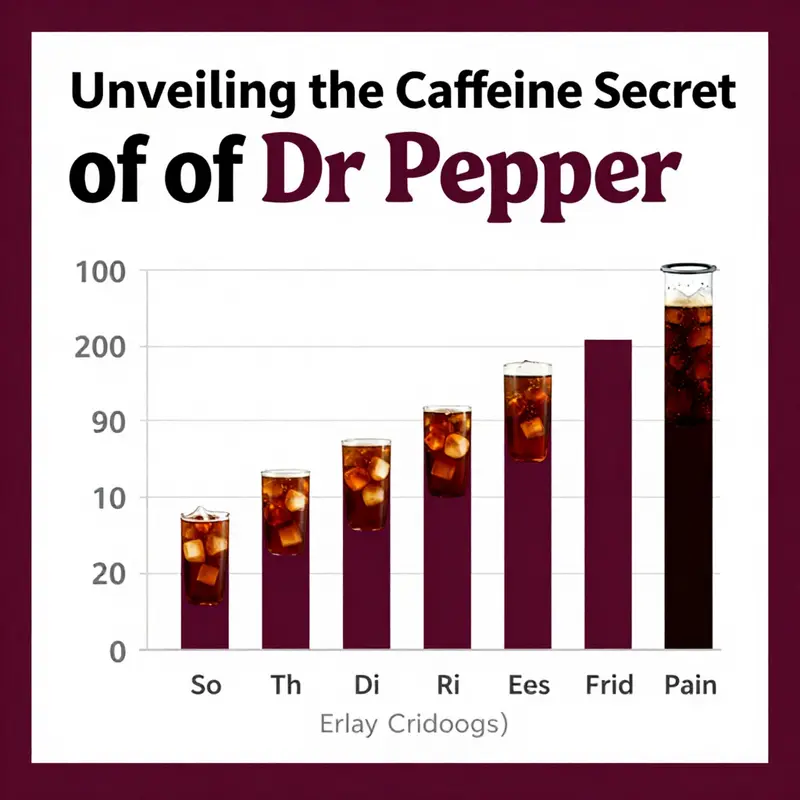
Caffeine is a vastly misunderstood ingredient in some of the most familiar drinks we reach for on a daily basis. In conversations about soft drinks, it’s easy to assume that only energy-forward beverages carry a noticeable kick. Yet the beverage at the center of this discussion—the one famous for its spice-and-fruit complexity—contains caffeine as part of its careful balance between flavor and lift. The numbers are clear and reassuring in their simplicity: a standard 12-ounce can holds about 41 to 42 milligrams of caffeine. That range is consistent across both the regular formulation and the zero-sugar version, a detail that matters more than it might at first glance for anyone watching caffeine intake or simply curious about what contributes to a drink’s wakefulness. The result is a profile that sits squarely in the middle of the caffeine spectrum among widely available beverages, offering a gentle boost without the intensity associated with high-caffeine options.
To place this in everyday terms, consider the broader landscape. A typical eight-ounce cup of brewed coffee—often the benchmark people use to gauge caffeine strength—delivers around 95 milligrams. Energy drinks, another common reference point, can range anywhere from about 70 to well over 200 milligrams per serving, depending on brand and formulation. Within the realm of sodas and other non-energy drinks, caffeine content varies, but the mid-30s to mid-40s milligram range per 12-ounce serving emerges as a common baseline for many traditional colas and their close relatives. In this context, the beverage in focus exhibits a more restrained lift than a late-morning coffee or a high-caffeine energy drink but exceeds the caffeine levels found in several non-caffeinated soft drinks, making it a plausible option for casual consumption when one needs a mild nudge rather than a surge.
The comparison becomes more nuanced when we look at related products in its family. The regular soda category often shows variability by formulation and market. For instance, some cola varieties hover around the 34 milligrams per 12 ounces mark, while certain diet or low-calorie variants run a bit higher, reflecting differences in target taste and mouthfeel. Diet versions sometimes present a different caffeine footprint, influenced by the need to preserve a crisp, sugar-free palate without introducing a heavy sweetness that masks the drink’s light bite. In this nuanced space, the beverage at hand holds a steady, approachable profile: enough caffeine to notice a lift, but never so much that it overwhelms the palate or the senses.
A key aspect of this drink’s character is how caffeine interacts with its distinctive flavor profile. The beverage owes its signature allure to a blend of 23 proprietary flavors, among them cherry, vanilla, almond, clove, and caramel. Caffeine brings a subtle bitterness that can help balance the sweetness inherent in such a complex mix. This slight bitterness is not a harsh note; rather, it acts as a counterpoint that brightens the profile and makes room for the rich fruit-and-spice notes to express themselves more clearly. In practical terms, caffeine contributes a gentle lift that can nudge the mind toward a clearer focus just enough to smooth the transitions between flavors, a contrast to the sharper bite of higher-caffeine drinks. This synergy between flavor and stimulant effect explains why the beverage remains a popular choice for casual consumption across different times of day, blending taste with a mild, approachable alertness rather than a dramatic caffeine spike.
An interesting point of variation appears when we examine the diet or zero-sugar variant more closely. A 2007 national study reported a slightly higher caffeine content for Diet Dr Pepper, at about 44.1 milligrams per 12-ounce serving. While this difference is modest, it underscores how even small formulation tweaks—like the balance between sweetness, sweetness-reduction, and flavor preservation—can influence the stimulant profile without sacrificing the drink’s recognizable character. The consistency observed between the regular and zero-sugar versions of the standard formulation reinforces the idea that caffeine is a stable component of the drink’s identity, serving the function of a mild energizer rather than a defining cue. This stability is important for people who monitor their caffeine intake for health or personal reasons, as it provides a dependable baseline across product variants.
For individuals who must observe strict caffeine limits—whether due to pregnancy, anxiety disorders, cardiovascular considerations, or personal preference—the takeaway remains straightforward: the beverage in question adds a discernible amount of caffeine to the daily total, but it does so in a measured manner. It isn’t a high-caffeine option, and as such it can be included in many daily plans without requiring drastic adjustments. Yet, as with all caffeinated beverages, repeated servings throughout the day can accumulate. Those who are particularly sensitive to stimulants may wish to factor in other sources of caffeine, including tea, chocolate, or certain beverages that can push the total above comfortable thresholds. The broader implication is clear: awareness of caffeine content matters, especially for individuals who aim to balance flavor enjoyment with health considerations.
The beverage’s place in the caffeine landscape is not only a matter of numbers. It also invites reflection on how taste, tradition, and modern health awareness intersect in everyday choices. The flavor profile—rooted in a centuries-long tradition of spice-and-fruit complexity—offers a distinctive alternative to the cleaner sweetness of some other soft drinks. Caffeine, with its mild lift, complements this complexity rather than competing with it. In other words, the beverage uses caffeine not as a loud call to action but as a feature that blends with its aroma, texture, and finish to create a more complete sensory experience. This makes the drink appealing to those who want a small boost without sacrificing the integrity of a nuanced flavor.
For readers curious about how these dynamics look in the diet version, see does-diet-dr-pepper-have-caffeine-in-it. This reference provides a focused look at how the caffeine footprint can shift slightly across variants while preserving the drink’s essential character. The point remains that caffeine is an active, measurable component in both standard and reduced-sugar formulations, reinforcing the broader conclusion that this beverage sits in a middle ground: not a negligible caffeine presence, but not an overpowering stimulant either.
Looking ahead, it is useful to frame these observations within a practical lens. When I consider the everyday choices people make, the caffeine content acts as a quiet guide to pacing—helping decide whether this drink fits into a morning routine, a mid-afternoon pick-me-up, or a relaxed evening, considering how caffeine can interplay with sleep and personal sensitivity. The flavor’s complexity invites savoring, which, in turn, moderates the idea of “drinking for caffeine” versus enjoying a beverage that offers both taste and a gentle lift. In this sense, the beverage stands apart from more aggressive caffeinated options while still delivering a recognizable, dependable kick that many find satisfying as part of a balanced day.
All of these considerations matter not only to the consumer but also to researchers and educators who aim to communicate clearly about caffeine in everyday foods and drinks. The overall message is straightforward: you are consuming a modest amount of caffeine that contributes to a broader, day-long intake profile. This means that discussing caffeine in the context of familiar beverages becomes less about alarm and more about informed choices—an invitation to understand where a given drink falls on the spectrum and how it interacts with one’s personal caffeine budget.
For a concise, evidence-based overview that places this beverage in perspective with others, see Healthline’s caffeine content overview. This external resource offers a practical reference point for readers who want to compare caffeine numbers across a range of popular drinks without wading through scattered data.
In sum, the beverage’s caffeine content—approximately 41 to 42 milligrams per 12-ounce serving, with a slightly higher figure for the diet variant—represents a balanced middle ground. It delivers enough lift to be noticeable, yet it remains approachable for everyday consumption. The caffeine works in concert with a complex flavor profile to create a distinctive, memorable experience that stands apart from ultra-high-caffeine options while still remaining firmly within the everyday beverage repertoire.
Peppery Stimulation: How Caffeine Shapes Flavor, Health, and Daily Choices in a Classic Cola

The question of what exactly gives a certain peppery soda its unmistakable lift has long fascinated both casual drinkers and nutrition-minded readers. Caffeine sits at the center of that mystery, not only contributing to a gentle mental and physical nudge but also subtly shaping the drink’s flavor profile. In the case of the familiar, century-spanning cola with a distinctive bite, caffeine acts as a quiet partner to sweetness, sharpening the edges of bitterness just enough to balance what would otherwise lean too sweet. This dual role—stimulant and flavor moderator—helps explain why a single 12-ounce can can feel both refreshing and slightly more complex than a sugar-savvy sip might imply. It is a reminder that a beverage’s impact is seldom confined to energy alone; it threads through taste, timing, and daily lifestyle choices in ways that compound over the hours that follow consumption.
When people compare caffeine across popular drinks, the numbers tell a pragmatic story. A standard 12-fluid-ounce can of this classic cola, whether the regular formulation or the zero-sugar version, contains approximately 41 milligrams of caffeine. That figure is remarkably consistent across these two versions, establishing a predictable baseline that makes it easier to plan caffeine intake without having to juggle multiple product lines. Relative to other familiar sodas, this level sits above the caffeine found in a typical cola and below the intensity of most energy beverages. It sits in a middle ground that many everyday consumers find suitable for a gentle lift during mid-afternoon work blocks or after a light lunch when a crisp, familiar taste is desired. For those who are mindful about caffeine, these numbers can function as a practical reference point rather than a hard rule.
To place those milligrams in everyday terms, consider how this caffeine load compares with other popular choices. It is a touch higher than the caffeine in a standard cola, which hovers around the mid-thirties of milligrams, and it is somewhat lower than the caffeine content of many energy-forward beverages. Those figures are useful for people who track caffeine for health reasons—whether due to sleep patterns, anxiety management, cardiovascular considerations, or pregnancy planning. It is important to remember that these measurements refer to a single can and can accumulate quickly if multiple servings are consumed in a day. In health terms, the daily arithmetic matters because it informs decisions about when to drink and how many cues of stimulation one may want to place before bed or during meals.
The profile described here has practical implications beyond pure caffeine counting. For some palate-driven reasons, caffeine contributes to an overall sensation of fullness in the mouth and can intensify perceived bitterness. That bitterness, when balanced against sweetness, helps create the beverage’s signature finish. In other words, caffeine doesn’t just wake the mind; it subtly orchestrates the end-of-sip impression. This is why even flavor-wise, caffeine can be a contributing factor in how a drink feels from first sip to the post-swallow aftertaste. The effect is nuanced, but for anyone who has noticed a sharper initial bite or a longer, more lingering finish, caffeine is a plausible contributor to that perception.
From a health perspective, the conversation around caffeine in this context often centers on safe daily limits. The U.S. Food and Drug Administration has long suggested that up to about 400 milligrams of caffeine per day is generally safe for most healthy adults. That ceiling provides a broad threshold for planning caffeine intake across all beverages, coffee, tea, and sodas alike. Yet this guideline is not a universal pass; it is a cautious boundary that needs adjustment for several groups. Pregnant individuals are commonly advised to limit caffeine exposure, as are children and anyone with anxiety, certain heart conditions, or heightened caffeine sensitivity. The presence of caffeine in a widely available, low-calorie option—if one chooses the zero-sugar version to reduce calories—should be weighed together with other caffeinated sources and sleep patterns. The equation becomes especially important for people who want to enjoy such beverages without compromising nightly rest or overall metabolic balance.
Alongside caffeine, the sugar story of this classic cola adds another layer to consider. A regular 12-ounce can typically contains around 40 grams of sugar, a substantial amount that contributes to energy spikes followed by potential crashes. The combination of caffeine and sugar can offer a quick and pleasant lift, but it can also amplify the impact on blood sugar and energy fluctuations if consumed in excess or late in the day. For readers seeking to moderate both caffeine and calories, a zero-sugar version provides an appealing alternative, delivering the same caffeine level without the calories from sugar. While this sounds advantageous for many, it is not automatically a risk-free option; artificial sweeteners, their own metabolic effects, and long-term health considerations continue to be topics of ongoing research and evolving consumer guidance.
The practical takeaway is straightforward: knowledge of caffeine’s presence and its magnitude helps people make informed daily beverage choices. The same caffeine level in both regular and zero-sugar forms means that individuals can select based on other priorities—calorie intake, sugar considerations, or taste preferences—without inadvertently altering caffeine exposure. For anyone monitoring caffeine intake in a broader lifestyle plan, it is helpful to think of a few anchors. One anchor is timing: aiming to avoid caffeine late in the day to protect sleep quality. Another is situational use: recognizing that a can with a familiar flavor profile can offer a dependable midafternoon pick-me-up without the need to reach for a more potent energy drink. A third anchor comes from mixing and matching with other sources: if a person’s day already includes coffee, tea, and perhaps a caffeine-containing supplement, total daily intake will escalate quickly, and the reliable 41-milligram figure per 12-ounce serving becomes a practical part of the math.
For readers who are curious about how diet or sugar-reduced variants fit into this framework, there is a useful point of reference. The zero-sugar version preserves the same caffeine content, making it a compelling option for those who want to enjoy the familiar taste while reducing caloric intake. However, even in this form, caffeine remains an active stimulant in the body. The behavioral question—whether to choose sweetness with calories or sweetness without calories—extends beyond taste to how a person experiences energy, mood, and sleep on any given day. In other words, caffeine’s influence on this beverage touches both the palate and the physiology of daily life, inviting readers to consider their own thresholds and patterns rather than relying solely on general guidelines.
For readers who want to explore more about how caffeine content is studied across carbonated beverages, it can be illuminating to consult authoritative sources that summarize beverage caffeine at a regulatory and scientific level. While one should not rely on any single source for dietary decisions, the broader picture shows a consistent pattern: caffeine in common colas tends to fall within a mid-range, with variations between regular and low- or zero-calorie versions often minimal. This consistency supports the practical approach many people adopt: treat a can as one unit of daily caffeine exposure, and plan the rest of the day accordingly.
In this context, the internal question becomes, how should one structure a daily caffeine plan that respects personal health goals and lifestyle demands? The answer lies in listening to the body as much as reading numbers. If sleep schedules are tight, if anxiety is a sensitive topic, or if there is a history of cardiovascular issues, it makes sense to treat each 12-ounce can as part of a broader, mindful routine rather than a recurring habit without reflection. It may also be helpful to track caffeine sources for a few days to see how a single beverage fits into the day’s energy profile, mood, and appetite. As with any nutrient or stimulant, balance and personal awareness trump rigid rules.
For those who want to delve deeper into the chemistry and regulatory context behind caffeine in carbonated beverages, the FDA’s compilation of caffeine content across beverages provides a foundational reference. This resource helps readers appreciate the broader landscape—how caffeine figures into everyday drinks and how experts interpret these values in relation to public health guidelines. If you are curious about specific diet-formulations and how they compare in terms of caffeine, a related discussion explores whether diet versions share the same stimulant profile as their full-calorie counterparts. Does Diet Dr Pepper Have Caffeine? can be a starting point for understanding how similar products vary in calories, flavor, and stimulant content. Does Diet Dr Pepper Have Caffeine?
In sum, recognizing that caffeine is present in this peppery cola—and that its amount sits in a practical middle ground compared with other caffeinated beverages—can empower readers to make more deliberate daily choices. The sweetness that defines its flavor is complemented by a companion bitter edge, a balance that caffeine helps to shape. The real question for most people is not whether caffeine exists in this drink but how it fits into a broader lifestyle that values steady energy, sound sleep, healthy weight, and mindful consumption. The beverage’s caffeine presence, paired with its sugar content in the regular version, invites a careful look at portion size, timing, and alternatives. The zero-sugar variant offers an appealing option for those who want to preserve the taste while trimming calories, yet it remains essential to attend to the wider caffeine picture across the day. By understanding these dynamics, readers can enjoy the familiar flavor with confidence, knowing how caffeine interacts with their bodies and routines.
External resource: for a comprehensive regulatory and scientific perspective, see the FDA’s overview on caffeine content in carbonated beverages at https://www.fda.gov/food/food-additives-petitions/caffeine-content-carbonated-beverages
Caffeine at the Core: Unraveling Misconceptions About a Classic Soft Drink

Caffeine often travels with the aroma of a soft drink culture, where the buzz of a caffeine kick is almost assumed to come with every fizzy bottle. Yet a surprising doubt persists about one widely recognized beverage: does it really contain caffeine, or is it among the few popular sodas people assume to be caffeine-free? The question sits at the intersection of taste, labeling, and consumer memory. On one hand, independent nutrition data and some retail listings place a clear caffeine presence in a standard can, with typical figures hovering in the 41 to 42 milligrams per 12-ounce serving. On the other hand, official statements from the brand’s own channels sometimes describe a caffeine-free formulation for its flagship product. That juxtaposition creates a fertile ground for misperception, and the tension between what is on a label and what a shopper believes to be true can shape choices in the aisle and beyond. The result is a crowded space where flavor memories, category expectations, and product labeling converge to shape a single, stubborn belief: caffeine may not be part of this beverage’s equation at all.
The data points themselves are instructive. When a consumer scans a standard, non-diet can, the caffeine figure, where disclosed, lands in a mid-range zone for non-energy drinks. It sits above regular cola options, which often register around the mid-thirties milligrams, and it trails far behind energy drinks, which frequently push past the hundreds of milligrams per can. This positioning matters because it provides a contextual cue about stimulant power, one that many shoppers use to calibrate what to expect in terms of alertness after a few sips. Yet the public conversation does not always follow those numbers. The 23-flavor profile—a hallmark of the beverage—adds another layer to perception. A flavor profile as intricate as that blend can feel, to some palates, reminiscent of a cocktail of botanicals and compounds rather than a simple, straightforward sweetness. That complexity can trigger an association with stimulating sensations, even when caffeine content is modest or uncertain. The mind searches for an explanation for a distinctive taste, and stimulation becomes a plausible, even tempting, explanation.
The way this is discussed in everyday life matters as well. In real-world shopping contexts, many listings and product pages either omit caffeine details or present them in a way that invites misinterpretation. Some online platforms display the product as caffeine-free, a label that aligns with a perception of a vast swath of soft drinks as caffeine-free staples, but that label may not reflect every formulation or regional variation. The disconnect between universal soft drink assumptions and explicit labeling fosters a cognitive drift: if a product belongs to a familiar category, it should share the same caffeine status as other drinks in that category. That drift helps explain why the myth persists even when data suggest otherwise.
To appreciate the nuance, it helps to map the landscape against a few benchmark comparisons. A commonly cited reference point is Coca-Cola, typically around 34 milligrams per 12 ounces, which places it on the lower end of caffeinated soft drinks in many markets. Diet Coke, meanwhile, has been reported in several datasets around the mid-40s milligrams range, signaling that low-calorie or zero-sugar variants may carry a stronger caffeine punch than their regular sugar counterparts. Against that backdrop, a mid-range caffeine figure for the flagship beverage in a 12-ounce can would place it in a space that is neither exceptional nor negligible. It is a value that supports a mild wakeful effect for some consumers, while others may not attribute any notable stimulant impact at all. The variance across product lines and markets underscores an important truth: caffeine content can shift with formulation, region, and regulatory labeling practices, which can complicate a straightforward belief about caffeine absence.
The caffeine conversation centers on how perceptions are formed and reinforced. The brand’s own communications, including official pages that address product composition, can pull perceptions in different directions. On one track, a public-facing message might emphasize a caffeine-free stance for certain iterations or market-specific releases, appealing to shoppers seeking to avoid stimulants. On another track, independent nutrition databases and retailers explicitly list caffeine content for the standard product, acknowledging that caffeine is indeed present. The friction between these narratives leaves room for confusion, which can be amplified by consumer memory of past experiences, promotional language that highlights flavor complexity without reference to caffeine, and the general expectation that a “soft drink” carries caffeine because many of its peers do.
For consumers who watch caffeine intake for health or personal reasons, the practical path is simple in theory but not always straightforward in practice. If avoiding caffeine is the goal, the first step is to read the label on the can or bottle, because a “caffeine-free” designation may appear in some packaging variants or across certain markets even when other versions retain caffeine. The second step is to verify through reliable sources—brand sites, nutrition databases, and trusted retailers—which can clarify whether a given formulation contains caffeine and, if so, how much. While the numbers themselves can settle the matter for a single can, the bigger challenge is understanding how those numbers fit into one’s daily total caffeine exposure, especially for people with clinical considerations such as pregnancy, anxiety disorders, or cardiovascular concerns. In this light, the consumer’s task becomes not merely about a single product’s caffeine content but about the broader habit of checking nutrition facts and understanding how a product fits into individual health goals.
The consumer education impulse, in turn, has implications for retailers and manufacturers. Clarity in labeling reduces subjective interpretation and helps people make informed choices aligned with their preferences and health needs. It also underscores the responsibility of brands to present the caffeine content clearly, especially as products proliferate in a crowded market where many beverages claim caffeine as a selling point. The conversation becomes more nuanced when considering how caffeine interacts with flavor. The distinct, 23-flavor blend can make a beverage feel energetic or uplifting, even when the physiological caffeine effect is modest. The sensory impression can lead people to infer stimulant content, turning taste into a shorthand cue for caffeine. This dynamic feeds into the broader consumer psychology of caffeine and flavor, where perception can magnify or diminish the actual stimulant impact.
For readers seeking a deeper dive into how caffeine content can vary by formulation, there are related explorations within the ecosystem of flavor and caffeine data. If you want to explore how caffeine content varies by variant, you can read a related explainer does-diet-dr-pepper-have-caffeine-in. This linked resource can illuminate how different product lines approach caffeine differently, highlighting that even within a single brand, caffeine presence is not a uniform constant. The contrast between official statements and independent data underscores the value of cross-checking multiple sources, especially when a shopper makes health-centered decisions.
Beyond the numbers and the labels lies a broader narrative about how a product’s identity can shape expectations. The signature taste embodies a blend of tradition and modern flavor experimentation. That profile invites curiosity about whether caffeine is part of the equation, but it also invites a more nuanced inquiry: does the beverage rely on taste and aroma to deliver a perceived lift, or does it rely on actual caffeine to deliver alertness? The answer is not a simple binary. For some, the lift is real and attributable to caffeine, with a dose that sits in the middle of the spectrum for soft drinks. For others, the effect is more subtle, or perhaps even negligible, and in those cases, the flavor experience becomes the primary actor. In either scenario, understanding the caffeine content becomes essential to responsible consumption, especially for those who track intake stringently.
From a storytelling perspective, the tension between perception and fact adds texture to the article’s larger arc. A beverage that evokes a vivid memory or mood can become a touchstone for conversations about caffeine, even when the actual caffeine content is not dramatic. This is not merely a debate about numbers; it is about how people navigate health information in a world of mixed messages, where labeling, branding, and personal experience converge. The chapter invites readers to approach caffeine content with both curiosity and discernment. It encourages looking at the label, considering regional formulations, and contextualizing any one product’s caffeine in the broader pattern of daily caffeine sources, whether from coffee, tea, energy drinks, or sodas. In that sense, the chapter does not resolve the caffeine question once and for all. Instead, it clarifies why confusion arises and how a careful reader can cut through misperception to arrive at an informed conclusion.
External resources can ground this exploration, offering a concrete reference point for readers who want to verify caffeine content or explore variations by variant and market. For comprehensive product details from an official source, the brand’s About Us page provides a canonical statement that helps anchor the discussion in the brand’s own framing of its products. External resource: https://www.drpepper.com/about-us/
In the end, the caffeine conversation around this classic beverage reveals two parallel truths. First, caffeine presence can vary by formulation, variant, and market, and it should be read directly from the label. Second, consumer perception is deeply influenced by the soft drink category’s expectations, flavor complexity, and a mix of official statements and independent data. The result is a rich, intricate picture of how people experience taste and stimulant effects in tandem, and it is a reminder that accuracy in labeling paired with clear communication about caffeine can help shoppers make choices that align with their health and lifestyle goals. For those who want a quick, practical takeaway: always check the nutrition facts panel, be mindful of regional differences, and recognize that flavor alone does not decide whether caffeine is part of the drink’s balance. The narrative around a familiar beverage continues to evolve as new formulations and new information emerge, keeping the conversation alive for researchers, retailers, and everyday readers alike.
Final thoughts
Dr Pepper’s caffeine content is a significant factor that can influence consumer choices and perceptions. By understanding the levels of caffeine in Dr Pepper and how they compare to other beverages, business owners can make informed decisions on product marketing and health messaging. Additionally, addressing misconceptions surrounding caffeine in Dr Pepper can enhance customer trust and brand loyalty. Ultimately, as the beverage landscape continues to evolve, staying informed about the implications of caffeine content is essential for building a successful business strategy.