

French press coffee has transcended beyond mere preparation into an art form, essential for business owners looking to elevate their café offerings. Understanding coffee-to-water ratios is crucial, as the right balance can significantly affect the quality of the beverage served to customers. This guide explores the widely accepted 1:15 coffee-to-water ratio, actionable adjustments for strength preferences, the importance of precision in measurements using scales, and how to fine-tune these ratios to cater to distinct flavor preferences. Each chapter builds on the foundational knowledge required for mastering French press brewing, ensuring that your coffee always meets high expectations.
The 1:15 Standard Unpacked: Crafting Balance and Clarity in French Press Coffee

The relationship between coffee and water in a French press is more than a simple measurement. It is a conversation between two essential ingredients, where the ratio acts as a guiding voice rather than a rigid rule. In coffee circles, the baseline that shows up most often is the 1:15 standard—1 gram of coffee for every 15 grams of water. This ratio is celebrated not because it guarantees a perfect cup in every situation, but because it reliably yields a balance that highlights bean sweetness and aroma while keeping bitterness in check. Consider it a starting compass, a point from which every home barista can tailor the brew toward personal preference without losing the fundamental clarity that makes a French press coffee enjoyable rather than muddy or overly harsh. The science behind this approach rests on a simple premise: water is the solvent that teases flavors from ground coffee, and the coffee itself supplies the binding agents, oils, and soluble compounds that define aroma and mouthfeel. When those elements meet in roughly 1 gram of coffee to 15 grams of water, the extraction tends to stay within a sweet spot where body, acidity, and depth harmonize rather than clash. The result is a cup that reads as full without feeling heavy, bright without turning sour, and comforting without drifting into dullness. From that vantage point, the 1:15 ratio becomes a practical language you can speak across different beans and roast levels, guiding you toward a clean, grit-free brew that remains expressive of the origin and roast of your coffee.
The practical side of this ratio is elegantly simple. If you prepare a standard batch of coffee using 60 grams of coffee and 900 grams of water, you are employing the 1:15 relationship by definition. In metric terms, this is a straightforward multiplication: 60 grams of coffee multiplied by 15 equals 900 grams of water. In practice, many home setups translate this to roughly 1 liter of water for about 60 grams of coffee, yielding a robust cup that still lets individual flavor notes show through. For those working in slightly different batch sizes, the same principle holds: adjust both coffee and water in tandem so the ratio remains constant. A half-liter batch would use about 33 grams of coffee with 500 grams of water, while a larger liter-sized brew would scale up to around 67 grams of coffee with 1,000 grams of water. These proportional calculations create consistency across batches, an important factor when you want predictable results as you experiment with beans from different origins or roasts.
Beyond the arithmetic, the act of weighing matters as much as the numbers themselves. The 1:15 standard assumes precise measurement because the specific balance between solubles being drawn into the water depends on small changes in weight. A digital scale does more than eliminate the variability of spoons and taps; it anchors your process. When you measure by volume, factors such as bean density, grind size, and even the way you scoop can introduce fluctuations that drift your brew away from the intended profile. The difference between pouring 500 milliliters versus 500 grams of water is negligible in volume but not in the way it interacts with coffee grounds. In this context, accuracy becomes an ally in consistency, allowing you to replicate a successful cup time and time again.
Sound extraction hinges on more than just the weight of water and coffee. Grind size, for instance, remains a critical variable that interacts with the 1:15 ratio to shape flavor and mouthfeel. A grind that is too fine for a given ratio can slow extraction and pull a heavy, almost gritty bitterness as the grounds cling to water longer than desired. Conversely, a grind that is too coarse can cause under-extraction, yielding a cup that tastes thin or sour because the water sweeps through too quickly, leaving behind underdeveloped sweetness and nuance. The ratio and grind size together determine how much surface area of the coffee is exposed to water during the brew, and how quickly flavors are dissolved into the cup. The 1:15 baseline remains a reliable starting point precisely because it remains robust across a range of common grind settings, roast levels, and even water quality, provided you stay mindful of the other variables at play.
Taste, after all, is the final judge. The canonical 1:15 brew tends to deliver a texture that is satisfying but not rough, with clarity that lets you sense both fruit-forward acidity and sweet, caramelized notes without the overt bite that often accompanies over-extraction. For those who prefer a bolder cup, the temptation to push toward a stronger profile—such as 1:13 or even 1:12—can be compelling. Yet such adjustments should be approached with caution. When you tilt toward a tighter ratio, the risk increases of over-extraction, where soluble compounds can suddenly dominate and sediment particles may become more noticeable. The mouthfeel can turn gritty, and the brightness that once added lift can become harshness. If you encounter a blotchy or overly bitter finish, it is typically a sign that the ratio has drifted toward too much coffee relative to water for the grind and brew time you’re using. In those moments, dialing back slightly toward the 1:15 baseline or stepping up the water a bit can restore balance.
On the other hand, if the cup arrives tasting flat or sour, the issue may lie in under-extraction. In practical terms, a shift to a slightly higher coffee-to-water ratio—toward 1:14 or even 1:13 for a particular bean and roast—can help. The extra coffee compounds give the water more to extract, enriching the mouthfeel and widening the flavor spectrum. Yet this adjustment should be made in measured steps, with another brew test to confirm that the increased strength doesn’t introduce new bitterness or a minerally aftertaste. If the brew grows too heavy, a counter-move is to dilute with water to bring the ratio back toward 1:15 or 1:16, depending on how the flavors respond to dilution. In this way, the 1:15 standard acts not as a ceiling but as a reliable anchor from which you can explore the spectrum of personal preference.
The process of refinement is not merely about chasing a single perfect cup; it is about building a repeatable method that respects both the science and the art of coffee. Your starting point is the 1:15 ratio, your compass for consistency. Your scale is your compass rose, pointing toward precision with every measurement. Your grinder and kettle are the instruments that translate intention into taste. And your palate is the final calibrator, the judge that says whether a given brew feels balanced, bold, or bright. When you combine these elements with patience and careful observation, you create a brewing approach that can adapt to differences in origin, roast, and even seasonal changes in water quality. The aim is not to chase a single ideal flavor profile, but to maintain a steady framework within which flavor can emerge with fidelity to the bean’s character.
For those who want a quick reference to keep on hand, the 1:15 ratio can guide almost any standard French press session. If you are preparing a typical batch, a common configuration would be 60 grams of coffee to 900 grams of water. If your scale is slightly different, you can adapt by maintaining the 1:15 proportion. A 500-milliliter batch would be around 33 grams of coffee, while a liter-wide brew would use about 67 grams. These figures are not hard rules but practical reminders of how the ratio scales with batch size. And if you want to confirm your understanding with a more formal exploration, you can consult a detailed guide that expands on these ratios and their place in the broader craft of coffee brewing. French-press-coffee-ratios-the-ultimate-guide.
A robust habit that supports consistent results is to record a simple brew log. Note the bean origin, roast level, and grind size, then the exact weights of coffee and water used, plus the extraction time and any agitation or stirring you perform during the brew. Taste notes should be recorded as well—whether the cup carried berry-like acidity, a chocolatey sweetness, or a nutty finish. Over time, the log reveals how slightly different variables interact with the core ratio for a given bean and roast. You will begin to notice that some beans respond to minor adjustments in grind size while others prefer a touch more water to bloom and release aroma. The 1:15 baseline remains the consistent backbone, while your notes guide the direction of small adjustments. In practice, this means you can treat your French press as a living system—one that slowly reveals how small changes compound into distinct flavor profiles.
For readers who crave a deeper, research-backed understanding of ratios and their extraction implications, a respected external resource provides a thorough treatment of the scientific underpinnings of these practices. It delves into how different ratios influence extraction yield and flavor balance, offering a framework that supports intuition with data. External resource: https://www.coffeereview.com/understanding-coffee-ratios-and-extraction/.
As you continue to explore, you may find value in connecting these ideas to broader questions about water quality and mineral balance. Water that is too hard or too soft can subtly shift extraction, altering perceived acidity and sweetness, even when the weight relationship stays constant. The 1:15 standard provides a solid foundation, but your local water profile can nudge flavor in unexpected directions. This is where the practice of brewing becomes both science and craft: you guard against one variable by maintaining a precise ratio, then you invite the variables you cannot fully control—bean origin, roast, and water chemistry—to inform your taste experience. The chapter of your coffee journey is thus written in part by your scale, in part by your grinder, and in large measure by your willingness to adjust with intention while preserving a steady baseline.
In summary, the 1:15 standard is not a dogma but a practical starting line. It offers a dependable pathway to a balanced, clean cup that reveals the coffee’s natural acidity, sweetness, and aroma without overwhelming bitterness. As you learn to read your own palate, you will recognize when a slight shift toward 1:14 or a touch of dilution toward 1:16 serves the cup better. The goal remains clear: consistency that honors the bean’s character, and a method that makes the act of brewing as precise as it is pleasurable. The journey from measurement to taste is continuous, and the 1:15 baseline acts as the steady compass that keeps you oriented as you navigate beans, roasts, and water with curiosity and care.
Concentrated by Design: Dialing in Stronger French Press Ratios for a Richer Cup

A stronger French press brew starts with a precise conversation between coffee and water. Strength, after all, is not simply a function of pouring more grounds into the same amount of liquid; it emerges when you bend the ratio toward higher coffee solids while guiding extraction to stay balanced. The central idea is straightforward: increase the coffee relative to the water, but do so with care. In practice, many brewers find a sweet spot somewhere in the 1:12 to 1:14 range. Here, the cup carries more heft and presence without drifting into harsh or dull territory. A practical way to think about it is this — a stronger cup is not a heavier cup. It is a cup in which more coffee solubles are present and actively engaged with the water, revealing more of the bean’s character, its sweetness, and its inherent depth of aroma. When you dial in this ratio, you begin to inhabit a space where body and clarity coexist, where the cup carries weight but still feels clean on the palate rather than chalky or flat. The baseline remains familiar: you’re still chasing balance, but your anchor point leans toward a more concentrated experience.
Starting from a reliable baseline matters. A commonly cited starting point for a stronger brew is a ratio of 1:12 to 1:14, such as 15 grams of coffee for every 180 to 210 milliliters of water. This higher concentration elevates body and intensity while keeping the extraction within a range that preserves sweetness and avoids excessive bitterness. It’s a practical invitation to experiment with the levers that influence strength: grind, time, and water temperature, along with the inherent qualities of the coffee you choose. If you’re curious about how these numbers translate into everyday practice, you can explore the broader French press ratio discussion in the linked guide. French press ratio guide.
To understand why this approach works, picture the extraction as a dance between solubles dissolving from the grounds and the water carrying them to your mug. A higher coffee mass relative to water increases the concentration of solids that begin the brew, which translates to a more perceptible aroma, a fuller mouthfeel, and a cup that presents more of the coffee’s original intensity. However, the key is to maintain control of extraction. If your grind is too fine for a longer contact time, or if the water is too hot, the same ratio can swing toward over-extraction, yielding bitterness and a gritty perceived texture. The challenge, therefore, is not simply to pour more coffee in; it is to harmonize the variables so the increased concentration remains drinkable and even enjoyable. When done well, the stronger cup carries a crisp sweetness, a deeper resinous character, and a lingering finish that makes the session feel substantial without becoming exhausting.
In practical terms, you begin by selecting a ratio in the 1:12 to 1:14 range and then verify how your grinder size and technique interact with the time you plan to steep. A moderate grind, slightly coarser than what you might use for an espresso, helps keep extraction approachable when you push the grounds’ contact time longer. If you’ve been consistent with a standard 4-minute brew, you may find that extending to 4 or even 4.5 minutes benefits the stronger profile, especially when the grind remains stable and the water temperature sits within the optimal zone. It’s not a license to abandon timing discipline; it’s an invitation to observe how the longer steep plays with a more concentrated bed of particles. The numbers provide a scaffold, but the sensory feedback you receive during tasting confirms whether you’ve reached a desirable equilibrium.
The water temperature also remains a key thermostat. For stronger brews, you want water hot enough to extract efficiently but not so scorching as to drag out bitter compounds from the deeper notes. A practical range to aim for is roughly 90 to 96 degrees Celsius (194 to 205 degrees Fahrenheit). Within this window, higher temperatures can help pull more solubles from the grounds when the dose is higher, but they also widen the risk of over-extracting from finely ground particles if you exceed the recommended contact time. When working with a 1:12 to 1:14 ratio, the thermometer becomes a partner in your taste development, not a mere tool for precision. Temperature stability matters, too. A steady pour over the grounds during the blooming phase or a stable water reservoir during pouring helps maintain a uniform extraction, especially crucial when the caffeine-rich, full-bodied compounds you’re seeking are more sensitive to heat spikes.
Grind size acts as another dial you can tweak in pursuit of stronger coffee without tipping into roughness. If you find your cup tasting harsh or overly astringent, scaling the grind slightly coarser can offset lingering bitterness and muddiness that often accompany longer contact times. The logic is simple: coarsening reduces the surface area exposed at any moment, slowing the rate at which solubles are pulled into the water. This adjustment can preserve the expected strength while preventing bitterness that often accompanies extended steep periods. Conversely, if the cup feels thin or underpowered at the same ratio, you might experiment with a slightly finer grind, but with careful attention to elevated stirring and possibly a minute adjustment in brew time. The objective remains consistent: maintain a strong, bold profile without sacrificing clarity or smoothness.
Bean selection is also a factor worth highlighting when you chase a stronger cup. Boldness is often associated with darker roasts or beans that carry a naturally full-bodied character. A darker roast can reveal more roasted, chocolatey, and caramelized notes, which tend to hold their shape when extraction intensifies. Single-origin beans known for their depth and density can also contribute to a robust cup, provided you modulate the grind, time, and water to prevent overpowering bitterness. The preference for dark or richly structured beans aligns with the overall aim of a stronger brew: a cup that feels substantial on the palate, with a lingering, satisfying finish. Yet this choice should always be aligned with the roasted profile you enjoy, because the same 1:12 to 1:14 ratio will read differently across coffee types. If the coffee you love tends toward bright acidity, you may find that you still crave strength, but you’ll likely need to adopt a slightly gentler approach to extraction to preserve the delicate notes that a brighter bean offers.
Accuracy remains the quiet engine behind consistent strong brews. Using a digital scale for both coffee and water ensures you are not at the mercy of volume approximations that can vary with grind size and bean density. For example, a 500-milliliter batch of water, at a 1:15 baseline, would require about 33 grams of coffee. When you adjust to a 1:12 to 1:14 range, you’re looking at roughly 36 to 42 grams of coffee for the same batch size. The difference is meaningful in the cup’s intensity and body, but the process remains the same: measure, brew, taste, and iterate. Digital precision becomes an ally in calibration, enabling you to reproduce a desired strength reliably across days of testing. The habit of weighing is a habit of respect for the craft, a way to keep welcome variability at bay and to give yourself a dependable springboard from which to refine the taste profile you pursue.
As with any adjustment, the spirit here is gradual change rather than abrupt overhaul. If you find the stronger cup too intense or slightly burned in flavor, dial back toward a 1:13 or 1:13.5 ratio and repeat the testing cycle until you identify a point where strength and balance coexist. If, on the other hand, you crave even more presence, you can push toward a 1:12 ratio with an incrementally longer brew time or a nuance of grind size shift. The key is to move in small steps and document the sensory outcomes. A few grams of coffee and a few seconds of brew time can alter the perceived strength dramatically, but you can only learn that through careful note-taking and repeated tasting. The final result will be a brew that feels more assertive, with a pronounced aroma and a mouthfeel that carries the impression of fullness without becoming syrupy or heavy.
In terms of practice, think of it as a conversation with your kettle and your grinder. You communicate intent with the dose, you respond with grind, you confirm with time, and you fine-tune with temperature. Each cycle teaches you how strong you want the cup to be and how to maintain the delicate balance that keeps the flavor from tipping into bitterness or dullness. If you want a quick mental map, imagine the process as a three-act play: the dose sets the stage, the grind sizes the tempo, and the time and temperature cue the emotional arc of the cup. The stronger mix asks you to maintain a steady tempo and a clear focus on clarity and sweetness, not merely on heaviness. The result should be a brew that delivers a confident bite of coffee while preserving the beans’ sweeter, more nuanced notes.
For readers who are exploring the practical, numbers-first framing of this approach, the broader resources on the subject can be helpful. Understanding the why behind these ratios—not just the how—can empower you to trust your own experiments and to interpret feedback from taste more effectively. If you’re integrating this into an ongoing practice, consider keeping a simple tasting log. Note the exact dose, water quantity, grind setting, brew time, temperature, and any sensory impressions of aroma, acidity, body, and finish. Over a few trials, you’ll notice patterns: certain beans excel with a stronger ratio, while others reveal bitterness or a dull finish if pushed too far. This reflective practice helps you map the landscape of what your palate finds most compelling and where you are willing to push for more mouthfeel and intensity without losing the cup’s balance.
In the end, the goal is not simply to produce a cup that tastes stronger. The objective is to craft a stronger experience that preserves the coffee’s identity—the sweetness that lingers after the sip, the aroma that fills the room, and the clean aftertaste that invites another pour. Stronger does not require sacrificing finesse; it invites a more deliberate calibration of how much you’re extracting, how long the grounds sit in contact with water, and how you regulate temperature to optimize solubility and flavor compounds. This is where practice becomes industry-grade craft, where steady hands and patient tasting replace guesswork. Your strongest cup should still be a reflection of the bean’s character, now delivered with more presence and a deeper, more confident finish. And as you continue to refine, you’ll likely discover a personal benchmark that marries your preferred strength with your preferred balance. The journey toward a stronger French press is, after all, a journey toward a more assured expression of the coffee you love.
External reference: for broader guidance on making a stronger French press, see The Spruce Eats’ discussion of extraction and strength in French press brewing. https://www.thespruceeats.com/french-press-coffee-strength-4587366
Scale-Driven Flavor: Precision in French Press Ratios
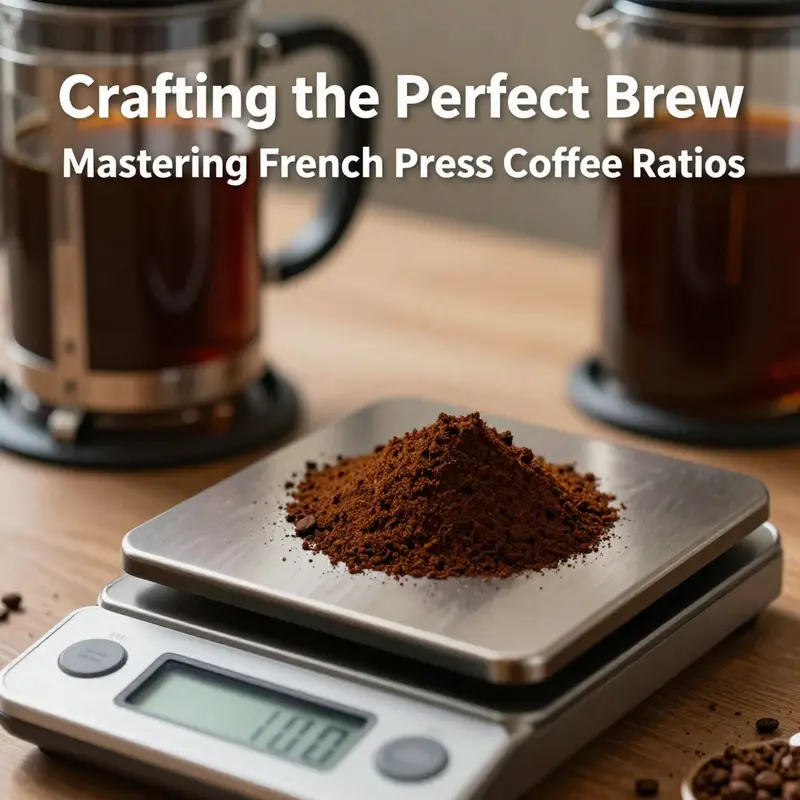
In the morning kitchen, precision becomes the quiet engine behind a great cup. When we talk about French press coffee, weighing both coffee and water turns guesswork into repeatable practice. A scale, not a spoon, becomes the central tool that lets you translate grams into consistency, so you can chase flavor with clarity rather than luck.
A solid baseline can act as a compass. Many baristas start with a 1:15 ratio, meaning one gram of coffee for roughly fifteen grams of water. This balance tends to reveal acidity and sweetness without bitterness, and it supports a clean body. If you crave more intensity, you can explore 1:13 or 1:12, understanding that these tighter ratios require attention to grind size, brew time, and water temperature to avoid over-extraction. Conversely, dialing toward 1:16 or 1:17 can restore balance if a batch tastes sharp or thin, while preserving the advantages of weighing everything precisely.
The practical power of a scale goes beyond numbers. Grinding size, agitation, and immersion time all interact with the ratio, and the scale gives you a common heartbeat to measure those interactions. If you grind finer at a 1:15, the cup may become heavy and bitter; if you grind coarser, it may taste weak. Because you measure by grams, you can log each change and replay a successful result. A 500 ml batch with roughly 33 g of coffee at 1:15, for example, becomes a repeatable starting point you can adjust from with confidence.
Weighing also clarifies how water quality and temperature influence the final cup. Good flavor depends on balance among extraction, solubility, and mouthfeel, and the scale helps you separate the effect of the grind and the ratio from other variables. The habit of documenting weight, grind setting, brew time, and any tweaks turns a daily ritual into a craft with measurable progress. The goal is not a single perfect cup but a robust framework that supports exploration without drifting into inconsistency.
As you weave scale-based discipline into your French press routine, you begin to see flavor as a conversation between beans and water that you can guide with numbers. The 1:15 baseline often serves well across many beans, yet the flexibility to move toward 1:13, 1:12, or toward 1:16-1:17 gives you room to adapt to roast level, origin, and personal preference. With a reliable baseline and a trusted log, you can pursue improvements deliberately, comparing results under consistent reference conditions and building a personal map of taste. The practice rewards patience, repetition, and reflection, turning a morning ritual into a craft that yields steady, gratifying cups.
null
null
Final thoughts
The mastery of French press coffee ratios is akin to crafting a signature brew that defines your business’s coffee experience. By understanding the 1:15 ratio as a foundational baseline, along with adjustments for strength and precision in measurements, you can dramatically enhance the quality of your offerings. Fine-tuning these ratios according to specific flavor profiles ensures that every cup of coffee served resonates with your customers’ tastes. As you refine these techniques, your establishment can stand out in today’s competitive coffee market, achieving both customer satisfaction and loyalty.