

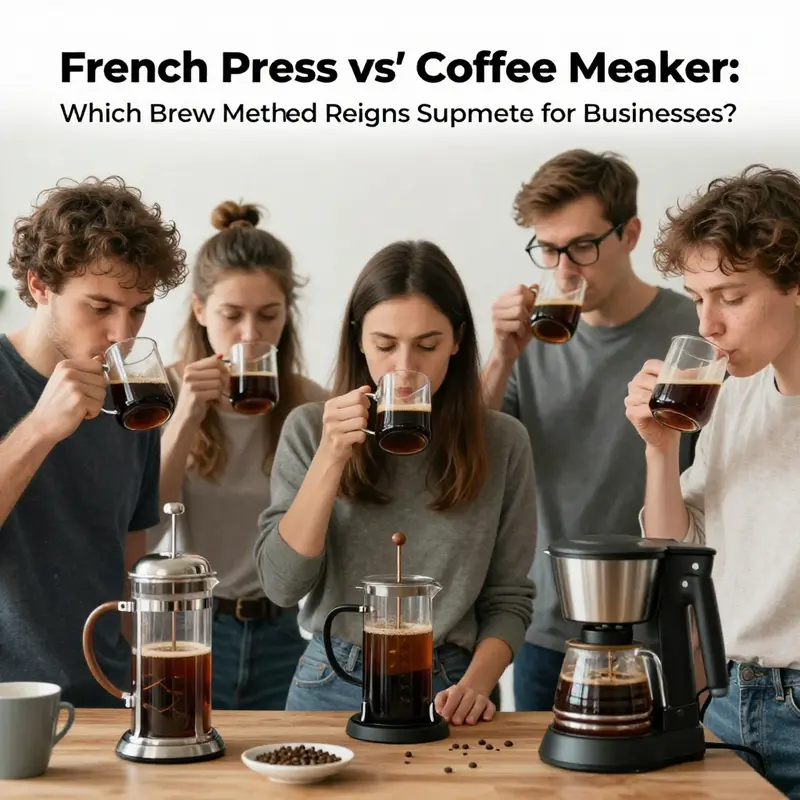
For business owners, the choice between a French press and a coffee maker extends beyond mere preference; it speaks to their brand identity and the coffee experience they wish to provide to employees and clients alike. While a French press embodies a handmade, artisanal coffee adventure, a coffee maker offers automation, speed, and consistency. This article dives deep into the strengths and weaknesses of each method, exploring the brewing processes, cost factors, cultural significance, and user experiences. By the end of this exploration, business owners will gain a comprehensive understanding that can guide their decision on whether to embrace the artistry of French press brewing or the efficiency of a coffee maker.
Between Immersion and Automation: Embracing French Press and Coffee Makers in Your Daily Brew
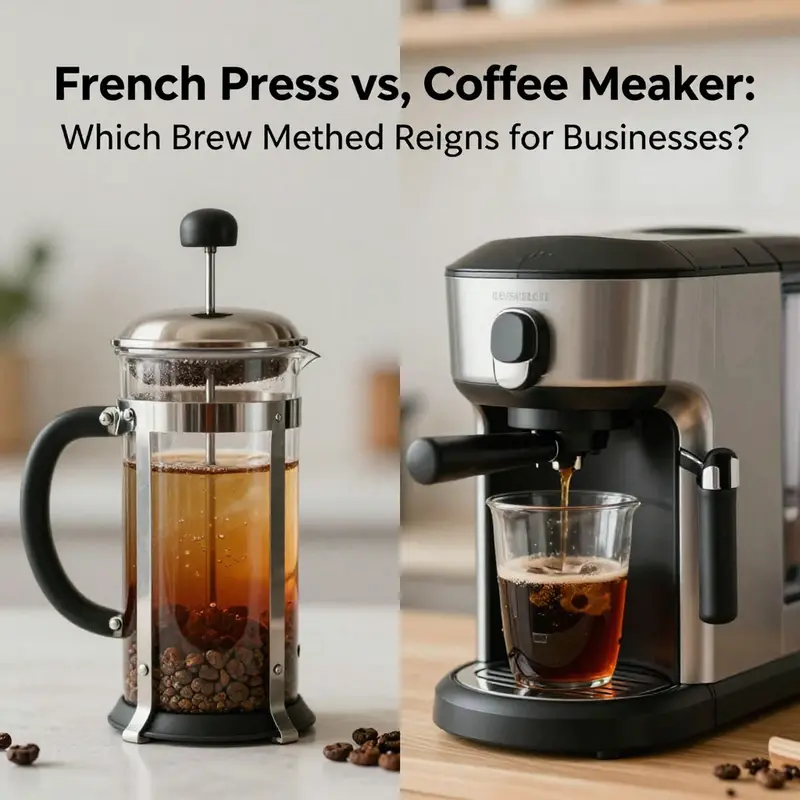
When you stand at the kitchen counter with a kettle in hand, the choice between a French press and a coffee maker is more than a matter of equipment. It is a reflection of how you want coffee to feel in your day. The French press invites you into a ritual of immersion, a tactile dance with heat, time, and texture. A coffee maker, by contrast, slides into the morning with a quiet efficiency, turning water, grounds, and heat into a familiar cup with minimal fuss. Each path leads to a distinct sensory experience and a different rhythm of life, and the decision often comes down to how you want to connect with your coffee, not just what you want to drink.
The French press operates on a simple principle: coarse to medium grind, hot water, time, and a metal filter that lets oils and fine particles mingle with the brew. Because the grounds steep in water rather than meeting a paper barrier, the resulting cup tends to carry more of the bean’s natural oils, a richer sheen of texture, and a complexity that can feel almost tactile on the tongue. The flavor range is broad because you control so many variables. Temperature tolerance, brew time, coffee-to-water ratio, and grind size all become instruments you tune until the cup sings in just the right way for that batch of beans. You can push toward a velvety body with longer steep times, or lean into brighter clarity by shortening the steep and adjusting the grind. There is a certain intimacy to the process: you weigh, you pour, you press, and you taste.
Yet this hands-on approach comes with its own cadence. The same immersion that liberates oils also leaves a cup with more texture and, occasionally, some fine sediment that a paper filter would catch. The sediment is not a flaw so much as a telltale sign of the method’s philosophy: you are drinking more of the bean’s honesty, including its oils and tiny particles that contribute to aroma and mouthfeel. And because the device is manual, timing becomes personal. A minute or two can swing a cup from balanced to bitter if the grounds rest too long in contact with hot water after pressing. For some, that nuance is a joy; for others, it is a source of hesitation during busy mornings. The French press also tends to be more forgiving to a certain extent. While grind consistency matters, the method tolerates a slightly coarser grind or a broader range of water temperatures, as long as you mind the timing and the pour.
Maintenance mirrors its design. There are fewer components to deteriorate, but the parts that interact with the brew require regular care to prevent stale oils and residue from dulling the aroma. Cleaning is straightforward but more hands-on: disassemble, rinse, and dry before the next use. Because there is no need for electricity, the French press is wonderfully portable. It travels well, adapts to different spaces, and remains a reliable companion in places with limited power outlets or simple setups. This portability integrates nicely with a lifestyle that values freedom and a hands-on approach to the craft of coffee. For travelers and campers, the French press can feel like a faithful extension of the coffee ritual rather than a compromise in quality.
The coffee maker, in its many guises, follows a different directive: automation, consistency, and scalability. A drip machine, a capsule brewer, or a more involved espresso unit each brings its own strengths, but they share a core promise: the ability to produce a routine, repeatable cup with minimal fuss. The automation is a relief in the morning when time is of the essence. You add water and grounds (or pods), set a timer, perhaps program a wake-up brew, and walk away. The result is dependable enough for a household or an office setting where the same morning cup is expected and appreciated by multiple people. The flavor tends to be cleaner and brighter, especially when a paper filter catches fines and oils. The absence of sediment makes the experience smoother for those who prefer a cup without the more pronounced oils that characterize immersion methods.
Capacity and consistency become the maker’s strongest selling points. Drip and other automated machines can deliver multiple cups in one cycle, maintain a steady water temperature, and preserve a stable extraction profile across batches. Some models integrate grinders, temperature control, and even smart features that let you adjust strength, water-to-coffee ratio, and flavor profiles from a phone or control panel. The convenience is not merely about time saved; it is about predictability. You know what you will get, day after day, and that reliability can be a quiet foundation for a busy life. However, this reliability can also dull some of the sensory exploration that immersion brewing invites. Because paper filters remove a portion of the oils and finer notes, the cup can feel lighter in body and more uniform in character. For a morning caffeine fix that must come fast, that trade-off is often worth it.
The trade-off between these approaches underscores a broader principle: your coffee identity is a blend of flavor, ritual, and schedule. If flavor depth and tactile craft matter most, the French press can be a source of daily inspiration. The act of weighing beans, heating water, and watching the plunger descend is almost ceremonial, a moment to center the day and to notice the bean’s evolving aromatics as they bloom. If efficiency, consistency, and the ability to serve several people with minimal effort take precedence, a coffee maker offers a practical backbone to your routine. It can become a dependable partner during late meetings, early starts, or weekend gatherings when time is a resource you cannot borrow from elsewhere.
This is not a strict bifurcation. The two methods often coexist in kitchens that value both precision and practicality. A household might use a French press for a weekend ritual—an evening treat or a lazy Sunday ritual—while relying on a coffee maker for weekday mornings when time is tight. The complementary relationship becomes a narrative about balance: immersion for texture and personality, automation for reliability and throughput. In moments when beans are exceptionally fresh or when you want to experiment with a new roast, the French press can reveal layer after layer of what the beans have to offer. When the goal is speed and consistency, the coffee maker becomes a trusted workhorse, delivering a clean, balanced cup with the least friction.
Guided by taste and schedule, you can leverage accessible wisdom from seasoned coffee thinkers without surrendering agency over your brew. If you crave the kind of flavor that carries more of the bean’s character, start by adjusting grind size, water temperature, and brew time in the French press. You may find a surprisingly broad spectrum of expression in a single batch. If you need a routine that simply works, consider the coffee maker’s programmable features, which can turn an ordinary morning into a quiet, predictable ritual. For readers who want a more in-depth framework, a comprehensive comparison guide on French press versus traditional drip brewing offers a structured lens to evaluate how each method aligns with your daily life, your kitchen space, and your coffee ambitions. a complete comparison guide on French press vs traditional drip coffee makers.
In the longer arc of your coffee journey, you may also explore the science that underpins these choices. Immersion brewing emphasizes body, aromatic complexity, and the tactile sensation of flavor, while filtration and automated control shape clarity and consistency. The conversation is less about choosing a single “best” method and more about acknowledging how your preferences—texture, aroma, mouthfeel, routine, and convenience—shape the tool you bring to the table. For those who want a deeper theoretical grounding, sources that explore extraction science and the role of filters can illuminate why different methods yield different cup profiles. External perspectives grounded in experimental practice remind us that coffee is as much a living conversation with beans as it is a technique or a gadget. If you wish to dive deeper into the science behind immersion and extraction, a widely respected author in coffee studies offers clear explanations that connect method to sensation. External reference: The Science of Coffee.
Brewing Mastery Across Immersion and Automation: Techniques and Tips for French Press and Automatic Coffee Makers
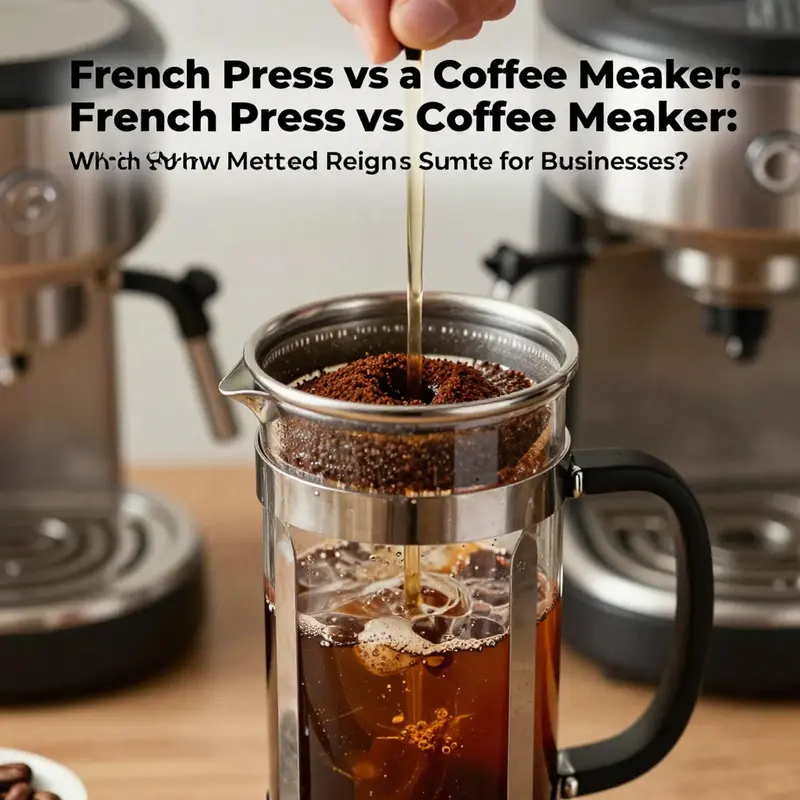
Brewing coffee is more than a routine; it is a dialogue between ingredients and method, between patience and precision. When you compare the French press with a coffee maker, you are choosing between immersion and automation, between a tactile ritual and a streamlined workflow. Each approach invites a different kind of attentiveness, yet both share the same core goal: to transform roasted beans into a cup that communicates brightness, balance, and personality. The practical differences are not merely about convenience or flavor; they are about controlling variables that determine whether a coffee tastes flat or complex, thin or velvety, nervy with acidity or gently rounded with sweetness. To navigate these choices well, it helps to think in terms of technique, temperature, grind, timing, and ratio, then let your taste buds do the final validating work. If you crave a deeper dive into the specifics of French press ratios, you can explore the guide on French press coffee ratios that breaks down exact grams per liter and why they matter for body and clarity.
With a French press, the brewing ethic is immersion. Grounds take up residence in the carafe and water surrounds them fully, allowing extracted oils and fine particles to mingle with the liquid before a final separation. This approach leans into texture and depth, producing a cup with a full mouthfeel and a perceptible richness that many drinkers chase as the defining feature of a well-made brew. The components—from the glass or metal carafe to the plunger and mesh filter—shape the experience by determining how much coffee oil and particle matter remains in the cup. A well-designed press holds heat reasonably well and makes the ritual of brewing a mindful, almost meditative act. The trade-off is that it demands attention: grind size must be coarser than drip coffee, water temperature must be controlled, and timing must be observed; otherwise, the result veers toward muddy textures or muddy flavors.
On the other side, a coffee maker—whether a drip machine, a capsule system, or an espresso-capable device—embodies a different philosophy. It relies on automation to achieve consistency across cups. The water is heated, pumped, and filtered through ground coffee as it travels along a fixed path, and the machine’s design typically emphasizes repeatable temperature, flow, and contact time. The advantages are clear: convenience, speed, and the capacity to serve multiple people with little manual effort. The drawbacks, however, can show up in flavor: paper filters may strip away some oils that contribute body, and the machine’s fixed parameters can mask nuances that become audible only when you control variables carefully. Still, when used thoughtfully, a reliable coffee maker can deliver a bright, clean cup with steady clarity—especially useful in morning rhythms, shared kitchens, or office settings where producing several servings quickly matters.
A balanced approach to both devices starts with the same foundational practices. Fresh beans are non-negotiable; grind size is the driver of extraction behavior; water quality is the silent partner that carries flavor into the cup. For the French press, a coarse grind—roughly the texture of sea salt—helps prevent too many fines from passing through the mesh and keeps the brew from becoming muddy. For a typical one-liter press, a dose around fifty-five to sixty grams of coffee provides ample concentration without overpowering the palate. Water temperature should hover in the range of 195 to 205 degrees Fahrenheit (about 90 to 96 degrees Celsius). Heating water to a precise temperature matters because too-hot water scorches the grounds, while too-cool water leaves flavors underdeveloped. Precision here pays off in balance rather than bitterness.
The process in the press unfolds with purposeful stages. Preheating the carafe reduces heat loss; grounding just before brew preserves aromatics that start to dissipate within minutes after grinding. The grounds sit in the bottom while hot water is poured in, usually in a slow, concentric motion to ensure even saturation. A gentle stir helps break the crust that forms on the surface and promotes uniform extraction. A brief pause allows the coffee to steep—traditionally about four minutes—during which time the aromatics bloom and the internal chemistry of extraction unfolds. Pressing the plunger slowly promotes an even separation of liquid from grounds, minimizes the disturbance that can push fines through the mesh, and preserves the clean, rich character of the brew. Pouring promptly into a warmed cup or carafe prevents lingering contact with the grounds, which can otherwise push the flavor toward over-extraction and bitterness.
In a coffee maker, the logic shifts toward controlled automation rather than manual immersion. The same essential variables apply, but the emphasis moves toward achieving a consistent brew profile across multiple cups. The grind tends to be medium for drip systems because it balances surface area and flow through the filter. The water temperature should still stay hot enough to drive extraction, typically in the mid-to-high eighty-degree Celsius range, and the contact time—though shorter than immersion—depends on the machine’s design and the brew cycle. The coffee-to-water ratio often translates to a standard, scalable metric: a moderate starting point is a little under the recommended brew strength for manual methods, with adjustments made for your preferred intensity and the particular beans you’re using. Cleanliness and maintenance matter more in this context; mineral buildup, stale filters, or clogged tubes can silently erode flavor, masking the beans’ true character.
What makes the choice matter beyond taste is the way you tailor the experience to your routine and your palate. The French press rewards those who enjoy a tactile, hands-on ritual and who want the fullest possible expression of a coffee’s oils and body. It invites experimentation with bloom time and grind coarseness, with a willingness to chase a satisfying mouthfeel that lingers pleasantly on the tongue. An automatic coffee maker, by contrast, shines when life leaves little room for manual steps. It supports routine, consistency, and the ability to serve several people efficiently, while still offering customization in terms of strength, water temperature, and cup size on many modern models. The best choice, in other words, aligns with how you want to experience coffee each day: as a deliberate personal ceremony or as a reliable, scalable morning routine.
To optimize either path, consider integrating a few universal practices. Start with quality water—softened or filtered water often carries flavor more faithfully than hard water. Invest in a burr grinder for the most uniform grind, because irregular grind sizes create uneven extraction and inconsistent flavors. Use a scale and timer when possible; even small differences in grounds weight or brew duration can shift the balance between sweetness and bitterness. Preheat vessels to minimize heat loss, which preserves extraction momentum. And most importantly, taste consciously and adjust method in small steps. If a cup tastes overly bitter, you might shorten the brew time, widen the grind, or slightly reduce the coffee dose. If it tastes flat or sour, you could try a warmer brew temperature, a finer grind, or a longer contact period.
Throughout this exploration, confidence grows from recognizing that the two systems sit on a shared spectrum of technique and care. You can cultivate a more nuanced palate by switching between immersion and automation on occasional mornings, letting your senses guide you rather than sticking to a single routine. In one session, you might focus on texture and fullness—emphasizing the press’s oils and body. In another, you might chase clarity and lift—favoring the precision of a well-tuned drip system. Keeping notes helps—record your grind size, water temperature, coffee weight, and brew time as you experiment. You may find that certain beans reveal themselves more vividly through immersion, while others show their bright acidity under drip extraction. Either way, the core discipline remains consistent: start with fresh, quality beans, respect temperature, grind, and timing, and finish with a clean, properly stored device so that the next batch starts from a clean slate.
As you continue your journey through the craft, you will learn where your curiosity and your daily schedule intersect. The dialogue between French press and coffee maker is not about choosing one method over the other forever; it is about building fluency in both, so that you can summon the right tool for the moment. When a quiet, deliberate morning calls for texture and depth, the immersion approach can sing. When a busy weekday demands speed without sacrificing flavor, automation becomes your ally. And when you want to cultivate a deeper relationship with coffee—understanding when minute adjustments yield meaningful differences—the practice becomes a form of sensory literacy, a way to read the cup as you would a landscape, noticing how heat, contact time, and grind reveal a bean’s character. The ritual, the discipline, and the curiosity all travel with you, regardless of the device you reach for next.
External reading for those who want to explore the science and art behind the process can be found here: https://www.seriouseats.com/french-press-coffee-guide
Counting the Cost of Flavor: Long-Term Value in Choosing a French Press or a Coffee Maker
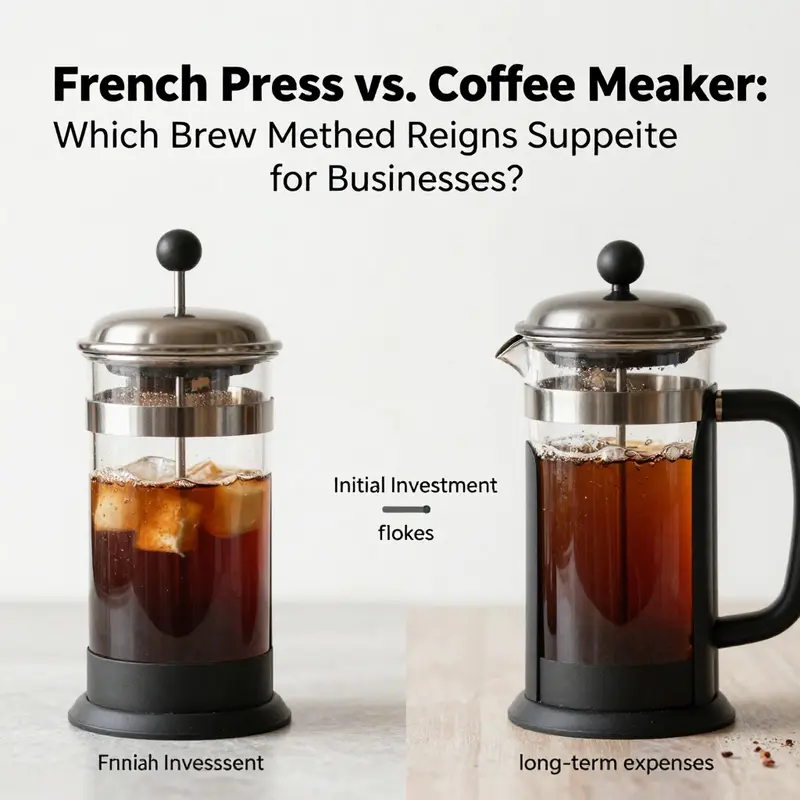
When you weigh a French press against a coffee maker, cost is more than a sticker price. It is a layered conversation about how you brew, how much effort you want to invest, and how long the device will stay useful in your daily routine. The numbers tell a practical story: French presses sit at the lower end of the price spectrum, while coffee makers span a wider range, from modestly affordable to comfortably expensive, depending on features, durability, and automation. From the outset, this means your decision will depend as much on your lifestyle as on the beverage you seek. A useful starting point is to anchor your expectations in concrete ranges. A French press typically costs between twenty and fifty dollars, a price tag that makes it among the most accessible brewing options. A coffee maker, by contrast, can run anywhere from around fifty dollars to well over three hundred, driven by programmable timers, built‑in grinders, and more elaborate brewing systems. Those initial costs already sketch a core divide: the French press promises economy, while the coffee maker promises convenience and breadth of capability. Beyond the sticker price, the ongoing costs begin to diverge in meaningful ways. The French press runs on a simple chemical principle—heat water, steep grounds, press and serve—without electricity. Its operating expenses are almost purely the cost of water and coffee, with minimal maintenance: a thorough rinse after each use is often enough, with occasional disassembly for a deeper clean. In practical terms, there is no need to replace filters, pumps, or seals on a regular schedule, and there are no energy bills to fear in the early morning rush. A coffee maker, on the other hand, typically requires electricity and a steady supply of replacement components. Even when you choose a mid‑range model, you may encounter recurring costs for descaling solutions, filters, and occasionally replacement carafes or seals. The energy draw—though often modest on a per‑cup basis—adds up with daily use, especially in households that rely on multiple cups per person and a machine that runs repeatedly through the day. The long‑term value of either option rests on how aggressively those costs accumulate and how resilient the device proves to be over time. Durability becomes a defining factor. French presses are frequently constructed from stainless steel or borosilicate glass and designed to withstand daily use for years. Their design is straightforward, with few moving parts that can fail. If the plunger seal wears, you can source a replacement part, and many models offer remarkable longevity with proper care. Because there are no complex electronics or heating elements to malfunction, the risk of breakdown stays relatively low, which translates into a calmer sense of financial predictability. In contrast, coffee makers couple heating assemblies, pumps, and intricate filtration systems into a compact package. The more features a model includes, the more there is that can go wrong. Over a five- to ten-year horizon, a coffee maker can incur higher maintenance costs, and its value can be eroded by component failures or the need to replace filters, descalers, or even the entire machine. Yet there is nuance here: a mid‑range coffee maker, used heavily for multiple cups per day, can offer a form of value that is not captured by the price tag alone. It can save time, deliver consistent extraction, and maintain temperature stability across servings, advantages that matter when mornings demand speed and predictability. In such scenarios, the incremental cost of a more robust machine might be justified by the convenience it provides. For readers who want to see the broader context of this trade‑off, a quick side‑by‑side comparison can be illuminating: French press vs traditional drip coffee maker: a complete comparison guide. This resource frames the cost discussion within a wider framework of flavor, control, and ease of use, helping readers map their priorities onto price and longevity. In this framework, the verdict often comes down to usage pattern. If your priority is to minimize expense while preserving a tactile, hands‑on ritual, the French press is a compelling option. Its minimal parts and the absence of electricity mean fewer opportunities for failure and lower ongoing costs, which compounds into a favorable long‑term value for many households. The charm of this route is not just the money saved but the simplicity preserved: you grind or measure and steep, and you can adapt the brew easily by adjusting grind size or steep time without needing a manual or onboard computer. If your life moves with speed and you brew for several people at once, a coffee maker’s strengths can be worth paying for. The ability to set a timer, to program multiple cups, and to keep coffee warm for a period of time translates into measurable time savings and a consistent, repeatable product. These advantages can offset a higher upfront investment and recurring costs when the daily routine demands reliability and throughput. There is a further layer to the economics that often surfaces in real households: environmental impact and waste. A French press eliminates disposable filters and pods that are common with some coffee makers, reducing ongoing waste and, arguably, a smaller footprint over time. This consideration may tilt the balance toward the French press for environmentally mindful buyers who want a durable, low‑waste solution. Conversely, a single‑serve or high‑capacity machine can minimize waste per cup when used efficiently, an argument that some households weigh in favor of the coffee maker under specific usage patterns. The most responsible choice, then, is not a universal verdict but a personalized calculus. It asks you to weigh not only the upfront price or the occasional repair bill but the cadence of your mornings, the number of coffee drinkers in your home, and how much value you place on control, flavor, and convenience. If you value the idea of a robust, full‑bodied cup with a mouthfeel that carries the oils and texture more vividly, and you want a device that remains simple and durable, the French press presents a financially sound and satisfying path. If you prize consistent heat, the ability to brew multiple cups with minimal supervision, and the capacity to tailor strength and flavor for a crowd, a coffee maker may deliver the best long‑term value despite a higher initial outlay. This is not merely about keeping a budget; it is about aligning your equipment with your coffee philosophy. The cost story matters, but it becomes most meaningful when read through the lens of habit, volume, and personal taste. For readers who wish to explore a broader, side‑by‑side analysis of these two pathways, the referenced guide offers a structured comparison that can help anchor decisions in real use cases. As the discussion turns toward practical maintenance and how to maximize longevity, future chapters will examine cleaning routines, material choices, and the subtle art of selecting grind sizes and water temperatures that preserve flavor while protecting the investment you have made in your preferred brewing method. External resource: https://www.seriouseats.com/the-best-french-press-coffee-maker-7483956
Brewing as Ceremony: The Cultural Resonance of French Press Rituals and Modern Coffee Makers
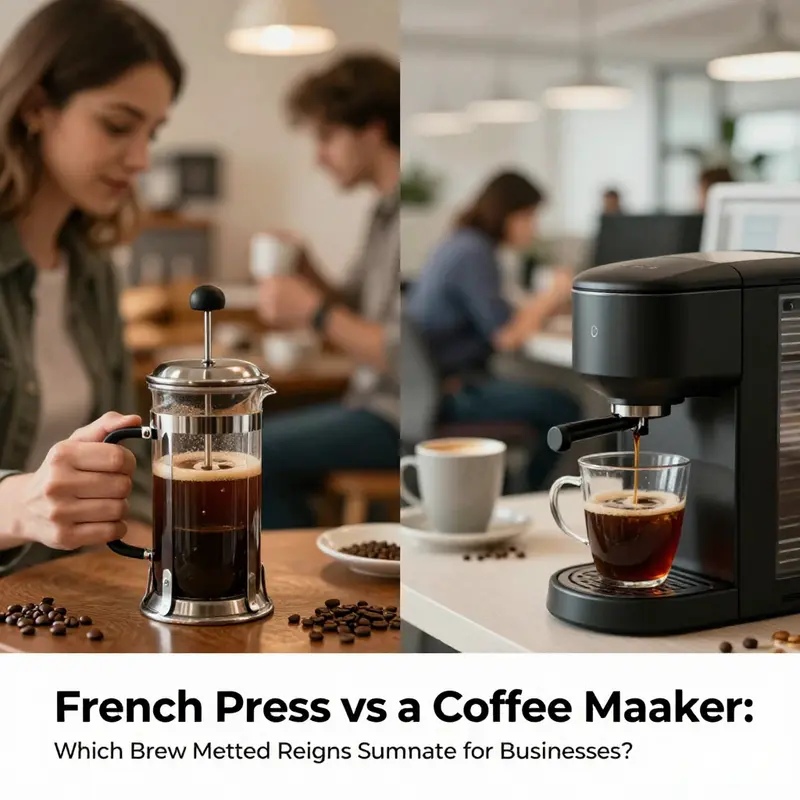
Morning light spills across the counter as a quiet decision unfolds before the first sip: which tool will cradle today’s coffee ritual? The choice between a manual French press and an automated coffee maker is more than a matter of convenience or flavor; it signals a stance toward time, touch, and attention. In many kitchens, the act of brewing becomes a daily practice that shapes how we show up to our day. The research into the cultural impact of these devices reveals that coffee is not simply a drink but a medium through which we negotiate presence, pace, and connection. The French press embodies a tangible invitation to participate in the making itself. It asks the brewer to bring the heat to life, to measure beans, to grind them fresh, and to coax water into contact with grounds in intimate, mindful stages. In this sense, the French press is less a machine and more a ritual object, a doorway into a slower, more intentional morning. The metal plunger, the glass cylinder, and the coarse grind coalesce into a ritual tempo: heat the water, steep, and press with deliberate pressure. The process unfolds in a four-minute window that is both practical and meditative. Each moment—the pause after pouring, the breath before the plunge, the quiet hiss as the plunger begins its descent—becomes part of a small ceremony that reduces distraction and increases awareness. The result is a coffee that carries oils and solids in suspension, delivering a full-bodied mouthfeel that can carry notes of chocolate, nut, and earth. The experience is tactile and sensorial, inviting a prioritization of texture as a marker of quality. The ritual is not merely about flavor; it is about how one moves through a moment, turning a routine into a ceremony of attention. This is where the French press earns its cultural foothold: it reframes daily coffee as an act of participation, a deliberate intervention in the automatic rhythm of life. The sensory richness that emerges from immersion brewing speaks to those who prize depth and texture over clarity. Oils are not filtered away; they carry fat and aroma across the palate, leaving a lingering, satisfying richness that can be hard to replicate with paper filters. The result is a cup that can taste, literally, of the world you ground and heat in your own kitchen. The cultural meaning extends beyond flavor. The process foregrounds mindfulness—an intentional slowing of pace that many find restorative in a world of rapid, push-button solutions. The ritual becomes a small act of resistance to the culture of immediacy, a moment to observe one’s breath, to attend to the temperature of the water, and to listen to the subtle sounds of steeping. In contrast, modern coffee makers—drip machines, capsules, and even some compact espresso setups—offer a different kind of cultural utility. They embody efficiency, predictability, and social practicality. A coffee maker is designed to deliver a cup, reliably, at scale. It can handle multiple mugs in a row, coordinate with alarms and schedules, and maintain temperature through warming plates or insulated carafes. The machine’s logic is straightforward: water is heated, guided through grounds, then dispersed into cups with minimal intervention required from the user. This design suits homes that begin with speed and routine, offices that aim to standardize morning rituals, and households that spread caffeine needs across several people with varying schedules. Yet there is a trade-off. The automation of extraction can dim the intimate feedback loop that characterizes manual brewing. The brewer loses some of the direct tactile control—the feel of the grind adjusting to water temperature, the timing of each pour—that makes the French press a hands-on art. In exchange, the coffee maker offers consistency and convenience, qualities that today’s busy lives often demand. It can produce a steady stream of familiar flavor profiles, a comforting predictability that reduces variability across batches. The technology also opens doors to broader social rituals: a shared pot during a morning briefing, a device that enables a quiet coffee moment before a busy day or a bustling morning with family. The conversation around these devices—the ritual of making coffee versus the efficiency of technology—has deeper cultural roots. The French press, with its manual rhythm, aligns with a growing appreciation for slow living, mindful practice, and sensory engagement. It invites a learning curve that rewards patience and attentiveness. The automatic coffee maker fits within a culture that prizes instant results, scalable routines, and networked living. It is not simply a device; it is a social facilitator that supports multitasking, household coordination, and time management. The interplay between these approaches can be understood as a spectrum rather than a dichotomy. A mindful morning might begin with the French press on certain days, offering a quiet ritual that anchors the personal moment of awakening. On other days, a coffee maker can provide the shared, efficient start that keeps a household or small team on schedule. The research into this spectrum highlights practical considerations that matter in everyday life. The preparation for both paths begins with thoughtful choices: selecting the grind size appropriate to each method, balancing water temperature with the intended extraction, and planning for a reasonable steep or brew time. For the French press, a coarser grind paired with hot but not boiling water supports a balanced extraction that preserves oils and texture. The four-minute steep is a window of time that rewards patience and focus, turning a simple pause into a moment of contemplation. Preheating the vessel with hot water is a practical tip that helps maintain stable extraction temperatures, a small but meaningful detail that underscores the craft behind the cup. For a drip or automated machine, the emphasis shifts toward consistency, calibration, and maintenance. Filter quality, grind uniformity, and water composition become the levers that shape the final cup, especially when repeated across many servings. The ease of programming, the reliability of automated timers, and the ability to keep coffee at a consistent temperature create a kind of cultural permission slip: you can prepare coffee without becoming absorbed in the process itself. In this landscape, the two approaches coexist and complement one another. The ritual of the French press remains a personal, almost meditative practice, a form of stationery that remembers the hands that made the coffee. The automated machine, meanwhile, encodes a social, communal function, sustaining the needs of households and workplaces where time and abundance must be managed with precision. The two, viewed together, reveal a nuanced cultural truth: coffee is a language of scale and stillness, of social connection and individual attention. The choice of device is less a matter of superiority and more a matter of intention. If the aim is to slow down, savor, and cultivate a daily practice that foregrounds texture, aroma, and tactile engagement, the French press offers a powerful conduit for mindfulness. If the goal is to nourish a household or office with reliability, efficiency, and a predictable flavor profile across multiple cups, a coffee maker provides a practical framework for consistency. The research findings point to a broader cultural implication: how we brew reveals who we are in the moment. The ritual, whether intimate or communal, becomes a lens through which we view time, attention, and relationship to food and drink. It is not mere technique; it is a mode of living that aligns daily actions with values. For readers who want to explore these ideas further, a comparative guide on the two approaches offers a deeper dive into how grind size, water management, and timing shape the cup. See french-press-vs-traditional-drip-coffee-maker-a-complete-comparison-guide. Meanwhile, the larger conversation about the craft of coffee making and its cultural resonance continues to unfold across kitchens and workplaces worldwide, where small acts of heat, water, and patience become everyday rituals. For additional context on the craft and science behind the French press, a broader external resource provides a thoughtful exploration of technique and tradition: https://www.brewcoffee.com/french-press-coffee-guide.
null
null
Final thoughts
The decision between a French press and a coffee maker ultimately hinges on your business’s unique needs and the coffee culture you wish to foster. A French press offers a rich, flavorful cup, ideal for establishments focusing on artisanal qualities and a personal touch. Conversely, a coffee maker brings efficiency and convenience, perfect for busy environments requiring consistent coffee production. Weighing cost against the desired coffee experience can guide business owners to the right choice, enhancing both daily operations and customer satisfaction. Regardless of the choice, integrating quality coffee into your business can significantly boost morale, productivity, and client relations.