
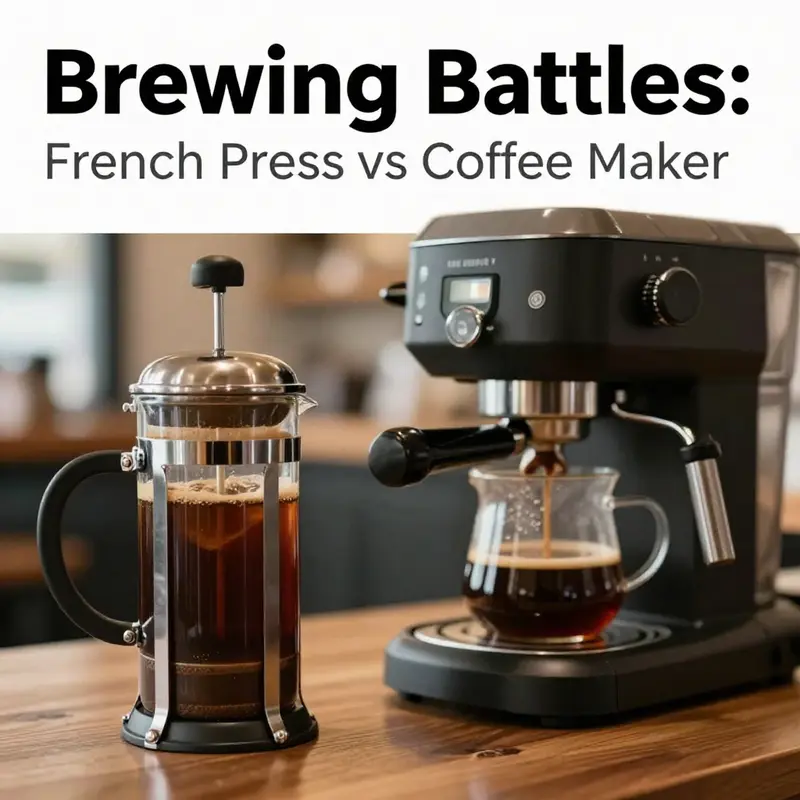
As the coffee culture continues to evolve, business owners face the pivotal decision of selecting the right brewing method for their establishments. This choice often boils down to either the classic French press or the automatic coffee maker, each offering distinct advantages that cater to different priorities. Whether you value rich flavor or quick convenience, this article unpacks the critical differences in flavor profiles, brewing techniques, cleanup processes, customization options, and efficiency. By delving into these chapters, you will gain insights that can significantly impact your operations and customer satisfaction.
null
null
null
null
null
null
Tuning the Cup: Personalization Frontiers in French Press vs Automatic Drip Brewing
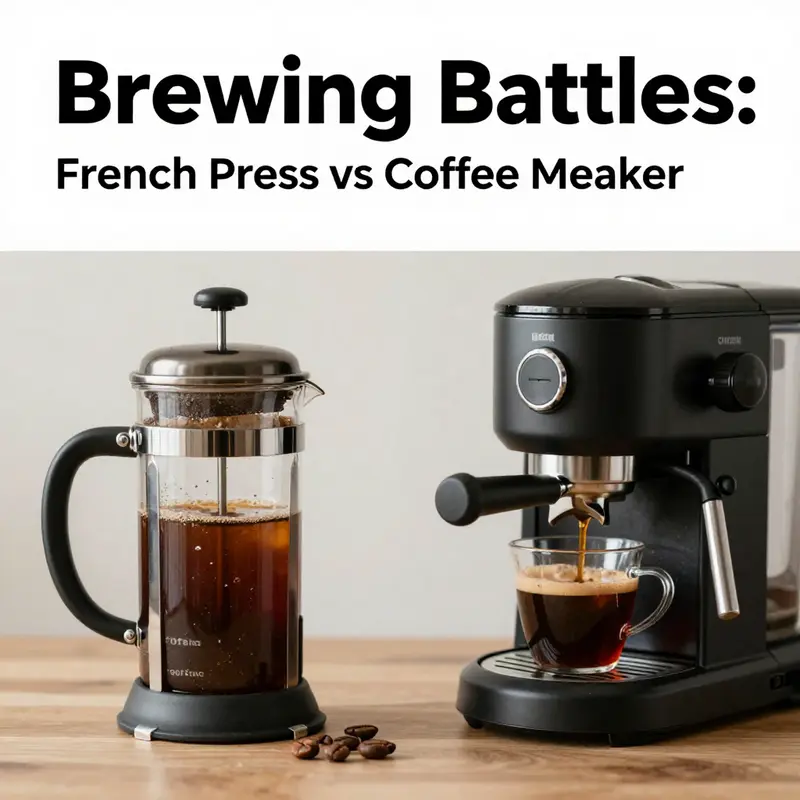
The allure of a French press lies not in a single moment of coffee-making but in a continuous conversation with the brew. It invites a brewer to experiment, to adjust a dozen variables until the cup sings in just the right key. That invitation stands in sharp relief against the more scripted experience of an automatic drip machine, where the same sequence unfolds with dependable familiarity but less room for personal tailoring. This chapter invites you to walk the line between art and procedure, to explore how the French press transforms customization from a vague aspiration into a practical, repeatable practice that shapes flavor, body, and intensity in ways that a standard coffee maker rarely matches.
At the heart of customization is grind size. The French press is uniquely sensitive to grind coarseness because the metal mesh plunger relies on surface area for extraction rather than a paper filter’s restraint. A finer grind increases extraction speed and surface contact, often delivering a more robust, sometimes headier cup. But push the grind too fine, and the result can drift toward bitterness or a gritty mouthfeel as fines slip through the mesh. Conversely, a coarser grind slows extraction, yielding a milder cup with more pronounced chocolate and nutty notes, yet it risks a thinner body if the contact time isn’t long enough. The balance is delicate, and it changes with every origin, roast, and even ambient temperature. The press becomes a studio for calibrating this balance rather than a simple button-press ritual.
Water temperature functions as a second dial for taste. The conventional wisdom anchors the window around 195–205°F (90–96°C), but within that range small deviations matter. A touch cooler water can highlight brighter acidity and citrusy or floral notes, letting delicate aromatics step forward. Warmer water extracts more oils and deeper flavors, increasing body and perceived sweetness but also the risk of scorching some volatile compounds. The ability to nudge the temperature within the range provides a practical path to evolving a cup from one day to the next, to account for differences in bean moisture, roast degree, or even the mood you bring to the brew.
Brew time is where intention becomes texture. The standard four minutes serves as a reliable baseline, but it’s a lever you can pull to change mouthfeel and intensity. Extending the steep to five or six minutes tends to deepen body and complexity, often amplifying bittersweet chocolate and earthy notes with a heavier finish. Reducing the time to three minutes yields a lighter, more agile cup, preserving brighter acidity and a cleaner aftertaste. The trick is not to see brew time as a fixed gate but as a variable that interacts with grind, temperature, and ratio. When you adjust one lever, the others must respond in harmony to keep the cup balanced rather than booming with one dominant trait.
The coffee-to-water ratio is perhaps the most powerful tool in the personalization arsenal. It governs strength, concentration, and perception of aroma. A typical range runs from near 1:12 to around 1:18 for the press, but even within that, the impact is pronounced. A 1:12 ratio floods the grounds with more solubles, producing a bolder, longer finish, which appeals to those who savor a pronounced, lingering cup. A 1:18 ratio lightens the cup, loosening the grip on bitterness and letting subtler notes—cocoa, almond, citrus zest—shine through. The beauty is that this isn’t a fixed standard you memorize; it’s a dial you turn based on roast level, origin, and what you want to drink with your morning pastry or after-dinner contemplation.
Bean selection, often overlooked as a personalization lever, becomes central in a French press. Because the metal mesh filters more oils and fines than a paper filter, the cup preserves a broader spectrum of flavors present in the bean. Single-origin beans, particularly those with distinctive origin notes and fermentation quirks, can bloom in a French press in ways that might feel muted or smeared under a filtered drip. The result is not just a stronger cup but a more faithful conduit of origin character—stone fruit from a light roast, cocoa and earthiness from a medium to dark roast, or bright, herbaceous tones from certain shade-grown profiles. The French press thus becomes less about chasing a universal “best” roast and more about discovering how a particular bean speaks through immersion—the way its oils, acidity, and texture interact with longer contact time and a heavier body.
Stirring and agitation are subtle but meaningful variables. A gentle stir after adding hot water helps ensure all grounds make contact, particularly when the grind is coarser. Some brewers prefer a light stir at the midpoint of the brew to re-map extraction, while others resist agitation to preserve a cleaner chiaroscuro of flavors. Even the act of plunging—the final, decisive moment—carries its own expressiveness. A slow, controlled plunge can coax a velvet-like fullness, whereas a brisk plunge can leave the cup with a brisk snap and a more immediate aftertaste. The plunger becomes a final instrument of personalization, a way to translate a mental image of the cup into the tactile ritual of service.
All these variables cohere into what is truly special about the French press: its openness to iteration. Each adjustment is not a radical departure but a refinement, a chance to map your preferences over weeks of tasting. The process invites a mindful routine—grind fresh, heat water to a precise range, weigh or approximate the ratio, apply a measured brew time, possibly stir, and finally plunge with intention. The objective is not a single flawless formula but a repeatable method that produces a cup aligned with your evolving palate. That is the customization potential the French press uniquely offers when contrasted with standard coffee pods or many automatic machines, which lock you into a fixed set of variables and a predetermined flavor profile.
In this light, the chart of variables becomes a narrative of flavor potential. The same bean can yield a world of experiences depending on how you adjust grind and contact time, how you modulate temperature within the safe band, and how aggressively you push the limits of the coffee-to-water ratio. The coffee you brew becomes not just a beverage but a small, crafted sculpture whose shape you mold with each session. This is where the French press earns its reputation among enthusiasts: it invites disciplined exploration, and it rewards patience with a deeper sense of ownership over the cup.
Of course, this path requires time and intention, and it stands in relief to the more streamlined path of a coffee maker. Pod-based or automatic systems are designed for predictability, efficiency, and ease, which are valuable in their own right. They excel when you want a quick cup with consistent results, without the need for tuning. The trade-off is that you surrender a portion of flavor range and personal expression that the French press makes available through direct control of the variables discussed above. The contrast is not merely about taste; it is about how you want to approach coffee as a practice. Do you want a ritual that evolves with your palate, or a reliable, fast, no-fuss cup that stays within a familiar flavor envelope?
For readers who crave concrete paths to better results, the dialogue between these approaches can be thought of as a roadmap. If you’re starting with a French press, treat the variables as your first set of waypoints: calibrate grind size to a true coarse or medium-coarse bread-crumb feel, stabilize water near 200°F, target a 1:14 to 1:16 ratio to begin, and time a four-minute bath with a possible push toward five if you want more body. Taste, compare, and adjust. If you’re more inclined toward ease, use the automatic drip as a baseline and view it as a gateway to future experimentation. Even within its limits, you can still lift the experience by selecting beans with pronounced aromatic oils, but you’ll likely encounter a cleaner cup with less of the mouthfeel that the press preserves.
To readers who are curious about the nuts and bolts of dialing in these parameters, a deeper dive into grind-size effects, ratio optimization, and their sensory implications can be found in french-press-coffee-ratios-the-ultimate-guide. That guide treats ratios, grind sizes, and extraction as a unified toolkit, illustrating how small adjustments ripple across aroma, body, and finish. It’s a practical companion as you experiment with heat, time, and dose, offering a structured way to map your preferences over dozens of cups.
In sum, customization in the French press is less about chasing a single perfect formula than about building a personal brewing language. It is the language you speak when you say, this cup should be bold and chocolatey today, or bright and citrus-driven tomorrow. The automatic coffee maker, by contrast, offers a more restrained vocabulary—consistent, convenient, predictable—but not as conducive to altering the paper-filtered narrative of the cup. The choice between these paths is not merely about speed or flavor; it is about the relationship you want with your daily coffee ritual. If you prize granular control, tactile involvement, and the chance to sculpt a cup to your exact taste, the French press remains a potent instrument in the craft of home brewing.
External resource: Master The Art Of French Press Coffee Brewing The Perfect Mug Every Time at https://www.coffeegear.com/guides/master-the-art-of-french-press-coffee-brewing/.
Speed and Efficiency: French Press vs Automatic Coffee Maker
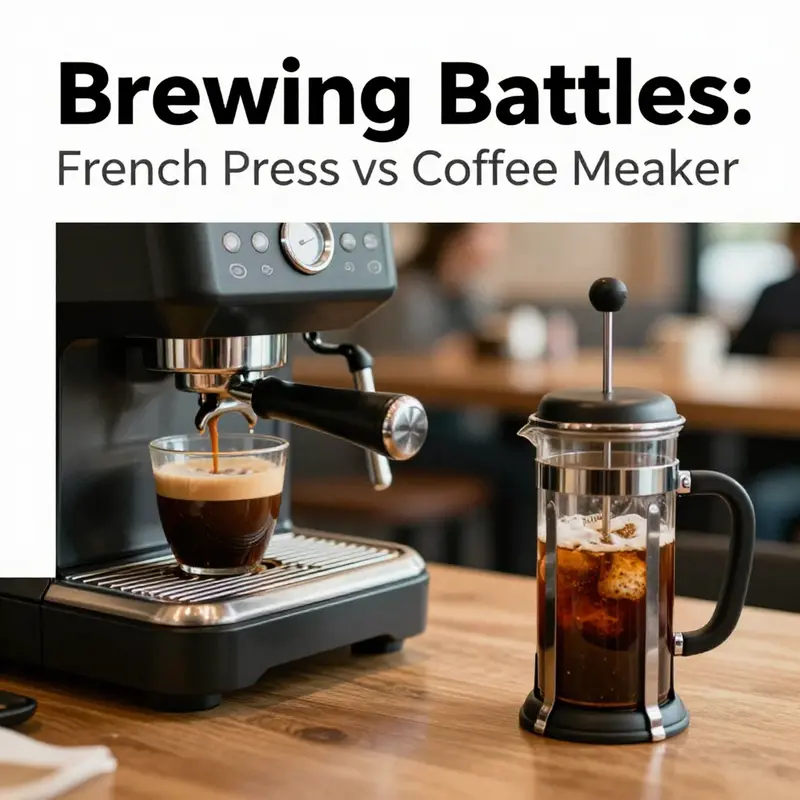
The speed of your morning brew is not just a timer on the wall; it shapes how you approach coffee as a daily ritual. When you stack a French press against an automatic coffee maker, you are pitting two brewing philosophies against each other. One emphasizes immersion, intuition, and a hands-on rhythm that rewards patience with depth. The other centers on automation, consistency, and a streamlined sequence that most mornings demand. The result is not simply a matter of speed, but of how efficiently you can move from beans to cup while preserving the kind of experience you want from your coffee.
Automatic drip machines are engineered for speed and ease. They automate most of the brewing ballet: the water is heated to a reliable range, delivered through the grounds in a controlled cascade, and guided into a carafe with minimal intervention. In many kitchens, a full pot—often eight to twelve cups—can be ready in under ten minutes. Pod-based systems push this even further, delivering a single cup in roughly a minute or two, with a press of a button and almost no attention beyond adding water and a small amount of coffee. The efficiency here shows up as predictable temperature, consistent extraction, and the ability to scale up quickly for households that rely on several servings before everyone heads out the door. The potential for automation means fewer timing mistakes in the morning, fewer variables for the user to juggle, and a straightforward routine that feels almost seamless once the machine is set up.
But efficiency is not purely a matter of minutes. It also hinges on how much work you are willing to do and how much you value the sensory outcome. A drip machine’s efficiency includes waste and cleanup. Paper filters, while excellent at catching fines, create ongoing waste that must be managed. Pod cups cut down on mess and measurement, yet they introduce their own packaging and disposal considerations. In contrast, a French press trades some speed for tactile control. The process is simple, yet it requires a sequence: grind the beans, heat water, combine them in a carafe, wait, press, and pour. The actual brew time—about four minutes of steeping—sits within a five to ten minute window for the full routine, depending on how you pace the steps. The machine stays silent while the coffee blooms in immersion, and the act of plunging the filter becomes a small, deliberate moment that marks the transition from raw grounds to a ready cup.
In terms of labor, the automatic machine shines when the goal is to minimize hands-on time. Once you measure out the coffee and fill the reservoir, the machine does the heavy lifting. It also keeps coffee warm, a feature that can be a boon in households that welcome a fresh, readily available pot as soon as morning bites begin. The trade-off is a degree of rigidity. The water flow, contact time, and extraction dynamics are largely fixed by the machine’s design, leaving little room to tailor the brew for nuanced taste. If your palate seeks a precise balance—stronger aroma, a specific acidity profile, or a particular level of body—the auto machine will require you to adapt to its presets rather than letting you sculpt the cup freely. In this sense, speed and consistency come at the cost of tonal variation.
The French press tells a different story about efficiency. It is lean in the sense that there are few moving parts and no electronics to fail. The process is tactile and repeatable in a very different way: you decide the grind size, you regulate the water temperature with your own kettle, and you time the steep with a minute-hand accuracy that you control. The payoff is flavor and mouthfeel that arise from the grounds’ full contact with hot water and their unfiltered immersion. Oils and fines remain in the cup, contributing a richer texture and a more robust chocolatey or nutty edge. But this depth arrives with complexity: you must manage the grind size to a coarse level, heat water to roughly the right range, measure the coffee by weight or scoops, maintain the timing, and press the plunger with even pressure. The incremental labor yields a cup that many describe as more alive and more forgiving of variables that would alter a drip brew’s brightness. In terms of “efficiency of effort,” the French press asks for more hands-on involvement, but it rewards the patient brewer with direct control over the extraction and a sensory payoff that feels more intimate and intentional.
When households weigh speed against flavor, the numbers sometimes steer them toward the automatic machine for daily routines. A busy morning benefits from the ability to reach for a cup quickly and repeatedly without re-establishing a ritual each time. In larger households, the capacity to brew a pot for several people in a short window becomes a decisive advantage. The automatic brewer’s efficiency is most pronounced when you factor in the time saved across multiple cups and the reduced attention required as people mill about the kitchen. The cost, of course, is that the cup may taste brighter or more nuanced, but with less body and oiliness—a trade-off many find perfectly acceptable for the sake of speed and reliability.
For those who savor a more deliberate experience, the French press can still be a strong competitor in the morning routine, even when time is tight. It offers a predictable procedure that, once learned, becomes nearly automatic: heat water to the target temperature, grind to a coarse consistency, pour, stir, steep, and press with a steady hand. The rhythm may be slower in the moment, but it avoids the waiting times that come with heating cycles and warming plates of some drip machines. The result is a cup whose character mirrors the brewer’s presence at the table—less about a uniform, universal profile and more about the relationship between the brewer and the brew. For a single cup or two, the time cost is minor, and the payoff—full body, richer oils, and a lingering finish—can feel worth the extra minutes.
This is where the broader question of efficiency comes into play. If you measure efficiency by the lowest possible minutes per cup, the automatic system wins, hands down. If you measure efficiency by the balance of control, flavor fidelity, and the satisfaction of a mindful ritual, the French press can continue to compete for a place in the morning lineup. The truth is that most kitchens navigate a hybrid approach: a fast, reliable auto brewer for weekdays and a French press for weekend mornings or when extra time invites a slower, more intentional brew. The choice is rarely binary; it is a matter of fitting the tool to the moment and the mood.
To deepen the conversation about the trade-offs, consider a practical perspective on setup and maintenance. An automatic machine thrives on routine: regular cleaning, descaling, and filter changes that keep the mechanism efficient and the water flow steady. If a device is neglected, performance declines, and the very efficiency it promises can erode. A French press, by contrast, rewards regular but straightforward upkeep: a quick rinse of the carafe, a thorough rinse of the metal or nylon mesh, and careful disposal of spent grounds. The effort pays off in a consistent plunger motion and a cleaner cup, yet the process remains more involved than simply loading and pressing on a drip machine. In both cases, efficiency is as much about how well you maintain the tool as it is about how quickly you can produce a cup.
For readers who want a concise path through the speed-versus-flavor debate, a useful middle ground emerges. If time is precious but you want more control over the cup, you might start with a drip machine that offers adjustable brew strengths and a reliable water temperature range. On weekends or on days when you can linger, you can switch to the French press to explore how different grind sizes or steep times shift the cup’s mood and body. This flexible approach lets you cultivate both efficiency and depth, without sacrificing one for the other.
If you’d like a broader exploration of how these two methods compare across more dimensions, you can read a deeper dive on a comprehensive guide dedicated to French press versus traditional drip coffee makers. It delves into ratios, extraction nuances, and practical tips for optimizing each method, offering a richer frame for the choices discussed here. French press vs traditional drip coffee maker—a complete comparison guide.
Ultimately, the decision comes down to your priorities: speed and consistency, or immersion and control. The automatic coffee maker aligns with a practical, time-conscious workflow that suits busy households and early mornings when every minute counts. The French press champions a tactile, flavor-forward approach that rewards experimentation and patience. In a well-rounded kitchen, recognizing when to reach for each method—depending on the day, the schedule, and the coffee you crave—can elevate daily routines without forcing a single, rigid choice. The blend of both methods, used thoughtfully, reveals that speed and efficiency are not enemies of flavor; they are simply different pathways to your preferred coffee experience.
External resource for broader benchmarking and context: For a detailed comparison of speed, cost, and ease of use across coffee makers, consult this comprehensive guide from a respected industry resource: https://www.nytimes.com/wirecutter/reviews/best-coffee-maker/.
Final thoughts
The choice between using a French press and an automatic coffee maker ultimately hinges on your business priorities. Each brewing method offers unique benefits that can enhance customer experience. While the French press excels in delivering a richer, more flavorful cup, it requires a dedication to the brewing ritual that may not suit every operation. Conversely, the convenience and speed offered by automatic coffee makers align well with fast-paced service demands. Understanding these differences allows business owners to make informed decisions that could influence profitability and customer loyalty.