

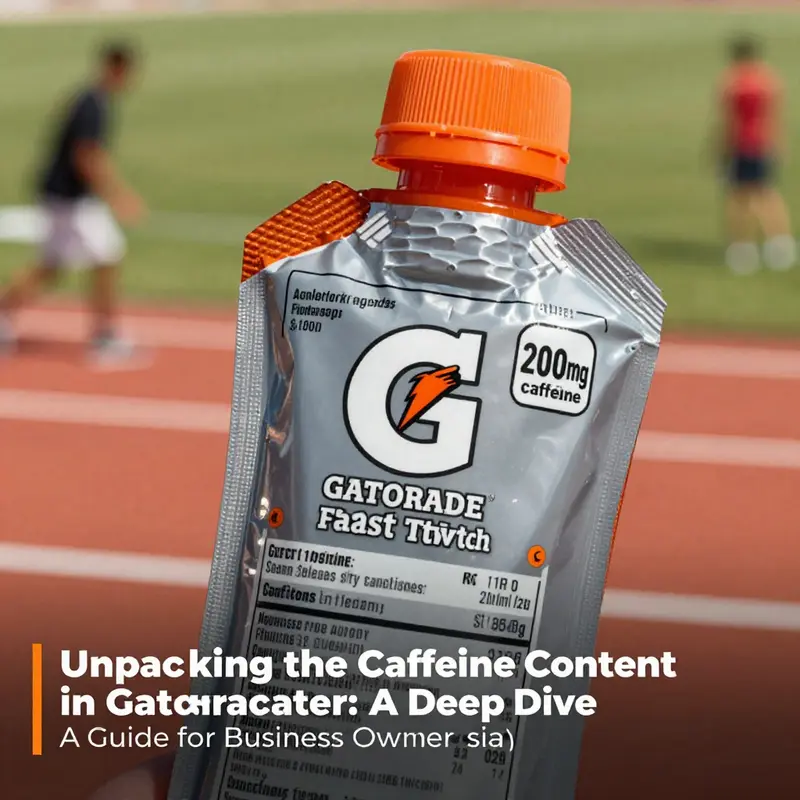
Gatorade, a powerhouse in sports hydration, has ventured into the realm of energy drinks with its Fast Twitch product line. Launched in September 2022, this innovative mixture offers a considerable caffeine boost of 200 milligrams per serving, catering to athletes and active individuals. As a business owner, understanding Gatorade’s caffeine content is crucial for making informed choices about product offerings and marketing strategies. This article delves into Gatorade’s caffeine nuances, including the science behind its energizing effects, a comparative analysis with competitors, consumer perceptions of caffeine in energy drinks, and what the future may hold for Gatorade in sports nutrition. Each chapter will provide you with insights that can shape your approach in maximizing performance within the energy drink segment.
Caffeine on the Field: Tracing the Footprint of Energy in Hydration Formulas
Hydration is usually presented as a straightforward equation: replace fluids, restore electrolytes, and get back to activity. Yet the once-clear boundaries between hydration and energy have grown fuzzier. A subset of hydration brands now offers caffeinated variants, designed not to replace coffee but to pair a small stimulant with reliable fluid balance. In practice, this means athletes and active readers are navigating a spectrum where hydration regimens can carry extra energy signals. The shift matters because it reframes how we think about performance support: fluids remain essential, but a modest caffeine dose can become a strategic addition rather than a separate cup of joe. This evolution sits at the crossroads of sports science, consumer preference, and product design, inviting a closer look at what caffeine actually does within a hydration framework and how to read the label with a critical eye toward daily intake and timing.
Two broad families populate the landscape. On one side are caffeine-free staples, the core hydration products whose purpose is rapid fluid uptake and electrolyte replenishment without stimulation. These products anchor daily hydration routines and practice sessions, offering predictability and simplicity. On the other side sits a niche of caffeine-containing formulations aimed at endurance contexts or longer training blocks. Here the caffeine content is intentionally modest—enough to influence alertness and perceived effort without delivering a coffee-like blast. For a typical 16-ounce serving in this category, caffeine commonly ranges from about 20 to 35 milligrams, a tier that can support focus and stamina during extended activity while staying well below the caffeine loads found in most caffeinated beverages. The exact number, again, fluctuates by flavor and formulation, underscoring the importance of checking the nutrition facts panel on the packaging.
This distinction is not merely academic; it translates into real-world choices. The caffeine-free baseline remains an attractive option for daily training days, for people who are caffeine-sensitive, or for those who simply want hydration without stimulation. The caffeinated option, by contrast, positions itself as a targeted tool for occasions that demand sustained attention, late-in-day workouts, or events that push effort over long periods. In both cases, the value lies not in a single heroic dose but in a measured rhythm that aligns with training goals, sleep patterns, and overall caffeine tolerance. The amount per serving is just one piece of the puzzle; timing—when during the day and relative to workouts—often governs whether caffeine delivers a net positive or an unwelcome nudge.
Interpreting caffeine content within hydration products also invites a practical discussion about labeling and consumption planning. The nutrition facts panel on the product is the definitive guide, because formulations can evolve with new flavors, packaging sizes, or regional variations. For readers who monitor caffeine intake for health, sleep, or performance reasons, that transparency matters. A single respected guideline is to view caffeine as a supplement to hydration, not as a replacement for other energy sources. If your daily routine already includes multiple caffeine-containing beverages, a caffeinated hydration option could contribute meaningfully to your total intake. If not, the caffeine-containing variant can be a measured introduction to stimulant-assisted performance, provided you are mindful of timing and total dose across the day.
From a physiological standpoint, caffeine’s mechanism is straightforward enough to explain in ordinary terms. It blocks certain receptors linked to fatigue perception, helping some individuals feel steadier during protracted or demanding exercise. The result can be a smoother pace, better focus, and reduced perceived exertion at a given workload. However, caffeine is not a universal enhancer, and its effects depend on individual sensitivity, prior exposure, and the intensity and duration of activity. A dose in the 20 to 35 milligram range may offer perceptual benefits without the jitters that sometimes accompany higher intakes. For athletes dealing with strict sleep schedules or late-evening training, those considerations matter as much as the physical energy provided by hydration and electrolytes. The simplest takeaway is that caffeine content in hydration products is a variable feature, not a fixed standard, and readers should judge it in light of their personal caffeine profile and training timeline.
The market context adds another layer of nuance. The growth of caffeinated hydration reflects a broader consumer interest in convenient, multifunctional products that can support both physical performance and cognitive readiness. Brands face the dual challenge of delivering a pleasant taste and a reliable energy signal without compromising hydration or safety. That means clear labeling, sensible portioning, and a reasonable default caffeine level that athletes can incorporate into a daily plan. It also means recognizing that flavor, texture, and mouthfeel can influence how people experience the stimulant—taste and sensation matter when you’re trying to sustain focus through a long session. In practice, this translates to a simple rule of thumb: read the label, consider your total daily caffeine exposure, and use caffeinated hydration as a strategic tool rather than a default habit.
For readers who want to apply this insight without guesswork, the precise numbers for a given flavor and size are your most dependable guide. The exact caffeine content can shift as products are reformulated or repackaged, so the current nutrition information is your best resource. If you’re curious about current figures and want to verify any flavor’s caffeine content, consult the official nutrition information. See the nutrition information for current numbers and ingredient disclosures. This approach keeps your planning grounded in data rather than memory, and it helps you tailor hydration choices to your training load, caffeine tolerance, and sleep needs.
In the broader article, this discussion about caffeine content serves as a lens through which to view how hydration products fit into an overall performance strategy. Hydration remains the constant, while caffeine introduces a flexible variable. The goal is not to promote one kind of product over another but to illuminate how stimulant presence intersects with hydration, taste, and daily routines. Readers can use this understanding to compare beverages across contexts—a light, caffeine-free option for routine workouts, a lightly caffeinated variant for longer efforts, or a caffeine-free alternative when sleep timing or caffeine sensitivity calls for caution.
As you move deeper into the topic, keep in mind that caffeine in hydration products is best understood as a tool with context. It works best when aligned with your training schedule, sleep plan, and personal response to caffeine. The most reliable path is to treat caffeine as one element within a broader nutrition and recovery framework. That means considering not just the caffeine dose per serving but the total intake across all sources, the timing relative to workouts, and how sleep might be affected. With this approach, caffeinated hydration can complement hydration and electrolytes rather than complicate them. In the end, readers gain a clearer view of how stimulant-containing hydration products fit into a holistic performance plan, empowering choices that support both physical output and cognitive sharpness during training and competition.
External resource: https://www.gatorade.com/en-us/nutrition
Caffeine at Hydration’s Edge: Unpacking Gatorade’s Caffeine Content and Its Impact on Endurance and Focus

Caffeine has long been a focal point in sports nutrition, a molecule that can sharpen metabolism, alter perception, and potentially extend endurance. For many athletes, beverages that pair hydration with caffeine promise a practical way to stay focused and push longer. Gatorade has offered caffeinated variants that blend its hydration matrix with measured doses of caffeine. One such option—the powdered energy drink mix—delivers about 200 milligrams of caffeine per serving. The high-dose format stands apart from more typical caffeinated hydration drinks that carry smaller amounts to boost alertness during activity. This contrast invites a closer look at how caffeine content translates to real-world performance—what the science says, how the body responds, and what athletes should consider when choosing a caffeinated option for training or competition.
Scientific evidence from the Gatorade Sport Science Institute and collaborators has helped map how caffeine influences endurance. A foundational study, conducted by researchers from the University of Birmingham and the Gatorade Sport Science Institute, used a single-blind, crossover design with trained male cyclists and triathletes. Participants completed 30 minutes of steady-state cycling at about 55% of their VO2 max, followed by a 45-minute time trial. The study compared caffeine to coffee and found both offered performance improvements, with caffeine showing a clear metabolic advantage. In practical terms, caffeine can enhance fat oxidation, sparing muscle glycogen and prolonging endurance under sustained effort. It also tends to reduce perceived exertion, a subjective but meaningful shift that can allow athletes to sustain higher workloads before fatigue becomes dominant. Finally, caffeine can support central nervous system function, helping maintain reaction time and cognitive sharpness when fatigue lingers late in a long effort.
These mechanisms underpin how caffeinated sports drinks are designed for performance support. The key takeaway is not simply a surge of energy, but a coordinated effect on energy metabolism, neuromuscular control, and the subjective sense of effort. For Gatorade’s caffeinated beverages, the typical dose range reported in reviews and product literature centers around 20 to 50 milligrams per serving. That level aims to deliver alertness and endurance benefits without provoking excessive jitteriness or gastrointestinal discomfort in most athletes. The higher-dose powder option, however, illustrates the spectrum of caffeine delivery available within the brand’s lineup, highlighting how different formats can meet diverse training goals. The choice between a lower-dose drink and a higher-dose mix depends on training duration, environmental conditions, and an athlete’s caffeine tolerance. It also reflects a broader principle: caffeine is not a magic bullet. Its effects depend on timing, context, and the person consuming it. For readers curious about whether standard hydration beverages carry caffeine, see Does Gatorade contain caffeine?.
From a physiology standpoint, caffeine exerts multiple, interlocking effects during endurance tasks. By increasing mobilization of fatty acids, caffeine promotes fat oxidation, which can spare intramuscular glycogen. This shift matters during long events or workouts where carbohydrate availability may become limiting. In addition, caffeine can influence central nervous system pathways that control motivation, attention, and perceived exertion. When the brain perceives effort less intensely, athletes tend to maintain higher power outputs for a longer portion of the session. The practical implication for hydration drinks with caffeine is that the caffeine dose should be harmonized with the carbohydrate content to sustain energy supply. A well-formulated caffeinated drink does not rely on caffeine alone; it complements electrolytes, fluids, and carbohydrates to preserve performance while supporting hydration.
Nevertheless, athletes should calibrate caffeine use to their individual profiles. Sensitivity to caffeine varies, as do sleep patterns, hydration status, and concomitant caffeine from other sources. High doses can raise heart rate, increase blood pressure in sensitive individuals, or cause GI distress. For this reason, many practitioners advise testing caffeine strategies in training before applying them in competition. Timing also matters: consuming caffeine a bit before or early during the performance window can align with the metabolic and CNS benefits described, while late dosing may disrupt sleep and recovery. When athletes combine caffeine with a hydration strategy, they should consider not only the caffeine dose but also the total daily caffeine intake from all sources, aiming to stay within safe limits to minimize adverse effects.
Because Gatorade’s caffeinated options integrate caffeine with a familiar electrolyte and carbohydrate system, they offer a practical path for athletes seeking both hydration and cognitive-physical support. The available research indicates that the caffeine present in these drinks can support performance, particularly in endurance contexts where sustained effort and focus determine outcomes. The nuanced real-world takeaway is that caffeine content should be treated as a strategic tool. It is most effective when matched to the event structure, training load, and individual tolerance, rather than as a mere energy boost. In practice, a careful plan for caffeine use might pair a caffeinated beverage with a pre-race or pre-workout habit and adjust the amount based on recent caffeine exposure and the length of the effort ahead.
In practice, teams and individual athletes adopt a cautious, individualized experimentation process. They log not only performance metrics such as power output, pace, and time to completion, but also subjective responses—how alert they feel, how their GI system responds, and how sleep quality is affected in the days surrounding a session. The goal is to integrate caffeine content with hydration strategy in a way that supports steady performance rather than chasing a quick spike of energy. This approach respects both the science of metabolism and the psychology of effort, acknowledging that the ergogenic effects of caffeine depend on context as much as dose. Coffee, tea, or caffeinated beverages each deliver caffeine with slightly different absorption patterns and side effects, but the core principle remains: timing and dose matter for endurance, cognition, and recovery.
For athletes seeking practical guidance, the literature suggests starting with smaller doses and testing in training environments before competition. A typical approach might involve consuming a caffeinated beverage a short time before a long workout, then evaluating any changes in perceived effort, pace sustainability, and hydration comfort. The caffeine content of the drink should be considered as part of an overall daily total, especially for athletes who consume multiple caffeine sources. By combining this evidence with individual experience, athletes can tailor a caffeine strategy that aligns with their physiological responses, the demands of their sport, and their recovery needs. This thoughtful, iterative process helps translate research findings into real-world performance benefits, transforming caffeine content from a mere specification on a label into a personalized performance tool within a hydration framework.
External resource: https://www.gatorade.com/en-us/our-science/caffeine-in-sports-drinks
null
null
Perception, Labels, and the Caffeine Conundrum: How Consumers View Gatorade’s Caffeine Content
Hydration branding has long carried an aura of purity and reliability. When a well-known sports drink brand adds a caffeinated energy blend to its lineup, the change can feel like a natural extension rather than a category shift. Yet for many consumers, the leap from hydration to stimulation exposes a gap between label literacy and everyday choices. Gatorade’s Fast Twitch energy drink mix, introduced in September 2022, contains 200 milligrams of caffeine per serving. This powdered mix is pitched as a quick energy boost while preserving the brand’s familiar hydration chemistry. Packaged in a cool blue, ice glacier flavor profile, it sits at the intersection of two well-worn consumer paths: the hydration ritual and the caffeine-driven performance impulse. The product’s packaging and formulation invite a straightforward assumption—that it is simply a more potent version of a familiar drink. But the public’s relationship with caffeine, especially when combined with hydration promises, is more complicated than it appears on the surface. The caffeine figure—200 mg per serving—reads as a concrete specification, yet the interpretive work for most consumers happens elsewhere: in memories of marketing, in conversations with peers, and in the fragmentary cues that accompany product displays and social feeds.
What emerges from consumer research on perceptions of caffeinated beverages is a pattern of misunderstanding that persists across age groups, but appears more pronounced among adolescents. A 2017 study found that young people did not consistently classify Gatorade, Coke, or a Starbucks drink as energy drinks, especially when contrasted with mainstream energy drink brands or energy shots. This finding is striking because it reveals a category boundary that is more a social artifact than a line drawn by caffeine content alone. In other words, the mere presence of caffeine does not automatically reposition a product into a particular mythos or category in the minds of consumers. Instead, the label, the marketing narrative, and the context of consumption shape whether a caffeinated beverage is seen as an energy drink, a sports drink, or something in between. The implication is that caffeine literacy—the ability to connect a mg value with a health and performance outcome—exists in a diffuse space, where marketing cues, packaging color, and brand language play as much a role as scientific facts.
Marketing, in particular, can intensify misperceptions about ingredients. Energy drink campaigns are designed to convey vigor, focus, and heightened performance, often through dynamic imagery and bold claims about endurance and mental sharpness. When such strategies feature healthful associations with hydration or sport, they can blur the boundaries that scientists and regulators try to maintain. Consumers may infer that a caffeine-containing beverage is a routine extension of a hydration habit, rather than a product that warrants careful attention to daily caffeine intake, interactions with other sources of caffeine, or individual tolerance. The effect is not merely semantic; it has real consequences for consumption choices, especially for adolescents who may already be navigating a complex caffeine landscape that includes coffee, tea, sodas, and energy shots. The results point to a broader truth: knowledge about caffeine content and its potential health implications is not evenly distributed across the population, and marketing messages can widen the gap.
To map consumer understanding more clearly, it helps to consider the dynamics of label information. A 2007 to 2017 thread of research consistently indicates that many consumers rely on familiar cues—taste, color, packaging familiarity, brand trust—when they decide whether a product is an energy drink or a hydration beverage. The designation energy drink often carries an implicit risk calculus: potential overstimulation, interactions with other caffeinated products, and the ethical question of whether a sport-focused product should carry a heavy stimulant footprint. When a hydration brand adds caffeine, the question becomes not just how much caffeine is present, but how the product is framed in the marketplace. Does the label emphasize energy, performance, or recovery? Are the ingredients described in a way that invites technical scrutiny, or do they appear as part of a lifestyle promise? For many consumers, the caffeine content may be acknowledged, but the broader health context remains underexplored. This is where consumer education and transparent communication become essential, not merely for regulatory compliance but for genuine informed choice.
In the case of Gatorade’s caffeinated powder, the 200 mg per serving figure is a meaningful data point, yet it sits within a more complex information ecosystem. People who drink sports beverages for hydration may not routinely monitor caffeine, assuming that if a product is associated with sports performance, it is safe or even beneficial to consume alongside training. Others may overestimate the safety margin, assuming that a single serving cannot yield a heavy caffeine load because it is labeled as a sports product rather than an energy drink. The reality is more nuanced: caffeine can affect sleep, heart rate, blood pressure, and anxiety levels, particularly for younger individuals and those with underlying health considerations. The presence of caffeine in a hydration-adjacent product raises legitimate questions about daily caffeine budgeting, especially in households where multiple caffeinated beverages are common. The literacy gap is not a trivial curiosity; it is a practical hurdle that shapes how people interpret risk, decide when and how to use such products, and communicate about them with friends and family.
For readers seeking a direct channel to reflect on their own caffeine literacy, consider the broader landscape of caffeinated beverages and how they are perceived. A deliberate approach to consumer education would emphasize clear labeling of caffeine content, contextual guidance on serving size, and explicit warnings where appropriate. The aim is not to scare but to empower—enabling athletes, students, and everyday picnickers to make choices aligned with their caffeine tolerance, activity level, and health status. When a familiar brand extends into a stimulants space, the opportunity lies in turning a potential confusion point into a teachable moment. The consumer who learns that a single serving contains 200 mg can better gauge whether that dose fits into their overall caffeine plan, which might include coffee in the morning, tea at lunch, or a late afternoon soda. In turn, this awareness can shape consumption patterns across the day, reducing the risk of cumulative exposure that might lead to undesired side effects.
The role of consumer perception in this space also intersects with questions of labeling clarity and regulatory expectations. If a product that carries a strong hydration heritage is perceived primarily through the lens of performance and energy, manufacturers face a delicate balancing act. They must preserve brand identity while ensuring that the product’s stimulant aspects are transparent and unambiguous. This balancing act can shape future product development, marketing language, and even packaging design. In practical terms, it may lead to more prominent caffeine disclosures, easy-to-understand serving size guidance, and clearer information about how the product fits within a daily caffeine budget. It can also encourage researchers and practitioners to continue exploring how adolescents and adults interpret caffeinated beverages, how marketing cues influence these interpretations, and what that means for public health messages about caffeine consumption.
For readers who want to explore related discussions beyond the chapter, a closer look at consumer perceptions of caffeinated energy drinks offers valuable context. A broader synthesis of perceptions and knowledge appears in the literature, and it emphasizes how marketing messages can shape what people think about ingredients, even when the facts are readily available on the label. This chapter has drawn on those insights to illuminate how a single caffeine figure on a hydration-adjacent product can ripple through consumer understanding and daily choices. To deepen your reading on the topic, the related article provides a comprehensive exploration of perception dynamics and knowledge gaps surrounding caffeinated beverages. Does Gatorade contain caffeine. For a more general notion of how caffeinated beverages are perceived within youth and consumer culture, the external review below offers further empirical grounding: https://www.ncbi.nlm.nih.gov/pmc/articles/PMC5463985/. The interplay between label literacy, marketing influence, and health outcomes remains a fertile ground for continued inquiry, especially as brands blend hydration benefits with stimulant characteristics in ways that challenge traditional category boundaries and consumer expectations.
Beyond Hydration: Charting the Next Wave of Caffeine in Sports Beverages

Hydration has long been the unwavering anchor of the brand behind the iconic electrolyte solution, yet the terrain of sports nutrition is shifting as caffeinated variants enter the lineup. The launch in 2022 of a caffeinated mix marked a turning point: a product positioned to deliver almost two hundred milligrams of caffeine per serving while resting on the bedrock of hydration science. It offered a quick energy lift, aligning with athletes’ need for mental focus and physical stamina during longer sessions. Yet caffeine in sports drinks is never a simple toggle; it interacts with fluid balance, electrolyte replacement, and ongoing training adaptations. The chapter that follows traces how this interaction shapes the future of caffeine content in performance beverages, not as a mere dose count but as part of a broader design philosophy that blends hydration, cognition, timing, and regulatory stewardship. The context is not about a single sensational figure but about how a brand lineage evolves to meet evolving athletic demands while staying faithful to core hydration science. In this frame, the caffeinated variant with a substantial per-serving dose becomes a reference point for what comes next, a baseline from which researchers, product developers, and athletes alike can assess the value of caffeine as a tool for performance under pressure.
Across caffeinated variants, the common thread is a relatively modest caffeine per serving compared with coffee cup expectations, often in the range of twenty to fifty milligrams. This level is chosen to offer a cognitive uplift without compromising hydration or electrolyte balance during exercise. It reflects a marketing move to appeal to athletes who want alertness during endurance work while protecting fluid intake and heat management. In practice, everyday athletes may experience a gentle, sustained nudge rather than a jittery spike, a pattern that aligns with the goal of maintaining performance without compromising safety. The 20–50 mg range also speaks to a wider ecosystem where athletes juggle multiple sources of caffeine—pre-workout, tea, coffee, or carbonated alternatives—and seek formulations that fit into real training schedules without tipping daily intake into risky territory. The design logic is to preserve the core hydration function while offering a predictable, manageable energy profile that can be woven into a practical training routine.
Looking ahead, researchers and formulators are likely to explore timing—how caffeine peaks relative to warm-ups, intervals, or post-activity cool-downs—to maximize benefits while minimizing interference with sleep when products are used outside training windows. There is also interest in dosage optimization for different sports; perhaps even personalized formulations guided by activity level, body weight, and tolerance. Beyond caffeine alone, the potential to pair it with other performance-supporting ingredients—such as amino acids, minerals, or adaptogens—could yield beverages that support both neuromuscular efficiency and stress resilience. Technological advances in delivery systems may matter just as much as milligrams per serving. Tiny, controlled-release technologies could keep caffeine active over a longer portion of a workout, or provide a rapid onset when athletes need a quick start in a sprint or a heavy lift. The implications extend to taste and stomach comfort as micro-encapsulation and film-forming techniques allow smoother administration of stimulants during intense exertion, reducing the chance of GI distress that can derail a session. In this evolving landscape, the chemistry of delivery becomes as important as the chemistry of the dose, shaping how reliably athletes can access the intended perceptual and physical benefits without sacrificing hydration.
These directions rest on a delicate balance between consumer demand and safety oversight. As labels grow more transparent, athletes and everyday exercisers increasingly expect clear information about caffeine content, serving size, and the presence of other stimulants. This demand for clarity intersects with regulatory realities. Jurisdictions may refine guidelines around safe caffeine thresholds in sports drinks, particularly as new products blur the line between hydration and performance enhancement. The potential regulatory response emphasizes not just the headline caffeine quantity but the total daily exposure from multiple sources, which many users navigate instinctively through habit. In parallel, labeling innovations—such as per-serving versus per-container caffeine figures, clear serving counts, and warnings for sensitive populations—could become standard practice to support informed choices. The regulatory conversation is not merely about limits; it is about giving consumers reliable, comparable data so they can tailor intake to training goals, body size, and caffeine tolerance. This is especially relevant as events of varying intensity, climate, and duration demand flexible caffeine strategies rather than a one-size-fits-all approach.
From a product-design perspective, the future of caffeine in hydration-forward beverages is less about a single, dominant spec and more about integrated experience. Hydration remains the backbone, but caffeine becomes a complementary element in a broader toolkit that supports perceived alertness, reaction time, and endurance. The evolution mirrors a broader trend toward personalization in sports nutrition, where consumers blend hydration, energy, and recovery signals to suit individual schedules and goals. In this context, a caffeinated variant with a 200 mg per serving anchor point serves as a reference against which new formulations will be judged not just on energy alone but on how well they maintain fluid balance, how easy they are to stomach under exertion, and how they perform across different climates and training loads. The result is a spectrum rather than a single standard, allowing athletes to choose products that align with their sport, intensity, and recovery cadence. As flavors, textures, and mouthfeel become more refined, the sensory experience of a caffeinated hydration beverage will also influence adherence and perceived value, ensuring that the stimulant dose integrates seamlessly with taste and digestive comfort rather than clashing with them.
To keep pace with this movement, educators and communicators in the field may prioritize how caffeine content is discussed, avoiding oversimplified narratives that equate mg with performance outcomes. The translation from lab findings to locker-room reality requires careful messaging about timing, dose, and subjective experience. In practice, this means referencing the body of work that examines cognitive benefits during prolonged activity, perceived exertion, and after-effect sleep considerations, and presenting it in a way that respects individual variability. For readers who want a concise snapshot of how caffeine content translates in the real world, a quick look at public discussions on caffeine in sports beverages can be informative. For a practical snapshot of how caffeine content is discussed publicly, you can read Does Gatorade contain caffeine?.
Beyond the technicalities, the social dimension of this evolution matters. Athletes today seek products that align with a health-conscious ethos, balancing energy with broader wellness goals. The demand for transparency means brands are more likely to publish multiple data points: caffeine per serving, total servings per package, and potential cumulative exposure across the day. This transparency helps athletes integrate caffeinated beverages with other nutrition strategies, including hydration planning, electrolyte management, and recovery protocols. The future will likely see a mosaic of offerings—some with moderate caffeine for steady performance, others with higher doses for specific contexts—and each backed by clear explanations about when and how to use them most effectively. The challenge for the industry is to maintain trust as caffeine becomes more commonplace in hydration-led products, ensuring that safety remains a visible priority alongside innovation.
Ultimately, the dialogue around caffeine in sports drinks will hinge on trust. Consumers increasingly expect brands to be forthright about both benefits and limits, and regulators will push for safer, more transparent formulations. The trend toward health-conscious choices means athletes will weigh caffeine alongside other dietary considerations, including hydration status, electrolytes, and the risk of overstimulation when multiple sources are consumed in a day. The employer of the science—the research community—will continue to probe how caffeine interacts with hydration physiology, sweat rate, and heat tolerance, refining guidance on optimal intake windows and contexts. The practical takeaway for practitioners is a call to integrate scientific insight with real-world use, aligning product development with the day-to-day demands of training cycles rather than with isolated laboratory findings. This is why ongoing monitoring of both performance outcomes and subjective experiences matters, ensuring that caffeine-supported beverages truly support athletes when and where they need them most.
Taken together, the trajectory is not simply a race to higher milligrams but a careful choreography of timing, composition, and communication. The next generation of caffeinated, hydration-centered beverages will aim to deliver reliable cognitive and physical support during demanding athletic tasks while preserving the core hydration function that underpins performance in heat, altitude, or long-duration events. For those following the evolution, the official sources offer the most current specifics on formulations and safety standards as they evolve. In practical terms, this means a portfolio approach: a range of products designed to fit different sports, training phases, and daily routines, each with transparent labeling and thoughtful, science-informed dosing. The result is not a single solution but a thoughtfully engineered spectrum that respects hydration needs, acknowledges caffeine’s nuanced effects, and empowers athletes to tailor their energy strategies to their own bodies and ambitions. To stay current, refer to the official site for the latest updates on product offerings and caffeine content.
External resource: Gatorade Official Website for the latest specifications and updates on caffeinated products. https://www.gatorade.com
Final thoughts
As Gatorade continues to innovate with its caffeine content, business owners must stay informed about its implications on consumer preferences and athletic performance. The strategic integration of Gatorade’s offerings in energy drinks positions it uniquely in a competitive market, appealing not just to hydration but also to energy replenishment. Monitoring trends and consumer insights will be key in leveraging this caffeine content for better market penetration and customer engagement, aiming for growth in an industry that increasingly prioritizes performance enhancement. Staying ahead of these trends will ensure your business remains competitive and responsive to evolving consumer needs.