

Coffee enthusiasts know that the perfect brew lies beyond just high-quality beans and water. A critical component of crafting a delicious French press coffee is understanding the optimal grounds to water ratio. This article delves into the standard 1:20 ratio, its significance, and how to adjust it for personal preferences that cater to diverse business clientele. The subsequent chapters will explore adjustments to this ratio, the impact of grind size, precise measurement techniques, and common mistakes to avoid, giving business owners a well-rounded perspective on achieving consistent quality in their coffee offerings.
From Ratio to Resonance: Mastering the Grounds-to-Water Balance in French Press Brewing
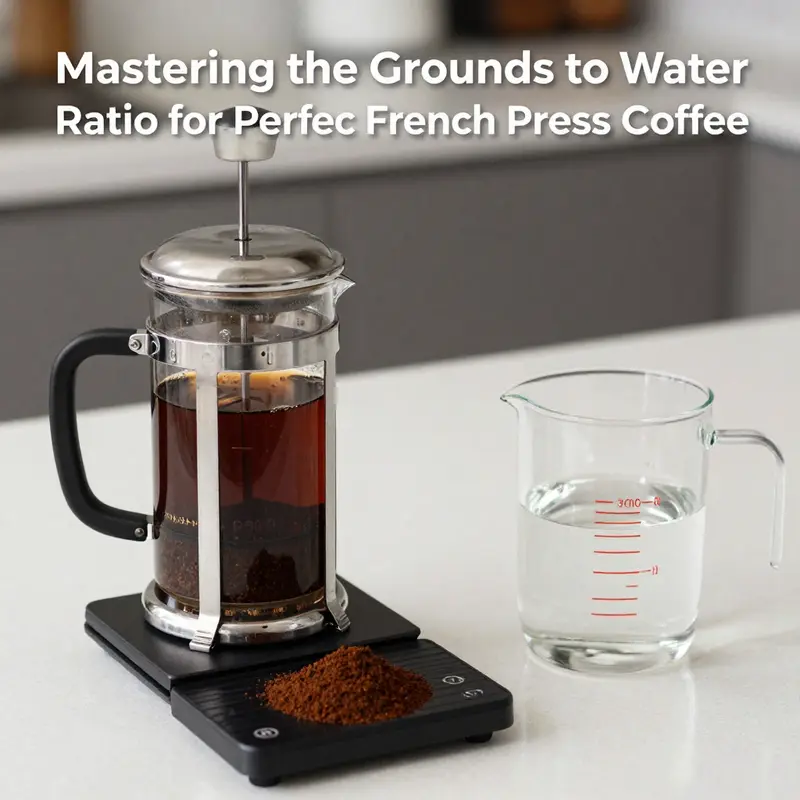
Choosing the grounds-to-water ratio for a French press is more than a math problem; it is a conversation between weight and time, between the texture of the grind and the warmth of the water, a delicate balance that determines the cup’s character. The most widely cited starting point is a 1:20 ratio, one part coffee to twenty parts water by weight. This baseline provides a solid, versatile foundation for a balanced cup that carries the aroma forward without tipping into harshness. In practical terms, that might translate to about 10 grams of coffee for 200 milliliters of water, or roughly 20 grams for a couple of cups totaling around 350 milliliters. Yet this starting point is not a rigid rule; it is a launchpad from which individuality blooms. If you lean toward a stronger, bolder brew, you can tilt toward 1:18 or 1:19. If you prefer something lighter, tuning toward 1:21 or 1:22 can yield a subtler, cleaner profile. The important thing is to anchor your exploration in accuracy. Proportion alone does not guarantee a great cup—the interaction with grind, time, and water quality matters just as much. Pro Tip: for greater accuracy, always use a digital scale to measure both coffee and water. Volume measurements like tablespoons can vary widely depending on grind size and how firmly the grounds are scooped, which affects consistency and flavor. Regularly calibrating your method around weight keeps your process honest and your results repeatable.
Beyond the numbers, the grind itself is a decisive actor in the performance of a French press. A medium-coarse grind, comparable to sea salt or coarse breadcrumbs, helps strike the balance between extraction and clarity. A grind that is too fine increases surface area, inviting water to pull out flavors too quickly and aggressively. The result can be an over-extracted cup with a bitter edge and a muddy texture, as fine particles slip through the mesh filter and settle at the bottom. Conversely, too coarse a grind can starve the water of surface area, yielding under-extracted flavors that taste flat or sour. The grind’s size is thus not merely a convenience; it is a critical variable that must harmonize with the chosen ratio and the brew time.
The interaction between ratio, grind, and time forms a three-dimensional puzzle. A typical approach for many brewers is to start from a 1:15 ratio—think about 30 grams of coffee to 450 grams of water for a standard brew—and adjust from there. This slightly stronger base helps reveal the coffee’s body and nuanced notes when steeped for a few minutes. It also offers a convenient reference point when experimenting with other variables. Some enthusiasts lean toward a 1:14 ratio for a more concentrated cup, while others drift to 1:16 as a middle ground that preserves sweetness while still delivering aroma. The key is to approach adjustments gradually and in small increments, allowing the brew to reveal its character at each step rather than overwhelming the palate with abrupt changes.
As you contemplate adjustments, it is worth remembering that brew time and ratio are companions, not rivals. A standard immersion period tends to hover around four minutes, a window that provides sufficient contact between grounds and water without tipping into excessive extraction. During the steep, a gentle stir can help ensure even saturation, bringing up any pockets that may have formed as the grounds settled. It is not about forceful agitation; it is about uniform wetting and consistent exposure. After the steep, the plunger descends, and the beer-like oils and aromatics settle into a cleaner cup once the grounds are separated from the liquid. Pouring promptly can prevent further extraction and the accrual of unwanted bitterness on the palate.
The practice of balancing the ratio also invites a broader mindfulness about water quality and temperature. Water that is too hot can accelerate extraction beyond what the ratio and grind size anticipate, while water that is not hot enough may leave flavors underdeveloped. A target range around the upper eighties to mid-nineties Celsius tends to produce a balanced extraction when used with a well-considered grind and a four-minute immersion. This alignment supports the idea that ratio is not a solitary dial but a compendium of conditions that together shape the final cup. When you adjust one variable, you should be prepared to reassess the others. A slightly finer grind may call for a touch less water or a shorter steep, while a coarser grind might invite a longer contact time to achieve full extraction. The goal is a harmony that remains stable across sessions, a cup that tastes reliable and true rather than variable and inconsistent.
In practice, the journey toward the ideal ratio often unfolds as an intimate dialogue with your own palate. If a brew tastes too sour or weak, you are typically nudged toward increasing the coffee-to-water ratio, moving from 1:15 toward 1:14, while keeping a close eye on grind size and brew time to avoid tipping into bitterness. If bitterness or astringency dominates, the adjustment might move in the opposite direction: reduce the coffee dose toward 1:16 or even to 1:17, or revisit the grind to ensure it remains coarse enough to prevent over-extraction. Whatever the adjustment, the directive remains: maintain consistency in grind and timing while you vary the ratio. This discipline—tracking changes, then tasting and documenting—turns a routine into a measured craft and helps you map your preferences with clarity.
A central theme in mastering the ratio is consistency. The grounds must be weighed, not scooped by volume, to produce reproducible results. The scale becomes a trusted partner, translating intention into measurable action. The grind size should be stable as well; if you notice more sediment than you expect or a chalky texture at the bottom of your cup, it can signal that the grind is too fine or the brew time is too long for the current ratio. Reversing course, with a coarser grind and a four-minute steep, often smooths the texture and clarifies the perceived balance. When a cup aligns with your expectations, you have found a touchstone: a ratio that serves your kitchen, your grinder, and your taste buds with dependable consistency.
The elegance of the French press lies in its tactile involvement. You are not simply measuring and pressing; you are orchestrating an extraction conversation. The ratio is your opening note, the grind size the instrument’s texture, and the time the cadence that carries aroma and flavor toward the cup. When you begin from a widely recommended ratio, such as 1:15, you establish a generous canvas on which the other variables can paint the coffee’s character. Then, with careful adjustments, you sculpt a profile that speaks to your daily mood—bold and comforting on a busy morning, delicate and nuanced on a quiet afternoon. The artistry is in the restraint: small changes, patient testing, and a clear sense of what you are seeking to amplify—acidity, sweetness, body, or a particular aroma perceived as the cup’s signature.
For those who want a more structured treatment while still preserving the narrative of personal discovery, consider exploring deeper discussions on how to balance these variables. A deeper dive into French press ratios and timing can be found in dedicated guides that walk through the same terrain—with emphasis on how to translate a ratio into a practical, repeatable routine while remaining faithful to your taste. If you’d like to explore a focused treatment of the subject, you can refer to the French-press coffee ratios—the ultimate guide. This resource consolidates the practical steps, experimental mindset, and sensory exploration that distinguish a studied approach from a casual routine. French-press-coffee-ratios-the-ultimate-guide.
As you near the end of your session, you may notice the rhythm of your own preferences emerging. The ideal ratio is not a single fixed number but a living guideline that accommodates changes in coffee origin, roast level, humidity, and even your mood. A lighter roast may reveal more nuanced acidity at a given ratio, while a darker roast might deliver a deeper sweetness when the ratio is adjusted toward the bolder side. In time, your kitchen becomes a field guide—an evolving map of how the grounds-to-water balance translates into aroma and sensation. And while science provides the framework—the 1:20 baseline, the 1:15 practice, the role of grind size and four-minute timing—your sensory memory completes the story. You remember which combinations produced a cup that felt bright and lively, which produced something comforting and grounded, and which produced a lingering aftertaste you wanted to chase with your next cup.
In summary, the grounds-to-water ratio for French press brewing anchors the craft but does not confine it. It is a starting point from which taste and technique unfold. By embracing weight-based measurements, maintaining a medium-coarse grind, and honoring a steady four-minute immersion, you set the stage for a dependable, expressive cup. When you encounter a cup that is underwhelming, it is typically a sign to revisit the ratio along with the grind and timing, not to abandon the method. When a cup sings with balance, you know you have found a sweet spot that respects the coffee’s origin and the brewer’s intentions. The journey is iterative, the results deeply personal, and the process, as it should be, both technical and a little poetic. For a deeper, structured treatment of the subject, see the cited guide above, which anchors these principles in a broader method while inviting you to tailor the approach to your own palate. For a practical, on-page reference to the core topic, this exploration keeps its eye on the real-world routine of daily brewing, where a simple ratio, approached with care, unlocks a world of flavors. External resource: https://www.illy.com/en/learn/coffee-brewing-methods/french-press
Dialing In the Brew: Personalizing the Grounds-to-Water Ratio for Your Ideal French Press Cup

The journey to a perfect French press cup begins with a simple decision that can alter every sip to come: how much coffee to use relative to the water. This ratio is not a rigid law but a compass that points toward your preferred flavor and body. The widely cited starting point of 1:20—one part coffee to twenty parts water by weight—serves as a reliable baseline. It tends to deliver balance, clarity, and a touch of richness that most drinkers recognize as true to the method. Yet no two pallets taste the same, and the rhythm of your morning routine, your grinder, and your kettle all nudge the final cup toward one direction or another. To start your exploration, measure precisely: about 10 grams of coffee for 200 milliliters of water provides a stout but manageable baseline for a single pressing, while a batch of roughly 350 milliliters for a two-cup press often lands around 20 grams of coffee. Those figures are not set in stone; they are stepping stones along a path that honors your taste and your variables, not a checklist you must slavishly follow.
The beauty of the grounds-to-water question lies in its malleability. A common and useful adjustment point is 1:15, which nudges the brew toward more concentrated character without sacrificing clarity. When you run a brew at 1:15, a practical example appears: 30 grams of coffee for about 450 milliliters of water. That combination tends to yield a cup that reads as bold and pronounced but not opaque, allowing nuanced notes to surface while still delivering a satisfying mouthfeel. If your palate craves even more punch, you can experiment with 1:14 or 1:14.5, though you should anticipate a perceptible shift toward heavier extraction and potential bitterness if the grind or temperature misaligns with the ratio. Conversely, dialing toward 1:16 or 1:17 opens the door to a lighter, more transparent cup—one where delicate aromatics can shine and the overall profile feels more delicate and brisk. Each small adjustment becomes a chance to hear how the coffee breathes under heat and pressure, and to notice how the water’s ability to extract changes as the coffee bed becomes more or less crowded with soluble material.
To align the ratio with beans that carry distinctive personalities, consider how origin and roast level interact with the math on your scale. Ethiopian beans, for instance, are often celebrated for floral brightness and fruity brightness that can resonate with a lighter balance. In practice, you might push toward 1:16 or 1:17 for these beans, aiming to highlight the brightness and bouquet while avoiding a bitter edge. The lighter the roast, the more the acids and aromatics tend to present themselves; a slightly stronger ratio can help keep complexity in focus without letting it drift into overly sharp or astringent territory. On the other hand, darker roasts tend to carry bolder, more roasted notes that can benefit from a touch less water per coffee mass—think 1:14 or 1:15. In this region of the spectrum, the goal is to preserve body and mouthfeel while preventing dullness and heavy, clinging bitterness that can come with over-extraction when the grind is too fine or the brew time too long. These bean-specific adjustments are not rules but guidelines that allow your grains and water to converse more frankly about sweetness, bitterness, and aroma.
The practical art of adjusting ratios is inseparable from the tactile and sensory elements of the brew. You begin with a precise weight for both coffee and water, preferably using a digital scale rather than relying on volume alone. This is because the density of coffee grounds and the compression of the bed can skew volume-based measurements, giving you inconsistent results from session to session. With the scale, you can reproduce a successful brew by maintaining the same ratio and adjusting other variables methodically, even if you alter grind size or water temperature. Alongside the ratio, grind size is critical; a medium-coarse grind—approximately the texture of sea salt or coarse breadcrumbs—helps keep fines from passing through the press’s mesh and creating a muddy cup. If the grind is too fine, the increased surface area accelerates extraction and can overflow the filter, muddying the cup and amplifying bitterness. If it’s too coarse, the extraction can fall short, leaving the cup pale and underdeveloped. In tandem with a judicious ratio, the grind size ensures that the coffee’s solubles are released in a controlled, predictable fashion, shaping both body and brightness.
As you experiment, you may find that starting with the ratio printed on the bag or a recommended range provides an honest roadmap, while tasting becomes the true compass. After your first brew, you can adjust by about a half-point in the ratio to refine balance. If the cup tastes weak or dilute, consider decreasing the denominator—tightening the ratio toward more coffee per water, such as moving from 1:15 toward 1:14.5. If it tastes overly strong or harsh, loosen the ratio toward more water per coffee, like stepping to 1:15.5. These small, incremental changes are powerful because they preserve the brew’s overall structure while allowing you to nudge sweetness, acidity, and mouthfeel into your preferred constellation. The iterative process, repeated over several sessions, is where a personal standard begins to emerge: a rhythm of grind, ratio, water temperature, and steep time that consistently yields a cup you love.
When you begin to think in terms of ranges rather than fixed numbers, the practical window broadens and your confidence grows. A pragmatic range to consider is 1:12 to 1:15 for a richly flavored result with pronounced body, while 1:15 to 1:18 leans toward a lighter, more aromatic profile without sacrificing the core character. This spectrum accommodates a variety of beans and roasts, offering a sane, actionable framework for a home barista who wants to honor variability without becoming overwhelmed by it. The trick is to stay curious and patient, recording what you change and how each adjustment reshapes aroma, sweetness, brightness, and aftertaste. Your notes become the map you revisit when you want to recreate a particular batch that surprised you with its balance or you want to replicate a flavor memory that captured your attention.
To keep the exploration grounded, you can consult a broader framework that treats the ratio as a central axis around which the rest of the brew orbits. The ultimate goal is not to chase perfection through a single number but to cultivate a rhythm that consistently yields a cup that reflects your taste, the bean’s character, and the method’s limits. In this sense, the ratio becomes a flexible recipe rather than a cage—a doorway to expressing preference through precise, repeatable action. For readers who want to dive deeper into the mechanics and to see how different sources frame the same questions about ratio, extraction, and method, a detailed guide on the French press ratios and related adjustments offers valuable perspectives. French press coffee ratios—the ultimate guide
As you continue this journey, a few practical rituals help keep your experiments productive. Keep a small log of each batch, including the grind size, water temperature, steep time, and the exact ratio used. Note the origin and roast level, the batch size, and the equipment you employed. If you brewed a cup that surprised you with its sweetness or its brightness, write down the sensory notes you perceived and compare them to the numbers you chose. Over time, you’ll find yourself muting randomness and amplifying repeatability, which is the essence of successful home coffee craft. The discipline of careful measurement paired with deliberate tasting creates a feedback loop that accelerates your learning and prevents you from chasing perfection through guesswork alone. You’ll learn to anticipate how a given roast responds to a tighter or looser ratio, how a bright bean can transform when paired with a slightly coarser grind, or how a deep, smoky roast can retain body even as you push toward a lighter profile. This is the heart of personalization—the craft of translating your palate into a reliable process that yields consistent joy with each cup.
In the end, the question of how to adjust the grounds-to-water ratio is less about chasing a single ideal and more about cultivating a sensibility for balance. The ratio is the starting note, the gravity that anchors your brew, but the melody that emerges—whether bright, round, or boldly resonant—depends on your ongoing dialogue with the variables: origin, roast, grind, temperature, and time. The path is iterative, observant, and deeply personal, which is why the act of measuring and tasting becomes both science and ritual. When you approach it with curiosity and a willingness to record outcomes, you’ll discover that the perfect cup isn’t a fixed target but a living result of how you choose to pair grounds with water at the moment you press.
External resource for further exploration: https://www.seriouseats.com/french-press-coffee-ratio
Grind Size and the 1:20 Balance: Crafting a Clean, Balanced French Press
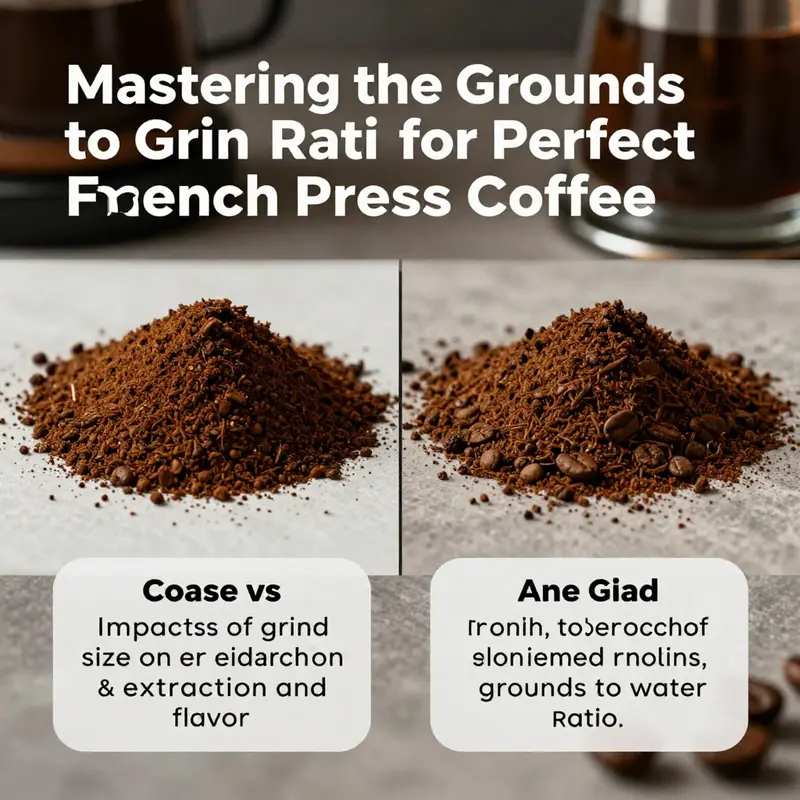
The French press is a tool that invites a quiet, patient form of coffee making, where precision hides in plain sight. The ritual revolves around two stubborn constants: the grind you choose and the ratio of coffee to water you pour through it. When those two variables fall into a harmonious alignment, the resulting cup carries a clarity and body that many other methods struggle to reproduce. The standard starting point around the world remains roughly 1:20, one part coffee to twenty parts water by weight. That ratio has earned its place because it consistently yields a cup that is balanced and expressive without tipping into sourness or heavy muddiness. As a practical rule of thumb, if you begin with 10 grams of coffee for about 200 milliliters of hot water, you are following a 1:20 baseline. When brewing for two cups, the math scales cleanly: approximately 20 grams of coffee for about 350 milliliters, and you’ll have a baseline that many people find both approachable and delicious. Yet the beauty of the French press is that it rewards experimentation; your preferences emerge when you adjust the ratio in small increments while respecting the nature of the grind you use. A stronger, bolder cup might welcome a shift to 1:18 or 1:19, where a touch more coffee meets the same water volume, intensifying the cup’s presence without tipping into harshness. A lighter, milder cup can be coaxed by dialing the ratio toward 1:21 or 1:22, letting the water carry more of the subtler notes without becoming watery. The key, as with many craft practices, is never to chase novelty by ignoring fundamentals. Instead, let the fundamentals—grind size, grind consistency, water temperature, water-to-coffee mass, and contact time—inform each other in a living feedback loop.
Central to this conversation is the insistence on accuracy. Volume measurements, such as tablespoons or scoops, vary widely depending on grind size and how the grounds are settled in the scoop. A digital scale is not a luxury here; it’s the most reliable instrument for consistency. When you weigh both the coffee and the water, you reduce the guesswork that can otherwise creep into your routine. With rare consistency, you can compare days, changes in grind, or different coffee origins and understand the impact of each variable with more confidence. The goal is not a single perfect cup but a reproducible approach that lets you dial in the taste you love.
Another pillar of the technique is grind size. In a French press, a coarse, even grind—roughly the texture of sea salt or coarse breadcrumbs—plays a non-negotiable role. The mesh filter is designed to trap grounds as the brew steeply collects flavor, and a coarse grind helps ensure that the sediment you encounter is part of a deliberate texture rather than a muddied cup. When the grind is too fine, several problems quickly follow. Fines slip through the mesh, creating a gritty mouthfeel and a cloudy appearance. Most importantly, a fine grind extends the extraction time undesirably, pulling more flavors from the coffee and potentially delivering a bitter, over-extracted finish. The result is a cup that lacks the clean, plush mouthfeel that the process promises when the grind aligns with the brew method.
The grind size is not simply an aesthetic choice; it is a defining factor in how the grounds interact with the water across the brew. A uniform, coarse grind allows the water to move through the bed evenly, promoting a balanced extraction. The opposite—grind variability—leads to a spectrum of particle sizes: some bits already delivered most of their sweetness early on, while finer particles continue to steep, extracting more aggressively. This mismatch can translate into sour notes from under-extracted particles and bitterness from over-extracted ones. The result is a cup that tastes inconsistent from one batch to the next, or even within the same cup as you reach the bottom and the fines accumulate.
To support this precision, many coffee professionals advocate using a burr grinder. Unlike blade grinders, burrs generate a more uniform particle size and minimize the number of fines that can slip through the filter. The consequence of a blade grinder, which can produce a range of particle sizes, is a higher likelihood of uneven extraction. When extraction is uneven, the cup reveals itself not as a single, coherent flavor profile but as a chorus of competing notes—some bright, some flat, some bitter—without the sense of unity that a well-calibrated grind delivers. The burr grinder’s consistency serves as a foundation, enabling the grounds-to-water ratio to express itself more predictably and with less interference from particle-size variability.
If we consider the ratio in tandem with grind size, the logic becomes clearer: the ratio sets the strength and concentration of flavors you can pull from the beans, while the grind size determines how cleanly those flavors emerge during the contact time. Together they determine the degree of clarity in your cup—the sense that you can taste distinct origin notes, the sweetness of the roast, and the aromatic compounds that define a coffee’s character without a muddy aftertaste. The Spanish flourish of a well-brewed cup—the way the aroma lingers and the mouthfeel feels velvet without heaviness—depends on getting this dynamic right.
As you navigate these decisions, timing and technique come into play. Time is the solvent that carries aroma and flavor from coffee to cup, and in a French press, it’s governed by the grind’s particle size and the coffee-to-water ratio. A coarser grind generally requires a slightly longer steep to achieve full extraction, whereas a finer grind, if used, would demand a shorter contact time to avoid over-extraction. But safety and taste do not arise from time alone; the agitation during immersion and the way you pour pre-and-post steep also shape the final experience. Gentle stirring after pouring helps ensure more even extraction by redistributing the grounds beneath the surface, but that same movement can invite more fines into the drink if the grind isn’t appropriately coarse. The result is a delicate balance where the grind, the ratio, and the brewing steps must cooperate, each step informed by the others.
In practice, most coffee enthusiasts will begin by weighing 1 part coffee to 15 to 17 parts water for a French press, with a ground texture that feels like coarse sea salt. If you want a stronger cup, you can shift to 1:18 or 1:19, but do so with a deliberate adjustment to the grind size as well. If you push toward 1:21 or 1:22, you may notice the need to pay closer attention to grind uniformity and to ensure a gentle, thorough immersion so the flavor remains balanced rather than thin. The beauty of this system is that you can tailor it step by step, tasting at intervals, then locking in your preferred profile with precise times and weights. The discipline of measurement—paired with the tactile feedback of aroma and flavor—transforms brewing into a craft rather than a ritual.
The interconnectedness of grind size and grounds-to-water ratio is not just a theoretical concept. It guides your decisions at the moment you scoop the beans and set the grinder to work, through the moment you pour the hot water and watch the coffee bloom, and into the brief, patient interval when the brew sits, waiting to be pressed. It explains why a coffee that is perfectly dialed in for one origin might need slight adjustments for another. It explains why a lighter roast might respond to a slightly different equilibrium than a darker roast, even when the same equipment is used. And it explains why precision matters: small changes in mass, grind consistency, or timing can shift flavor more than you might expect. If you measure, test, and taste with curiosity rather than rigidity, you’ll discover a spectrum of cup profiles that celebrate contrast—bright and clean, rich and velvety, or somewhere in between—without sacrificing the fundamental clarity that makes the French press so appealing.
Ultimately, the chapter of practice is about listening to the coffee as it speaks through the cup. The grind size, the grounds-to-water ratio, and the technique of pouring and pressing work together to reveal the bean’s character while preserving the method’s signature fullness. The goal is a grit-free, smooth, and rich cup that carries the intended balance to the palate with minimal sediment and maximum expression. It is the essence of a well-grounded approach: begin with a stable baseline, then let your tastes guide you as you refine the variables. When you find the sweet spot where the grind sits evenly within a coarse structure and the ratio respects the coffee’s strength, you’ll notice that your French press experience feels less like a ritual you endure and more like a conversation you initiate with every brew. And as you continue to brew, you’ll understand that the real magic lies not in a single perfect formula but in a disciplined, thoughtful dialogue between grind, ratio, and time that yields a cup you can savor and pursue ever more deeply.
For a deeper dive into ratios and how to apply them to a French press, you can explore a dedicated guide on coffee-ratio-french-press. This resource provides a detailed framework you can reference as you calibrate your own setup and flavor preferences. External guidance remains valuable, but the beauty of hands-on refinement is that you experience the result directly with each brew. If you’re curious about expanding your technique or comparing methods, the journey is ongoing, and the reward is a clearer, more satisfying cup that starts with the simple, stubborn truth of balance: the right grind and the right grounds-to-water ratio working in concert to reveal the coffee’s best.
External resource: https://www.illy.com/en/learn/coffee-brewing-methods/french-press
Precision as Flavor: Mastering Grounds-to-Water Ratios for French Press Brewing
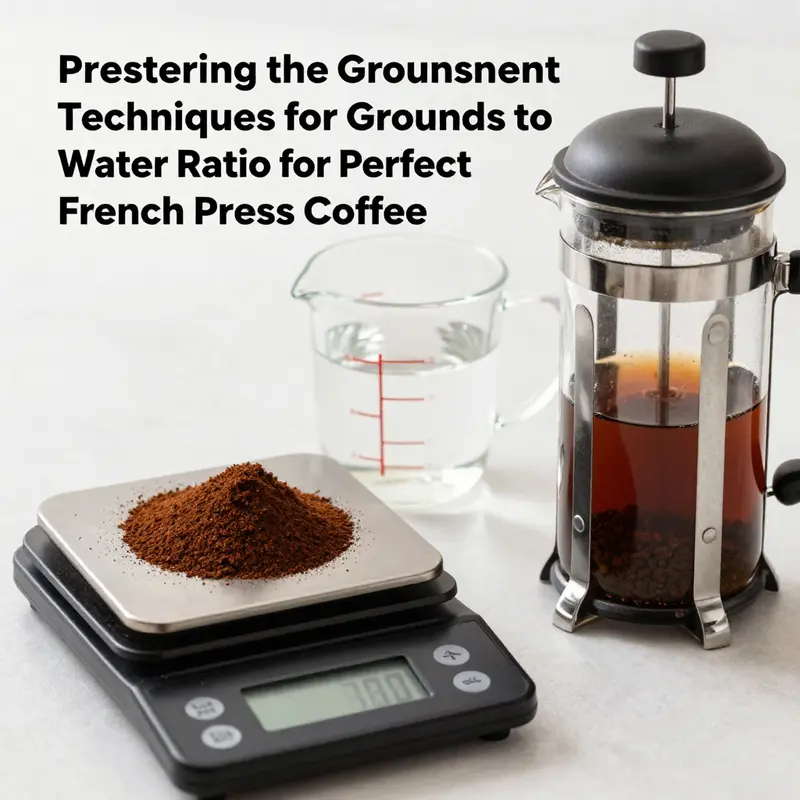
Precision, not luck, shapes the French press cup. In immersion brewing, the quiet math of weight and time unlocks flavor precision. Your palate will notice the difference between a cup measured with care and one pulled from guesswork, because every gram of coffee and every drop of water sets the stage for extraction. The craft rests on a simple idea: when you measure with purpose, you control the variables that determine aroma, body, and aftertaste. That control does not erase nuance; it invites it, letting you steer toward a cup that matches your beans and your morning mood. The discipline begins with a decision about measurement, because the rest of the process follows predictably when the starting point is accurate.
At the heart of this craft lies the grounds-to-water ratio. Using a scale removes guesswork and aligns coffee mass with water mass. When you measure by weight, small differences in scoop size stop dictating flavor. A scale also reveals how the density of different roasts can skew results if you rely on volume. A single extra gram of coffee can shift the perceived strength, balance, and texture. That awareness changes how you approach every brew, turning routine into an experiment and taste into a record of what each adjustment did. This is not about chasing perfection in a single brew; it is about building a repeatable method that yields a satisfying cup, day after day.
Many brewers start with a familiar baseline. The widely cited 1:20 ratio is a classic starting point for a balanced cup, offering a gentle default that suits a broad range of beans. Yet in precise brewing, the sweet spot often lies elsewhere, depending on the roast level, origin, grind size, and your personal taste. The goal is not to abandon tradition but to learn where tradition can flex to accommodate real-world variability. If you grind finer, or if you prefer a more assertive cup, you can explore ratios that edge toward bolder outcomes. If you seek clarity and brightness, you may drift toward a lighter profile within the same precise framework. The key is to measure, taste, and record what happens when you nudge the numbers.
The precise range commonly recommended by in-depth methods sits around 1:14 to 1:16. That means 30 grams of coffee pair with 420 to 480 grams of water. This range favors a more robust extraction without tipping into over-extraction, provided other variables stay steady. For a stronger cup, some experiment toward 1:18 or 1:19, whereas a lighter brew may hover around 1:21 or 1:22. The idea is not to chase extremes but to understand how each shift changes every component of the cup—from the first aroma to the lingering finish. Even a small adjustment, such as shifting from 420 to 430 grams of water for 30 grams of coffee, can alter sweetness and aftertaste in perceptible ways.
To brew with precision, start by weighing the coffee grounds first. Place an empty French press on a digital scale and tare it. Add your coffee, then water until you reach the target weight. Remember: one gram of water equals one milliliter. This equivalence is not merely a quirk of science; it is the practical bridge between the kitchen scale and the cup on your table. Once the grounds are weighed, you can pour water in stages or all at once, depending on your preferred technique, but always aim for the target total weight. The accuracy of the initial pour sets the distribution of extraction across the whole bed of grounds, which matters for consistency and flavor.
Water temperature should be between 92 and 96 Celsius. Let it rest about 30 seconds after boiling to reach that range. Then pour to saturate all grounds and stir gently to ensure even wetting. A uniform saturation minimizes dry pockets where extraction stalls, reducing the risk of sour notes at the cup’s edge. Set the timer for four minutes and let the mixture steep. After four minutes, press the plunger smoothly and steadily. A controlled press reduces turbulence that can lift fines and muddy the cup. The sequence—weigh, heat, saturate, stir, steep, press—transforms a simple infusion into a deliberate craft.
If you lack a scale, you can still brew with volume, but expect variability. A common if imperfect rule is one tablespoon per four ounces of water. However, grind density and how you scoop change the true ratio, so this method offers only a rough guide. The advantage of a scale becomes clear when you compare two cups brewed with the same coffee but different water weights. The scale makes the difference legible and repeatable, turning subjective taste into a measurable experience. The shift from guesswork to data is not about perfection in every brew; it is about building a consistent baseline that makes it easier to notice the impact of future changes.
Consistency comes from logging outcomes. Note the coffee amount, water amount, temperature, and steep time. Small changes accumulate; change one variable at a time. A simple notebook, a spreadsheet, or a dedicated app can serve as your memory. Over days and weeks, this practice creates a personal profile that helps you anticipate how particular beans will respond to a given ratio. You will begin to see patterns—beans that bloom with a touch more heat, or roasts that emphasize sweetness when you push the water a bit warmer. The act of recording is not tedious; it is the mechanism that converts curiosity into reliable skill.
As you refine, you’ll find the ideal balance for your beans and your taste. You may discover you prefer a smoother mouthfeel with a hint of chocolate, or you may crave a brighter acidity that lingers pleasantly after swallowing. The exact numbers are less important than the method that reveals your preferences. Your evolving profile will reflect not only the bean profile but also the cleanliness of the grind, the quality of the water, and even the equipment you use. A single variable—water weight—once stabilized, clarifies the influence of every other detail, from grind texture to cup temperature.
In the broader conversation about ratios, this precise approach aligns with a growing body of guidance that emphasizes weight over volume. For further reading on how ratios translate into technique, see the broader discussion in French press coffee ratios: the ultimate guide. This resource links the practical steps with the tasting outcomes that precise measurements enable, helping you connect the numeric target to the sensory result.
The practice of precise measurement does more than improve flavor; it enhances confidence. When you repeat a brew with the same weights, you trust what you’ll taste. When you introduce a new bean or a different roast level, you have a reliable starting point to compare against. The ritual becomes less about chasing a single “perfect cup” and more about building a scalable method that respects both the coffee and your routine. That mindset is what elevates daily coffee from a small comfort to a repeatable ritual you can rely on, even when mornings are busy and attention is divided.
The true gift of precision is clarity. You learn to hear how a slightly finer grind, a marginally warmer water, or a longer steep time shifts the balance. You learn which flavors emerge first and which recede into the background. This awareness doesn’t erase the mystery of coffee; it invites you to participate in it more intentionally. When the ritual is grounded in measurement, the act of brewing becomes a thoughtful practice rather than a moment of chance. And as you continue, you will notice that your best cups often arise not from chasing a single formula but from understanding how your favorite beans invite you to adjust the method to suit their character.
The dialogue between method and enjoyment is ongoing. For a practical touchstone, consider following the linked guide on ratios, which sketches how small changes in weight ripple through the cup’s aroma, sweetness, and body. The aim is not to lock every brew into a rigid rule but to provide a dependable starting point from which your palate can explore. By embracing precise measurement, you grant yourself the latitude to experiment with confidence, while keeping a steady hand on the essential variables that define a great French press experience.
External resource: The Perfect French Press Coffee Ratio – Coffee Geeks.
Precision and Presence: The Ground-to-Water Ratio in French Press Coffee
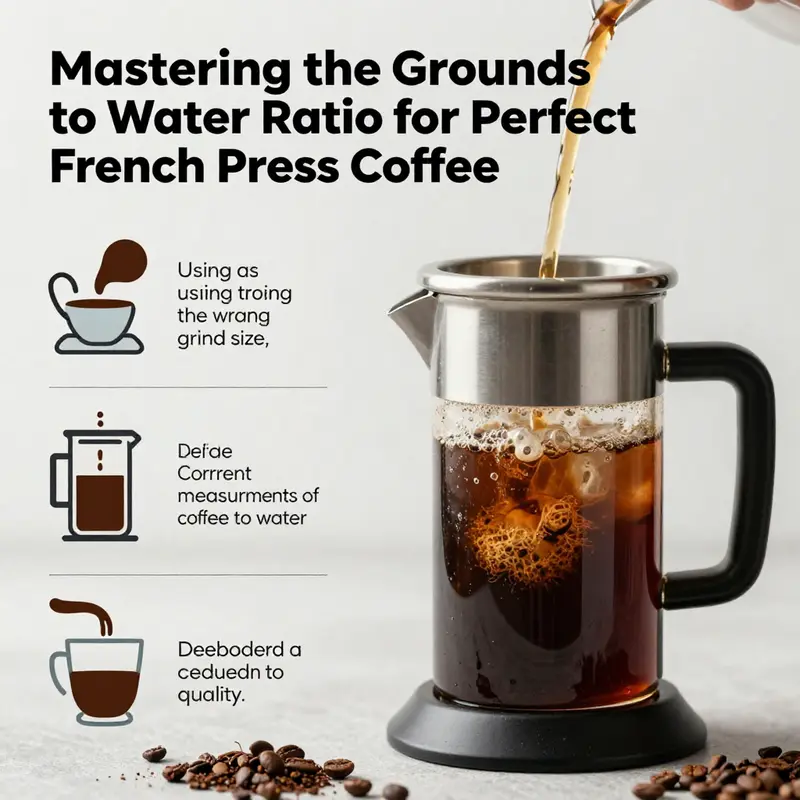
The ratio of coffee grounds to water is more than a mere number; it’s the framework that shapes aroma, body, sweetness, and acidity in a French press brew. In the moment of immersion, the balance between ground and water determines extraction pace and how long flavors stay in contact with the beans. The commonly cited starting point—1:20 by weight—offers a pragmatic baseline that yields a balanced cup. For example, 10 grams of coffee with 200 milliliters of water produces a brew with backbone and clarity, not overly bitter or sour. For two cups, about 12 ounces or 350 milliliters, the same logic translates to roughly 20 grams of coffee. These figures are anchors, not rigid laws.
Yet the French press thrives on flexibility. Small shifts—toward 1:18 or 1:19 for a bolder cup, or toward 1:21 or 1:22 for greater lightness—produce perceptible differences in aroma, sweetness, and mouthfeel. The art is listening as much as measuring. A digital scale helps eliminate guesswork and promotes consistency across batches, especially when beans vary in density and roast level. Ground coffee is not a uniform quantity; weight matters more than volume because different beans and grinds pack differently.
Grind size anchors the equation as well. The recommended texture for a French press is medium-coarse, like sea salt or coarse breadcrumbs. This size sits at the edge of the metal mesh, releasing aroma without overloading the filter with fines that muddy the cup. A too-fine grind, with immersion and a metal filter, risks over-extraction and a murky finish. The interplay between grind size and ratio drives extraction rate, body, and oil perception in the cup.
Within this framework, brew guides often place French press on the stronger side of general guidelines. A common range for many methods is 1:15 to 1:17. The French press, due to immersion and oil-rich extraction, favors the higher solubilities; many brewers gravitate toward 1:13 to 1:15 to emphasize body and presence. The two ranges are best understood as a spectrum, accommodating bean variation and taste. The core message remains: accurate measurement supports repeatable results. For example, with 500 milliliters of water, a 1:15 ratio yields about 33 grams of coffee—a base that balances sweetness, acidity, and body.
But numbers alone do not guarantee a perfect cup. The real work is calibrating to taste. If a brew tastes thin or lacks depth at 1:20, try 1:19 or 1:18; if it tastes harsh, move toward 1:21 or 1:22. Individual preference matters, and the goal is a controlled pathway to your ideal profile, not a single universal recipe. The calibration process is simple: start with a familiar baseline, weigh both grounds and water, and adjust in small increments. A single gram change can shift balance, especially as volume grows. After each batch, evaluate aroma and balance: sweetness, acidity, body, and aftertaste. Sourness can signal under-extraction; bitterness may point to over-extraction or too much coffee.
Finally, keep in mind this: the ratio is the starting line, not the finish line. It invites you to explore how roasts respond to different balances and to develop a vetted routine that travels with you across mornings and beans. With careful measurement, mindful adjustment, and a willingness to learn from each brew, you can transform the simple act of weighing coffee into a practiced ritual that honors both science and flavor.
External resources can offer additional context, but your own tasting and measurement discipline remains the best guide.
Final thoughts
Creating the perfect cup of French press coffee is a nuanced journey, deeply connected to the grounds to water ratio. From understanding the standard ratios to personalizing your brew based on customer preferences, every aspect counts towards achieving the desired flavor profile. Furthermore, incorporating precise measurement techniques and recognizing the importance of grind size can significantly enhance the quality of coffee served in your establishment. Avoiding common mistakes will empower business owners to elevate their coffee offerings, creating memorable experiences for customers and establishing a reputation for excellence in the coffee market.